Bangladesh mystic singers face Islamist backlash

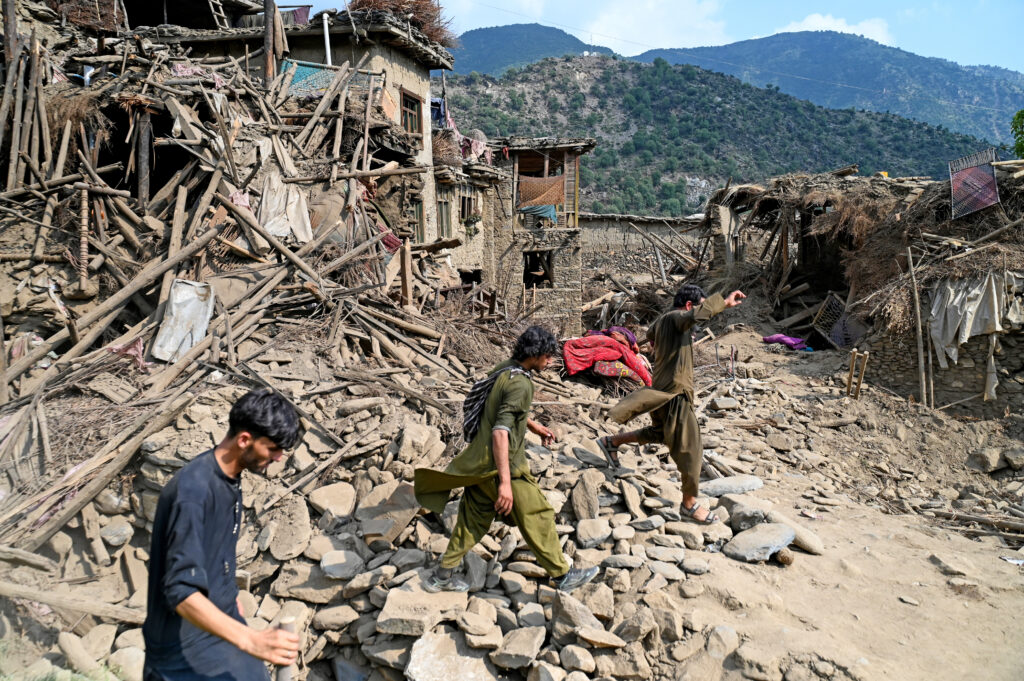
Sufi singer Jamal has spent decades devoted to his craft but now fears for his future as hardline Islamists gain ground in post-revolution Bangladesh.Conservative Muslim groups regard Sufism as deviant, opposing its mystical interpretation of the Koran.The movement is highly popular in Muslim-majority Bangladesh, but followers say they have faced unprecedented threats since the ouster of former prime minister Sheikh Hasina in August last year following a mass uprising.Hasina took a tough stand against Islamist movements during her autocratic 15-year rule, and since her ouster, Islamist groups have become emboldened, with security forces stretched.At least 40 Sufi shrines have come under attack in the past few months, according to official figures, with vandalism, arson and other violence linked to Islamist hardliners.Other estimates put the number at twice as high. Musical performances, once a mainstay at Sufi shrines, have sharply declined.”It’s been difficult for the last one-and-a-half decades but after August 5 things have deteriorated significantly,” said Jamal, on the sidelines of a musical gathering at a centuries-old shrine in Dhaka.”We used to perform in 40 programmes per season but now it’s down to 20 due to resistance from some people,” added the 50-year-old.In addition, Bangladesh’s ascetic minstrels, Baul folk singers who wander on foot from town to town singing and begging for alms, are also feeling the heat.While separate from Sufis, they are also branded heretics by some Islamists.Sardar Hirak Raja, general secretary of the Bangladesh Baul and Folk Artists Association, said more than 300 musical performances had to be cancelled since last year because of pressure from Islamist hardliners.  “The Sufi singers are in crisis because there aren’t enough programmes,” he told AFP.- ‘Inappropriate music’ -In northern Bangladesh’s Dinajpur this year, a vigilante group vandalised a popular shrine, accusing it of hosting “inappropriate music”. Similar disruptions have been reported across the country.Many of these attacks have been claimed by “Tauhidi Janata” (people of faith), an umbrella group of Muslim radicals who insist music is forbidden in Islam. Hefazat-e-Islam — a platform of religious seminaries also accused of mobilising people to attack shrines — said it opposed musical gatherings. “A group of people gather at shrines, consume cannabis and hold music fests, all of which are prohibited in our religion,” said its general secretary, Mawlana Mamunul Haque.Experts say the conflict between codified Islam and its mystical offshoots goes back far into the past.”Sufi singers and Bauls have been attacked repeatedly over the past decade but such incidents have become more frequent now,” said Anupam Heera Mandal who teaches folklore in the state-run Rajshahi University.”Since they rarely file complaints, the crimes committed against them often go unpunished.”Bangladesh’s interim government, headed by Nobel Peace Prize winner Muhammad Yunus, has been criticised for going soft on the alleged vandals, with police making only about 23 arrests so far.Mostofa Sarwar Farooki, who heads the country’s cultural affairs ministry, downplayed the threat, calling the scale of the violence “relatively low”.  “Whenever a festival is cancelled, we help the organisers hold it again,” Farooki told AFP.- ‘More powerful now’ -But critics say the measures are insufficient. “For mystical singers, the lyrics are not just words — they carry knowledge. Through music, they spread this philosophy,” said Faisal Enayet, a marketing graduate and Sufi music enthusiast.”Some people are trying to silence them.”Sufi singer Shariat Bayati, whom Islamist groups have in the past targeted with police complaints, said the harassment continued. “I couldn’t hold a programme in my courtyard last March,” he said. “Those who filed the cases are more powerful now and they keep threatening me.”Mystic practitioners, however, say they are turning to their core beliefs to weather the storm. “For mystic singers, it’s imperative to overcome anger,” Fakir Nahir Shah, one of the country’s best-known Bauls, said at a recent gathering of ascetics in Kushtia, widely celebrated as Bangladesh’s cultural capital.  “Modesty is the path we’ve deliberately chosen for the rest of our lives.”

Steeper US tariffs take effect on many Brazilian goods

US tariffs on many Brazilian products surged Wednesday, as President Donald Trump moved ahead with a pressure campaign against the trial of his right-wing ally Jair Bolsonaro.Trump’s latest salvo brings duties on various Brazilian goods from 10 percent to 50 percent, although broad exemptions — including for orange juice and civil aircraft — are expected to soften the blow.Brazil’s vice president Geraldo Alckmin previously told media that the new tariff would apply to just around 36 percent of Brazil’s exports to the United States. But analysts said it still hits key goods like coffee, beef, and sugar.In an executive order announcing the tariffs last week, the Trump administration lashed out at Brazilian officials for “unjustified criminal charges” against their country’s former president Bolsonaro, who is accused of planning a coup.Bolsonaro is on trial for allegedly plotting to hold onto power after losing the 2022 elections to President Luiz Inacio Lula da Silva. Trump’s order, which also criticized Brazil’s digital regulation, charged that the Brazilian government’s recent policies and actions threatened the US economy, national security, and foreign policy.But analysts have flagged major exclusions in the tariff hike.Valentina Sader, an expert on Brazil at the Atlantic Council, noted that there are nearly 700 exemptions.”The tariffs are not good, but they expected worse,” Sader said in a recent note.She predicts the Brazilian economy likely “will withstand the duties.””The government seems to be looking to subsidize some of the most impacted sectors, but we might see Brazil looking to diversify its export markets,” she told AFP.The tariff hike on Brazilian goods comes a day before a separate wave of higher US duties are set to take effect on dozens of economies ranging from the European Union to Taiwan — as Trump moves to reshape global trade.Analysts at Pantheon Macroeconomics estimate that these incoming tariff increases are expected to boost the average effective tariff rate for US imports to nearly 20 percent.This marks the highest level since at least the 1930s, according to the Budget Lab at Yale University.- ‘Off the table’ -But US tensions with Brazil are not likely to dissipate soon, with a Brazilian judge placing Bolsonaro under house arrest on Monday for breaking a social media ban.While the 70-year-old is barred from social media during legal proceedings — with third parties also not allowed to share his public remarks — his allies defied the order on Sunday.Supreme Court Justice Alexandre de Moraes — who is presiding over Bolsonaro’s trial — reacted furiously. Washington recently imposed sanctions on Moraes as well.Trump’s pressure campaign has angered many Brazilians but endeared him to Bolsonaro’s conservative base.”Brazilians have not taken well to what they perceive to be a clear intervention on domestic affairs and an independent judiciary,” Sader of the Atlantic Council said.”And President Lula has been firm that the government is open to dialogue and negotiations, but not to foreign interference on Brazilian affairs,” she added.”Brazilian sovereignty is off the table,” she said.

Investors walk fine line as Trump tariffs temper rate hopes

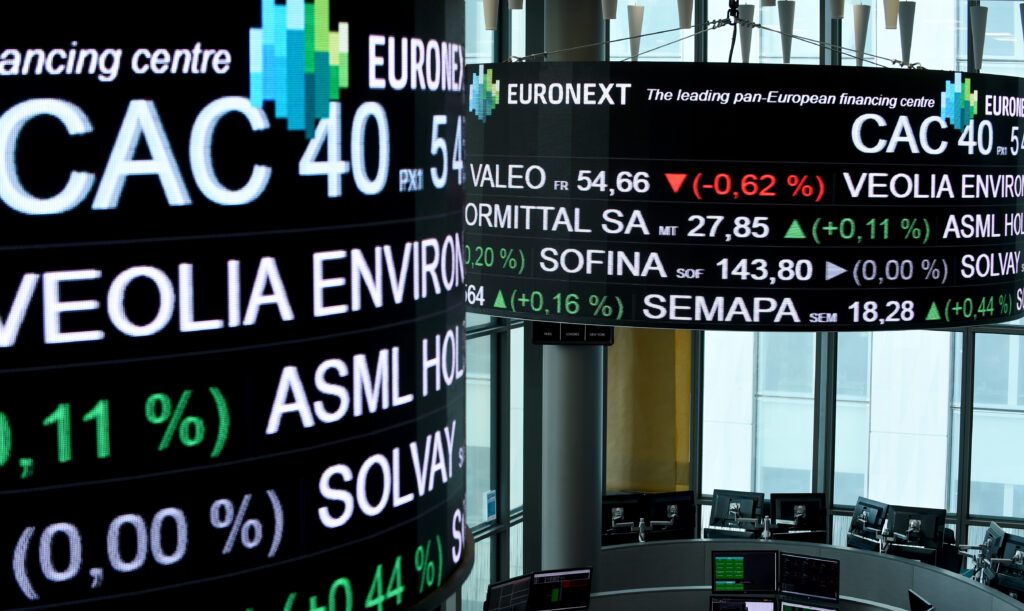
Asian investors trod warily Wednesday amid lingering uncertainty over Donald Trump’s trade war, while another round of data indicated further weakness in the US economy but added interest rate cut speculation.The US president’s claim that Washington was “very close to a deal” to extend a China truce provided some optimism, though that was tempered by his warning of fresh levies on pharmaceuticals and chips.After a strong start to the week sparked by hopes that painful jobs data will force the US Federal Reserve to lower rates next month, another batch of figures added fuel to the fire.A closely watched index of services activity showed it had barely grown in July as companies contend with weaker hiring conditions and rising prices.The news came after Friday’s jobs data revealed far fewer US jobs were created than expected in May, June and July.”Market pricing has moved aggressively in favour of a September rate cut by the Federal Reserve, after a weak July jobs report and ugly revisions to May and June signalled the US labour market may finally be cracking under the pressure of tariffs,” said Neil Wilson at Saxo Markets. “The data pushed the US closer to stagflationary territory,” he said.”So far, the market has held up and looked beyond the tariff risks, but we may at last be seeing the hard data finally catch up with the soft survey data.”But while bets on a rate cut in September have soared, he remained unsure that such a move was a certainty.Stocks fluctuated through the morning.Tokyo, Shanghai, Sydney, Wellington, Manila and Jakarta rose but Hong Kong, Singapore, Seoul and Taipei were in the red.Confidence remains thin as Trump’s tariff threats linger, with several countries — including India and Switzerland — still to hammer out deals before his delayed deadline Thursday, and agreed levies with others begin to kick in.In his latest salvo, Trump told CNBC he was looking at hitting pharmaceuticals with tolls that eventually reach 250 percent, while semiconductors were also in the firing line. He has said he will also hammer India over its purchases of Russian oil.Still, Trump did strike a positive note on China, which is in talks with US officials to continue a truce agreed in May that saw the world’s two largest economies pare down their eye-watering triple-digit tariffs.Regarding Chinese President Xi Jinping, Trump told CNBC’s “Squawk Box” that “I’ll end up having a meeting before the end of the year, most likely, if we make a deal.”If we don’t make a deal, I’m not going to have a meeting. I mean, you know, what’s the purpose of meeting if we’re not going to make a deal?”But we’re getting very close to a deal.”He added that his relationship with Xi was “very good” and that “I think we’ll make a good deal. It’s not imperative, but I think we’re going to make a good deal”. – Key figures at around 0230 GMT -Tokyo – Nikkei 225: UP 0.6 percent at 40,802.73 (break)Hong Kong – Hang Seng Index: DOWN 0.2 percent at 24,844.94Shanghai – Composite: UP 0.1 percent at 3,619.78Euro/dollar: DOWN at $1.1570 from $1.1582 on TuesdayPound/dollar: UP at $1.3303 from $1.3294Dollar/yen: UP at 147.61 yen from 147.55 yenEuro/pound: DOWN at 86.97 pence from 87.01 penceWest Texas Intermediate: UP 0.5 percent at $65.46 per barrelBrent North Sea Crude: UP 0.5 percent at $67.96 per barrelNew York – Dow: DOWN 0.1 percent at 44,111.74 (close)London – FTSE 100: UP 0.2 percent at 9,142.73 (close)

L’historien conservateur Karol Nawrocki investi président de la Pologne

L’historien conservateur Karol Nawrocki doit être investi mercredi nouveau président de la Pologne, ses déclarations présageant une cohabitation difficile avec le gouvernement pro-européen de Donald Tusk. Dans la matinée, le nouveau chef de l’Etat prêtera serment devant les deux chambres du Parlement réunies pour une session extraordinaire, puis prononcera son discours d’investiture. Dans la journée, il participera à une série de cérémonies, dont une messe pour la patrie et le président de la Pologne.Plusieurs manifestations en son soutien, organisées par la droite, doivent se dérouler dans la journée à Varsovie.M. Nawrocki, un historien de formation soutenu par le principal parti d’opposition, Droit et Justice (PiS, nationaliste), a remporté à une courte majorité le scrutin présidentiel du 1er juin.Il a battu le pro-européen Rafal Trzaskowski, un revers grave pour la coalition pro-UE en place depuis bientôt deux ans, et qui confirme la forte polarisation politique dans ce pays membre de l’Otan et de l’UE, voisin et grand soutien de l’Ukraine face à l’agression russe.- Entre compétition et confrontation -Elu pour un mandat de cinq ans, le chef de l’Etat exerce en Pologne principalement une influence sur la politique étrangère et de défense – il est le chef des forces armées -, mais dispose aussi du droit à des initiatives législatives et au véto sur les textes adoptés au Parlement.M. Nawrocki remplace à la présidence le conservateur Andrzej Duda, arrivé au terme de son deuxième mandat, avec qui le gouvernement pro-UE était déjà en désaccord sur nombre de sujets aussi importants que le respect de l’Etat de droit ou la libéralisation de l’avortement.La nouvelle cohabitation balancera entre compétition et confrontation, estiment les analystes, et les principaux acteurs en sont parfaitement conscients, à deux ans des prochaines élections législatives.”Je ne doute pas que M. Nawrocki (…) fera tout pour nous taquiner”, a déclaré le Premier ministre Donald Tusk.Et de prévenir qu’il ne le laisserait pas “démolir politiquement” son gouvernement de coalition quadripartite, parfois turbulente.De son côté, Karol Nawrocki a à plusieurs reprises dit considérer le gouvernement en place comme “le pire de l’histoire” de la Pologne démocratique.Il a promis d’être “un président actif”, de “stimuler” le gouvernement – qui dispose d’une majorité parlementaire – avec des propositions de textes relatifs aux politiques fiscale ou agricole immédiatement après son investiture.- “La Pologne et les Polonais d’abord” -Mardi, dans une vidéo publiée sur les réseaux sociaux, il a estimé que son investiture ouvrirait “un nouveau chapitre dans l’histoire de notre Pologne bien-aimée”.Novice en politique et en relations internationales, M. Nawrocki est un admirateur de Donald Trump, qu’il a rencontré brièvement à la Maison Blanche peu avant le premier tour du scrutin. Pendant sa campagne, il a expliqué vouloir refuser “tout transfert de compétences” des autorités polonaises aux organes de l’Union européenne et de signer de nouveaux traités européens “affaiblissant le rôle de la Pologne”.Il s’est également opposé à l’idée d’une adhésion de l’Ukraine à l’Otan, et a reproché à Kiev de ne pas avoir “fait preuve de gratitude pour ce que les Polonais ont fait”.Avec son slogan “La Pologne d’abord, les Polonais d’abord”, il a ciblé le million de réfugiés ukrainiens vivant dans le pays.Jeudi dernier, M. Nawrocki s’est pourtant entretenu au téléphone avec le président ukrainien Volodymyr Zelensky, qui s’est déclaré “reconnaissant” d’avoir entendu “l’assurance d’un soutien continu à l’Ukraine”.

L’historien conservateur Karol Nawrocki investi président de la Pologne

L’historien conservateur Karol Nawrocki doit être investi mercredi nouveau président de la Pologne, ses déclarations présageant une cohabitation difficile avec le gouvernement pro-européen de Donald Tusk. Dans la matinée, le nouveau chef de l’Etat prêtera serment devant les deux chambres du Parlement réunies pour une session extraordinaire, puis prononcera son discours d’investiture. Dans la journée, il participera à une série de cérémonies, dont une messe pour la patrie et le président de la Pologne.Plusieurs manifestations en son soutien, organisées par la droite, doivent se dérouler dans la journée à Varsovie.M. Nawrocki, un historien de formation soutenu par le principal parti d’opposition, Droit et Justice (PiS, nationaliste), a remporté à une courte majorité le scrutin présidentiel du 1er juin.Il a battu le pro-européen Rafal Trzaskowski, un revers grave pour la coalition pro-UE en place depuis bientôt deux ans, et qui confirme la forte polarisation politique dans ce pays membre de l’Otan et de l’UE, voisin et grand soutien de l’Ukraine face à l’agression russe.- Entre compétition et confrontation -Elu pour un mandat de cinq ans, le chef de l’Etat exerce en Pologne principalement une influence sur la politique étrangère et de défense – il est le chef des forces armées -, mais dispose aussi du droit à des initiatives législatives et au véto sur les textes adoptés au Parlement.M. Nawrocki remplace à la présidence le conservateur Andrzej Duda, arrivé au terme de son deuxième mandat, avec qui le gouvernement pro-UE était déjà en désaccord sur nombre de sujets aussi importants que le respect de l’Etat de droit ou la libéralisation de l’avortement.La nouvelle cohabitation balancera entre compétition et confrontation, estiment les analystes, et les principaux acteurs en sont parfaitement conscients, à deux ans des prochaines élections législatives.”Je ne doute pas que M. Nawrocki (…) fera tout pour nous taquiner”, a déclaré le Premier ministre Donald Tusk.Et de prévenir qu’il ne le laisserait pas “démolir politiquement” son gouvernement de coalition quadripartite, parfois turbulente.De son côté, Karol Nawrocki a à plusieurs reprises dit considérer le gouvernement en place comme “le pire de l’histoire” de la Pologne démocratique.Il a promis d’être “un président actif”, de “stimuler” le gouvernement – qui dispose d’une majorité parlementaire – avec des propositions de textes relatifs aux politiques fiscale ou agricole immédiatement après son investiture.- “La Pologne et les Polonais d’abord” -Mardi, dans une vidéo publiée sur les réseaux sociaux, il a estimé que son investiture ouvrirait “un nouveau chapitre dans l’histoire de notre Pologne bien-aimée”.Novice en politique et en relations internationales, M. Nawrocki est un admirateur de Donald Trump, qu’il a rencontré brièvement à la Maison Blanche peu avant le premier tour du scrutin. Pendant sa campagne, il a expliqué vouloir refuser “tout transfert de compétences” des autorités polonaises aux organes de l’Union européenne et de signer de nouveaux traités européens “affaiblissant le rôle de la Pologne”.Il s’est également opposé à l’idée d’une adhésion de l’Ukraine à l’Otan, et a reproché à Kiev de ne pas avoir “fait preuve de gratitude pour ce que les Polonais ont fait”.Avec son slogan “La Pologne d’abord, les Polonais d’abord”, il a ciblé le million de réfugiés ukrainiens vivant dans le pays.Jeudi dernier, M. Nawrocki s’est pourtant entretenu au téléphone avec le président ukrainien Volodymyr Zelensky, qui s’est déclaré “reconnaissant” d’avoir entendu “l’assurance d’un soutien continu à l’Ukraine”.

How Trump’s love for TV is shaping US diplomacy

Donald Trump’s sudden concern about starving Palestinians was a major shift for the US president, who had previously ignored the endless cries for help from aid groups. So what changed?In his words, it was images of emaciated children in Gaza that Trump saw on television — his main window into the world that has long shaped his political and diplomatic decision-making.Trump made clear his affection for the small screen in late July when asked if he agreed with Israeli Prime Minister Benjamin Netanyahu, a major US ally, that there was no famine in Gaza.”Based on television, I would say not particularly, because those children look very hungry,” said Trump, a former reality TV star.”That’s real starvation stuff. I see it, and you can’t fake that.”Since then, the 79-year-old has repeated that aid must be brought to people living in the war-ravaged Palestinian territory, though he has stopped of any major diplomatic moves.”Trump has a reputation for not reading anything, including the briefing papers that his aides prepare for him, and for always believing that he knows better than his staff or anyone else does,” said Dan Kennedy, a journalist professor at Northeastern University.”So it’s not surprising that he would be affected by images on television, especially since he is known to spend a lot of time watching TV.”- ‘I watch the shows’ -Trump has attended 22 intelligence briefings since taking office in January, according to an AFP tally, despite several reports having revealed that he lacks interest in written reports. However, his love for television is well-documented — even when it comes to major decisions.In 2015, before he first entered the White House, the billionaire told a journalist asking how he educates himself on military strategy: “Well, I watch the shows.”And a New York Times report recounted how Trump spent several hours a day in his first term glued to the television, mainly watching Fox News — his favorite channel — but also CNN, NBC and ABC news channels.His second term has been little changed, despite Trump leading an election campaign that deployed social media and podcasts. “Trump is a product of his generation,” Kennedy said. “He’s not sitting around looking at TikTok.”- ‘Great television’ -The Republican, who hosted 14 seasons of “The Apprentice” television series, knows better than most how images can be weaponized for political point-scoring.He was gleeful after his shocking clash with Ukrainian President Volodymyr Zelensky at the White House in February, which saw the pair rowing in front of the world’s press. “This is going to be great television,” Trump said. And in May he gave a similar public dressing down to South African leader Cyril Ramaphosa when he sat in the Oval Office for what turned into a diplomatic ambush. Trump hijacked the meeting by playing a video montage — one littered with inaccuracies — that purported to prove claims of a “genocide” against white farmers in South Africa.