



Mexique: les premiers juges élus au suffrage universel ont pris leurs fonctions
Les premiers juges élus au suffrage universel ont pris leurs fonctions lundi au Mexique, une première mondiale défendue par la gauche au pouvoir pour lutter contre la “corruption” au sein de la justice.Des juges de la Cour suprême, du tribunal électoral, mais aussi de nombreux tribunaux locaux ont pris leur poste.Les neuf ouveaux juges de la Cour suprême ont été intronisés lors d’une cérémonie traditionnelle. Les autorités des peuples autochtones ont remis un “bâton de commandement” aux membres de la plus haute juridiction du pays, au milieu de danses, de fumée d’encens et de discours en langues autochtones.Dans la soirée, lors d’une deuxième cérémonie à laquelle a assisté la présidente Claudia Sheinbaum, l’avocat autochtone Hugo Aguilar, nouveau chef de la Cour suprême, a ouvert les portes du siège de l’institution, acclamé par la foule. “Ceci est une invitation. Toutes les personnes qui ont besoin de la Cour suprême auront, à partir de demain, les portes grandes ouvertes”, a-t-il déclaré.L’élection unique au monde s’était déroulée en juin dernier avec un taux de participation d’à peine 13%. Cette faible participation a été largement critiquée par les opposants à la réforme, menée par la gauche au pouvoir.Ses adversaires accusent le Mouvement pour la régénération nationale (Morena, gauche) au pouvoir depuis décembre 2018 de vouloir faire main basse sur l’appareil judiciaire.L’élection était la pierre angulaire d’une réforme constitutionnelle défendue par le prédécesseur et mentor politique de Mme Sheinbaum, Andres Manuel Lopez Obrador, juste avant de lui remettre le pouvoir le 1er octobre.Les Etats-Unis avaient également critiqué la réforme lorsqu’elle était encore un projet. En 2024, l’ambassadeur des Etats-Unis à Mexico sous l’administration Biden l’avait qualifiée de “risque” pour la démocratie.La lutte contre l’impunité est un enjeu important de cette élection. Le Mexique, qui compte près de 130 millions d’habitants, enregistre chaque année 30.000 homicides. La plupart restent impunis. Des élections complémentaires auront lieu en 2027, mettant en jeu d’autres postes au niveau fédéral et local.
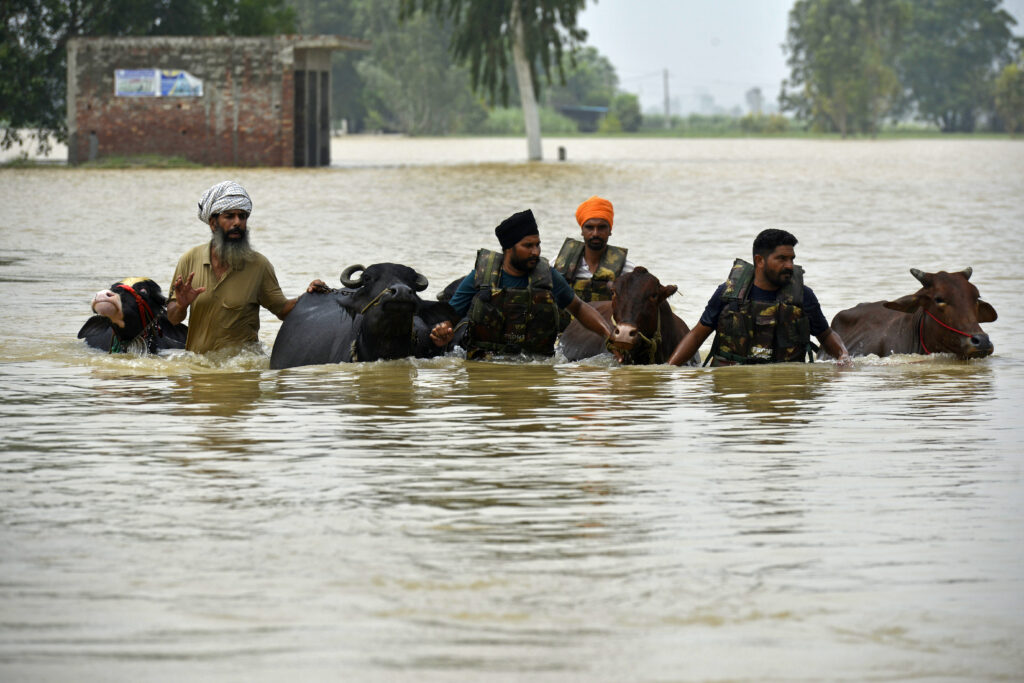
Villages marooned after deadly floods in India’s Punjab
A thousand villages in India’s Punjab state are marooned by deadly floods, with thousands forced to seek shelter in relief camps, government authorities say.Flooding across the northwestern state killed at least 29 people and affected over 250,000 last month, with the state’s chief minister calling it “one of the worst flood disasters in decades”.The region is often dubbed India’s breadbasket, but more than 940 square kilometres (360 square miles) of farmland are flooded, leading to “devastating crop losses”, Punjab’s Chief Minister Bhagwant Mann wrote in a letter to Prime Minister Narendra Modi.Modi on Monday assured him of the federal government’s “full support”.Authorities have said they fear a “huge loss of livestock”, the full extent of which will only be clear when the waters recede, according to a bulletin issued by the state authorities late Monday.India’s army and disaster teams have carried out vast rescue operations, deploying more than 1,000 boats and 30 helicopters to rescue the stranded or supply food.”The most important thing is to save the lives of people and helpless animals trapped in the water,” Mann said in a statement.Rivers in the region cross into Pakistan, where floodwater has also engulfed swathes of land.Floods and landslides are common during the June-September monsoon season in the subcontinent, but experts say climate change, coupled with poorly planned development, is increasing their frequency, severity and impact.Northwest India has seen rainfall surge by more than a third on average from June to September, according to the national weather department.In the capital Delhi, relentless rains have swollen the Yamuna river — which breached its danger mark on Tuesday, inundating several areas and creating traffic snarl-ups lasting for hours.Deadly floods triggered by record-breaking rain also killed dozens in India’s Jammu and Kashmir region last month.
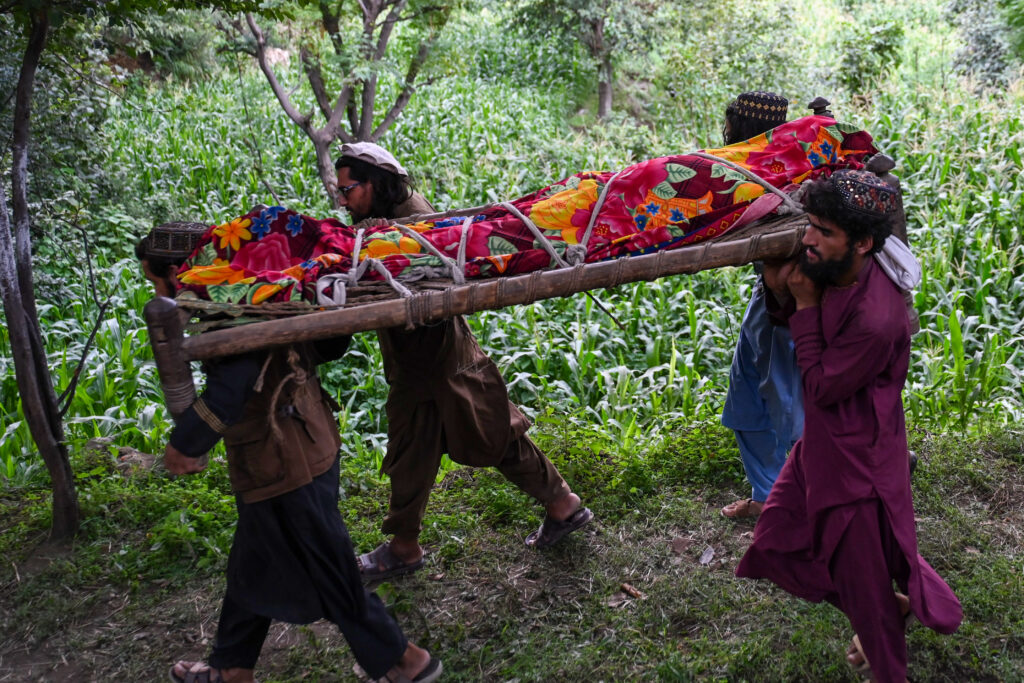
Search for survivors after Afghan earthquake kills 800
Rescuers desperately searched Tuesday for survivors in the rubble of homes flattened by an earthquake that struck eastern Afghanistan, killing more than 800 people.The 6.0-magnitude earthquake, followed by at least five aftershocks, hit remote areas in mountainous provinces near the border with Pakistan around midnight Sunday.The head of the Kunar Provincial Disaster Management Authority, Ehsanullah Ehsan, told AFP that “operations continued throughout the night”.He said there were “still injured people left in the distant villages” in need of evacuation to hospitals.Villagers joined the rescue efforts, using their bare hands to clear debris of simple mud and stone homes built into steep valleys.Obaidullah Stoman, 26, who travelled to the village of Wadir to search for a friend, was overwhelmed by the level of destruction.”I’m searching here, but I didn’t see him. It was very difficult for me to see the conditions here,” he told AFP.”There is only rubble left.”The dead, including children, were wrapped in white shrouds by villagers who prayed over their bodies before burying them.Some of the hardest-hit villages remain inaccessible due to blocked roads, the UN migration agency told AFP.The earthquake epicentre was about 27 kilometres (17 miles) from Jalalabad, according to the USGS, which said it struck at a shallow eight kilometres below the Earth’s surface.After decades of conflict, Afghanistan is one of the poorest countries in the world, facing a protracted humanitarian crisis and the influx of millions of Afghans forced back to the country by neighbours Pakistan and Iran in recent years. Since the Taliban seized power in 2021, foreign aid to the country has been slashed, undermining the impoverished nation’s already hamstrung ability to respond to disasters.The United States was the largest aid donor until early 2025, when all but a sliver of funds were cancelled after President Donald Trump took office.In June, the United Nations said it was drastically scaling back its global humanitarian aid plans due to the “deepest funding cuts ever”.On Monday, the UN Secretary-General Antonio Guterres said in a statement it was working with authorities to “swiftly assess needs, provide emergency assistance and stand ready to mobilise additional support”, and announced an initial $5 million.- Shallow quakes cause more damage -Taliban authorities in a provisional toll reported 800 dead and 2,500 injured in Kunar province, as well as 12 dead and 255 injured in Nangarhar.Laghman province also has dozens of injured, according to government spokesman Zabihullah Mujahid.Relatively shallow quakes can cause more damage, especially since the majority of Afghans live in low-rise, mud-brick homes vulnerable to collapse.Many living in quake-hit villages were among the more than four million Afghans who have returned to the country from Iran and Pakistan in recent years.”There is a lot of fear and tension… Children and women were screaming. We had never experienced anything like this in our lives,” Ijaz Ulhaq Yaad, a member of the agricultural department in Nurgal, told AFP on Monday.In a post shared by the Vatican, Pope Leo XIV said he was “deeply saddened by the significant loss of life” caused by the quake.Afghanistan is frequently hit by earthquakes, especially in the Hindu Kush mountain range, near the junction of the Eurasia and India tectonic plates.In October 2023, western Herat province was devastated by a 6.3-magnitude earthquake, which killed more than 1,500 people and damaged or destroyed more than 63,000 homes.A 5.9-magnitude quake struck the eastern province of Paktika in June 2022, killing more than 1,000 people and leaving tens of thousands homeless.