

L’Australie veut multiplier les zones refuges pour sauver les koalas
L’Etat le plus peuplé d’Australie a annoncé dimanche interdire l’exploitation forestière sur de vastes zones de la côte est pour créer des refuges pour les koalas et tenter d’enrayer le déclin de cette espèce emblématique du pays, désormais menacée d’extinction.Cette mesure du gouvernement de Nouvelle-Galles du Sud, effective dès lundi, concerne 176.000 hectares au total, soit 15 fois la superficie de Paris intra-muros. Elle affecte directement six scieries qui emploient environ 300 personnes.Ces zones seront comprises dans une nouvelle réserve naturelle, le Great Koala National Park, dont la création avait déjà été révélée il y a deux ans mais de manière bien moins ambitieuse avec une surface protégée 20 fois inférieure.”Les koalas sont en danger d’extinction à l’état sauvage en Nouvelle-Galles du Sud, c’est impensable”, a justifié le Premier ministre de l’Etat, Chris Minns, dans un communiqué.”Le Great Koala National Park vise à inverser la tendance”, a-t-il ajouté, assurant que les professionnels affectés seraient soutenus par les autorités.Symboles dans le monde entier de l’écosystème unique de l’Australie, les koalas, qu’on ne trouve que dans ce pays, voient leur population décimée par les feux de brousse dévastateurs de ces dernières années ainsi que par la déforestation et les maladies.En 2022, le gouvernement a officiellement classé ces marsupiaux comme étant “en danger” – le plus haut niveau de protection – sur une grande partie de la côte orientale de l’Australie.En Nouvelle-Galles du Sud, où se trouve la ville de Sydney, autorités et scientifiques craignent que l’espèce ne s’éteigne en 2050 si rien n’est fait pour enrayer leur déclin.- Refuge climatique -Avec l’annonce de dimanche, le nouveau parc national pourra servir de refuge à plus de 12.000 koalas et 36.000 grands phalangers volants (des marsupiaux qui vivent la nuit et planent d’arbre en arbre), ainsi qu’à des représentants de plus de 100 espèces menacées, selon les autorités.Le programme national de suivi des koalas estime leur nombre actuel entre 95.000 et 238.000 en Nouvelle-Galles du Sud, dans le Territoire de la capitale australienne et dans le Queensland qui constituent la côte orientale australienne.Outre la préservation des marsupiaux, la nouvelle réserve “permettra de sauvegarder des bassins hydrographiques essentiels (…), de protéger les sites sacrés des peuples autochtones et d’ouvrir d’énormes opportunités économiques pour le tourisme vert régional”, a insisté Gary Dunnett, directeur de l’association des parcs nationaux de Nouvelle-Galles du Sud.L’exécutif de l’Etat a annoncé presque doubler, à environ 80 millions d’euros, le financement de ce projet dont la création finale doit être validée par le gouvernement fédéral dans le cadre de ses politiques environnementales.Combinée avec les parc nationaux voisins, cette réserve qui ne sera pas d’un seul tenant formera un ensemble protégé de 476.000 hectares, à environ 350 km au nord de Sydney.L’organisation de défense de la nature WWF s’est félicitée d’un projet susceptible de mettre fin à la “tragédie” que représente le déclin de la population de koalas, divisée par deux entre 2000 et 2020 en Nouvelle-Galles du Sud.Les forêts de la région, a souligné le directeur de sa branche australienne Dermot O’Gorman, sont constituées d’eucalyptus de grande taille qui constituent “un refuge climatique pour les koalas”: “L’Australie a besoin de telles aires protégées connectées entre elles pour se préparer à la possibilité d’un réchauffement de 2,5 à 3 degrés d’ici la fin de ce siècle”.
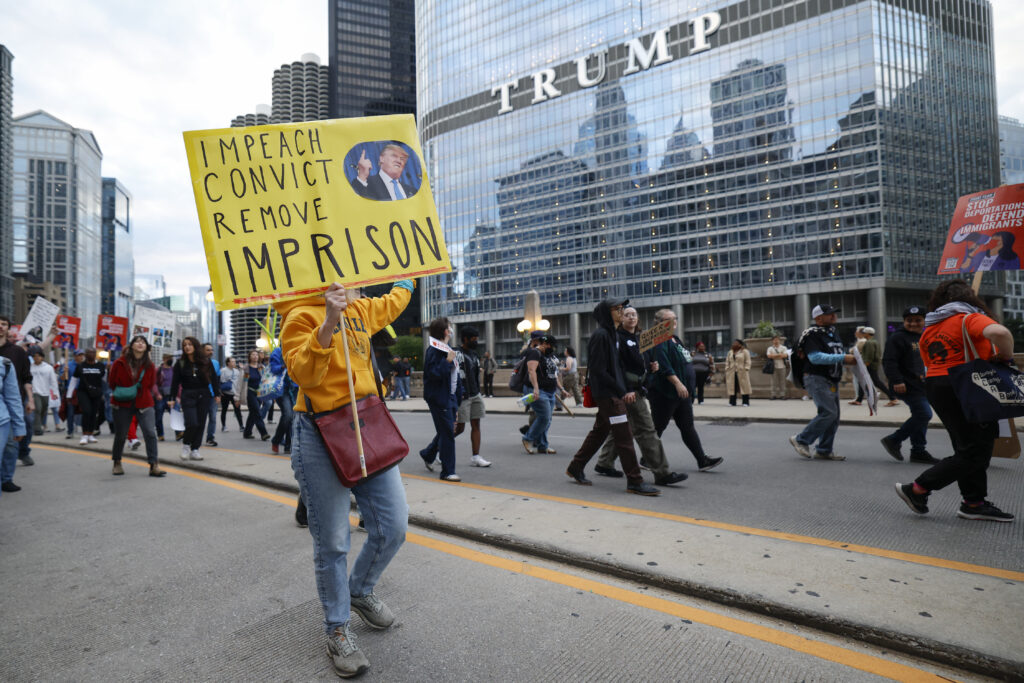
Trump escalates crackdown threats with Chicago ‘war’ warning
President Donald Trump threatened on Saturday to unleash his newly rebranded “Department of War” on Chicago, further heightening tensions over his push to deploy troops into Democratic-led US cities.The move seeks to replicate an operation in the US capital Washington, where Trump deployed National Guard troops and boosted numbers of federal agents, sparking a backlash and a fresh protest on Saturday that drew thousands.”Chicago about to find out why it’s called the Department of WAR,” Trump posted Saturday on his Truth Social account. The Democratic governor of Illinois, where Chicago is located, voiced outrage at Trump’s post.”The President of the United States is threatening to go to war with an American city. This is not a joke. This is not normal,” Governor JB Pritzker wrote in a post on X.”Illinois won’t be intimidated by a wannabe dictator,” he added.The post featured an apparent AI image of Trump and the quote: “I love the smell of deportations in the morning” — both references to the 1979 Vietnam War film “Apocalypse Now”.In the film, the line is spoken by Lt. Col. Bill Kilgore who says he loves the smell of “napalm” — not “deportations” — as the American military drops the highly flammable weapon on Vietnamese targets. The 79-year-old Republican has steadily ramped up threats against Chicago, since an early mention of it at the end of August.Anti-Trump protesters took to the streets of Chicago on Saturday, carrying signs that read “stop this fascist regime!” and “no Trump, no troops.” The protest route also went past Chicago’s Trump tower, and protesters made rude gestures at the president’s building as they walked past.On Saturday in the US capital, where National Guard troops have been deployed since Trump declared a “crime emergency” in August, a thousands-strong protest march wound through downtown with participants demanding an end to the “occupation.”Demonstrators in DC carried inverted US flags as they marched past the country’s national monuments, traditionally a symbol of a country facing existential peril.Trump’s troop and federal agent deployments — which first began in June in Los Angeles, followed by Washington — have prompted legal challenges and protests, with critics calling them an authoritarian show of force.Local officials in Los Angeles spoke out against the deployments and the violent tactics employed by ICE agents in Los Angeles, who often wore masks, drove in unmarked cars and chased down and snatched people from the streets without cause or warrants. In addition to Chicago, Trump has threatened to replicate the surges in Democratic-led Baltimore and New Orleans.On Friday, Trump signed an order changing the name of the Department of Defense to the Department of War, saying it sends “a message of victory” to the world.Pentagon chief Pete Hegseth cheered the move, saying the US will decisively exact violence to reach its aims, without apology.

‘Palestine 36’ shines light on Arab revolt against British rule
In “Palestine 36,” director Annemarie Jacir recounts a year of Arab revolt against British colonial rule that she says is crucial to understanding current events in the Middle East. “You can’t understand where we are today without understanding 1936,” Jacir told AFP a day after the film’s world premiere at the Toronto International Film Festival. The Palestinian filmmaker, who lives in the Israeli city of Haifa, was motivated to make the film, in part, to redress a lack of awareness about the consequences of British policies during the so-called mandate period, before Israel’s creation in 1948. “I wanted to really point the finger at the British,” she said. The film features a mostly Arabic-speaking cast, including Hiam Abbass from HBO’s “Succession,” and Jeremy Irons as a British high commissioner unsettled by rising violence and protests against the colonial administration.With Jewish immigration from Europe increasing and Palestinian villagers concerned about further loss of land, Arab support for armed revolt against the British surges.The film details the brutal crackdown launched to contain the violence.Villagers are beaten, people are arrested en masse while soldiers torch homes after searching them for weapons. They are tactics Jacir said Israel’s army learned from the British and have used since against Palestinians living under occupation. But Jacir — who was born in Bethlehem in the Israeli-occupied West Bank — told AFP a key goal of the film was to shine a spotlight on the British colonial practice of divide and rule, which was used across the empire. The narrative in “Palestine 36” builds toward the publication of the Peel Commission’s report, a British inquiry into the causes of Arab and Jewish unrest in Palestine. The commission recommended Palestine be partitioned — with separate areas for Jews and Arabs — a finding that influenced the United Nations-backed partition plan that coincided with Israel’s creation. “It was a British policy: first, we’ll bring (Arabs and Jews) together,” Jacir said. Then “we separate… It was a tactic of control,” she added.Jacir said the reception for the film at Friday’s world premiere was overwhelming. “Yesterday was crazy,” she told AFP, an outpouring of support likely tied to widespread outrage over the conflict in Gaza. She voiced hope that the film could foster broader awareness about the lasting impacts of the British mandate period in Palestine. “I’m shocked how many people have told me when I tell them about the film, they were like, ‘the British were in Palestine?'”British rule, she said, was “decisive.”
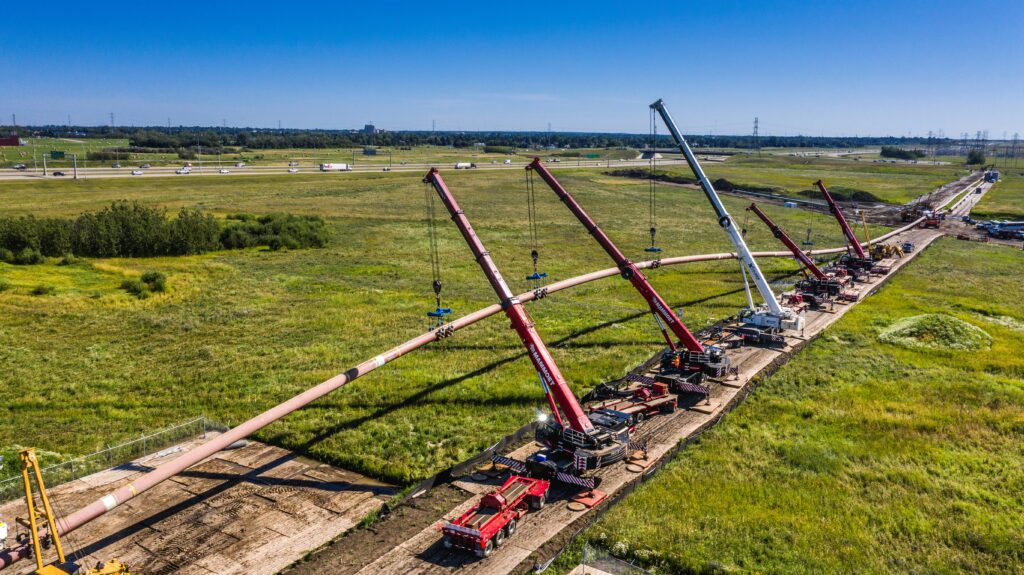
‘Build, baby, build’: Canada PM’s plan to counter Trump
On the night he won Canada’s election, Prime Minister Mark Carney summarized his plan to jumpstart the country’s economy in response to President Donald Trump’s threats. “Build, baby, build!” Carney told a jubilant crowd of Liberal party supporters in April. In the early weeks of his first term, Carney’s plans to build have taken shape, headlined by the new “Major Projects Office”, launched last month to spearhead the construction of ports, highways, mines and perhaps a new oil pipeline — a contentious subject for groups concerned about the environment. The office, which is expected to announce its priorities in the coming days, was formed after Carney’s Liberals secured cross-party support to pass legislation empowering his government to fast-track “nation-building projects.””We are moving at a speed not seen in generations,” Carney said, a level of urgency he argues is required as Trump reshapes the global economy. Trump’s threats to annex Canada have eased, but his trade war is hurting the Canadian economy. US tariffs on autos, steel and aluminum have squeezed the three crucial sectors and led to job losses.The unemployment rate hit 7.1 percent in August, the highest level since 2016 outside of the pandemic.That “adds to evidence that the trade war is taking its toll on Canadian labor markets,” RBC senior economist Claire Fan said this week. – ‘Economy in peril’ -Since entering politics earlier this year, Carney has insisted Canada needs to break its decades-long reliance on US trade by revitalizing internal commerce while pursuing new markets in Europe and Asia. During a visit to Germany last month, Carney said his government was “unleashing half a trillion dollars of investment” in infrastructure for energy, ports and other sectors. Jay Khosla, an energy expert at the Public Policy Forum, said the momentum to build would not have been possible without Trump. “We know our economy is in peril,” he said, noting Canada was effectively “captured economically,” because of its closeness to the United States. – ‘Energy superpower’? -Canada is the world’s fourth largest oil exporter and its crude reserves are the world’s third largest. Most of its resources are in the western province of Alberta, which exports almost exclusively to the United States, as Canada lacks the infrastructure to efficiently get energy products to other foreign markets. Former prime minister Justin Trudeau, Carney’s predecessor, put climate change at the center of his political brand and faced criticism from some over his perceived lack of support for the energy sector. In a shift from the Trudeau era, Carney’s Liberals now support exporting liquefied natural gas (LNG) to Europe. “What we heard loud and clear from German LNG buyers and LNG users is they believe there is demand and they want to buy our products” Energy Minister Tim Hodgson said in Berlin last week. Carney has repeatedly said Canada “can be an energy superpower.”But not everyone is enthusiastic about that plan. Greenpeace has accused the prime minister of backing “climate-wrecking infrastructure” while ignoring clean energy. Carney could likely press ahead despite concerns from pro-climate NGOs, but support from Indigenous leaders — for whom safeguarding the environment is top priority — is seen as essential. Despite Carney’s efforts to secure Indigenous backing for his major projects push, their concern persists. “We know how it feels to have Trump at our border. Let’s not do that and have Trump-like policies,” said Cindy Woodhouse, the national chief of the Assembly of First Nations, in a swipe at Carney’s backing for energy infrastructure. “Let’s take the time and do things properly.”
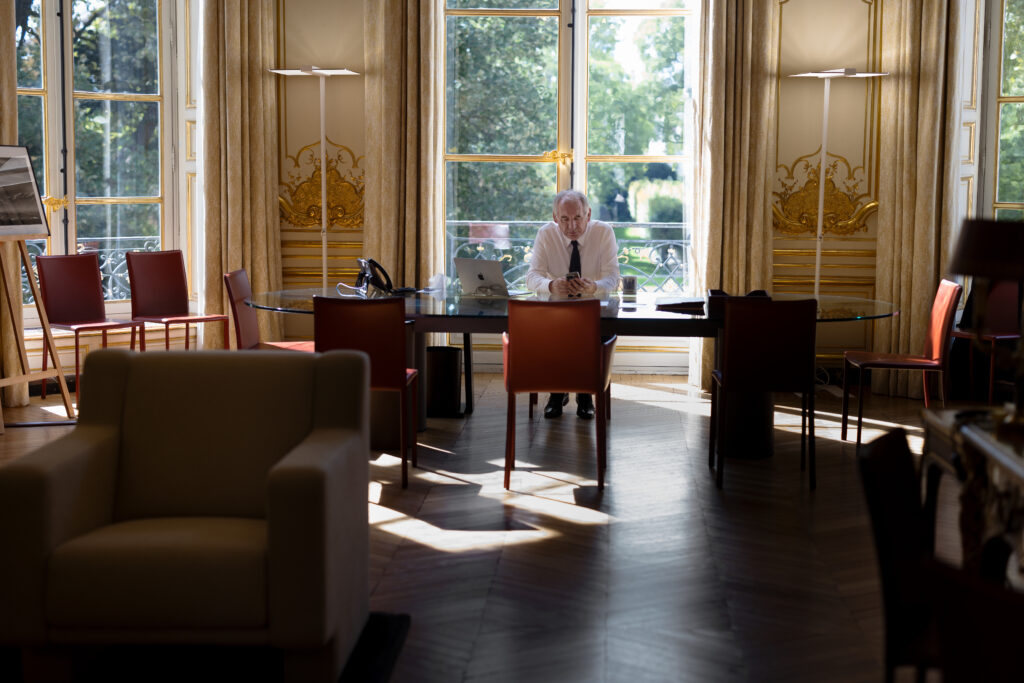
Vote de confiance: veillée d’armes pour Bayrou et ses opposants
A la veille du vote de confiance qu’il a convoqué et de sa chute plus que probable, François Bayrou achève dimanche sa tournée médiatique sans se faire d’illusion, alors qu’Emmanuel Macron est déjà en quête de son successeur, sous la pression des oppositions.Le compte à rebours est enclenché, les heures du gouvernement Bayrou sont comptées. Lundi à 15H00, le Premier ministre montera à la tribune de l’Assemblée pour demander la confiance des députés. Vers 19H00, leur verdict tombera.Sauf énorme surprise, la sentence est déjà connue: face aux vetos annoncés de la gauche et de l’extrême droite, le locataire de Matignon sait que la fin de son bail est imminente. Même s’il fait encore mine d’y croire.Comme samedi soir sur France 5: “Je crois toujours que la bonne foi, l’honnêteté, le sens de l’intérêt général peuvent l’emporter. Jusqu’au moment du vote, je plaiderai ça”.Le centriste défendra une nouvelle fois sa cause dimanche midi sur le média en ligne Brut. Sans doute pour insister une énième fois sur l’urgence du “surendettement” de la France, qui justifie à ses yeux l’effort budgétaire de 44 milliards d’euros qu’il a proposé pour 2026.Message qui parait de plus en plus adressé à son successeur, tant M. Bayrou semble s’être résolu à son départ forcé. “Il faudra bien trouver quelqu’un d’autre de toute façon”, admet-il, espérant “que le combat que nous avons mené (…) soit porté, poursuivi et si possible imposé”.Charge au chef de l’Etat de trouver le profil idoine. Pour l’heure, Emmanuel Macron “n’a pas tout à fait décidé” et “cherche encore la bonne solution sur le casting comme sur le fond”, glisse un visiteur de l’Elysée.- “La grande tambouille” -Dans l’entourage du président, peu envisagent toutefois qu’il nomme le socialiste Olivier Faure, qui a revendiqué en début de semaine “les places gouvernementales aujourd’hui occupées” par la droite et le centre.Sauf que pour Les Républicains, réunis en congrès ce weekend à Port-Marly (Yvelines), “si la gauche est à Matignon, la droite sera dans l’opposition”. Le discours de clôture de leur chef, Bruno Retailleau, à 15H00, dira si des marges de manoeuvre existent néanmoins.Prétendant pour Matignon, le patron du PS aura, lui, l’occasion de préciser ses conditions sur France 3 à 12H00 – au moment même où M. Bayrou donnera son ultime entretien.Olivier Faure “a vocation à revendiquer le pouvoir”, a estimé François Hollande dans La Tribune Dimanche. L’ancien président pose les conditions qui doivent amener, selon lui, les socialistes à un accord de non-censure : revenir sur le plan d’économies de 44 milliards voulu par le président du MoDem, “faire contribuer les détenteurs des plus hauts patrimoines” et “les entreprises à l’effort global de maîtrise de notre dette”.Olivier Faure doit aussi tenir compte du refus farouche des Insoumis d’accompagner sa stratégie, qualifiée d'”escroquerie”.Dénonçant “la grande tambouille” de “la coalition de tout et n’importe quoi”, Jean-Luc Mélenchon a prévenu samedi: “Nous ne sommes candidats à aucune autre place, sinon à la première pour tout changer”.Tourné vers l’élection suprême, le triple candidat malheureux à la présidentielle rêve d’en provoquer une autre avant 2027, grâce à la motion de destitution que les députés LFI s’apprêtent à déposer.Avec l’intention affichée de s’appuyer sur la colère sociale pour précipiter les événements, dès mercredi avec le mouvement “Bloquons tout”, puis avec la mobilisation syndicale du 18 septembre.Un pari opposé à celui du Rassemblement national, qui pousse de toutes ses forces pour de nouvelles législatives anticipées, que le parti à la flamme pense pouvoir gagner cette fois-ci.Pour sa rentrée politique dimanche en fin de matinée dans son fief d’Hénin-Beaumont (Pas-de-Calais), Marine Le Pen devrait insister sur cette perspective de majorité absolue, gage de “stabilité”.

First India-Pakistan match since conflict fires up Asia Cup
A blockbuster between India and Pakistan headlines the Asia Cup starting on Tuesday as they face off for the first time in cricket since the military conflict in May.Along with regional bragging rights, the Twenty20 competition will serve as a build-up towards the T20 World Cup in February-March in India and Sri Lanka.The eight-team event in the United Arab Emirates begins when Afghanistan play minnows Hong Kong in Abu Dhabi.Arch-rivals India and Pakistan clash in Dubai on September 14, with Pakistan bowling great Wasim Akram saying players and fans from both teams should “remain disciplined and not cross the line”.The neighbours have not met on either side’s soil in a bilateral series since 2012 and only play each other in international tournaments on neutral ground as part of a compromise deal.The two Asian cricketing giants have been clubbed together in the same group and could potentially meet three times in the tournament, which concludes on September 28.There have been tensions in the build-up after the two countries fought an intense four-day conflict, their worst since 1999.The hostilities in May left more than 70 people dead in missile, drone and artillery exchanges, before a ceasefire.Both sides claimed victory and in a sign of lingering bitterness, an India team of retired players withdrew from their semi-final with Pakistan in the World Championship of Legends in July-August in England.Led by former international Yuvraj Singh, the Indians also refused to play Pakistan in the group stage of the tournament, as clamour grew among fans to boycott the games.Former India spinner Harbhajan Singh was part of the veterans team and has strongly opposed the Asia Cup game.”Blood and sweat cannot co-exist,” Harbhajan told The Times of India.”It cannot be the case that there’s fighting on the border, tensions between the two nations, and we go to play cricket. “Until these big issues are resolved, cricket is a very small matter.”- India strong favourites -India and Pakistan last met in cricket, again in Dubai, in February in the 50-over Champions Trophy, with India winning by six wickets and going on to lift the title.They are also defending Asia Cup champions and led by Suryakumar Yadav are clear favourites against their old foes with a 10-3 win record against Pakistan in T20 internationals.Pakistan will be without star players Babar Azam and Mohammad Rizwan, both dropped from the shortest format because of poor form.India won the previous Asia Cup, which was played in a 50-over format in 2023, when they beat hosts Sri Lanka in the final in Colombo. India are strong favourites to retain their crown.The five full members of the Asian Cricket Council — Afghanistan, Pakistan, India, Bangladesh and Sri Lanka — earned automatic qualification to the tournament. They are joined by Hong Kong, Oman and the UAE, teams that secured their spots by finishing in the top three of the ACC men’s Premier Cup.Group A is made up of India, Pakistan, hosts UAE and Oman.Group B comprises Afghanistan, Bangladesh, Hong Kong and Sri Lanka.The group stage will be followed by a Super Four round, followed by the final in Dubai.