Sur Netflix ou Amazon, Paris capitale des “rom com”, au risque des clichés

Après “Emily in Paris” sur Netflix, la Ville lumière confirme son statut de capitale de la “rom com” (romantic comedy) avec le carton mondial de “L’été où je suis devenu jolie”, dont la troisième saison sur Amazon Prime se dénoue dans un Paris de carte postale très éloigné de la réalité.Cette ultime saison, classée première sur Amazon dans 120 pays à son lancement en juillet, s’est achevée fin septembre avec le départ à Paris du personnage principal, l’étudiante américaine Isabel “Belly” Conklin (Lola Tung), qui tente de s’extirper d’un douloureux triangle amoureux.Comme pour beaucoup d’autres héroïnes de fiction avant elle, la capitale française devient l’écrin dans lequel “Belly” va renaître dans un Paris stéréotypé: garçons de café atrabilaires, pâtisseries appétissantes et ruelles photogéniques. Jenny Han, l’autrice du roman ayant inspiré la série, rêvait d’un tournage à Paris sur les traces de l’actrice britannique Audrey Hepburn, dont les plus grands rôles dans les années 50-60 se sont déployés dans la capitale française (“Charade”, “Drôle de Frimousse”, “Comment voler un million de dollars”…).”C’est tellement iconique de voir Audrey Hepburn à Paris, trouver sa place et devenir une jeune femme, que je me suis dit que ce serait charmant que Belly suive cette voie”, avait déclaré Jenny Han au Los Angeles Times, ajoutant que la série allait désormais être adaptée sur grand écran. – “Version aseptisée” – De fait, Paris n’a pas attendu Belly ou l’Emily de la série Netflix pour faire briller les feux de l’amour sur grand écran.Dès 1951, “Un Américain à Paris” de Vincente Minelli mettait en scène les tribulations amoureuses de Gene Kelly et Leslie Caron dans la Ville Lumière et ce classique a d’ailleurs droit à un petit clin d’oeil dans l’épisode final de “L’été où je suis devenu jolie”.”Paris incarne l’amour dépassant le monde ordinaire, une transcendance au-delà du temps et de l’espace”, analyse Waddick Doyle, professeur de communication internationale à l’American University de Paris.La série Amazon enferme toutefois la ville dans une vision mythifiée et édulcorée, une critique déjà adressée à “Emily in Paris” où tout le monde vit dans des beaux quartiers.”Quand des médias étrangers font le portrait de Paris, ils en font une caricature sans aspérités. C’est une tradition bien ancrée qui assigne à Paris un rôle dont il ne peut pas sortir”, dit à l’AFP Lindsey Tramuta, une autrice américaine installée à Paris et dont le nouveau livre (“New Paris”) démonte les clichés sur la France.La plupart des scènes parisiennes de “L’été où je suis devenu belle” ont été tournées dans des quartiers touristiques dont la butte Montmartre, où Belly arrive miraculeusement à louer un grand appartement avec vue sur le Sacré-Coeur alors qu’elle cumule des jobs étudiants.Au début des années 2000, “le Fabuleux destin d’Amélie Poulain”, pourtant pure production française, avait lui aussi été accusé de véhiculer une image proprette de la ville et notamment du quartier Montmartre.”Il y a des moments où ça peut devenir problématique quand ce qui est montré est une version ripolinée, presque aseptisée de cet endroit qui ne reflète pas la réalité”, estime Lindsey Tramuta.Sans doute pas de quoi dissuader les fans de “L’été où je suis devenu jolie” d’affluer dans la capitale. Une croisière sur La Seine était prévue fin septembre pour naviguer sur les traces de Belly mais a dû être annulée pour des raisons techniques. Les fans d'”Emily in Paris” continuent, eux, de se ruer sur le restaurant parisien Terra Nera où se déroulent plusieurs épisodes de cette série qui perpétue une vision idéalisée de la ville.”Pourquoi ne peut-on pas montrer le vrai Paris et faire en sorte qu’il fasse aussi rêver?”, s’interroge Lindsey Tramuta. 

Taiwan says ‘will not agree’ to making 50% of its chips in US

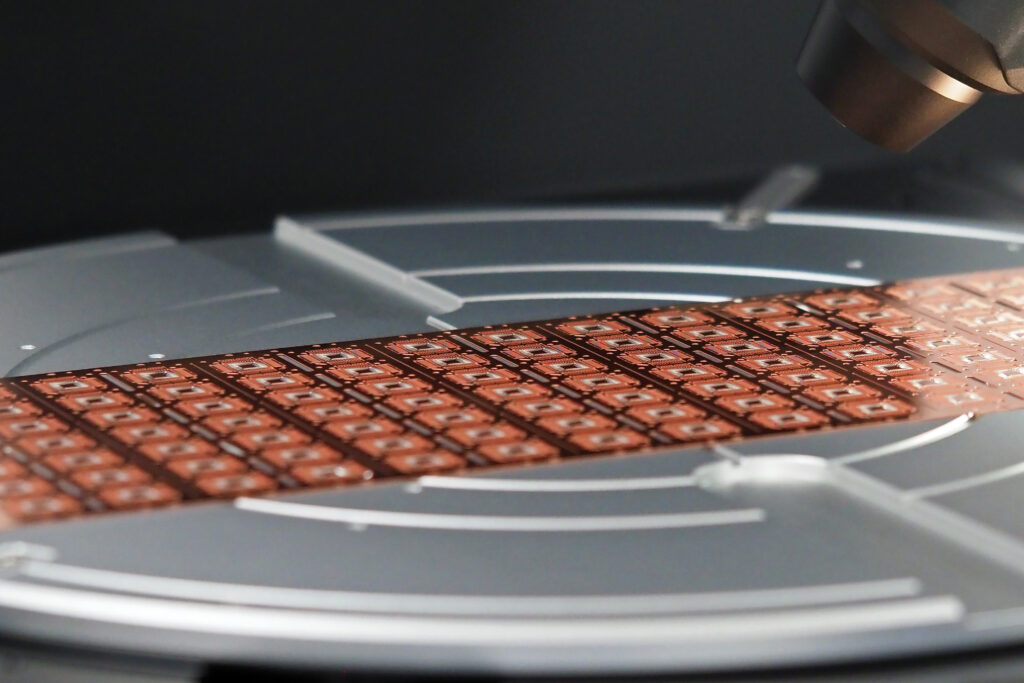
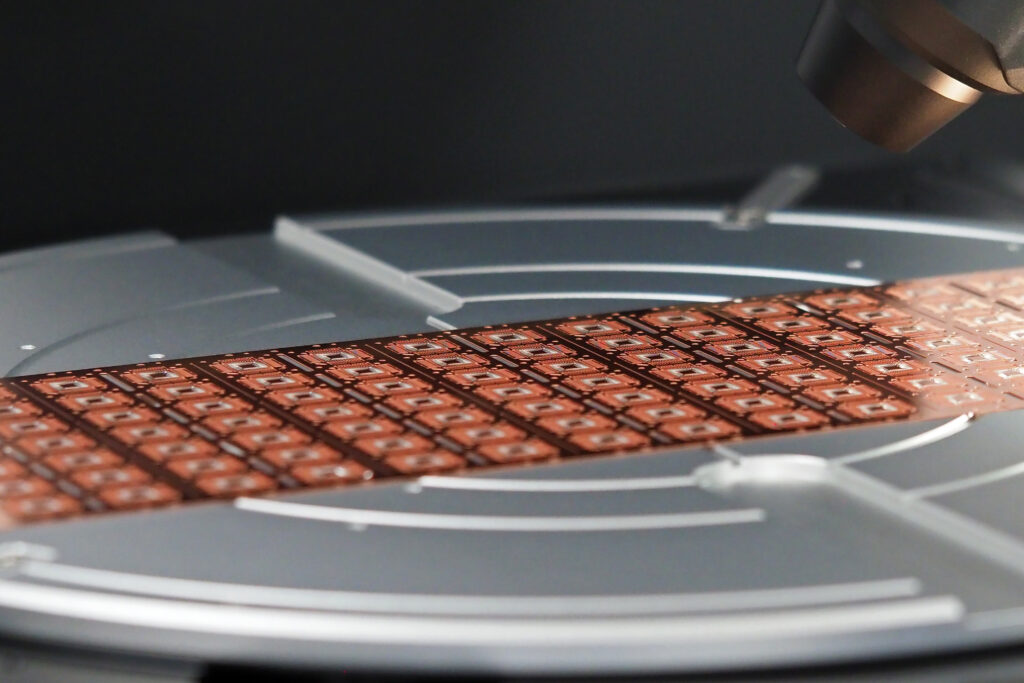
Taiwan “will not agree” to making 50 percent of its semiconductors in the United States, the island’s lead tariff negotiator said Wednesday, as Washington pressures Taipei to produce more chips on US soil.Vice Premier Cheng Li-chiun’s remarks came after US Secretary of Commerce Howard Lutnick said he had proposed to Taiwan a 50-50 split in chip production.”I want to clarify that this is the US’s idea. Our negotiation team has never made a 50-50 commitment to a chip split,” Cheng told reporters in Taipei.”Please be rest assured that we did not discuss this issue this time, and we will not agree to such a condition,” she said.Cheng spoke after returning from Washington where she said negotiations over US tariffs on Taiwanese shipments “made some progress”.Taiwan is struggling to finalise a tariff deal with Washington, after President Donald Trump’s administration imposed a temporary 20 percent levy that has alarmed the island’s manufacturers.Trump has also threatened to put a “fairly substantial tariff” on semiconductors coming into the country. Soaring demand for AI-related technology has fuelled Taiwan’s trade surplus with the United States — and put it in Trump’s crosshairs.More than 70 percent of the island’s exports to the United States are information and communications technology, which includes chips, the cabinet said in a statement Wednesday.In a bid to avoid the tariffs, Taipei has pledged to increase investment in the United States, buy more of its energy and increase its own defence spending to more than three percent of gross domestic product.Taiwan produces more than half of the world’s semiconductors and nearly all of the high-end ones.The concentration of chip manufacturing in Taiwan has long been seen as a “silicon shield” protecting it from an invasion or blockade by China, which claims it as part of its territory — and an incentive for the United States to defend it.In an interview with NewsNation broadcast over the weekend, Lutnick said having 50 percent of Taiwan’s chip production in the United States would ensure “we have the capacity to do what we need to do if we need to do it”.”That has been the conversation we’ve had with Taiwan, that you have to understand that it’s vital for you to have us produce 50 percent,” he said. “Our goal is to get to 40 percent market share, and maybe 50 percent market share, of producing the chips and the wafers, you know the semiconductors we need for American consumption, that’s our objective.”

Gold hits record, Wall St futures drop as US heads for shutdown

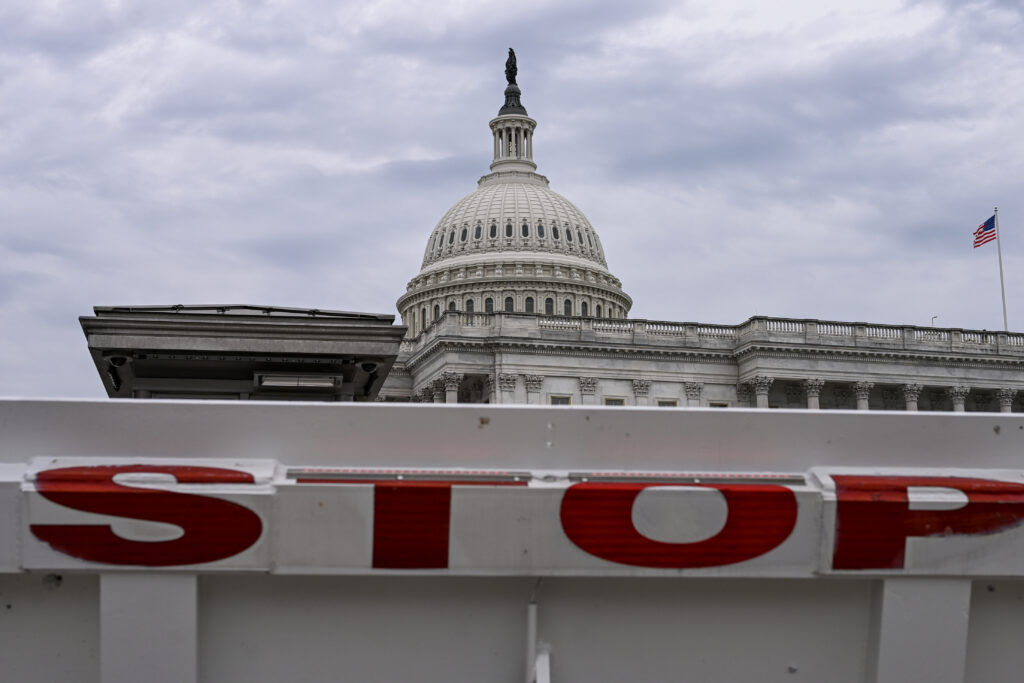
Gold hit a record high and Wall Street futures fell Wednesday as the US government went into shutdown after lawmakers in Washington failed to reach a deal to keep it funded, though most Asia markets held gains.The prospect of federal services being closed overshadowed optimism the Federal Reserve will cut interest rates again, with the crisis possibly causing the postponement of key data used by the bank to decide on policy.Democrats and Republicans have been unable to bridge their differences on funding the government beyond Tuesday — the end of the fiscal year — with both sides blaming each other.Senate Republicans tried to rubber-stamp a House-passed temporary funding patch — but could not get the handful of Democratic votes required to send it to Donald Trump to sign off.Democrats want to see hundreds of billions of dollars in healthcare spending for low-income households restored, which the Trump administration is likely to eliminate.”We’ll probably have a shutdown,” the Republican president told reporters before the vote. The closure will see non-essential operations grind to a halt, leaving hundreds of thousands of civil servants temporarily without pay, and payment of many social safety net benefits potentially disrupted.Trump threatened to punish Democrats and their voters during any stoppage by targeting progressive priorities and forcing mass public sector job cuts.”So we’d be laying off a lot of people that are going to be very affected,” he said”And they’re Democrats, they’re going to be Democrats,” he told an event at the White House, adding that he would use the pause to “get rid of a lot of things we didn’t want, and they’d be Democrat things”.While most shutdowns end after a short period with little effect on markets, investors remain concerned, particularly as it could prevent the release Friday of the key non-farm payrolls report — a crucial guide for the Fed on rate decisions.”Without (the report), the Fed would be forced to navigate October’s decision by starlight rather than compass, relying on smaller surveys and anecdotal signals,” wrote Stephen Innes at SPI Asset Management.”The October cut looks assured… but beyond that, the path becomes guesswork. Traders hate nothing more than an information vacuum. In its absence, every tick of secondary data looms larger than it should, amplifying volatility.”Gold, a go-to in times of turmoil and uncertainty, hit a new peak of $3,875.53 amid worries about the impact of the shutdown as well as a weaker dollar and bets on lower borrowing costs.Futures on all three main indexes in New York were in the red — with the Dow coming off a record.However, Asian equities held up, with Singapore, Seoul, Wellington, Taipei, Manila, Mumbai, Bangkok and Jakarta all up.Tokyo and Sydney were the only losers.Hong Kong and Shanghai were closed for holidays.In company news, Australian mining titan BHP fell around 1.8 percent following reports that China’s state-run iron ore buyer told steelmakers to temporarily stop buying seagoing, dollar-denominated cargoes from the firm, as part of a pricing dispute.Australian Prime Minister Anthony Albanese called the move “disappointing”.- Key figures at around 0415 GMT -Tokyo – Nikkei 225: DOWN 1.0 percent at 44,498.06Hong Kong – Hang Seng Index: Closed for a holidayShanghai – Composite: Closed for a holidayEuro/dollar: UP at $1.1741 from $1.1739 on TuesdayPound/dollar: DOWN at $1.3444 from $1.3448Dollar/yen: UP at 147.95 yen from 147.86 yenEuro/pound: UP at 87.33 pence from 87.29 penceWest Texas Intermediate: UP 0.2 percent at $62.52 per barrelBrent North Sea Crude: UP 0.3 percent at $66.20 per barrelNew York – Dow: UP 0.2 percent at 46,397.89 (close)London – FTSE 100: UP 0.5 percent at 9,350.43 (close)

L’Inde enfin en lice sur le marché des puces, se réjouit un pionnier de la tech

Quand Narendra Modi a annoncé au début du mois que l’Inde allait faire son entrée dans le club très fermé des pays fabricants de microprocesseurs, Vellayan Subbiah a compris que son heure était enfin arrivée.A 56 ans, il dirige CG Power, qui vient d’ouvrir dans l’Etat du Gujarat (ouest) une usine appelée à devenir l’un des champions de la fabrication de puces “made in India” voulue par son Premier ministre.”C’est la première fois de ma carrière que je vois le gouvernement, les décideurs et les investisseurs sur la même longueur d’ondes”, se félicite le PDG auprès de l’AFP.”Tous sont d’accord sur le chemin que l’Inde doit suivre et l’importance pour notre pays de développer une industrie nationale”, poursuit-il, “c’est très excitant”.New Delhi a investi cette année l’équivalent de 18 milliards de dollars dans dix projets liés aux semi-conducteurs, dont l’ouverture de deux usines dernier-cri à Noida, dans la banlieue de la capitale, et à Bangalore (sud).Les premières puces doivent sortir des chaînes de montage d’ici à la fin de l’année, sur un marché en progression exponentielle.Sa valeur est passée de 38 milliards de dollars en 2023 à 45 à 50 milliards lors de l’année fiscale 2024-2025. Et les investisseurs espèrent lui voir passer la barre des 100 milliards d’ici 2030.Selon Vellayan Subbiah, c’est une manne de “plus de 100 milliards de dollars, si ce n’est plus”, qui devrait irriguer cette jeune industrie dans les cinq à sept ans.- Retards -Pour s’affranchir de la dépendance de son pays dans un secteur stratégique pour son avenir, le chef du gouvernement a fixé des objectifs très ambitieux à ses pionniers.Il a sollicité le soutien financier et l’expertise de géants indiens comme Tata, et étrangers tels que l’américain Micron, pour mettre sur pied au plus vite les structures capables de concevoir, produire et vendre des microprocesseurs.CG Semi Private Ltd, la coentreprise créée par CG Power avec deux autres firmes du secteur, prévoit ainsi d’investir l’équivalent de 900 millions de dollars dans deux usines.”Nous voulons concevoir nos propres puces pour en détenir les brevets, c’est très important pour l’Inde”, précise M. Subbiah, un ingénieur formé à l’université du Michigan (Etats-Unis).Comme pour d’autres secteurs de pointe, l’Inde a tardé à se lancer dans la fabrication des puces. Elle arrive plusieurs décennies après ceux qui dominent le marché, Taïwan, les Pays-Bas, le Japon ou la Chine…”Il faut reconnaître qu’il y a un écart”, concède le PDG de CG Power.Mais le pays le plus peuplé du monde – 1,4 milliard d’habitants – dispose du réservoir de talents pour “accélérer” et “rattraper” ses concurrents, dans les “sept à dix ans”, anticipe-t-il.”20% des talents mondiaux en matière de conception de semi-conducteurs viennent d’Inde”, s’est enorgueilli Narendra Modi.- Autosuffisance ? -Mais garder les cerveaux indiens “à la maison” reste un défi, même après la décision des Etats-Unis de faire passer à 100.000 dollars le prix des visas H1-B, les plus prisés par les entreprises de la Silicon Valley.Dans la cinquième économie mondiale, bureaucratie et manque d’emplois restent des freins.Vellayan Subbiah reconnaît lui même avoir recours à 75 expatriés dans son usine. “Nous préférons grandir avec des Indiens. Mais comment les faire revenir ?”, interroge-t-il.La route vers l’autosuffisance en matière de microprocesseurs s’annonce donc tortueuse.L’Inde a réussi à sécuriser d’importants  investissements en matières de puces – 68 milliards de dollars signés en août avec le Japon – ou d’intelligence artificielle (IA).Mais la guerre commerciale engagée par Donald Trump laisse présager qu’il négociera âprement la participation américaine à des accords de transfert de technologies vers l’Inde.”La situation géopolitique est devenue complexe”, constate le patron de CG Power.”Mais il n’y a que deux écosystèmes à bas coût au monde: la Chine et, bientôt, l’Inde”. “Si on se projette à 20 ou 30 ans, on devrait voir le centre de gravité (du secteur) se déplacer vers ces deux écosystèmes”.

India ready to rev up chipmaking, industry pioneer says

When Prime Minister Narendra Modi declared India’s “late entry” into the global semiconductor race, he pinned hopes on pioneers such as Vellayan Subbiah to create a chip innovation hub.The chairman of CG Power, who oversees a newly commissioned semiconductor facility in western India, is seen as one of the early domestic champions of this strategic sector in the world’s fastest-growing major economy.”There has been more alignment between the government, policymakers, and business than I’ve ever seen in my working history,” Subbiah, 56, told AFP.”There’s an understanding of where India needs to go, and the importance of having our own manufacturing.”As US President Donald Trump shakes global trade with tariffs and hard-nosed transactionalism, Modi has doubled down on self-reliance in critical technologies.New Delhi, which flagged its push in 2021, has this year approved 10 semiconductor projects worth about $18 billion in total, including two 3-nanometre design plants, among the most advanced.Commercial production is slated to begin by the end of the year, with the market forecast to jump from $38 billion in 2023 to nearly $100 billion by 2030.Subbiah, whose CG Power is one of India’s leading conglomerates, predicts “over $100 billion, if not more”, will flow into the industry across the value chain in the next five to seven years.He said “symbiotic” public-private partnerships were “very exciting”.-‘Ability to accelerate’-Chips are viewed as key to growth and a source of geopolitical clout.India says it wants to build a “complete ecosystem”, and break the global supply chain dominance by a few regions.The government has courted homegrown giants such as Tata, alongside foreign players like Micron, to push design, manufacturing and packaging in joint ventures.CG Semi, a joint venture with CG Power, plans to invest nearly $900 million in two assembly and test plants, as well as to push its design company.”We are looking to design chips, so that we can own the (intellectual property) too — which is very important for India,” said Subbiah, a civil engineer by training with an MBA from the University of Michigan.Still, critics say India is decades late starting, and remains far behind chip leaders in Taiwan, the Netherlands, Japan and China.”First we have to recognise there is a gap,” Subbiah said, noting Taiwan’s TSMC has a 35-year head start. But he insists India’s scale and talent pool — the world’s most populous nation with 1.4 billion people — gives it “a significant ability to accelerate” production.- ‘More complicated’-Modi this month said that “20 percent of the global talent in semiconductor design comes from India”.But wooing talent who sought opportunities abroad back to India remains a challenge, even after Trump’s restrictions on the H-1B skilled worker visa programme, heavily used by Indians.India, the world’s fifth-largest economy, still struggles with bureaucratic inertia and a lack of cutting-edge opportunities.Subbiah acknowledged that his own venture employs about 75 expatriates.”That’s not the way we want to grow. We want to grow with Indians,” he said, calling for policies to lure back overseas talent. “How do we bring these people back?”But the path is tougher than in 2021, when New Delhi first pushed for chip self-sufficiency.While India has secured semiconductor and AI investment pledges from partners such as Japan — which pledged $68 billion in August — Trump is expected to be less willing than past US leaders to back ventures that build Indian capacity.”The geopolitical situation overall has become more complicated,” Subbiah said.Yet he remains upbeat for the long run.”There are only going to be two really low-cost ecosystems in the world: one is China, and the other is going to be India,” he said.”You’re going to see the centre of gravity move towards these ecosystems, if you start thinking about a 25-30 year vision”. 

India ready to rev up chipmaking, industry pioneer says

When Prime Minister Narendra Modi declared India’s “late entry” into the global semiconductor race, he pinned hopes on pioneers such as Vellayan Subbiah to create a chip innovation hub.The chairman of CG Power, who oversees a newly commissioned semiconductor facility in western India, is seen as one of the early domestic champions of this strategic sector in the world’s fastest-growing major economy.”There has been more alignment between the government, policymakers, and business than I’ve ever seen in my working history,” Subbiah, 56, told AFP.”There’s an understanding of where India needs to go, and the importance of having our own manufacturing.”As US President Donald Trump shakes global trade with tariffs and hard-nosed transactionalism, Modi has doubled down on self-reliance in critical technologies.New Delhi, which flagged its push in 2021, has this year approved 10 semiconductor projects worth about $18 billion in total, including two 3-nanometre design plants, among the most advanced.Commercial production is slated to begin by the end of the year, with the market forecast to jump from $38 billion in 2023 to nearly $100 billion by 2030.Subbiah, whose CG Power is one of India’s leading conglomerates, predicts “over $100 billion, if not more”, will flow into the industry across the value chain in the next five to seven years.He said “symbiotic” public-private partnerships were “very exciting”.-‘Ability to accelerate’-Chips are viewed as key to growth and a source of geopolitical clout.India says it wants to build a “complete ecosystem”, and break the global supply chain dominance by a few regions.The government has courted homegrown giants such as Tata, alongside foreign players like Micron, to push design, manufacturing and packaging in joint ventures.CG Semi, a joint venture with CG Power, plans to invest nearly $900 million in two assembly and test plants, as well as to push its design company.”We are looking to design chips, so that we can own the (intellectual property) too — which is very important for India,” said Subbiah, a civil engineer by training with an MBA from the University of Michigan.Still, critics say India is decades late starting, and remains far behind chip leaders in Taiwan, the Netherlands, Japan and China.”First we have to recognise there is a gap,” Subbiah said, noting Taiwan’s TSMC has a 35-year head start. But he insists India’s scale and talent pool — the world’s most populous nation with 1.4 billion people — gives it “a significant ability to accelerate” production.- ‘More complicated’-Modi this month said that “20 percent of the global talent in semiconductor design comes from India”.But wooing talent who sought opportunities abroad back to India remains a challenge, even after Trump’s restrictions on the H-1B skilled worker visa programme, heavily used by Indians.India, the world’s fifth-largest economy, still struggles with bureaucratic inertia and a lack of cutting-edge opportunities.Subbiah acknowledged that his own venture employs about 75 expatriates.”That’s not the way we want to grow. We want to grow with Indians,” he said, calling for policies to lure back overseas talent. “How do we bring these people back?”But the path is tougher than in 2021, when New Delhi first pushed for chip self-sufficiency.While India has secured semiconductor and AI investment pledges from partners such as Japan — which pledged $68 billion in August — Trump is expected to be less willing than past US leaders to back ventures that build Indian capacity.”The geopolitical situation overall has become more complicated,” Subbiah said.Yet he remains upbeat for the long run.”There are only going to be two really low-cost ecosystems in the world: one is China, and the other is going to be India,” he said.”You’re going to see the centre of gravity move towards these ecosystems, if you start thinking about a 25-30 year vision”. 

Asian stocks mixed, Wall St futures drop as US heads for shutdown

Asian markets stuttered, US futures fell and gold hovered near record highs Wednesday after lawmakers in Washington failed to reach a deal to avert a government shutdown.The prospect of federal services being closed overshadowed optimism the Federal Reserve will cut interest rates again, with the crisis possibly causing the postponement of key data used by the bank to decide on policy.Democrats and Republicans have been unable to bridge their differences on funding the government beyond Tuesday — the end of the fiscal year — with both sides blaming each other.Senate Republicans tried to rubber-stamp a House-passed temporary funding patch — but could not get the handful of Democratic votes required to send it to President Donald Trump’s desk.Democrats want to see hundreds of billions of dollars in healthcare spending for low-income households restored, which the Trump administration is likely to eliminate.”We’ll probably have a shutdown,” the Republican president told reporters before the vote. Such a scenario would see non-essential operations grind to a halt, leaving hundreds of thousands of civil servants temporarily without pay, and payment of many social safety net benefits potentially disrupted.Trump threatened to punish Democrats and their voters during any stoppage by targeting progressive priorities and forcing mass public sector job cuts.”So we’d be laying off a lot of people that are going to be very affected,” he said”And they’re Democrats, they’re going to be Democrats,” he told an event at the White House, adding that he would use the pause to “get rid of a lot of things we didn’t want, and they’d be Democrat things”.While most shutdowns end after a short period with little effect on markets, investors remain concerned, particularly as it could prevent the release Friday of the key non-farm payrolls report — a crucial guide for the Fed on rate decisions.”Without (the report), the Fed would be forced to navigate October’s decision by starlight rather than compass, relying on smaller surveys and anecdotal signals,” wrote Stephen Innes at SPI Asset Management.”The October cut looks assured… but beyond that, the path becomes guesswork. Traders hate nothing more than an information vacuum. In its absence, every tick of secondary data looms larger than it should, amplifying volatility.”Futures on all three main indexes in New York were in the red — with the Dow coming off a record — and Asian equities were mixed.Tokyo, Sydney and Manila fell, while Singapore, Seoul and Taipei rose.Gold, a go-to in times of turmoil and uncertainty, was hovering just below its record high of $3,871.72 owing to a weaker dollar, bets on lower borrowing costs and worries about the impact of the shutdown.In company news, Australian mining titan BHP fell more than one percent following reports that China’s state-run iron ore buyer told steelmakers to temporarily stop buying seagoing, dollar-denominated cargoes from the firm, as part of a pricing dispute.Australian Prime Minister Anthony Albanese called the move “disappointing”.- Key figures at around 0215 GMT -Tokyo – Nikkei 225: DOWN 1.0 percent at 44,480.02Hong Kong – Hang Seng Index: Closed for a holidayShanghai – Composite: Closed for a holidayEuro/dollar: DOWN at $1.1736 from $1.1739 on TuesdayPound/dollar: DOWN at $1.3439 from $1.3448Dollar/yen: UP at 148.00 yen from 147.86 yenEuro/pound: UP at 87.33 pence from 87.29 penceWest Texas Intermediate: UP 0.2 percent at $62.50 per barrelBrent North Sea Crude: UP 0.2 percent at $66.18 per barrelNew York – Dow: UP 0.2 percent at 46,397.89 (close)London – FTSE 100: UP 0.5 percent at 9,350.43 (close)

South Korea posts record semiconductor exports in September

South Korea recorded its highest ever semiconductor exports in September, official data showed Wednesday, despite growing pressure from US tariffs and other restrictions on the crucial sector.Seoul logged more than $16.6 billion in exports of semiconductors last month, up by more than a fifth from September 2024, according to data from the country’s industry ministry.The surge was driven by high demand for high-value memory such as HBM chips used in AI servers, the industry ministry said.Cars, the country’s other key export, also performed strongly, with auto shipments climbing to $6.4 billion, the highest ever recorded for the month of September.Driven by these strong figures, overall exports reached $65.9 billion, — the highest in more than 42 months.Exports rose to all major regions except the United States, which fell 1.4 percent from a year earlier to $10.27 billion, weighed down by tariffs on steel, automobiles and machinery.Asia’s fourth-largest economy was initially hit with a 25 percent across-the-board tariff by the United States but managed to secure a last-minute agreement for a reduced 15 percent rate.South Korea is one of Washington’s biggest trade partners, with automobiles leading the pack in exports.The country has yet to secure a deal, with auto tariffs reduced from 25 to 15 percent but not yet in effect, unlike in neighbouring Japan.Tariffs of 50 percent also remain in place on some key exports such as steel and aluminium.The new record is a “valuable achievement made by our companies, who swiftly diversified their export markets despite the unfavourable conditions of weakened exports to the US caused by tariff measures,” industry minister Kim Jung-kwan said in a statement.”Uncertainty surrounding our exports remains high due to ongoing US tariff negotiations, and we must remain vigilant and respond swiftly,” said Kim. He added that “the government will strengthen policy support to ensure that our companies can maintain export competitiveness.”

Un homme recherché aux Etats-Unis pour avoir décapité un lion de mer

Un homme était recherché mardi aux États-Unis pour avoir décapité un lion de mer sans vie, un acte illégal que la Californie a subi deux fois en moins d’un an.Les autorités offrent 20.000 dollars de récompense pour des informations permettant d’interpeller le suspect, qui a utilisé un couteau de chasse pour commettre son méfait en juillet.”Après avoir scié la tête du phoque, il a placé la tête dans un sac plastique zippé et a quitté la zone dans une Cadillac Escalade blanche modèle récent”, selon un communiqué de l’Agence américaine d’observation océanique et atmosphérique (NOAA). Le suspect est décrit comme un homme blanc, chauve, avec une barbe fournie, qui a l’air d’avoir entre 50 et 60 ans. Il a commis son forfait sur la plage de Point Pinos, à environ 130 kilomètres au sud de San Francisco.Un autre lion de mer décédé avait déjà été décapité le jour de Noël 2024, cette fois-ci à une centaine de kilomètres au nord de San Francisco. Le suspect dans cette affaire aurait environ 20 ans de moins et a également placé la tête du pinnipède dans un sac plastique, selon les autorités.Il aurait pris la fuite sur un vélo électrique à pneus larges.Aux Etats-Unis, il est illégal de harceler, chasser, capturer ou tuer les lions de mer et autres espèces de faune marine.Les lions de mer sont emblématiques de la côte ouest de l’Amérique du Nord. Leurs aboiements distinctifs peuvent souvent être entendus à San Francisco, que ce soit le long des quais ou près du Golden Gate Bridge, le fameux pont. Connus pour leur intelligence, ils sont parfois entraînés à effectuer des tours dans les cirques et aquariums, et ont été utilisés par la marine américaine pour mener des opérations militaires.

La banquise antarctique atteint son troisième plus bas niveau en un demi-siècle

La banquise d’hiver dans l’Antarctique a atteint son troisième plus bas niveau en près d’un demi-siècle d’observation par satellite, ont annoncé mardi des chercheurs, soulignant l’influence croissante du changement climatique sur le pôle Sud.A chaque hiver de l’hémisphère sud, l’océan autour de l’Antarctique gèle sur des centaines de kilomètres au-delà du continent, avec un pic généralement observé en septembre ou octobre, avant le début d’un cycle de dégel.Cette année, la surface de glace semble avoir atteint son maximum le 17 septembre avec 17,81 millions de kilomètres carrés, selon des chiffres préliminaires du Centre national américain des données sur la neige et la glace de l’université du Colorado à Boulder.Le maximum de 2025 se classe donc au troisième rang des plus bas niveaux enregistrés en 47 ans, derrière le record de 2023 et la deuxième place tenue par l’hiver 2024.Jusqu’en 2016, les mesures prises montraient “une augmentation irrégulière mais légère au fil du temps” de la surface de glace de mer (ou banquise) dans l’Antarctique, relève Ted Scambos, chercheur à l’université du Colorado à Boulder.Mais, ajoute-t-il à l’AFP, “ce qui semble se produire, c’est que la chaleur des océans se mêle désormais à l’eau la plus proche de l’Antarctique”, ce qui signifie que le changement climatique a finalement rattrapé les mers gelées du continent austral.La glace de mer n’augmente pas le niveau de la mer lorsqu’elle fond. Mais cette fonte a un impact sur le climat: le blanc de la glace réfléchit presque toute l’énergie solaire vers l’espace, leur remplacement par une surface d’eaux, plus sombre, participe au réchauffement climatique puisqu’elle absorbe cette même quantité d’énergie sans la renvoyer.La banquise agit également comme un tampon, en empêchant la calotte glaciaire antarctique (la glace installée sur le continent) de pénétrer dans l’océan et d’amplifier l’élévation du niveau de la mer.La fonte de la banquise pourrait aussi avoir un effet a priori paradoxal, souligne le scientifique Ted Scambos: “une augmentation des chutes de neige en Antarctique, car l’air humide au-dessus de l’océan serait plus proche de la côte” de l’Antarctique.Les données historiques montrent qu’à long terme, la calotte glaciaire se rétrécit inexorablement en cas de réchauffement climatique, précise néanmoins Ted Scambos.