US expert on India accused of China meetings denies charges

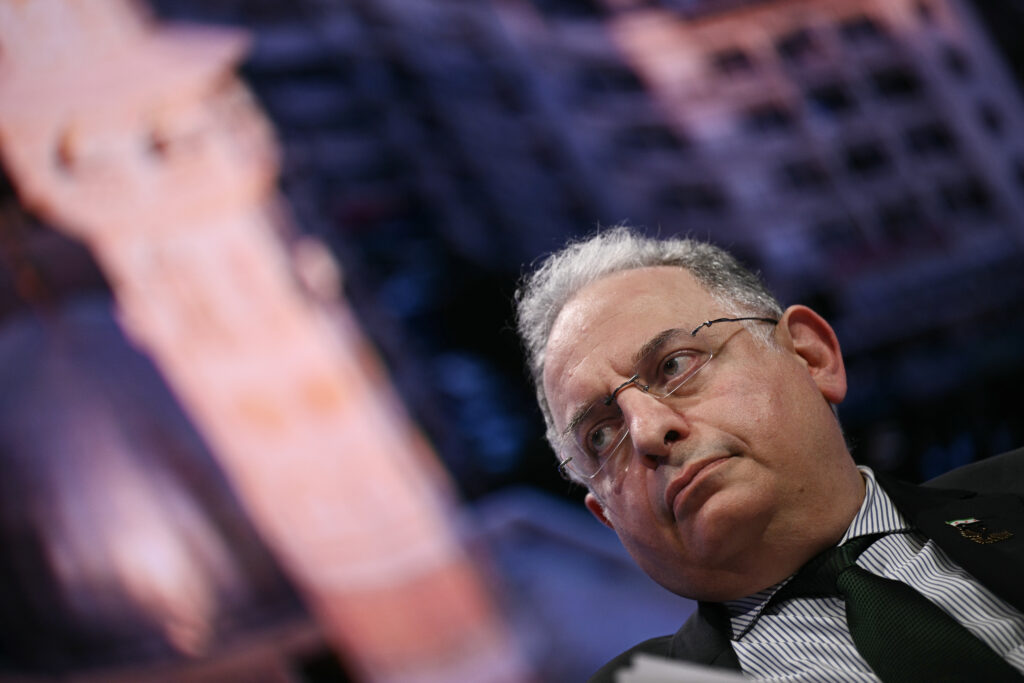
A prominent US scholar of India who was arrested after allegations of retaining classified documents and meeting Chinese officials is denying the charges against him, his lawyers said Wednesday.Ashley Tellis, 64, who held senior positions under former president George W. Bush and remained an unpaid advisor to the State Department, was arrested Saturday and faces up to 10 years in prison.”Ashley J. Tellis is a widely respected scholar and senior policy advisor,” his lawyers, Deborah Curtis and John Nassikas, said in a statement.”We will be vigorously contesting the allegations brought against him, specifically any insinuation of his operating on behalf of a foreign adversary,” they said.A criminal affidavit made public Tuesday said that Tellis went into the State Department late on September 25 and appeared to print from a secret document on US Air Force techniques.It alleged that Tellis met repeatedly with Chinese officials at a restaurant in the Washington suburb of Fairfax, Virginia, and that at one dinner he appeared to leave a manila envelope.The charges announced by the Justice Department relate to improper handling of documents rather than the meetings, with an FBI special agent saying a search found more than 1,000 pages of top-secret or secret documents in his house.Tellis has been a senior fellow at the Carnegie Endowment for International Peace, a leading Washington think tank, which said Wednesday that he has been put on administrative leave.Tellis, a naturalized American originally from India, helped negotiate the Bush administration’s civil nuclear cooperation deal with India, a landmark step to closer relations between the world’s two largest democracies.But Tellis in recent years has emerged as a leading contrarian in Washington about India, saying that New Delhi’s interests were not aligned on a host of issues including Ukraine.

Gaza: Israël menace de reprendre les combats si le Hamas ne rend pas toutes les dépouilles d’otages

Le ministre de la Défense israélien, Israël Katz, a affirmé mercredi soir qu’Israël reprendrait les combats dans la bande de Gaza si le Hamas ne respectait pas l’accord de cessez-le-feu, estimant que celui-ci n’avait pas rendu toutes les dépouilles d’otages.”Si le Hamas refuse de respecter l’accord, Israël, en coordination avec les Etats‑Unis, reprendra les combats et agira pour une défaite totale du Hamas”, indique un communiqué de son bureau.Le Hamas avait affirmé plus tôt avoir remis à Israël toutes les dépouilles d’otages auxquelles il avait pu accéder.Aux termes de l’accord du cessez-le-feu conclu entre le mouvement islamiste palestinien Hamas et Israël sur la base du plan du président américain Donald Trump, Hamas devait remettre à tous les otages encore détenus à Gaza, les vivants et les morts, dans les 72 heures suivant la cessation des hostilités, soit au plus tard à 09H00 GMT lundi.Le mouvement palestinien a bien libéré dans les temps les 20 otages vivants, mais il n’a pour l’instant remis que neuf dépouilles de captifs sur les 28 retenues à Gaza: quatre lundi soir, trois mardi et deux mercredi. “Nous avons rempli notre engagement au titre de l’accord en remettant tous les prisonniers israéliens vivants, ainsi que les corps auxquels nous avons pu accéder”, a assuré le Hamas. “Quant aux dépouilles restantes, leur récupération et extraction nécessitent des efforts considérables et un équipement spécial.”En échange du retour mardi des dépouilles de trois captifs, Israël a remis à Gaza 45 dépouilles de Palestiniens. – “Accès totalement libre” -Accusant le Hamas de jouer la montre et de violer l’accord de cessez-le-feu, Itamar Ben-Gvir, ministre de la Sécurité intérieure et figure de l’extrême droite israélienne, a de nouveau appelé mercredi le Premier ministre Benjamin Netanyahu à couper totalement l’aide humanitaire pour Gaza.Plus tôt, la radio-télévision publique israélienne KAN avait présenté comme imminente la réouverture du passage de Rafah entre l’Egypte et Gaza, crucial pour l’afflux de l’aide humanitaire qui attend du côté égyptien. Mais il est resté fermé jusque-là.L’ONU a exhorté Israël à ouvrir “immédiatement” tous les accès de la bande de Gaza à l’aide humanitaire.”Nous voulons que tous (les) points de passage soient ouverts et que l’accès soit totalement libre”, a déclaré à l’AFP au Caire Tom Fletcher, chef des opérations humanitaires de l’ONU.”Nous voulons que cela se fasse maintenant, dans le cadre de l’accord” de cessez-le-feu, a dit M. Fletcher, soulignant “l’urgence totale” de la situation et la nécessité de “livrer de l’aide à grande échelle.”Fin août, l’ONU a déclaré une famine dans plusieurs zones de Gaza, ce que conteste Israël.- “Il ne reste plus rien” -Israël autorise actuellement l’acheminement de l’aide humanitaire essentiellement via le passage de Kerem Shalom (sud d’Israël), mais les organisations humanitaires se plaignent des lenteurs administratives et des contrôles de sécurité.Selon l’ONU et l’Organisation mondiale de la Santé, Israël a permis ces derniers jours l’entrée d’aide humanitaire et médicale, notamment de gaz de cuisine, pour la première fois depuis mars, ainsi que des tentes supplémentaires pour les déplacés, des fruits frais, de la viande congelée, de la farine ou des médicaments.Dans la bande de Gaza, des habitants affamés interceptent régulièrement les camions d’aide pour voler et stocker de la nourriture, ce qui empêche une distribution ordonnée vers les communautés les plus touchées, selon une source humanitaire.De retour dans les ruines de leurs maisons à Gaza-ville, plusieurs habitants installent des tentes ou des abris de fortune au milieu des décombres, selon des images de l’AFP.”Nous sommes jetés à la rue. Il n’y a pas d’eau, pas de nourriture, pas d’électricité. Rien. Toute la ville de Gaza a été réduite en cendres”, déclare Mustafa Mahram.”Il ne reste plus rien à Gaza-ville. Ni arbres, ni bâtiments, ni être humains, ni vie. Juste des destructions”, dit un autre Palestinien, Youssef Jodah.En riposte à une attaque sans précédent du Hamas contre Israël le 7 octobre 2023, l’armée israélienne a mené une offensive qui a ravagé la bande de Gaza, provoqué un désastre humanitaire et fait des dizaines de milliers de morts.  L’attaque du Hamas a entraîné, du côté israélien, la mort de 1.221 personnes, en majorité des civils, selon un nouveau bilan établi par l’AFP à partir de données officielles, après l’identification de deux dépouilles d’otages.Dans la bande de Gaza, la campagne de représailles israélienne a fait 67.938 morts, en majorité des civils, selon les chiffres du ministère de la Santé du Hamas, jugés fiables par l’ONU.

United sees demand ‘strengthening’ as profits edge lower

United Airlines reported a slight dip in profits Wednesday as operating expenses ticked higher, adding that a strengthening demand outlook would boost fourth-quarter results.The big US carrier reported third-quarter profits of $949 million, down 1.7 percent from the year-ago level, as growth in operating expenses edged out the increase in revenues of 2.6 percent to $15.2 billion.The company estimated fourth-quarter profits of between $3.00 and $3.50 per share, better than Wall Street estimates. United is poised for a “strong” fourth quarter “as the demand environment strengthens,” said a United press release.The outlook echoes bullish commentary about consumer appetite earlier this month from Delta Air Lines.Both carriers have billed themselves as able to provide a premium-travel experience that emphasizes better onboard amenities in addition to reliable operations in an effort to strengthen brand loyalty. United’s press release emphasized perks such as Apple TV on board, increased investment on food quality and the introduction of Starlink Wi-Fi on flights, which is scheduled to launch on Thursday in a flight from Newark to Houston.The company promises Starlink on “every plane by 2027,” said United CEO Scott Kirby. “Our customers value the United experience, making them increasingly loyal to United.”Shares of United fell 1.8 percent in after-hours trading.

US agency blames faulty engineering for Titanic sub disaster

Flawed engineering and inadequate testing contributed to the catastrophic implosion of a private submersible during a 2023 expedition to the Titanic wreckage, the US National Transportation Safety Board said Wednesday.Its report comes after a US Coast Guard investigation in August outlined a litany of issues with operator OceanGate’s conduct, as well as design flaws in its Titan submersible, that led to a “preventable tragedy” in which all five passengers were killed.”We found that OceanGate’s engineering process for the Titan was inadequate and resulted in the construction of a carbon fiber composite pressure vessel that contained multiple anomalies and failed to meet necessary strength and durability requirements,” NTSB’s report said.”Because OceanGate did not adequately test the Titan, the company was unaware of the pressure vessel’s actual strength and durability, which was likely much lower than their target.”Additionally, OceanGate’s analysis of Titan pressure vessel real-time monitoring data was flawed, so the company was unaware that the Titan was damaged and needed to be immediately removed from service” after a previous dive, it added.OceanGate chief executive Stockton Rush was joined on the doomed expedition by British explorer Hamish Harding, French deep-sea explorer Paul-Henri Nargeolet, Pakistani-British tycoon Shahzada Dawood and his son Suleman.Seats on the submersible cost $250,000 per person.Communications were lost with the SUV-sized submersible about an hour and 45 minutes into its dive on June 18, 2023, kicking off a dramatic search that briefly captivated the world.Debris was found a few days later on the ocean floor, about 1,600 feet (500 meters) from the bow of the Titanic, and human remains were recovered when the sub was brought to the surface.Shortly after the tragedy, OceanGate halted all operations.Last year, the family of Nargeolet sued OceanGate for $50 million, accusing the US-based company of gross negligence.The wreckage of the Titanic sits 400 miles (644 kilometers) off the coast of Newfoundland and has become a lure for nautical experts and underwater tourists since its discovery in 1985.The ship hit an iceberg and sank in 1912 during its maiden voyage from England to New York, with 2,224 passengers and crew on board. More than 1,500 people died.

Judge ‘reluctantly’ tosses youth case challenging Trump climate policies

A federal judge on Wednesday “reluctantly” dismissed a lawsuit brought by young Americans accusing President Donald Trump’s administration of threatening their constitutional right to life and liberty through its aggressive fossil-fuel push.Judge Dana Christensen said that while the plaintiffs had presented “overwhelming” evidence that the government’s actions would worsen climate change and harm them, the case to overturn them “must be made to the political branches or to the electorate.””With this understanding in mind, the Court reluctantly concludes…that it cannot grant Plaintiffs the relief they seek,” he wrote.Trump, who received hundreds of millions of dollars from Big Oil in the runup to the 2024 election, has made expanded fossil fuel extraction the centerpiece of his energy policy, while curbing permits for solar and wind farms and ending tax credits for renewables. In a filing earlier this year, 22 plaintiffs — including several minors and represented by the nonprofit Our Children’s Trust — asked the court to block three executive orders they said violated their inalienable rights by seeking to “unleash” more drilling.They also accused the administration of eroding federal climate science, leaving the public less informed about mounting dangers.Julia Olson, the youths’ lead lawyer, vowed to swiftly appeal.”We will definitely appeal and get it up to the Ninth Circuit as quickly as we can so that they can correct this injustice, and give these young people their right to be heard in the federal courts,” she told AFP. The Ninth Circuit is a higher court.She called the decision “completely wrong” and an “anathema to the entire US Constitution and the entire purpose of the separation of powers among the three branches of government,” adding it places fossil fuel interests “above the health and safety of children.”- Emotional testimony -During a two-day hearing last month in Christensen’s packed courtroom in Missoula, Montana, the youths described in vivid testimony how global warming had reshaped their lives.Among them was Joseph Lee, an undergraduate from California who suffered a life-threatening heat stroke, and Jorja McCormick of Livingston, Montana, who said she was traumatized by wildfires that forced her family to flee their home.Christensen, an Obama appointee known for previous environmental rulings, listened intently and frequently engaged with witnesses as the plaintiffs called experts in climate science, energy economics, politics and law and children’s health.Those included climatologist and Nobel Peace Prize co-winner Steve Running, and John Podesta, a former senior White House official who testified about the legal nature of executive orders.Government lawyers, on the other hand, did not call their own witnesses and did not focus on disputing the reality of climate change.Instead, they argued that the lawsuit was fundamentally undemocratic and echoed Juliana v. United States — a similar youth-led case that featured some of the same plaintiffs and wound through the courts for nearly a decade before the Supreme Court declined to hear an appeal last year, closing it out.While lawyers for the youths contended the case differed from Juliana in key ways, Christensen disagreed and concluded that his hands were tied by the precedent set by that case.”Plaintiffs have presented overwhelming evidence that the climate is changing at a staggering pace, and that this change stems from the rise in atmospheric carbon dioxide, caused by the production and burning of fossil fuels,” Christensen wrote.He added that they had also shown “overwhelming evidence that implementation of the Challenged EOs will increase the concentration of atmospheric carbon dioxide, thereby exacerbating the harms Plaintiffs experience from an already-warming climate.”But he ruled their injuries could not be redressed by a court, saying he was troubled by being asked to reset national energy policy to its state before Trump’s second term — and by the idea of having to monitor every climate action by the government if he sided with the plaintiffs.

Syria won’t wait for global community to reform economy: Finance Minister

Syria is in a hurry to rebuild its war-torn economy and will not wait for the international community to begin making those changes, the country’s finance minister said Wednesday.Mohammed Yisr Barnieh, who spoke at the International Monetary Fund in Washington, was part of Syria’s first delegation to the Fund and the World Bank’s semi-annual gathering of central bank governors and finance ministers since the Syrian civil war broke out in 2011.Barnieh serves as finance minister in the country’s transitional government, set up earlier this year by Ahmed al-Sharaa after his Islamist forces ousted Syria’s long-serving strongman Bashar al-Assad.Without the IMF and other international financial institutions, Syria “cannot move ahead,” Barnieh said. “But if you are slow, we will move without you.””What we need from the IMF and World Bank is capacity building, knowledge transfer, technology, know how, expertise and so on,” he said. “We don’t need money from them.””I’m not excluding borrowing down the road, but now we have no intention whatsoever,” he added. “We want to make sure that our house (is) in order.”Syria’s government faces a monumental challenge in rebuilding the country’s war-torn economy after more than 15 years of civil war — something Barnieh estimated would likely cost “tens of billions” of dollars. Barnieh said his immediate priorities were to restore “confidence and trust” with both the public and the private sector.This, he added, included a focus on restoring fiscal credibility, simplifying Syria’s overly complex taxation system, and tackling its huge debt burden.”If you look at our reform agenda now, every single piece of reform is focused on how to create the ecosystem to support the private sectors and how to create the ecosystem to support attracting foreign investment,” he said. “I’m sure one day, everybody will realize that Syria is a good place to invest,” he continued. “My message is: Do not wait…It will take quite some time, but then the opportunity will be missed.”Addressing the US-Syria relationship, Barnieh said it was improving every day, and that Syria was moving ahead with reforms despite ongoing sanctions. “We are very optimistic about the Syria-US relationship, and we are very optimistic of seeing American companies, American banks, American and international organizations in Syria,” he said.

Wall Street tirée par la Fed et les résultats d’entreprises

La Bourse de New York a terminé sur une note positive mercredi, poussée par la perspective de baisses des taux de la Fed après des propos de son patron et par des résultats trimestriels jugés encourageants.L’indice Nasdaq a gagné 0,66% et l’indice élargi S&P 500 a progressé de 0,40%. Le Dow Jones a clôturé proche de l’équilibre (-0,04%).”Il y a un optimisme continu quant à un assouplissement monétaire” de la Réserve Fédérale (Fed), résume auprès de l’AFP Patrick O’Hare, de Briefing.com.M. Powell a fait part mardi de sa préoccupation face à l’atonie du marché du travail aux Etats-Unis, à deux semaines de la prochaine réunion de l’institution monétaire à l’issue de laquelle une baisse des taux est attendue.”Il n’y avait rien dans le discours de Jerome Powell (le président de la Fed, ndlr) hier qui puisse dissuader le marché de penser que ces baisses de taux sont imminentes”, note M. O’Hare.En outre, la publication mercredi du “Livre beige” de la Fed, une enquête régulière basée sur les remontées d’acteurs économiques, a renforcé ces attentes.Le rapport “confirme l’évaluation des responsables de la Fed selon laquelle la balance des risques penche toujours davantage vers un affaiblissement des conditions du marché du travail”, selon Nancy Vanden Houten, d’Oxford Economics et “pointe vers une baisse des taux en octobre”, les ramenant dans une fourchette comprise entre 3,75% et 4,00%.Côté commercial, “les préoccupations entre la Chine et les Etats-Unis persistent”, notent les analystes de Briefing.com.Le ministre des Finances Scott Bessent a affirmé mercredi que, selon ses informations, le président Donald Trump comptait toujours rencontrer prochainement son homologue chinois.Sur le marché obligataire, le rendement à échéance dix ans des emprunts de l’Etat américain restait stable par rapport à la veille en clôture, à 4,03% vers 20H30 GMT.Au tableau des valeurs, la saison des résultats bat son plein, et “le secteur financier affiche d’excellentes publications”, souligne M. O’Hare.Bank of America (+4,41% à 52,30 dollars) a fait mieux qu’attendu au troisième trimestre avec un chiffre d’affaires en nette hausse, qui a atteint 28,1 milliards de dollars (+11% sur un an), grâce au dynamisme des marchés financiers et à l’arrivée de nouveaux clients.Morgan Stanley (+4,74% à 162,70 dollars) a aussi publié mercredi des résultats nettement supérieurs aux attentes du marché, sous l’effet d’une reprise de l’activité dans le secteur des fusions-acquisitions et levées de capitaux.La veille JP Morgan Chase, Goldman Sachs, Citigroup et Wells Fargo avaient aussi fait mieux qu’escompté.Le fabricant néerlandais de machines de pointe pour le secteur des semiconducteurs ASML a été recherché (+2,71% à 1.009,81 dollars) après avoir publié mercredi un bénéfice net stable au troisième trimestre en glissement annuel et a annoncé s’attendre à une baisse significative de ses ventes en Chine l’année prochaine.L’action du groupe américain de semiconducteurs Advanced Micro Devices (+9,40% à 238,60 dollars) a continué de profiter de l’annonce lundi dernier d’une commande géante de puces électroniques par le pionnier de l’intelligence artificielle OpenAI.Le laboratoire pharmaceutique Abbott Laboratories a été boudé (-2,39% à 129,51 dollars) après être passé à côté de ses prévisions trimestrielles. 

Inceste: sept ans de prison pour les viols de six mineures

Un homme de 46 ans a été condamné mercredi à sept ans de prison par la cour criminelle de l’Allier pour avoir violé sa soeur, ses trois demi-soeurs et ses deux cousines lorsqu’elles étaient mineures, ont indiqué des avocates.Le verdict est très inférieur à la peine de treize ans de réclusion requise par le ministère public, lors de l’audience qui se tenait à huis-clos.”Il ne fera pas appel”, a déclaré l’avocate de cet homme, Me Catherine Etard-Gallot.”C’est incompréhensible pour les victimes car ce n’est pas dissuasif. Elles disent que leur vie est brisée alors que les conséquences pour lui sont nulles, cela donne le sentiment d’une peine symbolique”, a estimé pour sa part Me Vanessa Frasson, avocate des trois demi-sœurs, âgées aujourd’hui de 36, 38 et 40 ans.Une victime a fondu en larmes, d’autres sont en colère à l’issue de ce verdict, a-t-elle ajouté.La peine avec exécution provisoire, accompagnée de cinq ans de suivi socio-judiciaire, a été prononcée avec mandat de dépôt à effet différé, a précisé Me Etard-Gallot. Cela signifie qu’il sera convoqué pour être incarcéré.L’homme était jugé pour des viols et agressions sexuelles commis à partir de 1997, jusqu’en 2009 mais les faits n’ont été révélés qu’en 2020.Les victimes ont expliqué avoir subi des violences sexuelles pour certaines très jeunes, dès l’âge de neuf ans, et parfois jusqu’à leur majorité. Selon elles, leur frère ou cousin les menaçait, leur offrait de l’argent, des cadeaux ou des bonbons pour les faire taire.Lors de l’interrogatoire au fond mercredi matin, l’homme a été confronté au discours des victimes et a indiqué que même s’il ne se souvenait pas de tout ce dont elles l’accusent, elles ne pouvaient pas mentir et qu’il était “plausible qu’il ait commis ces viols”, a expliqué Me Etard-Gallot. “Il a formulé des excuses sincères, leur souhaitant d’avoir la force de se reconstruire, même s’il a conscience qu’il n’est pas pardonnable”, a-t-elle ajouté.Veste bleu marine, barbe de trois jours, légèrement voûté, l’homme marié et père de deux enfants avait décliné son identité à l’ouverture de son procès lundi, avant que la présidente n’ordonne le huis clos, selon la volonté de certaines parties civiles.”Le terreau incestuel sur plusieurs générations ainsi que la violence physique et les actes sexuels dont il a été victime par son père ont créé un adolescent déstructuré”, a réagi son avocate, dénonçant des “actes non cadrés par une réaction parentale qui savait depuis des années et alimentait l’omerta familiale”.L’affaire a éclaté en 2020 lorsque l’une des trois demi-soeurs a révélé avoir été agressée de 10 à 14 ans.La première à déposer plainte en novembre 2020 est une autre sœur de l’accusé, plus âgée, mais les faits étaient prescrits. Six autres plaintes ont suivi pour des violences, elles, non prescrites.