Withering vines: California grape farmers abandon fields as local wine struggles

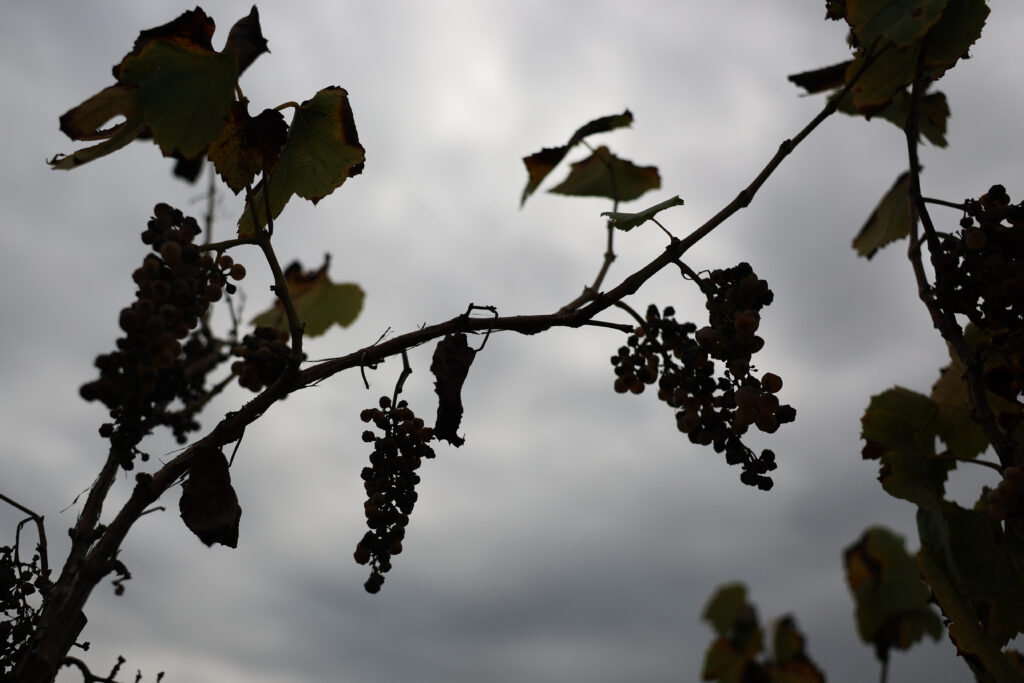
For more than a century, Lodi’s grape growers have supplied the old wineries that make this Californian city famous. But rocketing costs, falling demand and competition from imports mean some are now abandoning their vineyards.Randy Baranek, whose family has farmed these hillsides for generations, said thousands of acres (hectares) of vines — a quarter of Lodi’s production — have been removed in the last two years.”I’ve never seen anything like this,” he told AFP.Baranek said an acre of vines can produce between eight and ten tons of grapes, which can be sold for a maximum of $3,000.”Our costs are between $3,000 and $4,500 an acre to farm,” he said, as he picked his way through abandoned Chardonnay vines. “We’re twirling the toilet.”Even ripping out the vines is difficult, said Baranek, with California’s strict environmental rules making it expensive to convert a field, prompting some farmers to leave them to go wild.Such abandoned plots have become commonplace in Lodi, where around 130 varieties of grapes are grown, and which is known particularly for its Zinfandels.- Slowing demand -The decline in production has been consistent over the last few years, reaching its lowest point in two decades in 2024, when 2.9 million tons of grapes were harvested, said Stuart Spencer, executive director of the Lodi Winegrape Commission. This year, that figure is expected to fall by a further 400,000 tons.Spencer says a shift in the shape of the wine market in the United States is at the root of the changes.After three decades of growth, in which California, Oregon and Washington state forged a domestic consumer base previously enamored with the Old World wines of France, Italy and Spain, the last three years have been challenging.”The whole spectrum of those that contribute to the wine industry are struggling right now,” he said.On the consumer side, changing tastes and habits mean “people are just drinking less,” he said.The economy is also crimping demand, said Spencer.”The inflation we’ve seen over the last few years is really impacting the consumer’s wallet.”Vintners are reacting to this slowdown in demand by seeking out other suppliers.”One of the big changes we’ve seen here in California is our largest wineries, who are also the largest grape buyers, are choosing to import cheap, bulk wine instead of purchasing local grapes,” said Spencer.That price differential, he says, is the result of a skewed market.”European wine growers are heavily subsidized by the EU… So we are at a disadvantage. We are not playing on a fair, level playing field.”- Almonds -Some farmers are reluctantly giving up the grapes, at least on a portion of their land, opting instead for in-demand and lower-cost products like almonds.It is not a decision they take lightly, because replanting a vineyard can cost tens of thousands of dollars. It can also affect the wider community, with fewer workers needed for crops like almonds, whose harvest is largely automated.”There’s no other talk on the streets; we’re all very worried,” said one worker who has toiled in the area’s vineyards for ten years. “I don’t know what I would do without this.” Kevin Phillips is among those who have made the leap, converting one of his generations-old vineyards to an almond orchard.The area has good water supplies — key for thirsty almond trees — and the crop can cost just a quarter of what it does to farm grapes, he said.But one of the major attractions for a farmer is that demand is robust, and selling them is very straightforward.”With wine grapes, you’ve really got to go out there and you’ve got to talk to wineries, you’ve got to make connections, you’ve got to hope that things work, you’ve got to hope that all the stars line up,” he said.”Almonds, you don’t have to talk to anybody. There’s just a demand.”For Phillips, who said he made the difficult decision to rip out his vines after a few bottles of wine, the move is bittersweet.”It’s so much easier” to farm almonds, he said. “And I hate to say this, because I’m a wine guy.”
Major California freeway shut amid US military live-fire exercise

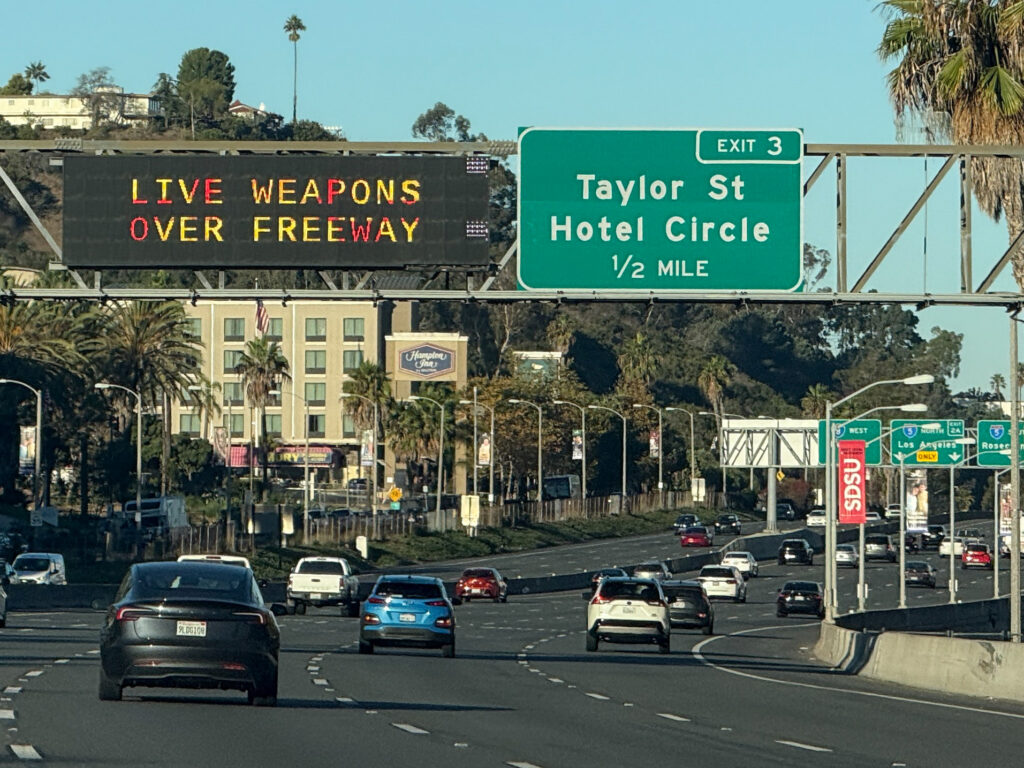
A major US freeway in California was shut Saturday due to the US Marine Corps firing live artillery over the roadway as part of ceremonies marking its 250th anniversary, an event attended by Vice President JD Vance.The closure of a 17-mile (27-kilometer) stretch of Interstate 5, which links Los Angeles and San Diego, snarled traffic for hours and set off another spat between California’s liberal governor and Republican Donald Trump’s White House.”The President is putting his ego over responsibility with this disregard for public safety,” said Governor Gavin Newsom, a frequent Trump critic who is expected to make a White House run in 2028.”Firing live rounds over a busy highway isn’t just wrong — it’s dangerous.”Signs near the interstate warned on Saturday: “Live weapons over freeway.”The order to shut the freeway came after California Highway Patrol officials warned that live munitions flying overhead would distract drivers on the oceanfront stretch of Interstate 5 near Camp Pendleton.In a statement, the Marine Corps insisted there was no risk to the public.”Artillery pieces have historically been fired during routine training from land-based artillery firing points west of the I-5 into impact areas east of the interstate within existing safety protocols and without the need to close the route,” it said in a statement. “This is an established and safe practice.”The massive Marine exercise featured fighter jet flyovers, amphibious ships, explosions in a simulated village and Navy SEALS dropping into the Pacific Ocean from helicopters.In his address, Vance said the Trump administration was focused on supporting Marines and removing “woke” priorities that he argued have weakened the US armed forces.”When officials try to shift focus to mandating diversity quotas, or they try to inject partisan politics into the American armed forces, they impede the Marine Corps’s ability to do its best work. “And that’s why the secretary of war and the president of the United States have stood so firmly against that crap,” Vance, a Marine veteran, told the assembled troops.The Marine display came the same day that millions took to the streets from coast to coast in the United States to protest the hardline policies of the Trump administration, which have included the dismantling of diversity and equity programs. In June, Trump ordered National Guard troops to Los Angeles to support federal officials in carrying out sweeping immigration raids and to tamp down local protests. The deployment, which also included hundreds of Marines, was criticized by Newsom and local officials, who argued that the relatively small demonstrations could have been easily handled by city and state law enforcement.

China’s power paradox: record renewables, continued coal

Call it the China power paradox: while Beijing leads the world in renewable energy expansion, its coal projects are booming too.As the top emitter of greenhouse gases, China will largely determine whether the world avoids the worst effects of climate change.On the one hand, the picture looks positive. Gleaming solar farms now sprawl across Chinese deserts; China installed more renewables last year than all existing US capacity; and President Xi Jinping has made the country’s first emissions reduction pledges.Yet in the first half of this year, coal power capacity also grew, with new or revived proposals hitting a decade high.China accounted for 93 percent of new global coal construction in 2024, the Centre for Research on Energy and Clear Air (CREA) found.One reason is China’s “build before breaking” approach, said Muyi Yang, senior energy analyst at think tank Ember.Officials are wary of abandoning the old system before renewables are considered fully operational, Yang said.”Think of it like a child learning to walk,” he told AFP.”There will be stumbles — like supply interruptions, price spikes — and if you don’t manage those, you risk undermining public support.”Policymakers remain scarred by 2021–22 power shortages tied to pricing, demand, grid issues and extreme weather.While grid reform and storage would prevent a repeat, officials are hedging with new coal capacity, even if it sits idle, experts said.”There’s the basic bureaucratic impulse to make sure that you don’t get blamed,” said Lauri Myllyvirta, CREA co-founder and lead analyst.”They want to make absolutely sure that they don’t block one possible solution.”- Grid and transmission -There’s also an economic rationale, said David Fishman, a China power expert at Lantau Group, a consultancy.China’s electricity demand has increased faster than even record-breaking renewable installations.That may have shifted in 2025, when renewables finally met demand growth in the first half of the year. But slower demand played a role, and many firms see coal remaining profitable.Grid and transmission issues also make coal attractive.Large-scale renewables are often in energy-rich, sparsely populated regions far from consumers.Sending that power over long distances raises the cost and “incentivises build-out of local energy capacity,” Fishman told AFP.China is improving its infrastructure for long-distance power trading, “but it’s definitely not where it needs to be”, he added.Coal also benefits from being a “dispatchable resource” — easily ramped up or down — unlike solar and wind, which depend on weather.To increase renewables, “you have to make the coal plants operate more flexibly… and make space for variable renewables,” Myllyvirta said.China’s grid remains “very rigid”, and coal-fired power plants are “the beneficiaries”, he added.- ‘Instrumental’ economic driver -Other challenges loom. The end of feed-in tariffs means new renewable projects must compete on the open market.Fishman argues that “green power demand is insufficient to keep capacity expansion high”, though the government has policy levers to tip the balance, including requiring companies to use more renewables.China wants 3,600 gigawatts of wind and solar by 2035, but that may not meet future demand, risking further coal increases.Still, coal additions do not always equal coal emissions — China’s fleet currently runs at only 50 percent capacity.And the “clean energy” sector — including solar, wind, nuclear, hydropower, storage and EVs — is a major economic driver.CREA estimates it contributed a record 10 percent to China’s gross domestic product last year, and drove a quarter of growth.”It has become completely instrumental to meeting economic targets,” said Myllyvirta.”That’s the main reason I’m cautiously optimistic in spite of these challenges.”

Netanyahu says Gaza war not over until Hamas disarms

Israeli Prime Minister Benjamin Netanyahu warned on Saturday that the war in Gaza would not be over until Hamas was disarmed and the Palestinian territory demilitarised.His declaration came as Hamas’s armed wing, the Ezzedine Al-Qassam Brigades, handed over the remains of two further hostages on Saturday night under a US-brokered ceasefire agreement.Netanyahu’s office said late Saturday that a Red Cross team had received the remains of two hostages from Hamas and handed them to Israeli forces in Gaza, from where they would be taken to Israel to be identified.The issue of the dead hostages still in Gaza has become a sticking point in the implementation of the first phase of the ceasefire. Israel has linked the reopening of the key Rafah crossing to the territory to the recovery of the hostages’ remains.Netanyahu cautioned that completing the ceasefire’s second phase was essential to ending the war and involved the disarming of Hamas and the demilitarisation of the Gaza Strip.”When that is successfully completed — hopefully in an easy way, but if not, in a hard way — then the war will end,” he added in an appearance on right-wing Israeli Channel 14.Hamas has so far resisted the idea and since the pause in fighting has moved to reassert its control over Gaza.The US State Department on Saturday said it had “credible reports” that Hamas was planning an imminent attack against civilians in Gaza, warning that would be a “ceasefire violation”.”Should Hamas proceed with this attack, measures will be taken to protect the people of Gaza and preserve the integrity of the ceasefire,” it said in a statement, without elaborating on the nature or target of such an attack.- Rafah crossing closed -Under the ceasefire deal brokered by US President Donald Trump, Hamas has so far released all 20 living hostages, along with the remains of nine Israelis and one Nepalese.In exchange, Israel has released nearly 2,000 Palestinian prisoners and 135 other bodies of Palestinians since the truce came into effect on October 10.Hamas has said it needs time and technical assistance to recover the remaining bodies, which it says are buried under Gaza’s rubble.Netanyahu’s office said he had “directed that the Rafah crossing remain closed until further notice”.”Its reopening will be considered based on how Hamas fulfils its part in returning the hostages and the bodies of the deceased, and in implementing the agreed-upon framework,” it said, referring to the week-old ceasefire deal.Hamas warned late Saturday that the closure of the Rafah crossing would cause “significant delays in the retrieval and transfer of remains”.- Digging latrines -Further delays to the reopening could also complicate the task facing Tom Fletcher, the UN head of humanitarian relief, who was in northern Gaza on Saturday.”To see the devastation — this is a vast part of the city, just a wasteland — and it’s absolutely devastating to see,” he told AFP.Fletcher said the task ahead for the UN and aid agencies was a “massive, massive job”.He said he had met residents returning to destroyed homes who were trying to dig latrines in the ruins.”We have a massive 60-day plan now to surge in food, get a million meals out there a day, start to rebuild the health sector, bring in tents for the winter, get hundreds of thousands of kids back into school.”- Gaza killings continue -Some violence has persisted despite the ceasefire. Gaza’s civil defence agency, which operates under Hamas authority, said on Saturday that it had recovered the bodies of nine Palestinians — two men, three women and four children — from the Shaaban family after Israeli troops fired two tank shells at a bus.Two more victims were blown apart in the blast and their remains have yet to be recovered, it said.At Gaza City’s Al-Ahli Hospital, the victims were laid out in white shrouds as their relatives mourned.”My daughter, her children and her husband; my son, his children and his wife were killed. What did they do wrong?” demanded grandmother Umm Mohammed Shaaban.The Israeli military said it had fired on a vehicle that approached the so-called “yellow line”, to which its forces withdrew under the terms of the ceasefire, and gave no estimate of casualties.burs-rlp/aha

Ligue 1: Greenwood marque quatre fois, l’OM passe en tête

Les premiers résultats du week-end leur étaient favorables et les Marseillais n’ont pas trébuché: très net vainqueur du Havre (6-2) samedi au Stade Vélodrome, grâce notamment à un retentissant quadruplé de Mason Greenwood, l’OM est désormais seul leader de la Ligue 1.Un point d’avance sur le Paris SG et deux sur Strasbourg, qui se sont neutralisés vendredi en ouverture de la 8e journée (3-3), ce n’est rien. Mais l’OM est devant, tout de même, et vient d’enchaîner cinq victoires consécutives en championnat.Cette série est le marqueur d’une force nouvelle de l’équipe de Roberto De Zerbi, capable en outre de marquer six buts dans une soirée où elle a pourtant longtemps été laborieuse, loin de la formation brillante du mois de septembre, qui a tant plu à l’entraîneur italien.Samedi, la dernière demi-heure a été un feu d’artifice mais, sous les yeux de Steve Mandanda, dont le maillot N.30 a été définitivement retiré par l’OM, les joueurs de De Zerbi ont d’abord commencé cette partie qui pouvait leur rapporter gros sur un tout petit tempo.Dominés mais loin d’être asphyxiés, les Havrais ont ainsi été les premiers dangereux par Fodé Doucouré (8e) et ils ont surtout été les premiers à marquer.- Penalty et rouge -A la 24e minute, Yassine Kechta a en effet ouvert la marque d’une jolie frappe croisée, après s’être joué de Greenwood et Matt O’Riley, pas les défenseurs les plus féroces du groupe de De Zerbi.Jeffrey De Lange, titularisé pour laisser Geronimo Rulli se reposer un peu après ses voyages avec l’Argentine, a encore dû intervenir devant Doucouré (29e) et l’OM semblait alors bien fragile.Mais tout a basculé dans la minute suivante sur une action à la fois limpide et confuse: la main de Gautier Lloris, menacé par Pierre-Emerick Aubameyang, était évidente mais quelle sanction allait chosir l’arbitre Bastien Dechepy ?Après avoir consulté les images, il a assez logiquement expulsé le défenseur havrais, initialement averti, et il a confirmé le penalty accordé à l’OM, la position exacte de la faute de main de Lloris semblant difficile à établir.Mais Greenwwod, lui, n’a pas hésité et a transformé le penalty pour remettre l’OM à hauteur (1-1, 34e).Désormais en supériorité numérique, les Marseillais ont accentué leur domination mais ont été maladroits, comme Igor Paixao et surtout Angel Gomes dans le temps additionnel, ou Aubameyang qui, juste après la pause, aurait pu mieux faire sur une passe en or de Greenwood.- Vaz récompensé -Mais au fil des minutes et de la fatigue qui gagnait le camp d’en face, l’OM a commencé à trouver des espaces de partout et, après sa première période paresseuse, Marseille a fini très fort, porté par la classe et l’efficacité de Greenwood.En à peine plus de dix minutes, l’Anglais a en effet ajouté trois buts à son penalty de la première période pour s’offrir un quadruplé et une sortie sous l’ovation debout du Vélodrome.A la 67e minute, il a d’abord superbement conclu un beau mouvement lancé par l’entrant Robinio Vaz et Paixao (2-1). Puis il a porté le score à 3-1 sur une bonne passe du même Vaz (72e) avant de profiter d’un débordement de Benjamin Pavard pour couler définitivement les Havrais (4-1, 76e).Ensuite, le spectacle s’est poursuivi avec un but mérité pour le jeune Vaz (5-1, 88e), une volée magnifique d’Abdoulaye Touré pour consoler un peu les Havrais (5-2, 90+2) puis un dernier but d’Amir Murillo dans la minute suivante pour conclure le festival (6-2).Nouveau leader, l’OM va maintenant devoir gérer une semaine à deux déplacements, mercredi sur la pelouse du Sporting Lisbonne en Ligue des Champions, puis le week-end prochain à Lens. Les Marseillais seront attendus et ils ont maintenant la pression des premiers de la classe. Mais on dirait qu’ils ont quelques armes.

Espagne: Araujo libère le Barça, le Real Madrid sous pression

Inquiétant défensivement, le FC Barcelone a évité une nouvelle débâcle samedi dans le derby catalan face à Gérone et s’est imposé sur le fil (2-1) grâce à son défenseur Ronald Araujo, permettant au club catalan de reprendre provisoirement la première place.L’international uruguayen, entré en jeu à la 82e minute pour peser sur la défense adverse, a offert un succès inespéré aux siens en reprenant un centre de Frenkie de Jong au bout du temps additionnel (90e+3, 2-1) et propulsé le Barça (1er, 22 points) en tête, devant le Real (2e, 21 points).À une semaine du Clasico, le champion d’Espagne en titre, battu par le PSG (2-1) puis corrigé à Séville (4-1) avant la trêve, met la pression sur son éternel rival, qui se déplace dimanche (21h) à Getafe (11e, 11 points), en banlieue de Madrid.Malgré le retour de son prodige Lamine Yamal, passeur décisif pour Pedri (13e, 1-0), le club blaugrana avait été rapidement repris par son modeste voisin (18e), qui a égalisé d’un retourné acrobatique du Belge Axel Witsel (20e, 1-1). – Flick suspendu pour le Clasico -Les hommes d’Hansi Flick, exclu en fin de partie pour des protestations envers l’arbitre, et qui devrait être suspendu pour le Clasico, ont ensuite sérieusement tangué et ont évité un troisième naufrage de rang grâce au manque cruel d’efficacité des Gironistes.En recherchant systématiquement la profondeur dans le dos de la défense catalane toujours très haute pour jouer le hors-jeu, les visiteurs se sont procurés quatre situations de but gâchées tour à tour par Vanat (23e), Portu (24e), Bryan Gil (39e) et Witsel (41e).”Quand on presse mal devant, avec une ligne défensive aussi haute, cela devient trop facile pour l’adversaire de se créer des occasions. Avec seulement une passe dans l’espace ils peuvent se retrouver en face à face avec le gardien…”, a concédé Pedri après la rencontre. “On doit s’améliorer sur cet aspect, mais également avec le ballon, car nous ne sommes pas aussi adroits que l’an dernier”, a poursuivi le milieu de la Roja.Les Blaugranas auraient pu prendre l’avantage bien avant le geste salvateur d’Araujo (90e+3), mais ils ont également manqué de réussite, avec notamment une barre sur coup franc de l’Anglais Marcus Rashford (30e) et un poteau du jeune Fermin Lopez (52e), suivis de plusieurs parades du gardien argentin Paulo Gazzaniga (54e, 57e, 66e).Les 22 joueurs n’ont pas disputé les 20 premières secondes du match, comme sur les autres pelouses de Liga, pour protester contre la délocalisation de la rencontre Villarreal – FC Barcelone aux États-Unis, dénoncée y compris par des joueurs catalans dont Frenkie De Jong.Plus tôt samedi, Majorque (15e, 8 points) a renversé (3-1) le bourreau des Barcelonais avant la trêve, le Séville FC (7e, 13 points), grâce à un doublé express de l’international espoirs espagnol Mateo Joseph (72e, 77e).L’ailier brésilien Antony, auteur d’un superbe doublé, a lui permis au Betis Séville (5e, 16 points) de décrocher le point du match nul (2-2) à la 94e minute dans le choc face à Villarreal (3e, 17 points).Ce scénario a profité à l’Atlético Madrid (4e, 16 points), qui réintègre le Top 4 après sa courte victoire 1-0 au Metropolitano contre Osasuna (12e, 10 points), grâce au premier but du milieu argentin Thiago Almada, ex-joueur de l’Olympique Lyonnais, servi par son compatriote Giuliano Simeone (69e), fils de l’entraîneur des Colchoneros.