La bataille parlementaire autour du budget démarre lundi

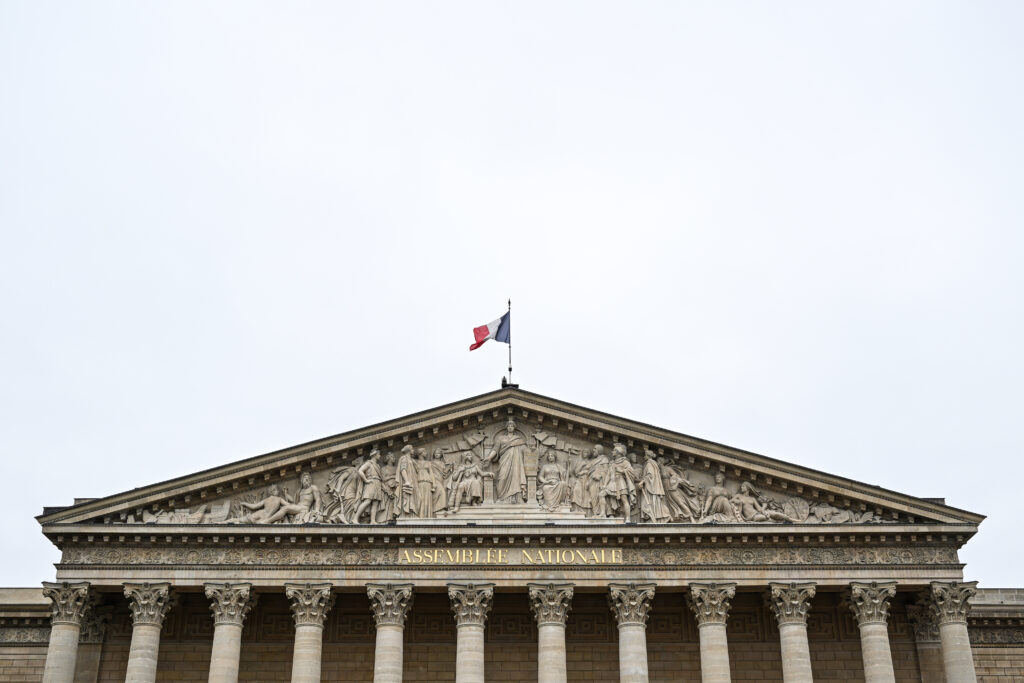
La bataille parlementaire est lancée: la commission des Finances de l’Assemblée nationale commence lundi à examiner le projet de budget de l’Etat pour 2026, dans un climat d’antagonisme politique exacerbé et des délais contraints.Après l’échec de la censure du gouvernement minoritaire de Sébastien Lecornu, les groupes politiques ont l’intention d’amender en profondeur un projet de budget jugé insatisfaisant, préfigurant des échanges électriques entre un socle commun fracturé, une gauche traversée de tensions et une extrême droite favorable à une union des droites.  Vendredi, une autre donnée s’est ajoutée au tableau: l’agence de notation S&P a annoncé abaisser d’un cran la note de la France, invoquant une incertitude “élevée” sur les finances publiques, et ce “malgré la présentation cette semaine du projet de budget 2026”.Pour l’année prochaine, le gouvernement ambitionne un effort global d’une trentaine de milliards d’euros, entre nouveaux prélèvements (14 milliards) et économies de dépenses (17 milliards) afin de ramener le déficit public à 4,7% du produit intérieur brut (PIB). Il accepterait d’assouplir cet objectif jusqu’à “sous 5%” pour permettre des compromis. De lundi 09H00 à mercredi soir, la commission des Finances se penchera sur la première partie du projet de loi de finances (PLF), celle consacrée aux recettes, pour une arrivée prévue vendredi dans l’hémicycle et un vote solennel le 4 novembre. Suivront l’examen des dépenses, puis le Sénat.   Le gouvernement a promis de laisser le dernier mot au Parlement, renonçant à l’article 49.3 de la Constitution, qui permet l’adoption d’un texte sans vote. Les élus disposent en tout de 70 jours pour examiner le PLF à compter du dépôt du texte à l’Assemblée nationale le 14 octobre, soit jusqu’au 23 décembre, avec une promulgation avant le 31 décembre.  – “Très injuste” -Parmi les mesures du PLF figurent une maîtrise des dépenses de l’Etat (sauf pour la défense), le maintien d’un impôt exceptionnel sur les hauts revenus et, partiellement, d’une surtaxe sur les bénéfices des plus grandes entreprises, une taxe sur les holdings patrimoniales, le gel du barème de l’impôt sur le revenu, un abattement forfaitaire sur les revenus des retraités ou la suppression de plus de 3.000 postes de fonctionnaires.  La gauche défendra “la même volonté de corriger un budget très injuste”, a déclaré le patron du PS, Olivier Faure, qui a évité la censure au gouvernement en contrepartie d’une suspension de la réforme des retraites. Les socialistes ont déjà annoncé qu’ils déposeraient un amendement au PLF prévoyant la mise en place d’une taxe Zucman, rejetée par le Premier ministre. Cette taxe, du nom de l’économiste Gabriel Zucman, prévoit de faire payer aux 1.800 contribuables ayant au moins 100 millions d’euros de patrimoine un impôt minimum de 2% de ce patrimoine, y compris professionnel.Au Rassemblement national, on promet de “se battre pied à pied pour protéger les Français”. “Article par article, amendement par amendement (…) on fera le maximum pour éviter la casse, les taxes, les sacrifices”, a prévenu le député Jean-Philippe Tanguy.Au total, environ 1.800 amendements ont été déposés par les députés. Mais l’irrecevabilité d’une partie d’entre eux pourrait réduire le nombre.”Le vrai enjeu, ça va être la séance” dans l’hémicycle, a souligné, le président de la commission des finances, l’Insoumis Eric Coquerel, dimanche sur franceinfo, car les députés repartiront alors de la copie initiale du gouvernement.Le camp gouvernemental appelle lui au compromis. “Ne pas avoir de budget serait un aveu d’impuissance collective énorme”, a mis en garde la ministre chargée des Comptes publics Amélie de Montchalin samedi dans un entretien avec Ouest-France. – “Equilibre” -De son côté, la commission des Affaires sociales débattra à partir de jeudi du projet de loi de financement de la sécurité sociale (PLFSS), après l’audition mardi des ministres concernés. Le texte contient des économies tous azimuts: gel des pensions, reste à charge supérieur sur les médicaments et les consultations ou contribution patronale rehaussée sur les titres restaurant et chèques vacances.C’est en novembre que le gouvernement soumettra un amendement de suspension de la réforme des retraites.Si le Parlement ne se prononce pas dans les délais (50 jours pour le budget de la Sécu), le gouvernement peut exécuter le budget par ordonnance. Une loi spéciale peut aussi être votée permettant à l’Etat de continuer à percevoir les impôts existants l’an prochain, tandis que ses dépenses seraient gelées, en attendant le vote d’un réel budget.

Foot: le Maroc remporte le Mondial U20 contre l’Argentine

Le Maroc a créé la surprise dimanche au Chili en remportant pour la première fois le Mondial des moins de 20 ans, grâce à une victoire 2-0 contre les favoris argentins à Santiago.L’attaquant Yassir Zabiri a signé les deux buts de son équipe à la 12e puis à la 29e, rapportant le trophée aux siens devant quelque 43.000 spectateurs, la majorité acquis à la cause des Marocains, nouveaux venus dans cette compétition.Leur succès est synonyme de deuxième titre pour le continent africain en Coupe du monde U20 après le sacre du Ghana en 2009.Le Maroc semble encore surfer sur sa grande performance au Mondial-2022 au Qatar, où sa sélection A avait terminé quatrième, avant que son équipe olympique masculine ne décroche le bronze deux ans plus tard aux JO de Paris. En 2030, le pays co-organisera la Coupe du monde avec l’Espagne et le Portugal.Quant à l’Argentine, participante à 18 des 24 éditions du Mondial U20 et la plus prolifique avec six couronnes, elle n’a plus remporté le tournoi depuis l’édition 2007 au Canada.

Trump says Israel-Hamas ceasefire still in place after Gaza strikes

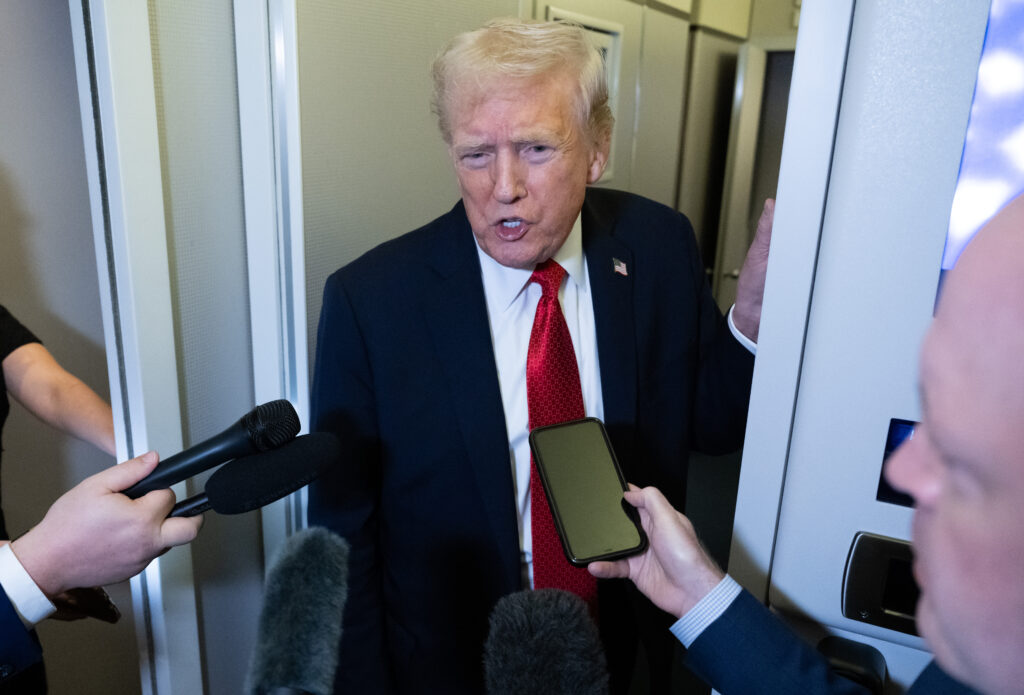
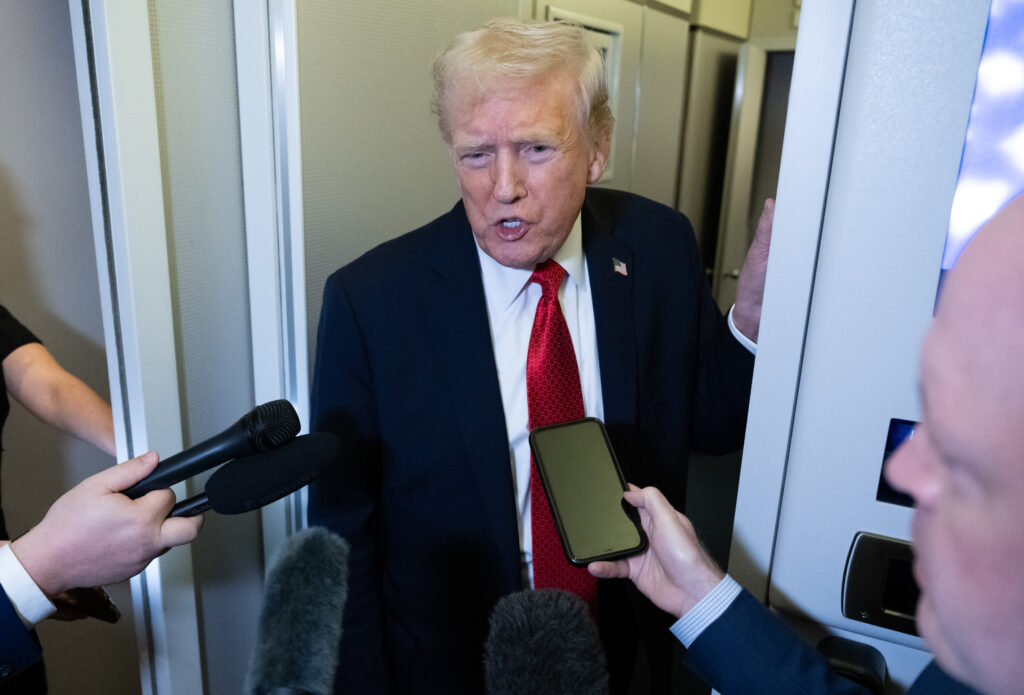
US President Donald Trump said Sunday that the ceasefire between Israel and Hamas was still in effect after the Israeli military carried out deadly strikes on Gaza over apparent truce violations by the Palestinian armed group. “Yeah, it is,” Trump told reporters aboard Air Force One when asked if the ceasefire was still in place. He also suggested that Hamas leadership was not involved in any alleged breaches and instead blamed “some rebels within.””But either way, it’s going to be handled properly. It’s going to be handled toughly, but properly,” Trump added.Israel said it had resumed enforcing the Gaza ceasefire after it struck Hamas positions Sunday, having accused the group of targeting its troops in the most serious violence since the nine-day-old truce began.Gaza’s civil defense agency, which operates under Hamas authority, said at least 45 people had been killed across the territory in Israeli strikes. Israel’s military said it was looking into the reports of casualties.Trump expressed hope that the ceasefire he helped broker would hold. “We want to make sure that it’s going to be very peaceful with Hamas,” he said. “As you know, they’ve been quite rambunctious. They’ve been doing some shooting, and we think maybe the leadership isn’t involved in that.”Shortly before Trump’s comments, his vice president, JD Vance, downplayed the renewed violence in Gaza, telling reporters there would be “fits and starts” in the truce. “Hamas is going to fire on Israel. Israel is going to have to respond,” he said. “So we think that it has the best chance for a sustainable peace. But even if it does that, it’s going to have hills and valleys, and we’re going to have to monitor the situation.”The truce in the Palestinian territory, which took effect on October 10, halted more than two years of devastating war that has seen Israel kill tens of thousands and reduce much of Gaza to rubble, after Hamas’s October 7, 2023, attack.The deal established the outline for hostage and prisoner exchanges, and was proposed alongside an ambitious roadmap for Gaza’s future. But it has quickly faced challenges to its implementation. Vance called on Gulf Arab countries to establish a “security infrastructure” in order to ensure that Hamas is disarmed, a key part of the peace deal.”The Gulf Arab states, our allies, don’t have the security infrastructure in place yet to confirm that Hamas is disarmed,” he said.Vance said that a member of the Trump administration was “certainly” going to visit Israel “in the next few days” to monitor the situation.He did not confirm who that would be, but said “it might be me.”

Trump says Israel-Hamas ceasefire still in place after Gaza strikes

US President Donald Trump said Sunday that the ceasefire between Israel and Hamas was still in effect after the Israeli military carried out deadly strikes on Gaza over apparent truce violations by the Palestinian armed group. “Yeah, it is,” Trump told reporters aboard Air Force One when asked if the ceasefire was still in place. He also suggested that Hamas leadership was not involved in any alleged breaches and instead blamed “some rebels within.””But either way, it’s going to be handled properly. It’s going to be handled toughly, but properly,” Trump added.Israel said it had resumed enforcing the Gaza ceasefire after it struck Hamas positions Sunday, having accused the group of targeting its troops in the most serious violence since the nine-day-old truce began.Gaza’s civil defense agency, which operates under Hamas authority, said at least 45 people had been killed across the territory in Israeli strikes. Israel’s military said it was looking into the reports of casualties.Trump expressed hope that the ceasefire he helped broker would hold. “We want to make sure that it’s going to be very peaceful with Hamas,” he said. “As you know, they’ve been quite rambunctious. They’ve been doing some shooting, and we think maybe the leadership isn’t involved in that.”Shortly before Trump’s comments, his vice president, JD Vance, downplayed the renewed violence in Gaza, telling reporters there would be “fits and starts” in the truce. “Hamas is going to fire on Israel. Israel is going to have to respond,” he said. “So we think that it has the best chance for a sustainable peace. But even if it does that, it’s going to have hills and valleys, and we’re going to have to monitor the situation.”The truce in the Palestinian territory, which took effect on October 10, halted more than two years of devastating war that has seen Israel kill tens of thousands and reduce much of Gaza to rubble, after Hamas’s October 7, 2023, attack.The deal established the outline for hostage and prisoner exchanges, and was proposed alongside an ambitious roadmap for Gaza’s future. But it has quickly faced challenges to its implementation. Vance called on Gulf Arab countries to establish a “security infrastructure” in order to ensure that Hamas is disarmed, a key part of the peace deal.”The Gulf Arab states, our allies, don’t have the security infrastructure in place yet to confirm that Hamas is disarmed,” he said.Vance said that a member of the Trump administration was “certainly” going to visit Israel “in the next few days” to monitor the situation.He did not confirm who that would be, but said “it might be me.”

OpenAI big chip orders dwarf its revenues — for now

OpenAI is ordering hundreds of billions of dollars worth of chips in the artificial intelligence race, raising questions among investors about how the startup will finance these purchases.In less than a month, the San Francisco startup behind ChatGPT has committed to acquiring a staggering 26 gigawatts of sophisticated data processors from Nvidia, AMD, and Broadcom — more than 10 million units that would consume power equivalent to 20 standard nuclear reactors.”They will need hundreds of billions of dollars to live up to their obligations,” said Gil Luria, managing director at D.A. Davidson, a financial consulting firm.The challenge is daunting: OpenAI doesn’t expect to be profitable until 2029 and is forecasting billions in losses this year, despite generating about $13 billion in revenue.OpenAI declined to comment on its financing strategy. However, in a CNBC interview, co-founder Greg Brockman acknowledged the difficulty of building sufficient computing infrastructure to handle the “avalanche of demand” for AI, noting that creative financing mechanisms will be necessary.- Creative financing -Nvidia, AMD, and Broadcom all declined to discuss specific deals with OpenAI.Silicon Valley-based Nvidia has announced plans to invest up to $100 billion in OpenAI over several years to build the world’s largest AI infrastructure. OpenAI would use those funds to buy chips from Nvidia in a game of “circular financing,” with Nvidia recouping its investment by taking a share in OpenAI, one of its biggest customers and the world’s hottest AI company.AMD has taken a different approach, offering OpenAI options to acquire equity in AMD — a transaction considered unusual in financial circles and a sign that it is AMD that is seeking to seize some of OpenAI’s limelight with investors.”It represents another unhealthy dynamic,” Luria said, suggesting the arrangement reveals AMD’s desperation to compete in a market dominated by Nvidia.- Crash or soar? -The stakes couldn’t be higher. OpenAI co-founder and CEO Sam Altman “has the power to crash the global economy for a decade or take us all to the promised land,” Bernstein Research senior analyst Stacy Rasgon wrote in a note to investors this month. “Right now, we don’t know which is in the cards.”Even selling stakes in OpenAI at its current $500 billion valuation won’t cover the startup’s chip commitments, according to Luria, meaning the company will need to borrow money. One possibility: using the chips themselves as collateral for loans.Meanwhile, deep-pocketed competitors like Google and Meta can fund their AI efforts from massive profits generated by their online advertising businesses — a luxury OpenAI doesn’t have.The unbridled spending has sparked concerns about a speculative bubble reminiscent of the late 1990s dot-com frenzy, which collapsed and wiped out massive investments.However, some experts see key differences. “There is very real demand today for AI in a way that seems a little different than the boom in the 1990s,” said Josh Lerner, a Harvard Business School professor of investment banking.CFRA analyst Angelo Zino pointed to OpenAI’s remarkable growth and more than 800 million ChatGPT users as evidence that a partnership approach to financing makes sense.Still, Lerner acknowledges the uncertainty: “It’s a real dilemma. How does one balance this future potential with the speculative nature” of its investments today?

Aussie PM meets Trump with critical minerals on offer

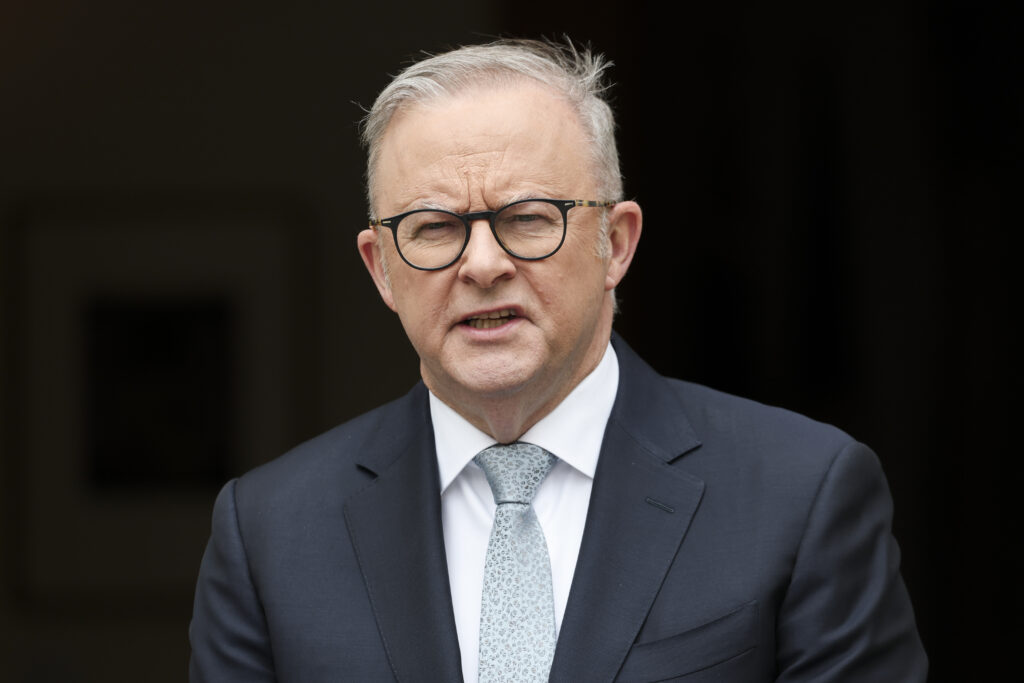
Australian Prime Minister Anthony Albanese meets with President Donald Trump in Washington on Monday, touting his country’s abundant critical minerals as a way to loosen China’s grip over global supplies.At the same time, Albanese is hoping to secure Trump’s backing for a 2021 pact to arm Australia with silent, nuclear-powered attack submarines.Australians have a mostly unfavourable view of the Trump administration, polling shows, though the country relies on the United States to balance China’s expanding military clout in the Pacific region.In the run-up to the White House talks, Australia is selling itself to Washington as a future source of critical minerals including rare earths — of which China is by far the world’s largest supplier.Australia sits on deposits of lithium, cobalt and manganese as well as rare earth metals used in technologies from semiconductors to defence hardware, electric cars and wind turbines.Albanese, who said he looked forward to a “positive and constructive” meeting with Trump, announced plans in April for a strategic reserve of critical minerals to provide to “key partners” such as the United States.The reserve is designed to help relax China’s chokehold on global critical minerals production, which it has been accused of leveraging to pressure trade partners.Trump this month threatened 100-percent tariffs on China in response to its latest rare earths export curbs, though he later eased his stance with a social media post saying: “It will all be fine.”- China the ‘focal point’ -Australia’s economy minister, Treasurer Jim Chalmers, said his country had “a lot to offer the world” in critical minerals.”We will engage with our partners to make sure that we can be a very reliable supplier to meet the critical minerals needs of this country, here in the US, and other markets around the world,” Chalmers told a news conference in Washington on Friday.But the treasurer has also taken a swipe at impediments to global trade, raising concerns over the economic impact of US tariffs, including a 10-percent levy on Australian goods, and the US-China trade spat.On defence, Australia’s government will be hoping for Trump’s blessing of the 2021 agreement to equip its navy with at least three US Virginia-class submarines within 15 years, and the technology to build its own vessels in the future.The AUKUS submarine deal between Australia, the United Kingdom and the United States could cost Australia up to US$235 billion over the next 30 years, according to Canberra.The nuclear-powered vessels lie at the heart of Australia’s strategy of improving its long-range strike capabilities in the Pacific.But the Trump administration said in June it had put AUKUS under review to ensure it aligned with his “America First agenda”, with some critics saying the United States did not produce enough Virginia-class submarines to supply Australia as well as its own navy.Australia’s government says it has received no indications that Washington will withdraw support for AUKUS, which is expected to be raised in the White House talks.”AUKUS should be given the green light and once again confirmed as the foundation of Australia’s security and vital to the United States’ interest in competing with a rising Beijing-led authoritarian axis,” predicted Justin Bassi, executive director of the Australian Strategic Policy Institute, a think tank partly funded by Australia’s Department of Defence.”China will likely be the focal point of discussions even if it is rarely mentioned publicly: AUKUS, critical minerals, cyber and critical technologies are frontline agenda topics, and all are about China.”

Israel says halting Gaza strikes after accusing Hamas of violating truce

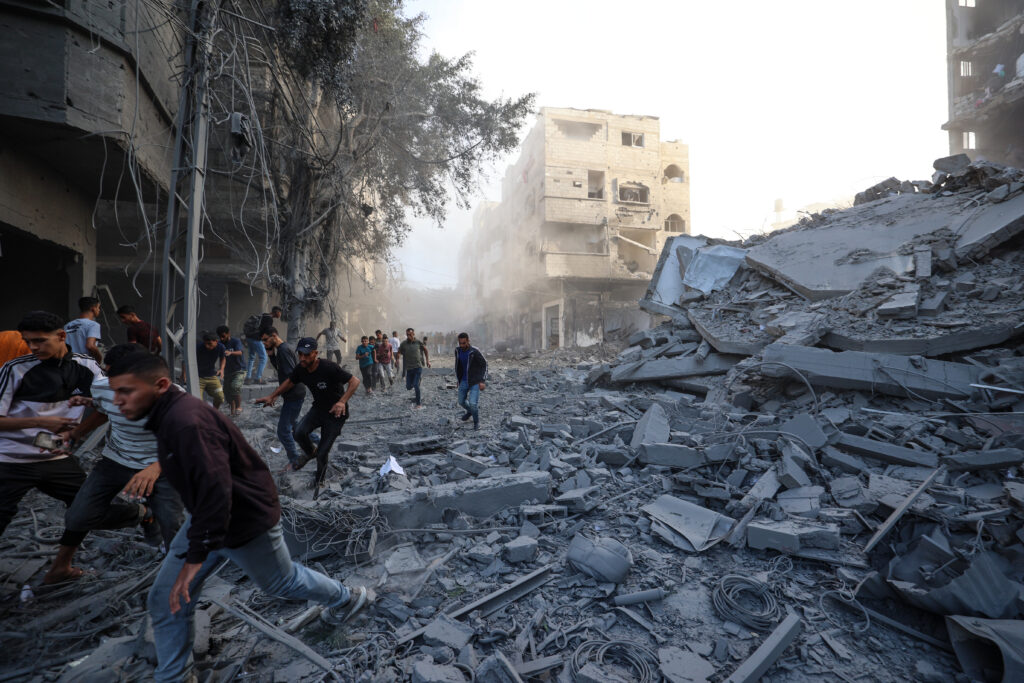
Israel said it had resumed enforcing a Gaza ceasefire after carrying out dozens of deadly strikes on Hamas positions Sunday, having accused the group of targeting its troops in the most serious violence since the nine-day-old truce began.Gaza’s civil defence agency, which operates under Hamas authority, said at least 45 people had been killed across the territory in Israeli strikes.Four hospitals in Gaza confirmed the death toll of 45 to AFP, saying they had received the dead and wounded.Israel’s military said it was looking into the reports of casualties.Later Sunday, the military said it had “renewed enforcement of the ceasefire” but vowed to “respond firmly to any violation of it”.The strikes began Sunday in response to what the Israeli military said in a statement had been a “blatant violation” of the ceasefire.The military had “begun a series of strikes against Hamas terror targets in the southern Gaza Strip”, the statement added.The Islamist group denied the accusations, one official accusing Israel of fabricating “pretexts” to resume the war.In a separate statement, the Israeli military said two of its soldiers “fell during combat in the southern Gaza Strip”. The prime minister’s office later said they were killed in the city of Rafah.A security official also told AFP that Israel was suspending the entry of aid into Gaza due to ceasefire violations.Israel repeatedly cut off aid to the territory during the war, exacerbating dire humanitarian conditions, with the United Nations saying it caused a famine in northern Gaza.- ‘Blood has returned’ -The truce in the Palestinian territory, brokered by US President Donald Trump and taking effect on 10 October, halted more than two years of devastating war between Israel and Hamas.The deal established the outline for hostage and prisoner exchanges, and was proposed alongside an ambitious roadmap for Gaza’s future. But it has quickly faced challenges to its implementation. “Earlier today, terrorists fired anti-tank missiles and opened fire on IDF (army) forces,” in Rafah, the military said in a statement.”The IDF responded with air strikes by fighter jets and artillery fire, targeting the Rafah area,” the statement said. Palestinian witnesses told AFP clashes erupted in the southern city in an area still held by Israel.One witness, a 38-year-old man who asked not to be named, said that Hamas had been fighting a local Palestinian gang known as Abu Shabab but the militants were “surprised by the presence of army tanks”.”The air force conducted two strikes from the air,” he added.Abdullah Abu Hasanin, 29, from Al‑Bureij camp in central Gaza where Israel launched strikes, said: “The situation is as if the war has returned anew.”We had hoped the agreement would hold, but the occupation respects nothing — not an agreement, not anything.”He said he had rushed to the site of the bombing to help, adding: “The scene is indescribable. Blood has returned again.”AFP images from Bureij showed Palestinians running for cover from the strikes, as well as the dead and wounded arriving at Deir al-Balah hospital, accompanied by grieving relatives.- ‘Security illusion’ -Defence Minister Israel Katz warned Hamas would “pay a heavy price for every shot and every breach of the ceasefire”, adding Israel’s response would “become increasingly severe”.A statement from Izzat Al-Rishq, a member of Hamas’s political bureau, reaffirmed the group’s commitment to the ceasefire.Israel, it said, “continues to breach the agreement and fabricate flimsy pretexts to justify its crimes”.Hamas’s armed wing insisted on Sunday that the group was adhering to the ceasefire agreement with Israel and had “no knowledge” of any clashes in Rafah.Under Trump’s 20-point plan, Israeli forces have withdrawn beyond the so-called Yellow Line. That leaves them in control of around half of Gaza, including the territory’s borders but not its main cities.Hamas in turn has released 20 surviving hostages and is in the process of returning the remaining bodies of those who have died.The war, triggered by Hamas’s October 7, 2023 attack on Israel, has killed at least 68,159 people in Gaza, according to the health ministry in the Hamas-run territory, figures the United Nations considers credible.The data does not distinguish between civilians and combatants but indicates that more than half of the dead are women and children.Hamas’s 2023 attack on Israel resulted in the deaths of 1,221 people, mostly civilians, according to an AFP tally based on official Israeli figures.- Bodies returned -On Sunday, Israel identified the latest two bodies returned overnight as Ronen Engel, a photojournalist and volunteer ambulance driver, and Thai farm worker Sonthaya Oakkharasri.Israel returned the bodies of 15 Palestinians to Gaza on Sunday, bringing the total number handed over to 150, the health ministry in the Hamas-run territory said.The issue of hostage bodies still in Gaza has become a sticking point in the ceasefire implementation.On Saturday, Israel had linked the reopening of the main gateway into the territory, the Rafah crossing, to the recovery of all of the deceased.The group has said it needs time and technical assistance to recover the remaining bodies from under Gaza’s rubble.burs-jj/rlp