China defends Russian oil purchases, slams US ‘bullying’

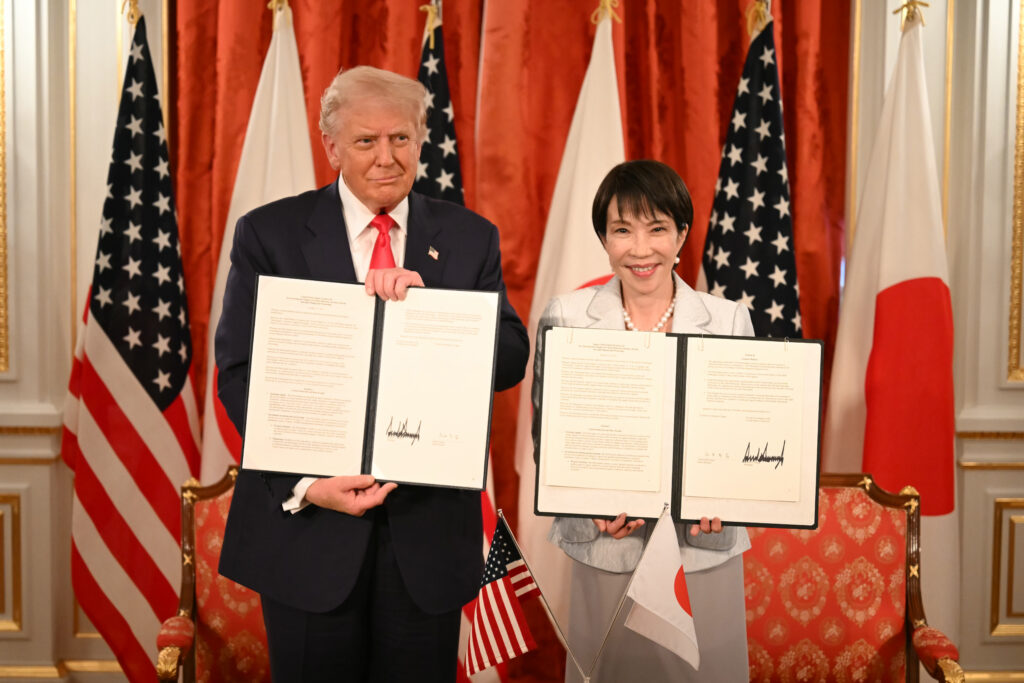
China said Thursday that its purchases of Russian oil were “legitimate” and decried recent “unilateral bullying” measures by the United States as the trade row between the two countries continues to intensify.The rebuke came after President Donald Trump said Wednesday that Indian Prime Minister Narendra Modi had promised to stop buying Russian oil, and that he would get China to follow suit.Trump has accused both China and India of funding the three-year Ukraine war through the purchases, and has also demanded that European allies immediately stop buying oil from Russia.India neither confirmed or denied it was shifting its policy.Asked on Thursday about Trump’s intention to pressure China further, Beijing’s foreign ministry defended its “normal, legitimate economic, trade, and energy cooperation with countries around the world, including Russia”.”The actions of the United States are a typical example of unilateral bullying and economic coercion,” ministry spokesman Lin Jian said at a press briefing.If China’s interests are harmed, it will “take firm countermeasures and resolutely safeguard its sovereignty”, he warned.Beijing and Moscow are key trading partners, and China has never denounced Russia’s war, nor called for it to withdraw its troops.Kyiv and Western governments have long accused Beijing of providing political and economic support for Moscow.- ‘Profoundly detrimental’ -Beijing on Thursday also criticised recent US moves to expand export controls and impose new port fees on Chinese ships, saying the measures had a “profoundly detrimental” impact on trade talks between the two superpowers.While tensions between Washington and Beijing have de-escalated from their peak, the truce remains shaky.After Beijing imposed fresh controls on the export of rare earth technologies and items, Trump said he would roll out an additional 100-percent tariff on the country’s goods from November 1.The United States announced in April it would begin applying fees to all arriving Chinese-built and operated ships after a “Section 301” investigation found Beijing’s dominance in the industry was unreasonable.Section 301 of the US Trade Act of 1974 enables Washington to impose trade penalties on countries whose practices are deemed unfair or harmful to American commerce.Beijing responded last week by announcing “special port fees” on American ships arriving at Chinese ports. Both sets of fees took effect Tuesday.Commerce ministry spokeswoman He Yongqian said Thursday the US moved ahead with the measures while “disregarding China’s sincerity in consultations”, causing “severe damage to China’s interests… (and) a profoundly detrimental impact”.”The Chinese side expresses strong dissatisfaction with and resolutely opposes the series of actions taken by the US side,” He Yongqian said.She urged Washington to “immediately rectify its erroneous practices” and respect the outcomes of recent trade talks.China’s commerce minister Wang Wentao accused the US of sparking the latest trade row during a meeting with Apple CEO Tim Cook in Beijing.”Maintaining the overall stability of China-US trade ties requires both sides to meet halfway,” Wang told the visiting American CEO according to a ministry readout.”Maintaining the overall stability of China-US trade ties requires both sides to meet halfway,” Wang said, adding that China welcomed deeper investment from Apple and remained open to foreign firms.

L’Alliance du commerce s’insurge du renforcement du partenariat entre La Poste et Temu

L’Alliance du commerce et la fédération Procos ont fait part jeudi de leur “profonde incompréhension et inquiétude” et appelé le gouvernement à “l’action forte” après le renforcement du partenariat entre La Poste et Temu sur la distribution des colis.Mercredi, Colissimo et Temu ont signé un protocole d’accord “pour renforcer leur collaboration logistique et soutenir les vendeurs” français en facilitant leurs envois, selon un communiqué publié mercredi par la plateforme de bazar appartenant au géant chinois PDD Holdings.Cet accord “acte la possibilité pour Temu d’avoir recours, comme tout autre client, à une palette de services de La Poste, de livraison de colis, d’entreposage ou de préparation de commandes”, d’après La Poste, entreprise publique française détenue à 66% par la Caisse des dépôts et consignations (CDC) et à 34% par l’Etat.”Ce partenariat facilite l’accès” de Temu “au marché français, au détriment des enseignes implantées sur le territoire et des règles fondamentales de concurrence loyale”, ont réagi dans un communiqué commun l’Alliance du commerce et la fédération du commerce spécialisé Procos.Celles-ci “expriment leur profonde incompréhension et inquiétude” et appellent le gouvernement à “la cohérence et à l’action forte”.”La Poste ne peut pas être le cheval de Troie de Temu. Ce partenariat envoie un signal désastreux aux acteurs du commerce implantés en France”, s’insurgent dans le communiqué Yohann Petiot, directeur général de l’Alliance du commerce, et Antoine Peters, délégué général de Procos.Ils demandent également au gouvernement, qu’ils accusent de “double discours”, de mettre en place plusieurs mesures: droits de douane pour les colis de moins de 150 euros, l’instauration de frais de gestion sur les petits colis au niveau européen, le renforcement des contrôles et des sanctions à l’égard de ces plateformes ainsi que la dénonciation de la convention postale universelle qui permet aux vendeurs chinois de bénéficier de tarifs préférentiels. Le projet de budget 2026 de l’Etat prévoit une taxe sur les petits colis livrés par des entreprises établies hors de l’Union européenne, notamment de Chine.Cette annonce survient dans un contexte abrasif en France concernant les plateformes asiatiques d’e-commerce, qui représentent 22% des colis acheminés par La Poste mais sont accusées d’inonder le marché de produits à prix cassés et non conformes, de concurrence déloyale, de pollution environnementale et de travail indigne.

Crowds flock for an audience with Madagascar’s new military leaderThu, 16 Oct 2025 16:27:07 GMT

A disparate crowd of politicians, businessmen, activists and citizens gathered at a Madagascar military barracks Thursday in hopes of an audience with the island’s new strongman, Colonel Michael Randrianirina.The commander of the CAPSAT unit was to be sworn in as transitional president Friday, just three days after seizing power as the national assembly voted to …

Crowds flock for an audience with Madagascar’s new military leaderThu, 16 Oct 2025 16:27:07 GMT Read More »

Former hostage says captives could have been freed ‘long time ago’

A former Israeli hostage has said that all Gaza captives could have returned home “a long time ago”, as relatives of newly released hostages described the torment endured by their loved ones.Arbel Yehud was held in captivity for nearly 500 days before being freed earlier this year under a previous Gaza truce.She spoke on Wednesday at a press conference alongside families of newly freed hostages, including her partner Ariel Cunio, released this week along with the remaining living captives.”We could have brought them back a long time ago,” Yehud said.She said the deal that was brokered by US President Donald Trump could have been struck earlier, in turn saving the lives of more hostages.”While we are here, fortunate to embrace our loved ones, there are dozens of families that never will,” said Yehud.During their attack on Israel on October 7, 2023, which sparked the war, Hamas-led militants abducted 251 hostages to Gaza.- ‘Bombings do not save’ -A vocal critic of the Israeli government, Yehud has participated in rallies calling for a ceasefire and the return of hostages.Earlier this year, she accused authorities of endangering captives by stalling negotiations.”I want you to know that when Israel blows up deals, it does so on the heads of the hostages,” Yehud said at a rally earlier this year.”Their conditions immediately worsen, food diminishes, pressure increases, and bombings and military actions do not save them, they endanger their lives.”Yehud’s own release in January was marked by chaotic scenes, with television footage showing masked gunmen struggling to clear a path for her through crowds gathered to witness the exchange.Critics of the Israeli government — and especially of Prime Minister Benjamin Netanyahu — argue that Israel could have ended the war months earlier, during a ceasefire agreed in January.That truce lasted until mid-March, when Israel resumed strikes in Gaza.This ceasefire, the second in the two-year war, was largely based on a three-stage plan announced by former US president Joe Biden in May 2024.More than 30 hostages were released from Gaza as part of that truce.- ‘Start a new journey’ -At the same press event on Wednesday, Sylvia Cunio, mother of Ariel and David Cunio, described the anguish of waiting for her sons’ return after losing several family members in Hamas’s October 7 attacks.”My children are home! Two years ago, one morning, I lost half of my family. Two of my children, two of my daughters-in-law, and two of my granddaughters were lost on the face of the earth,” Cunio said.”The world collapsed on me and my family in an instant.”Cunio, who emigrated with her husband from Argentina to Israel in 1986, has also been active at weekly Tel Aviv rallies urging a ceasefire to secure the hostages’ release.”For two years, I didn’t breathe. For two years, I felt like I had no air. And today, I stand here, in front of you, and I want to shout out loud, David and Ariel are here!” she said.”I know it will take time until they recover, but I trust my children.”Also speaking Wednesday, Kobi Kalfon, father of freed hostage Segev Kalfon, said his son endured “extreme” suffering during his two years in captivity.”It is important to note that his two years in captivity were truly difficult, reaching many extreme situations of hunger, mental, emotional and physical abuse,” said Kalfon.”We now start a new journey, his journey to rehabilitation. It will not be simple, but we will be with him, hand in hand.”

Assassinat d’un chrétien irakien à Lyon: cinq personnes en garde à vue

Deux semaines après l’arrestation d’un suspect en Italie, l’enquête sur le meurtre d’un chrétien d’Irak en septembre à Lyon, désormais dirigée par des juges antiterroristes, a encore progressé jeudi avec cinq nouvelles interpellations.Ces cinq personnes, arrêtées à Lyon, ont toutes été en contact avec l’homme interpellé en Italie, un ressortissant algérien de 28 ans, ont précisé à l’AFP des sources proches du dossier.Elles ont été placées en garde à vue sous la direction de juges antiterroristes parisiens, le parquet national antiterroriste (PNAT) ayant repris le dossier initialement supervisé par le parquet de Lyon.Le 10 septembre, Ashur Sarnaya, un chrétien d’Irak de 45 ans, très présent sur les réseaux sociaux où il postait régulièrement des vidéos évoquant sa foi, a été attaqué au pied de son immeuble, dans un quartier résidentiel de Lyon.En situation de handicap, il se trouvait dans son fauteuil roulant, en train de faire un live sur le réseau Tik Tok, quand il a été frappé au cou avec une arme blanche. Son assaillant s’était enfui à pied, tandis qu’il succombait à ses blessures.Selon une source policière française, des “investigations techniques très poussées” ont rapidement permis aux enquêteurs d’identifier un suspect, dont ils ont retrouvé la trace en Italie.Arrivé en bus à Milan dès le 12 septembre, l’homme avait fait étape à Rome avant de se diriger vers le sud du pays. Le 2 octobre, il a été arrêté à Andria, chez des compatriotes, dans le cadre d’un mandat d’arrêt européen. Un grand couteau a été saisi lors de son interpellation, selon la police italienne.La France a demandé son transfert, mais ce ressortissant algérien se trouvait encore en Italie jeudi, selon deux sources proches du dossier.- “association de malfaiteurs terroristes” -L’enquête, ouverte initialement pour homicide volontaire, avait été rapidement requalifiée en enquête pour assassinat par le parquet de Lyon, mais les enquêteurs restaient prudents sur le mobile du crime.Le 9 octobre, elle a été étendue aux infractions d'”assassinat en relation avec une entreprise terroriste” et “association de malfaiteurs terroriste criminelle”. Le parquet national antiterroriste, qui était en observation depuis un moment, a repris le dossier sans préciser les éléments ayant conduit à sa saisine.Ashur Sarnaya, membre de la communauté chrétienne assyro-chaldéenne, vivait avec sa sœur depuis au moins dix ans à Lyon. Selon ses voisins, il était très discret.Sur ses comptes en ligne, consultés par l’AFP, cet homme était au contraire particulièrement prolixe: il s’exprimait en arabe et postait fréquemment des vidéos consacrées à la religion chrétienne.Sur l’une d’elles, visible sur TikTok, il affirmait que ses contenus étaient régulièrement bloqués et ses comptes suspendus en raison, selon lui, de signalements faits par des utilisateurs musulmans.Au lendemain de son décès, l’Œuvre d’Orient, association catholique qui vient en aide aux chrétiens d’Orient, avait condamné “avec la plus grande fermeté” son assassinat. “Il est indispensable que les chrétiens du Moyen-Orient puissent témoigner de leur foi en toute sécurité et vivre dignement”, avait-elle ajouté dans un communiqué.

Lives at risk of French couple jailed by Iran: families

The lives of a French couple held by Iran for more than three years and who this week were handed lengthy jail sentences for espionage are at risk, their families warned Thursday, as France condemned their conviction on “baseless” charges.Cecile Kohler, 41, and Jacques Paris, 72, were arrested in May 2022 and have been detained ever since. Their current location is unknown after they were moved from Tehran’s Evin prison in the wake of the Israeli strike on the facility in the June war.They are among a number of Europeans still held by Iran in what several European governments, including France, describe as a deliberate strategy of hostage-taking by Tehran to extract concessions from the West.”The French state is responsible, every day that goes by, for the survival of Cecile and Jacques,” Noemie Kohler, Cecile’s sister, told reporters.She said she had spoken to the pair on Tuesday “for eight minutes via video call” under heavy surveillance, with the brief communication still offering no clues over where they were being held.”It was a distress call,” she said.”They told me they were exhausted,” she said, adding the pair are “at the end of their tether”.Cecile Kohler told her sister she could not endure “another three months or even a few weeks of detention”. Anne-Laure Paris, daughter of Jacques Paris, said she wanted to be “the mouthpiece for his exhaustion, his despair, his distress, and his anger”.”My father told me: ‘I am staring death in the face,'” she added.They confirmed that the sentence, initially announced by the Iranian judiciary on Tuesday, amounted to 17 years in prison for Jacques Paris and 20 years for Cecile Kohler.The families insist they are wholly innocent and were only visiting Iran as tourists.Kohler was shown in October 2022 on Iranian television in what activists described as a “forced confession”, a practice relatively common for detainees in Iran which rights groups say is equivalent to torture.Paris-based lawyer Chirinne Ardakani expressed concern they could again be subjected to “something staged for propaganda purposes”.- ‘Complete mobilisation’ -They “were arbitrarily sentenced… to very long prison terms”, French foreign ministry spokesman Pascal Confavreux told reporters in Paris.”The charges… are completely baseless,” he added, calling for their “immediate” release.France had filed a case with the Hague-based International Court of Justice over the couple’s detention, saying they were held under a policy that “targets French nationals travelling in or visiting Iran”.But in September, the ICJ suddenly dropped the case at France’s request, causing disappointment among the families.”If there is one thing that we should absolutely not doubt, it is the full and complete mobilisation at all levels of the state to obtain their immediate release,” said the French foreign ministry spokesman.Iran, which has previously carried out exchanges of Westerners for Iranians held by the West, has previously said the couple could be freed as part of a swap deal with France, which would also see the release of Iranian Mahdieh Esfandiari. Esfandiari was arrested in France in February on charges of promoting terrorism on social media, according to French authorities. She is due to go on trial in Paris from January 13.Frenchman Benjamin Briere, who spent over 1,000 days detained in Iran from May 2020 to May 2023 on national security charges he vehemently denied, told AFP that despite his freedom, “I won’t be able to rest until Cecile and Jacques are back”.”Everyone knows that their fate is not being decided in court. It’s a circus,” said Briere, who later this month is publishing a book “Azadi” (“Freedom” in Persian) about his ordeal.”Everything is happening at a higher, diplomatic and political level,” he added.He said he was now coping “more or less okay” but complained that reintegration into society was difficult as “there is no follow-up, no support, no help”.

Au procès Péchier, dix ans d’empoisonnements et la colère des familles

En dix ans, la clinique Saint-Vincent de Besançon a enregistré 27 des 30 empoisonnements présumés de patients dont est accusé l’ex-anesthésiste Frédéric Péchier. Une série noire stoppée tardivement, qui nourri la colère des familles de victimes.”J’en veux beaucoup à la clinique et l’ARS (Agence régionale de santé), aux enquêteurs. Ils ont laissé faire ces empoisonnements”, a estimé jeudi devant la cour d’assises du Doubs Céline Comtois, dont la mère Monique Varguet est décédée en 2010, après un arrêt cardiaque inexpliqué.Cette femme “solaire” et “battante” opérée pour une ablation du colon, est chronologiquement la 8e victime reprochée au docteur Péchier, jugé depuis six semaines pour l’empoisonnement de 30 patients âgés de quatre à 89 ans, dont 12 sont morts, dans deux cliniques de Besançon entre 2008 et 2017.”J’ai beaucoup de colère en moi. S’ils avaient enquêté plus rapidement, on aurait pu arrêter avant” l’empoisonneur, regrette la femme de 42 ans.Une enquête de police avait bien été ouverte dès le premier arrêt cardiaque suspect en 2008, qui avait conduit au décès de Damien Iehlen, mais les investigations s’étaient enlisées.Devant la cour, l’une de ses filles, Mélusine Iehlen, a elle aussi critiqué l’établissement, l’ARS et la justice: “L’impensable aurait dû poser question beaucoup plus tôt.”Le procureur a demandé aux enquêteurs en 2009 de joindre le dossier de M. Iehlen à leurs investigations lorsqu’une autre enquête a été ouverte sur trois autres arrêts cardiaques suspects, survenus cette fois-ci à la polyclinique de Franche-Comté.- “Pas de statistiques” -Ils avaient relevé le nom de Frédéric Péchier, seul médecin a avoir exercé dans les deux établissements au moment de ces évènements, sans toutefois l’incriminer. Le parquet avait classé l’enquête pour “auteur inconnu”.Il faudra attendre janvier 2017 pour que l’affaire Péchier soit lancée, grâce à la détermination de l’anesthésiste Anne-Sophie Balon, qui a permis de réaliser qu’un empoisonneur sévissait à la clinique Saint-Vincent.Le chef du service de réanimation du CHU de Besançon s’était alors alerté de ces “trop nombreux” patients en provenance de la clinique Saint-Vincent présentant des arrêts cardiaques inexpliqués.Les chirurgiens, anesthésistes et infirmières qui se sont succédé à la barre depuis l’ouverture du procès le 8 septembre ont témoigné qu’il leur était “inconcevable” d’imaginer un “empoisonneur” parmi eux.A l’époque des premiers faits, “il n’y avait pas de statistiques” disponibles pour comparer le nombre d’EIG (évènements indésirables graves) d’un établissement à l’autre a en outre expliqué l’ancienne directrice de la clinique Saint-Vincent, Valérie Fakhoury.”Le docteur Péchier lui-même nous avait dit qu’il n’y avait pas d’anomalie”, a-t-elle relevé, “je ne vois pas comment moi, de ma fenêtre, j’aurais pu avoir une autre vision”.L’accusé est suspecté d’avoir usé de plusieurs modes opératoires (pollution de poches en amont des opérations, injection de doses toxiques de produits pendant les interventions…), utilisant différentes substances (potassium, anesthésiques locaux, adrénaline, héparine).- “Redoutable” -“Comment pensez-vous que pendant 10 ans, nous n’avons jamais, jamais, soupçonné qu’il y avait un empoisonneur parmi nous ?”, a interrogé jeudi devant la cour Martial Jeangirard, anesthésiste de plusieurs victimes. “Un coup c’est arrivé à l’un, un coup à l’autre… Une fois c’est de l’héparine, une fois de la mépivacaïne, un fois du potassium…. C’est pour ça qu’on n’a pas réagi plus tôt”, a-t-il répondu.”On a un empoisonneur qui s’adapte aux protocoles utilisés. C’est redoutable”, selon l’avocate générale Christine de Curraize.Une infirmière de la clinique, Catherine Party, a précisé que “chacun allait dans son bloc, on ne partageait pas ce qui ce passait”.Céline Comtois est aujourd’hui certaine de la culpabilité de l’accusé de 53 ans, qui a toujours clamé son innocence.”C’est une personne sans empathie, sans sentiment pour les victimes. Quand on fait quelque chose comme ça, on est inhumain”, juge la jeune femme. Elle aurait “aimé avoir des réponses” mais selon elle “l’accusé est dans le déni donc on n’en aura pas”.”J’espère juste que les jurés prendront la bonne décision.”Frédéric Péchier comparait libre, mais risque la réclusion criminelle à perpétuité. Le verdict est attendu le 19 décembre.

Trump speaks with Putin ahead of Zelensky visit

Donald Trump held a crucial phone call with Russian leader Vladimir Putin Thursday, a day before Ukraine’s Volodymyr Zelensky meets the US president to push for Tomahawk missiles.”I am speaking to President Putin now,” Trump said on his Truth Social network. “The conversation is ongoing, a lengthy one, and I will report the contents, as will President Putin, at its conclusion.”The call comes as Trump shows mounting frustration over the Kremlin leader’s refusal to end the 2022 invasion of Ukraine despite their recent summit in Alaska.Trump is now considering a request from Ukraine for American-made Tomahawk cruise missiles, which have range of around 1,000 miles (1,600 kilometers) and could strike deep into Russia.During Zelensky’s meeting with Trump at the White House on Friday “the main topic of discussion is Tomahawks,” a senior Ukrainian official told AFP on Thursday.Trump had warned at the weekend that he would likely raise the issue first with Putin, who has warned that the supply of Tomahawks would be a “whole new level of escalation.””I might talk to him, I might say, ‘Look, if this war is not going to get settled, I’m going to send them Tomahawks.’ I may say that,” Trump told reporters aboard Air Force One en route to the Middle East. “The Tomahawk is a incredible weapon, very offensive weapon, and honestly, Russia does not need that.”- ‘Go offensive’ -Trump added on Wednesday that the Ukrainians “want to go offensive” and that they would discuss Kyiv’s request for the cruise missiles.The US leader has said he wants to up the pressure on Moscow for a peace deal following the ceasefire agreement he brokered in Gaza between Israel and Hamas last week.Relations between Trump and Zelensky have meanwhile warmed since February, when they sparred during a now infamous televised meeting at the White House in which the US leader told his Ukrainian counterpart: “You don’t have the cards.”The senior Ukrainian source said the tone of rhetoric between the White House and Kyiv was now “very businesslike” and that Washington understood pressure on Russia “will work to end it all.”Tomahawks would be a major addition to Ukraine’s arsenal, consolidating Kyiv’s long-range strike abilities with a missile that can fly just above the ground at near supersonic speed to avoid radar. The United States has used Tomahawks for more than 40 years and in some of the country’s most high-profile conflicts, from the 1991 Gulf War to this year’s US strikes on Iran’s nuclear program.Previously Tomahawks have primarily been fired from sea-based launchers, like warships or submarines, but the Ukrainian source told AFP that: “There is a technical solution in place for the launch platform.” – ‘Bullying’ -Senior Ukrainian officials visiting  Washington this week met with representatives of US weapon manufacturers, including Raytheon, which produces Tomahawk missiles.Zelensky will also meet with arms makers to discuss when deliveries could begin “but they need a political signal,” the Ukrainian source added.With the war now in its fourth year, Russia launched fresh attacks on energy facilities in eastern Ukraine, repeating the pattern of focusing on Kyiv’s power network that it has followed every winter.Energy has been a core factor throughout the war, with Trump saying on Wednesday that Indian Prime Minister Narendra Modi had promised him New Delhi would stop buying Russian oil.But Putin said Thursday that his country was still among the world’s top oil producers, despite what he called “unfair” anti-competitive practices used against it.China, a major purchaser of Russian oil, meanwhile rejected “unilateral bullying” by Washington.