Trump imposes full travel bans on seven more countries, Palestinians

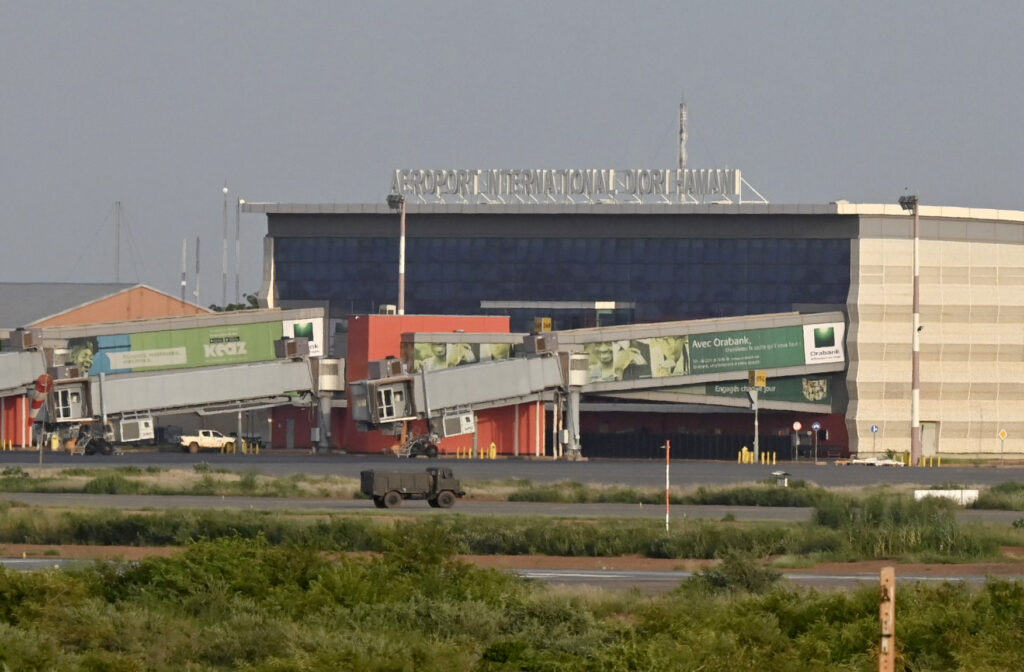
US President Donald Trump on Tuesday sharply expanded a travel ban by barring people from seven more countries including Syria, as well as Palestinian Authority passport holders, from entering the United States.The latest move brings to nearly 40 the number of countries whose citizens face restrictions in coming to the United States solely by virtue of nationality, with Trump also tightening rules for routine travel from Western nations.It comes as Trump, who has long made hostility to immigration a signature issue, orders mass deportations and takes an increasingly strident tone against non-white new Americans.The White House in a proclamation said it was banning foreigners who “intend to threaten” Americans.Trump also wants to prevent foreigners in the United States who would “undermine or destabilize its culture, government, institutions or founding principles,” the proclamation said.Syrians were banned days after two US troops and a civilian were killed in the war-torn country, which Trump has moved to rehabilitate internationally since the fall of longtime ruler Bashar al-Assad.Syrian authorities said the perpetrator was a member of the security forces who was due to be dismissed for “extremist Islamist ideas.”The Trump administration had already informally barred travel for Palestinian Authority passport holders as it acts in solidarity with Israel against the recognition of a Palestinian state by other leading Western countries including France and Britain.Other countries newly subjected to the full travel ban came from some of Africa’s poorest countries — Burkina Faso, Mali, Niger, Sierra Leone and South Sudan — as well as Laos in southeast Asia.In a series of new actions, Trump also imposed partial travel restrictions on citizens of other African countries including the most populous, Nigeria, as well as Ivory Coast and Senegal, which qualified for the World Cup set to be played next year in the United States as well as Canada and Mexico.The Trump administration has promised to let in athletes for football’s signature competition, but has made no such promises for fans of blacklisted countries.Other countries slapped with partial restrictions were from Africa or largely Black nations in the Caribbean — Angola, Antigua and Barbuda, Benin, Dominica, Gabon, The Gambia, Malawi, Mauritania, Tanzania, Zambia and Zimbabwe — plus the Polynesian country of Tonga.Angola, Senegal and Zambia have all been prominent US partners in Africa, with former president Joe Biden hailing the three for commitment to democracy.- Ramping up anti-immigrant tone -Global Refuge, a Christian-based group that supports refugees, warned that the travel ban would push vulnerable people further into harm’s way.”The administration is once again using the language of security to justify blanket exclusions that punish entire populations, rather than utilizing individualized, evidence-based screening,” said the group’s president and CEO, Krish O’Mara Vignarajah.Trump has used increasingly loaded language, complaining at a rally last week that the United States was only taking people from “shithole countries” and instead should seek immigrants from Norway and Sweden.He also recently described Somalis as “garbage” following a scandal in which Somali Americans allegedly bilked the government out of money for fictitious contracts in Minnesota.Trump had already banned the entry of Somalis. Other countries remaining on the full travel ban are Afghanistan, Chad, Republic of the Congo, Equatorial Guinea, Eritrea, Haiti, Iran, Libya, Myanmar, Sudan, and Yemen.Trump last month made the ban even more sweeping against Afghans, severing a program that brought in Afghans who had fought alongside the United States against the Taliban, after an Afghan veteran who appeared to have post-traumatic stress shot two National Guards troops deployed by Trump in Washington.The White House acknowledged “significant progress” by one initially targeted country, Turkmenistan.The Central Asian country’s nationals will once again be able to secure US visas, but only as non-immigrants.Trump has also all but ended refugee admissions, with the United States now only accepting South Africans from the white Afrikaner minority.

Asian markets drift as US jobs data fails to boost rate cut hopes

Asian equities fluctuated on Wednesday as mixed US jobs data did little to boost expectations for another interest rate cut next month, while oil rallied after Donald Trump ordered the blockade of “sanctioned” Venezuelan tankers.With Federal Reserve officials indicating they were unlikely to lower borrowing costs for a fourth successive meeting, sentiment on trading floors has been subdued of late, compounded by worries over tech valuations and AI spending.Focus had been on the delayed release of key non-farm payrolls reports, which showed Tuesday that the unemployment rate had jumped to a four-year high of 4.6 percent in November, reinforcing views that the labour market was slowing.However, a forecast-beating 105,000 drop in jobs in October was blamed on the extended government shutdown — with many expected to return — while November’s rise of 64,000 was more than estimated.Analysts said the figures did little to move the dial on rate-cut bets, with Bloomberg saying markets had priced in about a 20 percent chance of such a move next month.”The bleed higher in the unemployment rate plays to the (Fed policy board’s) concern about the labour market, which has supported the adjustment over the past three meetings,” wrote National Australia Bank senior economist Taylor Nugent. “But it is unlikely to be enough to push them to further near-term easing,” he added. “It would take another jump (in unemployment) next month to shift things much on a January cut.”Wall Street investors largely shrugged at the data, with many concerned that the tech-led rally over the past two years may have gone too far and that the vast sums invested in AI might not see returns as soon as hoped.Asian markets, having dropped at the start of the week, struggled to make big inroads higher.Tokyo, Seoul, Taipei, Manila and Jakarta rose, but Hong Kong and Shanghai were flat, while Sydney, Singapore and Wellington fell.Oil prices jumped more than one percent after Trump said on his Truth Social platform that he was “ordering A TOTAL AND COMPLETE BLOCKADE OF ALL SANCTIONED OIL TANKERS going into, and out of, Venezuela”.The announcement sharply escalates his campaign against the country — while issuing new demands for the country’s crude — after months of building military forces in the Caribbean with the stated goal of combating drug trafficking in Latin America.Caracas views the operation as a pressure campaign to oust leftist strongman Nicolas Maduro, whom Washington and many nations view as an illegitimate president.The gains pared some of the 2.7 percent in losses suffered Tuesday after the US president said a deal to end the war in Ukraine was closer than ever.An end to the war could ease sanctions on Russian oil, adding to oversupply concerns already weighing on the market.On currency markets, the yen strengthened further against the dollar following the US jobs data and days before the Bank of Japan is expected to hike interest rates to a 30-year high on Friday.In corporate news, Chinese chipmaker MetaX Integrated Circuits Shanghai soared more than 550 percent on its home city debut Wednesday, having raised $585.8 million in an initial public offering. The jump comes after semiconductor company Moore Threads also rocketed more than 500 percent on its first day earlier in the month, having taken $1.1 billion in its IPO.- Key figures at around 0230 GMT -Tokyo – Nikkei 225: UP 0.4 percent at 49,553.71 (break)Hong Kong – Hang Seng Index: FLAT at 25,239.12Shanghai – Composite: FLAT at 3,825.79Dollar/yen: DOWN at 154.52 yen from 154.80 on TuesdayEuro/dollar: UP at $1.1751 from $1.1747 Pound/dollar: UP at $1.3424 from $1.3422Euro/pound: UP at 87.54 pence from 87.52West Texas Intermediate: UP 1.2 percent at $55.91 per barrelBrent North Sea Crude: UP 1.1 percent at $59.53 per barrelNew York – Dow: DOWN 0.6 percent at 48,114.26 (close)London – FTSE 100: DOWN 0.7 percent at 9,684.79 (close) 

What we know about Trump’s $10 billion BBC lawsuit

US President Donald Trump has filed a defamation lawsuit against the BBC, seeking $10 billion in damages over a misleading edit of his 2021 speech before the US Capitol riot.Here’s what we know about the row:- Why Florida? – Trump filed the lawsuit in a federal court in Miami, Florida, the state where he is a legal resident and where he has filed previous lawsuits against US media outlets.His lawyers argue that many of the scenes in the Panorama documentary — which aired in Britain in October 2024 — were shot in Florida, including around Trump’s Mar-a-Lago resort.He was too late to file a libel claim in the UK, which generally has a one-year time limit to bring such cases.- What are the arguments? -The documentary spliced together two separate sections of Trump’s speech on January 6, 2021 in a way that made it appear he explicitly urged supporters to attack the Capitol, where lawmakers were certifying Joe Biden’s 2020 election win.The lawsuit alleges that the edit was a deliberate attempt to give a “false, defamatory, deceptive, disparaging, inflammatory, and malicious depiction” of Trump to try to “interfere and influence” the 2024 presidential election.They say it harmed Trump’s reputation as a “politician, leader, and businessman”, even though he went on to win the election and his team was apparently unaware of the broadcast for about a year.- Can Trump win? -While the BBC has previously apologised for its “mistake”, it insists there is no basis for a defamation case and said on Tuesday it would fight the lawsuit.The broadcaster contends that the documentary did not air in the United States and its streaming platform cannot be accessed outside the UK.Trump is arguing that people in Florida would have been able to view the documentary through the use of VPNs and the broadcaster’s US distributor.But Canadian company Blue Ant, which owns the rights to the documentary outside the UK, told AFP on Tuesday that “none” of its buyers “have aired it in the US”.Legal experts say the BBC has a strong case.”Defamation cases are difficult to win,” University of Richmond law professor Carl Tobias told AFP, noting a 1964 Supreme Court ruling that “requires plaintiffs to prove actual malice, which is an onerous proof burden”.Trump has launched several recent legal actions against media companies, including CNN and The New York Times, but these have not yet gone to court.The BBC could choose to settle, but Mark Damazer, a former BBC Radio 4 controller, said it would be “damaging” to the BBC’s reputation not to fight the case.- Could it cost the British public? -British taxpayers largely fund the cash-strapped broadcaster through an annual licence fee that is mandatory for anyone in the country who watches television.Some commentators in the UK have speculated that the legal costs of fighting or settling the defamation case could result in an increase to the £174.50 pound ($234) annual license.In December 2024, ABC News agreed to pay $15 million in a defamation case brought by Trump. In July, CBS forked out $16 million to settle another case.- Why it’s bad timing for the BBC -The lawsuit coincides with the launch in the UK of a politically sensitive review of the BBC’s Royal Charter, which outlines the corporation’s governance.The current charter ends in 2027 and will need to be renewed, with the BBC’s funding model and editorial priorities up for debate.It also comes as the broadcaster seeks a replacement for outgoing director general Tim Davie who announced his resignation over the edit. In the decade to 2020, the BBC’s income overall fell by about 30 percent in real terms, Davie said last year.Last month, lawmakers revealed that the BBC is losing more than £1 billion a year from households evading the licence fee.

Trump to tell Americans ‘the best is yet to come’

US President Donald Trump will boast of his achievements in an address to the nation Wednesday as voters sour on his handling of the economy after nearly a year back in power.Republican Trump is also expected to tease policies for 2026, following a blitz of hardline protectionist and nationalist policies at the start of his second term.With next year’s US midterm elections looming, the 79-year-old faces mounting anger among Americans about the high cost of living.Trump did not say what he would talk about in the primetime speech from the White House at 9pm, saying only on social media that “it has been a great year for our Country, and THE BEST IS YET TO COME!”But the White House said it would focus on his “historic accomplishments” including tackling inflation, which Trump blames on his Democratic predecessor Joe Biden, and tackling immigration.”It’s going to be a really good speech. I was just in the Oval Office with the President discussing it,” Press Secretary Karoline Leavitt told reporters outside the West Wing on Tuesday.”He’s going to talk a lot about the accomplishments over the past 11 months, all that he’s done to bring our country back to greatness, and all he continues to plan to do to continue delivering for the American people over the next three years.”Leavitt separately told Fox News that Trump would be “maybe teasing some policy that will be coming in the New Year as well.”Billionaire Trump, the oldest elected president in US history, has boasted of a new “golden age” in America.He recently rated the economy as “A++++” and rages against what he called an “affordability hoax” by rival Democrats.- ‘Make America affordable again’ -But US voters are increasingly angry about high prices of everything from gas to and groceries, which experts say are partly fueled by the tariffs he has slapped on trading partners. According to a poll by the University of Chicago for The Associated Press, published last week, only 31 percent of Americans are satisfied with Trump’s economic policy.He also faces criticism from within his Make America Great Again (MAGA) movement for focusing on peace deals in Ukraine and Gaza and on tensions with Venezuela instead of domestic issues.Now there are signs that his team have started to realize the issue could hurt Republicans in next year’s midterm elections for the control of Congress.Republicans lost heavily in elections in November for the mayor of New York and governorships in Virginia and New Jersey, while running them close in a previously safe area Tennessee.The president is ramping up his domestic travel to push his economic message.Last week in Pennsylvania he promised to “make America affordable again,” and on Friday he is due to give another campaign-style rally in North Carolina on Friday.Vice President JD Vance — who is rapidly becoming Trump’s messenger on the issue as he eyes his own presidential run in 2028 — urged voters to show patience during a speech on Tuesday.”They know Rome wasn’t built in a day,” Vance said in the key, blue-collar swing state of Pennsylvania on Tuesday. “They know what Joe Biden broke is not going to get fixed in a week.”Trump’s chief of staff Susie Wiles said in a Vanity Fair article published Tuesday that his program would feature “more talks about the domestic economy and less about Saudi Arabia.”

Dermatose: le gouvernement promet d’accélérer sur la vaccination

Pour tenter de désamorcer la colère des agriculteurs, le gouvernement promet une accélération de la vaccination dans le Sud-Ouest contre la dermatose nodulaire contagieuse, avec 750.000 bovins supplémentaires ciblés et le recours à des vétérinaires militaires.”Dans les semaines qui viennent, il faut que l’intégralité (de ce) cheptel soit vacciné et nous nous y employons” pour juguler la propagation de la maladie, a annoncé mardi soir la ministre de l’Agriculture, Annie Genevard, à la sortie d’une réunion à Matignon.Cet objectif vient affiner la fourchette de 600.000 à 1 million d’animaux supplémentaires devant être vaccinés, jusqu’ici évoquée par le ministère.Plus tôt, le Premier ministre, Sébastien Lecornu, avait déjà promis “d’accélérer” la vaccination, pour rassurer les éleveurs très mobilisés dans le Sud-Ouest contre la gestion de cette crise par le gouvernement.”Mais pour ça, il faut absolument qu’on ait les doses de vaccins disponibles et qu’on arrête de courir après les doses comme on est en train de le vivre en ce moment”, prévient Yohann Barbe, président de la FNPL (producteurs de lait).Car cette campagne vaccinale représente un défi logistique majeur, les doses devant être acheminées vers les dix départements situés à l’intérieur d’un “cordon sanitaire”: l’Ariège, le Lot, la Haute-Garonne, les Hautes-Pyrénées, les Pyrénées-Orientales, le Gers, les Landes, les Pyrénées-Atlantiques, l’Hérault et le Tarn.Un stock de 500.000 vaccins, fourni par le ministère de l’Agriculture, est déjà en cours d’acheminement vers le Sud-Ouest, et “une première livraison de 400.000 doses”, issues d’une commande réalisée la semaine dernière auprès des Pays-Bas, sera acheminée prochainement, a détaillé Annie Genevard.En plus des vétérinaires des services de l’Etat, le gouvernement mobilisera pour les injections des vétérinaires volontaires (libéraux, retraités ou en activité), des vétérinaires militaires (parmi les 70 en service) et des élèves vétérinaires.- Poursuite des blocages -Au total, 113 foyers de dermatose nodulaire contagieuse ont été recensés en France, depuis l’apparition de la maladie en juin en Savoie. Mais à ce jour, “il n’y a plus de foyers infectieux”, a assuré la ministre.Plus de 3.300 bêtes ont été abattues sur un cheptel bovins de quelque 16 millions bovins.La Confédération paysanne a appelé mardi soir “à amplifier et durcir les mobilisations”, estimant que le gouvernement ne répondait pas à ses revendications (l’ouverture vaccinale sur toute la France et la fin de l’abattage total dès la détection d’un cas).”Il n’y a pas grand chose qui a changé”, a réagi Jérôme Bayle, figure du mouvement agricole de 2024, sur BFMTV. “On s’oppose fermement à l’abattage total du moment qu’on a vacciné”, a-t-il souligné depuis un point de blocage de l’A64.Mardi, au septième jour de mobilisation, plusieurs axes routiers et ferroviaires étaient bloqués dans le Sud-Ouest à l’appel des syndicats Coordination rurale, radicale et parfois ouvertement proche de l’extrême droite, et Confédération paysanne, classée à gauche.En fin d’après-midi, 75 actions étaient recensées par le ministère de l’Intérieur, mobilisant 3.400 personnes.Dans la nuit, des agriculteurs ont aspergé la préfecture du Gers de lisier à Auch, a rapporté la chaîne BFMTV.Après avoir entravé le trafic ferroviaire entre Toulouse et Narbonne toute la journée de mardi, des éleveurs ont investi l’autoroute A61, stoppant le trafic dans le sens Carcassonne-Toulouse.Au niveau de Cestas, au sud de Bordeaux, l’A63 est bloquée dans les deux sens, perturbant notamment le trafic des poids lourds en provenance d’Espagne.D’autres actions sont déjà prévues mercredi à Limoges, où la Coordination rurale appelle les paysans à monter un mur de foin et de paille devant la préfecture.- “Mercosur” -Sébastien Lecornu recevra vendredi les syndicats agricoles, aussi remontés par la perspective d’une signature du traité de libre-échange entre l’Union européenne et des pays latino-américains du Mercosur.La FNSEA, premier syndicat agricole, a appelé à manifester à Bruxelles jeudi à l’occasion du sommet des chefs d’Etat européens invités à valider l’accord.Le président Emmanuel Macron, qui a demandé un report à 2026 du vote prévu à Bruxelles, a redit lundi soir aux dirigeants de l’UE, lors d’un déplacement à Berlin pour des échanges sur l’Ukraine, son opposition à la signature de l’accord.Et le Sénat a voté mardi une résolution invitant le gouvernement français à saisir la Cour de justice de l’Union européenne pour “faire barrage” à l’accord de libre-échange, accusant Bruxelles de “contourner les Parlements nationaux”.bur-are-alh-jmi/abb/bfi/ms/lgo