US Supreme Court to hear pivotal minority voting rights case
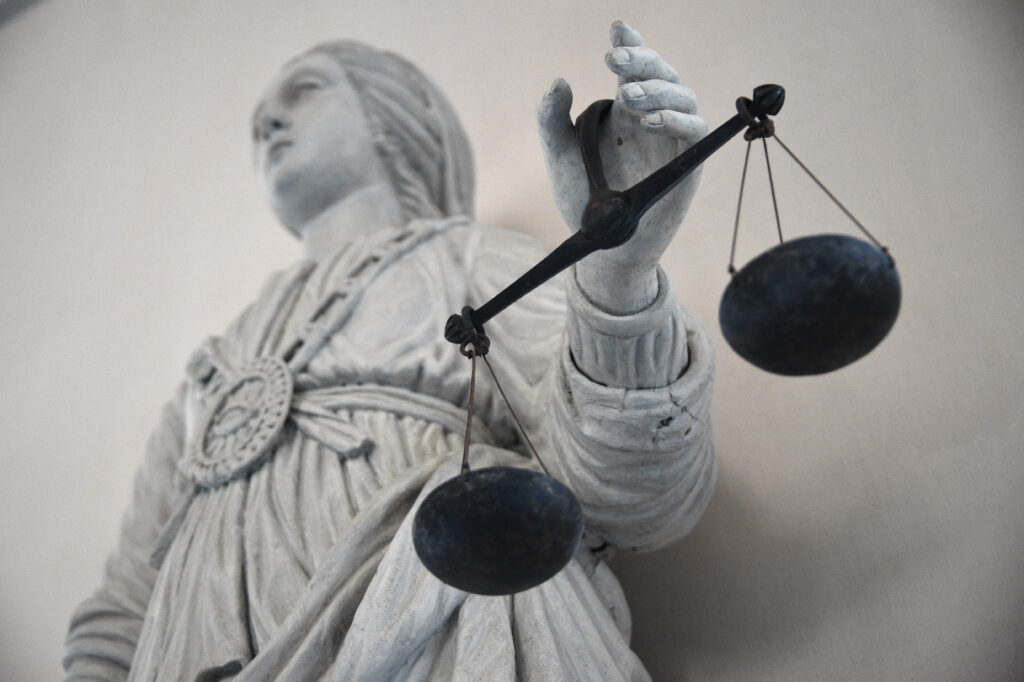
The US Supreme Court hears a case involving Black voters on Wednesday that could have lasting repercussions on whether Democrats or Republicans control the House of Representatives.The case touching on the thorny issues of race and politics is a challenge to a congressional map adopted by the Louisiana state legislature creating a second Black majority district.The conservative-dominated top court actually heard the case last term, but in an unusual move it decided not to issue a ruling and scheduled it for re-argument during the current session.African-Americans tend to overwhelmingly vote Democratic and they make up one-third of the population of Louisiana, which has six congressional districts.Following the 2020 census, Louisiana created a new congressional map that included only one Black majority district instead of the previous two.The American Civil Liberties Union (ACLU) and others filed suit claiming the new map diluted Black voting power and violated the Voting Rights Act, which was passed during the civil rights movement in 1965 to remedy historic racial discrimination.The Louisiana legislature released a new map last year with two Black majority districts that was met with the legal challenge from a group of “non African-American” voters. It has now reached the Supreme Court, where conservatives hold a 6-3 majority.The opponents of the redrawn map argue that using race to design congressional districts is racial gerrymandering prohibited by the equal protection clause of the 14th Amendment to the US Constitution.”The stakes are incredibly high,” said ACLU attorney Sophia Lin Lakin. “The outcome will not only determine the next steps for Louisiana’s congressional map, but may also shape the future of redistricting cases nationwide.”Republicans currently hold a slim majority in the House and an increase or decrease in the number of Black majority districts could help tip the balance in the November 2026 midterm elections, when all 435 seats in the chamber will be up for grabs.- ‘One-party control’ -According to a report by two voting advocacy groups, Fair Fight Action and Black Voters Matter, a Supreme Court ruling striking down Voting Rights Act protections for minorities could lead to Republicans picking up an additional 19 seats in the House.”It’s enough to cement one-party control of the US House for at least a generation,” they said.The Louisiana voting case is being heard against a backdrop of redistricting moves in both Republican- and Democratic-ruled states. Republican-led Texas is drawing new congressional district maps that are expected to flip up to five House seats from Democrats to Republicans.Several mainly Latino or Black districts which Republican Donald Trump lost in the 2024 election in Texas were broken up to dilute support for Democrats.Democratic leaders in California responded with a redistricting push to offset potential Republican gains in Texas, though it will first be put to a state-wide referendum.
Celebrated soul musician D’Angelo dead at 51: US media
Grammy-winning musician D’Angelo has died at the age of 51 after “a prolonged and courageous battle with pancreatic cancer,” his family told US media Tuesday.The R&B icon and neo-soul pioneer melded genres and opened doors as he stretched the boundaries of Black pop traditions while producing sensuous hits including “Brown Sugar” and the “Untitled (How Does It Feel).”The risque, shirtless music video for the latter track catapulted the artist to superstardom, though he struggled with the weight of his newfound pop culture fame. “The shining star of our family has dimmed his light for us in this life,” his family said in a widely reported statement. “After a prolonged and courageous battle with cancer, we are heartbroken to announce that Michael D’Angelo Archer, known to his fans around the world as D’Angelo, has been called home.” Fellow artist Lauryn Hill, who dueted with him in “Nothing Even Matters” on her Grammy-winning debut album, shared praise and prayers on Instagram Tuesday.The similarly reclusive singer wrote of D’Angelo’s “undeniable beauty and talent,” noting his ability to present an image of “strength and sensitivity in Black manhood to a generation that only saw itself as having to be one or the other.”On her website, singer Beyonce called him a “pioneer of neo-soul” who “changed and transformed rhythm and blues forever.”- ‘Rare and beautiful voice’ -Known as a creative perfectionist with a silky voice who could play piano and guitar, D’Angelo released three albums with RCA Records: his 1995 debut “Brown Sugar,” “Voodoo” in 2000 and “Black Messiah” in 2014. The record label said in a statement Tuesday D’Angelo “was a peerless visionary who effortlessly blended the classic sounds of soul, funk, gospel, R&B and jazz with a hip hop sensibility.” Voodoo’s lead single “Untitled (How Does It Feel)” won him the Grammy for Best Male R&B Vocal Performance and the album was named Best R&B Album.Red Hot Chili Peppers bassist Flea lamented the loss of D’Angelo Tuesday, saying “no one did anything funkier over the last 30 years,” adding “what a rare and beautiful voice and an inimitable approach to songwriting.”D’Angelo was a fan of analog production and favored long jam sessions, and was a sought-after collaborator. “Such a sad loss to the passing of D’Angelo. We have so many great times. Gonna miss you so much. Sleep Peacefully D’ Love You KING,” DJ Premier wrote on X in tribute.D’Angelo and DJ Premier collaborated on the 1998 single “Devil’s Pie.” Music industry bible Pitchfork credited D’Angelo with helping to “define the neo-soul movement.”Born Michael Eugene Archer in Virginia, the son of a Pentecostal preacher, D’Angelo was something of a recluse, periodically surfacing to release music or perform.In 2016, he was featured on a playlist used by then US president Barack Obama, alongside other musical greats such as pop superstar Janet Jackson, soul singer Janelle Monae and blues rocker Gary Clark Jr.Tyler, The Creator posted a black and white photograph of D’Angelo on X, while The Alchemist wrote simply “Man. Rest in peace D’Angelo.”
Les médias rejettent des restrictions d’informer voulues par le Pentagone
Un grand nombre de médias américains et internationaux, dont le New York Times, Fox News, Associated Press et l’AFP, ont refusé mardi de signer un document du Pentagone établissant des mesures restrictives pour la presse, au risque d’y perdre leur accréditation.Ce document introduit en particulier l’idée que les journalistes accrédités ne peuvent pas solliciter ni publier certaines informations sans autorisation explicite du ministère de la Défense.Ces nouvelles dispositions “musèlent les employés du Pentagone et menacent de représailles les journalistes qui vont à la recherche d’informations qui n’ont pas été approuvées en amont pour être publiées”, s’inquiète l’Association des journalistes du Pentagone (PPA) dans un communiqué. “Les nouvelles restrictions proposées dans ce document vont à l’encontre des fondements du travail de journaliste et sapent les droits prévus au premier amendement de la Constitution des Etats-Unis”, qui consacre la liberté de la presse, écrit l’AFP dans un communiqué mardi.”Elles placent des entraves non nécessaires au travail des journalistes et créent la confusion entre les responsabilités des employés du Pentagone et celles des journalistes qui en couvrent l’actualité”, poursuit-elle.Dans un communiqué commun publié sur les réseaux sociaux, les chaînes américaines ABC, CBS, CNN, NBC et Fox News expliquent se “joindre à pratiquement tous les autres médias en refusant d’accepter les nouvelles exigences du Pentagone, qui restreindraient la capacité des journalistes à continuer à informer la nation et le monde sur des questions importantes de sécurité nationale”.”Nous continuerons à couvrir l’armée américaine (…) en défendant les principes d’une presse libre et indépendante”, ajoutent-elles.- Délogés et escortés -Le Washington Post, l’agence de presse Reuters, ou encore des médias conservateurs tels que la chaîne Newsmax, ont aussi refusé de signer le document.Ces nouvelles mesures s’inscrivent dans une offensive plus large, menée depuis le retour au pouvoir de Donald Trump, restreignant l’accès des journalistes au Pentagone – le premier employeur du pays avec un budget annuel de plusieurs centaines de milliards de dollars.Dans les mois précédents, le ministère de la Défense – dernièrement rebaptisé ministère de la Guerre par l’administration Trump – a délogé de leurs bureaux dédiés au Pentagone huit médias, dont le New York Times, le Washington Post et CNN. Les conférences de presse y ont été drastiquement réduites : moins d’une demi-douzaine ont eu lieu depuis le début de l’année, contre au moins deux par semaine en moyenne sous la présidence démocrate de Joe Biden.Le ministère a également restreint les déplacements des journalistes à l’intérieur du Pentagone, en leur imposant d’être escortés en dehors d’un nombre limité de zones.En avril, Pete Hegseth, le ministre de la Défense, ancien présentateur sur Fox News, a été impliqué dans une fuite de plans militaires quand un journaliste a été ajouté par mégarde à un groupe dont il était membre sur la messagerie Signal.La presse américaine a rapporté qu’il avait discuté de ces mêmes plans visant le Yémen dans un autre groupe Signal avec une douzaine de personnes de son entourage personnel et professionnel. Son utilisation de ce service de messagerie est à l’origine d’une enquête interne du Pentagone.A plusieurs organes de presse qui ont exprimé sur les réseaux sociaux leur refus de souscrire au document du Pentagone, Pete Hegseth a répondu par une main mimant un au revoir.
Les médias rejettent des restrictions d’informer voulues par le Pentagone
Un grand nombre de médias américains et internationaux, dont le New York Times, Fox News, Associated Press et l’AFP, ont refusé mardi de signer un document du Pentagone établissant des mesures restrictives pour la presse, au risque d’y perdre leur accréditation.Ce document introduit en particulier l’idée que les journalistes accrédités ne peuvent pas solliciter ni publier certaines informations sans autorisation explicite du ministère de la Défense.Ces nouvelles dispositions “musèlent les employés du Pentagone et menacent de représailles les journalistes qui vont à la recherche d’informations qui n’ont pas été approuvées en amont pour être publiées”, s’inquiète l’Association des journalistes du Pentagone (PPA) dans un communiqué. “Les nouvelles restrictions proposées dans ce document vont à l’encontre des fondements du travail de journaliste et sapent les droits prévus au premier amendement de la Constitution des Etats-Unis”, qui consacre la liberté de la presse, écrit l’AFP dans un communiqué mardi.”Elles placent des entraves non nécessaires au travail des journalistes et créent la confusion entre les responsabilités des employés du Pentagone et celles des journalistes qui en couvrent l’actualité”, poursuit-elle.Dans un communiqué commun publié sur les réseaux sociaux, les chaînes américaines ABC, CBS, CNN, NBC et Fox News expliquent se “joindre à pratiquement tous les autres médias en refusant d’accepter les nouvelles exigences du Pentagone, qui restreindraient la capacité des journalistes à continuer à informer la nation et le monde sur des questions importantes de sécurité nationale”.”Nous continuerons à couvrir l’armée américaine (…) en défendant les principes d’une presse libre et indépendante”, ajoutent-elles.- Délogés et escortés -Le Washington Post, l’agence de presse Reuters, ou encore des médias conservateurs tels que la chaîne Newsmax, ont aussi refusé de signer le document.Ces nouvelles mesures s’inscrivent dans une offensive plus large, menée depuis le retour au pouvoir de Donald Trump, restreignant l’accès des journalistes au Pentagone – le premier employeur du pays avec un budget annuel de plusieurs centaines de milliards de dollars.Dans les mois précédents, le ministère de la Défense – dernièrement rebaptisé ministère de la Guerre par l’administration Trump – a délogé de leurs bureaux dédiés au Pentagone huit médias, dont le New York Times, le Washington Post et CNN. Les conférences de presse y ont été drastiquement réduites : moins d’une demi-douzaine ont eu lieu depuis le début de l’année, contre au moins deux par semaine en moyenne sous la présidence démocrate de Joe Biden.Le ministère a également restreint les déplacements des journalistes à l’intérieur du Pentagone, en leur imposant d’être escortés en dehors d’un nombre limité de zones.En avril, Pete Hegseth, le ministre de la Défense, ancien présentateur sur Fox News, a été impliqué dans une fuite de plans militaires quand un journaliste a été ajouté par mégarde à un groupe dont il était membre sur la messagerie Signal.La presse américaine a rapporté qu’il avait discuté de ces mêmes plans visant le Yémen dans un autre groupe Signal avec une douzaine de personnes de son entourage personnel et professionnel. Son utilisation de ce service de messagerie est à l’origine d’une enquête interne du Pentagone.A plusieurs organes de presse qui ont exprimé sur les réseaux sociaux leur refus de souscrire au document du Pentagone, Pete Hegseth a répondu par une main mimant un au revoir.
China consumer spending falls as pressure on economy builds
China’s consumer prices continued to fall last month, with official data highlighting the battle leaders face in trying to kickstart domestic spending in the world’s number two economy while fighting a trade war with the United States.Beijing has spent recent years grappling with a range of issues that have weighed on growth and consumer activity, including a persistent slump in the country’s vast property market and high youth unemployment.That has been compounded by a renewed standoff with Washington since Donald Trump became US president and unleashed a tariff war on the world, with a particular eye on Beijing.The uncertainty this has fanned has made the country’s army of shoppers tighten their wallets.Figures on Wednesday showed the country’s consumer price index — a key measure of inflation — dropped 0.3 percent year-on-year in September.The reading from the National Bureau of Statistics (NBS) was a slight improvement on August but worse than the 0.2 percent fall forecast in a Bloomberg survey.It also comes a day after the International Monetary Fund’s latest World Economic Outlook report noted a “weakness in domestic demand” in China — echoing a broader Asian outlook dimmed by the US trade war.The IMF added that a “rebalancing” of China’s economy through fiscal measures targeting social spending and property would help battle deflationary pressure.While deflation may be appreciated by consumers, it poses a threat to the broader economy as households tend to postpone purchases in the hope of even lower prices.- Trade tensions -China’s inflation stabilisation is “fragile and volatile”, said Tianzeng Xu from the Economist Intelligence Unit in response to Wednesday’s data.”The housing market has not yet recovered and the labour market remains weak,” Xu added.And Zhiwei Zhang, president and chief economist at Pinpoint Asset Management, wrote in a note: “The trade tension returned and growth outlook uncertainty heightened, which is negative for demand recovery.” The NBS figures also showed the producer price index, which measures the cost of goods before they enter wholesale or distribution, fell 2.3 percent last month, in line with the Bloomberg forecast and an improvement from August.While tensions between Washington and Beijing have eased from their peak, a truce struck by the leaders earlier this year remains shaky.After months of relative calm Trump warned Friday that he would roll out an additional 100 percent tariff on the country’s goods from November 1. That came after Beijing imposed fresh controls on the export of rare earth technologies and other items. China’s commerce ministry vowed Tuesday to “fight to the end” in its trade war with Washington, if necessary.The latest salvoes came as trade figures from Beijing on Monday provided some hope for the economy, with shipments to the United States — the world’s largest consumer market — rising 8.6 percent on-month in September. Top leaders from the ruling Communist Party will convene in Beijing next week for a closely watched gathering to discuss China’s plan for the next five years, including economic and social development goals. Analysts agree that more demand-side support from policymakers would be needed to prop up the economy.Until then, there will be “little prospect of a meaningful improvement in China’s deflationary environment in the near term”, wrote Zichun Huang, China Economist at Capital Economics, in a note.
Hamas launches Gaza crackdown as Trump vows to disarm group
Hamas tightened its grip on Gaza’s ruined cities Tuesday, launching a crackdown and executing alleged collaborators, even as US President Donald Trump vowed to disarm the group.The Israeli military said the remains of four more hostages held in Gaza had been brought into Israel, a day after Hamas handed over the bodies of four other captives and released the last 20 surviving hostages.Hamas published a video on its official channel showing the street execution of eight blindfolded and kneeling suspects, branding them “collaborators and outlaws”.The footage, apparently from Monday evening, emerged as armed clashes were underway between Hamas’s various security units and armed Palestinian clans in parts of the territory, on the fifth day of a US-brokered truce between Hamas and Israel. In the north of the territory, as Israeli forces withdrew from Gaza City, the Hamas government’s black-masked armed police have resumed street patrols.When busloads of prisoners freed from Israeli jails arrived in Gaza on Monday, fighters from Hamas’s Ezzedine al-Qassam Brigades provided crowd control.Meanwhile, a Hamas security unit has been conducting operations against armed clans and gangs, some alleged to have Israeli backing.”Intense clashes broke out — and are still ongoing at the moment — as part of efforts to eliminate collaborators,” said witness Yahya, who asked not to be named in full for fear of retribution.- Explosions and arrests -Another Gaza resident, Mohammed, told AFP: “For long hours this morning there were heavy clashes between Hamas security forces and members of the Hilles family.”The fighting was in Shujaiya, in the east of Gaza City, close to the so-called Yellow Line, behind which Israeli units still hold roughly half of Gaza.”We heard intense gunfire and explosions, and the security forces arrested some of them. We support this,” Mohammed said, also asking not to be named in full.A Palestinian security source in Gaza told AFP that Hamas’s security body, a recently established unit whose name translates as “Deterrence Force”, was conducting “ongoing field operations to ensure security and stability”.”Our message is clear: There will be no place for outlaws or those who threaten the security of citizens,” he said. – Troops open fire -Hamas has, since it crushed rival Fatah in armed clashes in 2007, been the dominant Palestinian faction in Gaza.Israel insists Hamas can have no role in a future Gaza government, must hand back the remains of all deceased hostages and eventually disarm. Prime Minister Benjamin Netanyahu said Tuesday that the US plan for Gaza was “very clear” that after Hamas returned the captives it would commence “both demilitarisation and disarmament.””First, Hamas has to give up its arms, and second, you want to make sure that there are no weapons factories inside Gaza. There’s no smuggling of weapons into Gaza. That’s demilitarisation,” he said in an interview with CBS News. US President Donald Trump’s 20-point plan says that Hamas members who agree to “decommission their weapons” will be given amnesty.”If they don’t disarm, we will disarm them,” Trump told reporters at the White House a day after visiting the Middle East to celebrate the Gaza ceasefire.”And it will happen quickly and perhaps violently.”The document, endorsed Monday by world powers at a Trump-chaired summit in Egypt, says Gaza will be demilitarised and Hamas have no leadership role.- Reassuring presence -But for many Palestinians rebuilding their homes and lives Tuesday amid Gaza’s rubble, the sight of the militants was reassuring.”After the war ended and the police spread out in the streets, we started to feel safe,” said 34-year-old Abu Fadi Al-Banna, in Deir al-Balah, central Gaza.Hamdiya Shammiya, 40, who was driven from her home in northern Gaza by the fighting to seek shelter in the southern city Khan Yunis, agreed.”Thank God the war is finally over. We’ve started to breathe a little,” she said.While Palestinians sought stability, Israeli families stepped up pressure for the return of the remains of deceased hostages still held in Gaza.- Bodies identified -The deal called for the return of all the missing — living and dead — and hostage families and Israeli leaders have demanded Hamas comply. Of the deceased hostages who have been returned, the military named two as Guy Iluz, an Israeli national, and Bipin Joshi, an agriculture student from Nepal.Later, the Families Forum, which campaigns for the release of the hostages, identified the two others as Yossi Sharabi and Daniel Peretz, an officer in the Israeli army.”Now we can finally bring closure to the nightmare that began over two years ago, and give Yossi the dignified and loving burial he deserves,” his wife Nira Sharabi was quoted as saying by the forum.In Tel Aviv, people gathered to celebrate the liberation of the living hostages and demand the return of the others’ remains.”I don’t know what to feel because I didn’t think (we’d) reach this day where all the living hostages will return,” demonstrator Barak Cohen told AFP.”But still I see great difficulties in returning the remaining dead hostages,” he said.burs-dc-jd/csp/tym/tc