

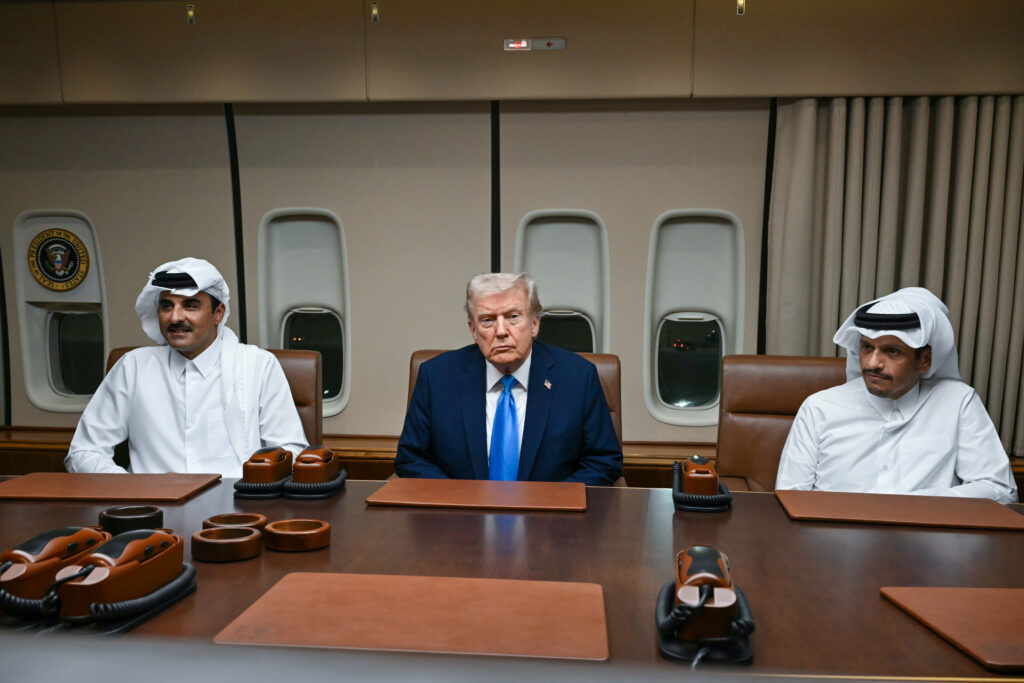
Trump meets Qatar leaders on way to Asia
US President Donald Trump on Saturday thanked Qatar’s emir and prime minister for being a “big factor” in helping secure a Gaza ceasefire deal, during a refueling stop on his way to Asia.The Qatari leaders boarded Air Force One when it landed at Al Udeid Air Base, which hosts the regional headquarters for the US military and thousands of American troops.Trump said the duo had played a crucial role in the Middle East peace process, adding that Prime Minister Sheikh Mohammed bin Abdulrahman Al Thani had been his “friend to the world.””What we’ve done is incredible peace to the Middle East, and they were a very big factor in it,” Trump said.US Secretary of State Marco Rubio, fresh off a trip to Israel as part of an all-out diplomatic push by Washington to keep the Gaza truce on track, was present for the meeting with Qatar’s leaders.Trump is traveling to Asia for the first time since retaking office in January, with two regional summits and face-to-face meetings with China’s Xi Jinping and other leaders on the agenda.Qatar has played a key mediating role in indirect talks between Israel and Hamas since the outbreak of the war, and is among the guarantors of the fragile peace deal, along with Egypt, the United States and Turkey.Qatar’s Emir Sheikh Tamim bin Hamad Al Thani hosted Turkish President Recep Tayyip Erdogan this week to discuss the highly sensitive next steps in the deal, including the establishment of a security force in Gaza and the fate of Hamas.Qatar’s prime minister has also been a key negotiator since the outbreak of the war following Hamas’s October 7, 2023 attack on Israel.The talks aboard Air Force One came as Israel conducted an air strike targeting an alleged Islamic Jihad militant in Gaza.Despite the ceasefire between Hamas, an ally of Islamic Jihad, and Israel, the latter reserves the right to defend itself and its forces from militant attacks.”Let’s see what they do over the next 48 hours. I am watching this very closely,” Trump said on his Truth Social platform after the talks with Qatar’s leaders.

Melissa strengthens into hurricane, cutting slow path to Jamaica
Deadly storm Melissa strengthened Saturday afternoon into a Category 1 hurricane, with rapid intensification expected over the weekend as it cut a worryingly slow course toward the Caribbean island of Jamaica, forecasters said.Currently packing winds of 75 miles (120 kilometers) per hour, Melissa was expected to set off “life-threatening and catastrophic” flooding and landslides in Jamaica, as well as in southern portions of Hispaniola, the island comprised of Haiti and the Dominican Republic, the US National Hurricane Center (NHC) said.”Rapid intensification is forecast to occur over the next couple of days and Melissa is forecast to become a major hurricane by Sunday,” the NHC said in a Saturday afternoon bulletin, referring to storms with sustained winds in excess of 111 miles (178 kilometers) per hour.Melissa was about 145 miles southeast of the Jamaican capital Kingston, and about 235 miles southwest of Haiti’s Port-au-Prince. The hurricane was moving at crawl of 1 mph.Three people in Haiti have already been killed this week as storm bands from Melissa lashed the impoverished nation with heavy downpours, provoking landslides.Haiti could see hurricane conditions by late Saturday, the NHC said. Tropical storm conditions were expected in Jamaica by Saturday night, with hurricane conditions expected by Sunday or Monday. Melissa could batter both countries for multiple days before heading north and threatening eastern Cuba.Fears were growing that Melissa’s extreme winds and rains could provoke life-threatening floods in the mountainous terrain of eastern Jamaica and western Haiti.Melissa could bring total rainfall of 15 to 25 inches (38 to 64 cm) in portions of southern Hispaniola and Jamaica, the NHC said, with isolated areas receiving as much as 35 inches.Residents in southwestern Haiti should begin “immediate preparations to protect life and property,” the NHC said, warning the storm will likely cause “extensive infrastructural damage and potentially prolonged isolation of communities.”Jamaican Prime Minister Andrew Holness on Friday urged residents of flood-prone areas to heed warnings and be prepared to evacuate.”If you live in an area that was flooded before, expect that it will flood again,” he said.Rains from Melissa already flooded several roads in Kingston, images from local media showed.Melissa is the 13th named storm of the Atlantic hurricane season, which runs from early June to late November.The last major hurricane to impact Jamaica was Beryl in early July 2024 — an abnormally strong storm for the time of year.Beryl brought downpours and heavy winds to Jamaica as it moved past off the island’s southern coast, leaving at least four people dead.
In New York, a night at the museum — five years in the making
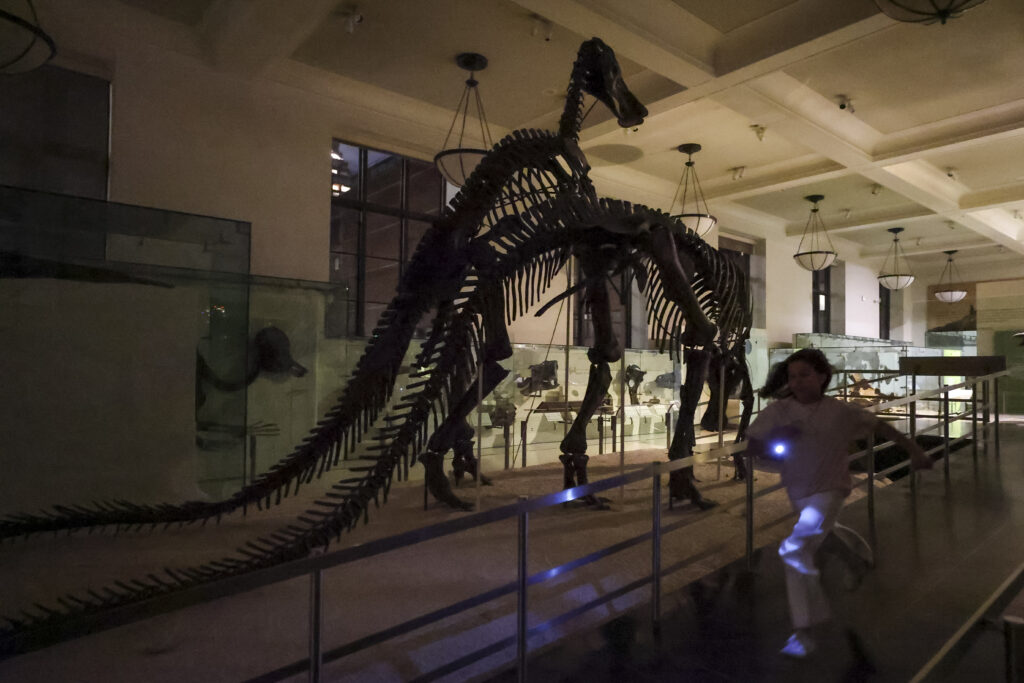
It’s nearly 10:00 pm on Friday night, and a group of children shine their flashlights on the imposing skeleton of a Tyrannosaurus rex.Though the scene seems like something out of a movie, it is in fact a whimsical sleepover at the American Museum of Natural History in New York.Once a month, and for a not insignificant fee, parents and kids can once again spend the night at the venerable institution — a program that had been suspended since the start of the coronavirus pandemic.”We live really close to this place. So we can come here anytime we want,” said eight-year-old Jake Nelson. “It’s crazy to sleep (here) — like, I don’t know who would come up with this crazy idea.”Jake, nestled into his sleeping bag on a cot underneath the museum’s gigantic suspended model of a blue whale, said he was “so happy to be here.”The museum first launched its “Night at the Museum” programs in 2006, riding the success of the movie of the same name, released that year, starring Ben Stiller as a security guard who realizes that the animals and fossils come to life overnight.The return of the sleepovers is good news for the museum and its visitors.”They were an iconic part of our itinerary here, and very sought after by all of our visitors,” Aaron Anleu, senior director of visitor service, told AFP.”Unfortunately, during the pandemic, we had to pause the experience for a few years, but we really wanted to take a pause and understand how we can make this experience exciting and memorable for our visitors, and now we’re here.”Friday’s overnight visit was sold out, as are the November and December events, but in the end, a few cots were empty when the lights dimmed.A few hundred children ages six to 12 arrived at the museum at 6:00 pm with their parents or other caregivers, sleeping bags and pillows in tow. Some were already wearing their pajamas.For a fee starting at $225 a person, attendees get flashlight tours of exhibits including the fossil halls, do scavenger hunts, play trivia games and have bedtime snacks. Breakfast is served before the event ends. Admission also includes a souvenir and a voucher for free admission during regular hours.- Tours and karaoke -Amid the games, crafts, live presentations and self-guided visits to the live insect displays, one of the most popular events is…. karaoke.Kids belt out a mix of Broadway tunes, viral YouTube hit “The Duck Song” and the inescapable soundtrack from the Netflix animated film “KPop Demon Hunters.”Shortly before midnight, the children get into their beds to listen to a live reading of the 1993 children’s book “The Night at the Museum” by Milan Trenc — the inspiration for the film.Wake-up comes early at 7:00 am, before the event ends at 8:30 am.”It’s magical. I’m a lifelong New Yorker, and I’ve never done anything like this,” said Jaclyn Rice Nelson, Jake’s mother. “There’s the whale above us.”Her son skipped a few hours of the night’s activities to read a Harry Potter book in the unusual setting. “This is tiring,” Jake said. “I think I’ve done a lot of stuff.”His mother explained that the pair had indeed visited several exhibits.”We went up to the dinosaurs, and all the lights were off, and so it was like walking around with flashlights with these big, kind of scary dinosaurs. And that’s just a very, very special experience,” she said.Hollywood media outlets have reported that a new “Night at the Museum” film is in the works. Stiller starred in the first three installments. So the magic is set to endure.
Trump makes Qatar stop en route to Asia summits, Xi talks
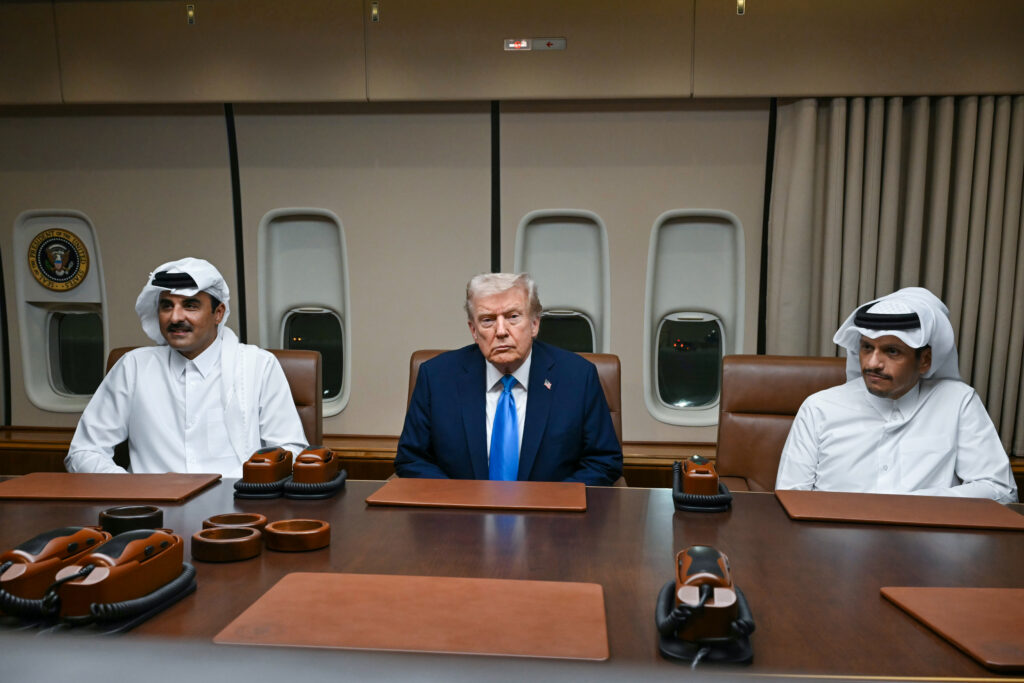
Donald Trump met Saturday with Qatar’s leaders to discuss the fragile truce in Gaza, stopping in the emirate on his way to Asia and talks with China’s Xi Jinping that the US president predicted could yield a “comprehensive deal.”Trump’s refueling stop in Qatar, a key ally in the Gaza negotiations, came as Israel conducted an air strike targeting an alleged Islamic Jihad militant in Gaza, despite the ceasefire brokered by the US president.Trump is set to meet Xi in South Korea on the last day of his regional swing in a bid to seal a deal to end the bruising trade war between the world’s two biggest economies. Trump has also said he would like to meet North Korean leader Kim Jong Un on his trip.He will also visit Malaysia and Japan on the trip, his first to Asia since he returned to the White House in January in a blaze of tariffs and international dealmaking.Aboard Air Force One at Qatar’s Al Udeid Air Base, when asked about ending the trade row with Beijing, Trump said: “I think we have a really good chance of making a really comprehensive deal.”Such an agreement would stave off further 100 percent tariffs on China that are due to come into effect on November 1.During the pit stop at the base, which hosts the regional headquarters for the US military, Trump greeted Emir Sheikh Tamim bin Hamad Al Thani and Prime Minister Sheikh Mohammed bin Abdulrahman Al Thani.”What we’ve done is incredible peace to the Middle East, and they were a very big factor in it,” Trump said.Ahead of the long trip, the US president fueled speculation that he could meet Kim for the first time since 2019, saying: “I’m open to it.”Asked if he would consider North Korea’s demand to be recognized as a nuclear state as a precondition for talks, Trump replied: “Well, I think they are sort of a nuclear power… They got a lot of nuclear weapons, I’ll say that.”Kim has said he would also be open to meeting the US president if Washington drops its demand that Pyongyang give up its nuclear arsenal.- Peace and trade deals -Trump’s first stop will be Malaysia, where he arrives on Sunday, for the Association of Southeast Asian Nations (ASEAN) summit — a meeting he skipped several times in his first term.Trump is set to sign a trade deal with Malaysia, and will witness the signing of a peace accord between Thailand and Cambodia in his continued quest for a Nobel Peace Prize.He said he also expected to meet Brazilian President Luiz Inacio Lula da Silva on the sidelines of the summit to improve ties with the leftist leader after months of bad blood.The US president’s next destination is Tokyo. He will meet Japan’s first woman prime minister Sanae Takaichi, a conservative, on Tuesday.Takaichi said Saturday that she had a “good and candid” initial conversation with Trump.Japan has escaped the worst of the tariffs Trump slapped on countries around the world to end what he calls unfair trade balances that are “ripping off the United States.”- Trump and Xi -The highlight of the trip is expected to be South Korea, with Trump due in the southern port city of Busan on Wednesday ahead of the Asia-Pacific Economic Cooperation (APEC) summit.Trump will meet South Korean President Lee Jae Myung, address an APEC lunch with business leaders and meet US tech bosses for dinner on the sidelines of the summit in the city of Gyeongju.He will meet Xi on Thursday for the first time since his return to office.Global markets will be watching closely to see if they can halt the trade war sparked by Trump’s sweeping tariffs, especially after a recent dispute over Beijing’s rare-earth curbs.Trump said he would also discuss fentanyl with Xi, as he raises pressure on Beijing to curb trafficking of the powerful opioid and cracks down on Latin American drug cartels.burs-jhe/sst/acb
Trump makes Qatar stop en route to Asia summits, Xi talks
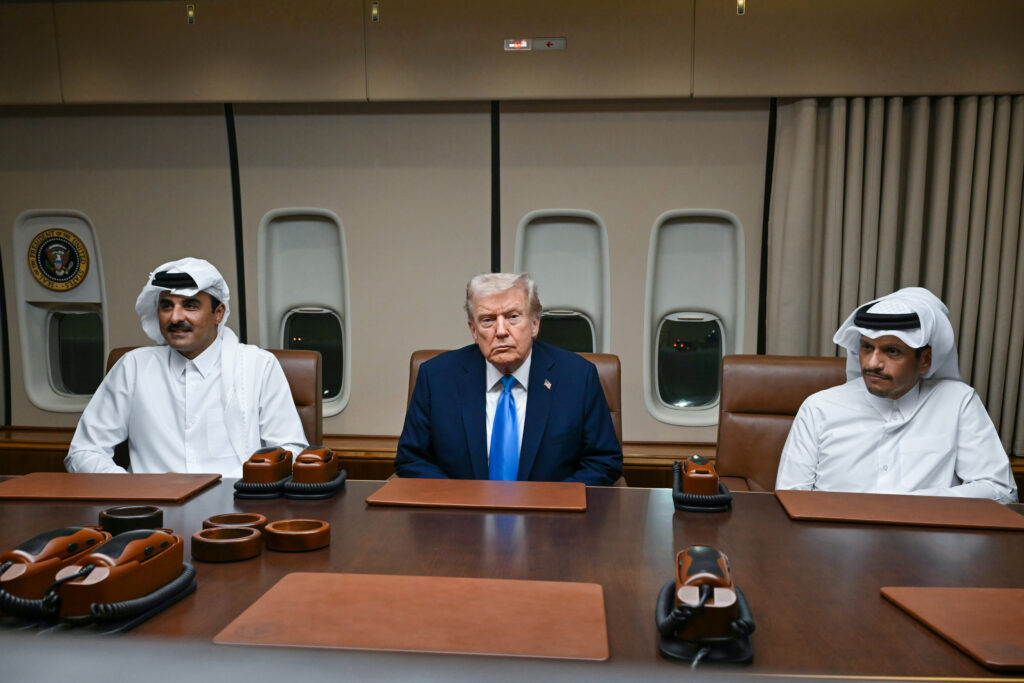
Donald Trump met Saturday with Qatar’s leaders to discuss the fragile truce in Gaza, stopping in the emirate on his way to Asia and talks with China’s Xi Jinping that the US president predicted could yield a “comprehensive deal.”Trump’s refueling stop in Qatar, a key ally in the Gaza negotiations, came as Israel conducted an air strike targeting an alleged Islamic Jihad militant in Gaza, despite the ceasefire brokered by the US president.Trump is set to meet Xi in South Korea on the last day of his regional swing in a bid to seal a deal to end the bruising trade war between the world’s two biggest economies. Trump has also said he would like to meet North Korean leader Kim Jong Un on his trip.He will also visit Malaysia and Japan on the trip, his first to Asia since he returned to the White House in January in a blaze of tariffs and international dealmaking.Aboard Air Force One at Qatar’s Al Udeid Air Base, when asked about ending the trade row with Beijing, Trump said: “I think we have a really good chance of making a really comprehensive deal.”Such an agreement would stave off further 100 percent tariffs on China that are due to come into effect on November 1.During the pit stop at the base, which hosts the regional headquarters for the US military, Trump greeted Emir Sheikh Tamim bin Hamad Al Thani and Prime Minister Sheikh Mohammed bin Abdulrahman Al Thani.”What we’ve done is incredible peace to the Middle East, and they were a very big factor in it,” Trump said.Ahead of the long trip, the US president fueled speculation that he could meet Kim for the first time since 2019, saying: “I’m open to it.”Asked if he would consider North Korea’s demand to be recognized as a nuclear state as a precondition for talks, Trump replied: “Well, I think they are sort of a nuclear power… They got a lot of nuclear weapons, I’ll say that.”Kim has said he would also be open to meeting the US president if Washington drops its demand that Pyongyang give up its nuclear arsenal.- Peace and trade deals -Trump’s first stop will be Malaysia, where he arrives on Sunday, for the Association of Southeast Asian Nations (ASEAN) summit — a meeting he skipped several times in his first term.Trump is set to sign a trade deal with Malaysia, and will witness the signing of a peace accord between Thailand and Cambodia in his continued quest for a Nobel Peace Prize.He said he also expected to meet Brazilian President Luiz Inacio Lula da Silva on the sidelines of the summit to improve ties with the leftist leader after months of bad blood.The US president’s next destination is Tokyo. He will meet Japan’s first woman prime minister Sanae Takaichi, a conservative, on Tuesday.Takaichi said Saturday that she had a “good and candid” initial conversation with Trump.Japan has escaped the worst of the tariffs Trump slapped on countries around the world to end what he calls unfair trade balances that are “ripping off the United States.”- Trump and Xi -The highlight of the trip is expected to be South Korea, with Trump due in the southern port city of Busan on Wednesday ahead of the Asia-Pacific Economic Cooperation (APEC) summit.Trump will meet South Korean President Lee Jae Myung, address an APEC lunch with business leaders and meet US tech bosses for dinner on the sidelines of the summit in the city of Gyeongju.He will meet Xi on Thursday for the first time since his return to office.Global markets will be watching closely to see if they can halt the trade war sparked by Trump’s sweeping tariffs, especially after a recent dispute over Beijing’s rare-earth curbs.Trump said he would also discuss fentanyl with Xi, as he raises pressure on Beijing to curb trafficking of the powerful opioid and cracks down on Latin American drug cartels.burs-jhe/sst/acb
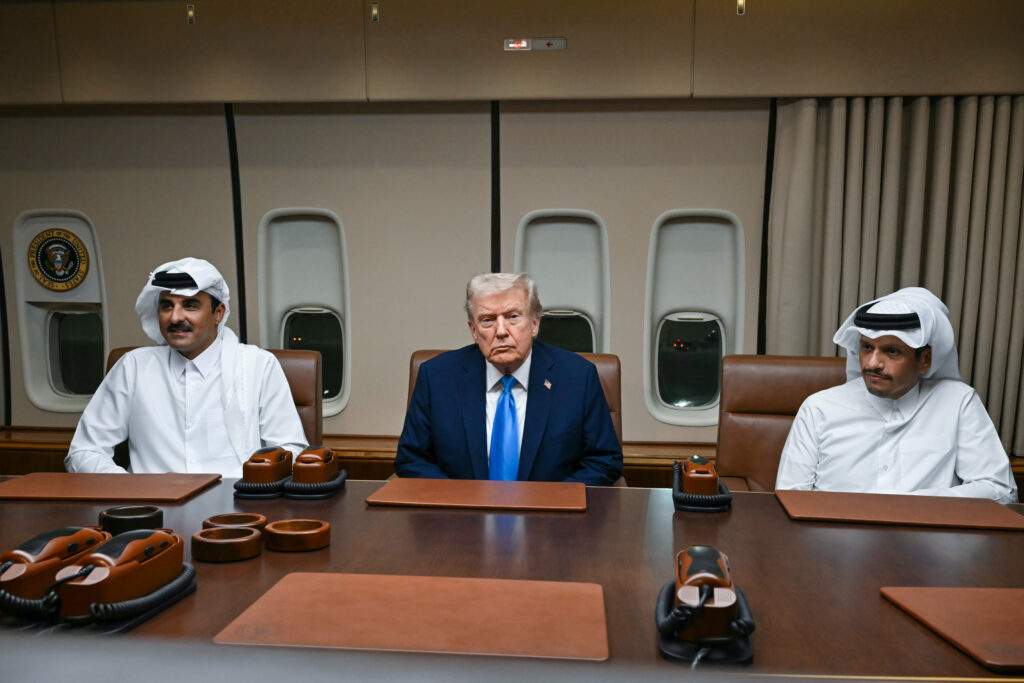
Donald Trump fait escale au Qatar avant une tournée en Asie, où il rencontrera Xi Jinping
Donald Trump a fait halte samedi au Qatar pour remercier l’émirat du rôle joué dans le cessez-le-feu à Gaza, première étape d’une importante tournée en Asie dont le point d’orgue sera une rencontre avec le président chinois Xi Jinping, lourde d’enjeux pour l’économie mondiale.”Je pense que nous avons vraiment de bonnes chances de parvenir à un accord global”, qui permettrait d’éviter l’entrée en vigueur de droits de douane supplémentaires de 100% sur les produits chinois à partir du 1er novembre, a déclaré le président américain. En chemin vers la Malaisie, il a reçu à bord l’avion présidentiel Air Force One l’émir et le Premier ministre du Qatar, saluant la contribution de l’émirat à l’instauration de la trêve entre Israël et le mouvement islamiste palestinien Hamas dans la bande de Gaza sur la base de son plan pour mettre fin à deux ans de guerre.”Ce que nous avons fait est incroyable, la paix au Moyen-Orient, et ils en sont un grand facteur”, a déclaré Donald Trump en présence de l’émir, Cheikh Tamim ben Hamad Al-Thani, et du Premier ministre, Cheikh Mohammed ben Abdelrahmane Al-Thani.- Rencontre avec Kim Jong Un ? -Par ailleurs, M. Trump s’est dit “ouvert” à une rencontre avec le dirigeant nord-coréen Kim Jong Un lors de cette tournée, sa première dans la région depuis son retour au pouvoir en janvier, qui le conduira en Malaisie, au Japon et en Corée du Sud.”J’aimerais bien, il sait que nous y allons”, a-t-il déclaré aux journalistes qui le questionnaient sur l’éventualité d’une telle entrevue lors de son passage dans la péninsule coréenne. Sa dernière rencontre avec Kim Jong Un remonte à 2019.A la question de savoir s’il accepterait de reconnaître la Corée du Nord comme une puissance nucléaire — une condition posée à toute rencontre par Pyongyang –, le président américain a répondu : “Eh bien, je pense qu’ils sont en quelque sorte une puissance nucléaire… Ils ont beaucoup d’armes nucléaires”.Avant l’arrivée de M. Trump à Kuala Lumpur, les discussions américano-chinoises qui se sont ouvertes dans la capitale malaisienne afin de trouver une issue à la guerre commerciale ont été “très constructives” et devraient reprendre dimanche, a affirmé un porte-parole du Trésor américain.Tous les pays hôtes devraient dérouler le tapis rouge à Donald Trump afin de s’attirer ses faveurs et d’obtenir les meilleurs accords possibles en matière de droits de douane et de garanties de sécurité.Un haut responsable américain a déclaré vendredi que le président signerait “une série d’accords économiques”, notamment sur les terres rares.- Accord de paix thaïlando-cambodgien -A Kuala Lumpur, le président américain participera dimanche au sommet de l’Association des nations de l’Asie du Sud-Est (Asean), qu’il avait snobé à plusieurs reprises lors de son premier mandat.Il devrait y conclure un accord commercial avec la Malaisie et, surtout, assister à la signature d’un accord de paix entre la Thaïlande et le Cambodge, qui avaient déclaré un cessez-le-feu le 29 juillet, à la suite d’une intervention de Donald Trump.Une rencontre avec le président brésilien Luiz Inacio Lula da Silva, avec lequel les différends ont commencé à s’aplanir, est également prévue à l’occasion du sommet de l’Asean.Le président américain se rendra ensuite lundi au Japon où il rencontrera le lendemain la nationaliste Sanae Takaichi, devenue cette semaine la première femme à prendre la tête du gouvernement japonais.Celle-ci a déclaré samedi avoir eu une “bonne et franche” conversation téléphonique avec Donald Trump. Tokyo a signé cet été avec Washington un accord commercial dont certains détails restent à discuter.La tournée se conclura en Corée du Sud, où Donald Trump est attendu à partir de mercredi pour un sommet de la Coopération économique Asie-Pacifique (Apec), en marge duquel il aura un entretien jeudi avec Xi Jinping à Gyeongju.Il a dit espérer conclure un accord avec le président chinois sur “tous les sujets”, même s’il entend surtout “discuter de la relation économique et commerciale”, selon un haut responsable américain s’exprimant sous le couvert de l’anonymat.Cette rencontre, qui sera très suivie par les marchés boursiers, est d’autant plus cruciale que la Chine a annoncé une réduction de ses exportations de terres rares, à laquelle Donald Trump a répliqué en menaçant d’imposer 100% de droits de douane supplémentaires aux produits chinois.

Donald Trump fait escale au Qatar avant une tournée en Asie, où il rencontrera Xi Jinping
Donald Trump a fait halte samedi au Qatar pour remercier l’émirat du rôle joué dans le cessez-le-feu à Gaza, première étape d’une importante tournée en Asie dont le point d’orgue sera une rencontre avec le président chinois Xi Jinping, lourde d’enjeux pour l’économie mondiale.”Je pense que nous avons vraiment de bonnes chances de parvenir à un accord global”, qui permettrait d’éviter l’entrée en vigueur de droits de douane supplémentaires de 100% sur les produits chinois à partir du 1er novembre, a déclaré le président américain. En chemin vers la Malaisie, il a reçu à bord l’avion présidentiel Air Force One l’émir et le Premier ministre du Qatar, saluant la contribution de l’émirat à l’instauration de la trêve entre Israël et le mouvement islamiste palestinien Hamas dans la bande de Gaza sur la base de son plan pour mettre fin à deux ans de guerre.”Ce que nous avons fait est incroyable, la paix au Moyen-Orient, et ils en sont un grand facteur”, a déclaré Donald Trump en présence de l’émir, Cheikh Tamim ben Hamad Al-Thani, et du Premier ministre, Cheikh Mohammed ben Abdelrahmane Al-Thani.- Rencontre avec Kim Jong Un ? -Par ailleurs, M. Trump s’est dit “ouvert” à une rencontre avec le dirigeant nord-coréen Kim Jong Un lors de cette tournée, sa première dans la région depuis son retour au pouvoir en janvier, qui le conduira en Malaisie, au Japon et en Corée du Sud.”J’aimerais bien, il sait que nous y allons”, a-t-il déclaré aux journalistes qui le questionnaient sur l’éventualité d’une telle entrevue lors de son passage dans la péninsule coréenne. Sa dernière rencontre avec Kim Jong Un remonte à 2019.A la question de savoir s’il accepterait de reconnaître la Corée du Nord comme une puissance nucléaire — une condition posée à toute rencontre par Pyongyang –, le président américain a répondu : “Eh bien, je pense qu’ils sont en quelque sorte une puissance nucléaire… Ils ont beaucoup d’armes nucléaires”.Avant l’arrivée de M. Trump à Kuala Lumpur, les discussions américano-chinoises qui se sont ouvertes dans la capitale malaisienne afin de trouver une issue à la guerre commerciale ont été “très constructives” et devraient reprendre dimanche, a affirmé un porte-parole du Trésor américain.Tous les pays hôtes devraient dérouler le tapis rouge à Donald Trump afin de s’attirer ses faveurs et d’obtenir les meilleurs accords possibles en matière de droits de douane et de garanties de sécurité.Un haut responsable américain a déclaré vendredi que le président signerait “une série d’accords économiques”, notamment sur les terres rares.- Accord de paix thaïlando-cambodgien -A Kuala Lumpur, le président américain participera dimanche au sommet de l’Association des nations de l’Asie du Sud-Est (Asean), qu’il avait snobé à plusieurs reprises lors de son premier mandat.Il devrait y conclure un accord commercial avec la Malaisie et, surtout, assister à la signature d’un accord de paix entre la Thaïlande et le Cambodge, qui avaient déclaré un cessez-le-feu le 29 juillet, à la suite d’une intervention de Donald Trump.Une rencontre avec le président brésilien Luiz Inacio Lula da Silva, avec lequel les différends ont commencé à s’aplanir, est également prévue à l’occasion du sommet de l’Asean.Le président américain se rendra ensuite lundi au Japon où il rencontrera le lendemain la nationaliste Sanae Takaichi, devenue cette semaine la première femme à prendre la tête du gouvernement japonais.Celle-ci a déclaré samedi avoir eu une “bonne et franche” conversation téléphonique avec Donald Trump. Tokyo a signé cet été avec Washington un accord commercial dont certains détails restent à discuter.La tournée se conclura en Corée du Sud, où Donald Trump est attendu à partir de mercredi pour un sommet de la Coopération économique Asie-Pacifique (Apec), en marge duquel il aura un entretien jeudi avec Xi Jinping à Gyeongju.Il a dit espérer conclure un accord avec le président chinois sur “tous les sujets”, même s’il entend surtout “discuter de la relation économique et commerciale”, selon un haut responsable américain s’exprimant sous le couvert de l’anonymat.Cette rencontre, qui sera très suivie par les marchés boursiers, est d’autant plus cruciale que la Chine a annoncé une réduction de ses exportations de terres rares, à laquelle Donald Trump a répliqué en menaçant d’imposer 100% de droits de douane supplémentaires aux produits chinois.
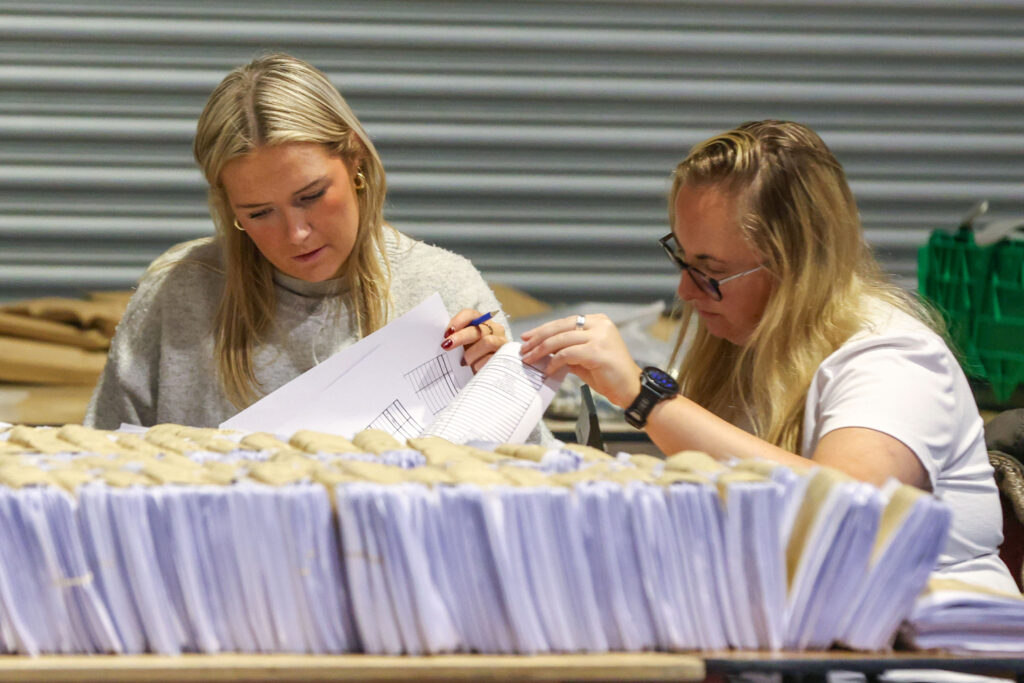
Irlande : victoire écrasante à la présidentielle de la candidate de gauche Catherine Connolly
La candidate indépendante de gauche Catherine Connolly a très largement remporté la présidentielle de vendredi en Irlande, tandis que le nombre des bulletins nuls a atteint un niveau inédit, selon les résultats officiels définitifs fournis samedi soir.Cette ex-avocate de 68 ans devenue députée en 2016, qui critique aussi bien l’Union européenne que les Etats-Unis, a obtenu plus de 63% des suffrages contre 29,5% pour Heather Humphreys, du parti de centre droit présent au gouvernement Fine Gael, sa seule véritable rivale dans ce scrutin.Un troisième candidat, Jim Gavin, du Fianna Fail, la principale formation – également de centre droit – au sein de la coalition au pouvoir, avait annoncé son retrait de la course début octobre mais a quand même eu 7% des voix.”Catherine sera une présidente pour nous tous et elle sera ma présidente”, avait quelques heures plus tôt concédé à la télévision Mme HumphreysCatherine Connolly succédera donc à Michael Higgins, 84 ans, qui a enchaîné deux mandats de sept ans depuis 2011 à ce poste essentiellement honorifique.- “Un immense privilège” -Si la participation a été de près de 46%, donc, contre toute attente, plus élevée qu’à la précédente présidentielle de 2018, cette élection a été ternie par la quantité record des bulletins de vote annulés, environ 13% du total, dont certains portant les mots “pas de démocratie” ou des messages anti-immigration. A l’instar du Royaume-Uni voisin, l’Irlande connaît en effet un débat de plus en plus conflictuel sur l’afflux de demandeurs d’asile, avec des manifestations parfois violentes.Des personnalités conservatrices avaient appelé à l’abstention, notamment en signe de protestation contre le fait que seuls deux candidats s’affrontaient réellement, et ce pour la première fois depuis 1990. La candidate des conservateurs, Maria Steen, n’avait pas réuni suffisamment de soutiens parmi les parlementaires pour pouvoir se présenter. “Ce sera un immense privilège de vous servir”, a assuré Catherine Connolly dans son discours de remerciement après la publication des résultats. “A ceux qui n’ont pas voté pour moi et à ceux qui ont rendu nul leur vote, laissez-moi vous dire que je serai une présidente inclusive, à votre écoute”, a-t-elle poursuivi. Mme Connolly s’est en outre engagée à être “une voix pour la paix, une voix qui s’appuie sur notre politique de neutralité” et qui insiste sur “la menace existentielle que constitue le changement climatique”.- Tensions en perspective -“Je me réjouis de travailler avec la nouvelle présidente (…) à un moment où l’Irlande continue de jouer un rôle important sur la scène internationale”, a pour sa part affirmé le Premier ministre Michael Martin, à la tête du Fianna Fail.”Je lui souhaite tout le succès possible”, avait auparavant clamé Simon Harris (Fine Gael), le vice-Premier ministre. Catherine Connolly “parle au nom des personnes ordinaires”, a estimé auprès de l’AFP Una Corcoran, 62 ans, à Galway, sa ville natale dans l’ouest de l’Irlande.”Dans l’ensemble, je trouve qu’elle est très intègre. Elle n’a pas peur d’être impopulaire. Et c’est une oratrice très douée et assurée. Je pense qu’elle réussira”, a commenté Oisin Woods, un employé du secteur des technologies âgé de 35 ans qui a également voté pour elle.Connue pour son franc-parler, Catherine Connolly était soutenue par les principaux partis d’opposition, dont les Verts et la formation nationaliste Sinn Fein, autrefois la vitrine politique de l’Armée républicaine irlandaise (IRA). Militant pour la réunification de l’île d’Irlande, elle est opposée à une augmentation des dépenses de défense et en faveur du maintien de la tradition de neutralité de l’Irlande, un pays de 5,2 millions d’habitants devenu membre de l’UE en 1973 et qui a un programme de partenariat avec l’Otan, dont elle ne fait pas partie.En septembre, Mme Connolly a toutefois réitéré sa condamnation de l’invasion de l’Ukraine par la Russie. “Je n’ai jamais, jamais hésité. Ce que je dis, c’est qu’un pays neutre comme le nôtre devrait dénoncer tous les abus de pouvoir – de la Russie et aussi de l’Amérique”, a-t-elle alors ajouté.Cette femme charismatique et sportive, qui parle couramment le gaélique, a par ailleurs condamné “le génocide” dans la bande de Gaza.Des commentateurs prédisent que ses positions tranchées sur la politique étrangère, la défense mais aussi le logement pourraient provoquer des tensions avec le gouvernement. La manière dont Catherine Connolly “gère les relations avec un gouvernement dont elle estime clairement qu’il poursuit de mauvaises politiques crée désormais une nouvelle incertitude – et possiblement un conflit – dans la politique irlandaise”, a ainsi écrit l’Irish Times.