Ligue 1: Lens renverse Rennes et met la pression sur le PSG

Mené, puis à dix pendant une demi-heure, Lens a fini par renverser Rennes (3-1) samedi après-midi au stade Bollaert pour reprendre la première place de Ligue 1 au Paris SG avant le classique face à Marseille dimanche soir.Ce succès est de ceux dont il faudra se remémorer en fin de saison, surtout si les Lensois atteignent leur objectif de se qualifier pour une coupe d’Europe, alors qu’ils n’osent pas encore évoquer la Ligue des champions.Dans la douleur, les Sang et Or (49 points) poursuivent leur chassé-croisé avec le champion d’Europe, en reprenant un point de plus qu’eux avant le terme de cette 21e journée de championnat.Surtout, ils sont assurés de ne pas perdre de terrain sur leurs poursuivants Marseille (3e) et Lyon (4e), tous deux à 39 points avant leur match de ce week-end.L’Europe, Rennes (6e, 31 pts) s’en éloigne de plus en plus. Le club breton encaisse un quatrième revers de suite qui fragilise un peu plus son entraîneur Habib Beye.Le scénario de la rencontre a démontré toutes les ressources mentales des joueurs de Pierre Sage, calme comme à son habitude malgré la tempête qui menaçait, sous le ciel gris de l’Artois.L’entraîneur lensois a d’abord constaté le nouveau retard à l’allumage des siens, mauvaise habitude prise ces dernières semaines qui ne semble pas vouloir partir. Après de bonnes premières minutes tant dans l’intensité que dans la qualité technique, les Rennais ont frappé dès leur première occasion, par leur avant-centre Esteban Lepaul (dix buts), très joliment trouvé par Arnaud Nordin, dans le dos de Samson Baidoo (8e), de retour de blessure.- Aguilar entre ombre et lumière -Ce but a perturbé les Lensois, qui ont parfois surjoué en attaque, et montré quelques signes de fébrilité en défense, malgré une possession largement à leur avantage en première période (64%). Alors ils s’en sont remis à leur avant-centre Odsonne Édouard, qui a d’abord trop écrasé sa frappe à l’entrée de la surface (30e), avant d’égaliser en dominant physiquement Alidu Seidu (41e).Auteur de sa huitième réalisation de la saison en championnat, Édouard a été bien trouvé par Ruben Aguilar, qui a été l’acteur majeur du match, dans les bons et les mauvais coups.Le piston droit a encore été à l’offensive mais maladroit dans sa dernière passe (49e), avant d’égaliser de la tête, idéalement servi par Florian Thauvin (54e). Mais dans la foulée, il a reçu un deuxième carton jaune synonyme d’exclusion pour une semelle sur Mousa Al-Tamari.Une partie du scénario du match aller (0-0), où Jonathan Gradit avait été exclu, s’est donc répété à Bollaert.Mais cette fois, les Artésiens l’ont emporté, bien aidés par leur dernière recrue Allan Saint-Maximin. Entré en jeu à la 61e minute, l’ailier a été trouvé rapidement par Robin Risser d’un long dégagement, puis a virevolté devant deux défenseurs rennais avant de tromper Mathys Silistrie d’une frappe à l’entrée de la surface (79e).Peu habitué à de tels coups d’éclat, Bollaert a exulté comme rarement devant ces débuts idyllique de l’ancien joueur du Club America, qui a quitté le Mexique cet hiver en dénonçant des discriminations racistes subies par ses enfants.Comme lors du premier but, Silistrie, titulaire en l’absence de Brice Samba, écarté, aurait dû mieux faire.Malgré une supériorité numérique de plus de trente minute, Rennes n’est pas parvenu à être dangereux, Al-Tamari (74e), Mahdi Camara (90e) et Mohamadou Nagida (90e+2) ne cadrant pas leurs tentatives. Le signe d’une équipe en pleine crise.Loin devant, Lens poursuit sa saison de rêve.


Demonstrators in Berlin call for fall of Iran’s Islamic republic

Several thousand demonstrators rallied in Berlin on Saturday calling for an end to Iran’s clerical-led government and its bloody repression of protests.Police said 10,000 people had attended one protest at the city’s Brandenburg Gate organised by the MEK, an exiled opposition group considered “terrorist” by Tehran.Another demonstration, this one organised by supporters of Reza Pahlavi, the US-based son of the last shah of Iran, attracted 1,600 people, said police. They marched along a major avenue, carrying shah-era Iranian flags as well as US, German and Israeli ones.The demonstrations followed protests in Iran that began at the end of December. Triggered by economic malaise in the sanctions-hit country, they spiralled into anti-government street demonstrations in January.They were countered by a crackdown by the security forces, which rights groups say killed thousands of people.Iran is currently engaged in talks with the United States to stave off threatened military action. US President Donald Trump has deployed a naval battle group and wants Tehran to end nuclear enrichment, curb the range of its ballistic missiles, and ease its repression.- Rival opposition groups -The Berlin rally by the MEK featured Charles Michel, the former president of the EU’s European Council, and Peter Altmaier, former German economy minister. Mike Pompeo, the United States’ former secretary of state, also addressed the crowd by video.The opposition group seeks to portray itself as a leading Iranian opposition force. But it is reviled by many Iranians for having fought on Iraq’s side against Iran in a war in the 1980s. Reza Pahlavi, whose name and photos have featured in Iranian protests, is also vying to be seen as an opposition figurehead, distinct from the MEK. He has, in interviews in the United States and on social media, urged Iranians to “be ready” for more protests.At the MEK-organised demonstration at the Brandenburg Gate one participant, Samin Sabet, a 40-year-old hotel employee, said Iran should have free and fair elections.”We don’t want a dictatorships, nor a monarchy,” she told AFP.Another demonstrator, Iraj Abedini, a 61-year-old psychologist who left Iran four decades ago, said he was there “to support the Iranian people” after “having lost two nephews in the January protests” in the Iranian city of Isfahan.He predicted that the Iran-US talks, hosted by Oman, “will go nowhere”.”The Iranian regime is trying to use the negotiations to stay in power. And the US government, which has other plans, doesn’t support the Iranian people,” he said.

Suryakumar’s 84 leads India to opening win over USA in T20 World Cup

A sparkling unbeaten 84 from India captain Suryakumar Yadav and three wickets from late call-up Mohammed Siraj in Mumbai on Saturday helped India to avoid a shock defeat to the United States as they opened their defence of the T20 World Cup.India were in trouble at 77-6 before Suryakumar took them to a competitive 161-9 at a packed Wankhede stadium and won by 29 runs as the USA could only muster 132-8 in reply.Chasing 162 for a massive upset, the Americans were quickly reduced to 13-3 as Siraj, only added to the squad 24 hours earlier as a replacement for the injured Harshit Rana, struck twice in his first two overs.A 58-run fourth wicket partnership between Milind Kumar (34) and Sanjay Krishnamurthi (37) put the USA on course for a stunning win.They were still in the hunt at 98-4 in the 16th over when spinner Axar Patel took two wickets in two balls to end their hopes.Suryakumar paced his 49-ball innings brilliantly, shepherding the tail and smashing 10 fours and four sixes as India plundered 75 off the final six overs.Siraj, who had not played a T20 international since July 2024, celebrated his recall by taking a wicket with his fourth ball.USA opener Andries Gous had just hit Siraj for six but next ball could only find Tilak Varma who took a low catch.Arshdeep Singh got in on the act at the other end, removing captain Monank Patel, who was caught by Shivam Dube off a leading edge. That left the USA at 11-2 which became 13-3 when Siraj struck again to remove Saiteja Mukkamalla for two.Siraj finished with 3-29 after trapping Shubham Ranjane lbw with the final ball of the innings.- Mini-collapse -After US captain Patel won the toss and opted to field, his decision was rewarded with the prize wicket of the dangerous Abhishek Sharma off the first ball he faced.The left-handed Abhishek attempted a typically flamboyant back-foot drive for six off the bowling of Ali Khan to be caught on the cover boundary by Sanjay Krishnamurthi.Number three Varma announced his arrival with a six and two fours off Saurabh Netravalkar.From a comfortable 45-1, Ishan Kishan slapped Shadley van Schalkwyk to Kumar at mid-off on 20 to spark a mini-collapse for India.It was soon 46-3 as Tilak succumbed to Van Schalkwyk, splicing an attempted pull to Patel at midwicket.Next ball Shivam Dube also fell to leave Van Schalkwyk on a hat-trick, which was successfully staved off by Suryakumar.India crept to 63-4 at the halfway stage which soon became 72-5 and 77-6 when Rinku Singh was caught in the deep and Hardik Pandya perished in similar fashion.Suryakumar bided his time before unleashing an assault in the 16th over, hitting three fours and a six off seamer Netravalkar.He reached his fifty off 36 balls with a trademark wristy sweep for four.The final over saw Suryakumar smash 21 runs including two sixes off the hapless Netravalkar, who finished with the sorry figures 0-65 off his four overs.Van Schalkwyk was the pick of the American attack with 4-25.

Opinions of Zuckerberg hang over social media addiction trial jury selection

A jury has been confirmed in a landmark social media addiction trial in the US state of California, a process dominated by references to tech giant Meta’s divisive founder Mark Zuckerberg.Meta’s lawyers fought for six days in court to remove jurors who they deemed overly hostile to Facebook and Instagram, two of the social media platforms involved in the case.The plaintiff’s lawyers sought to dismiss people, mostly men, who believed that young internet users’ mental health issues are more attributable to parental failures rather than tech platform designers.With the jury of 12 members and six alternates approved on Friday, arguments in the case are now scheduled to begin Monday in Los Angeles Superior Court.The case is being called a bellwether proceeding because its outcome could set the tone for a tidal wave of similar litigation across the United States.Defendants at the trial are Alphabet and Meta, the tech titans behind YouTube and Instagram. TikTok and Snapchat were also accused, but have since settled for an undisclosed amount.The trial focuses on allegations that a 20-year-old woman identified by the initials K.G.M. suffered severe mental harm because she became addicted to social media as a child.She accuses Meta and YouTube of knowingly designing addictive apps, to the detriment of her mental health. – ‘Start fairly’ -Jury selection was dominated by recurring references to Zuckerberg, the head of Meta and co-founder of Facebook who reached global fame after the Hollywood film “The Social Network.””I feel impartial toward the plaintiff, but based on things Mark Zuckerberg has done objectively — I have strong feelings about — and I think the defendant would start further behind,” said one young woman.Many potential jurors criticized Facebook’s early days — it was designed as a platform for college students to rate women’s looks — and cited the Cambridge Analytica privacy breach of 2018.They also said it would be difficult for them to accept the billionaire’s testimony — expected in the next two weeks — without prejudice.Meta’s lawyer, Phyllis Jones, raised frequent objections to such jurors.She said it was “very important that both sides start fairly, with no disadvantage, that you look at the evidence fairly and decide.”Others were dismissed for the opposite reason.”I like this guy,” said one rare Zuckerberg fan. “I regret not owning Meta shares.” He was dismissed by the plaintiff’s lawyer, Mark Lanier.Others to be removed included a man who expressed his anger against psychiatrists, and several people whose loved ones suffered from social media addiction or harassment.- Seeking distance -Alphabet’s lawyers were keen to ensure that their platform YouTube was not lumped in with Meta.”Does everybody understand that YouTube and Meta are very different companies? Does everyone understand that (Zuckerberg) doesn’t run YouTube?” asked Luis Li, a lawyer for Google’s video platform.One man said he saw the potential for YouTube to seek to trigger “immediate dopamine” rushes among users through its “Shorts” feature.He said his niece spends too much time on TikTok, which popularized a platform that provides endless scrolling of ultra-short-format videos.The case will focus not on content, on which front platforms are largely protected by US law, but on the design of algorithms and personalization features.The plaintiffs allege that the platforms are negligent and purposely designed to be harmful, echoing a strategy successfully used against the tobacco industry.Meta and YouTube strongly deny the allegations, and also unsuccessfully argued on Friday for the judge to declare statements comparing their platforms to tobacco and other addictive products to be illegitimate.The debate on the platform’s level of responsibility for their effect on users was already underway, even at this early stage of the trial.Alphabet’s lawyer Li asked the panel if people spend too much time on phones, with the majority nodding in agreement.”As a society, is it a problem?” he asked, with most hands again going up.He then asked if this is “because of YouTube?” prompting hesitation from the jurors.

Over 2,200 IS detainees transferred to Iraq from Syria: Iraqi official

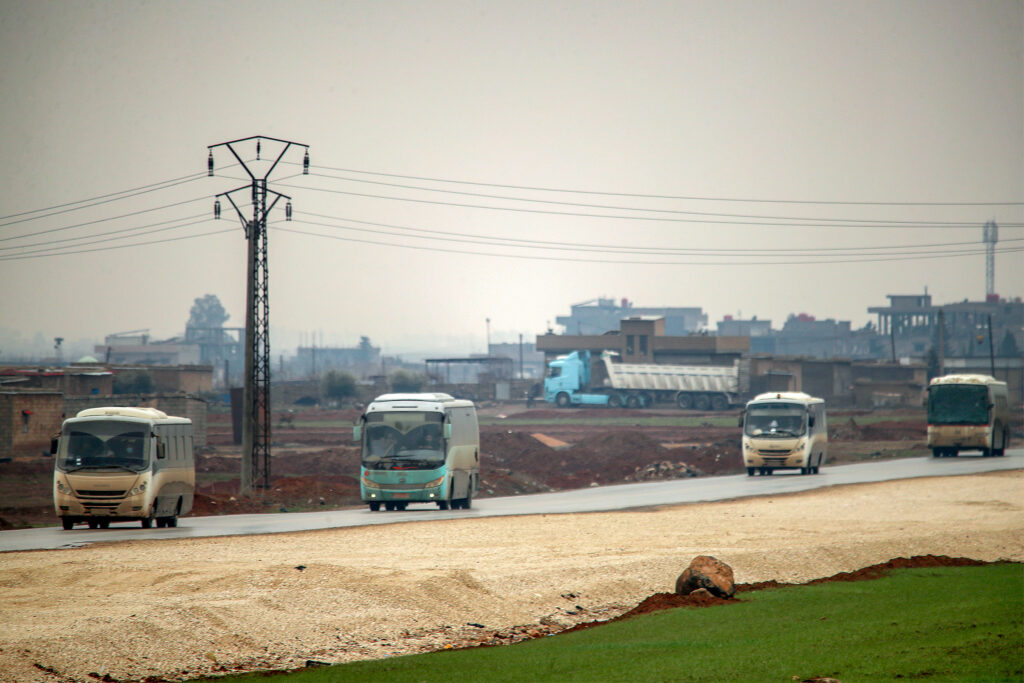
Iraq has so far received 2,225 Islamic State group detainees, whom the US military began transferring from Syria last month, an Iraqi official told AFP on Saturday.They are among up to 7,000 IS detainees whose transfer from Syria to Iraq the US Central Command (CENTCOM) announced last month, in a move it said was aimed at “ensuring that the terrorists remain in secure detention facilities”.Previously, they had been held in prisons and camps administered by the Kurdish-led Syrian Democratic Forces (SDF) in northeast Syria.The announcement of the transfer plan last month came after US envoy to Syria Tom Barrack declared that the SDF’s role in confronting IS had come to an end.Saad Maan, head of the security information cell attached to the Iraqi prime minister’s office, told AFP on Saturday that “Iraq has received 2,225 terrorists from the Syrian side by land and air, in coordination with the international coalition”, which Washington has led since 2014 to fight IS.He said they are being held in “strict, regular detention centres”.A Kurdish military source confirmed to AFP the “continued transfer of ISIS detainees from Syria to Iraq under the protection of the international coalition”, using another name for IS.On Saturday, an AFP photographer near the Kurdish-majority city of Qamishli in northeastern Syria saw a US military convoy and 11 buses with tinted windows.- Iraq calls for repatriation -IS seized swathes of northern and western Iraq starting in 2014, until Iraqi forces, backed by the international coalition, managed to defeat it in 2017.Iraq is still recovering from the severe abuses committed by the jihadists.In recent years, Iraqi courts have issued death and life sentences against those convicted of terrorism offences.Thousands of Iraqis and foreign nationals convicted of membership in the group are incarcerated in Iraqi prisons.On Monday, the Iraqi judiciary announced it had begun investigative procedures involving 1,387 detainees it received as part of the US military’s operation.In a statement to the Iraqi News Agency on Saturday, Maan said “the established principle is to try all those involved in crimes against Iraqis and those belonging to the terrorist ISIS organisation before the competent Iraqi courts”.Among the detainees being transferred to Iraq are Syrians, Iraqis, Europeans and holders of other nationalities, according to Iraqi security sources.Iraq is calling on the concerned countries to repatriate their citizens and ensure their prosecution.Maan noted that “the process of handing over the terrorists to their countries will begin once the legal requirements are completed”.

Deux Français arrivent à Shanghai, ralliée à pied depuis la France

Un an et demi de voyage, 16 pays traversés: deux marcheurs français sont arrivés samedi en Chine, à Shanghai, destination finale de leur périple à pied entrepris en 2024 au départ de la France.Épuisés mais heureux, Loïc Voisot, 26 ans, et Benjamin Humblot, 27 ans, partis d’Annecy, dans les Alpes françaises, en septembre 2024, se sont embrassés en arrivant sur le boulevard touristique du Bund, à Shanghai, dans l’est de la Chine.”Nous avons pensé à ce moment presque tous les jours depuis plus d’un an maintenant, alors c’est un sentiment vraiment intense,” s’est exclamé en anglais Benjamin Humblot.”On a du mal à réaliser que c’est réel, qu’on est enfin arrivé”, a confié à l’AFP Loïc Voisot. “Tous les gens qu’on a rencontrés sur la route, c’était merveilleux… qui nous ont aidés, hébergés, donné à manger, ou juste souri, indiqué la route”, raconte-t-il.”On est fier surtout d’avoir osé faire ça (…), fier d’avoir osé essayer”, a-t-il témoigné.Loïc Voisot, consultant en changement climatique, et Benjamin Humblot, qui gérait des équipes informatiques avant le départ, avaient décidé de rallier à pied la ville portuaire chinoise pour réaliser leur rêve de “grande aventure”.Depuis la France, la Chine “est un des points les plus éloignés qu’on peut rejoindre à pied en prenant la direction de l’est, ça symbolise le bout du monde”, a expliqué à l’AFP Benjamin Humblot.Le duo, qui voulait visiter la Chine, ne voulait pas prendre l’avion pour s’y rendre, en raison de l’impact de ce mode de transport sur le changement climatique. “Nous sommes tous les deux conscients du changement climatique, et de la responsabilité des humains pour ce qui arrive”, souligné Loïc Voisot.Leur périple s’est achevé après 518 jours et quelque 12.850 kilomètres – environ 45 km par jour – parcourus à pied, à l’exception d’un tronçon en Russie effectué en car pour des raisons de sécurité et de logistique.Il a été financé pour environ la moitié par une cagnotte sur internet, et par des entreprises de la région d’Annecy pour le reste, ont-ils expliqué à l’AFP.- “Si tes rêves sont fous…” -Une cinquantaine de personnes s’étaient rassemblées au point de départ des 10 derniers kilomètres de l’odyssée des deux marcheurs, rejoints au bord du chemin par des journalistes, des Français vivant à Shanghai, et de nombreux Chinois qui avaient suivi leur progression dans le pays sur les réseaux sociaux.”Si tes rêves sont fous, avance simplement pas à pas : parfois tu n’y arriveras pas, mais parfois tu y arriveras”, a dit Loïc Voisot. Les deux Français se connaissent depuis l’âge de dix ans, et ont été à l’école et à l’université ensemble.Le nombre de leurs supporteurs n’a cessé d’augmenter au fil de leur périple.”C’est très impressionnant qu’ils aient eu cette idée et l’aient réalisée”, a dit Salome Gao, une Chinoise de 28 ans qui leur a demandé des autographes.Luo, une autre femme, âgée de 57 ans, a confié avoir elle-même marché deux heures pour rejoindre les deux Français sur les derniers kilomètres de leur périple.Les deux hommes ont cependant confié que ce voyage n’avait pas été toujours facile.”Il y a eu des hivers très rigoureux, nous devions traverser le désert en Ouzbékistan”, a souligné Loïc Voisot.Mais ils ont ajouté ne pas exclure de poursuivre l’aventure.”Nous avons atteint l’océan, et nous nous disions – pourquoi ne pas prendre un bateau pour continuer vers l’est et les Etats-Unis?”, a dit Benjamin Humblot. Dans ce cas, ils devraient traverser le continent américain, puis monter à nouveau dans un bateau à destination du nord de la France, et marcher encore jusqu’à Annecy, pour boucler la boucle.Pour le court terme, les projets sont plus simples, dit Loïc Voisot : “Dormir beaucoup !”

La brigade fluviale cartographie les épaves de voitures pour élucider des cold cases

Trois plongeurs de la brigade fluviale s’immergent dans la Seine, munis d’un drone sous-marin qui retransmet leur progression sur un écran à la surface. Leur objectif: procéder à la reconnaissance de trois épaves de voitures détectées plusieurs mois auparavant.Lancé il y a six mois, le projet de Localisation des épaves, traitement hydrographique et enquête (LETHE) de la gendarmerie vise à cartographier l’ensemble des cours et plans d’eau de l’Hexagone pour y déceler des carcasses de véhicules et d’éventuels cadavres restés coincés dans l’habitacle.Le but de cette modélisation à grande échelle est de retrouver des personnes disparues et d’aider à la résolution de crimes non élucidés (cold cases).”L’élément déclencheur a été la découverte (en octobre 2023, NDLR) d’ossements dans la Seille, une petite rivière en Bourgogne, lors de la fouille d’une voiture immergée”, explique l’adjudant-chef Yohan Gérard, commandant de la brigade fluviale de Conflans-Saint-Honorine (Yvelines) et coordinateur du projet. Après analyse, les gendarmes ont réalisé qu’il s’agissait du corps d’un homme, resté sous l’eau pendant 40 ans.”Un autre constat est le fait qu’on ait connaissance de plusieurs centaines d’épaves de voitures dans le cadre d’affaires dites courantes sans qu’elles soient recensées”, ajoute Yohan Gérard.Réparties sur l’ensemble du territoire national, les unités fluviales comptent au total une centaine de plongeurs, qui interviennent dans leur zone de compétence.”Seuls les plongeurs sont capables d’aller sur la scène, d’où le besoin de la numériser pour en rendre compte” aux autorités judiciaires, explique Yohan Gérard.- “Aspirateurs subaquatiques” – Pour constituer cette mémoire cartographique, les techniciens de l’investigation sous-marine suivent un parcours bien jalonné.Première étape: la prospection grâce aux échos d’un sonar qui permet de localiser les véhicules immergés.Vient ensuite la phase de reconnaissance et de constatations durant laquelle les plongeurs cherchent à identifier la marque, le modèle ou encore l’état de la voiture.La fouille de l’habitacle est la partie la plus chronophage car elle “implique de retirer les tonnes de vase qui se sont accumulées au fil des années à l’intérieur de la voiture”, explique Yohan Gérard.”On utilise des techniques archéologiques avec des aspirateurs subaquatiques et différents outils pour essayer, de la façon la plus minutieuse possible, de retirer la vase et s’assurer qu’il n’y ait pas de restes humains”, détaille l’adjudant-chef.Le repêchage est quant à lui optionnel car très coûteux. Dans la plupart des cas, la voiture reste sous l’eau.En plus du drone et d’un lourd équipement pouvant peser jusqu’à 30 kg, les plongeurs disposent d’un appareil photo pour réaliser des clichés du véhicule.Si des ossements sont découverts, les gendarmes ont alors recours à la photogrammétrie, une technique de prises de vue multiples sous différents angles qui permet de réaliser des reconstitutions en 3D.Le projet LETHE est mené en partenariat avec le Pôle des crimes sériels et non élucidés du tribunal de Nanterre et avec l’appui de la division des affaires non élucidées (DIANE) de l’Unité nationale de police judiciaire de la gendarmerie.Depuis le début de cette initiative, trois corps ont déjà été découverts, a indiqué Yohan Gérard, qui n’a pas souhaité communiquer davantage de détails, s’agissant d’enquêtes en cours.