What’s at stake for Indian agriculture in Trump’s trade deal?

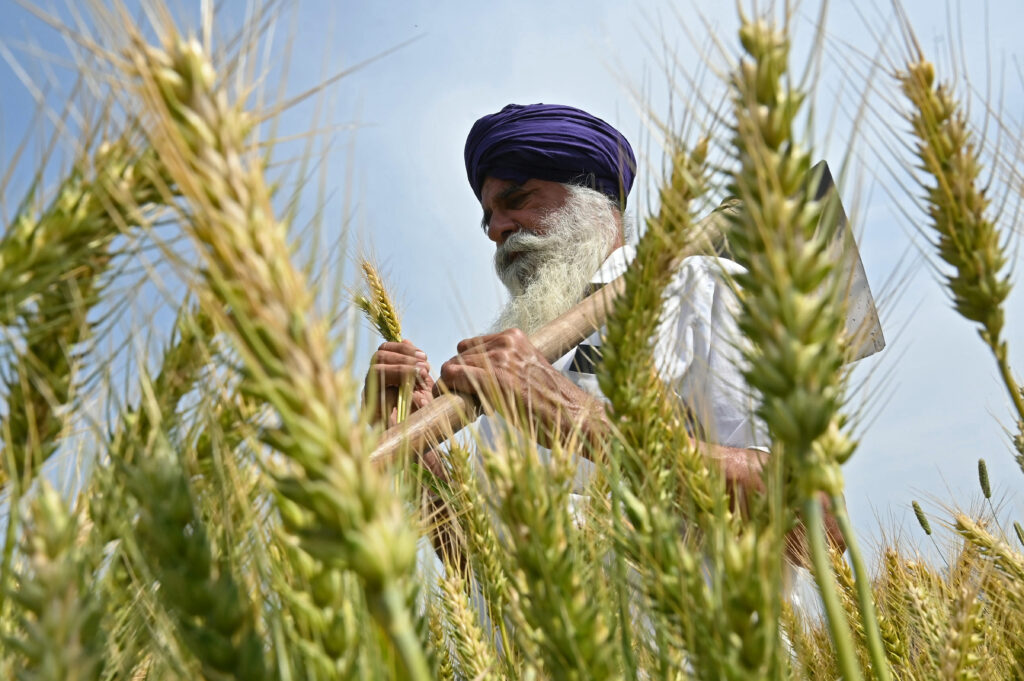
Indian farmers have expressed concern that New Delhi has made too many concessions to Washington after the two countries brokered a new trade deal that would lower tariffs.Under the terms of the deal that was laid out in a joint statement from both countries released on Saturday, India will “eliminate or reduce tariffs on all US industrial goods” and other food and agricultural products.Meanwhile, the US will apply a reciprocal tariff rate of 18 percent on goods from India, including textiles and apparel, leather and footwear, plastic and rubber, organic chemicals, and certain machinery, the joint statement added. The terms were released after US President Donald Trump announced a trade deal with India, stating that Prime Minister Narendra Modi had promised to halt Russian oil purchases.Modi lauded the new trade deal in a post on the social media platform X later on Saturday, saying it would open up opportunities and generate jobs.But Indian farmer unions weren’t convinced, calling the deal a “total surrender” to American agricultural giants. “Indian industry, agriculture… are now under grave threat of cheap imports that will be dumped into Indian markets,” the Samyukt Kisan Morcha (SKM), a coalition of multiple farmers’ unions, said in a statement following the announcement.The group also called on farmers to join a nationwide protest on February 12.- What’s on the table? -The joint statement states that India will “eliminate or reduce” tariffs on a “wide range of US food and agricultural products”.This includes tree nuts, some fresh fruit, soybean oil, wine, spirits and other “additional products” that were not specified.Siraj Hussain, a former agriculture ministry top official, said Indian consumers were purchasing more nuts, “so it’s import may not have much impact on local production”, and will help satisfy high demand. Domestic growers do worry, however, about cheap imports on items such as apples, which they believe could have dire impacts on local producers. “Import of fresh fruits such as apples… will ruin the farmers,” SKM said. Officials hope safeguards included into the agreement — such as import quotas or minimum import prices for commodities including apples — will reduce the impact of foreign competition. New Delhi’s promise of lower duties on dried distillers’ grains and red sorghum for animal feed could also reduce the need for local soybean meal. Opposition lawmaker Jairam Ramesh said the move to ease imports of dried distillers’ grains and soybean oil would hurt “millions of soybean farmers” in key Indian states such as Maharashtra and Madhya Pradesh.- What’s off the table? -To stem concerns, India’s Trade Minister Piyush Goyal reassured farmers that their interests would be safeguarded, adding that the key red lines that had been drawn by New Delhi had not been crossed. He said “no concessions” had been extended in “sensitive areas” such as grains, spices, dairy, poultry, meat and several vegetables and fruits — including potatoes, oranges and strawberries. The trade minister also said genetically modified crops were not part of the agreement.This includes GM soybean, which the US has searched hard to find new markets for.- Small farms ‘can’t compete’ -While the farm sector contributes just 16 percent to India’s GDP, it provides livelihood to over 45 percent of the population. This makes the industry a key voting bloc often wooed by political parties. Farmer groups have also shown, on multiple occasions, that they are a street force to be reckoned with. In 2021, the government abandoned plans to reform the sector after months of intense protests that blocked the national capital’s highways and led to Delhi’s historic Red Fort complex being stormed by tractors. “Indian farms are very small and they can’t really compete with highly subsidised US agriculture,” Hussain, the former agriculture ministry official, said.- India and US trade -Between January-November 2025, when New Delhi was negotiating with Washington, Indian imports of American agricultural goods rose 34 percent year-on-year, raking in just under $2.9 billion. Top imports included cotton, soybean oil, ethanol and various nuts such as almonds. This happened even before the trade deal, although the rise is partly due to India reducing tariffs on some of these US items. Experts have said that a further reduction on duties for products such as soybean oil, which was announced in the joint statement, will likely lead to a jump in goods being imported by India from the US. 
What’s at stake for Indian agriculture in Trump’s trade deal?

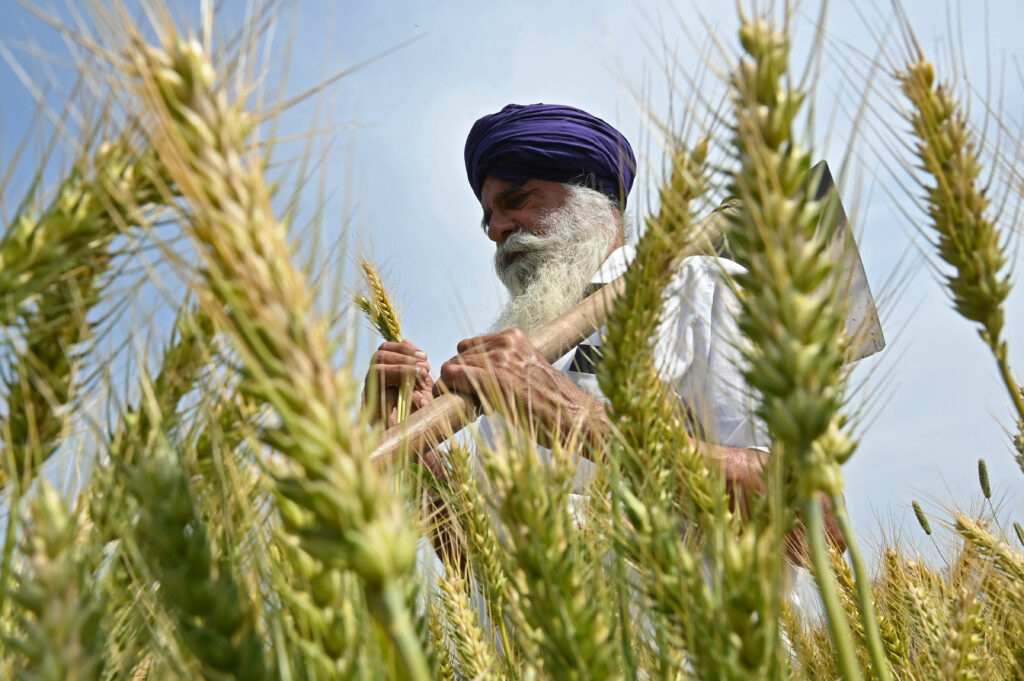
Indian farmers have expressed concern that New Delhi has made too many concessions to Washington after the two countries brokered a new trade deal that would lower tariffs.Under the terms of the deal that was laid out in a joint statement from both countries released on Saturday, India will “eliminate or reduce tariffs on all US industrial goods” and other food and agricultural products.Meanwhile, the US will apply a reciprocal tariff rate of 18 percent on goods from India, including textiles and apparel, leather and footwear, plastic and rubber, organic chemicals, and certain machinery, the joint statement added. The terms were released after US President Donald Trump announced a trade deal with India, stating that Prime Minister Narendra Modi had promised to halt Russian oil purchases.Modi lauded the new trade deal in a post on the social media platform X later on Saturday, saying it would open up opportunities and generate jobs.But Indian farmer unions weren’t convinced, calling the deal a “total surrender” to American agricultural giants. “Indian industry, agriculture… are now under grave threat of cheap imports that will be dumped into Indian markets,” the Samyukt Kisan Morcha (SKM), a coalition of multiple farmers’ unions, said in a statement following the announcement.The group also called on farmers to join a nationwide protest on February 12.- What’s on the table? -The joint statement states that India will “eliminate or reduce” tariffs on a “wide range of US food and agricultural products”.This includes tree nuts, some fresh fruit, soybean oil, wine, spirits and other “additional products” that were not specified.Siraj Hussain, a former agriculture ministry top official, said Indian consumers were purchasing more nuts, “so it’s import may not have much impact on local production”, and will help satisfy high demand. Domestic growers do worry, however, about cheap imports on items such as apples, which they believe could have dire impacts on local producers. “Import of fresh fruits such as apples… will ruin the farmers,” SKM said. Officials hope safeguards included into the agreement — such as import quotas or minimum import prices for commodities including apples — will reduce the impact of foreign competition. New Delhi’s promise of lower duties on dried distillers’ grains and red sorghum for animal feed could also reduce the need for local soybean meal. Opposition lawmaker Jairam Ramesh said the move to ease imports of dried distillers’ grains and soybean oil would hurt “millions of soybean farmers” in key Indian states such as Maharashtra and Madhya Pradesh.- What’s off the table? -To stem concerns, India’s Trade Minister Piyush Goyal reassured farmers that their interests would be safeguarded, adding that the key red lines that had been drawn by New Delhi had not been crossed. He said “no concessions” had been extended in “sensitive areas” such as grains, spices, dairy, poultry, meat and several vegetables and fruits — including potatoes, oranges and strawberries. The trade minister also said genetically modified crops were not part of the agreement.This includes GM soybean, which the US has searched hard to find new markets for.- Small farms ‘can’t compete’ -While the farm sector contributes just 16 percent to India’s GDP, it provides livelihood to over 45 percent of the population. This makes the industry a key voting bloc often wooed by political parties. Farmer groups have also shown, on multiple occasions, that they are a street force to be reckoned with. In 2021, the government abandoned plans to reform the sector after months of intense protests that blocked the national capital’s highways and led to Delhi’s historic Red Fort complex being stormed by tractors. “Indian farms are very small and they can’t really compete with highly subsidised US agriculture,” Hussain, the former agriculture ministry official, said.- India and US trade -Between January-November 2025, when New Delhi was negotiating with Washington, Indian imports of American agricultural goods rose 34 percent year-on-year, raking in just under $2.9 billion. Top imports included cotton, soybean oil, ethanol and various nuts such as almonds. This happened even before the trade deal, although the rise is partly due to India reducing tariffs on some of these US items. Experts have said that a further reduction on duties for products such as soybean oil, which was announced in the joint statement, will likely lead to a jump in goods being imported by India from the US. 

Real Madrid can wait – Siraj’s dream night after late T20 call-up

India’s wicket-taking hero Mohammed Siraj said “it felt like a dream” after a whirlwind 24 hours that saw him called into the T20 World Cup squad and force him to change holiday plans to watch Real MadridSiraj took a wicket with his fourth ball of his first T20 international for 19 months against the USA on Saturday night.He finished as India’s leading bowler with 3-29 as they completed a 29-run win at Mumbai’s Wankhede stadium after restricting the Americans to 132-8 in reply to 161-9.The experienced quick bowler was only added to the squad 24 hours earlier as a replacement for the injured Harshit Rana.He then was parachuted straight into the team for the opening match against the United States after space spearhead Jasprit Bumrah was unable to play because of a fever.”First of all, in the last 24 hours, when I was sitting on the flight, it felt like a dream,” an beaming Siraj told reporters.”God changed my destiny. I was spending time with my family … suddenly, Surya bhai (captain Suryakumar Yadav) called me. “He said, ‘get ready, pack your bag, and come’.”The 31-year-old Siraj has been a regular performer for the Test team with 139 wickets in 45 matches but had not played a T20 international since July 2024.After being initially left out of India’s T20 World Cup squad, the Hyderabad-born Siraj had planned to go to Spain and watch his favourite football team, Real Madrid, in action.”My plan was that on the 15th (of February), there was a Real Madrid match, and I was going to watch it,” said Siraj.”After that, Ramzan (Islamic month of fasting) was coming, so I had planned around that. But whatever God has written will happen.”He is a self-confessed Cristiano Ronaldo fan, has a wallpaper of the football icon on his phone and often celebrates his wickets with his idol’s famous “Siu” celebration.The co-hosts India next play Namibia in New Delhi on Thursday.

Pakistan’s capital picks concrete over trees, angering residents

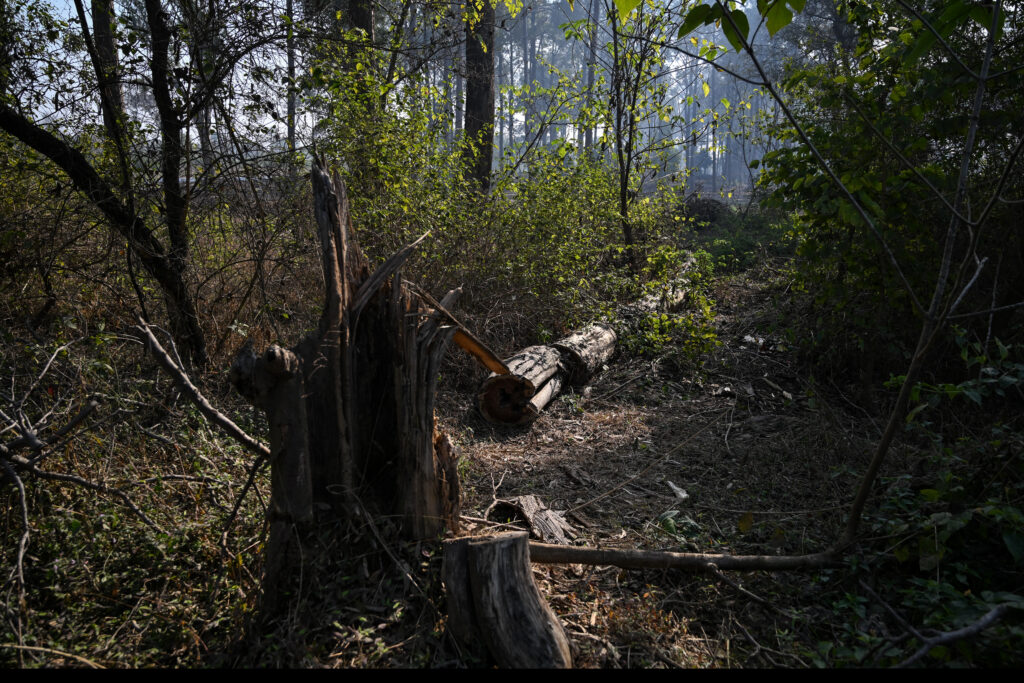
Pakistan’s capital Islamabad was once known for its lush greenery, but the felling of trees across the city for infrastructure and military monuments has prompted local anger and even lawsuits.Built in the 1960s, Islamabad was planned as a green city, with wide avenues, parks and tree-lined sectors.Many residents fear that vision is steadily being eroded, with concrete replacing green spaces.Muhammad Naveed took the authorities to court this year over “large-scale tree cutting” for infrastructure projects, accusing them of felling “many mature trees” and leaving land “barren”.The World Wide Fund for Nature (WWF) blamed major infrastructure development, including road construction and monuments, for the mass razing of trees and natural vegetation in Islamabad.Between 2001 and 2024, the capital lost 14 hectares of tree cover, equal to 20 football pitches, according to Global Forest Watch, though the figure does not account for tree cover gains during the same period.For Kamran Abbasi, a local trader and resident since the 1980s, it feels like “they are cutting trees everywhere”.”It is not the same anymore,” he told AFP.”Trees are life. Thousands are cut to build one bridge.”- Smog and pollen -Meanwhile, air quality in Islamabad continues to deteriorate.Pollution is a longstanding problem, but plants can help by filtering dirty air, absorbing harmful gases and cooling cities.”Forests act as powerful natural filters… cleaning the air and water, and reducing the overall impact of pollution,” Muhammad Ibrahim, director of WWF-Pakistan’s forest programme told AFP.There were no good air quality days in Islamabad last month, with all but two classed as “unhealthy” or “very unhealthy” by monitoring organisation IQAir.While some trees are felled for infrastructure, officials justify removing others to tackle seasonal pollen allergies that are especially acute in spring.That problem is largely attributed to paper mulberry trees, which were planted extensively during the city’s early development.”The main reason is pollen allergy,” said Abdul Razzaq, an official from the Capital Development Authority (CDA) in Islamabad.”People suffer from chest infections, asthma and severe allergic reactions. I do too,” he told AFP.The government plans to remove 29,000 pollen-producing trees and plants, according to a recent WWF report.However, critics argue that pollen allergies are an excuse to justify broader tree-cutting, particularly linked to military and infrastructure projects.The solution lies not in indiscriminate tree removal, but careful urban planning, experts say, replanting with non-allergenic species — and greater transparency around development projects in the capital.- Capital under axe -In recent months, large bulldozers have been spotted levelling former green belts and wooded areas, including near major highways.According to WWF and unnamed government officials, some of the cleared land is tapped for monuments commemorating the brief but intense armed conflict between Pakistan and neighbouring India last May.Other plots were razed to make way for military-linked infrastructure.”We know that trees are being cut for military-related projects, but there is not much we can do,” a government source told AFP, requesting anonymity for security reasons.”The people in power, the military, can do whatever they want.”Pakistan’s powerful military has ruled the country for decades through coups and is deeply involved in the country’s politics and economy, analysts say.At a proposed military monument site along the city’s express highway, WWF recorded more than six hectares of land clearing last year, with work continuing in 2026.It saw “no active plantation… indicating that the clearing is infrastructure driven”.The military did not respond to AFP’s request for comment.Naveed’s court case seeking to halt the widespread felling, which is still being heard, argues there is “no excuse” for the tree loss.If a monument is “deemed essential, why was it not placed in any existing park or public place?”, he argues.In reply to Naveed’s petition, authorities said roads and infrastructure projects were approved under regulations dating back to 1992.

Neglected killer: kala-azar disease surges in Kenya

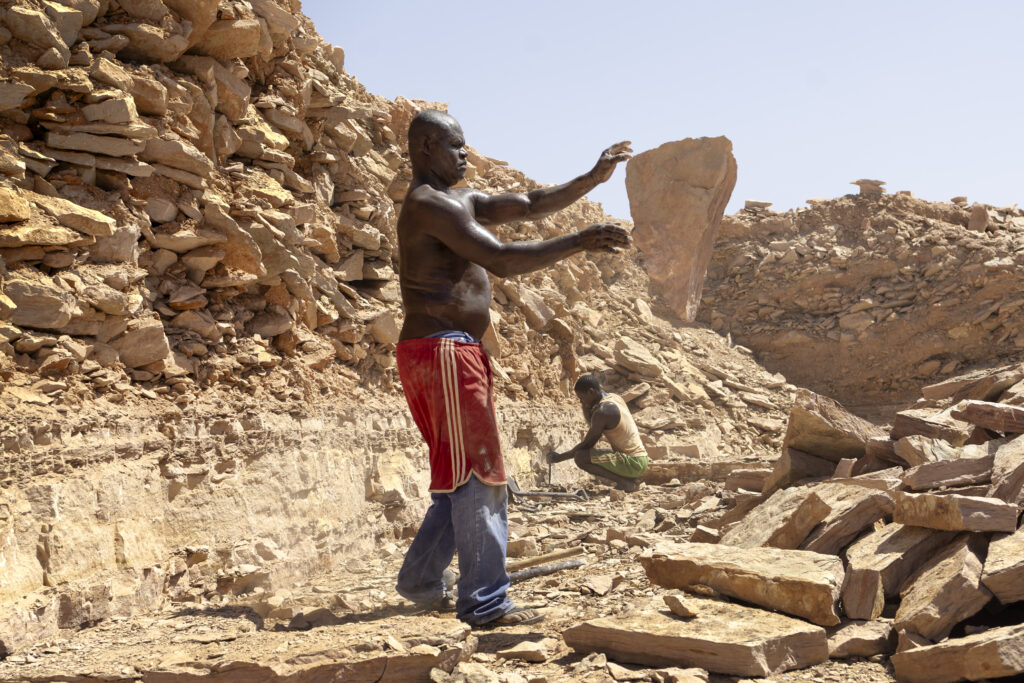
For nearly a year, repeated misdiagnoses of the deadly kala-azar disease left 60-year-old Harada Hussein Abdirahman’s health deteriorating, as an outbreak in Kenya’s arid regions claimed a record number of lives.Kala-azar is spread by sandflies and is one of the most dangerous neglected tropical diseases, with a fatality rate of 95 percent if untreated, causing fever, weight loss, and enlargement of the spleen and liver.  Cases of kala-azar, also known as visceral leishmaniasis, have spiked in Kenya, from 1,575 in 2024 to 3,577 in 2025, according to the health ministry.It is spreading to previously untouched regions and becoming endemic, driven by changing climatic conditions and expanding human settlements, say health officials, with millions potentially at risk of infection.Abdirahman, a 60-year-old grandmother, was bitten while herding livestock in Mandera county in Kenya’s northeast, a hotspot for the parasite but with only three treatment facilities capable of treating the disease.She was forced to rely on a local pharmacist who repeatedly misdiagnosed her with malaria and dengue fever for about a year. “I thought I was dying,” she told AFP. “It is worse than all the diseases they thought I had.”She was left with hearing problems after the harsh treatment to remove the toxins from her body.East Africa generally accounts for more than two-thirds of global cases, according to the World Health Organization.”Climate change is expanding the range of sandflies and increasing the risk of outbreaks in new areas,” said Dr Cherinet Adera, a researcher at the Drugs for Neglected Diseases Initiative in Nairobi. – ‘So scared’ -A surge in cases among migrant workers at a quarry site in Mandera last year led authorities to restrict movement at dusk and dawn when sandflies are most active.At least two workers died, their colleagues said. Others returned to their villages and their fates are unknown. “We did not know about the strange disease causing our colleagues to die,” said Evans Omondi, 34, who travelled hundreds of miles from western Kenya to work at the quarry. “We were so scared,” added Peter Otieno, another worker from western Kenya, recalling how they watched their infected colleagues waste away day by day.In 2023, the six most-affected African nations adopted a framework in Nairobi to eliminate the disease by 2030.But there are “very few facilities in the country able to actively diagnose and treat,” kala-azar, Dr Paul Kibati, tropical disease expert for health NGO Amref, told AFP.He said more training is needed as mistakes in testing and treatment can be fatal.The treatment can last up to 30 days and involves daily injections and often blood transfusions, costing as much as 100,000 Kenyan shillings ($775), excluding the cost of drugs, said Kibati, adding there is a need for “facilities to be adequately equipped”.The sandfly commonly shelters in cracks in poorly plastered mud houses, anthills and soil fissures, multiplying during the rainy season after prolonged drought.Northeastern Kenya, as well as neighbouring regions in Ethiopia and Somalia, have experienced a devastating drought in recent months. “Kala-azar affects mostly the poorest in our community,” Kibati said, exacerbated by malnutrition and weak immunity.”We are expecting more cases when the rains start,” Kibati said.

Washington Post CEO out after sweeping job cuts

The Washington Post said Saturday its CEO and publisher Will Lewis was leaving effective immediately, just days after the storied newspaper owned by billionaire Amazon founder Jeff Bezos made drastic job cuts that angered readers.Though newspapers across the United States have been facing brutal industry headwinds, Lewis’s management of the outlet was sharply criticized by subscribers and employees alike during his two-year tenure as he tried to reverse financial losses at the daily.Lewis, who is English, has been replaced by Jeff D’Onofrio, a former CEO of social media platform Tumblr who had joined the Post as chief financial officer last year, the paper announced.In an email to staff shared on social media by one of the newspaper’s reporters, Lewis said it was “the right time for me to step aside.” A statement from the Post said only that D’Onofrio was succeeding Lewis “effective immediately.”Hundreds of Post journalists — including most of its overseas, local and sports staff — were let go in the sweeping cuts announced on Wednesday.The Post did not disclose the number of jobs being eliminated, but The New York Times reported approximately 300 of its 800 journalists were laid off.The paper’s entire Middle East roster was let go as was its Kyiv-based Ukraine correspondent as the war with Russia grinds on.  Sports, graphics and local news departments were sharply scaled back and the paper’s daily podcast, Post Reports, was suspended, local media reported.Hundreds turned out Thursday at a protest in front of the paper’s headquarters in downtown Washington.- Editorial interference -Newspapers across the country have cratered under falling revenues and subscriptions as they compete for eyeballs with social media, and as internet revenue pales in comparison to what print advertising once commanded.However, national papers like The New York Times and The Wall Street Journal have managed to weather the storm and come out financially solid — something the Post, even with a billionaire backer, has failed to do.In Lewis’s note to staff, shared on X by White House bureau chief Matt Viser, Lewis said “difficult decisions have been taken” during his tenure “in order to ensure the sustainable future of The Post so it can for many years ahead publish high-quality nonpartisan news.”Bezos, one of the world’s richest people, was quoted in the Post’s statement saying that the paper has “an extraordinary opportunity. Each and every day our readers give us a roadmap to success. The data tells us what is valuable and where to focus.”He and Lewis have come under scrutiny for intervening directly in the paper’s editorial processes.Bezos reined in the newspaper’s liberal-leaning editorial page and blocked an endorsement of Democratic presidential candidate Kamala Harris days before the 2024 election — breaking the so-called firewall of editorial independence. He was widely seen as bowing to Donald Trump, who went on to win the election.The decision also apparently had financial consequences: The Wall Street Journal reported that 250,000 digital subscribers left the Post after it refrained from endorsing Harris, and the paper lost around $100 million in 2024 as advertising and subscription revenues fell.As president, Trump has heaped direct pressure on journalists, launching multiple lawsuits against media organizations.A withered Post, critics worry, will leave the country’s press corps less able to hold the government accountable.Marty Baron, the Post’s executive editor until 2021, said that the job cuts ranked “among the darkest days in the history of one of the world’s greatest news organizations.”

Bugs in food and sickness haunt immigrants held in Texas

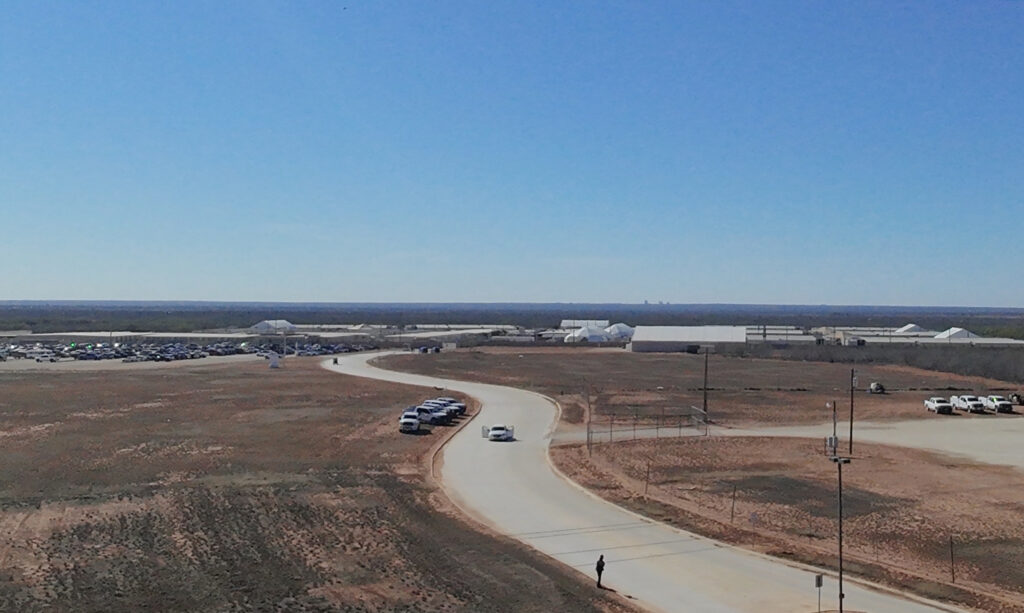
A detention center in rural Texas has become a harsh symbol of President Donald Trump’s immigration crackdown, with disease breaking out among the throng of people held, including some families who entered the United States legally. The Dilley Immigration Processing Center sits in a small town of just 3,200 people, just about 85 miles (135 kilometers) from the Mexico border, but has become a grim global melting pot.Many detainees were picked up as their asylum claims were being processed or as they were checking in with authorities on their cases, lawyers told AFP, as Trump massively expands the scope of who can be targeted for detention and deportation.”I cry all the time. My son tries to wipe the tear from my eyes,” said W, a Haitian woman who along with her son crossed the border legally to seek asylum, under a program run by Trump’s predecessor Joe Biden.Historically, asylum seekers have generally been allowed to live and work in the United States while their claims work their way through the court system. But W and her son were arrested by Immigration and Customs Enforcement (ICE) agents and sent to Dilley in October, where W says authorities have tried to force her to sign a deportation order.Her testimony, like that of others in this report, was taken by the Refugee and Immigrant Center for Education and Legal Services (RAICES), a legal advocacy group, and shown to AFP. Many names have been fully or partially withheld.- Bugs in food -Protests have erupted over bugs being found in the detention center’s food, W said, while lights are kept on 24 hours a day, making it difficult to sleep.On Monday, Texas health authorities warned of two measles cases at the facility, prompting ICE to quarantine some people held there.”These families have become a political pawn,” Javier Hidalgo, legal director at RAICES, told AFP.”They were in a process. They had future court dates… there’s no purpose to (detention) other than trying to convince them to give up their legal cases.”CoreCivic, the private company that the government contracts to run the facility, told AFP “the health and safety of those entrusted to our care is the (company’s) top priority.”The Dilley center is the same facility that held Liam Conejo Ramos, the five-year-old Ecuadoran boy who lawyers allege was detained as bait to lure his mother to agents.Liam has since been ordered released, though the Department of Homeland Security (DHS) is seeking to dismiss the family’s asylum claim — lodged after they entered the country legally in 2024 — and deport them.- Family held over father’s arrest -Also held at the facility is the family of Mohamed Sabry Soliman, who is accused of firebombing a protest in support of Israeli hostages last year in Colorado.The Egyptian national told authorities that no one knew of his plans, CNN reported, but his wife and five children have been held at Dilley for months while the government claims it is “investigating to what extent his family knew about this heinous attack.””Why would the government insist on detaining us with no evidence?” his daughter Habiba wrote in a letter shared by immigration attorney Eric Lee last month.The family entered the country legally in 2022 and filed for asylum. DHS has said the family is “in our country illegally” and is trying to deport them. None of the other family members has been charged with a crime.Days after speaking to CNN, Habiba was separated from her family.DHS told the broadcaster it was because she had turned 18 and needed to be moved to the adult section, though her birthday had passed months before without any action.- Alleged medical neglect -Other detainees complain of medical neglect. “One of the children had appendicitis last year, and it took days to get him medical care,” lawyer Chris Godshall-Bennett told AFP, adding that the child was told “to take a Tylenol and get over it.”Diana, a Colombian woman, is detained with her 10-year-old daughter who suffers from Hirschsprung’s disease, which causes blocked bowels and can require a special diet.But a doctor “told me that I needed to remember they are not there to accommodate me… that their only responsibility is to ensure that detainees do not go hungry,” she said.CoreCivic said that its medical staff “meet the highest standards of care.””We will be detained for who knows how long,” Habiba Soliman wrote in her letter.”We have been falling apart.”

Iran FM looks to more nuclear talks, but warns US

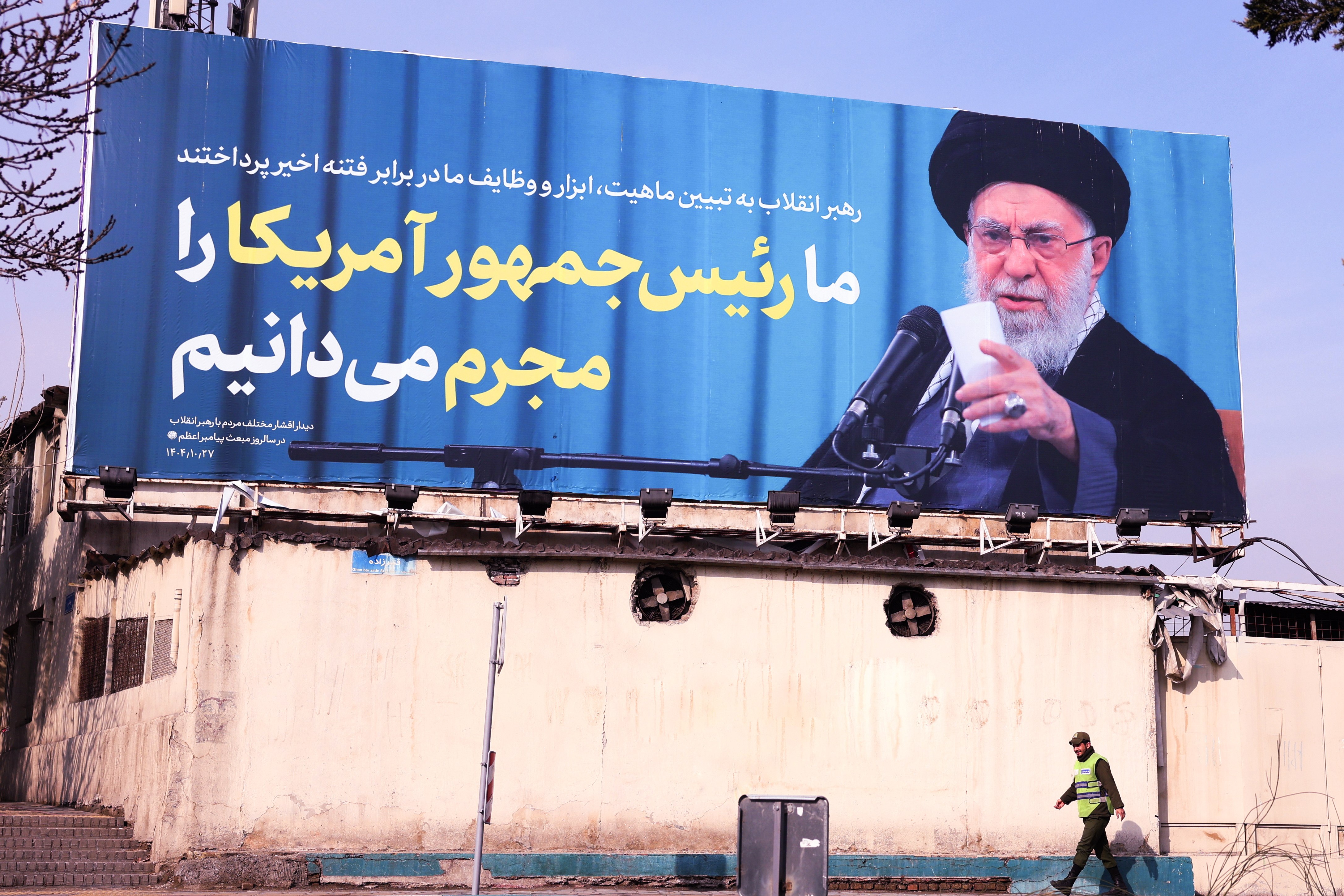
Iranian Foreign Minister Abbas Araghchi said on Saturday he hoped talks with the United States would resume soon, while reiterating Tehran’s red lines and warning against any American attack.According to excerpts published on his official Telegram channel during an interview with the Al Jazeera network, Araghchi said that Iran’s missile programme was “never negotiable” in Friday’s talks in Oman.Israeli Prime Minister Benjamin Netanyahu is expected to raise the ballistic missiles programme in a meeting with US President Donald Trump in Washington next week.Araghchi meanwhile warned that Tehran would target US bases in the region if the US attacked Iranian territory.It came as lead Iran negotiators Steve Witkoff and Jared Kushner visited the USS Abraham Lincoln aircraft carrier in the Arabian Sea, signalling the persistent threat of US military action.The US military’s Central Command (CENTCOM) said the two top officials visited the nuclear-powered vessel in a post on social media.In his own social media post, Witkoff said the aircraft carrier and its strike group was “keeping us safe and upholding President Trump’s message of peace through strength”.- ‘Good start’ -Araghchi on Saturday said that despite the talks in Muscat being indirect, “an opportunity arose to shake hands with the American delegation”.He called the talks “a good start”, but insisted “there is a long way to go to build trust”. He said the talks would resume “soon”.Trump on Friday called the talks “very good”, and pledged another round of negotiations next week.Despite this, he signed an executive order effective from Saturday that called for the “imposition of tariffs” on countries still doing business with Iran.The United States also announced new sanctions against numerous shipping entities and vessels, aimed at curbing Iran’s oil exports.More than a quarter of Iran’s trade is with China, with $18 billion in imports and $14.5 billion in exports in 2024, according to World Trade Organization data.- ‘Defence issue’ -Araghchi told Al Jazeera that nuclear enrichment was Iran’s “inalienable right and must continue”.”We are ready to reach a reassuring agreement on enrichment,” he said.”The Iranian nuclear case will only be resolved through negotiations.”He also said Iran’s missile programme was “never negotiable” because it relates to a “defence issue”.Washington has sought to address Iran’s ballistic missile programme and its support for militant groups in the region — issues which Israel has pushed to include in the talks, according to media reports.Tehran has repeatedly rejected expanding the scope of the negotiations beyond the nuclear issue.Netanyahu is set to meet Trump on Wednesday to discuss the Iran talks, the premier’s office said in a statement Saturday.Netanyahu “believes any negotiations must include limitations on ballistic missiles and a halting of the support for the Iranian axis”, it said, referring to Iran’s allies in the region.On Saturday, Araghchi criticised what he labelled a “doctrine of domination” that allows Israel to expand its military arsenal while pressuring other states in the region to disarm.Friday’s negotiations were the first since nuclear talks between Iran and the United States collapsed last year following Israel’s unprecedented bombing campaign against Iran, which triggered a 12-day war.During the war US warplanes bombed Iranian nuclear sites.Araghchi told Al Jazeera that if attacked again, “we will attack their bases in the region”, referring to the United States.- Protests toll -Friday’s talks between the two arch enemies came amid a major US military buildup in the region in the wake of Iran’s crackdown on protests that began in late December, driven by economic grievances.The authorities in Iran have acknowledged that 3,117 people were killed in the recent protests, publishing on Sunday a list of 2,986 names, most of whom they say were members of the security forces and innocent bystanders.International organisations have put the toll far higher.The US-based Human Rights Activists News Agency (HRANA), which has kept a running toll since the onset of the protests, says it has verified 6,961 deaths, mainly of protesters, and has another 11,630 cases under investigation. It has also counted more than 51,000 arrests.

Ligue 1: Lyon grimpe sur le podium malgré l’exclusion d’Endrick

En allant l’emporter à Nantes (1-0), Lyon a provisoirement pris la troisième place du classement de Ligue 1, malgré l’exclusion  d’Endrick à l’heure de jeu, samedi, lors de la 21e journée.Avec 42 points, l’OL prend trois longueurs d’avance sur l’OM qui a une bien meilleure différence de buts mais qui ira dimanche affronter le Paris SG avec l’obligation de l’emporter s’il veut remonter sur le podium.Cette défaite laisse en revanche Nantes à la 16e place de barragiste virtuel avec 14 points, soit un de plus qu’Auxerre et Metz, le duo de queue de classement.Face à des Nantais qui ont frappé à trois reprises sur les montants de Dominik Greif, les Gones ont souffert par moments, notamment après l’exclusion d’Endrick. La star brésilienne prêtée par le Real Madrid a reçu un carton rouge direct à l’heure de jeu pour un coup de pied volontaire sur l’arrière de la cheville de Dehmaine Tabibou, sorti sur blessure après ce geste.Soumis à un traitement musclé de la défense nantaise, le N.9 lyonnais, averti dès les premiers instants du match pour un geste d’humeur, a d’abord reçu un deuxième jaune avant que l’arbitre Mathieu Vernice ne visionne les images et le transforme en rouge direct, qui fait risquer une sanction plus lourde.- 10e but de Sulc -Jusque-là, Lyon avait plutôt dominé le match, faisant valoir une technique supérieure et un plan de jeu mieux maîtrisé, mais avec un manque de tranchant dans les 20 derniers mètres.Alfonso Moreira a bien fait briller Anthony Lopes, auteur d’un joli réflexe du bout du pied sur une frappe écrasée de l’ailier (19e), avant que le portier ne s’interpose aussi sur une tentative de près d’Endrick (27e).Mais entre les deux, l’OL a trouvé la faille sur une action presque anodine, Pavel Sulc ayant le bon réflexe de tendre le pied pour dévier un centre-tir à ras de terre de Moreira hors de portée de Lopes (0-1, 25e).En face Nantes, a joué de malchance. Dès la 8e minute, Mohamed Kaba, l’une des recrues hivernales des Canaris, a trouvé l’extérieur du poteau sur une frappe enroulée à l’entrée de la surface.En seconde période, l’entrée en jeu de Youssef El Arabi à la place d’un Mostafa Mohamed transparent, a donné du liant devant.Le Marocain s’est trouvé, à la 51e minute au lancement, au relais et à la conclusion d’un joli mouvement, mais sa tête décroisée a rebondi sur l’intérieur du poteau pour revenir dans les bras d’un Dominik Greif qui n’avait pas bougé.Dans le temps additionnel, c’est une frappe de Herba Guirassy, déviée par Matthis Abline, qui a pris totalement à contre-pied le Slovaque, tout heureux de voir le ballon repoussé pas son montant droit.Mais Lyon ne vient pas d’enchaîner une 12e victoire de rang, toutes compétitions confondues, sans raison. La culture de la gagne — accompagnée parfois par une certaine dose de roublardise — de cette équipe lui ouvre des perspectives très intéressantes pour cette fin de saison.