

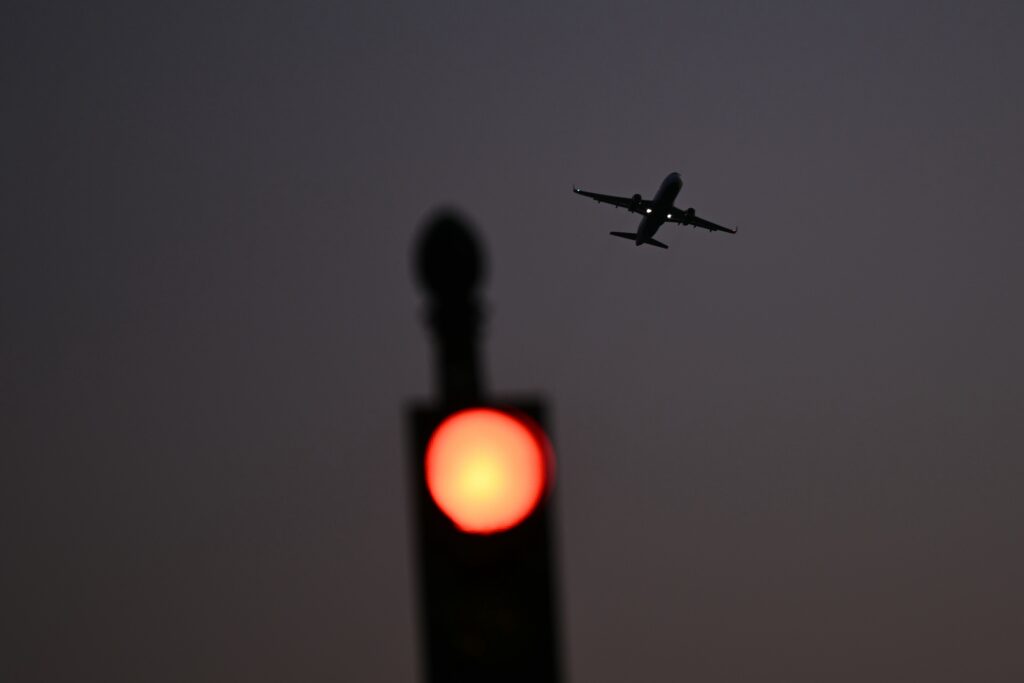
Paralysie budgétaire: les Etats-Unis redoutent la pagaille dans les aéroports
Des centaines de milliers d’Américains voient leurs vols annulés à partir de vendredi en raison du blocage budgétaire qui s’étire et a conduit les autorités à alléger le trafic aérien face à la pénurie d’aiguilleurs du ciel.Sont concernés, entre autres, les trois aéroports de New York, les trois qui desservent Washington, ceux de Chicago, Los Angeles, San Francisco, Miami, Boston, Philadelphie, Atlanta ou encore Dallas.American Airlines et United Airlines, deux des principales compagnies régulières américaines, ont dit à l’AFP qu’elles réduisaient leur activité de 4% dès vendredi et tout au long du week-end, soit “environ 220 vols annulés chaque jour” pour la première, et “moins de 200 vols vendredi et samedi” pour la seconde.Delta, autre compagnie américaine majeure, prévoit elle autour de 170 annulations vendredi sur “approximativement 5.000 départs quotidiens”.L’administration Trump avait annoncé mercredi une réduction de 10% du nombre de vols dans quarante des aéroports américains les plus importants dès vendredi. Une décision justifiée par la nécessité de “réduire la pression” sur le contrôle aérien par impératif de sécurité, face au manque de personnel dans les tours de contrôle, auquel il est demandé depuis plus d’un mois de continuer à travailler sans être payé du fait de la paralysie budgétaire.Ce “shutdown” de l’Etat fédéral dure depuis 37 jours, un record, républicains et démocrates étant incapables de s’entendre sur un nouveau budget depuis le 1er octobre.- Vols domestiques et régionaux -Les annulations de vols s’ajoutent aux longues files d’attente aux points de contrôles qui sont gérés par des agents de sécurité également privés de salaire depuis plus d’un mois.Les perturbations débutent à la veille d’un week-end que nombre d’Américains prolongeront jusqu’au mardi 11 novembre, jour férié aux Etats-Unis. Et elles surviennent à l’approche de Thanksgiving, la grande fête familiale américaine pour laquelle des millions d’Américains prennent l’avion chaque année, le 27 novembre.”Si vous devez aller à un mariage, des obsèques ou autre chose d’important dans les prochains jours, compte tenu du risque d’annulation de vols, je conseillerais d’acheter un billet de secours sur une autre compagnie”, suggère le patron de la compagnie à bas coût Frontier, Barry Biffle, sur les réseaux sociaux.”Ainsi, si votre vol est annulé, vous avez une solution de rechange immédiatement”, poursuit-il, en avisant d'”acheter un billet remboursable”.Quels vols sont concernés ?Pas les vols internationaux long courrier à ce stade, ont précisé United et Delta.United indique dans un communiqué que les annulations se concentrent sur “les vols domestiques et régionaux qui ne relient pas nos hubs” aéroportuaires.Dans un mail adressé à ses clients, consulté par l’AFP, la compagnie précise que les vols “entre (ses) hubs”, Chicago, Denver, Houston, Los Angeles, Newark, San Francisco et Washington Dulles, ne sont pas affectés.- Zéro dollar -American Airlines table elle sur “environ 6.000 vols quotidiens”.”Avec Thanksgiving qui arrive, si on est toujours dans cette situation, ça va être rude. On agira sur ce qui concerne la sécurité. Mais votre vol décollera-t-il à l’heure ? Décollera-t-il tout court ? Ca reste à voir, mais il y aura davantage de perturbations”, a averti le ministre des Transports Sean Duffy au micro de Fox News jeudi.Les principales compagnies américaines ont fait savoir que leurs clients impactés pouvaient modifier leur voyage ou en demander le remboursement sans pénalité financière.Le blocage budgétaire a fortement désorganisé le contrôle aérien.A titre d’illustration, “actuellement, la moitié de nos trente aéroports principaux connaissent des pénuries de personnel” et “près de 80% des contrôleurs aériens sont absents dans les aéroports new-yorkais”, communiquait le régulateur aérien américain (FAA) le 31 octobre.”Après 31 jours sans salaire, les contrôleurs aériens sont soumis à un stress et une fatigue immenses”, soulignait-il.Autour de 14.000 contrôleurs aériens surveillent le ciel américain – et reçoivent en ce moment des fiches de paie à zéro dollar.Chaque jour, plus de trois millions de passagers prennent l’avion aux Etats-Unis et plus de 44.000 vols en moyenne les transportent, selon la FAA.
US deportations like a kidnapping, says Eswatini lawyer
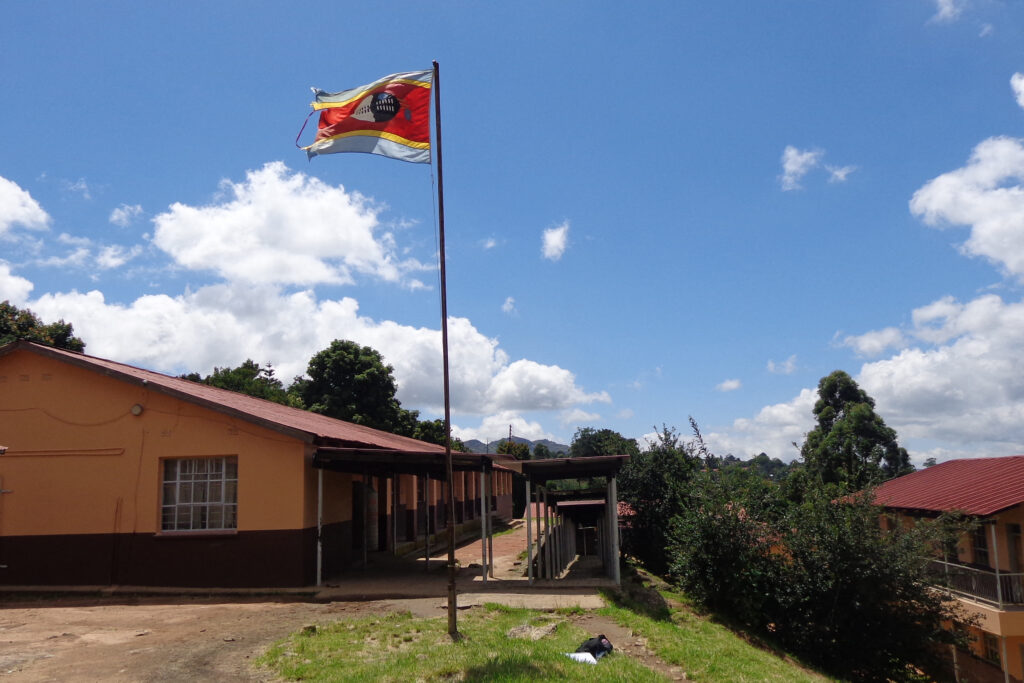
Leading Eswatini human rights lawyer Sibusiso Nhlabatsi likens the shadowy US expulsions of 15 men to his country, a tiny kingdom in southern Africa, to kidnappings.Since the first five deportees were flown from the United States on a military plane in July, authorities have blocked the lawyer from visiting them at the high-security prison where they are held.Another 10 arrived in October and had also reached out, via their relatives, for assistance, the lawyer told AFP in an interview.The expulsions are part of the Trump administration’s crackdown on migrants which has seen scores removed to countries in Africa and Central America. “Eswatini finds itself participating in what I can call human trafficking or kidnapping because you cannot have these third-party state deportees being housed (here) while denying them access to lawyers,” Nhlabatsi said.”They are far from their families, so their relatives cannot come here, yet they are being denied a basic right,” he said.Authorities have released few details about the deportees in Eswatini, who are from diverse countries including Vietnam, Laos and Cuba. One — a Jamaican — was repatriated in September.After being refused access by prison authorities, Nhlabatsi turned to the High Court which in early October agreed that local lawyers should be allowed to visit the detainees. But the government appealed the ruling and “that access has not yet been facilitated,” said Nhlabatsi, who is in his mid-40s.Lawyers have also asked the courts to oblige the government to make public the details of its deal with Washington. A text revealed by Human Rights Watch and some media, and seen by AFP, says Eswatini agreed to take 160 deportees in exchange for $5.1 million to “build its border and migration management capacity”.”I believe the country concentrated on financial gain and overlooked every aspect of international law,” Nhlabatsi said. – ‘Weaponisation’ -Poverty and unemployment are high among Eswatini’s 1.2 million population, with 58 percent of the youth without jobs, according to the International Monetary Fund.The autocratic ruler, King Mswati III, has held power for 39 years, openly flaunting his wealth with a lavish lifestyle.Political parties have been banned since 1973 and calling for democratic reforms risks terrorism or sedition charges.An example of the “weaponisation of the judiciary” in the deteriorating human rights environment was the jailing in 2021 of two opposition MPs accused of inciting unrest during pro-democracy protests, the lawyer said.One of them — Mthandeni Dube, sentenced to 18 years in prison — was freed on Tuesday after apologising to the king and agreeing not to make public speeches or join protests. “Even though one of them has since apologised, that does not change the fact that they should not have been convicted in the first place,” Nhlabatsi said.Since the 2021 protests, when at least 37 people were killed, “civic space has shrunk, the independence of the judiciary is questionable, and the rule of law remains under threat,” Nhlabatsi said.- Ticking time bomb -In 2023, human rights lawyer and fierce critic of the authorities Thulani Maseko was gunned down in a killing that shocked many beyond the borders of Eswatini. There have still been no arrests for the murder. “I began to truly fear for my safety after the assassination of Thulani Maseko because I had worked closely with him,” Nhlabatsi said.”What shocked and terrified me was that he was a man of peace. And I know for a fact that the state also knew that he never advocated violence in any form,” said the formal but friendly lawyer. Eswatini needs change, including a move away from its system of royal favouritism and patronage that is eating into government finances, he said. “It is not sustainable,” Nhlabatsi said, describing the desperation for jobs in particular as a “cry for help, a ticking time bomb.”
US deportations like a kidnapping, says Eswatini lawyerFri, 07 Nov 2025 06:24:14 GMT
Leading Eswatini human rights lawyer Sibusiso Nhlabatsi likens the shadowy US expulsions of 15 men to his country, a tiny kingdom in southern Africa, to kidnappings.Since the first five deportees were flown from the United States on a military plane in July, authorities have blocked the lawyer from visiting them at the high-security prison where …
US deportations like a kidnapping, says Eswatini lawyerFri, 07 Nov 2025 06:24:14 GMT Read More »

Bangladesh cricket probes sexual harassment claims
The Bangladesh Cricket Board has opened an inquiry after former women’s captain Jahanara Alam accused former and serving officials of sexual harassment.The 32-year-old pacer, in an interview on a YouTube channel, accused officials including then selector and manager Manjurul Islam of sexual harassment during the 2022 Women’s World Cup in South Africa.Manjurul, who is currently in China, rejected the allegations as “baseless”.Describing an incident during the 2022 World Cup, Jahanara alleged that Manjurul “made inappropriate physical contact”, claiming he “often hugged or pressed female players to his chest” under the pretext of encouragement.”You can ask other girls in the team”, Manjurul said. “This is all false.”Manjurul, 46, a former left-arm seamer, played 12 Tests and 34 ODIs for Bangladesh between 1999 and 2004, before serving in various coaching and managerial roles. Jahanara took 48 wickets in ODIs, and 60 in T20s, across 135 white-ball matches for her country.She also named other BCB officials, and said that she had previously written to the board, but that no action had been taken.The BCB said a committee would submit its findings within 15 working days.It reaffirmed its commitment to a “safe, respectful, and professional environment”, it said in a statement late Thursday.”We have to investigate this, since it’s a serious matter,” BCB vice-president Shakhawat Hossain said.

Three killed in new US strike on alleged drug boat, toll at 70
US forces on Thursday struck another alleged drug trafficking boat in the Caribbean, killing three people, Pentagon chief Pete Hegseth said, bringing the death toll from Washington’s controversial anti-narcotics campaign to at least 70.The United States began carrying out such strikes — which experts say amount to extrajudicial killings even if they target known traffickers — in early September, taking aim at vessels in the Caribbean and eastern Pacific.The US strikes have destroyed at least 18 vessels so far — 17 boats and a semi-submersible — but Washington has yet to make public any concrete evidence that its targets were smuggling narcotics or posed a threat to the United States.Hegseth released aerial footage on X of the latest strike, which he said took place in international waters like the previous strikes and targeted “a vessel operated by a Designated Terrorist Organization.”The video showed a boat traveling through the water before exploding into flames.”Three male narco-terrorists — who were aboard the vessel — were killed,” Hegseth said, without any further identifying information.”To all narco-terrorists who threaten our homeland: if you want to stay alive, stop trafficking drugs. If you keep trafficking deadly drugs — we will kill you,” he wrote.Like some previous videos released by the US government, a section of the boat is obfuscated for unspecified reasons.President Donald Trump’s administration has built up significant forces in Latin America, in what it says is its campaign to stamp out drug trafficking.So far it has deployed six Navy ships in the Caribbean, sent F-35 stealth warplanes to Puerto Rico, and ordered the USS Gerald R Ford carrier strike group to the region.The governments and families of those killed in the US strikes have said many of the dead were civilians — primarily fishermen. Venezuela’s President Nicolas Maduro has repeatedly accused Trump of seeking to oust him.US bombers have also conducted shows of force near Venezuela, flying over the Caribbean Sea off the country’s coast on at least four occasions since mid-October.Maduro — who has been indicted on drug charges in the United States — insists there is no drug cultivation in his country, which he says is used as a trafficking route for Colombian cocaine against its will.The Trump administration has said in a notice to Congress that the United States is engaged in “armed conflict” with Latin American drug cartels, describing them as terrorist groups as part of its justification for the strikes.The United Nations has asked the United States to cease its campaign, with rights chief Volker Turk saying the killings have taken place “in circumstances that find no justification in international law.”
Trump hails Central Asia’s ‘unbelievable potential’ at summit
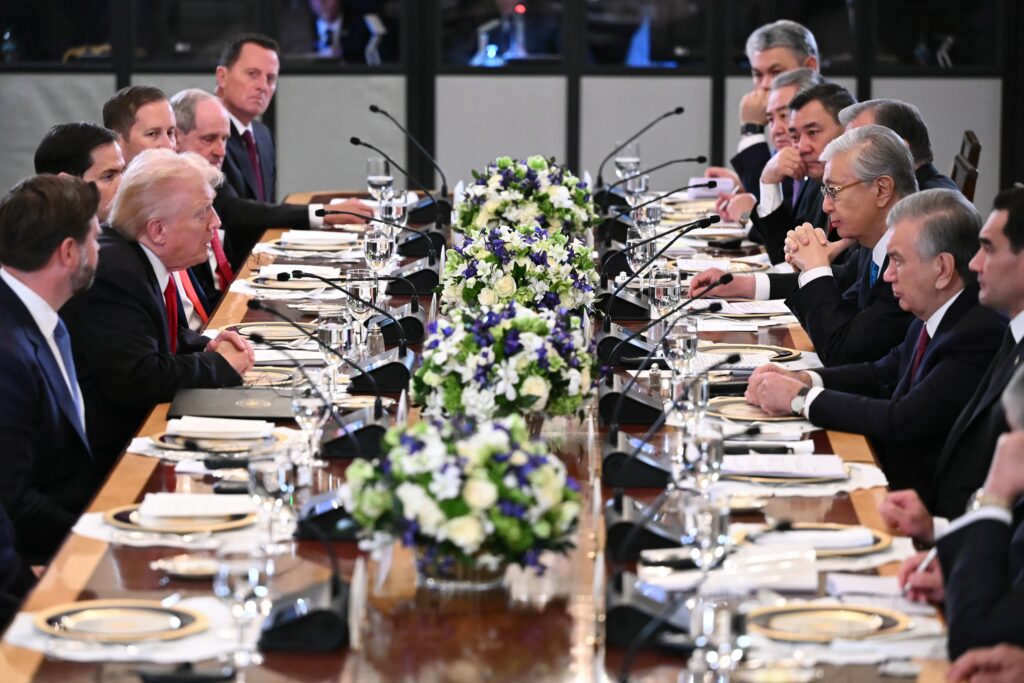
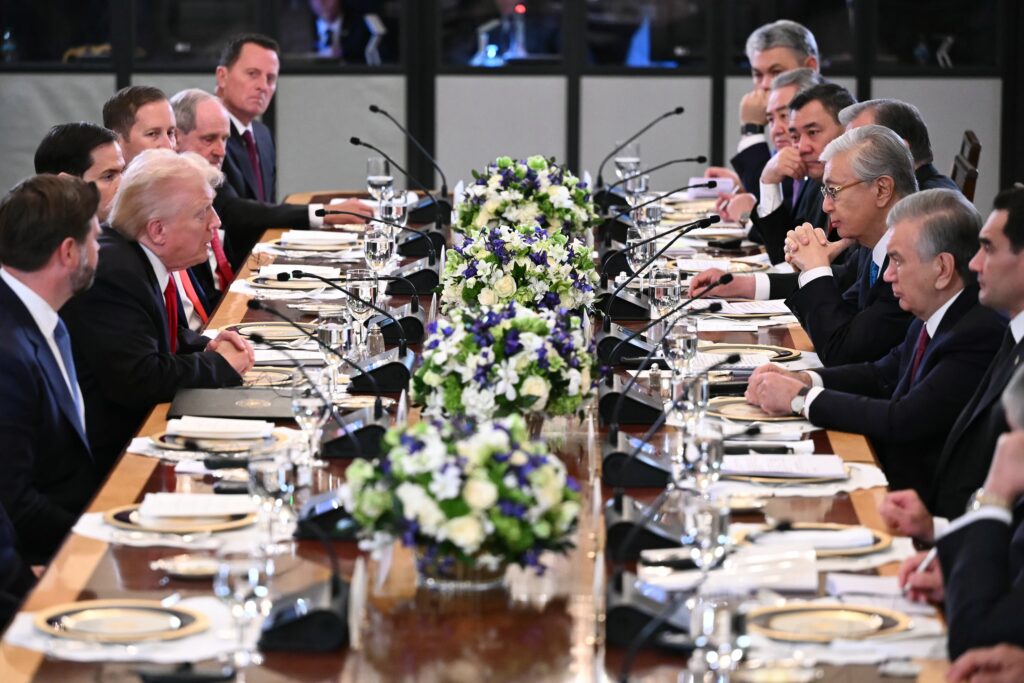
US President Donald Trump hosted all five Central Asian leaders on Thursday for the first time, a few months after they held separate summits with Russia’s Vladimir Putin and China’s Xi Jinping. The West has upped its interest with the resource-rich region, where Moscow’s traditional influence has been questioned since the Kremlin’s Ukraine invasion and where China is also a major player.- ‘Incredible importance’ of rare earths -“We’re strengthening our economic partnerships, improving our security cooperation, and expanding our overall bonds,” Trump said before a dinner with the leaders of Kazakhstan, Kyrgyzstan, Tajikistan, Turkmenistan and Uzbekistan.”One of the key items on our agenda is critical minerals,” Trump said at the so-called “C5+1” meeting.He hailed the countries’ “incredible importance and unbelievable potential.”On social media afterward, Trump announced “an incredible Trade and Economic Deal” with Uzbekistan, which he said included Tashkent investing nearly $35 billion over three years — and more than $100 billion in a decade — in key US sectors such as aviation, critical minerals, agriculture and IT.The United States and European Union are drawn by the region’s huge — but still mostly unexploited — natural resources as they try to diversify their rare earths supplies and reduce dependence on Beijing. Kazakhstan is the world’s largest uranium producer, Uzbekistan has giant gold reserves and Turkmenistan is rich in gas. Mountainous Kyrgyzstan and Tajikistan are also opening up new mineral deposits. But exploiting these giant reserves remains complicated in the impoverished states with harsh and remote terrains. Almost as large as the EU, but home to only about 75 million people, Central Asia is landlocked and covered by deserts and mountains.It is sandwiched between countries that have strained ties with the West: Russia to the north, China to the east and Iran and Afghanistan to the south.- ‘Sent by heaven’ -Trump’s counterparts did not hesitate in offering praise to their host.”You are the great leader, statesman, sent by heaven to bring (back) common sense and traditions that we all share and value,” gushed Kazakh President Kassym-Jomart Tokayev.Uzbek President Shavkat Mirziyoyev was no less effusive.”Before that, none of the presidents of the United States of America ever treated Central Asia as you do,” he said.”In Uzbekistan, we call you the president of the world.”The five landlocked countries, which gained independence from the Soviet Union in 1991, have put on a united front for diplomacy.China — which shares borders with Kazakhstan, Kyrgyzstan and Tajikistan — has presented itself as a main commercial partner for the region, investing in huge infrastructure projects.The ex-Soviet republics still see Moscow as a strategic partner but have been spooked by its invasion of Ukraine. – Abraham Accords -The biggest announcement of the day was that Kazakhstan will join the Abraham Accords between Israel and mainly Muslim nations, in a largely symbolic move aimed at boosting Trump’s push for Middle East peace.Kazakhstan will be the first country to join since the United Arab Emirates, Bahrain, Morocco and Sudan signed up to normalize ties with Israel in 2020.The central Asian republic has already had diplomatic ties with Israel for decades, but US Vice President JD Vance said Kazakhstan’s decision would nevertheless boost the initiative’s “momentum.”Several states in the Middle East have refused to join the accords so far, most notably Saudi Arabia.- Muffled human rights -For Trump, who has expressed admiration for hardline regimes, economic cooperation with Central Asia has taken precedence over promoting democratic values. While the region has opened up to tourism and foreign investment, rights groups have sounded the alarm over the further deterioration of civil freedoms. “The summit is taking place while all participating governments have increased efforts to stifle dissent, silence the media, and retaliate against critics at home and abroad,” Human Rights Watch said in a statement ahead of the talks.
Trump hails Central Asia’s ‘unbelievable potential’ at summit
US President Donald Trump hosted all five Central Asian leaders on Thursday for the first time, a few months after they held separate summits with Russia’s Vladimir Putin and China’s Xi Jinping. The West has upped its interest with the resource-rich region, where Moscow’s traditional influence has been questioned since the Kremlin’s Ukraine invasion and where China is also a major player.- ‘Incredible importance’ of rare earths -“We’re strengthening our economic partnerships, improving our security cooperation, and expanding our overall bonds,” Trump said before a dinner with the leaders of Kazakhstan, Kyrgyzstan, Tajikistan, Turkmenistan and Uzbekistan.”One of the key items on our agenda is critical minerals,” Trump said at the so-called “C5+1” meeting.He hailed the countries’ “incredible importance and unbelievable potential.”On social media afterward, Trump announced “an incredible Trade and Economic Deal” with Uzbekistan, which he said included Tashkent investing nearly $35 billion over three years — and more than $100 billion in a decade — in key US sectors such as aviation, critical minerals, agriculture and IT.The United States and European Union are drawn by the region’s huge — but still mostly unexploited — natural resources as they try to diversify their rare earths supplies and reduce dependence on Beijing. Kazakhstan is the world’s largest uranium producer, Uzbekistan has giant gold reserves and Turkmenistan is rich in gas. Mountainous Kyrgyzstan and Tajikistan are also opening up new mineral deposits. But exploiting these giant reserves remains complicated in the impoverished states with harsh and remote terrains. Almost as large as the EU, but home to only about 75 million people, Central Asia is landlocked and covered by deserts and mountains.It is sandwiched between countries that have strained ties with the West: Russia to the north, China to the east and Iran and Afghanistan to the south.- ‘Sent by heaven’ -Trump’s counterparts did not hesitate in offering praise to their host.”You are the great leader, statesman, sent by heaven to bring (back) common sense and traditions that we all share and value,” gushed Kazakh President Kassym-Jomart Tokayev.Uzbek President Shavkat Mirziyoyev was no less effusive.”Before that, none of the presidents of the United States of America ever treated Central Asia as you do,” he said.”In Uzbekistan, we call you the president of the world.”The five landlocked countries, which gained independence from the Soviet Union in 1991, have put on a united front for diplomacy.China — which shares borders with Kazakhstan, Kyrgyzstan and Tajikistan — has presented itself as a main commercial partner for the region, investing in huge infrastructure projects.The ex-Soviet republics still see Moscow as a strategic partner but have been spooked by its invasion of Ukraine. – Abraham Accords -The biggest announcement of the day was that Kazakhstan will join the Abraham Accords between Israel and mainly Muslim nations, in a largely symbolic move aimed at boosting Trump’s push for Middle East peace.Kazakhstan will be the first country to join since the United Arab Emirates, Bahrain, Morocco and Sudan signed up to normalize ties with Israel in 2020.The central Asian republic has already had diplomatic ties with Israel for decades, but US Vice President JD Vance said Kazakhstan’s decision would nevertheless boost the initiative’s “momentum.”Several states in the Middle East have refused to join the accords so far, most notably Saudi Arabia.- Muffled human rights -For Trump, who has expressed admiration for hardline regimes, economic cooperation with Central Asia has taken precedence over promoting democratic values. While the region has opened up to tourism and foreign investment, rights groups have sounded the alarm over the further deterioration of civil freedoms. “The summit is taking place while all participating governments have increased efforts to stifle dissent, silence the media, and retaliate against critics at home and abroad,” Human Rights Watch said in a statement ahead of the talks.
Emmanuel Macron attendu au Mexique pour “resserrer les liens”
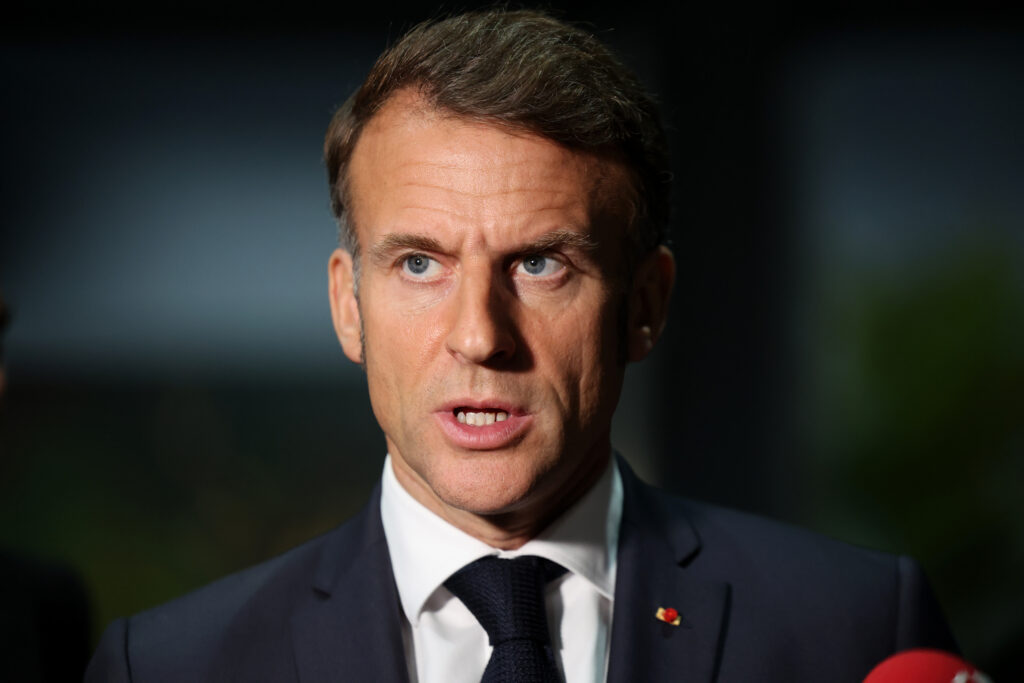
Emmanuel Macron conclut vendredi sa tournée en Amérique latine par une visite à Mexico, où il entend “resserrer les liens” politiques et économiques entre la France et le Mexique, un an après l’entrée en fonctions de la présidente de gauche Claudia Sheinbaum.Attendu dans la nuit de jeudi à vendredi en provenance du Brésil, le président français veut “resserrer les liens politiques et stratégiques” avec ce pays membre du G20 avec lequel “on partage beaucoup de valeurs” sur “le respect des règles fondant l’ordre international, le respect du multilatéralisme”, a dit l’Elysée aux journalistes.”La visite a aussi pour vocation d’approfondir nos liens économiques avec le Mexique”, a ajouté un conseiller du chef de l’Etat.”Ce sera l’occasion d’annoncer une accélération de notre coopération dans tous les domaines : économique, universitaire, scientifique, culturel, mais aussi en matière d’environnement, de santé, et de sécurité”, a déclaré pour sa part le chef de la diplomatie française Jean-Noël Barrot.Le dernier déplacement sur place d’un président français, François Hollande, remonte à onze ans.Emmanuel Macron doit s’entretenir dans la matinée avec son homologue mexicaine. Les deux présidents réuniront ensuite des dirigeants d’entreprises françaises et mexicaines.Le Mexique est le premier pays latino-américain investisseur en France, tandis que la France se classe comme le 11e investisseur étranger au Mexique.Au-delà de cet aspect économique, Claudia Sheinbaum a clairement fait savoir que pour Mexico, la priorité de cette visite était la demande de retour d’œuvres illustrant la vie et les croyances de la civilisation Mexica, anciennement appelée aztèque, conservées aujourd’hui en France.”Nous sommes très intéressés par certains +codex+”, “que nous souhaitons voir arriver au Mexique. C’est notre principal intérêt”, a dit la présidente la semaine dernière à la presse. Ils “sont très importants pour le Mexique”.Il s’agit notamment du “Codex Borbonicus”, conservé à l’Assemblée nationale française, composé de 36 feuilles en écorce de ficus, et long de 14 mètres.”C’est un dossier important sur lequel nous avons un dialogue qui est très ouvert avec les Mexicains”, a assuré l’Elysée avant le déplacement, soulignant la mise en place depuis septembre “d’un groupe de travail franco-mexicain qui rassemble nos meilleurs experts sur ces sujets”.”Toutes ces initiatives conjointes, on espère pouvoir en parler à Mexico”, a assuré la présidence française.