Asian stocks rise with focus on Fed, tech as US government reopens

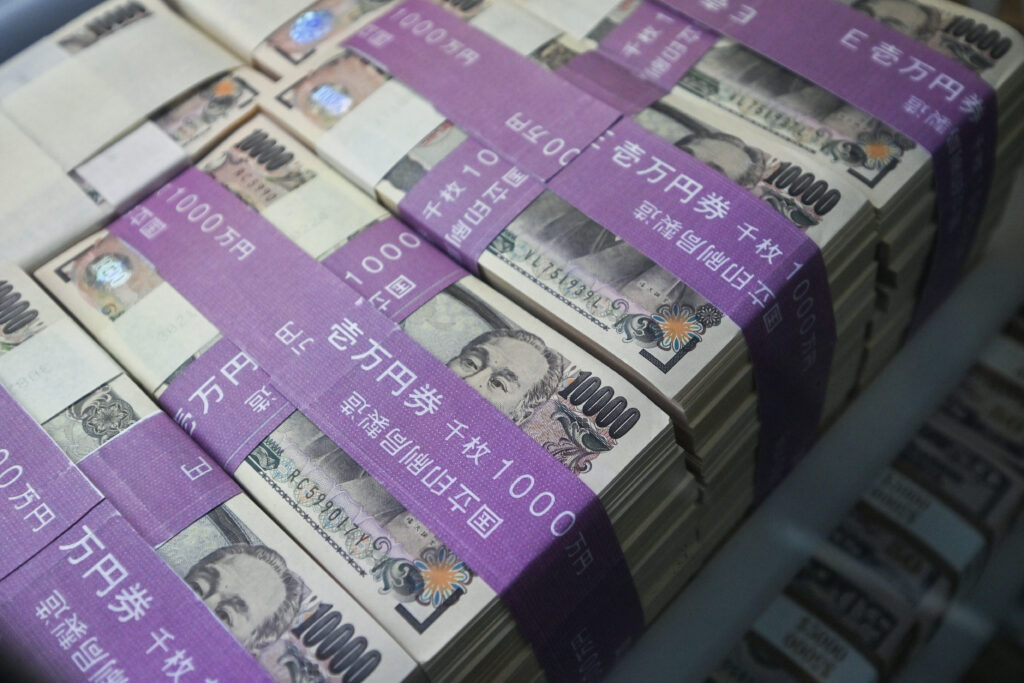
Asian markets rose on Thursday after Donald Trump signed a spending bill to end a record US government shutdown, while focus was also turning to Federal Reserve interest rates and tech bubble worries.Lawmakers in Washington voted on Wednesday night to send Trump legislation to end the stoppage that closed key services and suspended the release of data crucial to gauging the state of the world’s top economy.The US president put pen to paper later that day, allowing for the reopening of key services that were shut for 43 days as Democrats and Republicans refused to back down.Investors will now be able to get a long-awaited glimpse of the reports that have been held up by the closure, particularly the Fed as it decides whether or not to cut rates next month, as is widely expected.Even then, the White House said figures on jobs and consumer prices for October were not likely to be released as statistics agencies were unable to collect the necessary data.Still, Stephen Innes at SPI Asset Management wrote: “Reopening also doesn’t mean an instant snap-back to normal for the real economy. When you starve a system of staffing and pay for six weeks, the backlog doesn’t vanish just because a bill passed at 8 pm.”The shutdown ends with a vote and a signature; the aftershocks show up in queues, call centres and cash-flow stress far away from the Capitol dome.”Concerns also continue to mount that this year’s AI-led market rally may have pushed valuations too high and led to a bubble in the tech sector that could burst at any time.Some have warned that the hundreds of billions invested in artificial intelligence has been overdone and the return could take time to come through.Observers suggested that the recent tepid performance in several high-flying firms may be a sign of that, with the Nasdaq dropping for two days.The S&P 500 has also struggled of late, although the Dow ended at a record on Wednesday amid speculation that traders are shifting from tech into industrials.However, Asia continued its healthy run-up this week after a tepid start.Tokyo, Hong Kong, Shanghai, Seoul, Singapore, Mumbai, Manila, Bangkok and Jakarta all rose. But Sydney, Wellington and Taipei fell.London dropped as data showed the UK economy grew less than expected in the third quarter, putting fresh pressure on the government ahead of a closely watched budget this month. Sterling weakened against the dollar following the news. Paris rose and Frankfurt was flat.Oil prices extended losses after plunging around four percent on Wednesday after OPEC’s monthly crude market report forecast an oversupply in the third quarter.That came just a month after it had predicted a deficit in the period. The commodity has come under pressure of late amid easing tensions in the Middle East and increasing output by OPEC and other key producers. The International Energy Agency has estimated a record surplus in 2026.Attention is also on Tokyo after Japanese Finance Minister Satsuki Katayama said on Wednesday the government was keeping an eye on currency markets as the yen continued to weaken.She told parliament “the government is watching for any excessive and disorderly moves with a high sense of urgency”.The unit has weakened further to around 155 per dollar since her remarks, prompting speculation that authorities could step in to provide support.It has come under pressure following dovish comments from Japan’s central bank that tempered bets on another interest rate hike and as the United States moved towards reopening its government.- Key figures at around 0810 GMT -Tokyo – Nikkei 225: UP 0.4 percent at 51,281.83 (close)Hong Kong – Hang Seng Index: UP 0.6 percent at 27,073.03 (close)Shanghai – Composite: UP 0.7 percent at 4,029.50 (close)London – FTSE 100: DOWN 0.1 percent at 9,897.47 Dollar/yen: UP at 154.85 yen from 154.80 yen on WednesdayEuro/dollar: UP at $1.1610 from $1.1587 Pound/dollar: UP at $1.3142 from $1.3129Euro/pound: UP at 88.35 pence from 88.25 penceWest Texas Intermediate: DOWN 0.1 percent at $58.44 per barrelBrent North Sea Crude: DOWN 0.1 percent at $62.68 per barrelNew York – Dow:  UP 0.7 percent at 48,254.82 (close)
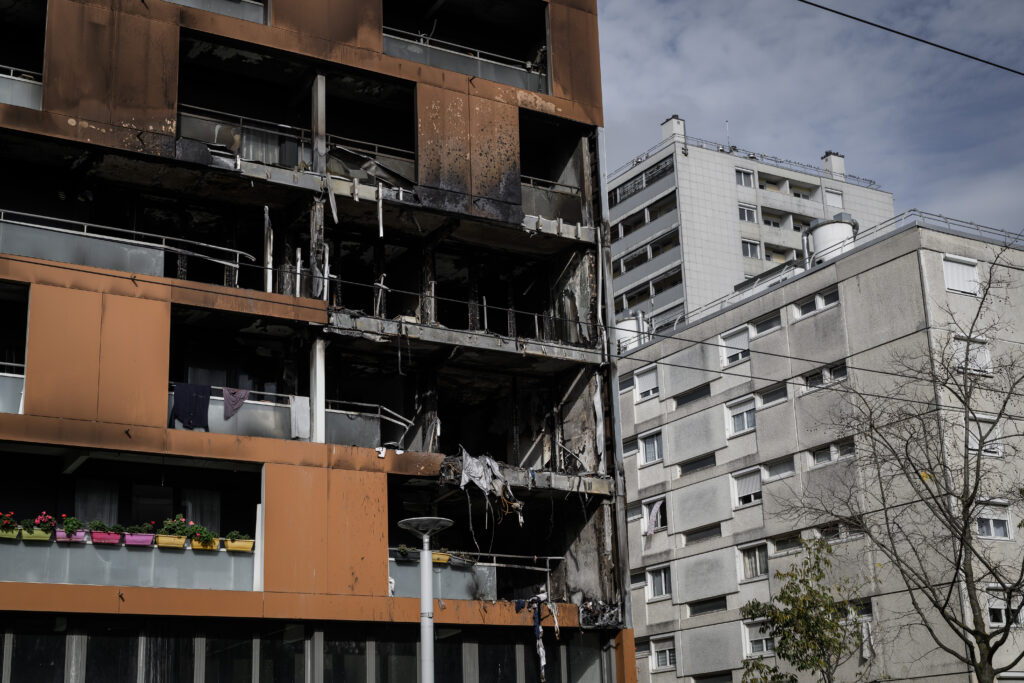
Tournage d’un clip qui dégénère près de Lyon: quatre interpellations, dont le rappeur

Quatre personnes, soupçonnées d’avoir participé au tournage sauvage d’un clip de rap qui a causé un incendie dans la banlieue de Lyon samedi, ont été interpellées jeudi matin et placées en garde à vue, a appris l’AFP de source proche du dossier.Un rappeur local de 18 ans, connu sous le nom de BFK.16, fait partie des personnes arrêtées lors de cette opération menée à Rillieux-la-Pape et dans d’autres communes de l’agglomération lyonnaise, a précisé cette source.Une quinzaine de perquisitions ont été menées lors de cette intervention. “D’autres devraient suivre dans les prochains jours”, a encore dit cette source.Samedi après-midi, un groupe de 20 à 30 personnes, certaines vêtues d’une combinaison blanche, d’autres le visage masqué, se sont regroupées pour tourner, sans autorisation, un clip avec ce rappeur, selon des sources policières.Dans le cadre du clip, le groupe a tiré des mortiers d’artifice. Un équipage de police stationné à proximité a voulu intervenir mais a été pris pour cible par les protagonistes du clip, a précisé une de ces sources.Alors que les policiers s’abritaient au pignon d’un immeuble, l’un des mortiers tirés en leur direction a atterri sur le balcon d’un appartement qui s’est embrasé, a-t-elle ajouté. Le feu s’est propagé et cinq appartements au total ont été sinistrés, d’après la préfecture. Quelque 70 pompiers ont dû être déployés mais ont également été visés par des projectiles, comme les policiers, et il a fallu un moment pour que le calme ne revienne.Une quarantaine de personnes résidents de l’immeuble ont dû être évacuées et relogées temporairement dans un centre de loisirs de la ville.Sur les réseaux sociaux, BFK.16 est présenté comme un rappeur de Vénissieux ayant sorti deux morceaux, dont un avec près d’un million de vues sur YouTube. Il a 26.000 followers sur Instagram.Un clip déjà diffusé, et tourné à Vénissieux, reprend des images d’affrontements entre des jeunes et la police, mais aussi de drogues, d’armes à feu et de grosses cylindrées.D’après une source policière, le jeune rappeur a déjà plusieurs interpellations à son actif, notamment pour rodéo urbain.

Sri Lanka to stay in Pakistan after bomb, games move to Rawalpindi

Sri Lanka’s cricket board said Thursday that its players will remain in Pakistan to complete a one-day international series and a subsequent T20 tri-series, with all games to be played in Rawalpindi.At least eight players had asked to leave over security fears after Tuesday’s suicide bombing in Islamabad that killed 12 people and wounded 27.Sri Lanka Cricket (SLC) said the decision to stay for next week’s tri-series, which also includes Zimbabwe, was taken after “close consultations” with hosts Pakistan who had given security assurances.Sri Lanka Cricket had threatened disciplinary action against any players who tried to leave Pakistan.”We lined up substitute players to be sent to continue with the tournament, but now that the squad has agreed to stay, we won’t be sending anyone,” an SLC official told AFP.All tri-series fixtures will now be played in Rawalpindi, which neighbours Islamabad, but has heavy security. Originally four of the six round-robin matches and the final had been scheduled to take place in Lahore.The ODI series was already being played in Rawalpindi, with the second match put back by a day to Friday and the third, originally due on Saturday, moved to Sunday.The T20 tri-series was scheduled to start on Monday but will also begin a day later with the final now also a day later on November 29.”Grateful to the Sri Lankan team for their decision to continue the Pakistan tour,” said Pakistan Cricket Board chairman Mohsin Naqvi on social media. “The spirit of sportsmanship and solidarity shines bright.”Six Sri Lankan players were wounded in March 2009 when gunmen opened fire on their team bus as it was taking them to Gaddafi Stadium in Lahore for a Test match.The incident led to international teams staying away from Pakistan for nearly a decade.Pakistan beat Sri Lanka by six runs in the opening ODI in Rawalpindi on Tuesday, a game that went ahead despite the suicide attack in nearby Islamabad.The PCB said security around the visiting team had been tightened following the attack.Naqvi met Sri Lankan players at their Islamabad hotel on Wednesday and assured them of their safety, Sri Lankan officials said, adding that the number of guards for the squad has been doubled.

Royal ransoms, a top money-maker for Mali’s jihadist kidnappers

At least $50 million for the freedom of an Emirati sheikh: that is the king’s ransom paid two weeks ago to jihadists linked to Al-Qaeda who are pushing to topple the Malian government and impose Islamic law.Alongside a crippling fuel blockade, the Group for the Support of Islam and Muslims, known by its Arabic acronym JNIM, has made kidnapping wealthy foreigners for a ransom a pillar of its strategy of “economic jihad”.Its goal: oust the junta, which has struggled to contain Mali’s decade-long insurgency since taking power following back-to-back coups in 2020 and 2021, by scaring away investors and paralysing the west African country’s economy. In June, the JNIM threatened to strike any foreign businesses and industries installed in Mali, as well as any enterprise doing business with the Malian government without its “authorisation”. Since then the group — which hopes to cement its status as one of the most powerful of the jihadist factions to plague the region by expanding towards the Atlantic coast — has made good on its promise.It has attacked and burnt tankers carrying vital fuel to landlocked Mali from the coasts of Senegal or Ivory Coast, launched assaults on factories and mines alike — and kidnapped more foreigners than ever before.”Between May and October 2025, at least 22 foreign nationals have been abducted — roughly double the previous record of 13 in 2022,” Heni Nsaibia, Senior West Africa Analyst for the ACLED conflict monitor, told AFP. Chinese, Indians, Egyptians, Emiratis and Iranians are all among the victims, together with a Serbian, a Croat and a Bosniak, Nsaibia added. – ‘Highest known’ ransom -The JNIM demanded the $50 million ransom after kidnapping a member of the United Arab Emirates royal family involved in the gold trade near the capital Bamako on September 26, according to a source close to the negotiations and another Malian security source.Two of his business partners, an Iranian and a Pakistani, were also abducted. A first sum of 400 million CFA Francs (more than $700,000) was then sent to the jihadists in exchange for proof that the hostages were alive, the source close to the negotiations said. The JNIM then freed the trio at the end of October after a ransom of “$50 million at least”, the source added. That sum “represents the highest known ransom in the region and constitutes a major financial boost for (the JNIM)”, said Nsaibia.Who actually paid the ransom is unknown.But a Malian security source, who confirmed the exorbitant total, said JNIM also obtained “the release of around 30 of its prisoners” held by the Malian intelligence services.”Malian soldiers were also released during the same exchange. It is an astounding deal in terms of its scale and the elements involved, especially in the current context,” the security source continued.For Rida Lyammouri, a researcher at the Policy Center for the New South, the ransom will allow the JNIM to “maintain its current level of military engagement, including the economic blockade on Bamako, for a prolonged period”.  – Swelling war chest -“Such a haul will only serve to boost the JNIM’s ambitions to expand and establish a lasting presence in the Sahel and the coastal states of Africa,” Lyammouri added.Liam Karr, an analyst at the Washington-based American Enterprise Institute (AEI), pointed out that those “funds will help the group procure more weapons, such as commercial drones, explosives, and small arms, as well as pay salaries to fighters”.The withdrawal of French troops in the wake of the coup has left a security vacuum exploited by the jihadists which the junta’s new security partners — including Russia — have failed to fill, Lyammouri said. And the JNIM still holds several other hostages who, once ransomed, will swell its war chest even further. Most are abducted in the west of the country, where around 80 percent of Mali’s gold production is mined, according to the Soufan Centre consultancy. At least 11 Chinese citizens have been abducted in western Mali in attacks on seven industrial sites, of which six were run by Chinese companies, according to the AEI think tank.And just last week, five Indians working for an electricity company and an Egyptian were kidnapped in the same region.”Targeting foreign nationals drives away foreign investment, undermining a key revenue stream for the Malian junta,” notably in the mining sector, said Karr, the AEI analyst.With the JNIM’s grip tightening, the United States and the United Kingdom announced two weeks ago that it was pulling out all non-essential personnel from Mali, while many embassies have urged their citizens to leave the country. lar-sd-str-bdi/pid/els/sbk/giv

Royal ransoms, a top money-maker for Mali’s jihadist kidnappersThu, 13 Nov 2025 06:40:54 GMT

At least $50 million for the freedom of an Emirati sheikh: that is the king’s ransom paid two weeks ago to jihadists linked to Al-Qaeda who are pushing to topple the Malian government and impose Islamic law.Alongside a crippling fuel blockade, the Group for the Support of Islam and Muslims, known by its Arabic acronym …

Royal ransoms, a top money-maker for Mali’s jihadist kidnappersThu, 13 Nov 2025 06:40:54 GMT Read More »

En Alsace, la traque ingénieuse des nids de frelons asiatiques

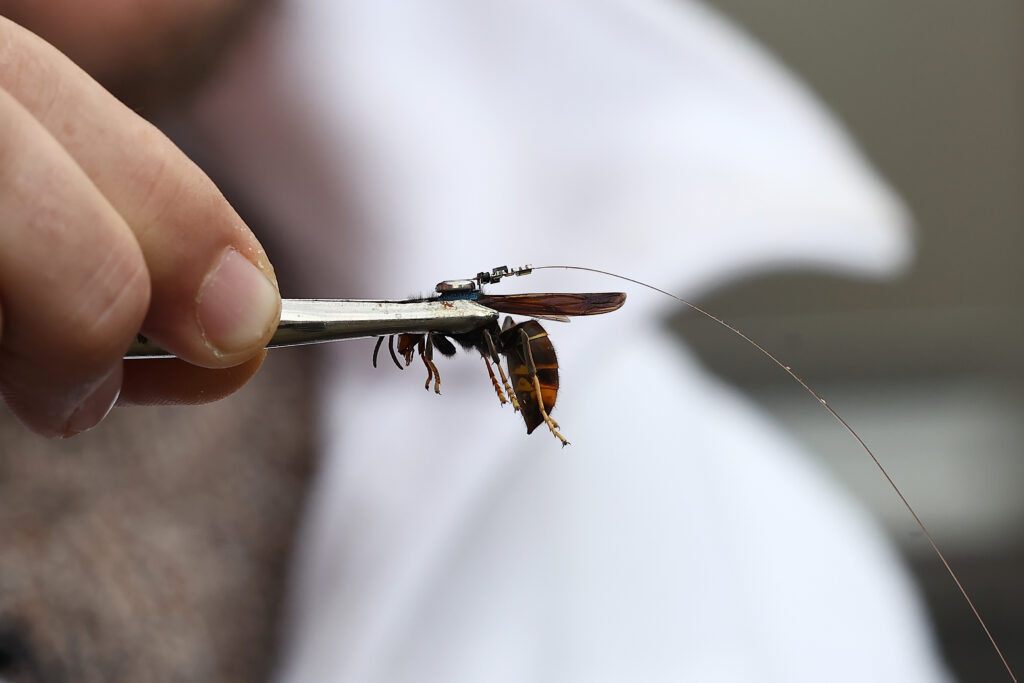
Ils traquent les insectes à la jumelle “thermographique” ou les équipent d’une marque de couleur ou d’un émetteur: des apiculteurs alsaciens se démènent pour débusquer les nids de frelons asiatiques, une espèce invasive, prédatrice des abeilles, dont le nombre a explosé depuis deux ans.”Chercher les nids, ça fait partie de mon travail. Si je veux continuer à faire de l’apiculture, je n’ai pas le choix”, résume Mathieu Diffort, qui exploite une centaine de ruches dans la région rurale du Sundgau, près de Belfort et de la frontière suisse.Avec Philippe Sieffert, son associé dans la société Api&Co, il se consacre également à la destruction des nids de frelons, ainsi qu’à leur traque, cette dernière activité étant aussi chronophage que peu rémunératrice.Apparu en France en 2004, le redoutable hyménoptère à pattes jaunes n’a été repéré qu’en 2023 dans le Haut-Rhin, mais y est désormais solidement installé, relève Sean Durkin, référent local du “groupement de défense sanitaire apicole” (GDSA) mobilisé contre ce fléau. Entre 15 et 20 nids ont été signalés dans le département en 2023, puis une petite centaine l’année suivante et “cette année on va dépasser les 400”, s’alarme-t-il. Parallèlement, le nombre de ruches attaquées ou décimées a explosé.Les bénévoles du GDSA multiplient les actions de communication pour appeler la population à signaler les nids aperçus dans la nature – chacun peut le faire, partout en France, sur le site lefrelon.com. Lorsqu’un nid est repéré, un spécialiste se déplace pour le détruire, avec un drone, une nacelle, ou une perche. En ce matin de novembre, la cible visée par Mathieu Diffort est accrochée en haut d’un chêne, à 25 mètres du sol. Vêtu d’une épaisse combinaison, l’apiculteur utilise une perche télescopique pour injecter dans l’énorme concrétion ovale une poudre insecticide bio. – Bouts de ficelle -Les communes “doivent prévoir une ligne budgétaire” pour ce type d’intervention, car “le phénomène va monter en puissance”, constate Olivier Pflieger, premier adjoint au maire de Hirtzbach. “C’est un problème d’apiculture, mais aussi de santé publique”, souligne l’élu, qui confie avoir perdu sa soeur l’an dernier, décédée d’un choc allergique après une piqûre de frelon.A Hirtzbach, le nid a été aperçu par un ancien garde forestier. “J’étais passée 20 fois à proximité, et je ne l’avais pas vu”, se désole Marion Federspiel, dont l’une des six ruches, installées à environ 200 mètres, a été entièrement décimée. Certaines colonies peuvent s’installer dans des granges abandonnées, où personne ne les repérera, s’inquiète-t-elle.D’où les efforts déployés par Matthieu Diffort pour chercher les nids. Il tente d’abord de chronométrer le déplacement des insectes: capturé avec un appât, un frelon est marqué d’un repère de couleur, puis relâché. Le temps qu’il met à revenir permet de déduire la distance à son nid. Répétée à au moins trois endroits, la méthode peut mener à une localisation assez précise.Autre piste: l’apiculteur scrute les arbres avec une jumelle “thermographique”, qui permet de repérer de loin les nids grâce à la chaleur – environ 30 degrés – qu’ils dégagent. Enfin, M. Diffort expérimente une solution “high tech”: sur le dos d’un frelon, préalablement anesthésié avec du CO2, il colle un minuscule émetteur, qui lui permettra de traquer ses déplacements à l’aide d’une antenne râteau reliée à un smartphone. L’enjeu étant de trouver le nid en moins de trois heures, avant que la batterie de l’émetteur ne se vide.Pour l’heure, la méthode est encore faillible, et surtout onéreuse, d’autant que l’émetteur ne peut pas toujours être récupéré.Dans cette démarche coûteuse en argent et en temps, le jeune homme avoue se sentir “un peu seul” et souhaiterait davantage de financements pour la recherche. Il en va, souligne-t-il, de l’avenir de l’apiculture et de la biodiversité, mais aussi de la sécurité alimentaire, les abeilles étant indispensables à la pollinisation. “On travaille avec des bouts de ficelle, des moyens dérisoires”, se désole Sean Durkin. Le frelon asiatique, “on sait qu’on ne l’éradiquera plus, il faut donc vivre avec. Et essayer de limiter au maximum sa prolifération”.

En Alsace, la traque ingénieuse des nids de frelons asiatiques

Ils traquent les insectes à la jumelle “thermographique” ou les équipent d’une marque de couleur ou d’un émetteur: des apiculteurs alsaciens se démènent pour débusquer les nids de frelons asiatiques, une espèce invasive, prédatrice des abeilles, dont le nombre a explosé depuis deux ans.”Chercher les nids, ça fait partie de mon travail. Si je veux continuer à faire de l’apiculture, je n’ai pas le choix”, résume Mathieu Diffort, qui exploite une centaine de ruches dans la région rurale du Sundgau, près de Belfort et de la frontière suisse.Avec Philippe Sieffert, son associé dans la société Api&Co, il se consacre également à la destruction des nids de frelons, ainsi qu’à leur traque, cette dernière activité étant aussi chronophage que peu rémunératrice.Apparu en France en 2004, le redoutable hyménoptère à pattes jaunes n’a été repéré qu’en 2023 dans le Haut-Rhin, mais y est désormais solidement installé, relève Sean Durkin, référent local du “groupement de défense sanitaire apicole” (GDSA) mobilisé contre ce fléau. Entre 15 et 20 nids ont été signalés dans le département en 2023, puis une petite centaine l’année suivante et “cette année on va dépasser les 400”, s’alarme-t-il. Parallèlement, le nombre de ruches attaquées ou décimées a explosé.Les bénévoles du GDSA multiplient les actions de communication pour appeler la population à signaler les nids aperçus dans la nature – chacun peut le faire, partout en France, sur le site lefrelon.com. Lorsqu’un nid est repéré, un spécialiste se déplace pour le détruire, avec un drone, une nacelle, ou une perche. En ce matin de novembre, la cible visée par Mathieu Diffort est accrochée en haut d’un chêne, à 25 mètres du sol. Vêtu d’une épaisse combinaison, l’apiculteur utilise une perche télescopique pour injecter dans l’énorme concrétion ovale une poudre insecticide bio. – Bouts de ficelle -Les communes “doivent prévoir une ligne budgétaire” pour ce type d’intervention, car “le phénomène va monter en puissance”, constate Olivier Pflieger, premier adjoint au maire de Hirtzbach. “C’est un problème d’apiculture, mais aussi de santé publique”, souligne l’élu, qui confie avoir perdu sa soeur l’an dernier, décédée d’un choc allergique après une piqûre de frelon.A Hirtzbach, le nid a été aperçu par un ancien garde forestier. “J’étais passée 20 fois à proximité, et je ne l’avais pas vu”, se désole Marion Federspiel, dont l’une des six ruches, installées à environ 200 mètres, a été entièrement décimée. Certaines colonies peuvent s’installer dans des granges abandonnées, où personne ne les repérera, s’inquiète-t-elle.D’où les efforts déployés par Matthieu Diffort pour chercher les nids. Il tente d’abord de chronométrer le déplacement des insectes: capturé avec un appât, un frelon est marqué d’un repère de couleur, puis relâché. Le temps qu’il met à revenir permet de déduire la distance à son nid. Répétée à au moins trois endroits, la méthode peut mener à une localisation assez précise.Autre piste: l’apiculteur scrute les arbres avec une jumelle “thermographique”, qui permet de repérer de loin les nids grâce à la chaleur – environ 30 degrés – qu’ils dégagent. Enfin, M. Diffort expérimente une solution “high tech”: sur le dos d’un frelon, préalablement anesthésié avec du CO2, il colle un minuscule émetteur, qui lui permettra de traquer ses déplacements à l’aide d’une antenne râteau reliée à un smartphone. L’enjeu étant de trouver le nid en moins de trois heures, avant que la batterie de l’émetteur ne se vide.Pour l’heure, la méthode est encore faillible, et surtout onéreuse, d’autant que l’émetteur ne peut pas toujours être récupéré.Dans cette démarche coûteuse en argent et en temps, le jeune homme avoue se sentir “un peu seul” et souhaiterait davantage de financements pour la recherche. Il en va, souligne-t-il, de l’avenir de l’apiculture et de la biodiversité, mais aussi de la sécurité alimentaire, les abeilles étant indispensables à la pollinisation. “On travaille avec des bouts de ficelle, des moyens dérisoires”, se désole Sean Durkin. Le frelon asiatique, “on sait qu’on ne l’éradiquera plus, il faut donc vivre avec. Et essayer de limiter au maximum sa prolifération”.