Italie: l’Inter, encore privé de Thuram, ne sait pas encore quand il reviendra
L’Inter Milan sera privé de son international français Marcus Thuram, blessé, pour affronter l’AS Rome samedi lors de l’affiche de la 7e journée de Serie A, a annoncé vendredi son entraîneur qui n’a pas encore de date pour son retour.”Thuram n’a pas encore repris l’entraînement collectif, il va mieux et a commencé à courir doucement. Nous espérons le revoir au plus vite”, a déclaré Cristian Chivu lors de la traditionnelle conférence de presse de veille de match.”Pour ce qui est de son retour (en compétition), il faut voir, je n’ai pas encore de date”, a poursuivi l’entraîneur de l’Inter.Thuram n’est plus apparu en match depuis la victoire de l’Inter (3-0) face au Slavia Prague en Ligue des champions le 30 septembre.Il avait quitté ses coéquipiers peu après l’heure de jeu après avoir ressenti “comme une crampe” à la cuisse gauche, mais s’était immédiatement montré rassurant.Depuis, il a manqué le match de la 6e journée du Championnat d’Italie contre la Cremonese (4-1) et le duel face à l’Atletico Madrid (1-1) en Ligue des champions, ainsi que le rassemblement de l’équipe de France pour les matches de qualification pour le Mondial-2026, contre l’Azerbaïdjan (3-0) et en Islande (2-2).L’avant-centre de 28 ans a marqué trois buts cette saison en Serie A.Contre la Roma, Chivu pourrait aligner aux côtés de son capitaine Laurato Martinez un autre Français Ange-Yoann Bonny ou le grand espoir italien Franceso Pio Esposito qui a marqué son premier but en sélection contre l’Estonie.L’Inter, vice-champion d’Italie et d’Europe 2025, occupe la 4e place du championnat (12 pts) avant d’affronter la Roma, 2e avec 15 points.
Le dernier membre retrouvé du “gang de Roubaix” nie en bloc au premier jour de son procès
Le dernier membre retrouvé du “gang de Roubaix”, après 27 ans de cavale, a contesté vendredi l’intégralité des faits qui lui sont reprochés pour sa participation présumée à ce groupe criminel mêlant grand banditisme et islamisme radical dans les années 1990.Dès l’ouverture de son procès devant la cour d’assises du Nord à Douai, Seddik Benbahlouli, 55 ans, crâne dégarni et barbe poivre et sel fournie, ne s’est guère montré coopératif.”Je n’ai nullement l’intention de participer à ce procès. J’ai été clair depuis le début, à cause de la violation de mes droits dès les États-Unis”, a-t-il déclaré, en faisant référence à son arrestation en 2023 dans ce pays, qui a mené à son extradition vers la France.Malgré ses protestations, il est d’abord resté dans le box des accusés, à la demande de la présidente de la cour. Mais lorsqu’il a tenté de quitter sa place de force, les policiers sont intervenus pour le faire sortir de la salle d’audience. Il n’y est plus revenu.”Il conteste l’intégralité des faits qui lui sont reprochés”, a déclaré devant la cour son avocate, Me Soizic Salomon.Seddik Benbahlouli doit être jugé jusqu’au 27 octobre pour tentative de meurtre sur deux policiers en 1996, recel de véhicule volé et participation à une association de malfaiteurs.La présidente de la cour a dit qu’elle pourrait être amenée à demander sa comparution forcée lorsque les victimes témoigneront la semaine prochaine.Originaire de Roubaix et titulaire d’un BEP électrotechnique, l’accusé se déclare célibataire et sans enfant. Aux États-Unis, il aurait principalement vécu à Philadelphie (est), où il aurait travaillé dans le secteur de l’automobile, sous une fausse identité, a rapporté la présidente.En détention, il a été placé à l’isolement “en raison d’un risque de prosélytisme”, tout en se montrant “correct avec les professionnels” et “très religieux”, consacrant “beaucoup de temps à la prière”, a-t-elle poursuivi. – “Eléments imparables” -Le “gang de Roubaix”, qualifié d'”islamo-braqueurs” par l’ancien patron de la brigade criminelle de Lille, Romuald Muller, qui doit témoigner lundi au procès, s’était formé au milieu des années 1990 autour d’un noyau d’hommes fréquentant la mosquée Dawa de la ville. La plupart de ses membres s’étaient rendus en Bosnie en 1994-1995, aux côtés d’islamistes venus combattre au sein de “brigades de moudjahidines”.En 1995 naissait l’idée de monter un groupe en France et d’organiser des braquages pour financer la cause islamiste armée.Entre janvier et mars 1996, le gang mène une série de braquages et attaques avec des armes de guerre dans le nord de la France, causant la mort d’un civil à Roubaix lors d’une course-poursuite avec la police, et faisant plusieurs blessés.Le groupe est démantelé fin mars, lors d’un assaut du Raid contre une planque à Roubaix. Quatre membres meurent sur place et le chef présumé, Christophe Caze, est abattu dans sa fuite en Belgique.Les cinq survivants ont été condamnés, en première instance ou en appel entre 2001 et 2007, à des peines de 15 à 25 ans de réclusion criminelle.Benbahlouli est lui soupçonné d’avoir tiré à la Kalachnikov sur des policiers alors qu’il venait récupérer une Audi 90 volée, le 27 janvier 1996 à Croix, dans la banlieue lilloise. L’un des deux policiers avait été blessé.Dans ce dossier, “il y a des éléments imparables”: de l’ADN de Benbahlouli a été retrouvé “dans une trace de sang sur les lieux du crime”, a rappelé Me Blandine Lejeune, l’avocate des parties civiles.Après la chute du gang, Benbahlouli a disparu dans la nature. Selon les enquêteurs, il serait passé par le Togo, le Burkina Faso et le Yémen, avant de rejoindre la Belgique, sous une fausse identité. Selon les témoignages de membres de sa famille cités par la présidente de la cour, Seddik Benbahlouli ne leur avait plus donné de nouvelles depuis 1996, et les enquêteurs avaient complètement perdu sa trace en 1998. L’un des temps forts du procès devrait être la journée d’audience de mercredi, où les quatre autres survivants du “gang de Roubaix” doivent témoigner.
US sinks international deal on decarbonising ships
An international vote to formally approve cutting maritime emissions was delayed by a year Friday, in a victory for the United States which opposes the carbon-cutting plan.The London-based International Maritime Organization (IMO), which is the shipping body of the United Nations, voted in April for a global pricing system to help curb greenhouse gases.But a vote on whether to formally approve the deal was cancelled on Friday until next year after US President Donald Trump threatened sanctions against countries backing the plan.Increased divisions, notably between oil producing nations and non-oil producers, emerged this week at meetings leading up to Friday’s planned follow-up vote to approve the scheme.Delegates instead voted on a hastily-arranged resolution to postpone proceedings, which passed by 57 votes to 49.Trump on Thursday said the proposed global carbon tax on shipping was a “scam” after the United States withdrew from IMO negotiations in April.A Russian delegate described proceedings as “chaos” as he addressed the plenary Friday after talks had lasted until the early hours.Russia joined major oil producers Saudi Arabia and the United Arab Emirates in voting against the carbon-reduction measure in April, arguing it would harm the economy and food security.IMO Secretary-General Arsenio Dominguez, representing 176 member states, pleaded Friday that he hoped there would be no repeat of how the week’s discussions had gone.”It doesn’t help your organisation, it doesn’t help yourself,” he told delegates. – Trump ‘outraged’ -Since returning to power in January, Trump has reversed Washington’s course on climate change and encouraged fossil fuel use by deregulation.”I am outraged that the International Maritime Organization is voting in London this week to pass a global Carbon Tax,” Trump wrote on his Truth Social platform Thursday. “The United States will NOT stand for this Global Green New Scam Tax on Shipping,” he added, urging countries to vote against it.Washington threatened to impose sanctions, visa restrictions and port levies on those supporting the Net Zero Framework (NZF), the first global carbon-pricing system.Liberia and Saudi Arabia called for Friday’s vote to be postponed.”We agree with the United States that it’s important that these conversations are brought to light,” a Saudi representative said.Ahead of this week’s London gathering, a majority 63 IMO members that in April voted for the plan had been expected to maintain their support and to be joined by others to formally approve the NZF.Argentina, which in April abstained from the vote, now opposes the deal. Leading up to Friday’s decision — China, the European Union, Brazil, Britain and several other members of the IMO — reaffirmed their support.The NZF requires ships to progressively reduce carbon emissions from 2028, or face financial penalties.Shipping accounts for nearly three percent of global greenhouse gas emissions, according to the IMO, while the CO2 pricing plan should encourage the sector to use less polluting fuels.The Philippines, which provides the most seafarers of any country, and Caribbean islands focused on the cruise industry, would be particularly impacted by visa restrictions and sanctions.The plan would charge ships for emissions exceeding a certain threshold, with proceeds used to reward low-emission vessels and support countries vulnerable to climate change.Pacific Island states, which abstained in the initial vote over concerns the proposal was not ambitious enough, had been expected to support it this time around.If the global emissions pricing system was adopted, it would become difficult to evade, even for the United States.IMO conventions allow signatories to inspect foreign ships during stopovers and even detain non-compliant vessels.burs-pml/bcp/ode/jkb/giv
US sinks international deal on decarbonising ships
An international vote to formally approve cutting maritime emissions was delayed by a year Friday, in a victory for the United States which opposes the carbon-cutting plan.The London-based International Maritime Organization (IMO), which is the shipping body of the United Nations, voted in April for a global pricing system to help curb greenhouse gases.But a vote on whether to formally approve the deal was cancelled on Friday until next year after US President Donald Trump threatened sanctions against countries backing the plan.Increased divisions, notably between oil producing nations and non-oil producers, emerged this week at meetings leading up to Friday’s planned follow-up vote to approve the scheme.Delegates instead voted on a hastily-arranged resolution to postpone proceedings, which passed by 57 votes to 49.Trump on Thursday said the proposed global carbon tax on shipping was a “scam” after the United States withdrew from IMO negotiations in April.A Russian delegate described proceedings as “chaos” as he addressed the plenary Friday after talks had lasted until the early hours.Russia joined major oil producers Saudi Arabia and the United Arab Emirates in voting against the carbon-reduction measure in April, arguing it would harm the economy and food security.IMO Secretary-General Arsenio Dominguez, representing 176 member states, pleaded Friday that he hoped there would be no repeat of how the week’s discussions had gone.”It doesn’t help your organisation, it doesn’t help yourself,” he told delegates. – Trump ‘outraged’ -Since returning to power in January, Trump has reversed Washington’s course on climate change and encouraged fossil fuel use by deregulation.”I am outraged that the International Maritime Organization is voting in London this week to pass a global Carbon Tax,” Trump wrote on his Truth Social platform Thursday. “The United States will NOT stand for this Global Green New Scam Tax on Shipping,” he added, urging countries to vote against it.Washington threatened to impose sanctions, visa restrictions and port levies on those supporting the Net Zero Framework (NZF), the first global carbon-pricing system.Liberia and Saudi Arabia called for Friday’s vote to be postponed.”We agree with the United States that it’s important that these conversations are brought to light,” a Saudi representative said.Ahead of this week’s London gathering, a majority 63 IMO members that in April voted for the plan had been expected to maintain their support and to be joined by others to formally approve the NZF.Argentina, which in April abstained from the vote, now opposes the deal. Leading up to Friday’s decision — China, the European Union, Brazil, Britain and several other members of the IMO — reaffirmed their support.The NZF requires ships to progressively reduce carbon emissions from 2028, or face financial penalties.Shipping accounts for nearly three percent of global greenhouse gas emissions, according to the IMO, while the CO2 pricing plan should encourage the sector to use less polluting fuels.The Philippines, which provides the most seafarers of any country, and Caribbean islands focused on the cruise industry, would be particularly impacted by visa restrictions and sanctions.The plan would charge ships for emissions exceeding a certain threshold, with proceeds used to reward low-emission vessels and support countries vulnerable to climate change.Pacific Island states, which abstained in the initial vote over concerns the proposal was not ambitious enough, had been expected to support it this time around.If the global emissions pricing system was adopted, it would become difficult to evade, even for the United States.IMO conventions allow signatories to inspect foreign ships during stopovers and even detain non-compliant vessels.burs-pml/bcp/ode/jkb/giv
Trump reçoit Zelensky après avoir relancé son dialogue avec Poutine
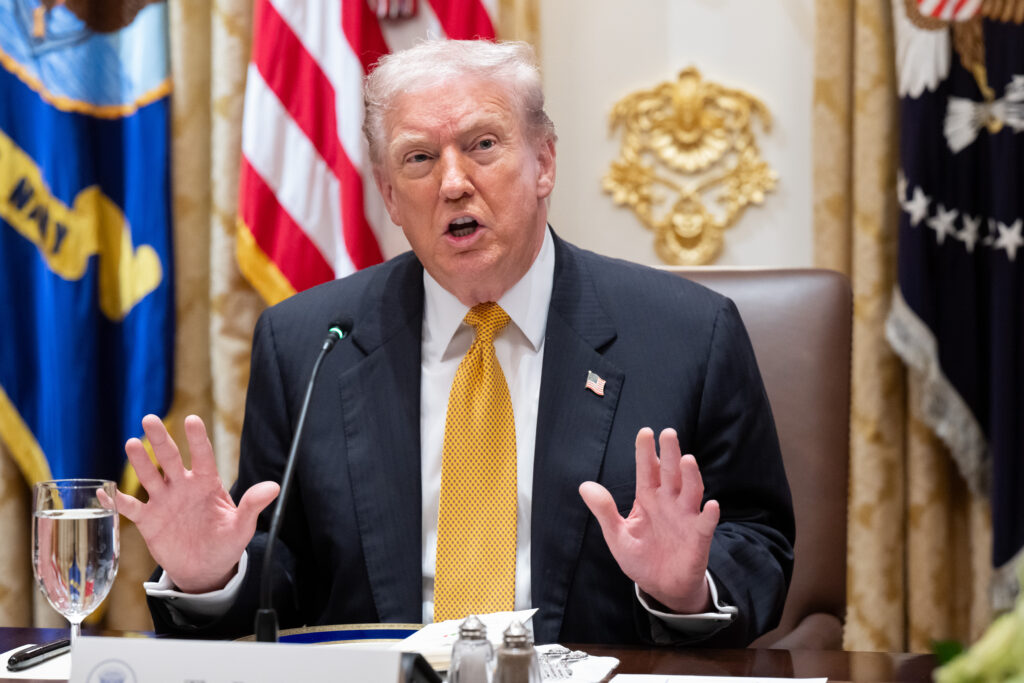
Volodymyr Zelensky aura fort à faire vendredi pour convaincre Donald Trump de livrer à l’Ukraine des missiles Tomahawk, alors que le président américain et Vladimir Poutine viennent de relancer leur dialogue, en convenant d’un prochain sommet à Budapest.Le président ukrainien sera reçu à la Maison Blanche pour la troisième fois depuis le retour au pouvoir du républicain. La rencontre est prévue à 13H00 (17H00 GMT).Lors de leur première entrevue en février, Donald Trump avait asséné brutalement à Volodymyr Zelensky qu’il n’avait “pas les cartes en main”. La seconde, en août, avait été beaucoup plus cordiale.Cette fois, le président ukrainien arrive à la Maison Blanche au lendemain d’un coup de fil surprise entre Donald Trump et Vladimir Poutine, dont le dirigeant russe a profité pour avertir qu’une livraison de missiles Tomahawk “nuirait considérablement” à la relation russo-américaine.Le président américain, interrogé jeudi après sa conversation avec Vladimir Poutine, s’est montré très réservé. “Nous ne pouvons pas appauvrir (les réserves de Tomahawk) notre propre pays”, a-t-il estimé.- 1.600 kilomètres -“Moscou se précipite pour reprendre le dialogue dès qu’ils entendent parler de Tomahawk”, a commenté sur X Volodymyr Zelensky, à son arrivée jeudi à Washington.Le président ukrainien a rencontré des représentants du fabricant américain des systèmes de missiles Tomahawk et Patriot, pour discuter entre autres de la “perspective d’une production conjointe ukraino-américaine”.Le BGM-109 Tomahawk vole jusqu’à 1.600 kilomètres, à 880 km/h, à quelques dizaines de mètres du sol.Ces missiles permettraient à l’Ukraine de frapper en profondeur en Russie, au moment où Moscou, à l’entrée de l’hiver, intensifie ses attaques sur les infrastructures énergétiques ennemies.Vendredi, la Russie a aussi revendiqué la prise de trois villages ukrainiens dans les régions de Kharkiv et Dnipropetrovsk (Est).Le président américain a dit jeudi espérer “mettre fin à cette guerre +sans gloire+” lors de sa rencontre avec Vladimir Poutine, prévue selon lui “dans les deux prochaines semaines.”- “Très productif” -Les dirigeants américain et russe ont eu jeudi un entretien “très productif”, a jugé le républicain de 79 ans, tandis que Moscou a salué un échange “extrêmement franc et empreint de confiance”.Le porte-parole du Kremlin, Dmitri Peskov, a toutefois relevé vendredi qu’il fallait résoudre de “nombreuses questions” avant la rencontre de Budapest. Serguei Lavrov et Marco Rubio, les chefs des diplomaties russe et américaine, se rencontreront pour tenter d’y répondre.Le ministre hongrois des Affaires étrangères, Péter Szijjarto, a assuré que le président russe pourrait faire le déplacement sans encombres. Vladimir Poutine est sous le coup d’un mandat d’arrêt de la Cour pénale internationale pour crimes de guerre présumés, mais la Hongrie a annoncé son retrait de la CPI, qui sera effectif le 2 juin 2026. Le dernier sommet entre les deux présidents, le 15 août en Alaska, s’était conclu sans perspective concrète de paix.Cet échec a irrité Donald Trump, qui s’est dit plusieurs fois “très déçu” de Vladimir Poutine et qui a même estimé que la Russie pourrait perdre la guerre.- “Il n’a pas aimé” -Le président américain s’est toutefois cantonné depuis cette rencontre dans un rôle d’observateur, sans mettre à exécution ses menaces de lourdes sanctions contre la Russie.Donald Trump a rompu l’isolement dans lequel les puissances occidentales maintenaient Moscou depuis l’invasion russe de février 2022 et remis en cause l’aide militaire accordée à l’Ukraine par l’administration de son prédécesseur, Joe Biden.Refusant d’attribuer la responsabilité du conflit le plus meurtrier en Europe depuis la Deuxième guerre mondiale, le président américain renvoie volontiers dos à dos Vladimir Poutine et Volodymyr Zelensky. “Ils ne s’entendent pas très bien, ces deux-là”, a-t-il remarqué jeudi, sur un ton désinvolte.Puis il a plaisanté sur son échange téléphonique avec Vladimir Poutine.”Je lui ai dit +Cela vous dérangerait si je donnais quelques milliers de Tomahawk à votre adversaire?” (…). Il n’a pas aimé cette idée”, a lancé le président américain en s’esclaffant, pendant un échange avec la presse dans le Bureau ovale.
Zelensky to push for Tomahawk missiles in Trump meeting
Ukrainian President Volodymyr Zelensky meets Donald Trump at the White House Friday to push the US leader for long-range Tomahawk missiles that can strike deep inside Russia.The meeting comes a day after Trump threw Zelensky a curveball by announcing a fresh summit with Russian President Vladimir Putin.Trump also cast doubt on whether he would grant Ukraine’s wish for the powerful Tomahawk cruise missiles, saying Washington could not “deplete” its own supplies.Ukraine has been lobbying Washington for Tomahawks for weeks, arguing that they could help put pressure on Russia to end its brutal three-and-a-half year invasion.But on the eve of Zelensky’s visit, Putin warned Trump in a call against delivering the weapons, saying it could escalate the war and jeopardize peace talks.Trump and Putin agreed to a new summit in the Hungarian capital Budapest, which would be their first since an August meeting in Alaska that failed to produce any kind of peace deal.- ‘Many questions’ -Diplomatic talks on ending Russia’s invasion have stalled since the Alaska summit.Ukraine had hoped Zelensky’s trip would add more pressure on Putin, especially by getting Tomahawks, which have a range of over 1,600 kilometers (1,000 miles).But Trump, who once said he could end the war in Ukraine within 24 hours, appears set on pursuing a new diplomatic breakthrough to follow the Gaza ceasefire deal that he brokered last week.The Kremlin said Friday that “many questions” needed resolving before Putin and Trump could meet, including who would be on each negotiating team. “It could indeed take place within two weeks or a little later. There’s an understanding that nothing should be put off,” Kremlin spokesman Dmitry Peskov said.But the Kremlin appeared to brush off suggestions Putin would have difficulty flying over European airspace.Hungary said Friday it would ensure Putin could enter and “hold successful talks” with the US despite an International Criminal Court (ICC) arrest warrant against him for alleged war crimes.”Budapest is the only suitable place in Europe for a USA–Russia peace summit,” Hungarian President Viktor Orban said on X on Friday.- Trump frustration -Zelensky’s visit to Washington, Ukraine’s main military backer, will be his third since Trump returned to office.During this time, Trump’s position on the Ukraine war has shifted dramatically back and forth.At the start of his term, Trump and Putin reached out to each other as the US leader derided Zelensky as a “dictator without elections”.Tensions came to a head in February, when Trump accused his Ukrainian counterpart of “not having the cards” in a bombshell televised meeting at the Oval Office.Relations between the two have since warmed as Trump has expressed growing frustration with Putin.But Trump has kept a channel of dialogue open with Putin, saying that they “get along.” The US leader has repeatedly changed his position on sanctions and other steps against Russia following calls with the Russian president.Putin ordered a full-scale invasion of Ukraine in February 2022, describing it as a “special military operation” to demilitarize the country and prevent the expansion of NATO.Kyiv and its European allies say the war is an illegal land grab that has resulted in tens of thousands of civilian and military casualties and widespread destruction.Russia now occupies around a fifth of Ukrainian territory — much of it ravaged by fighting. On Friday the Russian defense ministry announced it had captured three villages in Ukraine’s Dnipropetrovsk and Kharkiv regions.
Temporary Afghanistan-Pakistan ceasefire expires, next step unclear
A 48-hour ceasefire between Afghanistan and Pakistan expired Friday evening, leaving the region on edge as officials on both sides remained silent on the deadline’s passing.The truce, which began at 6:00 pm Islamabad time (1300 GMT) on Wednesday, paused nearly a week of bloody border clashes that killed dozens of troops and civilians on both sides.The violence escalated dramatically from Saturday, days after explosions rocked the Afghan capital, Kabul, just as the Taliban’s foreign minister began an unprecedented visit to India, Pakistan’s longtime rival.The Taliban then launched an offensive along parts of its southern border with Pakistan, prompting Islamabad to vow a strong response of its own.Before the truce expired Friday, Pakistani foreign office spokesman Shafqat Ali Khan said at a media briefing it was necessary to “wait for 48 hours” to “see if the ceasefire is held”, without providing further details.Taliban authorities did not immediately respond to AFP’s request for comment on what would happen next once the deadline passed.Security issues are at the heart of the tensions, with Pakistan accusing Afghanistan of harbouring militant groups led by the Tehreek-e-Taliban Pakistan (TTP) — the Pakistani Taliban — on its soil, a claim Kabul denies.”Pakistan has repeatedly shared its concerns” related to the presence of militant groups operating from Afghan soil, spokesman Shafqat Ali Khan said in a weekly press briefing Friday.”Pakistan expects concrete and verifiable actions against these terrorist elements by the Taliban regime.”Just before the truce ended, seven Pakistani paramilitary troops were killed in a suicide bombing and gun attack at a military camp in the North Waziristan district that borders Afghanistan, an administration official told AFP.A faction of the TTP claimed responsibility for the attack.Earlier on Friday, Afghans in the frontier town of Spin Boldak — where the fighting had been particularly intense — described scenes of normalcy.”Everything is fine, everything is open,” said Nani, 35, told AFP.”I’m not afraid, but everyone sees things differently. Some say they’re going to send their children elsewhere as the situation isn’t good, but I don’t think anything will happen,” said Nani, who did not give a surname.- ‘Mixed feelings’ -Initial explosions, which the Taliban blamed on Pakistan, struck Kabul last week while Afghanistan’s top diplomat was on an unprecedented visit to India, Pakistan’s longtime rival.Taliban authorities then launched an offensive along the border, prompting a deadly response from Islamabad in the days before the ceasefire.The United Nations Assistance Mission in Afghanistan said 37 people were killed and 425 wounded on the Afghan side of the border, calling on both sides to bring a lasting end to hostilities.An AFP correspondent in Spin Boldak said they saw hundreds of people attending funerals on Thursday, including for children whose bodies were wrapped in white shrouds.”People have mixed feelings,” Nematullah, 42, told AFP. “They fear that the fighting will resume, but they still leave their homes and go about their business.”Calm has also returned to Kabul, where new explosions rang out shortly before the ceasefire announcement on Wednesday.Nobody claimed responsibility for the blasts, but Pakistani security sources said they had undertaken “precision strikes” against an armed group in the Afghan capital.Sources in Afghanistan suggested that Pakistan was behind at least one of the blasts and that they were air strikes, but the government has not formally accused Islamabad.The initial explosions took place as the Taliban’s foreign minister was beginning an unprecedented visit to India, Pakistan’s historic foe.On Thursday, Sharif suggested that New Delhi was involved in the confrontation, without giving details. cgo-jma-zz/abs