Nouvelle-Calédonie: au Sénat, le gouvernement s’accroche à une réforme constitutionnelle sensible

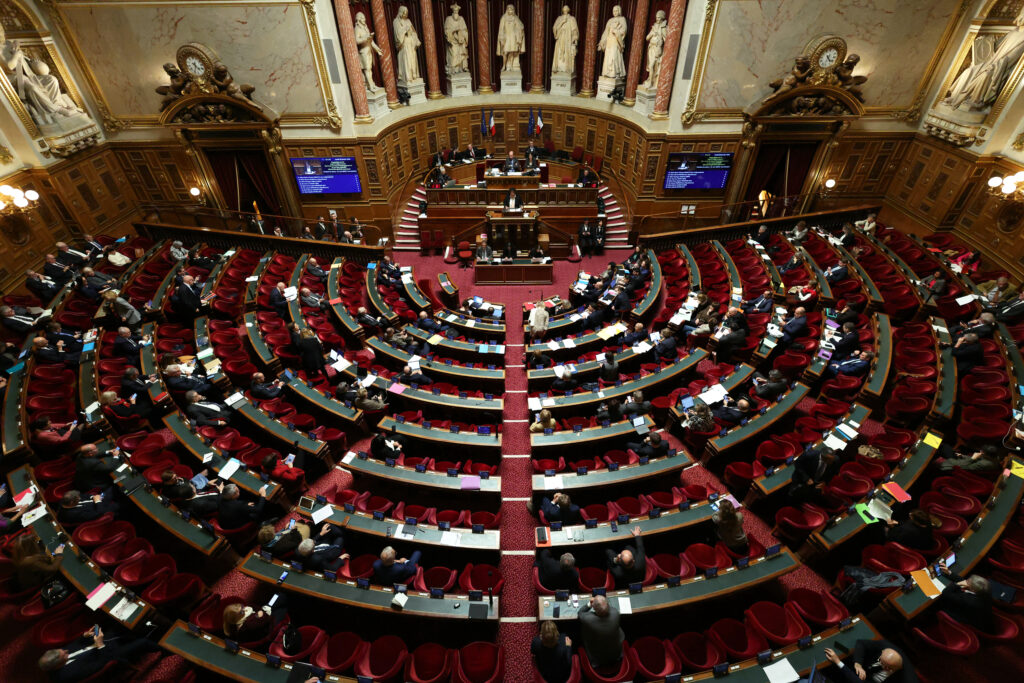
“Entêtement” gouvernemental ou point de départ d’une “stabilité” retrouvée ? Dossier sensible localement, la réforme constitutionnelle sur l’avenir institutionnel de la Nouvelle-Calédonie est examinée mardi au Sénat, où l’exécutif tentera de défendre un projet décrié et très mal embarqué au Parlement.A partir de 14H30, le Premier ministre Sébastien Lecornu viendra en personne au Palais de Luxembourg pour répondre aux interrogations des sénateurs sur ce projet de loi constitutionnelle, avant un vote prévu dans la soirée.Le gouvernement espère convaincre le Parlement de “donner sa chance” à ce texte, qui retranscrit deux accords conclus avec la majorité des forces politiques calédoniennes, celui de Bougival (juillet 2025) et celui de l’Elysée-Oudinot, signé en janvier 2026 sous l’égide d’Emmanuel Macron.Il prévoit notamment la création d’un État calédonien inscrit dans la Constitution française, doté d’une nationalité propre et pouvant être reconnu internationalement.Ces accords permettent d’envisager un nouvel avenir institutionnel pour la Nouvelle-Calédonie, archipel meurtri par les violentes émeutes du printemps 2024, survenues en réaction à un précédent projet de réforme constitutionnelle.- Pas “d’alternative” ? -Mais l’opposition des indépendantistes du FLNKS à ces accords, qu’ils jugent incompatibles avec la pleine souveraineté du territoire, complique sérieusement la donne. L’absence de consensus local fait en effet craindre à de nombreux parlementaires un “passage en force” aux conséquences potentiellement néfastes à Nouméa.”Il n’existe aujourd’hui ni alternative ni contre-projet”, a toutefois martelé la ministre des Outre-mer Naïma Moutchou ces derniers jours. Même si le processus est “imparfait”, il faut lui “donner sa chance” car “stopper net le projet de loi constitutionnelle, c’est fermer la porte définitivement” au consensus.Dominé par une alliance entre droite et centristes, le Sénat partage majoritairement ce point de vue et devrait, sauf surprise, adopter le texte. “La voie de la raison, c’est d’accompagner la volonté d’une majorité de partenaires, négociée à Bougival”, assume la sénatrice Agnès Canayer (Les Républicains), chargée de piloter l’examen du texte.Le gouvernement compte sur l’appui du Sénat pour légitimer son action en vue d’un examen qui s’annonce beaucoup plus incertain à l’Assemblée nationale, à partir du 31 mars.Au Palais Bourbon, la gauche et le Rassemblement national devraient, sauf revirement, s’opposer au texte, tandis que beaucoup d’élus ont dit s’attendre à de “l’obstruction” des députés Insoumis pour retarder le vote. – “Calendrier intenable” -Sur l’archipel, mi-février, un millier de personnes selon les organisateurs – 400 selon les autorités – s’étaient réunies devant le haut-commissariat de Nouméa pour “faire entendre jusqu’à Paris” leur opposition à la réforme. Et l’UNI, mouvement indépendantiste favorable au texte, voit les défections se multiplier en son sein.Lundi, Paul Néaoutyine, président de la province Nord et figure historique du Palika, principale composante de l’UNI, a exprimé dans un communiqué son “opposition” aux accords Bougival-Elysée-Oudinot, qui selon lui “marquent une rupture et un recul par rapport à l’accord de Nouméa et ferment la porte à la pleine souveraineté de la Nouvelle-Calédonie”.Dans ces conditions, l’hypothèse de voir le Congrès du Parlement réuni à Versailles dès la mi-avril pour entériner la réforme, date envisagée par le gouvernement, semble hautement improbable. D’autant plus que la majorité des 3/5e, nécessaire pour modifier la Constitution, est loin d’être réunie à ce stade.Les parlementaires socialistes – qui détiennent une grande partie des clés de l’avenir du texte – sont en effet extrêmement réservés.”Un rejet du projet anéantirait le travail patient de concessions réciproques” enclenché à Bougival, mais le gouvernement s’est “enfermé dans un calendrier intenable”, “au lieu de renouer avec la recherche de compromis”, a regretté le chef des sénateurs socialistes Patrick Kanner.L’ensemble de la gauche semble désormais se résoudre à ce que les élections provinciales se tiennent avant la fin juin, comme prévu, avant d’ouvrir un nouveau cycle de discussions.Ces élections, dont dépend la composition du gouvernement local, ont déjà été reportées à trois reprises depuis 2024.Si la réforme passe, elles doivent à nouveau être reportées à la fin de l’année, pour permettre de “dégeler” le corps électoral, une mesure ultrasensible pour les indépendantistes.”Si le gouvernement s’entête à vouloir poursuivre ce processus, c’est qu’il veut faire assumer la responsabilité de l’échec au Parlement plutôt qu’à lui”, a estimé le député indépendantiste calédonien Emmanuel Tjibaou.
France to revoke US envoy’s govt access after summons no-show

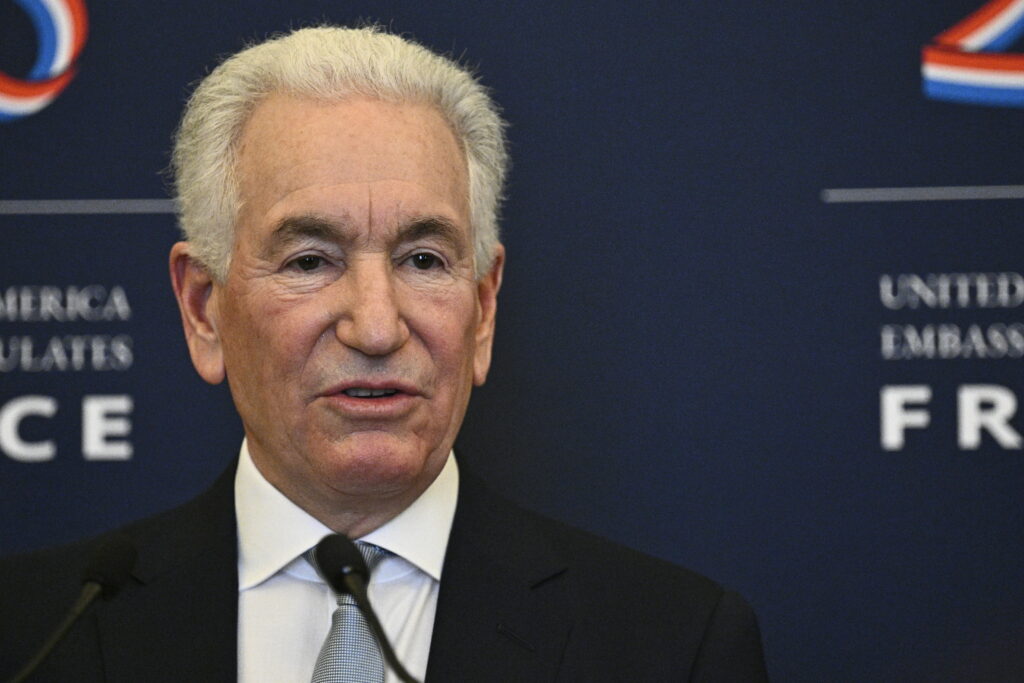
France moved on Monday to block US envoy Charles Kushner from having access to government ministers, after he failed to show up to explain comments about a killed far-right activist.The move is the latest instance of diplomatic friction between Paris and the United States under President Donald Trump, with Paris bristling at what it sees as repeated interference by Washington in domestic matters.Kushner, whose son Jared is married to Trump’s daughter Ivanka, has already been summoned once before over his criticism of France’s handling of antisemitism. He skipped that meeting as well, sending another official instead.Foreign Minister Jean-Noel Barrot summoned Kushner after the US embassy in Paris reposted comments by the Trump administration in Washington about slain far-right activist Quentin Deranque.Deranque, 23, died from head injuries following clashes between radical-left and far-right supporters on the sidelines of a February 12 protest against a politician from the left-wing France Unbowed (LFI) party in Lyon.Barrot denounced on Sunday any attempts to exploit the killing “for political ends” and summoned Kushner for a meeting at 7:00 pm (1800 GMT) the following day.But a diplomatic source told AFP the ambassador cited “personal commitments” and sent a senior embassy official instead.”In light of this apparent failure to grasp the basic requirements of the ambassadorial mission and the honour of representing one’s country, the minister (Barrot) has requested that he (Kushner) no longer be allowed direct access to members of the French government,” the foreign ministry said.Kushner would, however, be permitted to continue his diplomatic duties and have “exchanges” with officials, it added in a statement.Washington has not commented on this development.- On edge -Deranque’s death has put France on edge, igniting tensions between the left and right ahead of a 2027 presidential vote. More than 3,000 people marched in Lyon on Saturday in tribute to Deranque, with authorities deploying heavy security for fear of further clashes.On Friday, Sarah Rogers, the State Department under secretary for public diplomacy, said Deranque’s killing showed “why we treat political violence — terrorism — so harshly”. “Once you decide to kill people for their opinions instead of persuade them, you’ve opted out of civilization,” she wrote on X.The State Department’s bureau of counter-terrorism separately posted: “Violent radical leftism is on the rise and its role in Quentin Deranque’s death demonstrates the threat it poses to public safety.”The US embassy shared a French translation of the post on its account.Italy’s Prime Minister Giorgia Meloni has also weighed in, triggering a war of words with French President Emmanuel Macron, who urged her to stop “commenting on what happens in other countries”.Kushner, who took up his post in Paris last year, was previously summoned to the foreign ministry at the end of August, after the French government took exception to his criticism that Macron was not tackling antisemitism.The US charge d’affaires — the ambassador’s de facto deputy — attended that meeting.

Panama wrests control of canal ports from Hong Kong group

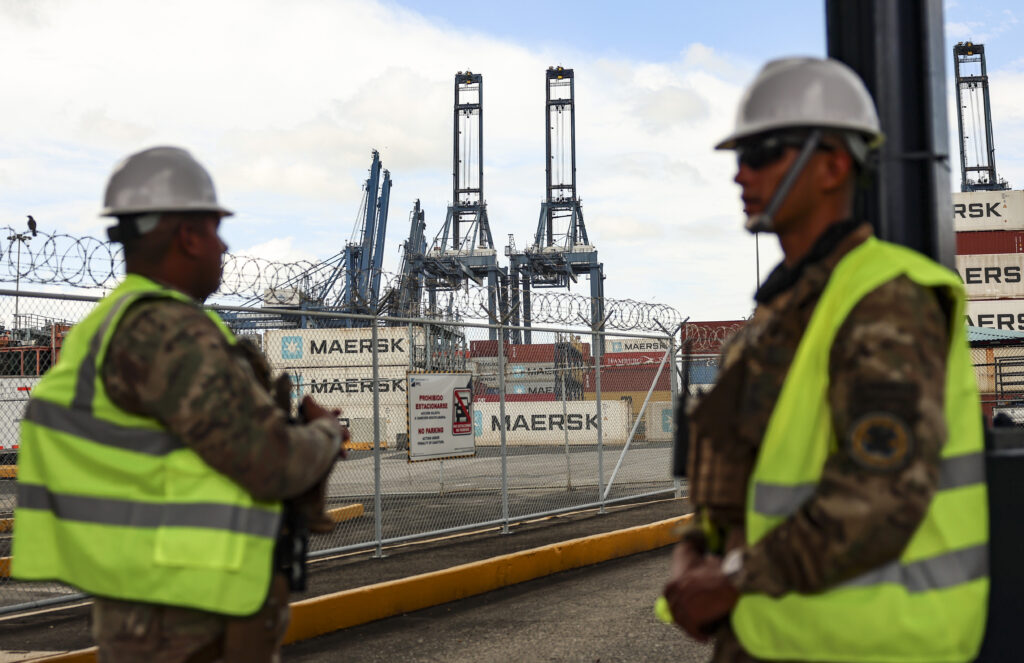
Panamanian authorities have taken control of two ports on the Panama Canal from CK Hutchison after the Hong Kong-based conglomerate’s concession was annulled amid a row between the United States and China.CK Hutchison objected Tuesday to the takeover, which it called “unlawful” and said raises “serious risks to the operations, health and safety” at terminals.”In January, the country’s supreme court declared as “unconstitutional” the contract which had allowed Hutchison’s subsidiary Panama Ports Company (PPC) to manage the ports of Balboa on the Pacific and Cristobal on the Atlantic since 1997.”The Panama Maritime Authority has taken possession of its ports and guarantees the continuity of operations,” an official said Monday after the Panamanian Supreme Court annulled Hutchison’s contracts to operate the ports.The court ruling was the latest legal move to ripple through the interoceanic waterway, which handles about 40 percent of US container traffic and five percent of world trade.The Central American country has been swept up in broader tensions between Washington and Beijing, with US President Donald Trump claiming, without providing evidence, last year that China effectively runs the canal.Panama has always denied Chinese control over the 80-kilometer (50-mile) waterway, which is used mainly by the United States and China.Hutchison had asked the Panamanian government to enter into negotiations to allow it to continue operating the two terminals — to no avail.Publication of the court ruling in the official gazette Monday effectively ended the legal process.”This does not imply the expropriation of those assets, but rather their use to guarantee the operation of the ports until their real value is determined for the corresponding actions,” said Panamanian President Jose Raul Mulino.Ports director Max Florez said an 18-month transition period now begins, with the ports being operated by two other companies before contracts are awarded under a new international tender.PPC denounced the move as an “illegal takeover without transparency or coordination” and said Panama’s actions were “confiscatory.”In its statement Tuesday, CK Hutchison said: “None of the actions by the Panama State were advised to or co-ordinated with PPC.”It will continue to consult with legal advisors regarding the ruling and “all available recourse including… legal proceedings against the Republic of Panama and its agents and third parties colluding with them”, CK Hutchison added.Hong Kong’s government lodged a “stern protest” on Tuesday, saying in a statement that the “heavy-handed action” had “seriously infringed upon the lawful rights and interests of Hong Kong enterprises.”- ‘No layoffs’ -China’s Hong Kong and Macao Affairs Office had previously warned that Panama would pay a “heavy price, both politically and economically” for stripping Hutchison of its tender.Panama said APM Terminals, a subsidiary of the Danish Maersk group, will operate the port of Balboa, and Terminal Investment Limited, owned by the logistics giant MSC, will operate the port of Cristobal.Labor Minister Jackeline Munoz assured there would be “no layoffs” at the two terminals, which employ around 1,200 people.Following the court’s January ruling, the Panama Maritime Authority had said a division of Maersk Group would temporarily take over operation of the facilities.Last week, Hutchison warned of possible legal action against Maersk and others over the annulment of its contract. The Hong Kong company has said it will challenge Panama’s decision before the International Chamber of Commerce.US Ambassador to Panama Kevin Cabrera defended Panamanian authorities, saying they have the right “to have their judicial system make its own decisions” and that the Supreme Court ruling was “very good” for the people of Panama.The Panama Canal was built by the United States, which operated it for a century before ceding control to Panama in 1999.On his first day back in the White House last year, Trump threatened to seize the canal.He cooled his threats after Panamanian authorities decided that the concession ran counter to Panama’s interests.

Corée du Sud: l’ex-président Yoon fait appel de sa condamnation à vie pour sa loi martiale

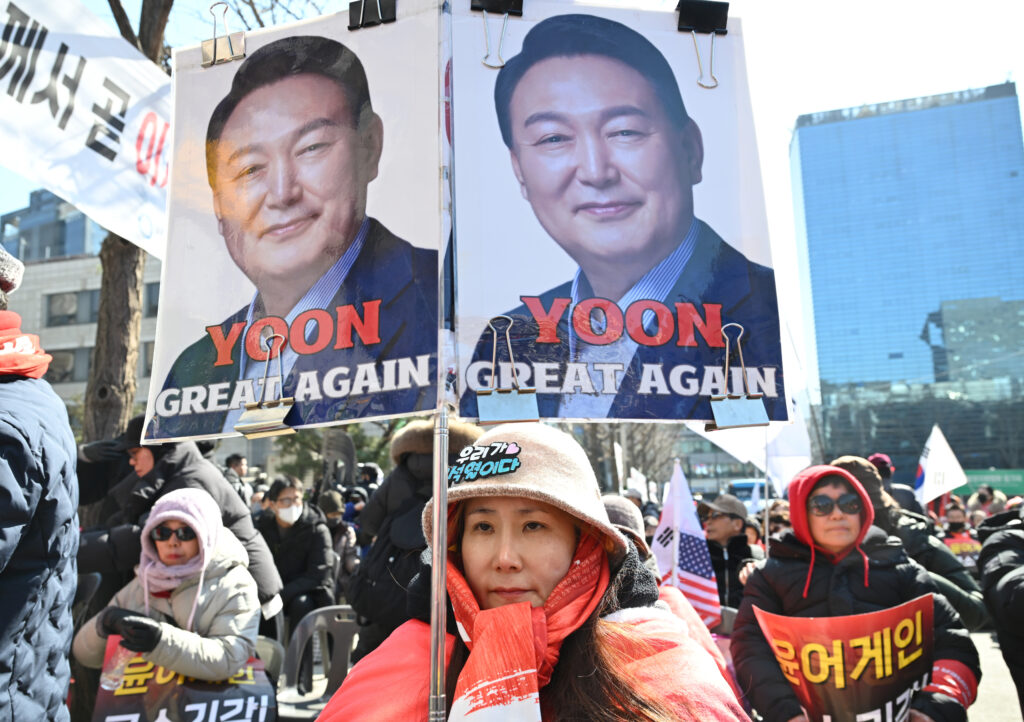
L’ancien président sud-coréen Yoon Suk Yeol a fait appel de sa condamnation à la prison à vie pour avoir déclaré la loi martiale en 2024, ont annoncé mardi ses avocats.”Nous estimons qu’il est de notre responsabilité de signaler clairement les problèmes que pose cette décision, non seulement dans les archives du tribunal, mais aussi devant le jugement de l’histoire à venir”, a déclaré l’équipe juridique de M. Yoon dans un communiqué.Jeudi dernier, le tribunal du district central de Séoul a condamné M. Yoon à la perpétuité pour avoir “dirigé une insurrection” en décrétant soudainement la loi martiale le 3 décembre 2024 et en envoyant l’armée au Parlement pour le museler.L’ex-dirigeant conservateur âgé de 65 ans avait justifié cette mesure-choc par de vagues menaces posées selon lui par des “forces anti-Etat” affiliées à la Corée du Nord, et par le fait que le Parlement, dominé par l’opposition, faisait échec à toutes ses initiatives.La cour a considéré que “l’intention” de M. Yoon lors de la crise de la loi martiale “était de paralyser l’Assemblée pendant une période considérable”, selon le juge Ji Gwi-yeon.Un nombre suffisant de députés avait réussi à se faufiler dans l’hémicycle cerné par les soldats et à voter une résolution contre ce coup de force, l’obligeant à faire marche arrière.Le régime civil n’avait finalement été suspendu que six heures, mais cette tentative a provoqué une profonde crise politique dans le pays. Elle a déclenché des manifestations massives, semé la panique sur les marchés boursiers et pris au dépourvu des alliés militaires essentiels de la Corée du Sud tels que les Etats-Unis.- Verdict “difficile à accepter” -Après des mois de chaos politique, Yoon Suk Yeol a été officiellement destitué en avril 2025 par la Cour constitutionnelle et les Sud-Coréens ont élu le président Lee Jae Myung, issu de l’opposition de gauche, lors d’une élection anticipée en juin.La semaine dernière, l’ancien dirigeant avait déclaré le verdict “difficile à accepter”, sans indiquer s’il allait faire appel ou non.”Même si cette décision (de la loi martiale, ndlr) a été prise dans ce que je pensais être l’intérêt national, je présente mes sincères excuses à la population pour la frustration et les difficultés qui ont finalement résulté de mes lacunes”, a déclaré M. Yoon dans un communiqué publié vendredi par l’intermédiaire de son avocat.”Nous ne resterons pas silencieux face à la mise en cause excessive” de M. Yoon, ont déclaré ses avocats mardi.

YouTube exec says goal was viewer value not addiction

A landmark social media addiction trial resumed Monday with a YouTube executive insisting that the Google-owned company’s aim was to give people value, not hook them on harmful binge-viewing.YouTube vice president of engineering Cristos Goodrow was pressed to defend the company’s self-styled “big, hairy, audacious goal,” set more than a decade ago, to increase viewer time to more than a billion hours a day by 2016.As he did last week when Meta chief executive Mark Zuckerberg testified in the same Los Angeles court, plaintiff’s attorney Mark Lanier told jurors that Goodrow’s compensation climbed with his company’s share price, meaning he profited personally from ramping up user engagement.”YouTube is not designed to maximize time,” Goodrow replied, as he was shown company documents indicating that viewer engagement was a priority for performance at the platform.”It’s designed to give people the most value…”As a counterpoint, Lanier had Goodrow detail the addition of features including viewing recommendations, auto-play for videos and ads, and a version of YouTube designed specifically for children.The lawyer said these efforts enticed users to a “treadmill of continuous checking” for new content.Goodrow contended “we don’t want anybody to be addicted to anything” as Lanier pressed him about YouTube features crafted to keep viewers watching.The executive pushed back against efforts by Lanier to put YouTube on par with social networks such as Facebook or Snapchat, stressing the platform was not a forum for friends to connect or for sharing vanishing messages.And YouTube would see relentless scrolling by users as a failure, not a success, according to Goodrow.”We want people to be able to watch what they want to watch as quickly as possible every time,” Goodrow told jurors.”If they scroll, they’ll get kind of frustrated.”Lots of scrolling would also mean YouTube’s vaunted recommendation software was not doing its job well, he added.Lanier pointed to internal YouTube documents referencing outside research that found harmful effects from spending too much time watching videos.Goodrow agreed that children should not be losing sleep watching YouTube, saying that is why the platform came up with features like view timers and prompts to take breaks.- Kaley to testify -The trial is set to last until late March, when the jury will decide whether Meta and YouTube bear responsibility for the mental health problems suffered by Kaley G.M., a 20-year-old California resident who has been a heavy social media user since childhood.Kaley G.M. started using YouTube at age six, Instagram at nine, and later TikTok and Snapchat.She is expected to testify this week — perhaps as early as Tuesday, according to her lawyers.Zuckerberg testified last week that he regretted Meta’s slow progress in identifying underage users on Instagram, as the plaintiff’s legal team sharply criticized the company for deliberately targeting children.The trial is the first in a series of lawsuits filed by American families against social media platforms and will determine whether Google and Meta deliberately designed their platforms to encourage compulsive use among young people.The case is expected to set a standard for resolving thousands of lawsuits that blame social media for fueling an epidemic of depression, anxiety, eating disorders, and suicide.TikTok and Snapchat, also named in the complaint, reached settlements with the plaintiff before the trial began.