Trois départements bretons maintenus en vigilance orange crues

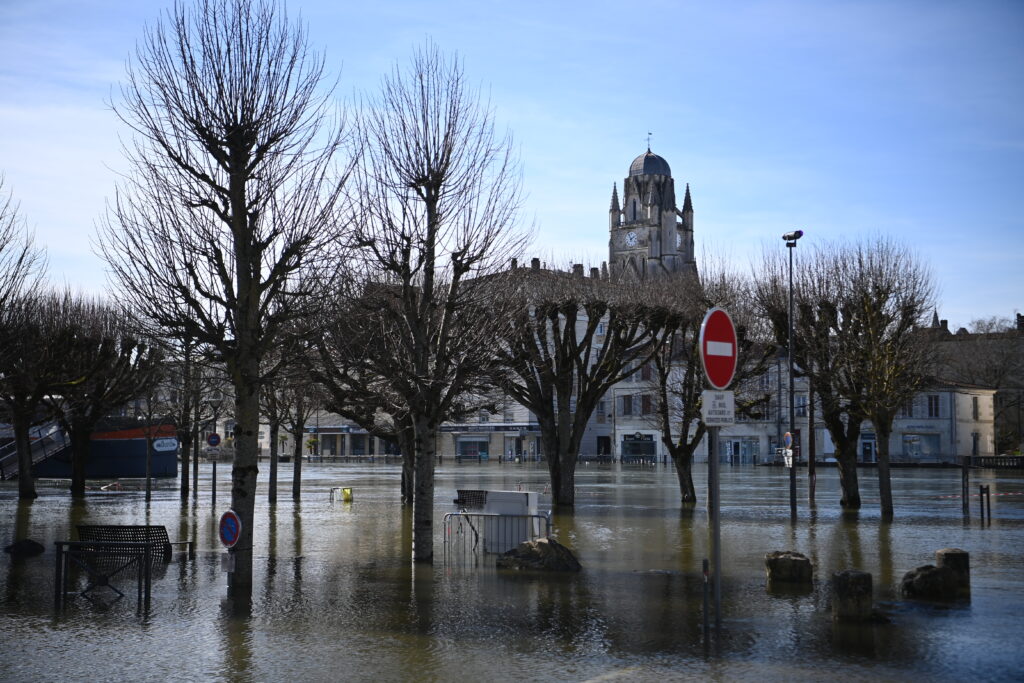
Trois départements bretons, le Finistère, le Morbihan et l’Ille-et-Vilaine, sont maintenus jusqu’à mardi en vigilance orange crues, dont deux également en vigilance pluie/inondation, a indiqué Météo-France dans son bulletin de 16H00.La vigilance orange “pluie-inondation” dans le Finistère et le Morbihan est prévue jusqu’à mardi 06H00.Une nouvelle perturbation “va concerner la pointe bretonne en lien avec la dépression baptisée +Chandra+”, selon Météo-France.Cette perturbation va apporter, à nouveau, “des cumuls notables” de pluie, avec “un renforcement du vent”, “dans un contexte de sols saturés et de crues déjà en cours”.Concernant le risque de crues, les cours d’eau bretons concernés par la vigilance orange restent l’Odet, la Laïta et l’Oust, selon Vigicrues. Après une “accalmie” dimanche, l’organisme prévient que ce nouvel épisode pluvieux sera “de nature à faire repartir à la hausse” les niveaux de ces cours d’eau. Sur l’Oust par exemple, un pic de crue a été atteint dans le secteur de Malestroit (Morbihan) dimanche soir avant que les niveaux baissent lentement mais les pluies à venir pourrait entraîner une nouvelle “réaction importante” du cours d’eau, selon Vigicrues.Vigicrues rapporte par ailleurs des débordements “localisés” sur certains tronçons de cours d’eau du quart sud-ouest de la France, dans le piémont pyrénéen et sur le plateau de Lannemezan.A Redon, commune située dans le sud de l’Ille-et-Vilaine et qui avait connu d’importantes inondations en 2025, la situation était lundi “maîtrisée”.”Notre priorité est aujourd’hui l’anticipation : nous agissons en amont pour protéger les habitants et garantir la continuité de la vie locale”, a déclaré le maire Pascal Duchêne dans un communiqué de presse.Des dispositifs anti-inondation ont été installés lundi sur des quais qui “permettent de limiter les infiltrations d’eau”.

Qatar announces $430 mn in support for Lebanon

A visiting Qatari official on Monday announced a multi-million dollar aid package for Lebanon, primarily to support the country’s crumbling electricity sector.In a separate statement, the Qatar Development Fund said the package was valued at about $430 million, the majority of it to support the energy sector, adding that it would benefit some 1.5 million people.”The support includes a contribution of up to $400 million to support the energy sector,” of which 10 percent would be allocated as a grant, it addedAt a press conference in Beirut, Qatari state minister for foreign affairs Mohammed al-Khulaifi announced “a package of development and humanitarian projects” for Lebanon, including “a grant of $40 million to support the electricity sector”.Lebanon’s electricity sector has cost Lebanon more than $40 billion since the end of its 1975-1990 civil war, and successive governments have failed to reduce losses or repair crumbling infrastructure.Last year, Lebanon signed a $250 million deal with the World Bank to modernise the sector. Khulaifi also announced “the launch of a project supporting the voluntary and safe return of Syrians from Lebanon to Syria” in cooperation with the United Nations migration agency.The first phase of the project is worth $20 million and “targets some 100,000 people”, he told a joint press conference with Lebanese Deputy Prime Minister Tarek Mitri.The assistance will help secure housing in Syria ahead of the returnees’ departure “in addition to providing food and medicine for three months” after they arrive, as part of supporting their reintegration, he said.According to the UN refugee agency, more than 500,000 Syrians returned home from Lebanon last year. However, another 115,000 have fled to Lebanon since the December 2024 ouster of longtime Syrian ruler Bashar al-Assad.Around one million Syrian refugees remain in Lebanon, according to UNHCR.Lebanon has been urging the international community to help refugees return, particularly since an economic collapse began in late 2019 and amid international aid cuts.Lebanese officials have more recently raised the issue with the new authorities in Damascus.Qatar has been a supporter of Lebanon for years, in particular providing assistance for the country’s army, including for soldiers’ salaries.Doha is also a key supporter of Syria’s new authorities, and Qatari companies have signed major contracts in Syria including on energy, electricity and transport.

Fermeture du site de Bétharram: les modalités arrêtées d’ici l’été

Après quelques jours de cacophonie, l’enseignement catholique a confirmé lundi “souhaiter” fermer le site historique de Notre-Dame de Bétharram, au cœur d’un scandale de violences physiques et sexuelles, et prévoir de préciser les modalités “avant l’été”.”Nous souhaitons fermer le site”, “c’est clairement notre objectif”, a affirmé le secrétaire de l’enseignement catholique Guillaume Prévost lundi.Mais “nous ne souhaitons pas le faire dans n’importe quelles conditions, compte tenu de nos responsabilités” vis-à-vis des victimes et des familles notamment, a-t-il ajouté lors d’une conférence de presse, quelques jours après des déclarations contradictoires sur le sujet et qui laissaient planer une incertitude sur le devenir de l’établissement des Pyrénées-Atlantiques.M. Prévost s’est dit “confiant” sur sa “capacité à pouvoir (…) présenter un projet clair sur le plan logistique et éducatif avant l’été”. “Nous nous sommes donné trois mois pour aboutir”, a-t-il affirmé, assurant qu'”une seule chose nous guide, la responsabilité”.”C’est officiel, Bétharram va fermer”, s’est réjoui auprès de la presse Alain Esquerre, ancien élève de Bétharram à l’origine de la révélation du scandale.Depuis deux ans, près de 250 plaintes ont été déposées par d’anciens élèves de Notre-Dame-de-Bétharram auprès du parquet de Pau, visant des prêtres et des laïcs pour des faits commis entre la fin des années 1950 et le début des années 2000.- “Un symbole, un bâtiment” -Aujourd’hui, le groupe scolaire rebaptisé Le Beau Rameau compte plusieurs établissements sur deux sites : un collège à Lestelle-Bétharram, le site historique, et une école primaire, un lycée et un lycée professionnel à Igon, une commune voisine. S’y ajoutent deux internats: un pour les garçons à Lestelle-Bétharram, et un pour les filles à Igon. Il y a sur le site de Lestelle-Bétharram “un symbole, un bâtiment” qui “est la version négative qu’il faut quitter”, a affirmé Pierre-Vincent Guéret, président de la Fédération nationale des organismes de gestion de l’enseignement catholique (Fnogec).L’avenir des enfants scolarisés sur place “est sur le groupe scolaire du Beau-Rameau”, a-t-il expliqué. A Igon, où il existe déjà trois établissements, “il conviendra d’y rajouter un quatrième établissement, un collège. Voilà ce qui s’appelle la fermeture en bon ordre et proprement du site”.Pour les 160 collégiens aujourd’hui sur le site de Lestelle-Bétharram, “il faut leur trouver des salles de classe” et donc “réorganiser le site d’Igon”. Pour les onze élèves de l’internat de garçons, “il faut trouver sur le site d’Igon onze chambres, c’est possible”, a-t-il ajouté. Il a détaillé qu’il y aurait aussi des espaces à “re-concevoir” pour les activités sportives, et une “question à se poser” concernant un éventuel déménagement de la cuisine centrale du site de Bétharram.Pour M. Guéret, “ce type d’opérations est faisable, en profitant des temps fermés, donc de vacances”.M. Guéret avait annoncé la semaine dernière la prochaine fermeture du site de Lestelle-Bétharram, des propos avec lesquels le Secrétariat général de l’Enseignement catholique (Sgec) avait toutefois pris ses distances, assurant qu’il n’était “pas question de fermeture de l’établissement à ce stade”.Des violences à Bétharram avaient été dénoncées dès les années 1990 mais la parole des anciens élèves ne s’est libérée qu’à partir de l’automne 2023, dénonçant fellations et masturbations forcées, passages à tabac, humiliations et supplices.Concernant le devenir des bâtiments historiques et la possibilité d’en faire un lieu mémoriel, M. Prévost a indiqué que “ça n’appartenait pas” à l’enseignement catholique, le propriétaire des murs étant la congrégation de Bétharram.Le Sgec a également annoncé lundi le lancement d’une mission sur la “Qualité de la relation éducative” après “le traumatisme” de la révélation des violences dans des établissements catholiques.

Rushdie warns of political violence as he recounts his attack

The horrific knife attack that almost killed Salman Rushdie was an example of violence unleashed by unscrupulous political leaders, the author said Sunday, warning that “everybody’s in danger now” in the increasingly febrile United States. Speaking at the premiere of the documentary “Knife: The Attempted Murder of Salman Rushdie,” the writer pointed to events unfolding across the country, where a second protester was shot dead by federal agents 24 hours earlier.”The idea of danger and violence is close to everyone now in this country,” he told AFP at the Sundance Film Festival in Park City, Utah.”I think everybody’s in danger now.” The film, directed by documentarian Alex Gibney, is the companion piece to Rushdie’s “Knife,” a memoir recounting the harrowing 2022 attack and its aftermath.The British-American author was at an event in Chautauqua, New York when 24-year-old Hadi Matar leapt onto the stage and stabbed him 15 times.The brutal assault left Rushdie with life-changing injuries, including the loss of his right eye.The comments on political violence come as President Donald Trump has surged militarized immigration raids into American cities, notably Minneapolis where federal agents have shot dead two US citizens this month. A man was arrested at Sundance on Saturday after allegedly punching Congressman Maxwell Frost in the face and screaming that Trump was going to deport him, the Florida lawmaker said on X.- Fatwa -Gibney’s film uses graphic video of the assault on Rushdie, shot by event organizers and attendees, as well as intimate footage filmed by his wife, Rachel Eliza Griffiths, over six weeks as the author lay in hospital grievously wounded.It also mixes in archival news reports and interviews with Rushdie detailing the furor in the Islamic world that greeted the publication of his 1988 novel “The Satanic Verses.”The following year, Iran’s supreme leader Ayatollah Ruhollah Khomeini issued a fatwa, telling Muslims worldwide it was their religious duty to kill Rushdie.For over a decade the author lived in hiding, protected by the British government, until a deal was reached in which the fatwa was officially rescinded in exchange for Britain’s granting diplomatic recognition to Tehran.As the immediate risk appeared to recede, Rushdie re-emerged, becoming something of a celebrity and continuing to create successful literary fiction.But the threat against him never vanished, and the animosity some bore him remained. – ‘Authoritarian’ -Hadi, who was sentenced last year to 25 years for attempted murder and assault, told a reporter before his trial that he believed Rushdie had “attacked Islam.” He admitted he had only read two pages of “The Satanic Verses.”Rushdie said the brutal attack on him was an example of a “larger thing.””Violence is that thing, violence unleashed by the unscrupulous using the ignorant to attack… culture.”For the authoritarian, culture is the enemy. Whether that’s journalism or universities or music or writing… the uncultured and ignorant, and the radical don’t like it, and they take steps against it, which we see every day.”Rushdie’s comments come in the wake of a crackdown Trump has launched on higher education, in an effort to stamp out what he claims is a “liberal bias” in university teaching.Trump also routinely derides journalism and journalists, blasting any report he disagrees with as “fake news,” while conservative US states increasingly ban books from school libraries.The Booker-Prize winning author said the film as conceived was not intended as a commentary on the here and now.”When you’re making the film, you’re making the film, and then the world does what it does, and sometimes the two things run into each other,” he said.”I’m now beginning to think that maybe the film is here at a kind of apposite moment, that maybe all of us now are feeling the risk of violence.”The Sundance Film Festival runs until February 1.

Iran broadcasting forced ‘confessions’ to deter dissent: activists

The man faces the camera with his face blurred as dramatic music pounds in the background.”I made a mistake,” he says, his voice trembling as an unseen interrogator presses him about the deaths of members of Iran’s security forces. “If I’d known, I would not have done it.”According to one rights group, at least 240 such “forced confessions” have been broadcast by Iranian state television in recent weeks — an “unprecedented” quantity — after authorities arrested thousands of people in the wake of protests that shook the country’s clerical leadership.Questioned by an interviewer, detainees are shown confessing to a variety of alleged offences ranging from committing violence against members of the security forces, to accepting money from monarchists or Iran’s foes, or sharing images with banned groups or media outlets.In some cases, people are accused of merely following accounts of opponents of the Islamic republic on social media.Activists say the so-called confessions are extracted by psychological and physical torture, and are a familiar tactic used in the past by Iranian authorities against detainees who in some cases have subsequently been executed.Amnesty International termed the scenes “propaganda videos”, saying it had received reports “authorities are forcing detainees to sign statements they have not been allowed to read and to give forced ‘confessions’ to crimes they did not commit as well as to peaceful acts of dissent”.The UN special rapporteur on human rights in Iran, Mai Sato, told the UN Human Rights Council that such “false confessions” seek to “reinforce the state’s narrative that protesters are dangerous criminals”.- ‘Deterring dissent’ -Iran’s feared judiciary chief Gholamhossein Mohseni Ejei appeared to take the lead earlier this month by personally interrogating detainees in sessions broadcast by state TV.”Coerced televised confessions in totalitarian regimes such as Iran have multiple key functions, including that of manufacturing political legitimacy, creating a false, official narrative such as framing peaceful protesters as violent agents of foreign influence, and deterring dissent,” Roya Boroumand, director of the US-based Abdorrahman Boroumand Center for Human Rights in Iran, told AFP. The demonstrations started in late December sparked by economic grievances but grew into a mass movement against the Islamic republic, with huge street protests from January 8, when authorities imposed an internet blackout.Thousands were killed in an ensuing crackdown on the protests, which have for now abated, with the authorities blaming the unrest on Iran’s enemies, including Israel and the United States.More than 41,000 people have been arrested in the crackdown, according to the US-based Human Rights Activists News Agency (HRANA), which has recorded 240 instances of “forced confessions”.One video widely circulating on social media Monday showed a teen, identified by users as 18-year-old Shervin Bagherian, being questioned over the killing of a member of the security forces and then told he would face charges that could see him executed.In another widely shared case, a man was shown admitting to having sent footage of the protests to US President Donald Trump via social media accounts.Such broadcasts have in the past been used ahead of executions. In one notorious case, the formerly Paris-based dissident Ruhollah Zam, who according to supporters was abducted from Iraq by Iranian security forces, was subjected to an interrogation on Iranian TV before his execution in December 2020.Foreigners have also been subjected to the same treatment. French citizen Cecile Kohler was shown in October 2022 on Iranian television making what activists described as a “forced confession” before being sentenced on espionage charges her family vehemently rejects.She and fellow French citizen Jacques Paris were released late last year but are still unable to leave Iran.- ‘Humiliating’ dissidents -The US-based Center for Human Rights in Iran (CHRI) said that in the wake of the protests, the forced confessions were being broadcast by Iranian state television on an “unprecedented scale”.”These false confessions are routinely used as the sole evidence to convict, including in capital cases where the death penalty may be imposed,” it added.”By forcing dissidents to publicly ‘confess’ to actions such as ‘colluding with foreign powers’, the state legitimises its repression as necessary to protect national security and, bypassing the presumption of innocence, uses the televised confessions as proof of guilt to justify severe punishment such as executions,” said Boroumand.”These broadcasts also aim at humiliating and destroying dissidents’ credibility while reminding the public of the high cost of challenging the state,” she added.

Israel military says remains of last Gaza hostage Ran Gvili returned

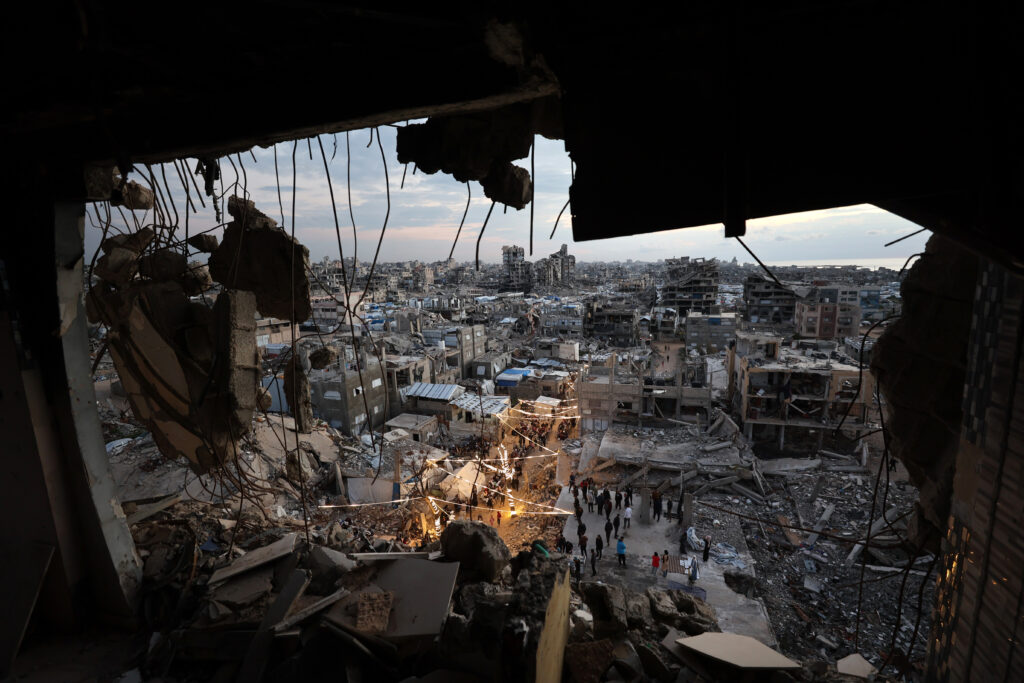
The Israeli military said on Monday that the remains of the last hostage held in Gaza, Ran Gvili, had been identified and were being repatriated to Israel for burial.The announcement put an end to a lengthy process to locate and return the last of the 251 hostages taken by Hamas militants during their October 2023 attack on Israel.Israeli Prime Minister Benjamin Netanyahu on Monday hailed the return of all those held captive “down to the very last”.The latest set of hostage handovers were part of the first phase of the US-backed ceasefire deal, which began on October 10 and aimed to stop the fighting in the Palestinian territory.Hamas said the return of Gvili’s body showed the militant group’s “commitment” to the ceasefire, which entered its second phase earlier this month.Gvili’s family had expressed strong opposition to launching the second phase of the plan before they had received his remains.The Israeli military said in a statement on Monday that its representatives “informed the family of hostage Ran Gvili… that their loved one has been identified and will be returned for burial”.”With this, all hostages have been returned from the Gaza Strip to the State of Israel”, it added.Footage released by the Israeli military showed Gvili’s coffin draped in an Israeli flag and surrounded by soldiers singing the national anthem.The young Israeli police officer in the elite Yassam unit was on medical leave ahead of shoulder surgery when Hamas launched its deadly attack on Israel on October 7, 2023.Instead of staying home, the 24-year-old motorcycle enthusiast grabbed his personal gun and raced toward the area of the attack in southern Israel to fight the Palestinian militants.- ‘Many difficult years’ -The gradual return of the hostages over several stages had been a complicated and arduous process for both sides.”This is an extraordinary achievement for the State of Israel,” Prime Minister Benjamin Netanyahu told journalists in parliament on Monday. “We promised — and I promised — to bring everyone back. We brought them all back, down to the very last captive,” he added.Israeli President Isaac Herzog celebrated Gvili’s return saying: “After many difficult years, for the first time since 2014, there are no Israeli citizens held hostage in Gaza. An entire nation prayed and waited for this moment.”Prior to October 2023, two civilian hostages and the bodies of two Israeli soldiers killed in earlier wars were being held in Gaza.Hamas spokesman Hazem Qassem said in a statement that “the discovery of the body of the last Israeli prisoner in Gaza confirms Hamas’s commitment to all the requirements of the ceasefire agreement on the Gaza Strip”.Officials said on Sunday that Israeli forces were searching for Gvili’s remains in a cemetery in northern Gaza.The announcement of the search came after visiting US envoys reportedly pushed Israeli officials to reopen Gaza’s Rafah crossing, a vital entry point for aid.Israeli officials said on Monday that though they would open the crossing, only pedestrians would be allowed to travel through the crossing to Egypt.Reopening Rafah, a vital entry point for aid into Gaza, forms part of the US-brokered truce.- ‘True friend’ -Nicknamed the “Defender of Alumim” by his family and the kibbutz of that name, Gvili was killed in combat near the community and his body taken to Gaza by Hamas militants.Israeli authorities confirmed to his parents in January 2024 that the young officer had been killed on that day and that his body had been taken to Gaza.”He ran to help, to save people… even though he was already injured before October 7,” his father told AFP in December, referring to Gvili’s shoulder injury.”But that was Rani — always running forward, the first to help and the first to jump in.”In a statement, the Israeli group representing the families of hostages held in Gaza described Gvili as “a true friend, loved by everyone”.”He loved life, was a young man of deep values, always spoke at eye level, and carried a powerful yet calm presence,” the Hostages and Missing Families Forum added.The Gaza war was sparked by Hamas’s attack on Israel, which resulted in the deaths of 1,221 people, according to an AFP tally based on official Israeli figures.The Israeli retaliation flattened much of Gaza, a territory that was already suffering severely from previous rounds of fighting and from an Israeli blockade imposed since 2007.The two-year war between Israel and Hamas has left at least 71,660 people dead in Gaza, according to the territory’s health ministry which operates under Hamas authority, figures considered reliable by the United Nations.