US health agency edits website to reflect anti-vax views

The US health agency has updated its official website to reflect the vaccine skepticism of a senior Trump official, a move that medical and public health experts widely condemned.The Centers for Disease Control and Prevention (CDC) late Wednesday revised its site with language that undermines its previous, scientifically grounded position that immunizations do not cause the developmental disability autism.Years of research demonstrate that there is no causal link between vaccinations and autism or other neurodevelopmental disorders.But Robert F. Kennedy Jr, the nation’s health chief, has long voiced anti-vaccine rhetoric and inaccurate claims connecting the two.The CDC webpage on vaccines and autism had previously stated that studies show “no link between receiving vaccines and developing autism spectrum disorder,” citing a body of high-quality research including a 2013 study from the agency itself.That text reflects medical and scientific consensus, including guidance from the World Health Organization.But the changes rebuke it. The website now asserts that “the claim ‘vaccines do not cause autism’ is not an evidence-based claim because studies have not ruled out the possibility that infant vaccines cause autism.”The revised language accuses health authorities of having “ignored” research supporting a link and said the US health department “has launched a comprehensive assessment of the causes of autism.”A purported connection between the measles, mumps and rubella (MMR) vaccine and autism stems from a flawed study published in 1998, which was retracted for including falsified data. Its results have not been replicated and are refuted by subsequent research.Amid the site rewrite, one header remained: “Vaccines do not cause Autism.”A footnote explains that the line wasn’t cut due to an agreement Kennedy had made with the Republican Bill Cassidy, a medical doctor and senator from the southern state of Louisiana who chairs the Senate committee focused on health.Cassidy on Thursday insisted on vaccine safety and efficacy in a post on X. He did not name Kennedy, but said “any statement to the contrary is wrong, irresponsible, and actively makes Americans sicker.””What parents need to hear right now is vaccines for measles, polio, hepatitis B and other childhood diseases are safe and effective and will not cause autism,” he said.- ‘Do not trust this agency’ -The CDC website edits were met with anger and fear by career scientists and other public health figures who have spent years combatting such false information, including from within the agency.”Staff are very worried and upset about everything happening surrounding vaccines,” a CDC union member, who asked not to be named for fear of retribution, told AFP.Helen Tager-Flusberg, director of Boston University’s Center for Autism Research Excellence, called the changes “terribly disturbing.””I feel like we are going back to the Dark Ages. I feel like we are undermining science by tying it to people’s political agendas,” the psychologist told AFP.”We’re going to see a significant increase in these childhood diseases.”Demetre Daskalakis — the former director of the agency’s arm focused on immunization and respiratory diseases, who resigned earlier this year in protest — was unequivocal: “DO NOT TRUST THIS AGENCY.”And Susan Kressly, president of American Academy of Pediatrics, said “we call on the CDC to stop wasting government resources to amplify false claims that sow doubt in one of the best tools we have to keep children healthy and thriving: routine immunizations.”Pointing to “40 high-quality studies,” she said that “the conclusion is clear and unambiguous: There’s no link between vaccines and autism.”The anti-vaccine advocacy group Children’s Health Defense meanwhile praised the revisions. The organization’s CEO Mary Holland said “thank you, Bobby” on X.Kennedy is the founder and former chairman of the nonprofit.
Un incendie fait dérailler les dernières 24 heures de négociations de la COP30

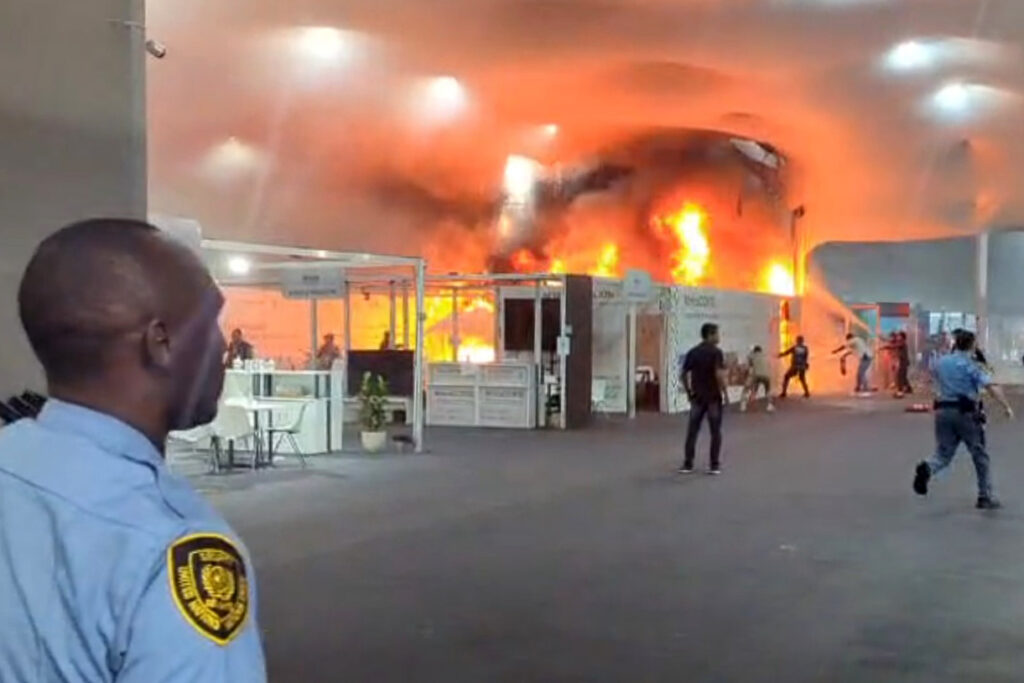
Un incendie a bouleversé la dernière ligne droite des négociations climatiques de la COP30 au Brésil, privant les délégués de précieuses heures pour forger un compromis sur la finance et les énergies fossiles avant la fin prévue vendredi soir.Le site à Belem a été fermé pendant près de sept heures jeudi, forçant les négociateurs à interrompre leurs travaux et à rentrer dans leurs hôtels. Il n’a rouvert que dans la soirée, après une inspection des pompiers. Les négociations, déjà mal engagées jeudi au lever du jour, ne reprendront pleinement que vendredi matin.C’est le troisième incident perturbant la conférence de l’ONU, démarrée la semaine dernière dans cette ville d’Amazonie brésilienne. Une incursion de manifestants indigènes, puis le blocage de l’entrée, avaient déjà désorganisé les travaux du sommet, organisé par le Brésil avec l’ONU.Le feu a éclaté vers 14H00 heure locale (17H00 GMT) en plein coeur du site temporaire érigé au Parque da Cidade, constitué d’immenses tentes climatisées. “Au feu! Sortez!” criaient des participants affolés en courant vers les sorties.En quelques minutes, la fumée a envahi la zone et les hautes flammes ont consumé une partie du toit dans le secteur des stands nationaux, ont constaté des journalistes de l’AFP. Le pavillon de la communauté d’Afrique de l’Est est l’un de ceux détruits par le feu. Le secteur des pavillons nationaux est fermé, a constaté un journaliste de l’AFP.Des agents avec extincteurs puis des pompiers ont éteint l’incendie en six minutes, selon la présidence brésilienne de la conférence et l’ONU Climat. Dix-neuf personnes ont été traitées par les secours à cause des fumées, et deux pour des crises d’anxiété, selon le ministère de la Santé. Neuf d’entre elles restaient prises en charge dans la soirée.Aucune alarme n’a retenti, si bien que l’évacuation du très grand site a été menée par des agents de sécurité dans un certain désordre.- “Détresse émotionnelle” -“Les difficultés opérationnelles juste avant le démarrage de la COP pouvaient laisser penser que ce type d’incident puisse se produire”, a confié à l’AFP une source proche de l’organisation, sous couvert d’anonymat.Le patron de l’ONU Climat, Simon Stiell, s’était plaint dans une lettre aux Brésiliens, au début de la conférence, de problèmes de sécurité, de climatisation et de fuites d’eau.”Cela aurait pu arriver n’importe où dans le monde”, s’est défendu Celso Sabino, ministre brésilien du Tourisme, sur place.Mais de multiples participants ont signalé des problèmes de systèmes de câblages électriques ces derniers jours. L’AFP a constaté dans son propre espace de travail des fuites d’eau venant du plafond pendant les fortes pluies tropicales quotidiennes. Il y a eu “des personnes en état de détresse émotionnelle et de choc”, a témoigné Kimberly Humphrey, spécialiste en médecine d’urgence, participant à la COP avec Doctors for the Environment Australia.- Tout retarder -La présidence brésilienne de la conférence, déjà en retard sur son calendrier, devait publier jeudi un projet d’accord pour les 194 pays et l’Union européenne membres de l’accord de Paris, pour une adoption par consensus, toujours une épreuve.A l’extérieur, la frustration des participants qui espéraient envoyer un signal fort sur la coopération climatique est palpable.”Cela va retarder le processus” alors que c’est le “moment crucial” où “l’on doit prendre des décisions”, a dit à l’AFP Windyo Laksono, un délégué indonésien.- Blocages sur les fossiles -L’UE a tenu sa réunion de coordination en visioconférence.”La situation est volatile. On attendait des nouvelles de la présidence en début d’après midi, là c’est compliqué pour eux, ils faut qu’ils relancent un processus clair et propre”, confie un négociateur d’un pays développé.L’un des sujets les plus conflictuels est l’idée de créer une “feuille de route” pour accélérer la sortie du pétrole, du charbon et du gaz, largement responsables du réchauffement, afin d’aller plus loin que l’engagement à une sortie progressive des énergies fossiles pris à la COP28 il y a deux ans.Le président brésilien Lula l’a remise au centre du jeu mercredi lors de sa visite à Belem.Mais selon un négociateur qui souhaite rester anonyme, la Chine, l’Inde, l’Arabie saoudite, le Nigeria et le Russie s’y sont fermement opposés. Et cette “feuille de route” ne figurait pas dans une ébauche d’accord proposée par les Brésiliens aux délégations jeudi, et obtenue par l’AFP.

Un incendie fait dérailler les dernières 24 heures de négociations de la COP30

Un incendie a bouleversé la dernière ligne droite des négociations climatiques de la COP30 au Brésil, privant les délégués de précieuses heures pour forger un compromis sur la finance et les énergies fossiles avant la fin prévue vendredi soir.Le site à Belem a été fermé pendant près de sept heures jeudi, forçant les négociateurs à interrompre leurs travaux et à rentrer dans leurs hôtels. Il n’a rouvert que dans la soirée, après une inspection des pompiers. Les négociations, déjà mal engagées jeudi au lever du jour, ne reprendront pleinement que vendredi matin.C’est le troisième incident perturbant la conférence de l’ONU, démarrée la semaine dernière dans cette ville d’Amazonie brésilienne. Une incursion de manifestants indigènes, puis le blocage de l’entrée, avaient déjà désorganisé les travaux du sommet, organisé par le Brésil avec l’ONU.Le feu a éclaté vers 14H00 heure locale (17H00 GMT) en plein coeur du site temporaire érigé au Parque da Cidade, constitué d’immenses tentes climatisées. “Au feu! Sortez!” criaient des participants affolés en courant vers les sorties.En quelques minutes, la fumée a envahi la zone et les hautes flammes ont consumé une partie du toit dans le secteur des stands nationaux, ont constaté des journalistes de l’AFP. Le pavillon de la communauté d’Afrique de l’Est est l’un de ceux détruits par le feu. Le secteur des pavillons nationaux est fermé, a constaté un journaliste de l’AFP.Des agents avec extincteurs puis des pompiers ont éteint l’incendie en six minutes, selon la présidence brésilienne de la conférence et l’ONU Climat. Dix-neuf personnes ont été traitées par les secours à cause des fumées, et deux pour des crises d’anxiété, selon le ministère de la Santé. Neuf d’entre elles restaient prises en charge dans la soirée.Aucune alarme n’a retenti, si bien que l’évacuation du très grand site a été menée par des agents de sécurité dans un certain désordre.- “Détresse émotionnelle” -“Les difficultés opérationnelles juste avant le démarrage de la COP pouvaient laisser penser que ce type d’incident puisse se produire”, a confié à l’AFP une source proche de l’organisation, sous couvert d’anonymat.Le patron de l’ONU Climat, Simon Stiell, s’était plaint dans une lettre aux Brésiliens, au début de la conférence, de problèmes de sécurité, de climatisation et de fuites d’eau.”Cela aurait pu arriver n’importe où dans le monde”, s’est défendu Celso Sabino, ministre brésilien du Tourisme, sur place.Mais de multiples participants ont signalé des problèmes de systèmes de câblages électriques ces derniers jours. L’AFP a constaté dans son propre espace de travail des fuites d’eau venant du plafond pendant les fortes pluies tropicales quotidiennes. Il y a eu “des personnes en état de détresse émotionnelle et de choc”, a témoigné Kimberly Humphrey, spécialiste en médecine d’urgence, participant à la COP avec Doctors for the Environment Australia.- Tout retarder -La présidence brésilienne de la conférence, déjà en retard sur son calendrier, devait publier jeudi un projet d’accord pour les 194 pays et l’Union européenne membres de l’accord de Paris, pour une adoption par consensus, toujours une épreuve.A l’extérieur, la frustration des participants qui espéraient envoyer un signal fort sur la coopération climatique est palpable.”Cela va retarder le processus” alors que c’est le “moment crucial” où “l’on doit prendre des décisions”, a dit à l’AFP Windyo Laksono, un délégué indonésien.- Blocages sur les fossiles -L’UE a tenu sa réunion de coordination en visioconférence.”La situation est volatile. On attendait des nouvelles de la présidence en début d’après midi, là c’est compliqué pour eux, ils faut qu’ils relancent un processus clair et propre”, confie un négociateur d’un pays développé.L’un des sujets les plus conflictuels est l’idée de créer une “feuille de route” pour accélérer la sortie du pétrole, du charbon et du gaz, largement responsables du réchauffement, afin d’aller plus loin que l’engagement à une sortie progressive des énergies fossiles pris à la COP28 il y a deux ans.Le président brésilien Lula l’a remise au centre du jeu mercredi lors de sa visite à Belem.Mais selon un négociateur qui souhaite rester anonyme, la Chine, l’Inde, l’Arabie saoudite, le Nigeria et le Russie s’y sont fermement opposés. Et cette “feuille de route” ne figurait pas dans une ébauche d’accord proposée par les Brésiliens aux délégations jeudi, et obtenue par l’AFP.

Ukraine would cede Donbas to Russia under 28-point US plan

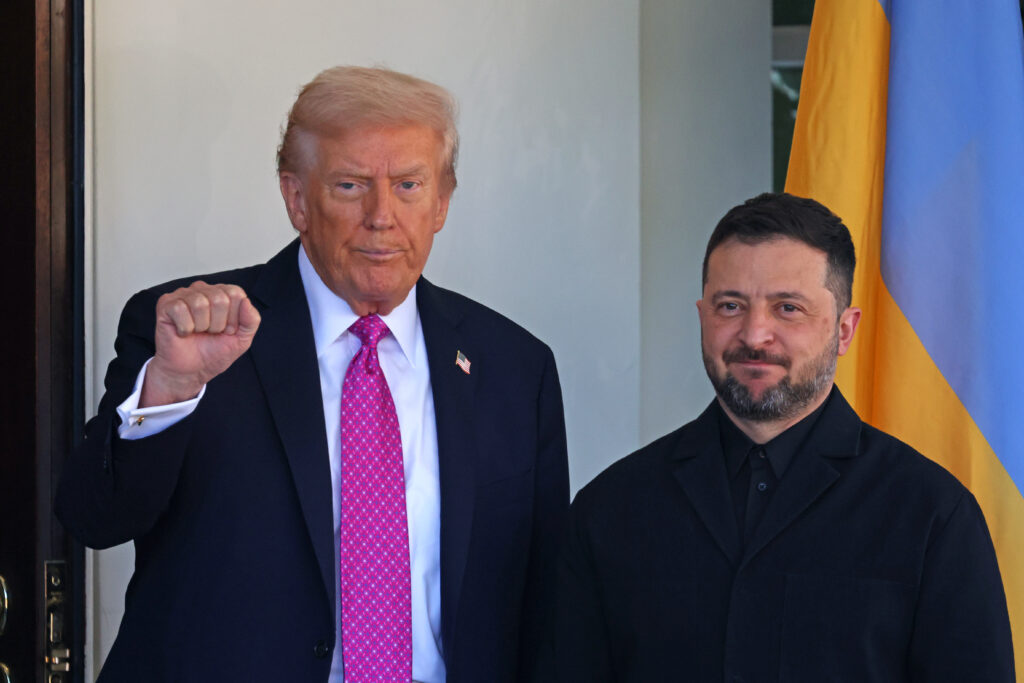
Ukraine would give up the eastern Donbas region to Russia under a 28-point peace plan backed by US President Donald Trump, according to a draft obtained Thursday by AFP.Kyiv would also agree to limit its army to 600,000 personnel, and while European fighter jets would be based in Poland to protect Ukraine, no NATO troops would be stationed in Ukraine.Russia would meanwhile be readmitted to the G8 group of nations and be integrated back into the global economy under the plan, which US officials said was still a “working document.””The president supports this plan. It’s a good plan for both Russia and Ukraine,” White House Press Secretary Karoline Leavitt told reporters.Trump’s special envoy Steve Witkoff and US Secretary of State Marco Rubio had been “quietly” working on the plan with both Russia and Ukraine for around a month, Leavitt said.She rejected concerns that the plan echoes many of Moscow’s maximalist demands.Ukrainian President Volodymyr Zelensky said he expected to discuss the plan with Trump “in coming days.” He said any deal must bring a “dignified peace” with “respect for our independence, our sovereignty.”Zelensky also met a Pentagon delegation headed by US Army Secretary Daniel Driscoll in Kyiv.Here are the details of the US plan: – Territory –   Under the document seen by AFP, “Crimea, Lugansk and Donetsk will be recognised as de facto Russian, including by the United States.”Kyiv still partly holds Lugansk and Donetsk, which together make up the Donbas industrial belt on the front line of the war. Crimea was annexed by Russia in 2014.Areas from which Ukraine has withdrawn in Donetsk would be deemed a demilitarized zone which Russian forces will not enter, according to the plan.The southern regions of Kherson and Zaporizhzhia — which Russia falsely claims to have annexed — will be “frozen along the line of contact,” it said.The plan for Donbas, Kherson and Zaporizhzhia corresponds to Moscow’s previous demands.Ukraine’s Zaporizhzhia nuclear plant, occupied by Russian forces since March 2022, would be supervised by the International Atomic Energy Authority and the electricity it produces be shared between Russia and Ukraine, the plan says.Russia’s army occupies around a fifth of Ukraine — much of it ravaged by years of fighting, particularly in the east.Ukraine has previously said it will never recognize Russian control over its land, but has conceded it might be forced to get it back through diplomatic means.- Ukraine security – The US-backed plan calls for Ukraine to reduce its army to 600,000 personnel, according to the draft.NATO would agree not to station troops in Ukraine — dashing Kyiv’s hopes for a European peacekeeping force — and the country would be barred from joining NATO by both its own constitution and the alliance’s statutes.That fits with previous Russian demands that have been made public and goes against what Ukraine has cast as red lines.Ukraine would receive “reliable security guarantees,” the plan says without specifying. But European jets would be stationed in neighboring Poland.Amid a spiralling corruption scandal in Ukraine that has claimed the jobs of two ministers, Kyiv had meanwhile removed language about an audit of foreign aid and replaced it with a call for a “full amnesty,” a senior US official said.- Whose plan? -Under the proposed deal, Russia would be “reintegrated into the global economy” after nearly four years of tough sanctions and be allowed back into the G8.”It is expected that Russia will not invade neighboring countries and NATO will not expand further,” it says.But all sanctions would snap back if Russia invades Ukraine again — “in addition to a decisive coordinated military response.”The contents of the plan have fuelled suggestions that Moscow was involved in drafting it.”It seems that the Russians proposed this to the Americans, they accepted it,” a senior Ukrainian source told AFP.But US officials strongly denied that it was a Russian plan, saying it had been drafted after weeks of consultations involving Witkoff, Rubio, the Ukrainians and Moscow.Since returning to the White House, Trump’s position on the Ukraine war has shifted dramatically back and forth.He rowed with Zelensky in the Oval Office in February before saying in September that Ukraine should try to reclaim its land.Trump has also hit Russia with sanctions after becoming increasingly frustrated with President Vladimir Putin, with a summit in Moscow having produced few results.On the ground, Russia claimed Thursday to have recaptured the key city of Kupiansk in eastern Ukraine, as Putin visited an army command post to speak with officers about the situation at the front.The Ukrainian army denied Russia had retaken Kupiansk.burs-dk/mlm

‘Black Panther’ star Chadwick Boseman gets Hollywood star

“Black Panther” star Chadwick Boseman was posthumously honored on Thursday with a star on the Hollywood Walk of Fame.Ryan Coogler, who directed Boseman in the 2018 hit, actress Viola Davis and Boseman’s widow, Simone Ledward-Boseman, led the emotional ceremony in the heart of Tinseltown.”Today was a beautiful day,” Ledward-Boseman told AFP.”Everyone was just so full of love and joy. And we’re all so proud of this person that we knew, that we shared.”Coogler remembered Boseman as an “incredibly generous” person. “Even when he knew his days were limited, and his moments were numbered, he still gave to the art form. He still threw himself into the fire,” he said.Chadwick Boseman began his career in theater and television before making the leap to film. Boseman’s most famous character T’Challa/Black Panther was introduced in “Captain America: Civil War” (2016).Two years later he reprised the role in the hugely successful standalone “Black Panther,” becoming the first Black actor to take the lead in the sprawling Marvel franchise.Boseman died in 2020 at the age of 43 after suffering from colon cancer for four years.The debilitating disease did not keep him from making movies or from fully committing to his craft, Coogler said.”Even though he was going through what he was going through, he would do his own stunts, he would be there for off-camera dialogue readings. It was incredible.”Viola Davis, with whom he shared the screen in 2020’s “Ma Rainey’s Black Bottom,” which would be his final outing, said Boseman’s work “reminded us that we are less alone.””That was Chadwick, more than just an actor who you can observe on screen doing wonderful work.”Disney CEO Bob Iger, actor Michael B. Jordan, and the late actor’s brothers, Kevin and Derrick Boseman, also attended the ceremony.

Trump évoque la peine capitale pour des démocrates qui appellent l’armée à désobéir

Donald Trump a évoqué jeudi la peine de mort pour des élus démocrates ayant appelé les militaires et les agents du renseignement américains à désobéir aux “ordres illégaux” de son gouvernement.”COMPORTEMENT SEDITIEUX, passible de la peine de MORT!”, a écrit le président américain sur son réseau Truth Social.”Absolument infâme”, a réagi le Parti démocrate sur …

Trump évoque la peine capitale pour des démocrates qui appellent l’armée à désobéir Read More »

Trump plans massive expansion of offshore oil drilling

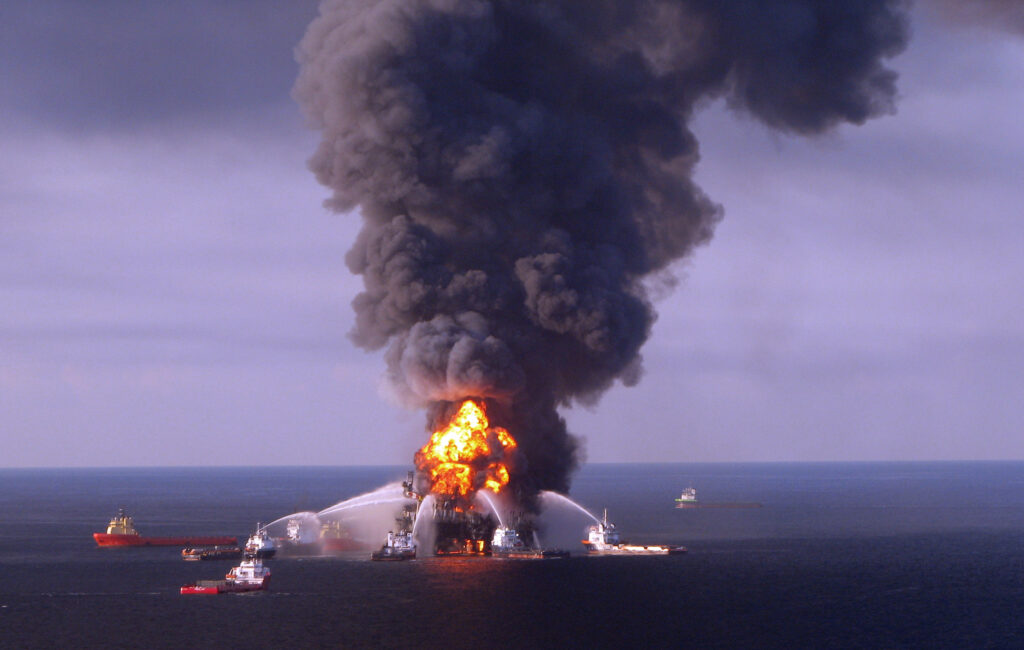
President Donald Trump’s administration is planning to open up millions of square miles (kilometers) of US coastal waters to oil and gas drilling, it said Thursday, in a step that could lead to a massive expansion of fossil fuel extraction.The move comes as Washington looks increasingly out of step with much of the developed world, where there is growing acceptance of the reality of human-caused climate change.Under the plan announced by the US Department of the Interior, 34 lease sales will be offered, allowing for drilling in 1.27 billion acres (500 million hectares) — an area the size of the Amazon.The proposal includes waters off the north coast of Alaska that have never been drilled before, in the Gulf of Mexico — which the administration calls the Gulf of America — and off California.”The Biden administration slammed the brakes on offshore oil and gas leasing and crippled the long-term pipeline of America’s offshore production,” said Secretary of the Interior Doug Burgum, referring to Trump’s predecessor Joe Biden.Burgum insisted that offshore energy production requires a lot of time and investment.”By moving forward with the development of a robust, forward-thinking leasing plan, we are ensuring that America’s offshore industry stays strong, our workers stay employed, and our nation remains energy dominant for decades to come.”Trump speaks frequently of what he says is the need for America to drill for more fossil fuel, and is disparaging about the global shift to renewables, which he calls a “scam.” He regularly calls climate change science “a con.”Under his presidency, the country has pulled back from international agreements on fighting climate change, and did not send an official delegation to the ongoing COP30 climate summit in Brazil.But the plans announced Thursday are likely to face pushback domestically, particularly from California, whose government pledged to block drilling in the state’s coastal waters.”Trump’s idiotic plan endangers our coastal economy and communities and hurts the well-being of Californians. This reckless attempt to sell out our coastline to his Big Oil donors is dead in the water,” said Governor Gavin Newsom.”Californians remember the environmental and economic devastation of past oil spills. For decades, California has stood firm in our opposition to new offshore drilling, and nothing will change that. The proposals are also expected to face opposition in the Gulf, where memories remain of the devastating Deepwater Horizon spill in 2010, which saw millions of gallons (liters) of oil wreck tourism and fishing.Rick Scott, a Republican senator for Florida, was quick to lodge his objections to the Trump plan.”Florida’s coasts must remain off the table for oil drilling to protect Florida’s tourism, environment, and military training opportunities,” he wrote on X.