Canada, Mexico leaders agree to seek ‘fairer’ trade deal with US
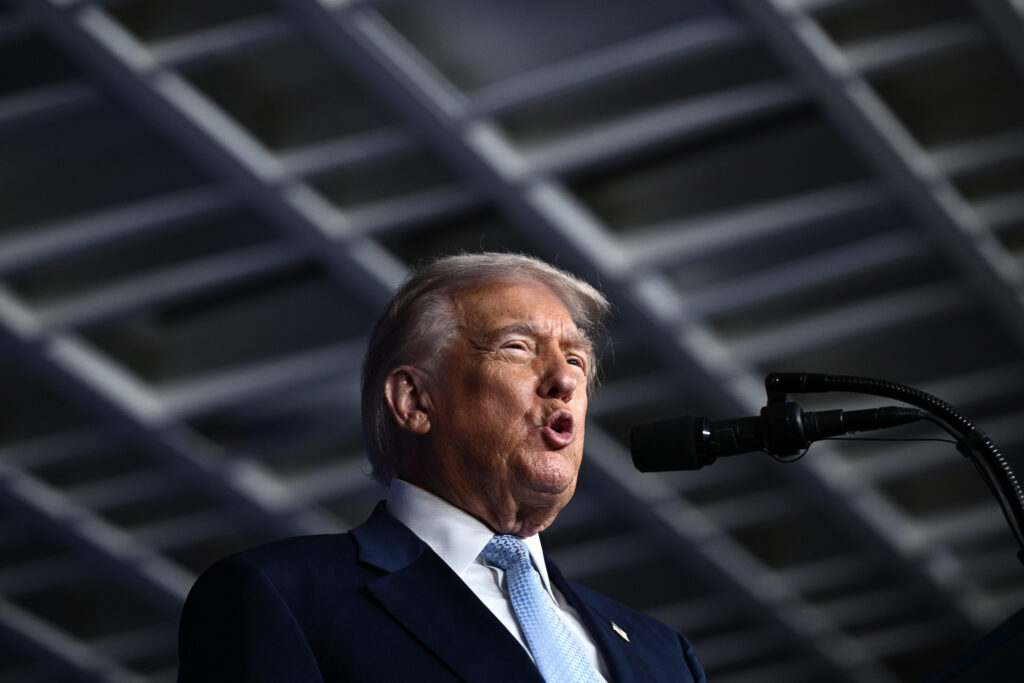
The leaders of Canada and Mexico on Thursday defended their three-way free-trade deal with the United States, while agreeing to try and make it “fairer” in the face of tariff pressure from President Donald Trump.After talks in Mexico with President Claudia Sheinbaum, Canadian Prime Minister Mark Carney said the pair were “committed” to the United States-Mexico-Canada Agreement (USMCA), saying it had “helped make North America the economic envy of the world.”Sheinbaum said she was “optimistic” about the future of the accord, which Trump wants to renegotiate on terms more favorable to US manufacturers.”I believe that the USMCA will prevail,” she told a joint press conference with Carney.The agreement, in place since 2020, is up for review next year. It is critical to the economies of both Mexico and Canada, which send around 80 percent and 75 percent of their exports to the United States, respectively.Trump has already imposed tariffs on some exports from Canada and Mexico that don’t fall under the agreement and threatened further punishment if they fail to curb cross-border migration and drug trafficking.The USMCA replaced the North American Free Trade Agreement signed in the 1990s.The successive deals fundamentally reshaped North America’s economy over three decades, creating a high degree of interdependence between the three partners.However, Trump’s trade war has already significantly disrupted cross-border supply chains.He has hit Canadian goods that fall outside the agreement with 35-percent duties and similar Mexican goods with 25-percent levies.The tariffs are hurting Canada’s crucial auto, steel and aluminum sectors, leading to job losses, and also causing pain for Mexico’s auto and steel industries.”We complement the United States, we make them stronger, we are all stronger together,” Carney said.The fact that Washington was already reviewing UMSCA was “a good thing,” he added, arguing that it meant decisions on tariffs and local content could be “taken in a calm, deliberate manner.”- ‘Move forward together’ -Both Sheinbaum and Carney have been attempting to reach side deals with Trump. But on Thursday they insisted they were not in competition with each other.”We will move forward together,” said Carney, holding up next year’s FIFA World Cup, to be jointly hosted by the United States, Canada and Mexico as an expression of the countries’ synergies.Anxious to diversify their exports, Carney and Sheinbaum also announced plans to boost bilateral trade and investment, using Canadian and Mexican ports rather than shipping goods across the United States.Trade between the two countries last year totaled under $32 billion — more than 20 times less than the amount each has with the United States. Mexico is Canada’s third-largest partner and Canada is Mexico’s fifth-largest.The two leaders also announced plans to cooperate more closely on foreign affairs, agriculture, the environment and security, among other areas.Some Canadian politicians have complained that Trump unfairly lumped their country, a small player in the global drug trade, with Mexico in terms of fentanyl trafficking.”The unfortunate fact is that there are gangs from one country in another country but also vice-versa,” Carney said.
How did an Indian zoo get the world’s most endangered great ape?
Tapanuli orangutans are the world’s most endangered great ape. Fewer than 800 remain, all previously thought to be in their native Indonesia. But now an Indian zoo says it has one.An Indian court cleared the 3,500-acre wildlife facility known as Vantara on Monday of allegations including unlawful acquisition of animals and financial wrongdoing.But the decision is unlikely to quiet questions about how Vantara, which describes itself as a wildlife rehabilitation and conservation centre, has stocked its enclosures. Vantara, run by Anant Ambani, the son of Asia’s richest man, says it houses 150,000 animals of 2,000 species, far exceeding populations at well-known zoos in New York, London or Berlin. AFP spoke to seven experts on conservation and the wildlife trade to understand concerns about Vantara.Several declined to speak on the record, citing Vantara’s previous legal actions against critics. They called Vantara’s collection unprecedented.”We’ve never seen anything on this scale,” said one longtime conservation expert from a wildlife protection group.”It’s hoovering up animals from all over the world.”Some of those acquisitions are more noteworthy than others, such as the single tapanuli that arrived in Vantara between 2023 and 2024, according to the facility’s submissions to India’s Central Zoo Authority.Only officially described in 2017, tapanulis are incredibly rare, said Serge Wich, an orangutan specialist at Liverpool John Moores University.They are confined to a small range in Indonesia and are in “dire straits” because of threats including mining and deforestation, he told AFP.- ‘Surprised and shocked’ -Trade in the world’s most endangered species is prohibited by the Convention on International Trade in Endangered Species of Wild Fauna and Flora (CITES).But there are exceptions, including for “captive-bred” animals — individuals born in captivity to captive parents. There is only one CITES record of a tapanuli orangutan ever being transferred internationally.It left Indonesia in 2023, bound for the United Arab Emirates, where Vantara says its tapanuli came from.The transfer record describes the animal as “captive-bred”.However, multiple experts said that description was implausible.”There are no captive breeding programmes for orangutans in Indonesia,” said Panut Hadisiswoyo, founder and chairman of the Orangutan Information Centre in Indonesia.Only a handful are known to be in captivity at all, at rehabilitation facilities in Indonesia, he said.A conservationist for more than two decades, Panut said he was “surprised and shocked” to learn from AFP about Vantara’s tapanuli orangutan.”We do everything to protect them,” he said. “So it’s really, really distressing information.”There is no information on where in Indonesia the animal originated. The country’s CITES authorities did not respond to a request for comment.Experts said it was possible the orangutan is not a tapanuli at all. They look similar enough to Bornean and Sumatran orangutans that DNA testing would be needed for confirmation. It could also be a mix of tapanuli and another species, perhaps discovered by a zoo in its collection — although experts questioned why a facility would hand off such a rare animal.But if the animal is a tapanuli, “it’s almost inevitable that it would have to be illegal”, said orangutan conservation expert Erik Meijaard.”It would be super sad.”- ‘Pure nonsense’ -Vantara did not respond to AFP’s request for comment on the orangutan and how it acquires animals.The tapanuli is not the first highly endangered animal to arrive at Vantara.Spix’s macaws, a vibrant blue species native to Brazil, were extinct in the wild until recently.Brazil has sought to prevent all trade and transfer of the birds.It allowed a breeding facility in Germany to acquire some on condition they would not be sold or moved without Brazilian permission, according to documents submitted to CITES. Yet in 2023, 26 Spix’s macaws from the German facility arrived in Vantara. Vantara says it is working “to ensure that the calls of these rare birds are never lost from their native habitats”.The case has rankled Brazil, which raised it repeatedly at CITES meetings.Asked about Vantara’s tapanuli, the CITES secretariat told AFP “this matter is under review”, adding it was “not in a position to provide information”.In public documents, CITES has acknowledged receiving “multiple reports” about imports of endangered animals into India. India has said it will invite CITES officials for a visit but has yet to provide “detailed information on the matter”, the secretariat noted.If Vantara does own a single tapanuli orangutan, its conservation value would be limited, said Panut, who urged the animal’s return to Indonesia.For Meijaard, conservation in their natural habitat in Indonesia provides “the only chance for this species’ survival”.”Trying to breed orangutans outside Indonesia with some kind of long-term hope that they are going to contribute to the population is just pure nonsense.”
How did an Indian zoo get the world’s most endangered great ape?
Tapanuli orangutans are the world’s most endangered great ape. Fewer than 800 remain, all previously thought to be in their native Indonesia. But now an Indian zoo says it has one.An Indian court cleared the 3,500-acre wildlife facility known as Vantara on Monday of allegations including unlawful acquisition of animals and financial wrongdoing.But the decision is unlikely to quiet questions about how Vantara, which describes itself as a wildlife rehabilitation and conservation centre, has stocked its enclosures. Vantara, run by Anant Ambani, the son of Asia’s richest man, says it houses 150,000 animals of 2,000 species, far exceeding populations at well-known zoos in New York, London or Berlin. AFP spoke to seven experts on conservation and the wildlife trade to understand concerns about Vantara.Several declined to speak on the record, citing Vantara’s previous legal actions against critics. They called Vantara’s collection unprecedented.”We’ve never seen anything on this scale,” said one longtime conservation expert from a wildlife protection group.”It’s hoovering up animals from all over the world.”Some of those acquisitions are more noteworthy than others, such as the single tapanuli that arrived in Vantara between 2023 and 2024, according to the facility’s submissions to India’s Central Zoo Authority.Only officially described in 2017, tapanulis are incredibly rare, said Serge Wich, an orangutan specialist at Liverpool John Moores University.They are confined to a small range in Indonesia and are in “dire straits” because of threats including mining and deforestation, he told AFP.- ‘Surprised and shocked’ -Trade in the world’s most endangered species is prohibited by the Convention on International Trade in Endangered Species of Wild Fauna and Flora (CITES).But there are exceptions, including for “captive-bred” animals — individuals born in captivity to captive parents. There is only one CITES record of a tapanuli orangutan ever being transferred internationally.It left Indonesia in 2023, bound for the United Arab Emirates, where Vantara says its tapanuli came from.The transfer record describes the animal as “captive-bred”.However, multiple experts said that description was implausible.”There are no captive breeding programmes for orangutans in Indonesia,” said Panut Hadisiswoyo, founder and chairman of the Orangutan Information Centre in Indonesia.Only a handful are known to be in captivity at all, at rehabilitation facilities in Indonesia, he said.A conservationist for more than two decades, Panut said he was “surprised and shocked” to learn from AFP about Vantara’s tapanuli orangutan.”We do everything to protect them,” he said. “So it’s really, really distressing information.”There is no information on where in Indonesia the animal originated. The country’s CITES authorities did not respond to a request for comment.Experts said it was possible the orangutan is not a tapanuli at all. They look similar enough to Bornean and Sumatran orangutans that DNA testing would be needed for confirmation. It could also be a mix of tapanuli and another species, perhaps discovered by a zoo in its collection — although experts questioned why a facility would hand off such a rare animal.But if the animal is a tapanuli, “it’s almost inevitable that it would have to be illegal”, said orangutan conservation expert Erik Meijaard.”It would be super sad.”- ‘Pure nonsense’ -Vantara did not respond to AFP’s request for comment on the orangutan and how it acquires animals.The tapanuli is not the first highly endangered animal to arrive at Vantara.Spix’s macaws, a vibrant blue species native to Brazil, were extinct in the wild until recently.Brazil has sought to prevent all trade and transfer of the birds.It allowed a breeding facility in Germany to acquire some on condition they would not be sold or moved without Brazilian permission, according to documents submitted to CITES. Yet in 2023, 26 Spix’s macaws from the German facility arrived in Vantara. Vantara says it is working “to ensure that the calls of these rare birds are never lost from their native habitats”.The case has rankled Brazil, which raised it repeatedly at CITES meetings.Asked about Vantara’s tapanuli, the CITES secretariat told AFP “this matter is under review”, adding it was “not in a position to provide information”.In public documents, CITES has acknowledged receiving “multiple reports” about imports of endangered animals into India. India has said it will invite CITES officials for a visit but has yet to provide “detailed information on the matter”, the secretariat noted.If Vantara does own a single tapanuli orangutan, its conservation value would be limited, said Panut, who urged the animal’s return to Indonesia.For Meijaard, conservation in their natural habitat in Indonesia provides “the only chance for this species’ survival”.”Trying to breed orangutans outside Indonesia with some kind of long-term hope that they are going to contribute to the population is just pure nonsense.”
Kirk killing sparks fierce US free speech debate
For Americans, the words are practically sacred: the First Amendment to the US Constitution guarantees freedom of speech. But that right is now the subject of bitter debate, following the assassination of right-wing activist Charlie Kirk.On Thursday, several high-ranking Democrats accused President Donald Trump of waging war on free speech, after he celebrated ABC’s suspension of talk show host Jimmy Kimmel, who accused the political right of using Kirk’s death to score points.The American Civil Liberties Union, a rights advocacy group, accused the Trump administration of operating outside constitutional safeguards to target its opponents, likening it to the Red Scare of the late 1940 and 1950s under senator Joseph McCarthy.”This is beyond McCarthyism. Trump officials are repeatedly abusing their power to stop ideas they don’t like, deciding who can speak, write, and even joke,” said Christopher Anders, director of the ACLU’s democracy and technology division.So what does the First Amendment say? And why is it up for debate?- ‘How we identify ourselves’ -Ratified in 1791, the Bill of Rights comprises the first 10 amendments to the US Constitution, protecting the fundamental rights of Americans.”Congress shall make no law respecting an establishment of religion, or prohibiting the free exercise thereof; or abridging the freedom of speech, or of the press; or the right of the people peaceably to assemble,” the First Amendment says.For David Super, a professor at Georgetown University’s law school, the amendment is “really how we identify ourselves as a nation.”Beyond the varied ethnicities and background of the nation’s 340 million people, “we are thought to be drawn together by a belief in open discussion and a belief that the government can’t shut any of us up,” Super told AFP.The First Amendment even protects speech that is “morally repulsive,” explained Eugene Volokh, a professor of law at the University of California, Los Angeles.Volokh however emphasized that the history of the United States has been marked by attempts to stifle dissident voices.- ‘Malicious writings’ -In 1798, America’s second president John Adams signed into law the Sedition Act, which forbade “any false, scandalous and malicious writing or writings against the government of the United States.”Then during World War I, the expression of pacifist ideology was banned.From the 1920s to the 1950s, anyone expressing support for communist ideals risked serious repercussions. And in the 1960s, officials in several southern US states battled to silence the civil rights movement.One of the key pillars of Trump’s political movement has been to eviscerate “cancel culture” — the process of criticizing someone for voicing an opinion seen as unacceptable, to the point of that person being ostracized or fired. Trump has often called “cancel culture” a scourge of leftist progressives, claiming that it has been used to silence conservative pundits and politicians.But Democrats have turned the tables on Trump, accusing him of doing the same to US media organizations, major universities and, now, Kimmel — a frequent target of Trump’s ire.”After years of complaining about cancel culture, the current administration has taken it to a new and dangerous level,” Democratic former president Barack Obama wrote Thursday on X.- Conservative push-back -US Attorney General Pam Bondi sparked controversy among conservatives by saying earlier this week that the Justice Department would pursue anyone guilty of “hate speech” linked to the slain influencer.Republican Senator Ted Cruz quickly countered that the Constitution “absolutely protects hate speech.” Bondi then said she meant to refer to “threats of violence that individuals incite against others.”Conservative commentator Tucker Carlson called for “civil disobedience” should Kirk’s murder result in an uptick in laws limiting free speech.And some voices on the far right have criticized a decree signed by Trump in August that makes burning the American flag punishable by up to a year in prison. The US Supreme Court ruled in 1989 that burning the Stars and Stripes indeed amounted to free speech, and was protected by the First Amendment.”I would never in a million years harm the American flag,” conservative radio host Jesse Kelly wrote on X.”But a president telling me I can’t has me as close as I’ll ever be to lighting one on fire. I am a free American citizen. And if I ever feel like torching one, I will.”
Eying bottom line, US media giants bow to Trump
The suspension by Disney-owned ABC of talk show host Jimmy Kimmel is the latest surrender by a US media giant to pressure from the Trump administration, putting the bottom line over free speech.ABC’s decision to pull Kimmel off the air comes two months after CBS announced plans to cancel “The Late Show” featuring Stephen Colbert, another unsparing critic of President Donald Trump.Kimmel, 57, was suspended “indefinitely” by ABC because of remarks the comedy show host made about last week’s murder of conservative activist Charlie Kirk.In a similar vein, the Emmy-winning Colbert was canned shortly after he criticized a decision by CBS’s parent company, Paramount Global, to pay $16 million to settle a lawsuit brought by Trump over an interview with former vice president Kamala Harris.ABC also came in for criticism after it agreed in December to donate $15 million to Trump’s eventual presidential library to settle a defamation suit instead of fighting it out in court.Kimmel’s departure came after Federal Communications Commission (FCC) chairman Brendan Carr openly threatened the licenses of ABC affiliates that broadcast his show.Speaking to reporters aboard Air Force One on his return from a visit to Britain, Trump complained about the late night shows and networks, saying “all they do is hit Trump.””They are licensed. They are not allowed to do that,” he claimed.Democratic lawmakers and media analysts condemned the FCC threats to revoke broadcast licenses and said media and entertainment corporations were placing their economic interests over free speech rights.”What we are witnessing is an outright abuse of power,” Harris wrote on X.”This administration is attacking critics and using fear as a weapon to silence anyone who would speak out. Media corporations — from television networks to newspapers — are capitulating to these threats.”For Senator Richard Blumenthal, “Jimmy Kimmel is off-the-air because of an unprecedented act of gov’t censorship.””The FCC has now proven that its sole mission is to be the speech police for Trump, punishing his perceived opponents & rewarding his cronies,” Blumenthal wrote on X.- ‘Coercion’ -Jeffrey McCall, a professor of media studies at DePauw University, said Kimmel’s ratings have been “questionable for a long time.””ABC and Disney at some point just had to make a decision that was based more on the marketplace,” McCall said. “They’ve just decided that, from a corporate ratings and revenue standpoint, he’s no longer viable.”Ken Paulson, director of the Free Speech Center at Middle Tennessee State University, said the “problem lies in corporations that apparently make decisions based solely on financial considerations and cannot be trusted to protect the public.”The Colbert cancellation came as the FCC was considering a multi-billion-dollar deal between Paramount Global and Skydance, a company owned by the son of Trump billionaire ally Larry Ellison.The FCC gave the green light to the merger a few days after CBS pulled the plug on Colbert.It also obtained an extraordinary pledge from Skydance that it will “adopt measures that can root out the bias that has undermined trust in the national news media.”In the Kimmel case, the Nexstar group — which controls more than 200 local television stations in the United States — was the first to announce it would no longer air Kimmel’s show after FCC chair Carr’s remarks Wednesday.The Texas company is currently seeking FCC approval of a bid to acquire rival Tegna.Some right-wing commentators have condemned Kimmel’s silencing, comparing it to the 2023 firing of conservative darling Tucker Carlson by Fox News or the 2018 booting of sitcom star Roseanne Barr over tweets seen as racist.Paulson said the situations are not comparable.”In this case, the head of the Federal Communications Commission is targeting the on-air talent,” he said. “Others have lost their jobs because of public outrage.”When the public is angry, networks can take that into account,” he said. “But when the government is angry, that’s coercion.”
Les géants des médias cèdent aux pressions de Trump par calcul économique
La suspension de l’animateur Jimmy Kimmel s’inscrit dans une série de concessions des grands médias, soumis à une forte pression du gouvernement Trump, pour préserver leurs intérêts économiques quitte à reléguer la liberté d’expression au second plan.Avant le retrait de la grille du talk-show “Jimmy Kimmel Live!”, annoncée mercredi par la chaîne ABC, pour des commentaires jugés déplacés après l’assassinat de l’influenceur ultraconservateur Charlie Kirk, CBS avait annoncé, en juillet, la suppression de l’émission concurrente, “The Late Show” de Stephen Colbert.Celui-ci avait qualifié de “bon gros pot-de-vin” l’indemnité de 16 millions de dollars versée par Paramount Global, maison mère de CBS, pour solder une procédure intentée par Donald Trump.En décembre, ABC, déjà, avait accepté de régler un autre contentieux qu’il avait aussi initié, en déboursant 15 millions de dollars.L’affaire Kimmel a été amplifiée par un commentaire du patron du régulateur américains des communications (FCC), Brendan Carr, nommé par Donald Trump, dénonçant les déclarations de l’humoriste et appelant à une réponse.Jeudi, l’ex-rivale de Donald Trump à la présidentielle Kamala Harris a fustigé sur X un “abus de pouvoir pur et simple” et une “attaque frontale contre la liberté d’expression”.Mais “les audiences de Jimmy Kimmel sont mauvaises depuis longtemps”, a commenté Jeffrey McCall, professeur à l’université DePauw. Selon lui, ABC et Disney (maison mère) se sont surtout décidés “par rapport aux recettes publicitaires”.Pour Ken Paulson, directeur du centre de la liberté d’expression de la Middle Tennessee State University, “les entreprises se fondent uniquement sur des considérations financières et ne protègent pas les intérêts du public”.- “Corriger les biais” -La plupart des juristes s’accordent à dire que la justice aurait débouté Donald Trump ou son gouvernement dans tous ces dossiers.Mais, sur le cas Jimmy Kimmel, ABC a décidé qu'”il n’était plus viable sur le plan des audiences et des revenus”, estime Jeffrey McCall.L’épisode Colbert est lui intervenu alors que la FCC devait statuer sur le projet de rachat de Paramount Global par la société de production Skydance, feu vert obtenu quelques jours plus tard.Fait sans précédent connu, la FCC a notamment obtenu de Skydance la promesse d’adopter “des mesures de nature à corriger les biais qui ont sapé la confiance (du public) dans les médias nationaux”.Dans le cas de Jimmy Kimmel, le groupe Nexstar, qui contrôle plus de 200 stations locales aux Etats-Unis, a décidé le premier de ne plus diffuser le talk-show après l’appel de Brendan Carr.Or l’entreprise texane attend la validation, par la FCC, de l’acquisition de son concurrent Tegna, dévoilée en août. Plusieurs éditorialistes de droite ont opposé aux critiques sur la suspension de Jimmy Kimmel l’exemple du licenciement, en 2023, par la chaîne Fox News, appréciée des conservateurs, de Tucker Carlson, objet de campagnes pour dissuader les annonceurs.- “Coercition” -Revenait aussi le nom de la comédienne Roseanne Barr, débarquée par ABC en 2018 de son propre sitcom, “Roseanne”, pour un tweet à caractère raciste.”Ce n’est absolument pas comparable”, rétorque Ken Paulson. “Quand le public est mécontent, les chaînes peuvent en tenir compte. Quand c’est le gouvernement, c’est de la coercition.”Jeudi, Donald Trump a évoqué la suspension de licence pour les chaînes qui seraient “contre (lui)”.Dans un contexte d’offensive contre les médias généralistes, considérés comme trop à gauche par le gouvernement Trump, le Congrès a adopté en juillet une loi supprimant la totalité de la subvention prévue pour l’audiovisuel public américain ces deux prochaines années.Jeffrey McCall rappelle que la FCC n’a autorité que sur les grandes chaînes hertziennes et pas sur la télévision câblée ou les plateformes en ligne.Pour autant, certains craignent de voir la famille Ellison, proche de Donald Trump et déjà aux manettes de Paramount Global, prendre le contrôle de Warner Bros Discovery (une offre serait en préparation), et plus particulièrement de la chaîne d’information CNN, bête noire des conservateurs.
Japan inflation slows in August, rice price surges ease
Inflation in Japan slowed to 2.7 percent in August due partly to government energy subsidies, official data showed Friday, with the cost of rice easing following a huge price spike.Inflation continues to be driven by rice prices, which increased by 68.8 percent year-on-year in August after surges of around 100 percent in June and 90.7 percent in July.Voters angry about rising rice costs have deserted the long-dominant ruling Liberal Democratic Party, and this month an under-pressure Prime Minister Shigeru Ishiba announced he would step down after his coalition lost its majority in both chambers.Rice prices have skyrocketed because of supply problems linked to a very hot summer in 2023 and panic-buying after a “megaquake” warning last year, amongst other factors.The core inflation reading from the internal affairs ministry, which excludes volatile fresh food prices, was in line with market expectations, and was down on the 3.1 percent in July.Abhijit Surya of Capital Economics said the main factor behind the fall in inflation was “a deepening of energy price deflation… due to the resumption of electricity and gas subsidies”.But Taro Kimura, an analyst with Bloomberg Economics, said that a pullback in inflation “won’t change the big picture”.”Consumer prices will remain warm enough to keep the Bank of Japan on track to pare stimulus, likely as soon as October,” he added.Ishiba appointed a new farm minister and his government has released emergency stocks in an effort to bring prices down.Last month Japan announced a change in its decades-old policy of encouraging farmers to grow crops other than rice.US President Donald Trump also wants Japan to import more American rice.- Export woes -Last month, data showed that Japan’s economy grew at an annualised pace of 1.0 percent in the second quarter.The reading suggested the economy was suffering less than feared from US tariffs.But other data released this week showed exports to the United States plunged nearly 14 percent in August, with cars down 28.4 percent. The auto industry, which accounts for about a third of Japan’s exports to the United States, has been suffering under a 27.5 percent levy. However, on Tuesday, lower US tariffs on Japanese autos kicked in as Washington implemented a recent trade pact between the two countries. Vehicles will now face a 15 percent toll, the same as many other goods.While the implementation of the trade deal marked a win for Japan, the levies will continue to cause huge pain for the nation’s industries and Japanese business lobbies are hoping Tokyo will push on with fresh negotiations.Japan’s automobile industry, which includes major firms such as Toyota and Honda, accounts for around eight percent of the country’s jobs.