EU to seek more tariff exemptions during US commerce secretary visit

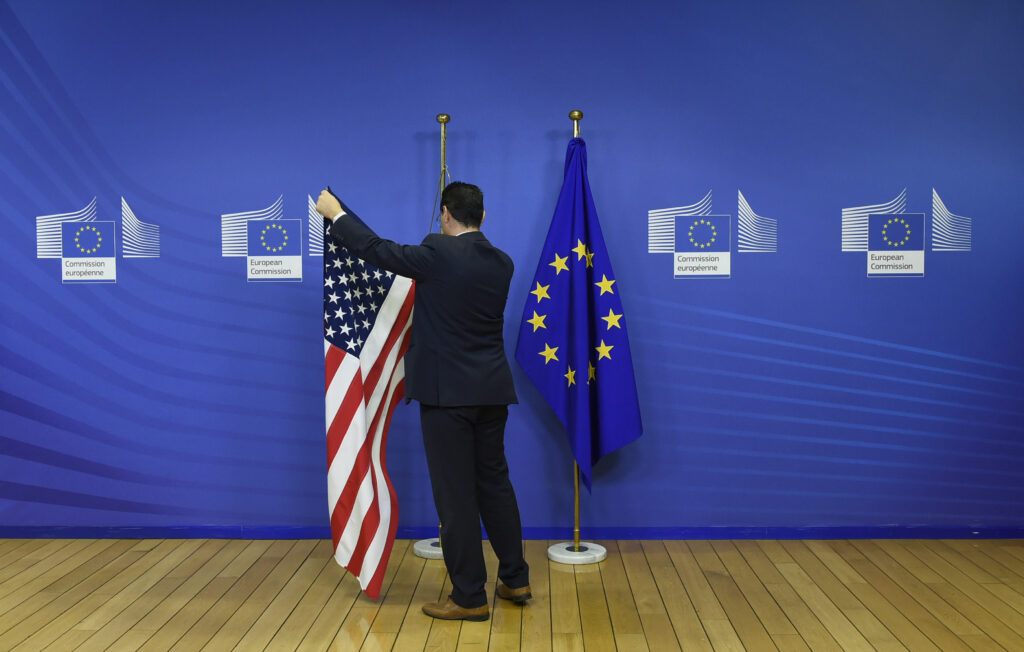
The EU will demand more tariff exemptions on products including wines when US Commerce Secretary Howard Lutnick meets the bloc’s trade ministers on Monday.US President Donald Trump and EU chief Ursula von der Leyen struck a deal in July for most EU exports to face a 15-percent US levy, but the European Union has been seeking various exemptions for more sectors.Despite the deal, both sides point to outstanding issues and the agreement still awaits approval by the EU parliament before further implementation.The EU’s trade ministers will meet in Brussels on Monday during which Lutnick and US Trade Representative Jamieson Greer will join them for lunch.Greer will also hold talks with EU trade chief Maros Sefcovic on Sunday, the European Commission said.As the EU’s digital rules are the subject of thorny relations with Washington, the bloc’s tech chief Henna Virkkunen is also expected to meet the Americans.The European Commission said on Friday it continues “to engage with the US both at political and technical level”.Diplomats said EU states were set to finalise a list of sectors they want to exempt from levies on Friday that will likely include wines and spirits — and potentially pasta, already the subject of tensions between Rome and Washington.Italy last month appealed to Washington and Brussels in an attempt to dissuade the United States from imposing provisional anti-dumping duties of over 91 percent on pasta from January 2026, on top of the 15 percent already in place.”The EU is aiming to present a united front and not come off as divided with all ministers arguing their own national exemptions,” a diplomat told AFP.Relations between the transatlantic allies remain tense.The United States is pushing Brussels to scrap digital and green rules, viewed as “non-tariff” barriers to trade by Washington.But the EU has insisted its digital laws are not up for discussion.President Donald Trump has lashed out at Brussels’ moves against US Big Tech companies including a whopping 2.95-billion-euro ($3.4-billion) fine on Google in September, threatening tariffs if the bloc does not repeal the measure.Brussels also wants Washington to cut its 50-percent steel tariffs, and proposes to create a broader “metals alliance” with the United States to ringfence their respective economies from Chinese overcapacity.
Indian warplane crashes at Dubai Airshow, killing pilot

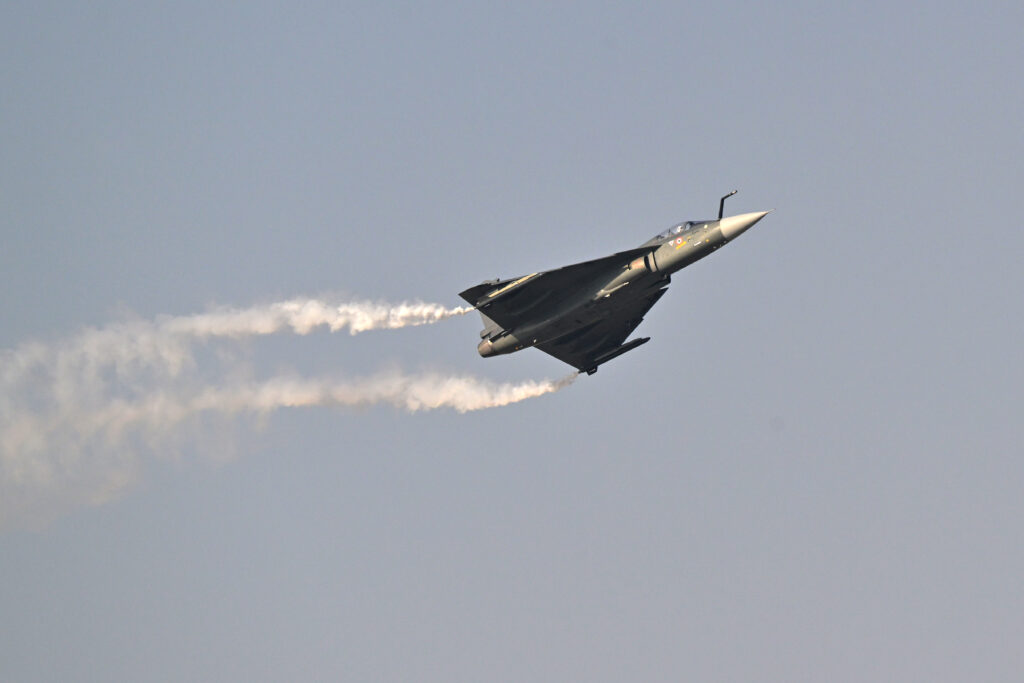
An Indian fighter jet crashed during a flying display at the Dubai Airshow on Friday, killing the pilot in front of hundreds of shocked onlookers.The Indian-made Tejas warplane was executing a manoeuvre when it plunged to the ground and erupted in a fireball. The pilot was unable to eject.The crash happened in full view of a packed grandstand watching the aerobatics display on the last day of the Middle East’s biggest air show.Dubai’s government-run media office confirmed the “tragic death of the pilot” and the Indian Air Force (IAF) announced an inquiry.”IAF deeply regrets the loss of life and stands firmly with the bereaved family in this time of grief,” it said in a statement.The plane went down about a mile (1.6 kilometres) from the show site, which was full of planes, helicopters and other hardware on static display.The United Arab Emirates’ president and prime minister, aviation industry leaders and military top brass were among thousands who attended the show this week.Videos on social media showed the aircraft plunging to the ground and bursting into flames on impact. Smoke billowed from the crash site as emergency vehicles sped towards it.”The pilot was flying at a low altitude, performing risky manoeuvres,” Iraqi eyewitness Hassan Loqman told AFP.”Then he seemed he was trying to avoid the accident, he began to steer the plane upwards, but he couldn’t do so in time.”The incident happened near the start of the daily flying display, which features barrel rolls, loops and other stunts. The demonstration later resumed.It is the second crash involving the single-seat Tejas in less than two years after a non-fatal training accident in Rajasthan in March last year.In September, India signed a $7 billion order for 97 upgraded Tejas Mk1A fighter jets to replace its Russian MiG-21 fleet after decades of use.The Tejas, designed and built in India, was first commissioned into the air force in 2016.Friday’s crash is believed to be the first in the history of the Dubai Airshow, which dates back to 1986. Dubai’s state-owned Emirates and flydubai airlines signed several major agreements at the airshow, including Emirates’ order for 65 Boeing jets valued at $38 billion.

Afghanistan seeks new trade routes as Pakistan ties sour

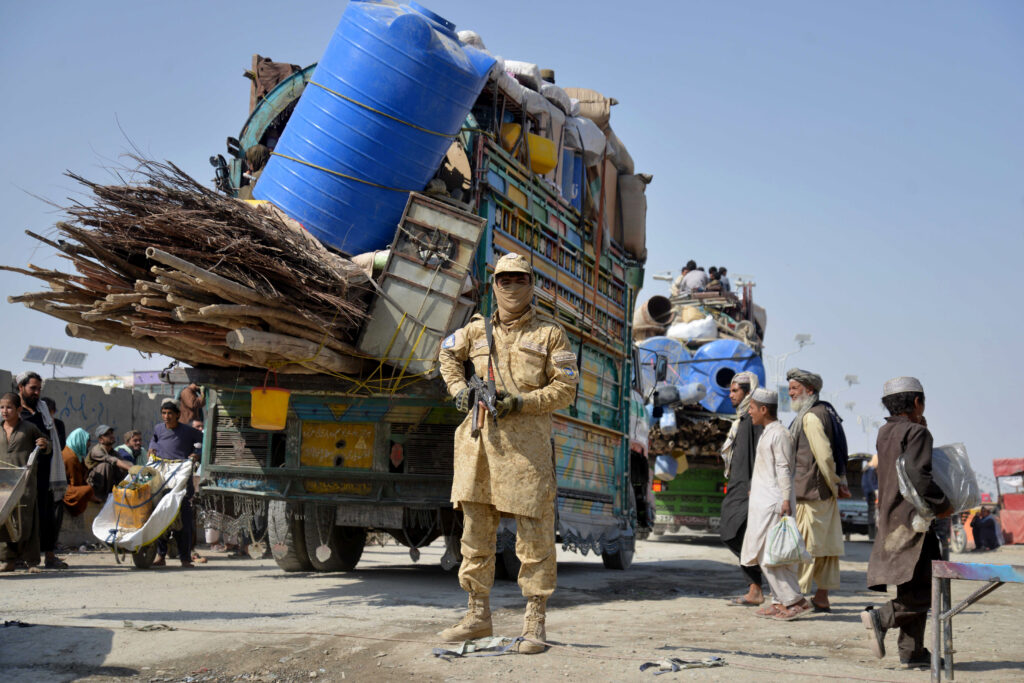
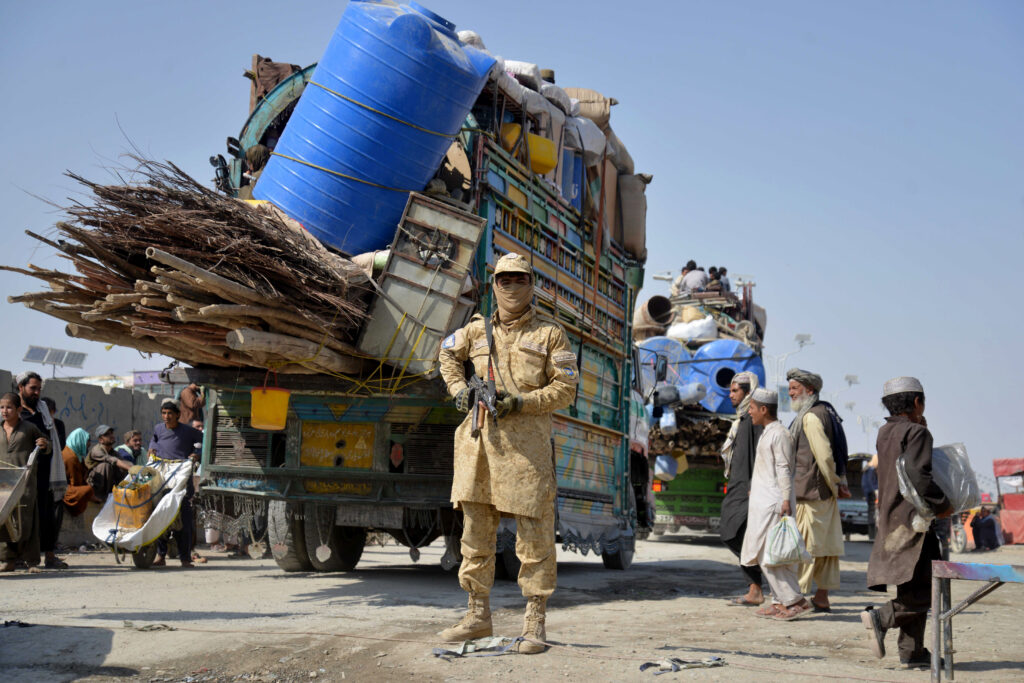
Afghanistan is scrambling to diversify its trade partners after a deadly border clash with Pakistan last month brought ties to their lowest point in years, affecting people on both sides of the frontier.The South Asian neighbours have been locked in an increasingly bitter dispute since the Taliban took over Kabul in 2021, with Islamabad accusing Afghanistan of harbouring the militants behind cross-border attacks — charges the Taliban government denies.Abdul Ghani Baradar, Afghanistan’s deputy prime minister for economic affairs, urged traders last week to “redirect their trade toward other alternative routes instead of Pakistan”. Pakistan is landlocked Afghanistan’s top trading partner, supplying rice, pharmaceuticals and raw materials, while taking in 45 percent of Afghan exports in 2024, according to the World Bank. More than 70 percent of those exports, worth $1.4 billion, are perishable farm goods such as figs, pistachios, grapes and pomegranates. Dozens of Afghan trucks were stranded with rotting produce when the frontier shut on October 12 due to deadly cross-border fire, which was followed by a fragile truce. Losses have topped $100 million on both sides, and up to 25,000 border workers have been affected, according to the Pakistan Afghanistan Joint Chamber of Commerce and Industry (PAJCCI), which seeks to promote bilateral trade.Baradar warned traders that Kabul would not intervene if they kept relying on Pakistan.Wary of further disruptions, the Taliban government is now hedging its bets with Iran, Central Asia — and beyond.- Pomegranates to Russia -Trade with Iran and Turkmenistan has jumped 60–70 percent since mid-October, said Mohammad Yousuf Amin, head of the Chamber of Commerce in Herat, in western Afghanistan.Kabul also sent apples and pomegranates to Russia for the first time last month. Russia is the only country to have officially recognised the Taliban administration.Taliban leaders crave wider recognition and foreign investment, but sanctions on senior figures have made investors wary.The vast market in India is a prime attraction. On Sunday, state-owned Ariana Afghan Airlines cut freight rates to the country of 1.4 billion people.Two days later, Kabul sent its commerce and industry minister to New Delhi.”Afghanistan has too many fruits and vegetables it cannot store because there are no refrigerated warehouses,” said Torek Farhadi, an economic analyst and former IMF adviser. “Exporting is the only way,” he told AFP. And quickly, before the products spoil.Kabul touts Iran’s Chabahar port as an alternative to Pakistan’s southern harbours, but Farhadi noted it is farther, costlier and hampered by US sanctions on Tehran.- ‘Distraught’ -“It’s better for both countries to end this trade war… They need each other,” Farhadi said.Afghanistan relies on Pakistan’s market of 240 million people and its sea access, while Islamabad wants Afghan transit to reach Central Asia for textile and energy trade. Pakistan says the closure curbs militant infiltration, but its economy is also feeling the pinch.The spokesman for Pakistan’s foreign ministry said on Friday that Islamabad had reached its “threshold of patience” after recent attacks.”Either we get ourselves killed or we undertake very risky trade… This is a difficult choice that we have made,” spokesman Tahir Hussain Andrabi told a weekly briefing.”Can you put a price tag on a human life, on a Pakistani life?” he said.In Peshawar, near the frontier, Afghan produce has all but vanished from markets. Grapes cost four times more and tomatoes have more than doubled to over 200 rupees (70 cents) a kilogram, an AFP correspondent found.On Monday, the PAJCCI urged Islamabad to act, warning of mounting costs as shipping containers bound for Afghanistan and Central Asia remain stuck in Pakistan.Each container is racking up $150–$200 in daily port charges, the group said, adding: “With thousands of containers stuck, the collective economic burden has become unbearable and continues to grow with each passing day.”Truck driver Naeem Shah, 48, has been waiting at the Pakistani border town of Chaman with sugar and cooking oil bound for Afghanistan.”I haven’t been paid for a month. No matter who I call, they say there is no money because the border is closed,” he told AFP.”If it doesn’t reopen, we will be distraught.”

Afghanistan seeks new trade routes as Pakistan ties sour

Afghanistan is scrambling to diversify its trade partners after a deadly border clash with Pakistan last month brought ties to their lowest point in years, affecting people on both sides of the frontier.The South Asian neighbours have been locked in an increasingly bitter dispute since the Taliban took over Kabul in 2021, with Islamabad accusing Afghanistan of harbouring the militants behind cross-border attacks — charges the Taliban government denies.Abdul Ghani Baradar, Afghanistan’s deputy prime minister for economic affairs, urged traders last week to “redirect their trade toward other alternative routes instead of Pakistan”. Pakistan is landlocked Afghanistan’s top trading partner, supplying rice, pharmaceuticals and raw materials, while taking in 45 percent of Afghan exports in 2024, according to the World Bank. More than 70 percent of those exports, worth $1.4 billion, are perishable farm goods such as figs, pistachios, grapes and pomegranates. Dozens of Afghan trucks were stranded with rotting produce when the frontier shut on October 12 due to deadly cross-border fire, which was followed by a fragile truce. Losses have topped $100 million on both sides, and up to 25,000 border workers have been affected, according to the Pakistan Afghanistan Joint Chamber of Commerce and Industry (PAJCCI), which seeks to promote bilateral trade.Baradar warned traders that Kabul would not intervene if they kept relying on Pakistan.Wary of further disruptions, the Taliban government is now hedging its bets with Iran, Central Asia — and beyond.- Pomegranates to Russia -Trade with Iran and Turkmenistan has jumped 60–70 percent since mid-October, said Mohammad Yousuf Amin, head of the Chamber of Commerce in Herat, in western Afghanistan.Kabul also sent apples and pomegranates to Russia for the first time last month. Russia is the only country to have officially recognised the Taliban administration.Taliban leaders crave wider recognition and foreign investment, but sanctions on senior figures have made investors wary.The vast market in India is a prime attraction. On Sunday, state-owned Ariana Afghan Airlines cut freight rates to the country of 1.4 billion people.Two days later, Kabul sent its commerce and industry minister to New Delhi.”Afghanistan has too many fruits and vegetables it cannot store because there are no refrigerated warehouses,” said Torek Farhadi, an economic analyst and former IMF adviser. “Exporting is the only way,” he told AFP. And quickly, before the products spoil.Kabul touts Iran’s Chabahar port as an alternative to Pakistan’s southern harbours, but Farhadi noted it is farther, costlier and hampered by US sanctions on Tehran.- ‘Distraught’ -“It’s better for both countries to end this trade war… They need each other,” Farhadi said.Afghanistan relies on Pakistan’s market of 240 million people and its sea access, while Islamabad wants Afghan transit to reach Central Asia for textile and energy trade. Pakistan says the closure curbs militant infiltration, but its economy is also feeling the pinch.The spokesman for Pakistan’s foreign ministry said on Friday that Islamabad had reached its “threshold of patience” after recent attacks.”Either we get ourselves killed or we undertake very risky trade… This is a difficult choice that we have made,” spokesman Tahir Hussain Andrabi told a weekly briefing.”Can you put a price tag on a human life, on a Pakistani life?” he said.In Peshawar, near the frontier, Afghan produce has all but vanished from markets. Grapes cost four times more and tomatoes have more than doubled to over 200 rupees (70 cents) a kilogram, an AFP correspondent found.On Monday, the PAJCCI urged Islamabad to act, warning of mounting costs as shipping containers bound for Afghanistan and Central Asia remain stuck in Pakistan.Each container is racking up $150–$200 in daily port charges, the group said, adding: “With thousands of containers stuck, the collective economic burden has become unbearable and continues to grow with each passing day.”Truck driver Naeem Shah, 48, has been waiting at the Pakistani border town of Chaman with sugar and cooking oil bound for Afghanistan.”I haven’t been paid for a month. No matter who I call, they say there is no money because the border is closed,” he told AFP.”If it doesn’t reopen, we will be distraught.”

Au moins cinq morts dans un séisme au Bangladesh

Un tremblement de terre de magnitude 5,5 a frappé vendredi le centre du Bangladesh, au nord-est de la capitale Dacca, faisant au moins cinq morts et une centaine de blessés, selon un nouveau bilan du gouvernement.Des reporters de l’AFP ont vu des gens pleurer dans les rues de Dacca tandis que d’autres semblaient sous le choc.Le séisme est survenu à une heure où une part importante de la population se trouvait à son domicile vendredi, jour de congé hebdomadaire dans le pays de 170 millions d’habitants à forte majorité musulmane.Le chef du gouvernement provisoire, Muhammad Yunus, s’est dit “profondément choqué et attristé par les informations faisant état de victimes dans différents districts”.Au moins cinq personnes ont été tuées et environ 100 personnes blessées, parmi eux des étudiants d’une université et des ouvriers travaillant dans une usine, a-t-il déclaré dans un communiqué. Deux enfants figurent parmi les personnes décédées, selon le ministère de la Santé.Trois personnes, dont un enfant, ont été tués par la chute de la balustrade d’un immeuble de huit étages devant une boucherie dans le quartier d’Armanitola, dans les faubourgs de Dacca.”J’étais venu acheter de la viande et je faisais la queue quand le tremblement de terre a frappé. La balustrade s’est effondrée sur quatre ou cinq personnes devant moi. Un enfant, grièvement blessé au cou, est mort sur le coup”, a raconté à l’AFP, Md Sharif, 26 ans.”J’ai vu des véhicules transporter des blessés. J’ai appris plus tard que trois d’entre eux étaient morts de leurs blessures”, a expliqué un voisin, Sakib Hossain, 50 ans, qui a dit s’être précipité dans la rue après avoir entendu un grand bruit.- Jusqu’à Calcutta -La secousse, d’une magnitude de 5,5, s’est produite à 10H38 (04H38 GMT) et son épicentre a été localisé près de la ville de Narsingdi, selon l’Institut américain d’études géologiques (USGS), qui a évoqué dans son alerte la possibilité d’un “nombre significatif de victimes et de dégâts”.Les services bangladais de météorologie ont pour leur part fait état d’un séisme d’une magnitude de 5,7 avec pour épicentre la ville de Mabhabdi, dans le district de Narsingdi, ajoutant que la secousse avait été ressentie pendant 26 secondes.Elle a été fortement ressentie dans les rues de Dacca, ont rapporté des journalistes de l’AFP.M. Yunus a indiqué que “toutes les mesures nécessaires (étaient) prises” pour assurer la sécurité de la population, ajoutant qu’il était “conscient de l’anxiété et la panique” causées par l’événement.La secousse a été perçue jusque dans la mégapole indienne de Calcutta, à quelque 300 km à l’ouest de Dacca, a indiqué à l’AFP le directeur du centre indien de sismologie, OP Mishra.Dans le quartier de Salt Lake City, qui accueille de nombreuses entreprises de la “tech” locale, de nombreux habitants ont évacué rapidement bureaux et domiciles, a rapporté un correspondant de l’AFP.”J’ai senti des secousses et des secousses et mon lit a tremblé”, a témoigné l’un d’eux, Sumit Dutta, 66 ans: “je suis sorti en trombe de ma chambre”.Les autorités de Calcutta n’ont fait état d’aucune victime ni dégât dans l’immédiat.Le Bangladesh est souvent le théâtre de secousses telluriques, mais le dernier tremblement de terre en date important survenu sur son sol remonte à 1896.

How US sanctions on Russia’s Lukoil hit Bulgaria’s largest refinery

By taking over the Balkan’s largest refinery from Lukoil, Bulgaria has for now avoided punishing US sanctions against the Russian oil giant, which enter into force on Friday.But what comes next for the crucial refinery on the outskirts of Bulgaria’s Black Sea city of Burgas is uncertain.- Why has Sofia stepped in? -On October 22, Washington announced it would impose sanctions on Russian oil giants Rosneft and Lukoil to stifle the financing of Russia’s invasion of Ukraine that started in 2022.Among European Union members, Bulgaria took the hardest hit from the measure as it hosts Lukoil’s largest refinery in the Balkans. Lukoil has owned the Neftochim plant since 1999.Bulgarian authorities said the US sanctions would effectively shut the refinery down as all business partners have refused to pay companies sheltered by Lukoil.In a move aimed at preventing such an outcome, Bulgaria’s parliament on November 7 adopted legal changes to place all Lukoil assets in the country under state control.Last week, the government named senior government official Rumen Spetsov, who was the National Revenue Agency director and is also a former bodybuilding champion, to take control of the refinery.Just after that, the US Treasury Department issued a license authorising transactions involving certain Lukoil entities in Bulgaria — including the refinery — until April 29 next year.- Why does the refinery matter?  -The Burgas refinery plays a key economic role for Bulgaria. It is the largest company in the poorest EU member with turnover of 4.68 billion euros ($5.39 billion) in 2024.Lukoil is the dominant force in Bulgaria’s wholesale fuel market as well as in sales to end-customers owing to its large network of petrol stations. Its presence in Bulgaria made it “a key part of Russian influence”, said Martin Vladimirov, an expert at the Sofia-based think-tank CSD.But Lukoil’s importance goes well beyond Bulgaria’s borders, he added, describing the company as “effectively a market maker for the whole of southeast Europe”.”It is no coincidence that fuel prices in Romania are rising, as the refinery in Bulgaria plays a key role in supplying the Romanian market,” Vladimirov told AFP.And “Romania is a major distribution hub for the region -– Ukraine, Moldova, Hungary, Austria,” he added.- What’s next? -Bulgaria has given free rein to administrator Spetsov to sell the refinery with the government’s consent.The US has set a December 13 deadline to find a buyer, with the potential contract subject to Washington’s approval.”The situation is stable for the moment” in terms of supply, Vladimirov said.But for its part, Lukoil on Wednesday called on Bulgarian authorities not to interfere with its efforts to sell its assets in the country, warning it “reserves the right to seek judicial remedies to protect its rights and legitimate interests”.Lukoil’s parent company sheltering its foreign units is based in Vienna, and if Lukoil decides to sell it, Sofia would lose control over the refinery, said a Bulgarian government source.In late October, Lukoil said it had accepted an offer from Geneva-based oil trading group Gunvor, which Washington has described as “the Kremlin’s puppet”.The bid was then pulled back immediately.

Les derniers chasseurs-cueilleurs de Thaïlande revendiquent leur droit aux terres

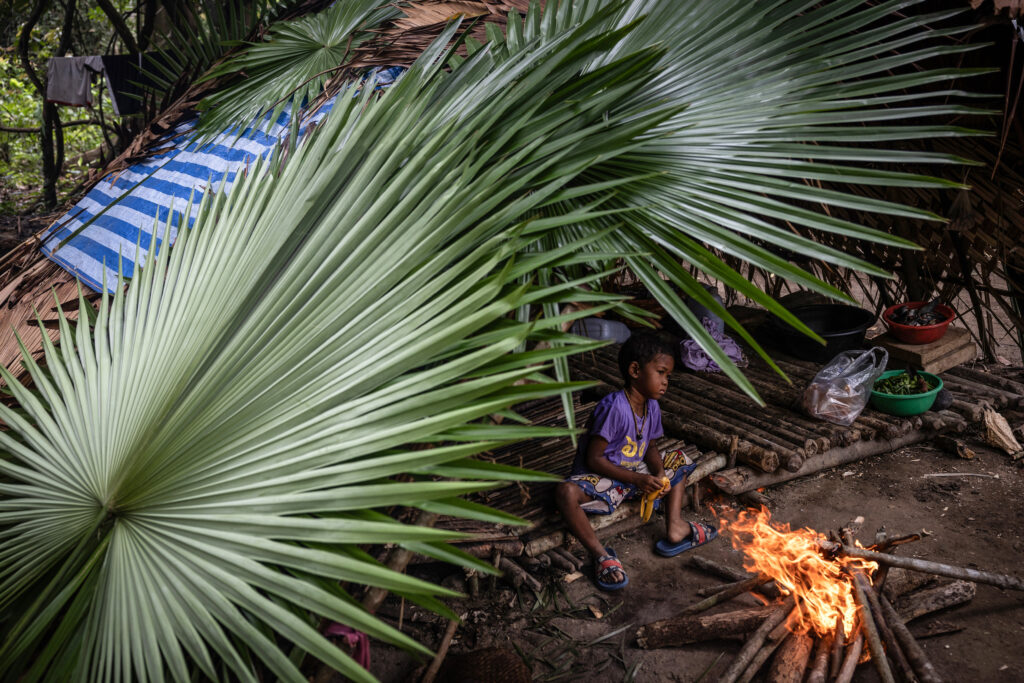
Au coeur d’une forêt du sud de la Thaïlande, un jeune homme court, sarbacane en main, avant de décocher une flèche empoisonnée sur un singe.Le groupe qui l’accompagne s’approche en criant avant que l’animal ne tombe au sol.Cette chasse traditionnelle est toujours pratiquée par les Maniqs, l’un des plus petits groupes ethniques de Thaïlande et …

Les derniers chasseurs-cueilleurs de Thaïlande revendiquent leur droit aux terres Read More »

Mette Frederiksen, la dame de fer du Danemark affaiblie par son échec aux élections locales

Longtemps leader incontestée de la gauche danoise, saluée pour ses capacités de rassemblement, la Première ministre Mette Frederiksen voit son autorité s’affaiblir après le net recul de son parti aux élections locales du 18 novembre.A 48 ans, cette femme d’appareil, incarnation de la sociale-démocratie acquise à la rigueur migratoire pour défendre l’Etat providence, entend rester …

Mette Frederiksen, la dame de fer du Danemark affaiblie par son échec aux élections locales Read More »

Le plan américain pour l’Ukraine prévoit de fortes concessions à la Russie

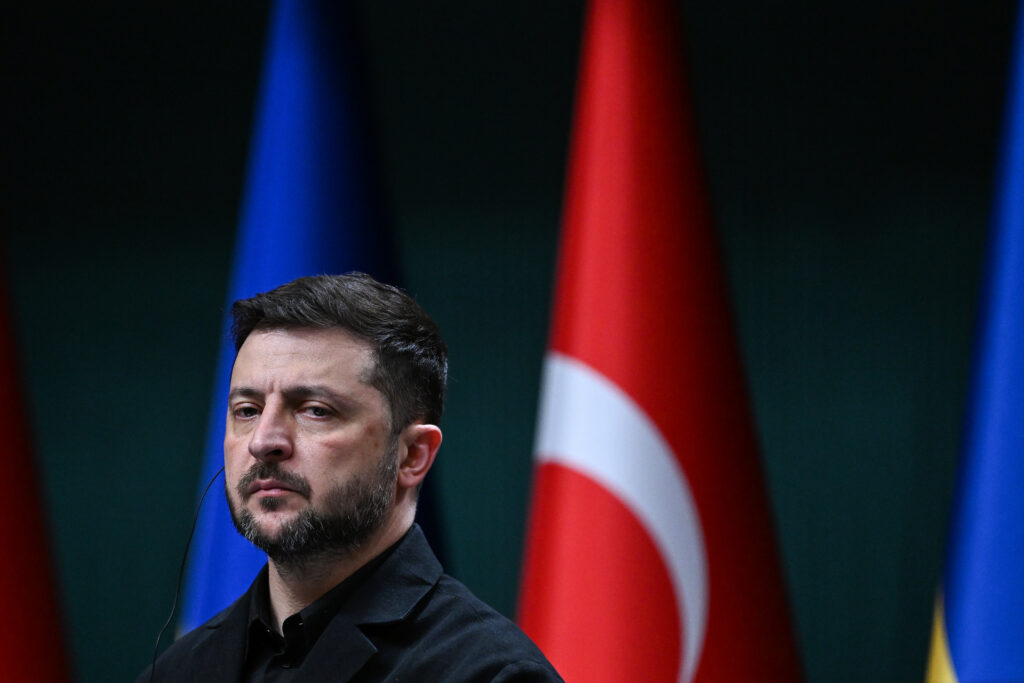
Le président ukrainien Volodymyr Zelensky a plaidé jeudi en faveur d’une “paix digne” alors que les Etats-Unis ont présenté un plan, vu par l’AFP, qui prévoit en particulier que Kiev cède à la Russie les régions de Donetsk et Lougansk dans l’est.Ces deux régions que Moscou réclame, et la Crimée annexée par la Russie en …

Le plan américain pour l’Ukraine prévoit de fortes concessions à la Russie Read More »