La brigade fluviale cartographie les épaves de voitures pour élucider des cold cases

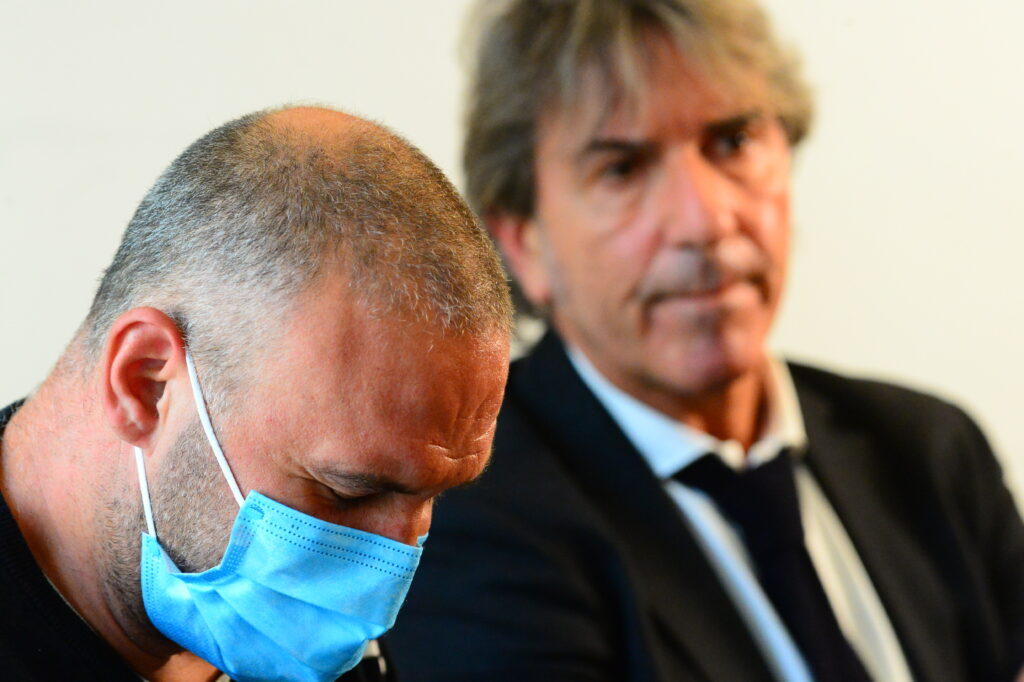
Trois plongeurs de la brigade fluviale s’immergent dans la Seine, munis d’un drone sous-marin qui retransmet leur progression sur un écran à la surface. Leur objectif: procéder à la reconnaissance de trois épaves de voitures détectées plusieurs mois auparavant.Lancé il y a six mois, le projet de Localisation des épaves, traitement hydrographique et enquête (LETHE) de la gendarmerie vise à cartographier l’ensemble des cours et plans d’eau de l’Hexagone pour y déceler des carcasses de véhicules et d’éventuels cadavres restés coincés dans l’habitacle.Le but de cette modélisation à grande échelle est de retrouver des personnes disparues et d’aider à la résolution de crimes non élucidés (cold cases).”L’élément déclencheur a été la découverte (en octobre 2023, NDLR) d’ossements dans la Seille, une petite rivière en Bourgogne, lors de la fouille d’une voiture immergée”, explique l’adjudant-chef Yohan Gérard, commandant de la brigade fluviale de Conflans-Saint-Honorine (Yvelines) et coordinateur du projet. Après analyse, les gendarmes ont réalisé qu’il s’agissait du corps d’un homme, resté sous l’eau pendant 40 ans.”Un autre constat est le fait qu’on ait connaissance de plusieurs centaines d’épaves de voitures dans le cadre d’affaires dites courantes sans qu’elles soient recensées”, ajoute Yohan Gérard.Réparties sur l’ensemble du territoire national, les unités fluviales comptent au total une centaine de plongeurs, qui interviennent dans leur zone de compétence.”Seuls les plongeurs sont capables d’aller sur la scène, d’où le besoin de la numériser pour en rendre compte” aux autorités judiciaires, explique Yohan Gérard.- “Aspirateurs subaquatiques” – Pour constituer cette mémoire cartographique, les techniciens de l’investigation sous-marine suivent un parcours bien jalonné.Première étape: la prospection grâce aux échos d’un sonar qui permet de localiser les véhicules immergés.Vient ensuite la phase de reconnaissance et de constatations durant laquelle les plongeurs cherchent à identifier la marque, le modèle ou encore l’état de la voiture.La fouille de l’habitacle est la partie la plus chronophage car elle “implique de retirer les tonnes de vase qui se sont accumulées au fil des années à l’intérieur de la voiture”, explique Yohan Gérard.”On utilise des techniques archéologiques avec des aspirateurs subaquatiques et différents outils pour essayer, de la façon la plus minutieuse possible, de retirer la vase et s’assurer qu’il n’y ait pas de restes humains”, détaille l’adjudant-chef.Le repêchage est quant à lui optionnel car très coûteux. Dans la plupart des cas, la voiture reste sous l’eau.En plus du drone et d’un lourd équipement pouvant peser jusqu’à 30 kg, les plongeurs disposent d’un appareil photo pour réaliser des clichés du véhicule.Si des ossements sont découverts, les gendarmes ont alors recours à la photogrammétrie, une technique de prises de vue multiples sous différents angles qui permet de réaliser des reconstitutions en 3D.Le projet LETHE est mené en partenariat avec le Pôle des crimes sériels et non élucidés du tribunal de Nanterre et avec l’appui de la division des affaires non élucidées (DIANE) de l’Unité nationale de police judiciaire de la gendarmerie.Depuis le début de cette initiative, trois corps ont déjà été découverts, a indiqué Yohan Gérard, qui n’a pas souhaité communiquer davantage de détails, s’agissant d’enquêtes en cours.

Crypto firm accidentally sends $40 bn in bitcoin to users

A South Korean cryptocurrency exchange apologised on Saturday after mistakenly transferring more than $40 billion worth of bitcoin to users, which briefly prompted a selloff on the platform.Bithumb said it accidentally sent 620,000 bitcoins, currently worth more than $40 billion, and blocked trading and withdrawals for the 695 affected users within 35 minutes after the error occurred on Friday.According to local reports, Bithumb was meant to send about 2,000 won ($1.37) to each customer as part of a promotion, but mistakenly transferred roughly 2,000 bitcoins per user.”We sincerely apologise for the inconvenience caused to our customers due to the confusion that occurred during the distribution process of this (promotional) event,” Bithumb said in a statement.The platform said it had recovered 99.7 percent of the mistakenly sent bitcoins, and that it would use its own assets to fully cover the amount that was lost in the incident.It admitted the error briefly caused “sharp volatility” in bitcoin prices on the platform as some recipients sold the tokens, adding that it brought the situation under control within five minutes.Its charts showed the token’s prices briefly went down 17 percent to 81.1 million won on the platform late Friday.In a separate statement released later on Saturday, Bithumb said some trades were executed at unfavourable prices for users due to a price drop during the incident Friday, including “panic selling”.The platform said it would compensate affected customers, covering the full price difference as well as a 10-percent bonus.It estimated losses at about 1 billion won.The platform earlier stressed that the incident was “unrelated to external hacking or security breaches”.Bitcoin, the world’s biggest cryptocurrency, sank this week, wiping out gains sparked by US President Donald Trump’s presidential election victory in November 2024.

After boos for Vance, IOC says it hopes for ‘fair play’

The International Olympic Committee said on Saturday it hoped for “fair play” after US Vice President JD Vance was booed at the opening ceremony of the Milan-Cortina Winter Olympics.There were audible boos at the San Siro stadium in Milan when Vance, who was attending Friday’s ceremony with his wife Usha, appeared on a big screen.The US team itself was loudly applauded.”With the vice president, what I would say is that with the next Games coming up in Los Angeles we are super happy that the US administration is so engaged with the Games here and obviously going forward that’s a great thing for the Olympic movement,” IOC communications director Mark Adams told a news conference.”I was in the stadium last night and we’re largely a sports organisation and seeing the US team cheered as they were by the audience, fair play, that was fantastic,” he added.”In general, I would say at sporting events, we like to see fair play but in terms of having a good relationship with the administration, that is only good news for us.”IOC chief Kirsty Coventry, the former Zimbabwean swimmer and sports minister, met Vance for the first time before the ceremony to discuss preparations for the 2028 Summer Games in Los Angeles.Adams said the meeting “went incredibly well” and that they had “very good chemistry” but said he could give no further details of the content of their discussions.Hundreds protested in Milan on Friday against Vance’s visit and the presence of some agents from the US immigration enforcement agency ICE who are in Italy to help protect the American delegation.The Israeli team also received a smattering of boos when it entered the stadium for the athletes’ parade.Adams said: “Whatever background they’re from, I don’t think you want to see any booing there.”If you want to get philosophical about it, one of the ideas is that the athletes shouldn’t be punished for whatever their country has done.”

Thousands gather as Pakistan buries victims of mosque suicide attack

Thousands gathered on Saturday for the funerals of victims of a suicide bombing at a Shiite mosque that killed 31 people and wounded 169 others in Pakistan’s capital. Friday’s attack, which was claimed by the Islamic State group, was the deadliest in Islamabad since the 2008 Marriott hotel bombing.City officials said 31 people were killed and another 169 were wounded in the explosion at the Imam Bargah Qasr-e-Khadijatul Kubra mosque on the city’s outskirts. The death toll was expected to rise.Tearful mourners gathered at locations across Islamabad to bury the dead.”What happened yesterday has left us extremely angry and deeply hurt,” Bushra Rahmani, whose brother was among the wounded, said at one funeral.Syed Jamil Hussain Shah, a 45-year-old resident of the capital, said: “Whatever happened was completely wrong and against humanity.”Officials including a senior police officer in Pakistan’s northwest said on Saturday that some of the bomber’s relatives had been arrested.The officer, who did not give his name, said the attacker was from Peshawar, the capital of the violence-racked western province of Khyber Pakhtunkhwa, and that some of his relatives had been living in Nowshera on the road to the capital for several years.A security official told AFP on the condition of anonymity that the attacker’s mother was taken into custody in an upmarket neighbourhood of Islamabad, and that his brother and others were also arrested in different parts of the country.Officials did not specify on what charges they had been arrested or how many people had been taken into custody.- Bodies, bloodied clothing -The blast occurred during Friday prayers, when mosques are packed with worshippers. A security source told AFP that the attacker blew himself up after he was stopped at the mosque’s gate.A worshipper, Imran Mahmood, told AFP that there was a gunfight between the bomber and volunteer security personnel.”He then detonated the explosives”, Mahmood said.Prime Minister Shehbaz Sharif condemned the blast and vowed that those responsible would be found and brought to justice.Deputy Prime Minister Ishaq Dar branded it “a heinous crime against humanity and a blatant violation of Islamic principles”.AFP journalists at a major hospital on Friday afternoon saw several people, including children, being carried in on stretchers or by their arms and legs.Medics and bystanders helped unload victims with blood-soaked clothes from the back of ambulances and vehicles as friends and relatives of the wounded wept and screamed.Heavily armed security forces guarded the mosque, where pools of blood were visible on the ground.Videos shared on social media, which AFP was not able to verify immediately, showed several bodies lying near the mosque’s front gate, with people and debris also strewn across the red-carpeted prayer hall.- Growing insurgencies -The attack comes as Pakistan’s security forces battle intensifying insurgencies in southern and northern provinces that border Afghanistan.Pakistan is a Sunni-majority nation, but Shiites make up between 10 and 15 percent of the population and have been targeted in attacks throughout the region in the past.The last major attack in Islamabad was in November, when a suicide blast outside a court killed 12 people and wounded dozens, the first such incident to hit the capital in nearly three years.In Balochistan in the southwest, attacks claimed by separatist insurgents last week killed 36 civilians and 22 security personnel, prompting a wave of counter-operations in which authorities said almost 200 militants were killed.Friday’s attack was the deadliest in Islamabad since September 2008, when 60 people were killed in a suicide truck bomb blast that destroyed part of the five-star Marriott hotel.

A close-up of a stack of newspapers resting on a desk, symbolizing information and media.

Le Pakistan enterre les victimes de l’attentat meurtrier contre une mosquée

Beaucoup pleurent, d’autres se serrent dans les bras: près de la mosquée chiite d’Islamabad frappée par un attentat-suicide revendiqué par le groupe jihadiste Etat islamique, des milliers de personnes se sont rassemblées samedi pour dire adieu à une partie des 31 morts.Sur les toits, des tireurs d’élite des forces pakistanaises assurent la sécurité, en plus de l’important dispositif policier au sol, ont constaté des journalistes de l’AFP.Des arrestations ont eu lieu dans l’entourage proche de l’homme suspecté d’être l’auteur de cette attaque, a par ailleurs indiqué à l’AFP une source sécuritaire s’exprimant sous couvert d’anonymat. L’auteur présumé était originaire de Peshawar, selon un haut responsable policier dans cette région du nord-ouest.L’EI, groupe jihadiste sunnite, a revendiqué l’attentat contre la mosquée chiite Imam Bargah Qasr-e-Khadijatul Kubra, en périphérie d’Islamabad. Au moins 31 personnes ont été tuées et 169 blessées, selon la municipalité. La capitale pakistanaise n’avait pas connu pareil carnage depuis 2008, lorsque 60 personnes avaient été tuées dans un attentat-suicide au camion piégé contre le luxueux hôtel Marriott.”L’assaillant a été bloqué à l’entrée (de la mosquée) et s’est fait exploser”, avait indiqué vendredi à l’AFP une source sécuritaire ayant requis l’anonymat.Un fidèle, Imran Mahmood, a déclaré à l’AFP qu’un “volontaire assurant la sécurité de la mosquée avait tiré sur l’assaillant quand ce dernier tentait d’avancer vers l’intérieur”. Mais le kamikaze a malgré tout réussi à faire détoner ses explosifs près du portail de la mosquée, tandis qu’un homme qui l’accompagnait tirait sur les volontaires assurant la sécurité du lieu de culte, a-t-il ajouté.- Arrestations -Le frère du suspect a été arrêté à Peshawar (nord-ouest) et sa mère à Islamabad, a indiqué une source sécuritaire. Un complice de l’attaque a lui été tué à Nowshera (nord-ouest), a-t-elle ajouté.”Ceux qui ont commis cela doivent être jugés et recevoir la punition la plus sévère possible”, a estimé Bushra Rahmani, le frère d’une des personnes blessées, présente à l’une des cérémonies de funérailles.”Ce qui s’est passé est inhumain. Quelle que soit la confession des personnes, attaquer des gens en train de prier est absolument inacceptable”, déplore de son côté Syed Jamil Hussain Shah, un habitant d’Islamabad venu témoigner de sa solidarité avec la communauté chiite.Le Pakistan est un pays à majorité sunnite, mais les chiites représentent de 10 à 15% de la population et ont été attaqués dans le passé par des groupes jihadistes.Comme certains des fidèles de la mosquée, il critique “un échec du gouvernement”.”Quand un pays a des autorités, des institutions, les gens devraient se sentir en scéurité”, ajoute-t-il.Muhammad Kazim, 52 ans, qui se trouvait dans la mosquée visée par l’attentat, s’en est sorti indemne mais un de ses amis a été blessé. “L’explosion a été extrêmement puissante”, a-t-il dit à l’AFP vendredi. “Des débris sont tombés du toit, les fenêtres ont volé en éclats (…). Quand je suis sorti, il y avait de nombreux corps partout”.- Insurrections -Le secrétaire général de l’ONU, Antonio Guterres, a déclaré, selon son porte-parole, que “les attaques contre les civils et les lieux de culte (étaient) inacceptables”. Le Premier ministre pakistanais, Shehbaz Sharif, a affirmait que les auteurs seraient retrouvés et jugés.Le Pakistan lutte actuellement contre l’intensification des insurrections dans les provinces du sud et du nord du pays, à la frontière avec l’Afghanistan.La dernière attaque majeure en date à Islamabad avait eu lieu en novembre, lorsqu’un attentat-suicide devant un tribunal avait coûté la vie à 12 personnes et fait des dizaines de blessés. C’était le premier événement de ce type à frapper la capitale depuis près de trois ans.Les forces pakistanaises sont également sous pression dans le Baloutchistan, province frontalière de l’Iran et de l’Afghanistan, riche en minerai mais où une grande partie de la population vit dans la pauvreté. Des attaques revendiquées par des séparatistes y ont tué 36 civils et 22 membres des forces de sécurité la semaine dernière. A la suite de ces attaques, les forces de sécurité ont tué près de 200 insurgés, selon les autorités.

Faheem blitz sees Pakistan avoid Netherlands shock at T20 World Cup

Faheem Ashraf smashed an unbeaten 29 off 11 balls as Pakistan scrambled past the Netherlands by three wickets to avoid a massive shock in the curtain-raiser of the T20 World Cup in Colombo on Saturday.Pakistan were made to sweat as the Netherlands took a flurry of late wickets to leave them needing 29 off the last two overs with only three wickets in hand at the Sinhalese Sports Club ground.Faheem then hit 24, including three sixes, off a 19th over that also saw him dropped in the deep by Max O’Dowd and then completed the chase with three balls to spare.”We had to do it the hard way,” admitted Pakistan captain Salman Agha.”We did well with the bat. We batted well earlier on but then in T20 cricket a few bad overs can change the complexion. All credit to Faheem,” he added.”Happy with our bowling. We did a good job. A target of 148 we would take that any day on this kind of surface. It was a good bowling performance.”Pakistan had begun well, racing to 61 for two after the six-over power play.Sahibzada Farhan looked in prime touch, cracking 47 off 31, but his exit swung the pendulum the Dutch way.Right-arm quick Paul van Meekeren produced a double-wicket maiden to turn the screws.When the unconvincing Babar Azam perished in the next over for a scratchy 15, Pakistan were in trouble having lost three wickets for two runs in the space of 10 deliveries.- Wobbling chase -With the chase wobbling, Faheem stitched a priceless unbroken 34-run stand for the eighth wicket with Shaheen Shah Afridi to see Pakistan home.a”We have been playing this brand of cricket for this past year,” said Faheem, who was awarded player of the match.”Heart rates go up and down, it’s happened so many times before, we’re used to it.”Earlier, the Netherlands showed plenty of flair after being put in. Roared on by around 200 travelling fans, they were in a good position at 127-4 with four overs to go, but Pakistan applied the brakes with the slow men sharing six wickets between them.”We weren’t at our best in all three departments today,” said Netherlands captain Scott Edwards. “Credit to the boys to give us a chance at the back end. Obviously small moments can be crucial,” he added.Edwards anchored the innings with a polished 37 off 29 balls, but perished when he tried to take the aerial route against leg-spinner Abrar Ahmed.Part-time spinner Saim Ayub then struck twice in the 17th over before left-arm quick Salman Mirza’s three-wicket burst dismissed the Dutch with one ball to spare.Pakistan conceded just 20 runs in the final four overs backed up by a razor-sharp performance in the field with several outstanding catches in the deep.”We just kept losing wickets at important times rather than building partnerships. We were thinking 160 would be a good total,” said Edwards.Pakistan can ill-afford any slip-ups in the group stage after saying they will not play against India on February 15 on government instructions and forfeiting the points in Group A.Pakistan will play all their matches in Sri Lanka in the 20-team tournament co-hosted by Sri Lanka and defending champions India.

Au Muséum d’Histoire naturelle, fossiles et squelettes déménagent

Des invertébrés, des rongeurs ou encore des papillons: au sein de la Galerie de Paléontologie et d’Anatomie comparée du Muséum national d’Histoire naturelle, les équipes s’affairent pour déménager des centaines de spécimens en prévisions de travaux.Dans quelques jours, la GPAC, joyau de l’Art nouveau inaugurée en 1898 à Paris et déjà fermée au public depuis la mi-janvier, sera totalement inaccessible pendant 18 mois.A l’été 2027, la mise aux normes de cette emblématique galerie du Muséum sera terminée. La nouvelle GPAC sera rigoureusement identique à l’ancienne – notamment avec ces fameuses allées serrées – hormis un nouvel accès pour les personnes à mobilité réduite.En attendant, c’est une ruche studieuse à l’oeuvre sur les différents niveaux du site au milieu des vitrines, des fossiles, des squelettes et des bocaux de formol, afin de préparer le terrain aux échafaudages. – Restauration -En bas, c’est un squelette de cochon d’Inde mal en point pour qui la fermeture tombe à pic: le fait de le déplacer a révélé la fragilité de sa structure. Penchés sur le petit squelette, le préparateur ostéologique Guillaume Gérard et la régisseuse des collections Cécile Colin-Fromont établissent le diagnostic: sa tête s’est décrochée, une patte également, et plusieurs côtes manquent à l’appel. Il va devoir bénéficier d’une restauration.”C’est un spécimen qui vient du Pérou, il date de la moitié du 19e siècle”, confie la chercheuse. “En route !”, lance son collègue Alexander Nasole, chargé des projets muséographiques, en emmenant sur un chariot la fragile petite structure vers les coulisses.En plus des restaurations opérées en interne, “12 spécimens seront envoyés en restauration à l’extérieur du Muséum, auprès de restaurateurs spécialistes de +naturalia+, les objets d’histoire naturelle”, explique à l’AFP Christine Lefèvre, directrice des collections naturalistes du MNHN.Comme ce petit cochon d’Inde, peu des 5.600 spécimens de la galerie ont été déplacés depuis l’inauguration de ce lieu emblématique.Dans la galerie d’anatomie comparée, au rez-de-chaussée, “la plupart des spécimens étaient déjà là soit à l’époque des galeries Cuvier (ouvertes en 1806), soit préparés pour cette galerie (1898)”, explique Christine Lefèvre.Au 1er niveau, en paléontologie, “il y a eu davantage de mouvements car l’arrivée de nouveaux spécimens de grande taille a nécessité de réaménager l’espace”, poursuit-elle en regardant les fossiles de dinosaures.Au niveau des invertébrés, Marie-Béatrice Forel, responsable scientifique de la paléontologie, et deux agentes techniques des collections s’attellent à une tâche bien spécifique: elles regardent “la liste des spécimens que les scientifiques du Muséum veulent sortir pour les étudier”. Il y en a 80 à mettre à leur disposition, listés “pour des projets scientifiques, ou pour des projets d’ouvrages qui sont déjà lancés et qui doivent continuer”.Ceux qui auront oublié de faire leur demande à temps auront “éventuellement la possibilité d’être redirigés vers des spécimens dans les réserves de collection”, disent-elles.Ainsi donc, pendant les travaux, les recherches continuent.- Vibrations -En tout, 622 spécimens seront déplacés au centre des salles, près des grandes structures – dont le fameux rorqual – indémontables et indéplaçables. Les travaux porteront principalement sur le pourtour (fenêtres, portes…).L’équipe s’attelle à minimiser les “risques de vibrations qui vont intervenir”, explique Christine Lefèvre.”On fait très attention aussi aux spécimens accrochés sur les grands panneaux en bois, tels les crânes d’éléphants. Certains sont fragiles et il faut les descendre”. Ce sera chose faite après plusieurs heures d’effort.Non loin, des techniciens procèdent au calage du squelette d’un éléphanteau, afin de minimiser les vibrations.Délicatement, ils lui soulèvent les pattes, pour glisser dessous une plaque rigide plutôt qu’une mousse, afin d’éviter que les os ne s’enfoncent et que la structure d’ensemble ne se déforme.Après les travaux, les salles seront mieux isolées des variations de températures extérieures.En hiver, il y fait trop froid, et en été, trop chaud. Or “les squelettes de mammifères marins par exemple sont très gras. Quand il fait très chaud, ils continuent à suinter des extrémités articulaires”, rappelle Christine Lefèvre.C’est la magie de ce lieu plus de 100 ans après son ouverture: ses spécimens “bougent” encore.

A close-up of a stack of newspapers resting on a desk, symbolizing information and media.

Trump refuses to apologize for racist clip of Obamas as monkeys

President Donald Trump refused to apologize Friday for a video posted on his social media account depicting Barack and Michelle Obama as monkeys, though he said he condemned the post as the White House shifted the blame to staff.The video shared on Trump’s Truth Social account late Thursday night sparked censure across the US political spectrum, with the White House initially rejecting “fake outrage” only to then blame the post on an error by a staff member.”I didn’t make a mistake,” Trump said on Air Force One late Friday when asked if he would apologize for the post.Asked if he condemns the racist imagery in the video, Trump replied: “Of course I do.”Democrats slammed Trump as “vile” over the clip of the Obamas — the first Black president and first lady in US history — while a senior Republican senator said the video was blatantly racist.Near the end of the one-minute-long video promoting conspiracies about Republican Trump’s 2020 election loss to Joe Biden, the Obamas were shown with their faces on the bodies of monkeys for about one second.The video, uploaded late Thursday amid a flurry of other posts, repeated false allegations that ballot-counting company Dominion Voting Systems helped steal the election from Trump.White House Press Secretary Karoline Leavitt initially played down the row, saying the images were “from an internet meme video depicting President Trump as the King of the Jungle and Democrats as characters from The Lion King.””Please stop the fake outrage and report on something today that actually matters to the American public,” Leavitt said in a statement to AFP.- About-face -But almost exactly 12 hours after the post appeared on Trump’s account there was an unusual concession from an administration that normally refuses to admit the slightest mistake.”A White House staffer erroneously made the post. It has been taken down,” a White House official told AFP.Speaking to reporters on board Air Force One on Friday, Trump stood by the thrust of the video’s claims about election fraud, but said he had not seen the offensive clip.”I just looked at the first part… and I didn’t see the whole thing,” Trump said, adding that he “gave it” to staffers to post and they also didn’t watch the full video. There was no immediate comment from the Obamas.Former vice president Kamala Harris, who has long condemned Trump’s divisive racial rhetoric, called out the White House’s backpedaling in a post on X on Friday.”No one believes this cover up from the White House, especially since they originally defended this post,” she wrote. “We are all clear-eyed about who Donald Trump is and what he believes.” – ‘Disgusting bigotry’ -While Democrats pounced on the post, it was the outrage from some members of Trump’s own Republican Party that appeared to trigger the about-face.Tim Scott, the only Black Republican senator and once a contender for the 2024 presidential nomination, called the video “the most racist thing I’ve seen out of this White House.”Scott said he was “praying it was fake” and called for Trump to remove it.Roger Wicker, another Republican senator, said the post was “totally unacceptable. The president should take it down and apologize.”The top Democrat in the House of Representatives, Hakeem Jeffries, called Trump “vile, unhinged and malignant” and urged Republicans on X to “immediately denounce Donald Trump’s disgusting bigotry.”Trump launched his own political career by pushing the racist and false “birther” conspiracy theory that Barack Obama was lying about being born in the United States.Trump has long had a bitter rivalry with his Democratic predecessor, taking particular umbrage at his popularity and the fact that he won the Nobel Peace Prize.In his second term in the White House, Trump has used hyper-realistic but fabricated AI visuals on Truth Social and other platforms, often glorifying himself and rallying his conservative base around social issues.During negotiations to avoid a US government shutdown Trump posted a video of Jeffries, who is Black, wearing a fake mustache and a sombrero. Jeffries called the image racist.One AI-generated video showed fighter jets dumping human waste on protesters — which was created by the same X user who made the video showing the Obamas as monkeys.Since returning to the White House, Trump has led a crusade against diversity, equity and inclusion (DEI) programs.US federal anti-discrimination programs were born of the 1960s civil rights movement, mainly led by Black Americans, for equality and justice after hundreds of years of slavery. Slavery was abolished in the United States in 1865, but other forms of institutional racism continued for decades.burs-dk/aha/ksb/lga/jfx