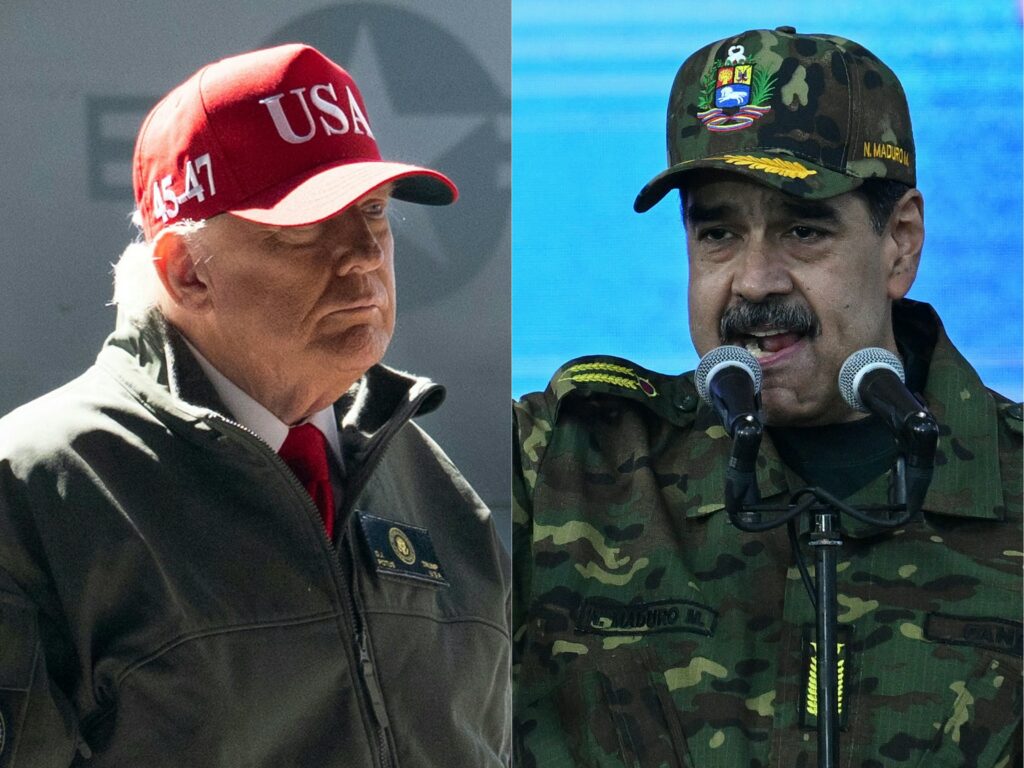
The US Senate took a major step Thursday toward passing a resolution to rein in President Donald Trump’s military actions in Venezuela — a rare bipartisan rebuke following alarm over the secretive capture of leader Nicolas Maduro.The Democratic-led legislation, which bars further US hostilities against Venezuela without explicit congressional authorization, got through a key procedural vote with support from five Republicans.The vote on final passage, expected next week, is now seen as little more than a formality, and would mark one of Congress’s most forceful assertions of its war-making authority in decades.The effort is seen as largely symbolic however, as the resolution faces a steep climb in the US House and almost no prospect of surviving a likely veto by Trump.The president lashed out at the five Republican rebels for their “stupidity” on his Truth Social platform and said they “should never be elected to office again.””Republicans should be ashamed of the Senators that just voted with Democrats in attempting to take away our Powers to fight and defend the United States of America,” he added.The vote followed a dramatic escalation in US action — including air and naval strikes and the nighttime seizure of Maduro in Caracas — that lawmakers from both parties said went beyond a limited law-enforcement operation and crossed unmistakably into war.”Less than courageous members of Congress fall all over themselves to avoid taking responsibility, to avoid the momentous vote of declaring war,” said Senator Rand Paul, the Kentucky Republican who broke with much of his party to co-sponsored the measure. “But make no mistake, bombing another nation’s capital and removing their leader is an act of war, plain and simple. No provision in the Constitution provides such power to the presidency.”- ‘Time will tell’ -Trump said in an interview published Thursday the United States could run Venezuela and tap into its oil reserves for years, telling The New York Times “only time will tell” how long Washington would demand direct oversight of the South American nation.Democrats are framing the resolution as a constitutional line in the sand after what they described as months of misleading briefings, including assurances from the administration as recently as November that it had no plans for strikes on Venezuelan soil.The administration has argued the Maduro operation was legally justified as part of a broader campaign against transnational drug trafficking, characterizing it as a battle with cartels designated as terrorist organizations. Republican leaders largely defended the president, touting his authority to conduct limited military actions in defense of US national security.”This is something that should have taken place, probably in a previous administration,” Senator Markwayne Mullin of Oklahoma told reporters Wednesday.”Only President Trump had the backbone to pull it off, to pull out an indicted, illegitimate president that was holding Venezuela hostage.”Since Trump returned to office, war powers resolutions on Venezuela have been rejected twice in the Senate and twice in the House.Over the last century, only one congressional resolution has successfully imposed a broad, lasting limit on unilateral presidential military action abroad: the War Powers Resolution of 1973, passed over then-president Richard Nixon’s veto.
The US Senate took a major step Thursday toward passing a resolution to rein in President Donald Trump’s military actions in Venezuela — a rare bipartisan rebuke following alarm over the secretive capture of leader Nicolas Maduro.The Democratic-led legislation, which bars further US hostilities against Venezuela without explicit congressional authorization, got through a key procedural vote with support from five Republicans.The vote on final passage, expected next week, is now seen as little more than a formality, and would mark one of Congress’s most forceful assertions of its war-making authority in decades.The effort is seen as largely symbolic however, as the resolution faces a steep climb in the US House and almost no prospect of surviving a likely veto by Trump.The president lashed out at the five Republican rebels for their “stupidity” on his Truth Social platform and said they “should never be elected to office again.””Republicans should be ashamed of the Senators that just voted with Democrats in attempting to take away our Powers to fight and defend the United States of America,” he added.The vote followed a dramatic escalation in US action — including air and naval strikes and the nighttime seizure of Maduro in Caracas — that lawmakers from both parties said went beyond a limited law-enforcement operation and crossed unmistakably into war.”Less than courageous members of Congress fall all over themselves to avoid taking responsibility, to avoid the momentous vote of declaring war,” said Senator Rand Paul, the Kentucky Republican who broke with much of his party to co-sponsored the measure. “But make no mistake, bombing another nation’s capital and removing their leader is an act of war, plain and simple. No provision in the Constitution provides such power to the presidency.”- ‘Time will tell’ -Trump said in an interview published Thursday the United States could run Venezuela and tap into its oil reserves for years, telling The New York Times “only time will tell” how long Washington would demand direct oversight of the South American nation.Democrats are framing the resolution as a constitutional line in the sand after what they described as months of misleading briefings, including assurances from the administration as recently as November that it had no plans for strikes on Venezuelan soil.The administration has argued the Maduro operation was legally justified as part of a broader campaign against transnational drug trafficking, characterizing it as a battle with cartels designated as terrorist organizations. Republican leaders largely defended the president, touting his authority to conduct limited military actions in defense of US national security.”This is something that should have taken place, probably in a previous administration,” Senator Markwayne Mullin of Oklahoma told reporters Wednesday.”Only President Trump had the backbone to pull it off, to pull out an indicted, illegitimate president that was holding Venezuela hostage.”Since Trump returned to office, war powers resolutions on Venezuela have been rejected twice in the Senate and twice in the House.Over the last century, only one congressional resolution has successfully imposed a broad, lasting limit on unilateral presidential military action abroad: the War Powers Resolution of 1973, passed over then-president Richard Nixon’s veto.