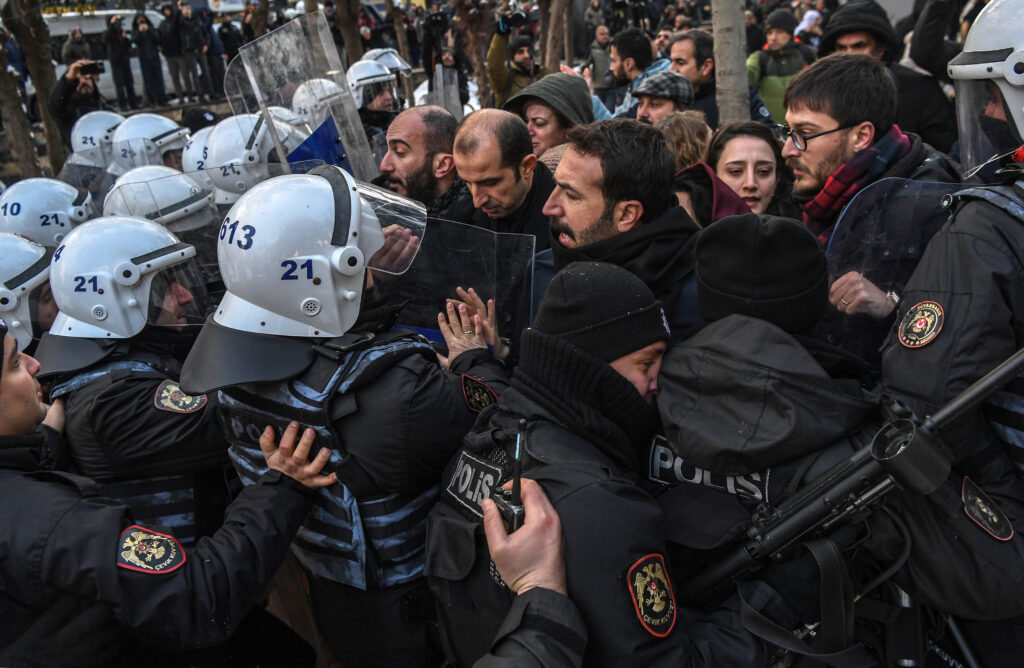
Turkey warned Tuesday it would not tolerate “provocations” as Kurds in the country prepared to protest over a military offensive targeting Kurds in Syria that has also angered the militant PKK. Syrian forces began an offensive nearly two weeks ago, pushing the Kurdish-led SDF forces out of Aleppo. Over the weekend,they advanced deep into the northeastern area held by Kurdish forces for over a decade.Ankara hailed it as a legitimate “fight against terror” but Damascus’s campaign triggered furious protests among Turkey’s Kurds, who make up a fifth of the country’s 86 million residents. The violence has raised serious doubts about the fate of Turkey’s peace process with the Kurdistan Workers’ Party (PKK), whose militants last year said they were ending their four-decade insurgency to embrace democratic means to advance the Kurdish struggle. That process has largely stalled amid a stand-off in Syria between the Kurdish-led Syrian Democratic Forces (SDF) and Damascus over plans to integrate the force into the central state, triggering the current round of violence. That in turn has set off angry protests by Turkey’s Kurds.Early on Tuesday, the PKK’s leadership vowed it would “never abandon” the Kurds of Syria and urged all of its people to stand by Rojava — the name Syrian Kurds use for the autonomous area they administer. “Whatever the cost, we will never leave you alone.. we as the entire Kurdish people and as the movement, will do whatever is necessary,” Murat Karayilan of the Kurdistan Workers’ Party (PKK) was quoted as saying by the pro-Kurdish Firat news agency, accusing Turkey and Islamic State militants of involvement in the violence in Syria. Inside Turkey, the pro-Kurdish DEM party, the third largest in parliament, has called a protest at 1000 GMT in the southeastern town of Nusaybin, which lies just across the frontier from the Kurdish-majority Syrian town of Qamishli. – ‘Meticulously monitoring events’ -The party, which has been mediating between Ankara and the jailed PKK leader Abdullah Ocalan, has been enraged over Turkey’s support for the Syrian offensive. “You cannot treat those you call ‘citizens’ on this side of the border as ‘enemies’ on the other,” it said on Sunday, accusing Ankara of “pure hypocrisy”. Police broke up two pro-Kurdish protests on Monday — one in the southeastern city of Diyarbakir and another outside a DEM office in Istanbul at which 10 people were arrested, including a French journalist. Early on Tuesday, Interior Minister Ali Yerlikaya warned Turkey would not tolerate any “provocations”. “We are meticulously monitoring, moment-by-moment, the recent developments in Syria and all movements along our border,” he wrote on X. “We will not tolerate any initiatives, provocations or any misinformation campaign targeting the peace of our country.” Wladimir van Wilgenburg, an author and journalist and expert on Syrian Kurdish affairs said the unrest risked collapsing Turkey’s efforts to end the PKK conflict. “There’s a risk it could blow up with cross-border protests,” he told AFP. “Kurdish groups in Syria have called on the Kurds, both in Iraqi Kurdistan and in southeastern Turkey, to come and cross the border and join them in solidarity,” he added.
Turkey warned Tuesday it would not tolerate “provocations” as Kurds in the country prepared to protest over a military offensive targeting Kurds in Syria that has also angered the militant PKK. Syrian forces began an offensive nearly two weeks ago, pushing the Kurdish-led SDF forces out of Aleppo. Over the weekend,they advanced deep into the northeastern area held by Kurdish forces for over a decade.Ankara hailed it as a legitimate “fight against terror” but Damascus’s campaign triggered furious protests among Turkey’s Kurds, who make up a fifth of the country’s 86 million residents. The violence has raised serious doubts about the fate of Turkey’s peace process with the Kurdistan Workers’ Party (PKK), whose militants last year said they were ending their four-decade insurgency to embrace democratic means to advance the Kurdish struggle. That process has largely stalled amid a stand-off in Syria between the Kurdish-led Syrian Democratic Forces (SDF) and Damascus over plans to integrate the force into the central state, triggering the current round of violence. That in turn has set off angry protests by Turkey’s Kurds.Early on Tuesday, the PKK’s leadership vowed it would “never abandon” the Kurds of Syria and urged all of its people to stand by Rojava — the name Syrian Kurds use for the autonomous area they administer. “Whatever the cost, we will never leave you alone.. we as the entire Kurdish people and as the movement, will do whatever is necessary,” Murat Karayilan of the Kurdistan Workers’ Party (PKK) was quoted as saying by the pro-Kurdish Firat news agency, accusing Turkey and Islamic State militants of involvement in the violence in Syria. Inside Turkey, the pro-Kurdish DEM party, the third largest in parliament, has called a protest at 1000 GMT in the southeastern town of Nusaybin, which lies just across the frontier from the Kurdish-majority Syrian town of Qamishli. – ‘Meticulously monitoring events’ -The party, which has been mediating between Ankara and the jailed PKK leader Abdullah Ocalan, has been enraged over Turkey’s support for the Syrian offensive. “You cannot treat those you call ‘citizens’ on this side of the border as ‘enemies’ on the other,” it said on Sunday, accusing Ankara of “pure hypocrisy”. Police broke up two pro-Kurdish protests on Monday — one in the southeastern city of Diyarbakir and another outside a DEM office in Istanbul at which 10 people were arrested, including a French journalist. Early on Tuesday, Interior Minister Ali Yerlikaya warned Turkey would not tolerate any “provocations”. “We are meticulously monitoring, moment-by-moment, the recent developments in Syria and all movements along our border,” he wrote on X. “We will not tolerate any initiatives, provocations or any misinformation campaign targeting the peace of our country.” Wladimir van Wilgenburg, an author and journalist and expert on Syrian Kurdish affairs said the unrest risked collapsing Turkey’s efforts to end the PKK conflict. “There’s a risk it could blow up with cross-border protests,” he told AFP. “Kurdish groups in Syria have called on the Kurds, both in Iraqi Kurdistan and in southeastern Turkey, to come and cross the border and join them in solidarity,” he added.