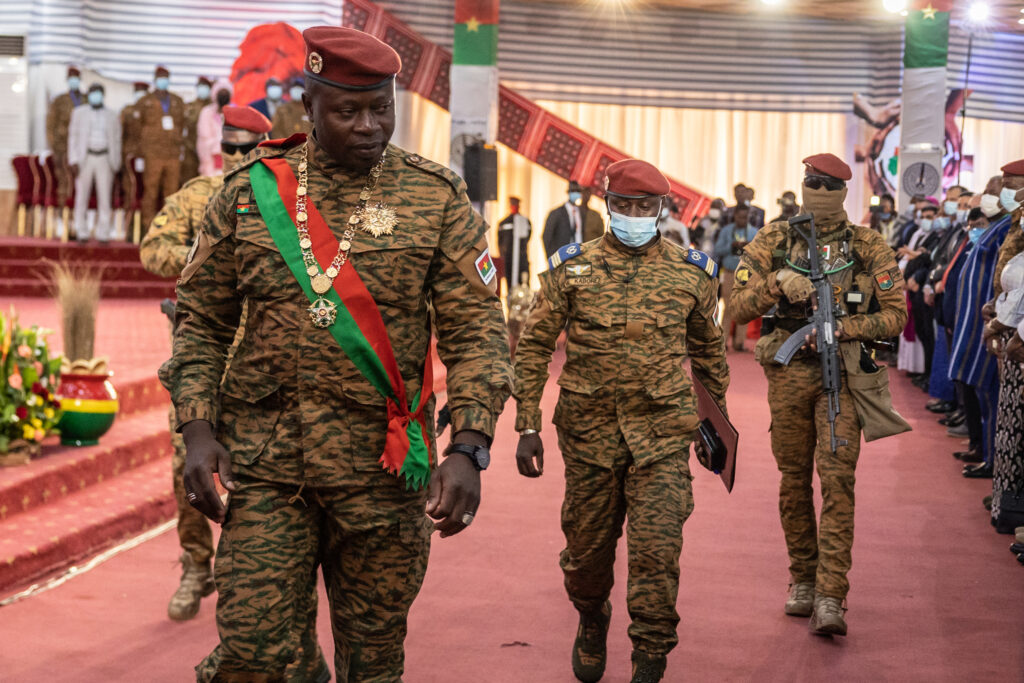
Togo is supporting juntas in the Sahel region by its extradition of Burkina Faso’s former transitional president, as part of its own diplomatic, security and economic ambitions, several experts have told AFP.The government in Lome announced on Tuesday that it had sent back Paul-Henri Sandaogo Damiba, who fled to Togo after a September 2022 coup that brought current junta chief Captain Ibrahim Traore to power.- What is Damiba accused of? -Damiba, a former lieutenant-colonel, ousted the elected president, Roch Kabore, in January 2022 until he was in turn overthrown by Traore.The military in Ouagadougou has since regularly accused him of having masterminded several coup attempts, including one in early January this year.Damiba was arrested in Togo’s capital, Lome, on January 16 and handed over to the authorities in Burkina Faso the next day, following court approval for his extradition.He is accused of “criminal embezzlement of public funds, criminal illicit enrichment, corruption, incitement to commit offences and crimes, aggravated concealment and money laundering”.- Why did Togo hand him over? -Togo has for several months been reaching out to the Alliance of Sahel States (AES), which comprises the military-run trio of Burkina Faso, Mali and Niger.The west African country is capitalising on tensions between the AES and Ivory Coast and Benin, which have been accused of taking an overly pro-Western stance.As a result, the Sahel states have been looking increasingly towards using the ports of Lome, and Tema in neighbouring Ghana.Togo equally wants to take advantage of its proximity to the AES to improve security cooperation, with west Africa hit by jihadist violence, including on its northern border.To curb the violence, Togo is also courting the United States, offering to act as an intermediary to facilitate intelligence sharing between the AES and Washington, whose engagement in the Sahel has been limited since the military coups.For the Sahel countries, the decision to hand over Damiba is aimed at “strengthening ties with the AES’s closest neighbour”, said Togolese political scientist and writer Madi Djabakate.”This choice was guided more towards protecting political and security relations than by any thorough assessment of commitments relating to international law, human rights or refugee status,” he added.- What has been the reaction? -Damiba’s case made front-page headlines on Wednesday in Burkina Faso, which has seen critical voices stifled since Traore came to power.Newspapers praised Togo for the move but in Lome, opponents criticised veteran leader Faure Gnassingbe, who is keen to position himself as a mediator in the region.Nathaniel Olympio, spokesman for the Don’t Touch My Constitution grouping, accused Gnassingbe of “violating the diplomatic tradition in Togo, which has always given refuge to deposed presidents” in the past.- What could happen to Damiba? -Lome said it agreed to extradite Damiba because of “guarantees” given by Burkina Faso in respect of his physical safety and right to a fair trial.”From reading the statement that was published, Togo requested diplomatic assurances concerning the treatment of Damiba and the non-application of the death penalty,” Julien Antouly, a senior lecturer in public law in France, told AFP. “However, it is possible that Burkina will not comply with them and will decide to open new proceedings on new charges that are themselves punishable by death.”Burkina Faso reintroduced the death penalty last year, including for crimes of high treason.Mali’s former justice minister, lawyer Mamadou Ismaila Konate, however, wrote on X that the extradition “directly exposes Paul-Henri Damiba to serious threats against his person”.On social media, supporters of the Sahel juntas are already calling for a crackdown on Damiba.