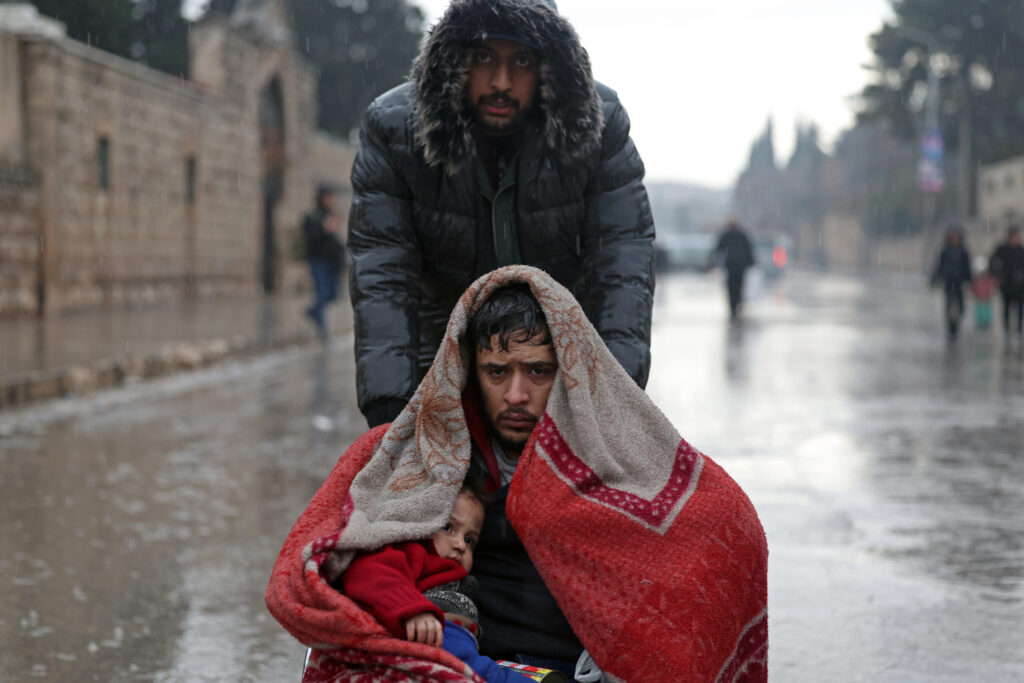
Syria’s army renewed strikes on a Kurdish district of Aleppo on Friday after fighters from the minority refused to leave in defiance of a ceasefire that sought to halt days of fighting.The government and Kurdish forces have traded blame over who started the violence in Syria’s second city on Tuesday as they struggle to implement a deal to merge the Kurds’ de facto autonomous administration and military into the country’s new government.At least 21 civilians have been killed according to figures from both sides and tens of thousands have fled the worst clashes in Aleppo since Syria’s new Islamist authorities took power.The fighting presents yet another challenge for a country struggling to forge a new path since the ousting of longtime ruler Bashar al-Assad a year ago.Early Friday, Syrian authorities announced a truce with Kurdish forces linked to the US-backed, Kurdish-led Syrian Democratic Forces (SDF) and said fighters and their light weapons would be sent to Kurdish areas further east.But Kurdish fighters rejected any “surrender” and said they would stay and defend their districts.Hours later, Syria’s army warned it would renew strikes on what it said were military targets in the Kurdish-majority district of Sheikh Maqsud and urged residents to evacuate.The defence ministry said an ammunition depot at one of the sites had been destroyed.An AFP correspondent had seen residents laden with belongings fleeing before a two-hour humanitarian corridor closed.- Flights still suspended -In the late evening, an AFP correspondent reported the sound of heavy artillery shelling and gunfire.The army said three soldiers had been killed by Kurdish forces’ fire and announced “the start of combing operations” for fighters in Sheikh Maqsud ahead of the district’s handover to security forces.Kurdish forces reported shelling on Sheikh Maqsud, while state television accused the Kurds of launching drones on residential areas of Aleppo.A flight suspension at Aleppo airport was extended until late Saturday.Turkey’s Defence Minister Yasar Guler welcomed the government operation, saying “we view Syria’s security as our own security and that we support Syria’s fight against terrorist organisations”.Sheikh Maqsud and Ashrafiyeh have remained under the control of Kurdish units linked to the SDF, despite Kurdish fighters agreeing to withdraw from the areas in April.The SDF controls swathes of Syria’s oil-rich north and northeast, and was key to the defeat of the Islamic State group in 2019. But Ankara views its main component as an extension of the Kurdistan Workers’ Party (PKK), which earlier this year agreed to end its four-decade armed struggle against Turkey.Elham Ahmad, a senior official in the Kurdish administration in Syria’s northeast, accused Syria’s authorities of “choosing the path of war” by attacking Kurdish districts and of “seeking to put an end to the agreements that have been reached”.”We are committed to them and we are seeking to implement them,” she told AFP.- ‘Apply pressure’ -The March integration agreement was meant to be implemented last year, but differences, including Kurdish demands for decentralised rule, have stymied progress.Ahmad said that “the United States is playing a mediating role… we hope they will apply pressure to reach an agreement”.A diplomatic source told AFP that US envoy Tom Barrack was headed to Damascus.Syrian President Ahmed al-Sharaa discussed the situation in a call with Turkish leader Recep Tayyip Erdogan and said he was determined to “end the illegal armed presence” in the city, a Syrian presidency statement said.Turkey, which shares a 900-kilometre (550-mile) border with Syria, has launched successive offensives to push Kurdish forces from the frontier.Separately, French President Emmanuel Macron told Sharaa of his country’s keenness on a united Syria “where all society’s components are represented and protected”, a French foreign ministry statement said, urging the implementation of the March integration deal.Syria’s authorities have committed to protecting minorities, but sectarian bloodshed rocked the country’s Alawite and Druze communities last year.Nanar Hawach, senior Syria analyst at the International Crisis Group, said the renewed clashes cast further doubt on the March integration deal.”If the fighting escalates, international actors will wonder about Damascus’s capacity to govern Syria’s heterogeneous society,” he added.burs-str-lg/jfx
Syria’s army renewed strikes on a Kurdish district of Aleppo on Friday after fighters from the minority refused to leave in defiance of a ceasefire that sought to halt days of fighting.The government and Kurdish forces have traded blame over who started the violence in Syria’s second city on Tuesday as they struggle to implement a deal to merge the Kurds’ de facto autonomous administration and military into the country’s new government.At least 21 civilians have been killed according to figures from both sides and tens of thousands have fled the worst clashes in Aleppo since Syria’s new Islamist authorities took power.The fighting presents yet another challenge for a country struggling to forge a new path since the ousting of longtime ruler Bashar al-Assad a year ago.Early Friday, Syrian authorities announced a truce with Kurdish forces linked to the US-backed, Kurdish-led Syrian Democratic Forces (SDF) and said fighters and their light weapons would be sent to Kurdish areas further east.But Kurdish fighters rejected any “surrender” and said they would stay and defend their districts.Hours later, Syria’s army warned it would renew strikes on what it said were military targets in the Kurdish-majority district of Sheikh Maqsud and urged residents to evacuate.The defence ministry said an ammunition depot at one of the sites had been destroyed.An AFP correspondent had seen residents laden with belongings fleeing before a two-hour humanitarian corridor closed.- Flights still suspended -In the late evening, an AFP correspondent reported the sound of heavy artillery shelling and gunfire.The army said three soldiers had been killed by Kurdish forces’ fire and announced “the start of combing operations” for fighters in Sheikh Maqsud ahead of the district’s handover to security forces.Kurdish forces reported shelling on Sheikh Maqsud, while state television accused the Kurds of launching drones on residential areas of Aleppo.A flight suspension at Aleppo airport was extended until late Saturday.Turkey’s Defence Minister Yasar Guler welcomed the government operation, saying “we view Syria’s security as our own security and that we support Syria’s fight against terrorist organisations”.Sheikh Maqsud and Ashrafiyeh have remained under the control of Kurdish units linked to the SDF, despite Kurdish fighters agreeing to withdraw from the areas in April.The SDF controls swathes of Syria’s oil-rich north and northeast, and was key to the defeat of the Islamic State group in 2019. But Ankara views its main component as an extension of the Kurdistan Workers’ Party (PKK), which earlier this year agreed to end its four-decade armed struggle against Turkey.Elham Ahmad, a senior official in the Kurdish administration in Syria’s northeast, accused Syria’s authorities of “choosing the path of war” by attacking Kurdish districts and of “seeking to put an end to the agreements that have been reached”.”We are committed to them and we are seeking to implement them,” she told AFP.- ‘Apply pressure’ -The March integration agreement was meant to be implemented last year, but differences, including Kurdish demands for decentralised rule, have stymied progress.Ahmad said that “the United States is playing a mediating role… we hope they will apply pressure to reach an agreement”.A diplomatic source told AFP that US envoy Tom Barrack was headed to Damascus.Syrian President Ahmed al-Sharaa discussed the situation in a call with Turkish leader Recep Tayyip Erdogan and said he was determined to “end the illegal armed presence” in the city, a Syrian presidency statement said.Turkey, which shares a 900-kilometre (550-mile) border with Syria, has launched successive offensives to push Kurdish forces from the frontier.Separately, French President Emmanuel Macron told Sharaa of his country’s keenness on a united Syria “where all society’s components are represented and protected”, a French foreign ministry statement said, urging the implementation of the March integration deal.Syria’s authorities have committed to protecting minorities, but sectarian bloodshed rocked the country’s Alawite and Druze communities last year.Nanar Hawach, senior Syria analyst at the International Crisis Group, said the renewed clashes cast further doubt on the March integration deal.”If the fighting escalates, international actors will wonder about Damascus’s capacity to govern Syria’s heterogeneous society,” he added.burs-str-lg/jfx