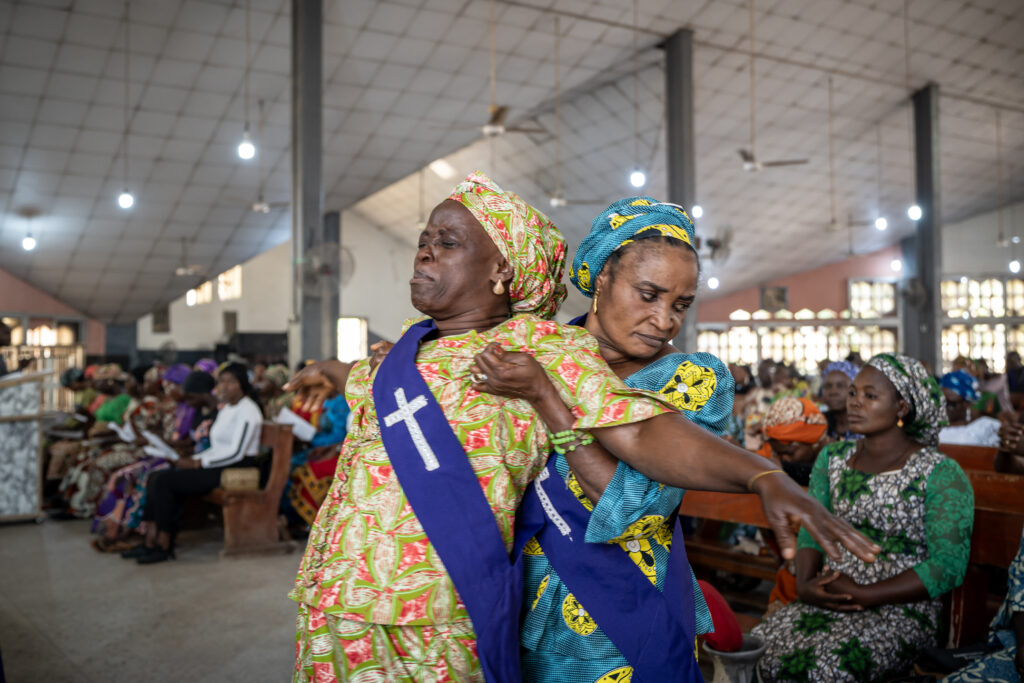
More than a week after the mass kidnapping of hundreds of children from a Catholic school, emotions remain raw in the religiously mixed Niger state in central Nigeria.Predominantly Muslim, Niger state has a significant Christian population and followers of the two faiths live side-by-side in harmony. But the November 21 kidnapping of more than 300 schoolchildren from the remote Papiri village has prompted complaints of Christian persecution — a contested narrative inflamed in recent weeks by US President Donald Trump.Kidnappings are frequent in Nigeria and are mostly carried out by criminal gangs seeking quick ransom payments. Africa’s most populous country is long-conditioned to insecurity but the repeated spate of abductions recently has left it reeling. Churches nationwide have been offering prayers for an end to kidnappings and the safe return of the children, most of whom are still being held despite government pledges to rescue them.In the Niger state capital, Minna, Julius Umaru, the laity president of St Michael’s Catholic Diocese, told AFP after Sunday mass that “Christians have not been having it easy in northern Nigeria”.”The problem has now crept in here. Our people cannot go to the farm. Now they are carrying away our children,” said Umaru, as hymns from the congregation filtered through the church premises, with its well-kept flowers and hedges.- ‘Reckless’ claims -Northern Nigeria, which is mainly Muslim, is beset by insecurity: jihadist violence in the northeast, “banditry” in the northwest and conflict between herders and farmers over scarce land resources in central Nigeria. Heavily armed bandit gangs, motivated by money rather than ideology, conduct mass kidnappings for ransom and loot and raid villages across the rural northwest.But jihadists and bandits have forged closer ties in recent years and created a foothold in central Nigeria, particularly in rural communities in Niger state. Nigeria is almost equally split between the mostly Muslim north and the predominantly Christian south. While sectarian and religious violence does break out, most communities live peacefully side-by-side.Umaru claimed bandit violence was more prevalent in nine districts where the “majority of the populace is Christian”.”Yes, if I want to be fair, even the Muslims are affected… but the most affected people are the Christians,” Umaru said, stroking his salt-and-pepper goatee beard.Trump has named Nigeria a Country of Particular Concern (CPC) — a State Department designation for religious freedom violations — over the killing of Christians by “radical Islamists” and threatened to intervene militarily.The children’s “kidnapping has changed my life to daily bitterness and pain”, said Janet Ifren, a worshipper in her 60s, standing under the shade of a tree in the church grounds.Father James David Gaza, still in his cassock after mass, said “it is a fact we have to face” that Christians were being persecuted, and urged “Islamic clerics to speak up” about killings in their own communities. But Washington’s rhetoric — rejected by the Nigerian government and independent security analysts — has inflamed tensions, with some accusations the Trump administration is favouring Christians.”Trump has caused so much chaos with his unguarded” and “reckless” claim of Christian killings, said Usman Isah, a Muslim resident of Minna. Now, some “Christians are parroting the same false narrative. They feel since Trump said it everyone must echo it as gospel truth”. “Most of the communities bandits have for years been ravaging are Muslim-dominated. This shows the criminals don’t have religious consideration for their criminal acts,” he added.- ‘Bandwagon’ effect -George Dike, a Christian from eastern Nigeria who has lived in Minna for 48 years, also dismissed claims of Christian “persecution and genocide” in Niger state. “There is bandwagon effect to story telling, projecting a narrative that is not real,” Dike said who owns a chain of hotels and doubles as adviser to the state governor on inter-tribal affairs. In Papiri, where the children were snatched, the emotional strain was evident on Friday when a group of parents staged a protest at the school.Local media showed footage of wailing parents rolling on the ground, while some held placards reading “We want our children back”.Samson Najajah, 35, whose 15-year-old son is among those abducted, told the local AIT television channel: “I’m extremely sad thinking about how these children are being held.”I can imagine the hardship they are facing, I can imagine the cold they bear”.