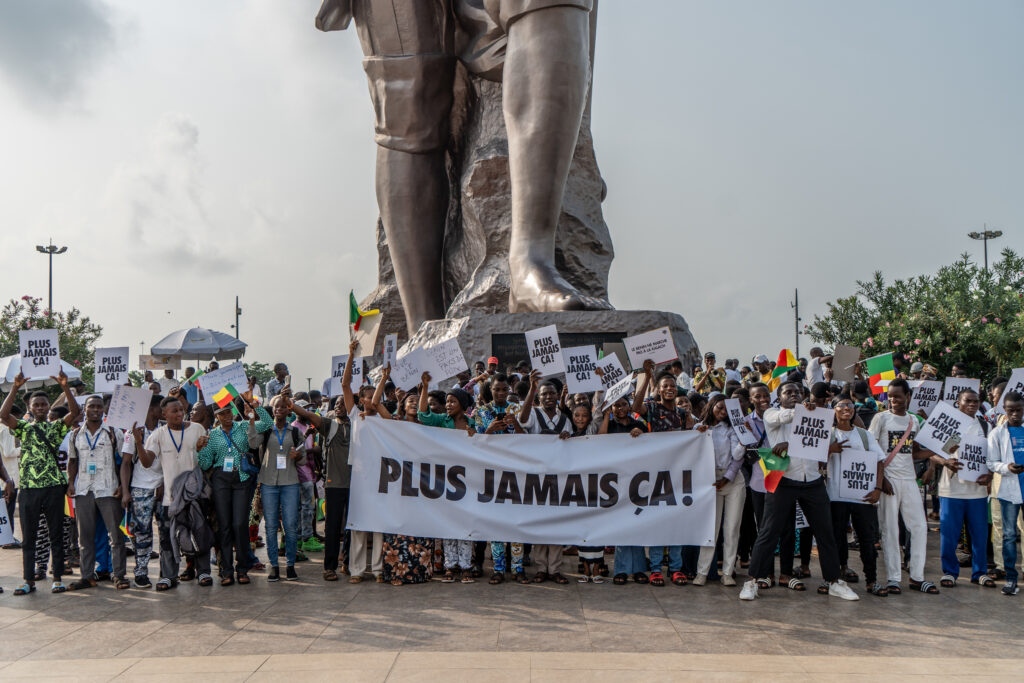
One month after an attempted coup shook Benin, the west African country will hold parliamentary and local elections Sunday, set to define the political landscape ahead of presidential polls in April.President Patrice Talon’s ruling coalition is expected to strengthen its already powerful hand in the ballots, with the main opposition Democrats party barred from the local polls — and from April’s presidential race — for failing to gather enough signatures to register.The Democrats will be running in parliamentary races Sunday, but risk ceding more ground to Talon’s three-party bloc, which currently holds 81 of the 109 seats in the National Assembly.The elections come at a fraught moment for Benin, still reeling from a deadly coup attempt by army mutineers on December 7, which was put down in a matter of hours by the military, with support from Nigeria and France.Talon, 67, has presided over strong economic development across his nearly a decade in power, but critics accuse him of restricting political opposition and basic rights.Security is also expected to be a key issue for voters.Northern Benin has been hit hard by a spillover of jihadist violence by Al-Qaeda-affiliated groups from neighbouring Burkina Faso and Niger.While Talon, who is nearing the end of his second five-year term, is barred from running in April’s elections, his hand-picked successor, Finance Minister Romuald Wadagni, is a strong favourite to win.Wadagni will face a single rival for the presidency, moderate opposition figure Paul Hounkpe of the smaller FCBE party, which has signed a number of agreements with parties in the ruling bloc.FCBE parliamentary candidates are set to form a coalition with the ruling bloc if elected Sunday.Under a November constitutional reform, the presidential term was extended to seven years, with a two-term limit.Under the tweak, after Sunday’s elections and April’s presidential race, Benin will go years without any elections — a fact the Democrats attacked as putting “freedoms in quarantine”.- ‘Insurmountable’ requirement -Some observers say the opposition may lose all its seats in parliament, given the current electoral law.The rules require parties to gather support from 20 percent of registered voters in each of the country’s 24 voting districts to stand for parliament.For all but the ruling coalition, “that 20-percent threshold looks relatively insurmountable,” said Beninese political scientist Joel Atayi Guedegbe.He also pointed out that the Democrats have been riven by recent infighting.”It’s not as united and determined a party as it was in the last elections, in 2023, when it won 28 seats,” he said.Ahead of the vote, Amnesty International’s executive director in Benin, Dieudonne Dagbeto, warned that “civic space is shrinking” in the country, “with a wave of attacks on independent media and people arbitrarily arrested and detained for expressing differing opinions.”Members of the ruling majority reject those accusations.