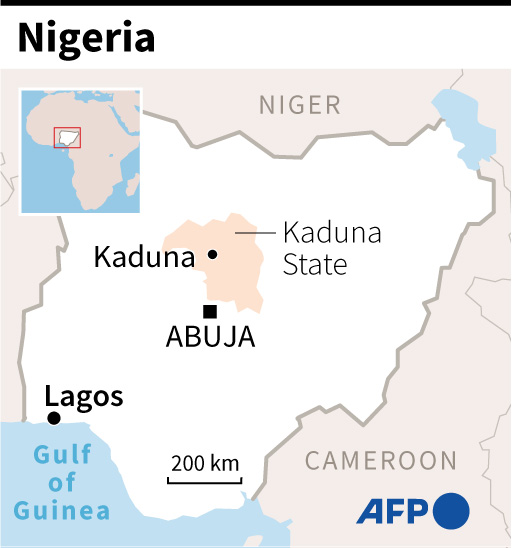
Nigerian police have made an about-face and admitted dozens of Christian worshippers were kidnapped by gunmen in northern Kaduna state — piling more pressure on the country as it faces international scrutiny over insecurity.The kidnapping of more than 170 people during Sunday services at three churches by gangs known as “bandits” marks the latest in a wave of mass abductions targeting both Christians and Muslims in Nigeria.After a diplomatic offensive over what US President Donald Trump claimed was the mass killing of Christians in particular, the United States last month launched strikes in Nigeria targeting militants that authorities said were linked to the Islamic State group.But the one-time strikes have done virtually nothing to rein in the rampant violence in the west African nation, which faces jihadists and bandits across its north as well as farmer-herder conflicts over land and resources.The mass kidnappings in Kaduna Sunday followed another mass abduction — and subsequent release — of hundreds of Catholic schoolchildren in neighbouring Niger state late last year. But Kaduna state authorities had initially dismissed the reports as “totally false”.A senior Christian clergy member and a village head had told AFP that dozens of people were snatched from churches on Sunday. A security report prepared for the United Nations noted the kidnapping of over 100 people at multiple churches.But it was only late Tuesday that national police spokesman Benjamin Hundeyin said an “abduction” had occurred and that the force had launched security operations, “with a clear focus on locating and safely rescuing the victims and restoring calm to the area”.He said remarks made by his colleagues from Kaduna state were “intended to prevent unnecessary panic while facts were being confirmed”. Police in Nigeria are stretched thin across rural areas, and amid government pressure to show progress, “security forces sometimes attempt to suppress security incidents”, said Kabir Adamu, of Beacon Security and Intelligence consulting firm.The country faces myriad and sometimes overlapping armed conflicts that kill both Muslims and Christians, including a jihadist insurgency raging since 2009.But the government and independent analysts reject the framing by the US and European religious right that the violence in the country amounts to the “persecution” of Christians.- Can’t hide ‘such a number’ -A Nigerian Christian group has submitted a list of people seized. Long blocks of people sharing the same surname suggest entire families may have been taken, likely for ransom.”We did produce the names of over 177 people and there is no contest that it was real,” Reverend Joseph Hayab, head of the Christian Association of Nigeria for the country’s north told AFP. “Such a number couldn’t have been taken and you think you can bury it just like that.” Analysts have mostly been sceptical of the effectiveness of the US strikes, which Nigeria said it provided intelligence for. Both Abuja and Washington claimed the bombardments killed militants but so far have provided no evidence.The only casualties confirmed by local and international journalists have been injured civilians.A Nigerian government source told AFP that from now on US recon flights would provide intelligence and Nigerian jets would conduct strikes. Pentagon sources cited by The New York Times also suggested the strikes were a one-off hit — though Trump himself recently backtracked, saying: “if they continue to kill Christians it will be a many-time strike.”Hayab called for more US bombardments.”It should be a sustainable strike until every terror camp, until every terrorist, until every terror sponsor, until every terror supporter, until every terror hideout is completely wiped out,” he said.Nigeria has emerged from the worst of the US pressure campaign, with Trump last year threatening unilateral military intervention.In the meantime, Abuja has struck a $750,000-per-month contract with a US lobbying firm to help it communicate “its actions to protect… Christian communities and (maintain) US support in countering west African jihadist groups”, according to disclosure forms.