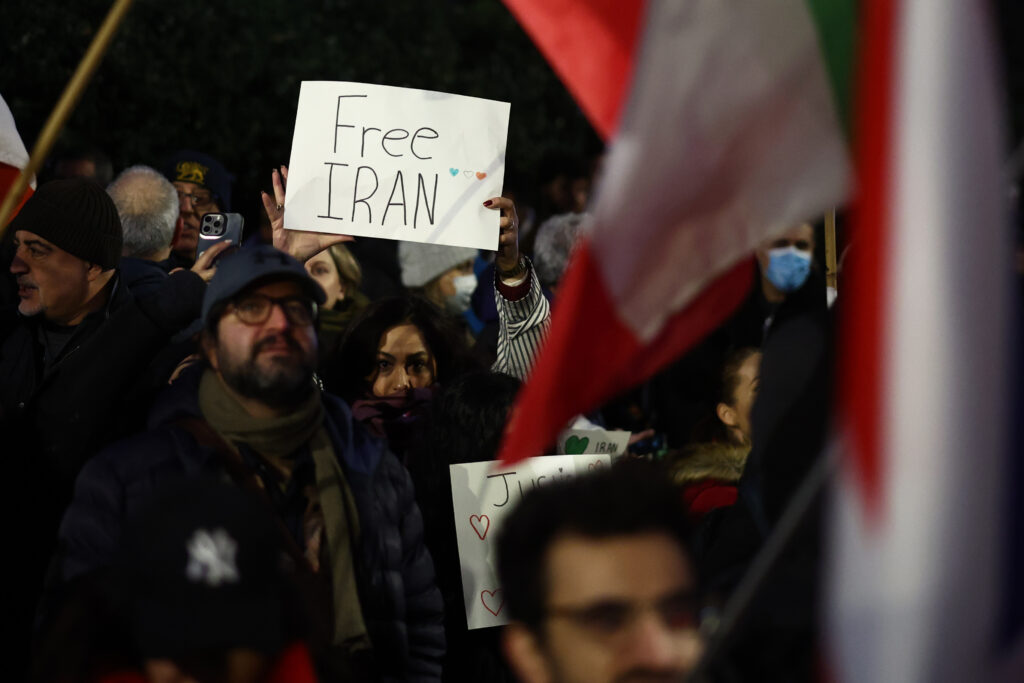
Iranian authorities have committed a “mass killing” in cracking down on the biggest protests against the Islamic republic in years, a rights group said Sunday, as the president warned “rioters” must not be allowed to destabilise the country.The Norway-based NGO Iran Human Rights (IHR) said it had confirmed the killing of at least 192 protesters but warned the actual death toll could already amount to several hundreds, or even more.The protests, initially sparked by anger over the rising cost of living, have evolved into a movement against the theocratic system in place in Iran since the 1979 revolution, and have already lasted two weeks.They have become one of the biggest challenges to the rule of supreme leader Ayatollah Ali Khamenei, 86, coming in the wake of Israel’s 12-day war against the Islamic republic in June, which was backed by the United States.Protests have swelled in recent days despite an internet blackout that has lasted more than 60 hours, according to monitor Netblocks, with activists warning that the shutdown was limiting the flow of information and that the actual toll risks being far higher. “Unverified reports indicate that at least several hundreds, and according to some sources, more than 2,000 people may have been killed,” said IHR, denouncing a “mass killing” and a “major international crime against the people of Iran”. Iranian authorities have sought to distinguish between what they deem legitimate protests over Iran’s dire economy and “rioters” they allege are backed by the United States and Israel. President Masoud Pezeshkian accused the arch-foes of Iran of “trying to escalate this unrest” and bringing “terrorists from abroad into the country”, in an interview broadcast Sunday. “The people (of Iran) should not allow rioters to disrupt society. The people should believe that we (the government) want to establish justice,” he told state broadcaster IRIB. State TV has aired images of burning buildings, including a mosque, as well as funeral processions for security personnel, with authorities saying members of security forces have been killed. The head of Iran’s judiciary, Gholamhossein Mohseni Ejei, repeated warnings that authorities would deal “decisively” with arrested protesters, and national police chief Ahmad-Reza Radan reported “significant” arrests made on Saturday night. More than 2,600 protesters have been arrested since the beginning of the demonstrations, according to estimates by IHR. – Paralysis in Tehran -Reza Pahlavi, the US-based son of Iran’s ousted shah, who has played a prominent role in calling for the protests, has urged renewed demonstrations on Sunday night. Since the protests began, some participants have been heard chanting “long live the shah”.Pahlavi said he was prepared to return to the country and lead a transition to a democratic government. “I’m already planning on that,” he told Fox News on Sunday. Videos of large demonstrations in the capital Tehran and other cities over the past three nights have filtered out despite the internet cut, which has rendered impossible normal communication with the outside world via messaging apps or even phone lines. Several circulating videos, which have not been verified by AFP, purported to show relatives in a Tehran morgue identifying bodies of protesters killed in the crackdown.The US-based Center for Human Rights in Iran (CHRI) said hospitals were “overwhelmed”, blood supplies were running low and that many protesters had been shot in the eyes in a deliberate tactic. In Tehran, an AFP journalist described a city in a state of near paralysis. The price of meat has nearly doubled since the start of the protests, and while some shops are open, many are not.Those that do open must close at around 4:00 or 5:00 pm, when security forces deploy in force. – ‘Alive or not’ -Solidarity protests were held in multiple countries, including France, Britain and Austria, with several thousand people gathering in London alone. “We don’t know anything about our family members now, in Iran,” Fahimeh Moradi told AFP in the UK. “My son is there, and I don’t know if he’s alive or not,” the 52-year-old said, echoing other Iranians outside the country worried about relatives they have not been able to reach during the internet shutdown. US President Donald Trump has voiced support for the protests and threatened military action against Iranian authorities “if they start killing people”. Israeli Prime Minister Benjamin Netanyahu also said Sunday that he hoped Iran would soon be freed from what he described as the “yoke of tyranny”. Iran’s parliament speaker Mohammad Bagher Ghalibaf said Iran would hit back if the US launched military action. “In the event of a military attack by the United States, both the occupied territory and centres of the US military and shipping will be our legitimate targets,” he said in comments broadcast by state TV. He was apparently also referring to Israel, which the Islamic republic does not recognise and considers occupied Palestinian territory.
Iranian authorities have committed a “mass killing” in cracking down on the biggest protests against the Islamic republic in years, a rights group said Sunday, as the president warned “rioters” must not be allowed to destabilise the country.The Norway-based NGO Iran Human Rights (IHR) said it had confirmed the killing of at least 192 protesters but warned the actual death toll could already amount to several hundreds, or even more.The protests, initially sparked by anger over the rising cost of living, have evolved into a movement against the theocratic system in place in Iran since the 1979 revolution, and have already lasted two weeks.They have become one of the biggest challenges to the rule of supreme leader Ayatollah Ali Khamenei, 86, coming in the wake of Israel’s 12-day war against the Islamic republic in June, which was backed by the United States.Protests have swelled in recent days despite an internet blackout that has lasted more than 60 hours, according to monitor Netblocks, with activists warning that the shutdown was limiting the flow of information and that the actual toll risks being far higher. “Unverified reports indicate that at least several hundreds, and according to some sources, more than 2,000 people may have been killed,” said IHR, denouncing a “mass killing” and a “major international crime against the people of Iran”. Iranian authorities have sought to distinguish between what they deem legitimate protests over Iran’s dire economy and “rioters” they allege are backed by the United States and Israel. President Masoud Pezeshkian accused the arch-foes of Iran of “trying to escalate this unrest” and bringing “terrorists from abroad into the country”, in an interview broadcast Sunday. “The people (of Iran) should not allow rioters to disrupt society. The people should believe that we (the government) want to establish justice,” he told state broadcaster IRIB. State TV has aired images of burning buildings, including a mosque, as well as funeral processions for security personnel, with authorities saying members of security forces have been killed. The head of Iran’s judiciary, Gholamhossein Mohseni Ejei, repeated warnings that authorities would deal “decisively” with arrested protesters, and national police chief Ahmad-Reza Radan reported “significant” arrests made on Saturday night. More than 2,600 protesters have been arrested since the beginning of the demonstrations, according to estimates by IHR. – Paralysis in Tehran -Reza Pahlavi, the US-based son of Iran’s ousted shah, who has played a prominent role in calling for the protests, has urged renewed demonstrations on Sunday night. Since the protests began, some participants have been heard chanting “long live the shah”.Pahlavi said he was prepared to return to the country and lead a transition to a democratic government. “I’m already planning on that,” he told Fox News on Sunday. Videos of large demonstrations in the capital Tehran and other cities over the past three nights have filtered out despite the internet cut, which has rendered impossible normal communication with the outside world via messaging apps or even phone lines. Several circulating videos, which have not been verified by AFP, purported to show relatives in a Tehran morgue identifying bodies of protesters killed in the crackdown.The US-based Center for Human Rights in Iran (CHRI) said hospitals were “overwhelmed”, blood supplies were running low and that many protesters had been shot in the eyes in a deliberate tactic. In Tehran, an AFP journalist described a city in a state of near paralysis. The price of meat has nearly doubled since the start of the protests, and while some shops are open, many are not.Those that do open must close at around 4:00 or 5:00 pm, when security forces deploy in force. – ‘Alive or not’ -Solidarity protests were held in multiple countries, including France, Britain and Austria, with several thousand people gathering in London alone. “We don’t know anything about our family members now, in Iran,” Fahimeh Moradi told AFP in the UK. “My son is there, and I don’t know if he’s alive or not,” the 52-year-old said, echoing other Iranians outside the country worried about relatives they have not been able to reach during the internet shutdown. US President Donald Trump has voiced support for the protests and threatened military action against Iranian authorities “if they start killing people”. Israeli Prime Minister Benjamin Netanyahu also said Sunday that he hoped Iran would soon be freed from what he described as the “yoke of tyranny”. Iran’s parliament speaker Mohammad Bagher Ghalibaf said Iran would hit back if the US launched military action. “In the event of a military attack by the United States, both the occupied territory and centres of the US military and shipping will be our legitimate targets,” he said in comments broadcast by state TV. He was apparently also referring to Israel, which the Islamic republic does not recognise and considers occupied Palestinian territory.