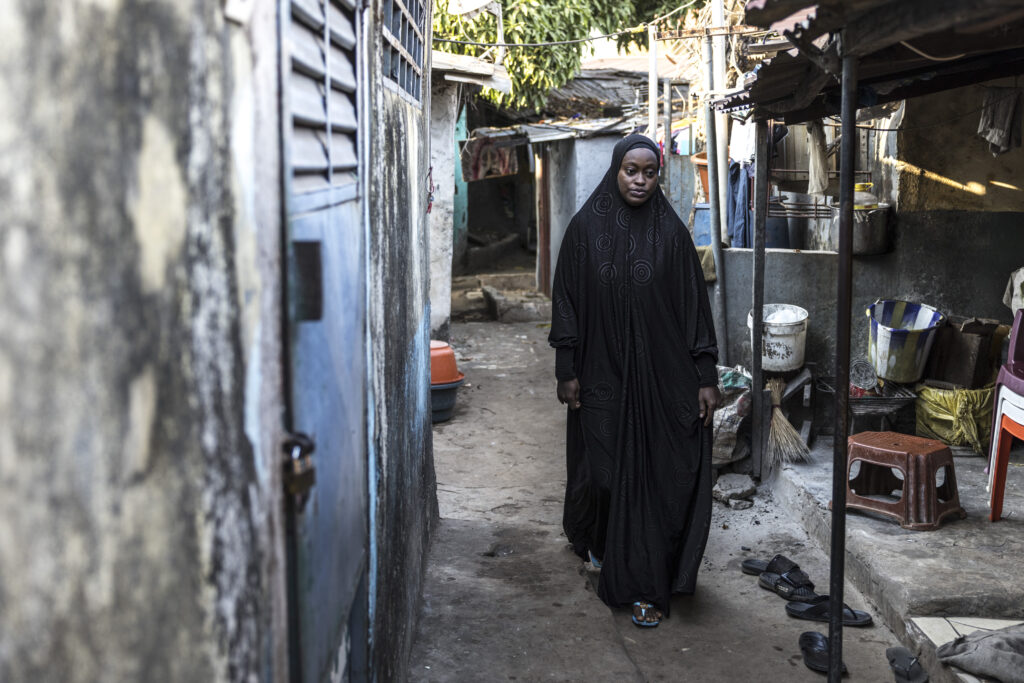
It’s been nine months since Mariam Soumah, a 23-year-old Guinean woman, says she last saw her baby girl Sabina. The mother is in Guinea, while her daughter is — against her will — in an orphanage in Belarus. Several months ago, Belarus forcibly deported the young migrant mother to her west African homeland without her baby, according to Soumah and rights groups that have taken up her case.The reports drew condemnation by UN experts, rights groups and Guinean diplomats. “I begged them not to do it,” Soumah told AFP during an interview in the slums of Guinea’s capital Conakry, swiping through recent photos on her phone of Sabina — who turned one in November — wearing a red dress. In a bid to escape poverty, Soumah said she had travelled across Africa to get to Belarus, hoping to get to the EU. The migration route has become popular in recent years, with the EU accusing the regime of President Alexander Lukashenko of encouraging migrants to try to enter the bloc via Belarus. Like many, Soumah was lured online to come to authoritarian Belarus on a student visa. “I didn’t want to go (to Europe) by sea. I looked on a map and saw Belarus was surrounded by Schengen countries.” – 600 grams -Her ordeal began in Belarus just as she tried to renew her visa. Having fallen pregnant there with a Guinean man who left to try to get to the EU, Soumah went into labour more than two months before her due date. Sabina weighed just 600 grams when she was born in November 2024.She was rushed to intensive care, where Belarusian doctors managed to save her. But shortly afterwards, Soumah said she was restricted from seeing her child unless she paid hefty medical bills. She was later imprisoned for breaking migration rules and forced on a plane without her daughter. “I said I will only go back with my baby. I begged them, please, just let my baby recover and I will go home with her,” Soumah told AFP. “They said no.” Since her deportation in August, Soumah said she has been allowed two short video calls to see Sabina, who is being kept in a Minsk orphanage. UN experts have called reports of the forced separation “extremely concerning.” The Guinean embassy in Moscow, which oversees Belarus, told AFP it was following the case with “great humanitarian concern” and said it had demanded “clarifications”.The embassy said UNICEF Belarus — which told AFP it cannot comment on individual cases — is aware and could help organise “humanitarian support” for the child. Belarusian authorities did not respond to an AFP request for comment.- ‘From morning to night’ -Attempts to restrict Soumah from Sabina began while she was recovering from an emergency C-section. “Already in hospital, I asked, ‘how is my baby?’ and they told me she was sick and tired,” Soumah said.She only knew that Sabina had been moved to another hospital. After 10 days, she walked through Minsk “looking from morning to night” before finding the hospital her daughter was in and visiting her daily. After Sabina was discharged from intensive care and moved to another hospital, Soumah was handed a medical bill of around $33,000.Upon seeing it, “I raised my hands into the air”, she said. She was then blocked from seeing Sabina until she paid. “I kept coming and they kept saying she was sleeping… or out with the nurses.” – ‘What orphanage?’ -According to Soumah, a woman in the hospital last summer announced to her that Sabina was being sent to an orphanage. “I said: what? What orphanage?,” Soumah, herself an orphan, recalled. Simultaneously, immigration services were ramping up the pressure.She tried to sign up for more studies for a new visa, but was refused.In July, Soumah said she was jailed for breaking immigration rules.The exiled rights group Human Constanta — which monitors migrant rights in Belarus — slammed the heavy-handed response for what is classified an administrative, not criminal, offence. “They simply did not care and separated the mother and child,” Enira Bronitskaya, of Human Constanta, said, calling the process “manipulative.”- Deportation -“Threatening her not to give her her child is, of course, illegal,” Bronitskaya said, since there was no official ruling to strip Soumah of her parental rights. In prison, Soumah said immigration officers tried to get her to find a family member that could fund a ticket home.Nobody could and “anyway I would not leave without my baby,” she said.Then, one day she said she was handcuffed, driven to the airport, put on a flight to Istanbul and told not to come back. In Turkey, Soumah opened her phone to call the woman who raised her. “I am coming,” she told her, sobbing.”But I have nothing, not even my child.”