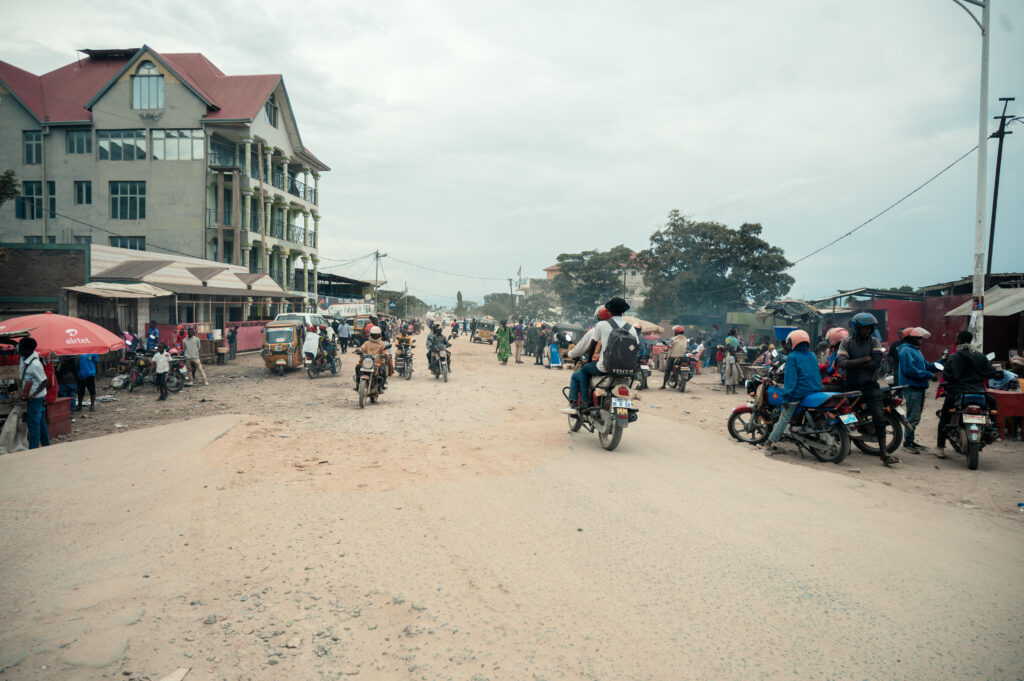
The Rwanda-backed M23 armed group on Thursday sought to consolidate its control of a strategic DR Congo city near Burundi, where residents who did not flee the rapid advance spoke of their fears.M23 fighters combed the streets of Uvira in the eastern Democratic Republic of Congo to flush out remaining enemy combatants a day after taking over key parts of the city, security and local sources said.The latest offensive, launched at the beginning of December just before Kinshasa and Kigali signed a peace deal in Washington, was described by Burundi’s foreign minister on Wednesday as a “humiliation” for the United States.As it did in two provincial capitals, Goma and Bukavu, seized in January and February after a lightning offensive, the M23, backed by Rwanda and its army, was seeking to take control of neighbourhoods in Uvira where militia who have not already fled have taken refuge.Businesses have been closed for several days and only a few motorcycles were out in the streets, while sporadic shots still rang out, local civil society representatives said.”It crackles from time to time. We’re still afraid because there were deaths yesterday,” one resident told AFP. A dozen bodies were collected from the streets between Wednesday and Thursday, according to local sources and witnesses.”Yesterday we collected at least nine bodies and today two on the avenue leading to Saint Paul’s Cathedral,” a civil society representative told AFP, but gave no other details.”I saw at least 15 bodies near the Kavimvira roundabout. They’re starting to decompose,” another resident added.On Thursday, almost all parts of the city suffered power cuts, with many residents reliant on battery-powered phones for contact with the outside world.UN Secretary-General Antonio Guterres on Thursday condemned the new offensive and called for “an immediate and unconditional cessation of hostilities”, his spokesman said in a statement. – ‘No choice’ -The city hall, the provincial governor’s office and the border post to Burundi already fell to the M23 on Wednesday after most Congolese forces and allied militias — known as “Wazalendo” — fled in the previous days.More than 200,000 people, the majority of them civilians, have been displaced within South Kivu province since December 2, according to the UN. But for those who could not flee the fighting, they waited anxiously as the M23 entered the city.”I was very scared, thinking they would consider everyone a Wazalendo and kill people,” one resident told AFP. “We have no choice, we are forced to live with it. This is our home, I have no intention of fleeing,” he added.Rights campaigners and civil society representatives say they received threats as the M23 advanced.”Burundi has closed its border. There are no more motorised canoes on Lake Tanganyika,” one resident who is trying to leave the city said.All of the residents who spoke to AFP requested anonymity for their protection.- ‘Humiliating defeats’ -For months, the M23 and the Rwandan army had chipped away at the South Kivu highlands at the expense of the Congolese and Burundian forces defending Uvira.After days of intense fighting, the army’s defences rapidly collapsed and Congolese soldiers fled to neighbouring Burundi and towards the town of Kalemie, further south. “It was every man for himself. The soldiers were firing into the air and there were some looting incidents,” one religious leader in Uvira told AFP.The latest offensive by the anti-government armed group and its Rwandan allies aims initially to deprive the DRC of military support from Burundi, according to experts and security sources.Some of the 18,000 Burundian forces present in South Kivu province in eastern DRC have already crossed the border back to the Burundian economic capital Bujumbura, sources within the Burundi army said.However, around 2,500 are still in the hills overlooking Uvira and the Ruzizi border plain, they said.The Burundian army has lost several hundred men in the fighting, according to several military sources. A Burundian general, contacted by AFP, acknowledged “humiliating defeats”.The Rwandan army used drones, GPS-guided mortars and jammers during the offensive on Uvira, security sources said.