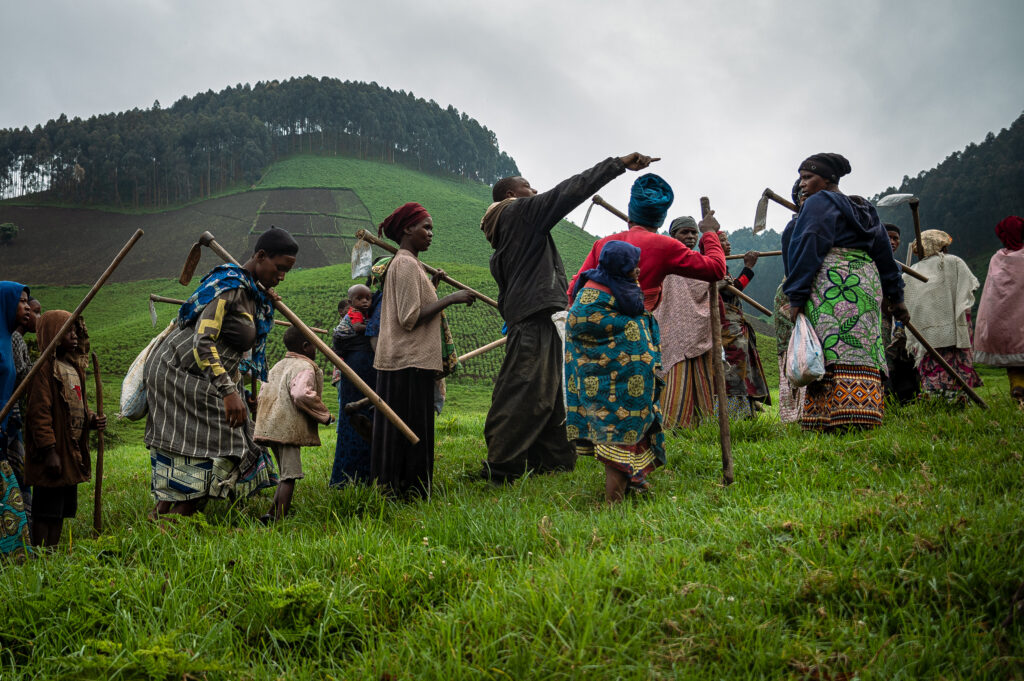
Francois Mitterand Murekezi walked three hours to join a hundred or so hoe-wielding farmhands gathered at sunrise in the hope of finding work on a plantation in conflict-ridden eastern DR Congo.In exchange for a hard day’s labour on a local farm in Mushaki, where land squabbles have been a source of strife since the Democratic Republic of Congo gained independence from Belgium in 1960, the 61-year-old stood to earn 5,000 Congolese francs, or around $2.5. “In our villages we live a tough life. I’m forced to pick for other people so I can feed my three kids,” he said. He is one of the many farm labourers squeezed by a combination of the more than three-decade-long cycle of violence in the region and the concentration of land and power in the hands of the local elite.Mushaki is in the Masisi territory, considered a breadbasket for the eastern Congolese city of Goma, which fell to the Rwanda-backed M23 armed group in January. Rows of potato and bean plots extend as far as the eye can see along the cliffs and hills, neatly tilled by local farmers for decades.The war interrupted their work in the fields.But gradually the labourers have returned since the M23’s advance pushed the front line to the west.Both Rwanda and the DRC signed a deal aimed at ending the fighting on December 4, though Congolese President Felix Tshisekedi on Monday accused Kigali of breaking that agreement.- Child labour -Beneath the latest bout of fighting between the two neighbours and rivals, however, lie old frustrations over the control of land in a region where traditional models of ownership rub up against those of the state. With a bit of luck, Murekezi will find himself chosen by the farm’s managers, middlemen for the grand landowners, who between them own the best part of the fertile region’s rich farmlands.Those plots, which were customarily either co-owned or accessible to entire communities, have since been concentrated in the hands of that elite, sometimes by force, according to a 2022 study published by Antwerp University.Wars, conflicts over land and pressure from the local barons have pushed many small farmers to sell their fields, driving them into poverty.”We have no fields, so to live we have to farm for other people and take the risk of being mistreated,” said Rachel Furaha, a mother-of-seven in her 40s, who woke up at 5:00 a.m. to elbow her way onto the list of labourers hired for the day.The workers insist they are forced to pay 2,000 Congolese francs for the privilege of being taken on for a day’s work, in return for a wage not three times that, plus a few potatoes. Their work is entirely done by hand, and sometimes by children.”I am an orphan, both my father and mother are gone. To survive and study, I’m forced to carry these potatoes,” said 12-year-old Gisele Uwese, panting as she lugged a hefty sack from the fields to the nearby road on her back.- Migration -Many of the labourers are Rwandan-speakers, some having settled during the colonial era when Belgian authorities brought workers from neighbouring Rwanda to cultivate the Congolese fields. People have migrated across the border ever since which has become a source of grievance among the local population, a 2023 study by the United Nations Food and Agriculture Organization found.Communities seen as foreign have been excluded from the traditional channels for the granting of plots, according to experts. The anti-government M23 says it is defending the interests of the Tutsi population in eastern DRC.But Kinshasa accuses the armed group of seeking to profit from both the region’s rich mineral veins and vast tracts of fertile farmland.Several of the region’s big landowners have been involved in the successive rebellions against the Congolese government, which have blighted the region since the end of the genocide in Rwanda in 1994.