AFP USA

Trump considering strikes on land against Venezuela cartels

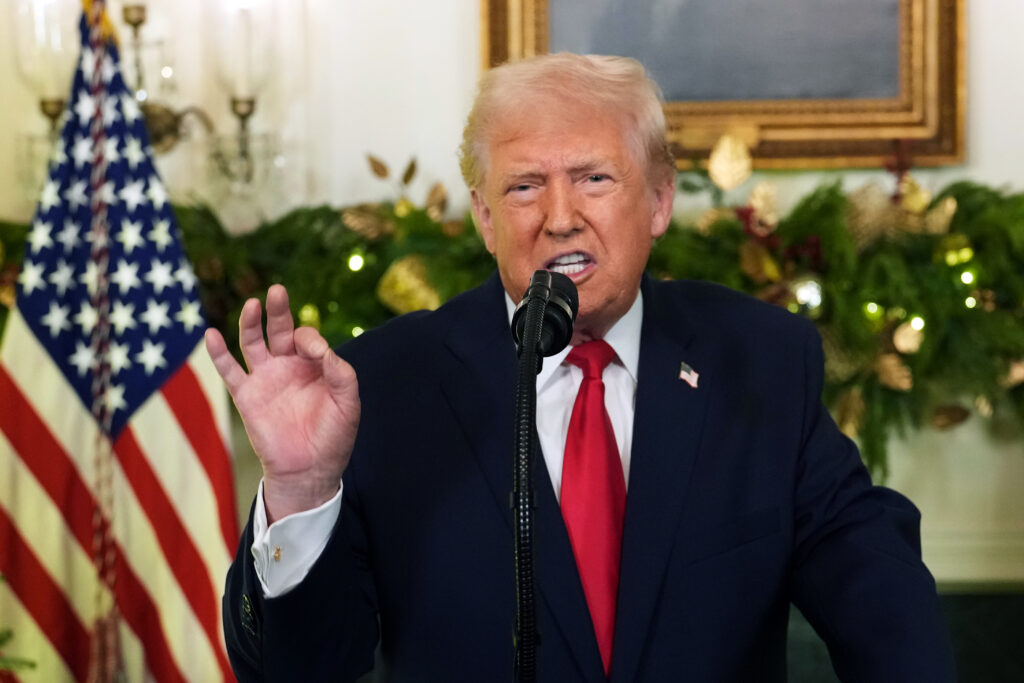
US President Donald Trump said Wednesday he was considering strikes targeting Venezuelan cartels on land, after a series of deadly strikes at sea against alleged drug-carrying boats.”We are certainly looking at land now, because we’ve got the sea very well under control,” Trump told reporters in the Oval Office when asked if he was weighing strikes on land. But Trump declined to confirm a New York Times report that he had secretly authorized the CIA to conduct covert action in Venezuela against the administration of President Nicolas Maduro.Asked if he had given the CIA authority to “take out” Maduro, Trump replied: “That’s a ridiculous question for me to be given. Not really a ridiculous question, but wouldn’t it be a ridiculous question for me to answer?”Venezuela is taking the threats — open or clandestine — seriously.On Tuesday, under Maduro’s direction, exercises were conducted across the entire Atlantic Caribbean coast of Venezuela, and other military activities are planned in the states on the border with Colombia.In a message on the social network Telegram, Maduro said he was mobilizing the military, police and a civilian militia to defend Venezuela’s “mountains, coasts, schools, hospitals, factories and markets.”Trump said on Tuesday that another strike on boats allegedly transporting drugs from Venezuela had killed six “narcoterrorists.”At least 27 people have been killed so far in the US attacks. Experts question the legality of using lethal force in foreign or international waters against suspects who have not been intercepted or questioned.Colombia’s President Gustavo Petro has said he believes some of those killed were Colombian.Trump accuses Maduro of heading a drug cartel — charges Maduro denies.Ahead of ramping up military actions, the US Justice Department in August doubled a bounty for information leading to Maduro’s capture to $50 million.

Argentine markets cheer new US aid, but Trump threat sparks anger

Argentine stocks surged Wednesday on a new US promise of aid for embattled President Javier Milei, despite Donald Trump conditioning the assistance on his ally winning upcoming midterm elections.Some stocks on the benchmark Merval index rose by almost 10 percent on the announcement by US Treasury Secretary Scott Bessent that his department was working on the second $20 billion “facility” for Argentina in as many months.The new program brings the total promised US assistance for the South American country to a whopping $40 billion.Bessent told reporters in Washington that the new aid “would be adjacent to our swap line” announced in September, which already totaled $20 billion.He said the new bailout would come from “private banks and sovereign wealth funds” and would be “more aimed at the debt market,” amid growing concerns over Argentina’s ability to meet its looming debt repayments.Bessent made the announcement a day after Trump hosted the right-wing Milei at the White House, in a bid to boost the Argentine leader ahead of midterm elections on October 26.Milei, once a global poster boy for budget-slashing libertarian politics, is heading into the polls diminished by his failure to stabilize Argentina’s ailing peso, despite spending nearly all the Central Bank’s dollar reserves to prop it up.Bessent last week said that the US Treasury had begun purchasing pesos to help support the currency.Milei has also faced a growing rebellion in Congress over his austerity measures and is still reeling from a corruption scandal engulfing his sister and right-hand woman, Karina Milei.Last month, he suffered a stunning defeat in Buenos Aires provincial polls seen as a key bellwether of his support.Opinion polls show his bloc running neck-and-neck with the center-left opposition in the midterms, but Milei’s La Libertad Avanza coalition is expected to fall far short of winning an outright majority.Political scientist Gustavo Marangoni, head of the M&R polling firm, told AFP that Milei’s party had “no chance of winning a majority,” predicting he would win around one-third of the seats up for grabs.Trump threatened Argentine voters with withdrawing aid if his ally was defeated.”If he loses, we are not going to be generous with Argentina,” he warned.- ‘Quasi-colonial’ attitude -Economist Carlos Melconian, former president of the state-owned Banco Nacion, reacted angrily to Trump’s remarks, calling it “a quasi-colonial incursion” into Argentina’s affairs.”Trump doesn’t want to save the country, he only wants to save Milei,” centrist Senator Martin Lousteau said.On Wednesday, Bessent assured that Milei would continue to enjoy US support as long as he could continue to veto legislation passed by parliament that did not fit his agenda. “It is not election-specific, it is policy-specific,” he said. “So as long as Argentina continues enacting good policy, they will have US support,” he said.Milei enacted sweeping budget cuts after taking office in December 2023 on a promise to quell chronically high inflation and revive the sputtering economy.But his reforms left tens of thousands of public servants out of a job, caused consumer spending to nosedive and left many of Argentina’s most vulnerable citizens living on the breadline.In an interview with CNBC broadcast Wednesday, the 54-year-old president said he had “no intention of changing course until the end of my term.””I am committed to the agenda of lowering taxes, deregulating and keeping the economy growing,” he said.burs-cb/jgc

US expert on India accused of China meetings denies charges

A prominent US scholar of India who was arrested after allegations of retaining classified documents and meeting Chinese officials is denying the charges against him, his lawyers said Wednesday.Ashley Tellis, 64, who held senior positions under former president George W. Bush and remained an unpaid advisor to the State Department, was arrested Saturday and faces up to 10 years in prison.”Ashley J. Tellis is a widely respected scholar and senior policy advisor,” his lawyers, Deborah Curtis and John Nassikas, said in a statement.”We will be vigorously contesting the allegations brought against him, specifically any insinuation of his operating on behalf of a foreign adversary,” they said.A criminal affidavit made public Tuesday said that Tellis went into the State Department late on September 25 and appeared to print from a secret document on US Air Force techniques.It alleged that Tellis met repeatedly with Chinese officials at a restaurant in the Washington suburb of Fairfax, Virginia, and that at one dinner he appeared to leave a manila envelope.The charges announced by the Justice Department relate to improper handling of documents rather than the meetings, with an FBI special agent saying a search found more than 1,000 pages of top-secret or secret documents in his house.Tellis has been a senior fellow at the Carnegie Endowment for International Peace, a leading Washington think tank, which said Wednesday that he has been put on administrative leave.Tellis, a naturalized American originally from India, helped negotiate the Bush administration’s civil nuclear cooperation deal with India, a landmark step to closer relations between the world’s two largest democracies.But Tellis in recent years has emerged as a leading contrarian in Washington about India, saying that New Delhi’s interests were not aligned on a host of issues including Ukraine.

United sees demand ‘strengthening’ as profits edge lower

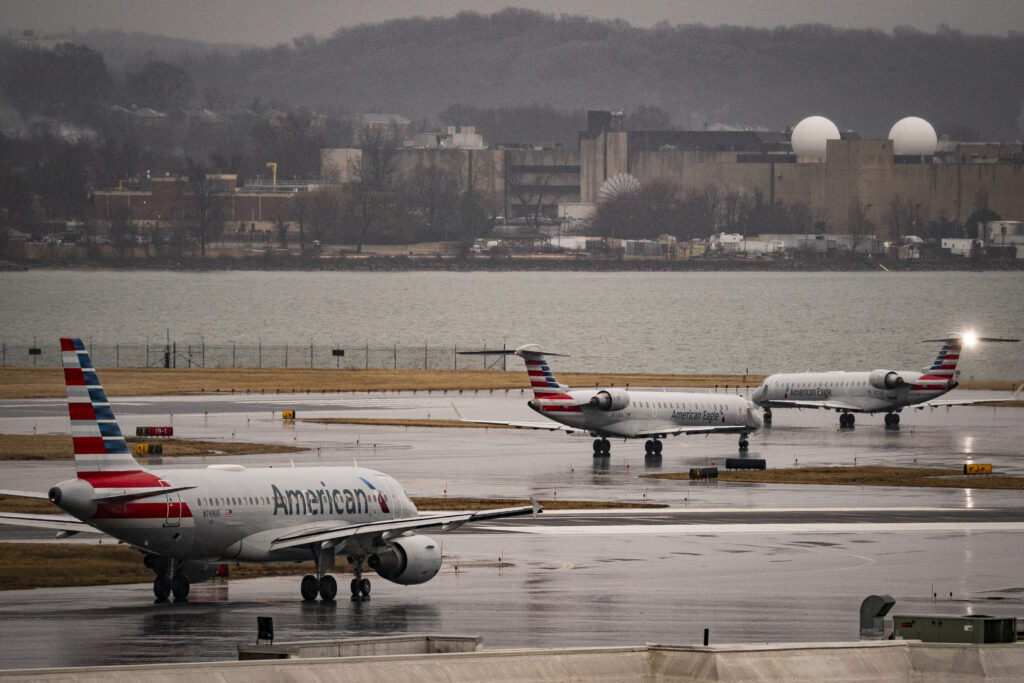
United Airlines reported a slight dip in profits Wednesday as operating expenses ticked higher, adding that a strengthening demand outlook would boost fourth-quarter results.The big US carrier reported third-quarter profits of $949 million, down 1.7 percent from the year-ago level, as growth in operating expenses edged out the increase in revenues of 2.6 percent to $15.2 billion.The company estimated fourth-quarter profits of between $3.00 and $3.50 per share, better than Wall Street estimates. United is poised for a “strong” fourth quarter “as the demand environment strengthens,” said a United press release.The outlook echoes bullish commentary about consumer appetite earlier this month from Delta Air Lines.Both carriers have billed themselves as able to provide a premium-travel experience that emphasizes better onboard amenities in addition to reliable operations in an effort to strengthen brand loyalty. United’s press release emphasized perks such as Apple TV on board, increased investment on food quality and the introduction of Starlink Wi-Fi on flights, which is scheduled to launch on Thursday in a flight from Newark to Houston.The company promises Starlink on “every plane by 2027,” said United CEO Scott Kirby. “Our customers value the United experience, making them increasingly loyal to United.”Shares of United fell 1.8 percent in after-hours trading.

US agency blames faulty engineering for Titanic sub disaster

Flawed engineering and inadequate testing contributed to the catastrophic implosion of a private submersible during a 2023 expedition to the Titanic wreckage, the US National Transportation Safety Board said Wednesday.Its report comes after a US Coast Guard investigation in August outlined a litany of issues with operator OceanGate’s conduct, as well as design flaws in its Titan submersible, that led to a “preventable tragedy” in which all five passengers were killed.”We found that OceanGate’s engineering process for the Titan was inadequate and resulted in the construction of a carbon fiber composite pressure vessel that contained multiple anomalies and failed to meet necessary strength and durability requirements,” NTSB’s report said.”Because OceanGate did not adequately test the Titan, the company was unaware of the pressure vessel’s actual strength and durability, which was likely much lower than their target.”Additionally, OceanGate’s analysis of Titan pressure vessel real-time monitoring data was flawed, so the company was unaware that the Titan was damaged and needed to be immediately removed from service” after a previous dive, it added.OceanGate chief executive Stockton Rush was joined on the doomed expedition by British explorer Hamish Harding, French deep-sea explorer Paul-Henri Nargeolet, Pakistani-British tycoon Shahzada Dawood and his son Suleman.Seats on the submersible cost $250,000 per person.Communications were lost with the SUV-sized submersible about an hour and 45 minutes into its dive on June 18, 2023, kicking off a dramatic search that briefly captivated the world.Debris was found a few days later on the ocean floor, about 1,600 feet (500 meters) from the bow of the Titanic, and human remains were recovered when the sub was brought to the surface.Shortly after the tragedy, OceanGate halted all operations.Last year, the family of Nargeolet sued OceanGate for $50 million, accusing the US-based company of gross negligence.The wreckage of the Titanic sits 400 miles (644 kilometers) off the coast of Newfoundland and has become a lure for nautical experts and underwater tourists since its discovery in 1985.The ship hit an iceberg and sank in 1912 during its maiden voyage from England to New York, with 2,224 passengers and crew on board. More than 1,500 people died.

Judge ‘reluctantly’ tosses youth case challenging Trump climate policies

A federal judge on Wednesday “reluctantly” dismissed a lawsuit brought by young Americans accusing President Donald Trump’s administration of threatening their constitutional right to life and liberty through its aggressive fossil-fuel push.Judge Dana Christensen said that while the plaintiffs had presented “overwhelming” evidence that the government’s actions would worsen climate change and harm them, the case to overturn them “must be made to the political branches or to the electorate.””With this understanding in mind, the Court reluctantly concludes…that it cannot grant Plaintiffs the relief they seek,” he wrote.Trump, who received hundreds of millions of dollars from Big Oil in the runup to the 2024 election, has made expanded fossil fuel extraction the centerpiece of his energy policy, while curbing permits for solar and wind farms and ending tax credits for renewables. In a filing earlier this year, 22 plaintiffs — including several minors and represented by the nonprofit Our Children’s Trust — asked the court to block three executive orders they said violated their inalienable rights by seeking to “unleash” more drilling.They also accused the administration of eroding federal climate science, leaving the public less informed about mounting dangers.Julia Olson, the youths’ lead lawyer, vowed to swiftly appeal.”We will definitely appeal and get it up to the Ninth Circuit as quickly as we can so that they can correct this injustice, and give these young people their right to be heard in the federal courts,” she told AFP. The Ninth Circuit is a higher court.She called the decision “completely wrong” and an “anathema to the entire US Constitution and the entire purpose of the separation of powers among the three branches of government,” adding it places fossil fuel interests “above the health and safety of children.”- Emotional testimony -During a two-day hearing last month in Christensen’s packed courtroom in Missoula, Montana, the youths described in vivid testimony how global warming had reshaped their lives.Among them was Joseph Lee, an undergraduate from California who suffered a life-threatening heat stroke, and Jorja McCormick of Livingston, Montana, who said she was traumatized by wildfires that forced her family to flee their home.Christensen, an Obama appointee known for previous environmental rulings, listened intently and frequently engaged with witnesses as the plaintiffs called experts in climate science, energy economics, politics and law and children’s health.Those included climatologist and Nobel Peace Prize co-winner Steve Running, and John Podesta, a former senior White House official who testified about the legal nature of executive orders.Government lawyers, on the other hand, did not call their own witnesses and did not focus on disputing the reality of climate change.Instead, they argued that the lawsuit was fundamentally undemocratic and echoed Juliana v. United States — a similar youth-led case that featured some of the same plaintiffs and wound through the courts for nearly a decade before the Supreme Court declined to hear an appeal last year, closing it out.While lawyers for the youths contended the case differed from Juliana in key ways, Christensen disagreed and concluded that his hands were tied by the precedent set by that case.”Plaintiffs have presented overwhelming evidence that the climate is changing at a staggering pace, and that this change stems from the rise in atmospheric carbon dioxide, caused by the production and burning of fossil fuels,” Christensen wrote.He added that they had also shown “overwhelming evidence that implementation of the Challenged EOs will increase the concentration of atmospheric carbon dioxide, thereby exacerbating the harms Plaintiffs experience from an already-warming climate.”But he ruled their injuries could not be redressed by a court, saying he was troubled by being asked to reset national energy policy to its state before Trump’s second term — and by the idea of having to monitor every climate action by the government if he sided with the plaintiffs.

US says working on new $20 bn ‘facility’ for Argentina

US Treasury Secretary Scott Bessent on Wednesday said he was working to rally the private sector around a new $20 billion “facility” to support Argentina’s embattled economy.”We are working on a $20 billion facility that would be adjacent to our swap line, of private banks and sovereign wealth funds that I think would be more aimed at the debt market,” he told reporters in Washington.Bessent added that he had spent weeks working on the private-sector solution to Argentina’s upcoming debt payments, which would come on top of the $20 billion US swap line the US Treasury recently set up.”So that would be a total of $40 billion for Argentina,” he said, in remarks that triggered a rebound in Argentine stocks with some shares on the Merval index rising by almost 10 percent.Bessent’s comments mark the latest round of support from the administration of Donald Trump for Argentina’s right-wing populist leader Javier Milei, who faces an uphill battle in crucial midterm elections later this month.Milei enacted sweeping budget cuts after taking office in 2023 in a bid to quell inflation and turn the Argentine economy around, drawing fierce opposition and widespread protests.Last week, Bessent confirmed the Treasury had set up the $20 billion swap line with Buenos Aires, adding that it had already begun purchasing Argentine pesos to help support the currency on global markets. And on Tuesday, President Donald Trump hosted Milei at the White House, and threw his support behind him ahead of the elections.”If he loses, we are not going to be generous with Argentina,” he warned.The strong US showing of support for Argentina this week has unfolded on the sidelines of the annual meetings of the International Monetary Fund (IMF) and World Bank in Washington.The IMF, which has its own multi-billion dollar loan program with Buenos Aires, has supported America’s bilateral assistance for Argentina’s economy.In a broadcast interview on Wednesday, Milei said he was confident of US financial support so long as he remains in office, and vowed to maintain his libertarian agenda.”We continue to advance the ideas of freedom, so at least until 2027 we have that support assured,” he said, according to the dubbed-over voiceover of an English interpreter.Milei, an economist, voiced hope that the legislative elections would increase his base to allow him to pursue his policies.”I have no intention of changing course until the end of my term,” he said. “I am committed to the agenda of lowering taxes, deregulating and keeping the economy growing.”Bessent said Milei would continue to enjoy US support for as long as he had a veto on legislation in parliament. “It is not election-specific, it is policy-specific,” he said. “So as long as Argentina continues enacting good policy, they will have US support.”

US judge ‘reluctantly’ tosses youth case challenging Trump climate policies

A federal judge on Wednesday tossed a youth-led lawsuit accusing US President Donald Trump’s fossil-fuel agenda of trampling their inalienable rights, ruling that he lacked jurisdiction to intervene.In his written order, Judge Dana Christensen of Missoula, Montana, said that while the youth plaintiffs in Lighthiser v. Trump had presented “overwhelming” evidence showing the administration’s actions would further destabilize the climate and harm them, their case “must be made to the political branches or to the electorate.””With this understanding in mind, the Court reluctantly concludes…that it cannot grant Plaintiffs the relief they seek,” wrote Christensen.The 22 plaintiffs, including several minors and represented by the nonprofit Our Children’s Trust, had sought a stay against three executive orders they said violated their constitutional rights to life and liberty by seeking to “unleash” fossil fuel development while sidelining renewable energy.They also accused the administration of eroding federal climate science, leaving the public less informed about mounting dangers.During a two-day hearing held in Christensen’s courtroom last month, the youth were given the opportunity to testify about the ways global warming had impacted their lives. The witnesses included Joseph Lee, an undergraduate from California who suffered a life-threatening heat stroke, and Jorja McCormick of Livingston, Montana, who said she was traumatized by wildfires that forced her family to evacuate.Christensen, who has issued favorable environmental rulings in the past, listened intently as the plaintiffs called experts in climate science, energy economics, politics, and children’s health.Government lawyers, on the other hand, did not call their own witnesses and did not spend significant time disputing the reality of climate change.Instead, they argued that the lawsuit was fundamentally undemocratic and echoed Juliana v. United States — a similar youth-led case that featured some of the same plaintiffs and wound through the courts for nearly a decade before the Supreme Court declined to hear an appeal last year, closing it out.While lawyers for the youths contended the case differed from Juliana in key ways, Christensen ultimately disagreed.”Plaintiffs have presented overwhelming evidence that the climate is changing at a staggering pace, and that this change stems from the rise in atmospheric carbon dioxide, caused by the production and burning of fossil fuels,” Christensen wrote.He added that they had also shown “overwhelming evidence that implementation of the Challenged EOs will increase the concentration of atmospheric carbon dioxide, thereby exacerbating the harms Plaintiffs experience from an already-warming climate.”But he maintained the injuries were not redressable by a court, saying he was troubled by being asked to reset national energy policy to the way it was before Trump took office a second time, and by the fact that his court would be required to monitor all of the administration’s actions if he sided with the youths.”The Court reads Juliana to mandate this outcome,” he said, but added that he would gladly hear the case on its merits if an appeals court, the Ninth Circuit, disagreed.

White House expects 10,000 US shutdown layoffs

The White House said Wednesday it will likely lay off at least 10,000 federal workers during the US government shutdown as Republican President Donald Trump steps up pressure on Democrats.The shutdown has ground into its third week, with Congress deadlocked in a clash over spending and Trump following through on his threats to take a hatchet to the workforce in response.”I think we’ll probably end up being north of 10,000,” White House Office of Management and Budget chief Russ Vought said in an interview with the Charlie Kirk show when asked how many layoffs there would be.”We want to be very aggressive where we can be in shuttering the bureaucracy.”Court documents filed by the Department of Justice showed that more than 4,000 employees were fired on Friday, with the US Treasury and health, education and housing departments hardest hit.Vought said that was a “snapshot” and that there would be more.Trump has warned that continued refusal by Democrats to support a House-passed resolution to fund the government through late November would result in mass layoffs targeting workers deemed to be aligned with the opposition party.The US president has vowed to find a way to pay troops due to go without their paychecks for the first time, although the uncertainty is already leading to long lines of men and women in uniform at food banks.

US Supreme Court hears voting rights case that could decide Congress control

The US Supreme Court appeared poised on Wednesday to restrict the use of race to draw electoral districts in a case that could cement Republican control over the House of Representatives — potentially even by next year’s crucial midterm vote.During two-and-a-half hours of oral arguments, the court’s right-wing majority appeared inclined to gut a six-decades-old civil rights law designed to ensure Black representation in Congress.African-Americans overwhelmingly vote Democratic and a ruling by the court neutering the 1965 Voting Rights Act could reorder the electoral map and give President Donald Trump’s Republicans a lasting structural advantage.The case centers around a challenge to a congressional map adopted by the Louisiana state legislature creating a second Black majority district.Blacks make up one-third of the population of Louisiana, which has six congressional districts.But following the 2020 census, Louisiana created a new congressional map that included only one Black majority district instead of the previous two.The Legal Defense Fund (LDF) and others filed suit claiming the new map diluted Black voting power and violated the Voting Rights Act, passed during the civil rights movement to remedy historic racial discrimination.The Louisiana legislature released a new map last year with two Black majority districts that was met with the legal challenge from a group of “non African-American” voters.Opponents of the redrawn map argue that using race to design congressional districts is unconstitutional racial gerrymandering.Janai Nelson, an LDF attorney, noted that the Supreme Court had authorized race-based districting in the past to remedy discrimination, including in a recent Alabama case.Refusing to do so now, Nelson told the court, would constitute a “staggering reversal of precedent that would throw maps across the country into chaos.””The results would be pretty catastrophic,” she said. “We only have the diversity that we see across the south, for example, because of litigation that forced the creation of (minority) opportunity districts under the Voting Rights Act.”Benjamin Aguinaga, the Louisiana solicitor general, countered that “race-based redistricting is fundamentally contrary to our Constitution.””It requires striking enough members of the majority race to sufficiently diminish their voting strength, and it requires drawing in enough members of a minority race to sufficiently augment their voting strength,” Aguinaga said.Justice Sonia Sotomayor, one of the three liberals on the nine-member court, said no one is stopping the white plaintiffs who brought the case “from participating in the voting process.””No one is stopping them from trying to run candidates or support candidates that reflect their views,” Sotomayor said. “But the state is stopping Black voters from doing that in many districts because it’s packing them into areas where whites overwhelm them.”- ‘One-party control’ -Edward Greim, an attorney representing the white voters, questioned whether it was acceptable to create race-based districts “under our color blind constitution,” and even if so, he said “it was never intended to continue indefinitely.”This argument appeared to strike a chord with Justice Brett Kavanaugh, a conservative who could prove to be the crucial swing vote.The courts has ruled in the past that “race-based remedies are permissible for a period of time,” Kavanaugh said, but “they should not be indefinite and should have an end point.”A decision in the case is expected in June.Republicans currently hold a slim majority in the House and an increase or decrease in the number of Black majority districts could help tip the balance in the midterms, when all 435 seats in the chamber will be up for grabs.According to a report by voting advocacy groups Fair Fight Action and Black Voters Matter, a court ruling striking down voting protections for minorities could lead to Republicans picking up an additional 19 House seats.”It’s enough to cement one-party control of the US House for at least a generation,” they said.The Louisiana voting case is being heard against a backdrop of redistricting moves in both Republican- and Democratic-ruled states.Republican-led Texas has drawn new congressional maps that could flip up to five House seats from Democrats to Republicans. Democratic-ruled California has responded with a redistricting push of its own.