AFP USA

Instagram users given new algorithm controls

Instagram on Wednesday unveiled a new AI-powered feature that lets users view and adjust the algorithm shaping their Reels feed, calling it a pioneering move toward greater user control.The Meta-owned app is introducing “Your Algorithm,” accessible through an icon in the upper right corner of Reels — a user’s video feed — which displays the topics Instagram believes users are interested in based on their viewing history. In a blog post, Meta said users can now directly tell the platform which subjects they want to see more or less of, with recommendations adjusting accordingly in real time.Social media platforms have faced mounting pressure from regulators and users alike to provide greater transparency around algorithmic content curation, which critics say can create echo chambers or promote harmful content.But companies also see algorithms as their platform’s ‘secret sauce’ for engaging users and have often resisted greater transparency.”Instagram has always been a place to dive deep into your interests and connect with friends,” the company said in its blog. “As your interests evolve over time, we want to give you more meaningful ways to control what you see.”The feature shows users a summary of their top interests and allows them to type in specific topics to fine-tune their feed.Instagram said it is “leading the way” in offering such transparency and control, with plans to expand the feature beyond Reels to Explore and other sections of the app.The tool launched Wednesday in the United States and will roll out globally in English “soon,” the company said.The move came as Australia, in a world-first, banned people under age 16 from a raft of popular social media apps, including Instagram. The government said it aimed to “take back control” from tech giants and protect children from “predatory algorithms.”   

Trump calls media reports on his health ‘seditious’

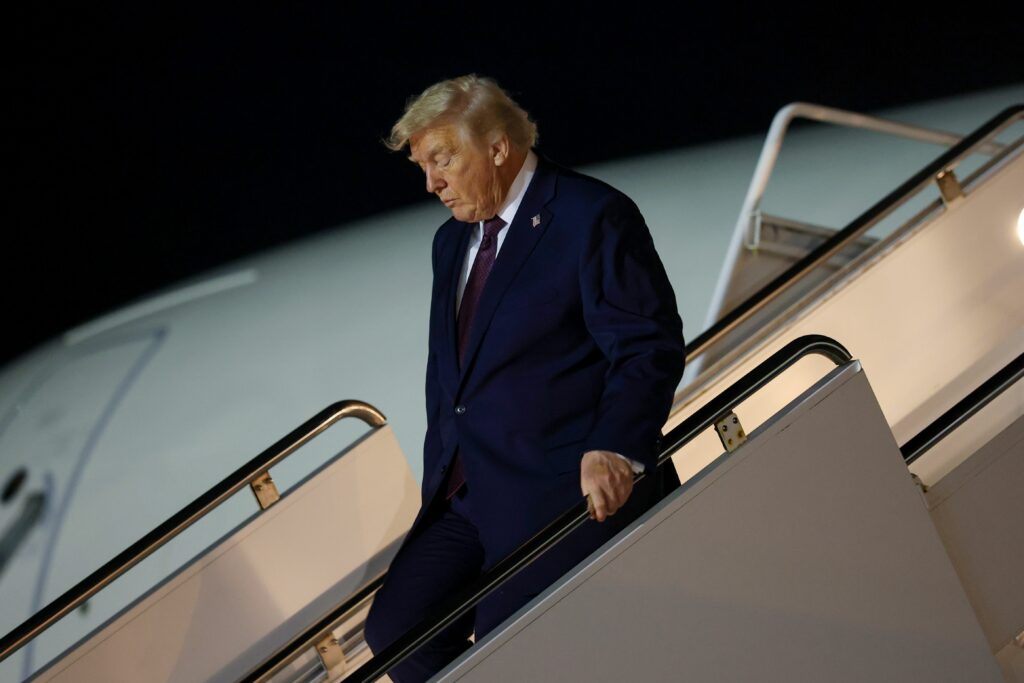
US President Donald Trump has blasted media reports questioning his state of health as “seditious, perhaps even treasonous,” sparking pushback Wednesday by one of the major outlets behind the stories.In a long, late-night social media post, the oldest elected president in US history raged about stories in The New York Times and elsewhere suggesting that at the age of 79 he is slowing down.”There has never been a President that has worked as hard as me! My hours are the longest, and my results are among the best,” Trump said in the nearly 500-word screed on his Truth Social network.”I actually believe it’s seditious, perhaps even treasonous, for The New York Times, and others, to consistently do FAKE reports in order to libel and demean  ‘THE PRESIDENT OF THE UNITED STATES.'” The Republican added that he had been through “long, thorough, and very boring” medical examinations and had been able to “ace” cognitive tests that he claimed other presidents had not taken.Trump added that the “best thing that could happen to this Country would be if The New York Times would cease publication because they are a horrible, biased, and untruthful ‘source’ of information.”The outburst comes despite the fact that Trump regularly accuses the media of having failed to cover the health of his predecessor Joe Biden, who dropped out of the 2024 election after a shambolic debate performance raised concerns about the Democrat’s age.He has also long contrasted his vigor with that of Biden — whom he dubs “Sleepy Joe” and described at the rally in Pennsylvania on Tuesday as a “sleepy son of a bitch.”- ‘False and inflammatory’ -Trump and the White House were incensed by a New York Times article in November that reported he had sharply reduced public events, domestic travel and working hours compared to his first term.The scrutiny on Trump’s health intensified after he appeared to be fighting to stay awake at a series of events, along with the revelation that he had an MRI test during an extra medical check-up in October.”Americans deserve in-depth reporting and regular updates about the health of the leaders they elect,” New York Times spokesperson Nicole Taylor said in a statement to AFP.”Mr Trump welcomed our reporting on the age and fitness of his predecessors; we’re applying the same journalistic scrutiny to his vitality.”The newspaper said its reporting was “heavily sourced” and based on interviews with people close to the president and with medical experts.”We won’t be deterred by false and inflammatory language that distorts the role of a free press,” Taylor added.Trump’s post on Tuesday night came after a vigorous performance at a more than hour-long campaign-style rally on affordability in which he joked, sang, danced — and lashed out at migrants and the “fake news.” In his Truth Social post, he rejected claims that he was slowing down or “maybe not as sharp as I once was.””I will know when I am ‘slowing up,’ but it’s not now!” he said.

US Fed expected to make third straight rate cut despite divisions

The US Federal Reserve is expected to deliver a further interest rate cut Wednesday despite divisions among its ranks, with chief Jerome Powell’s ability to secure support from fellow policymakers put to the test.Financial markets expect a third consecutive 25 basis points reduction, bringing levels to a range between 3.50 percent and 3.75 percent. This would be the lowest in around three years.But fissures within the Fed have grown even as policymakers slashed rates twice in recent months to boost the weakening employment market — and the central bank faces a turbulent year ahead.Officials opened their second day of deliberations at 9:00 am (1400 GMT), with their decision to be unveiled later Wednesday.”We look for at least two dissents in favor of no action and one in favor of a larger cut,” said Michael Feroli, chief US economist at JP Morgan.”There are almost equally compelling reasons to cut and to hold,” he added in a recent note.The Fed’s rate-setting committee consists of 12 voting members — including seven members of the board of governors, the New York Fed president and a rotation of reserve bank presidents — who take a majority vote in deciding the path of rates.Powell noted in October that inflation separate from President Donald Trump’s tariffs is not too far from officials’ two-percent target.But goods costs have risen on Trump’s sweeping levies, and some officials are concerned that higher prices could become persistent.The Fed pursues maximum employment and stable prices, although these goals can sometimes be in conflict. Lower rates typically stimulate the economy while higher levels hold back activity and tamp down inflation.- ‘Risk management’ -Powell will likely be able to “persuade several hesitant policymakers to support a third consecutive ‘risk management’ rate cut,” said EY-Parthenon chief economist Gregory Daco.The most recent available figures confirmed a slowdown in the jobs market, while a government shutdown from October to mid-November delayed the publication of more updated federal data.But Daco also expects Powell to signal “firmly that additional easing is unlikely before next spring,” unless there is material weakening in the economy.This is because rates are close to “neutral,” a level that neither stimulates nor restricts economic activity.Feroli of JP Morgan observed that most Fed governors appear to favor lowering rates, while most reserve bank presidents seem inclined to keeping them unchanged.But New York Fed President John Williams’s remarks that there was room for another cut in the near-term tilts the balance.”We believe he was speaking for the rest of the leadership,” Feroli said, referring to Powell and Vice Chair Philip Jefferson. “This should weigh the votes firmly toward a cut.”Meanwhile Fed Governor Stephen Miran, who is on leave from his role heading the White House Council of Economic Advisers, is expected to push for a larger cut.- Political pressure -This week’s gathering is the last before 2026, a year of key changes for the Fed — including the accession of a new chief and tests of the central bank’s independence as political pressure mounts.In a Politico interview published Tuesday, Trump signaled he would judge Powell’s successor on whether they immediately cut rates.Interviews for his choice are entering the final stages, and Powell’s term as Fed chair ends in May.Trump earlier hinted he wants to nominate his chief economic adviser Kevin Hassett.Other top contenders include former Fed official Kevin Warsh, Fed governors Christopher Waller and Michelle Bowman, and Rick Rieder of BlackRock.Hassett chairs the White House National Economic Council and appears to be in lockstep with the president on key economic issues.Miran’s term as governor also ends in January, creating an opening among top Fed officials. And Trump has sought to free up another seat in attempting to fire Fed Governor Lisa Cook this year.Cook challenged her ousting, and the Supreme Court awaits oral arguments in the case in January.

Trump touts economy at raucous rally as voter worries mount

US President Donald Trump insisted Tuesday that prices were falling “tremendously” for Americans in a rambling campaign-style rally that was meant to address mounting anger over the cost of living.Speaking at a casino in the blue-collar state of Pennsylvania, Trump was taking his economic message on the road for the first time in months as his approval ratings slump ahead of the 2026 midterm elections.But the 79-year-old also weaved through a host of topics familiar from last year’s presidential run, including inflammatory rhetoric on migration and swipes at what he called “shithole” countries.The second-term president has angrily rejected what he calls a “hoax” by rival Democrats on affordability, but he has shown signs that he realizes the issue is hurting Republicans ahead of the midterms.Instead, the billionaire former reality TV star is trying to convince voters that inflation is the fault of his Democratic predecessor Joe Biden — and that he alone can fix it.”I can’t say affordability ‘hoax’, because I agree the prices were too high,” Trump told the audience at a rural casino in Mount Pocono, Pennyslvania.”But they use the word affordability, and that’s their only word. They say affordability and everyone says, ‘oh, that must mean Trump has high prices.’ No, our prices are coming down tremendously from the highest prices in the history of our country.”Trump insists prices are falling for gas and for key consumer goods like beef, eggs and coffee, even though US inflation accelerated in September to 2.8 percent on an annual basis.- Migration rhetoric -Supporters who lined up in the biting cold to see him said they were worried about prices but backed Trump to tackle the problem.”You know he can’t fix all that in under a year,” Brianna Shay, 26, told AFP.Much of Trump’s focus on Tuesday however seemed to be heated remarks about immigration, the issue that drove his election wins in 2016 and 2024 and has seen him launch a major crackdown since his return to power.Trump repeatedly lashed out once again at Somali immigrants, including Democratic Congresswoman Ilhan Omar, and the country of Somalia itself, which he described as “filthy, dirty, disgusting.”He has ramped up his rhetoric on the subject as a scandal unfolds in the state of Minnesota where prosecutors say more than $1 billion went to non-existent social services, largely through false billing by Somali Americans.Trump also boasted about halting all migration from a number of countries including Afghanistan, Haiti and Somalia.”I didn’t say shithole, you did,” Trump said to an audience member, referring to an incident in his first term where he used the term during a White House event when he said he wanted to limit migration from certain countries. The focus on migration was a return to Trump’s comfort zone amid the growing discontent about the economy, which Americans have blamed at least partly on his sweeping tariffs.- ‘America first’ -In a Politico interview published earlier Tuesday, Trump said he would give the economy an “A-plus-plus-plus-plus-plus” rating.But Trump’s approval ratings have fallen to their lowest point since his return to office in January. Democrats campaigning on affordability swept elections last month for New York City mayor, and for the governors of New Jersey and Virginia.Republicans are now looking increasingly nervously at next year’s midterm elections, when control of Congress will be up for grabs. The parties of incumbent US presidents often take a beating in the midterms, but Trump’s chief of staff Susie Wiles said Monday she intended to “put him on the ballot” to get out loyal voters who might otherwise stay away.Yet Trump also faces growing dissent from within his “Make America Great Again” movement, with calls for him to focus on the economy instead of foreign peace deals.Former close ally Marjorie Taylor Greene, who broke with Trump in November, said the president had failed to focus on affordability.”For an ‘America First’ president, the number one focus should have been domestic policy, and it wasn’t,” Greene told the CBS News show “60 Minutes” in an interview that aired Sunday.

US Fed appears set for third rate cut despite sharp divides

The US Federal Reserve is expected to deliver a further interest rate cut Wednesday despite divisions among its ranks, with chief Jerome Powell’s ability to secure support from fellow policymakers put to the test.Financial markets expect a third straight 25 basis points reduction, bringing levels to a range between 3.50 percent and 3.75 percent. This would be the lowest in around three years.But divides within the Fed have grown even as policymakers voted to slash rates twice in recent months to boost the weakening employment market.”We look for at least two dissents in favor of no action and one in favor of a larger cut,” said Michael Feroli, chief US economist at JP Morgan.”There are almost equally compelling reasons to cut and to hold,” he added in a recent note.The Fed’s rate-setting committee consists of 12 voting members — including seven members of the board of governors, the New York Fed president and a rotation of reserve bank presidents — who take a majority vote in deciding the path of rates.Powell noted in October that inflation separate from President Donald Trump’s tariffs is not too far from officials’ two-percent target.But the costs of goods have risen on the back of Trump’s wide-ranging levies this year, and some officials are cautious that higher prices could become persistent.The Fed pursues maximum employment and stable prices as it decides the path of interest rates, although the goals can sometimes be in conflict. Lower rates typically stimulate the economy while higher levels hold back activity and tamp down inflation.- ‘Risk management’ -Powell will likely be able to “persuade several hesitant policymakers to support a third consecutive ‘risk management’ rate cut,” said EY-Parthenon chief economist Gregory Daco.This comes as the most recent available figures confirmed a slowdown in the jobs market, while a government shutdown from October to mid-November delayed the publication of more updated federal data.But Daco also expects Powell to signal “firmly that additional easing is unlikely before next spring,” unless there is material weakening in the world’s biggest economy.This is because rates are close to “neutral,” a level that neither stimulates nor restricts economic activity, analysts believe.Feroli of JP Morgan observed that most Fed governors appear to favor lowering rates, while most reserve bank presidents seem inclined to keeping them unchanged.But New York Fed President John Williams’ remarks that there was room for another cut in the near-term tilts the balance.”We believe he was speaking for the rest of the leadership,” Feroli said, referring to Powell and Vice Chair Philip Jefferson. “This should weigh the votes firmly toward a cut.”Meanwhile Fed Governor Stephen Miran, who is on leave from his role heading the White House Council of Economic Advisers, is expected to push for a larger rate cut.- Litmus test -This week’s gathering is the last before 2026, a year of key changes for the central bank — including the accession of a new chief and tests of its independence as political pressure mounts.In an interview with Politico published Tuesday, Trump signaled that he would judge Powell’s successor on whether they immediately cut interest rates.Asked if this was a “litmus test” for his handpicked candidate, Trump responded “yes.”Powell’s term as Fed chair ends in May 2026, and Trump has hinted that he wants to nominate his chief economic adviser Kevin Hassett to the top post.Hassett currently chairs the White House National Economic Council, and appears to be in lockstep with the president on key economic questions facing the Fed.If appointed, however, Hassett could also face pressure from financial markets to diverge from the White House on interest rates — particularly if inflation worsens.Miran’s term as governor also ends in January, creating an opening among the Fed’s top officials. And Trump has sought to free up another seat in attempting to fire Fed Governor Lisa Cook earlier this year.Cook challenged her ousting, and the Supreme Court barred the president from immediately removing her while awaiting oral arguments on the case in January.

Trump supporters say prices too high, but president has cure

Donald Trump may have dismissed US cost of living issues as a “hoax,” but his most loyal supporters are feeling the pinch — even if they still back the president to fix the problem.Hundreds of people, many bundled up with red “Make America Great Again” beanies, waited in the biting cold Tuesday to see Trump talk up his economic agenda at a casino in rural Pennsylvania.Several told AFP they are worried about high prices but stopped short of blaming the 79-year-old billionaire.”Personally, yes, prices are high right now… but things have to get worse before they get better,” said Brianna Shay, 26, clutching a sign reading “Trump Gives Us Hope.””Unfortunately, the president before really screwed us, really bad,” she said, echoing Trump in blaming his Democratic predecessor Joe Biden for the situation.”I think people are going to be able to afford to live again. But he has been president for just under a year now. You know he can’t fix all that in under a year,” said Shay, a public education administrator.Under pressure from his Republican Party, Trump has softened his message on inflation by acknowledging an affordability “problem,” having dismissed it last week as a “con job.”His appearance at Mount Airy Casino Resort, which was flanked by snowy fields and a partially frozen lake on Tuesday, was part of an effort to boost messaging that he is reducing inflation.Inside the packed conference hall, Trump lapped up the attention of a lively crowd that cheered his claims that US prices are falling “tremendously.”And the president again pinned lingering economic issues on his predecessor, prompting boos from the audience, with one woman shouting “I hate Joe Biden!”But even devoted followers like Tevin Dix — one of the first people queuing to hear Trump’s speech — noted the gravity of the financial situation.”Things are a little difficult, people are struggling,” said Dix, an air conditioning technician. Still, the 30-year-old was confident that Trump’s proposed solutions — including his sweeping levies on US trading partners — would yield results soon. “If the tariffs continue to keep pounding and getting other countries to bring jobs back and put more Americans back to work,” said Dix, who wore a Christmas-style jumper with Trump’s portrait.Many Americans, however, at least partly blame tariffs for worsening the cost of living, according to polls that show Trump’s approval rating at its lowest since his January return to office.Despite recognizing some financial concerns, people at the Pennsylvania rally were keen to praise Trump on other policies, such as his crackdown on migrants. And others simply shrugged off the suggestion of financial hardship. “Just past Black Friday was the biggest sales ever. If everybody’s broke, I don’t know where the money came from,” said Mark Johnson, 70.”All my investments are doing good. I’m happy. You can’t cure everything overnight. It’s gonna take a while,” the retiree added, holding a cutout of Trump wearing a Santa hat.

Honduran leader alleges vote tampering, US interference

Honduran President Xiomara Castro on Tuesday denounced what she called tampering with results in the recent general election, and accused US counterpart Donald Trump of interfering in the vote.The final votes are still being counted after the November 30 presidential election, and suspicions of interference have been fueled by successive computer failures that have stalled tallying.Trump-backed conservative candidate Nasry Asfura, 67, on Monday had 40.53 percent of votes, followed closely by right-wing candidate Salvador Nasralla with 39.16 percent, according to the National Electoral Council (CNE).Nasralla has also complained about alleged electoral corruption and on Monday described the results as “theft,” arguing he was in fact leading by 20 percent.Both are well ahead of the candidate from Castro’s left-wing Libre party, Rixi Moncada.Speaking at a rally in the center of the country, Castro said people had taken part in the election with “courage and determination.”However, she said the process was marked by “threats, coercion, manipulation of the TREP” — the country’s preliminary results system — and “tampering with the popular will.”Castro also claimed Trump had “interfered” in the election by threatening Hondurans that there would be “consequences” if they voted for Moncada.Trump declared his clear support for Asfura in the final stretch of the campaign, declaring him a “friend of freedom” and accusing Nasralla of merely “pretending to be an anti-communist.”Trump also issued a surprise pardon of former Honduran president Juan Orlando Hernandez, who had been serving a 45-year prison sentence in the United States on drug charges of helping traffic hundreds of tons of cocaine.Nasralla is demanding a “vote-by-vote” recount of the tallies which, according to him, show “a pattern of fraud where biometric recognition was not used and the tallies were drafted arbitrarily.”More than a week after the elections, thousands of voting records with “inconsistencies” still need to be reviewed, election officials said.Late Sunday, the Libre party demanded “the total annulment” of the elections and called for protests and strikes, while urging officials not to cooperate with the government transition.- Request to Interpol -The Trump administration said Monday that the election had been fair and that there was “no credible evidence” justifying its annulment.The electoral council has until December 30 to declare a winner, according to Honduran law.Amid the uncertainty over who will succeed Castro, Honduran Attorney General Johel Zelaya requested Tuesday that Interpol execute an arrest warrant against ex-president Hernandez.The warrant was issued in 2023 — when Hernandez was already in US custody — over alleged money laundering and fraud.On Tuesday, Hernandez’s lawyer, Renato Stabile, dismissed the prosecutor’s request, linking it to a “desperate and shameful attempt” by the Honduran left to “remain in power,” according to a statement to AFP in the United States.The former Honduran president, who is from the same party as Trump’s favored candidate Asfura, has ruled out returning to Honduras anyway because he fears for his life, according to his wife Ana Garcia.

Florida carries out state’s 18th execution of the year

A Florida man convicted of murdering a woman during a robbery was put to death by lethal injection on Tuesday, one of two executions scheduled in the United States this week.Mark Geralds, 58, was executed at 6:15 pm (2315 GMT) at the Florida state prison in Raiford after abandoning legal appeals against his death sentence.Geralds was convicted of the 1989 murder of Tressa Pettibone, 33, who was beaten and stabbed to death in her home.Pettibone’s eight-year-old son found her body when he returned home from school.Florida has carried out 18 executions this year, more than any other US state.There have been five each in Alabama and Texas.Tennessee is scheduled to carry out its third execution of the year on Thursday. Harold Nichols, 64, is to be executed by lethal injection at a state prison in Nashville for the rape and murder of Karen Pulley, 20.There have been 45 executions in the United States this year, the most since 2010, when 46 inmates were put to death.Thirty-seven of this year’s executions have been carried out by lethal injection.Three have been by firing squad and five by nitrogen hypoxia, which involves pumping nitrogen gas into a face mask, causing the prisoner to suffocate.The use of nitrogen gas as a method of capital punishment has been denounced by United Nations experts as cruel and inhumane.The death penalty has been abolished in 23 of the 50 US states, while three others — California, Oregon and Pennsylvania — have moratoriums in place.President Donald Trump is a proponent of capital punishment and, on his first day in office, called for an expansion of its use “for the vilest crimes.”

US Supreme Court weighs campaign finance case

The US Supreme Court heard arguments on Tuesday in a Republican challenge to campaign finance rules that could impact next year’s midterm elections.Among those bringing the case is Vice President JD Vance, who joined when he was running for the Senate in 2022 and is now considered a potential candidate for the Republican presidential nomination in 2028.At issue in the case brought by the Republican Party is limits on the amount of money political parties can spend in coordination with their candidates.In Citizens United, a landmark 2010 case, the Supreme Court lifted restrictions on campaign spending by corporations, unions and other outside groups.But political parties are still restricted, however, on how much they can spend on advertising, for example, in coordination with individual candidates.Supporters of the law argue that it curbs potential corruption and prevents wealthy donors from funneling money through a political party to a candidate of their choice.It was unclear during oral arguments on Tuesday how the court would rule although several of the six conservative justices on the nine-member court appeared inclined to strike down the restrictions.”I am concerned…that the combination of campaign finance laws and this court’s decisions over the years have together reduced the power of political parties as compared to outside groups, with negative effects on our constitutional democracy,” said Justice Brett Kavanaugh, a conservative.”You can give huge money to the outside group, but you can’t give huge money to the parties, and the parties are very much weakened compared to the outside group,” Kavanaugh said.The three liberal justices were skeptical.”Once we take off this coordinated expenditure limits, then what’s left?” said Justice Sonia Sotomayor. “What’s left is nothing, no control whatsoever.”Marc Elias, arguing for Democrats who oppose easing the rules, said lifting the spending restrictions would “convert the political parties into mere paymasters to settle invoices from campaign vendors.””They will not be able to support activity that is long term in nature, because there will be an arms race that right now doesn’t exist,” Elias said.”Coordinated party spending limits act as a buffer on how much money you can pump into directly paying the bills of a House or Senate campaign or a presidential campaign so that you have funds to do these other party building functions,” he added.The court is expected to issue its decision by the end of June, four months ahead of the midterm vote.