AFP USA

Zelensky reveals US-Ukraine plan to end Russian war, key questions remain

Ukraine won some limited concessions in the latest version of a US-led draft plan to end the Russian invasion, President Volodymyr Zelensky has revealed, though key questions remain over territory and whether Moscow could accept the new terms.The 20-point plan, agreed on by US and Ukrainian negotiators, was being reviewed by Moscow. The Kremlin has previously not shown a willingness to abandon its hardline territorial demands for full Ukrainian withdrawal from the east.Zelensky conceded there were some points in the document that he did not like, but that Kyiv had succeeded in removing immediate requirements for Ukraine to withdraw from the Donetsk region or that land seized by Moscow’s army would be recognised as Russian.Nevertheless, the Ukrainian leader still indicated the proposal would pave the way for Kyiv to pull some troops back, including from the 20 percent of the Donetsk region that it controls, where demilitarised zones would be established.It also got rid of demands that Kyiv must legally renounce its bid for NATO membership.Zelensky presented the plan during a two-hour briefing with journalists, reading from a highlighted and annotated version.”In the Donetsk, Lugansk, Zaporizhzhia, and Kherson regions, the line of troop deployment as of the date of this agreement is de facto recognised as the line of contact,” Zelensky said of the latest version.”A working group will convene to determine the redeployment of forces necessary to end the conflict, as well as to define the parameters of potential future special economic zones,” he added.This appears to suggest the plan opens the way for, but delays, options that Ukraine was previously reluctant to consider — a withdrawal of troops and the creation of demilitarised zones.”We are in a situation where the Russians want us to withdraw from the Donetsk region, while the Americans are trying to find a way,” Zelensky said.”They are looking for a demilitarised zone or a free economic zone, meaning a format that could satisfy both sides,” he continued.- ‘Let him croak’ -US President Trump is trying to broker an to end the four-year war, triggered by Russia’s 2022 invasion.Tens of thousands have been killed, eastern Ukraine decimated and millions forced to flee their homes.Russian troops are advancing on the front and hammering cities and Ukraine’s energy grid with nightly missile and drone barrages. Moscow’s defence ministry on Wednesday said it had captured another Ukrainian settlement in the southern Zaporizhzhia region.Russia in 2022 claimed to have annexed four Ukrainian regions — Donetsk, Kherson, Lugansk and Zaporizhzhia — in addition to the Crimean peninsula which it seized in 2014.President Vladimir Putin has shown no willingness to compromise, doubling down on his hardline demands for a sweeping Ukrainian withdrawal and a string of political concessions that Kyiv and its European backers have previously cast as capitulation.In a Christmas Eve address to the nation later on Wednesday, Zelensky appeared to wish death upon the Russian leader.”Today we all have one dream. And we make one wish for everyone: Let him croak,” he said, a reference widely understood to be about Putin.- NATO, nuclear plant, elections -Any plan that involves Ukraine pulling back its troops would need to pass a referendum in Ukraine, Zelensky said.”A free economic zone. If we are discussing this, then we need to go to a referendum,” Zelensky said, referring to plans to designate areas Ukraine pulls out from as a demilitarised free trade zone.On NATO, Zelensky said: “It is the choice of NATO members whether to have Ukraine or not. Our choice has been made. We moved away from the proposed changes to the Constitution of Ukraine that would have prohibited Ukraine from joining NATO.”Nevertheless, the prospects of Ukraine being admitted to the bloc appear slim-to-none, as it has been ruled out by Washington.Moscow has repeatedly said NATO membership for Ukraine is unacceptable, presenting it as one of the reasons it invaded in the first place.The plan sees joint US-Ukrainian-Russian management of the Zaporizhzhia nuclear power plant, occupied by Russian troops. Zelensky said he does not want any Russian oversight of the facility.He also said Ukraine would hold presidential elections only after an agreement is signed — something both Putin and Trump have been pushing for.Kremlin spokesman Dmitry Peskov told reporters Moscow was “formulating its position” and declined to comment on the specifics of the latest plan. 

Trump says comedian Colbert should be ‘put to sleep’

On the eve of Christmas, President Donald Trump has unleashed a fresh blast of vitriol at late-night comedy talk shows, saying comedian Stephen Colbert is a “pathetic trainwreck” who should be “put to sleep.”Colbert’s “The Late Show” is scheduled to end in May 2026, a decision his fans say smacks of censorship.In a late night Truth Social post, Trump wrote that Colbert “has actually gotten worse” since being “terminated by CBS, but left out to dry.” “Stephen is running on hatred and fumes ~ A dead man walking! CBS should, ‘put him to sleep,’ NOW,” Trump wrote.Colbert has hosted the “The Late Show” since 2015 and it has been the highest-rated late night talk show on US television. His opening monologues often take aim at the Republican president.There was no immediate public response from Colbert or CBS to Trump’s post. CBS announced the sunsetting of Colbert’s show after one more season in July, the same month its parent company reached a $16 million settlement with Trump. CBS called the cancellation “a purely financial decision.”Trump had sued Paramount, alleging that CBS News’ “60 Minutes” program deceptively edited an interview with his 2024 election rival, Kamala Harris, in her favor.In another overnight post, Trump repeated threats to yank the broadcast licenses of networks whose content he deemed overly critical. “If Network NEWSCASTS, and their Late Night Shows, are almost 100% Negative to President Donald J. Trump, MAGA, and the Republican Party, shouldn’t their very valuable Broadcast Licenses be terminated? I say, YES!” On Sunday, CBS’s new editor-in-chief, Bari Weiss, pulled a “60 Minutes” segment on alleged torture at El Salvador’s CECOT prison — where Trump sent hundreds of deported Venezuelans — saying it needed more reporting. In August, Disney-owned ABC briefly suspended its late-night star, Jimmy Kimmel, before bringing him back on a one-year contract.Kimmel had annoyed conservatives with comments in the wake of the murder of right-wing activist Charlie Kirk.Trump appears to be aiming to reshape the US media landscape, which he says is biased against conservatives.His appointee to head the Federal Communications Commission, Brendan Carr, turned heads when he told a Congressional hearing that “the FCC is not formally an independent agency,” implying that his actions could justifiably be aligned with the political priorities of the White House.

David Sacks: Trump’s AI power broker

From a total Washington novice, Silicon Valley investor David Sacks has against expectations emerged as one of the most successful members of the second Trump administration.He is officially chair of President Donald Trump’s Council of Advisors on Science and Technology. However, in the White House he is referred to as the AI and crypto tsar, there to guide the president through the technology revolutions in which the United States play a central role.”I am grateful we have him,” OpenAI boss Sam Altman said in a post on X.”While Americans bicker, our rivals are studying David’s every move,” billionaire Salesforce CEO Marc Benioff chimed in.Those supportive posts responded to a New York Times investigation highlighting Sacks’s investments in technology companies benefiting from White House AI support.Sacks dismissed the report as an “anti-truth” hit job by liberal media.But the episode confirmed that this South African-born outsider has become a force in Trump’s Washington, outlasting his friend Elon Musk, whose White House career ended in acrimony after less than six months.”Even among Silicon Valley allies, he has outperformed expectations,” said a former close associate, speaking anonymously to discuss the matter candidly.- ‘Mafia’ member -Unlike many Silicon Valley figures, the South African-born Sacks has been staunchly conservative since his Stanford University days in the 1990s.There he met Peter Thiel, the self-styled philosopher king of the right-wing tech community.In the early 1990s, the two men wrote for a campus publication, attacking what they saw as political correctness destroying American higher education.After earning degrees from Stanford and the University of Chicago, Sacks initially took a conventional path as a management consultant at McKinsey & Company.But Thiel lured his friend to his startup Confinity, which would eventually become PayPal, the legendary breeding ground for the “PayPal mafia” — a group of entrepreneurs including Musk and LinkedIn billionaire Reid Hoffman — whose influence now extends throughout the tech world.After PayPal, Sacks founded a social media company, sold it to Microsoft, then made his fortune in venture capital.A major turning point came during the COVID pandemic when Sacks and some right-wing friends launched the All-In podcast as a way to pass time, talk business and vent about Democrats in government.The podcast rapidly gained influence, and the brand has since expanded to include major conferences and even a tequila line.Sacks began his way to Trump’s inner circle through campaign contributions ahead of last year’s presidential election.With Musk’s blessing, he was appointed as pointman for AI and cryptocurrency policy.Before diving into AI, Sacks shepherded an ambitious cryptocurrency bill providing legal clarity for digital assets.It’s a sector Trump has enthusiastically embraced, with his family now heavily invested in crypto companies and the president himself issuing a meme coin — activity that critics say amounts to an open door for potential corruption.But AI has become the central focus of Trump’s second presidency with Sacks there to steer Trump toward industry-friendly policies.However, Sacks faces mounting criticism for potential overreach.According to his former associate, Sacks pursues his objectives with an obsessiveness that serves him well in Silicon Valley’s company-building culture. But that same intensity can create friction in Washington.The main controversy centers on his push to prevent individual states from creating their own AI regulations. His vision calls for AI rules to originate exclusively from Washington.When Congress twice failed to ban state regulations, Sacks took his case directly to the president, who signed an executive order threatening to cut federal funding to states passing AI laws.- ‘Out of control’ -Tech lobbyists worry that by going solo, Sacks torpedoed any chance of effective national regulation.More troubling for Sacks is the growing public opposition to AI’s rapid deployment. Concerns about job losses, proliferating data centers, and rising electricity costs may become a major issue in the 2026 midterm elections.”The tech bros are out of control,” warned Steve Bannon, the right-wing Trump movement’s strategic mastermind, worried about political fallout.Rather than seeking common ground, Sacks calls criticism “a red herring” from AI doomers “who want all progress to stop.”

EU ‘strongly condemns’ US sanctions against five Europeans

The European Union and some member states reacted sharply Wednesday to US sanctions imposed on five European figures involved in regulating tech companies, including former European commissioner Thierry Breton.They were responding after the US state department announced Tuesday it would deny visas to the five, accusing them of seeking to “coerce” American social media platforms into censoring viewpoints they oppose.France, Germany and Spain also condemned the news from Washington.A statement from the Commission said: “We have requested clarifications from the US authorities and remain engaged. If needed, we will respond swiftly and decisively to defend our regulatory autonomy against unjustified measures.”Our digital rules ensure a safe, fair, and level playing field for all companies, applied fairly and without discrimination.” Breton, the former top tech regulator at the European Commission, often clashed with tycoons including Elon Musk over their obligations to follow EU rules.The state department has described him as the “mastermind” of the European Union’s Digital Services Act (DSA), which imposes content moderation and other standards on major social media platforms operating in Europe.The DSA stipulates that major platforms must explain content-moderation decisions, provide transparency for users and ensure researchers can carry out essential work, such as understanding how much children are exposed to dangerous content.But the act has become a bitter rallying point for US conservatives who see it as a weapon of censorship against right-wing thought in Europe and beyond, an accusation the EU furiously denies.”The Trump Administration will no longer tolerate these egregious acts of extraterritorial censorship,” US Secretary of State Marco Rubio said in a post on X Tuesday.- ‘Intimidation and coercion’ -French President Emmanuel Macron said on X: “France condemns the visa restriction measures taken by the United States against Thierry Breton and four other European figures.””These measures amount to intimidation and coercion aimed at undermining European digital sovereignty,” he added, saying Europe would defend its “regulatory autonomy”.German Foreign Minister Johann Wadephul wrote in a post on X Wednesday: “The DSA was democratically adopted by the EU for the EU –- it does not have extraterritorial effect.The visa bans, he added, “are not acceptable”.Spain’s foreign ministry also condemned the US measures, saying in a statement: “A safe digital space, free from illegal content and disinformation, is a fundamental value for democracy in Europe and a responsibility for everyone.” Breton himself described the latest measures as a political “witch hunt” in a post on X: “To our American friends: ‘Censorship isn’t where you think it is’.”Breton left the commission in 2024 and Stephane Sejourne, his successor in charge of the EU’s internal market, said on X that “no sanction will silence the sovereignty of the European peoples”.The visa ban also targeted Imran Ahmed of the Center for Countering Digital Hate, a nonprofit that fights online misinformation; and Anna-Lena von Hodenberg and Josephine Ballon of HateAid, a German organisation that the state department said functions as a trusted flagger for enforcing the DSA.Clare Melford, who leads the UK-based Global Disinformation Index (GDI), was also on the list.A statement from HateAid called the US government decision an “act of repression by an administration that increasingly disregards the rule of law and tries to silence its critics with all its might”.A GDI spokesperson said the measures were “an egregious act of government censorship” as well as “immoral, unlawful, and un-American”. 

UN experts slam US blockade on Venezuela

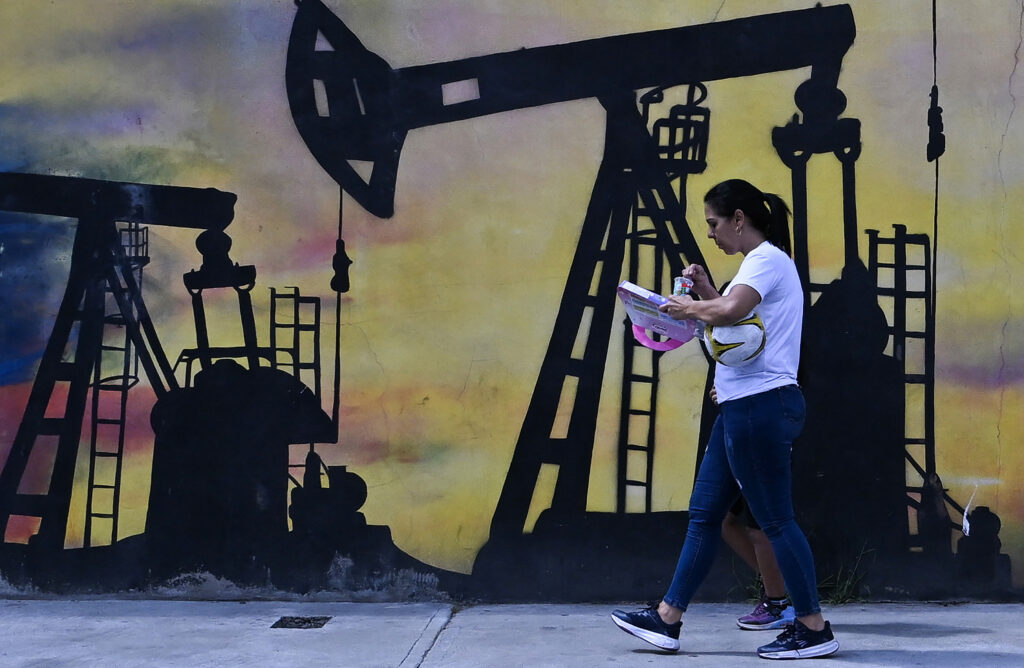
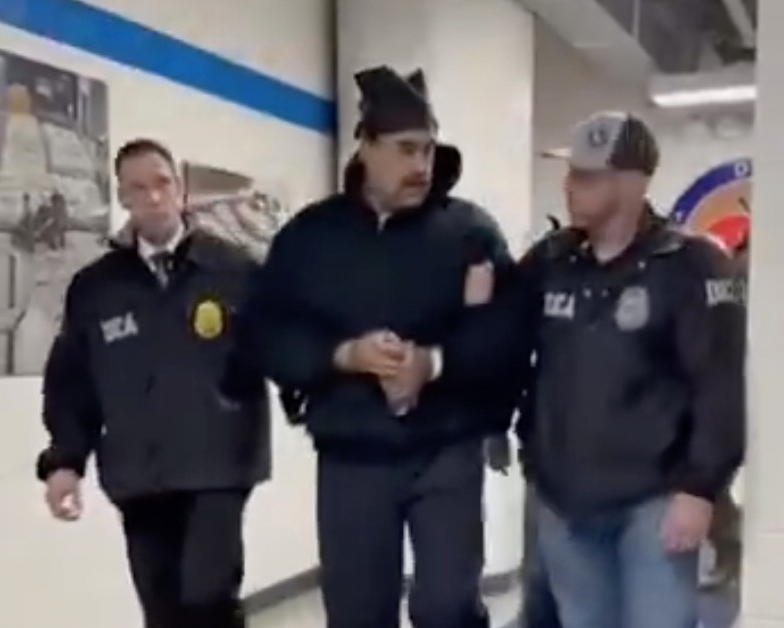
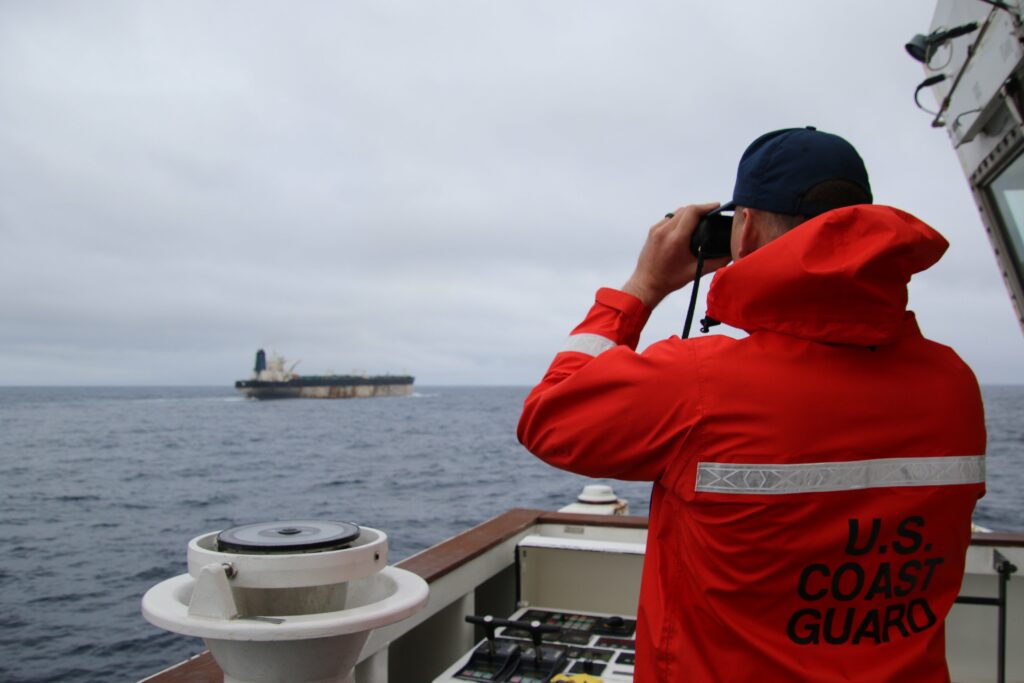
Four United Nations rights experts on Wednesday condemned the US partial naval blockade of Venezuela, determining it illegal armed aggression and calling on the US Congress to intervene.The United States has deployed a major military force in the Caribbean and has recently intercepted oil tankers as part of a naval blockade against Venezuelan vessels it considers to be under sanctions.”There is no right to enforce unilateral sanctions through an armed blockade,” the UN experts said in a joint statement.A blockade is a prohibited use of military force against another country under the UN Charter, they added.”It is such a serious use of force that it is also expressly recognised as illegal armed aggression under the General Assembly’s 1974 Definition of Aggression,” they said.”As such, it is an armed attack under article 51 of the Charter — in principle giving the victim state a right of self-defence.”US President Donald Trump accuses Venezuela of using oil, the South American country’s main resource, to finance “narcoterrorism, human trafficking, murders, and kidnappings”.Caracas denies any involvement in drug trafficking. It says Washington is seeking to overthrow its president, Nicolas Maduro, in order to seize Venezuelan oil reserves, the largest in the world.Since September, US forces have launched dozens of air strikes on boats that Washington alleges, without showing evidence, were transporting drugs. More than 100 people have been killed.- Congress should ‘intervene’ -“These killings amount to violations of the right to life. They must be investigated and those responsible held accountable,” said the experts.”Meanwhile, the US Congress should intervene to prevent further attacks and lift the blockade,” they added.They called on countries to take measures to stop the blockade and illegal killings, and bring perpetrators justice.The four who signed the joint statement are: Ben Saul, special rapporteur on protecting human rights while countering terrorism; George Katrougalos, the expert on promoting a democratic and equitable international order; development expert Surya Deva; and Gina Romero, who covers the right to freedom of peaceful assembly and association.UN experts are independent figures mandated by the UN Human Rights Council to report their findings. They do not, therefore, speak for the United Nations itself.On Tuesday at the UN in New York, Venezuela, having requested an emergency meeting of the Security Council, accused Washington of “the greatest extortion known in our history”.

El Salvador defends mega-prison key to Trump deportations

El Salvador’s leader Nayib Bukele on Tuesday defended a huge prison that has become key to deportations from the United States under President Donald Trump, after drawing criticism for alleged rights abuses.The Terrorism Confinement Center (CECOT) is a maximum security facility lauded by Bukele as part of his attempts to rid the Central American country of prolific narco-gangs.US broadcaster CBS News had been due to air an investigation Sunday about alleged abuses at CECOT on its flagship “60 Minutes” program, but it was pulled at the last minute, leading to accusations of political meddling. Bukele fired back Tuesday against allegations about the prison’s conditions, saying that “if you are convinced that torture is taking place at CECOT, El Salvador is ready to cooperate fully” by releasing the entire prison population to any country willing to take them.”The only condition is straightforward: it must be everyone,” Bukele said in the social media post, specifying that this would include “all gang leaders and all those described as political prisoners.”Bukele’s post follows former US secretary of state Hillary Clinton labeling the prison “brutal” on social media Monday.”Curious to learn more about CECOT? Hear Juan, Andry, and Wilmer share firsthand how the Trump administration branded them as gang members without evidence and deported them to the brutal El Salvadoran prison,” Clinton said in the post in which she also shared an 11-minute video of the PBS Frontline documentary titled: “Surviving CECOT.”- Centuries-long sentences – CECOT has also been at the center of a major US legal case since March, when the Trump administration sent hundreds of Venezuelan and other migrants there despite a judge’s order that they be returned to the United States.Several deportees who have since been released have made claims of repeated abuse at the facility, with human rights groups echoing these allegations.According to rights group Socorro Juridico Humanitario, 454 Salvadorans have died in prisons since Bukele’s crackdown began.Since March 2022, Bukele has been cracking down on gangs under a state of emergency that allows for arrests without warrants.More than 90,000 people have been detained, and some 8,000 have been released after being found not guilty, according to official sources.On Sunday, El Salvador announced prison sentences for hundreds of convicted gang members, with some of them receiving centuries-long terms.The Salvadoran government says gang violence is responsible for 200,000 deaths over the past three decades.

US Supreme Court blocks Trump’s National Guard deployment in Chicago

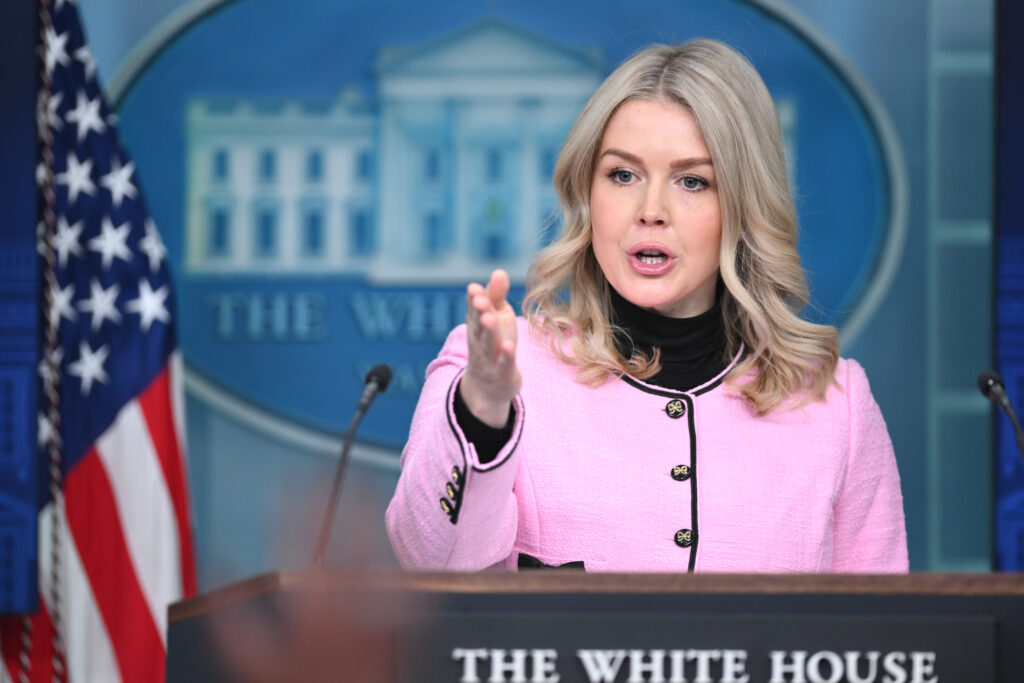
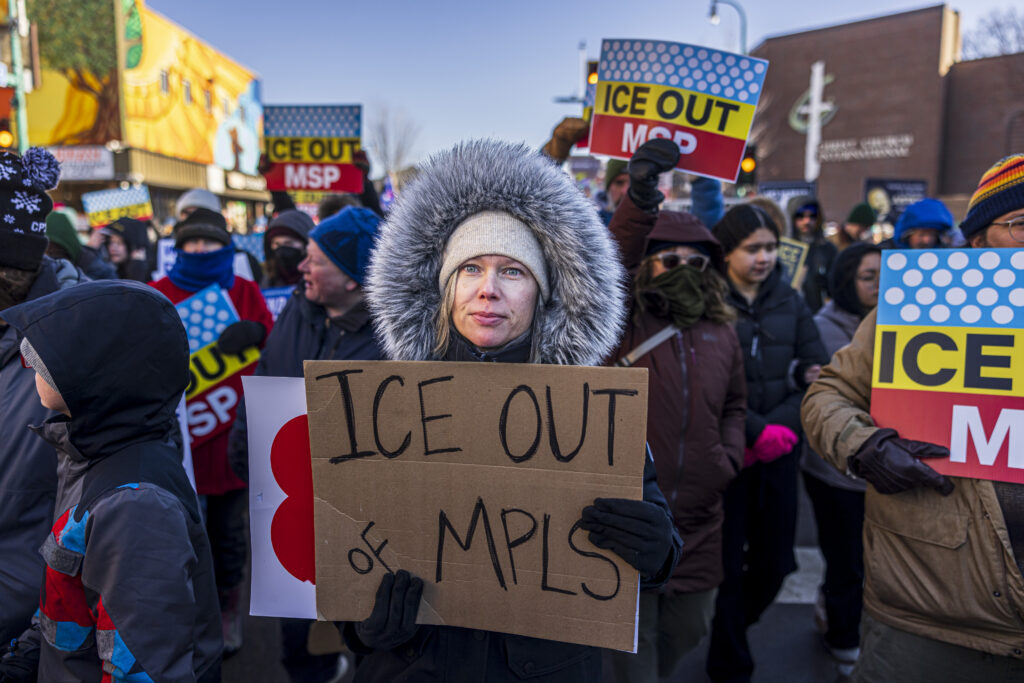
The US Supreme Court dealt a blow to President Donald Trump’s immigration crackdown on Tuesday by blocking his deployment of National Guard troops in Chicago.The conservative-dominated court kept in place for now a lower court order barring the deployment of troops on the streets of the city in the midwestern state of Illinois.”At this preliminary stage, the Government has failed to identify a source of authority that would allow the military to execute the laws in Illinois,” the court said in an unsigned order.Three conservative justices — Samuel Alito, Clarence Thomas and Neil Gorsuch — dissented.The Republican president has sent National Guard troops to three Democratic-led cities this year — Los Angeles, Washington and Memphis — but his efforts to deploy soldiers in Portland and Chicago have been tied up in the courts. White House spokeswoman Abigail Jackson, reacting to the court ruling, said the president “activated the National Guard to protect federal law enforcement officers, and to ensure rioters did not destroy federal buildings and property.””Nothing in today’s ruling detracts from that core agenda,” Jackson said.JB Pritzker, the Democratic governor of Illinois, who strongly opposed the deployment along with the Democratic mayor of Chicago, welcomed the ruling, calling it a “big win for Illinois and American democracy.””This is an important step in curbing the Trump Administration’s consistent abuse of power and slowing Trump’s march toward authoritarianism,” Pritzker said.After two lower courts blocked Trump from sending troops into Chicago, his administration made an emergency appeal to the Supreme Court.In his filing with the top court, Solicitor General John Sauer claimed federal agents in Chicago were being “forced to operate under the constant threat of mob violence.”The court order blocking deployment of the National Guard “improperly impinges on the president’s authority and needlessly endangers federal personnel and property,” Sauer added.The Supreme Court rebuff of the emergency appeal was a rare defeat for Trump at the top court, where conservatives hold a 6-3 majority.It was not immediately clear how Tuesday’s decision would affect the other cases where Democratic-ruled states have challenged Trump’s National Guard deployment.California and Oregon have both filed legal challenges against the Trump administration’s extraordinary domestic use of the National Guard.Trump sent troops to Los Angeles earlier this year to quell demonstrations sparked by a federal crackdown on undocumented migrants.A district court judge ruled it unlawful, but an appeals court panel allowed the Los Angeles deployment to proceed.Some 300 National Guard troops remain activated in the Chicago area but are not engaged in operations.

New Epstein files dump contains multiple Trump references

A new batch of Jeffrey Epstein files released Tuesday contains numerous references to President Donald Trump, including documents detailing flights he took on his then friend’s private jet, and other claims that his Justice Department described as “untrue and sensationalist.”The latest release contains reams of previously unseen material from the investigation into Epstein, a wealthy US financier who died in jail in 2019 while awaiting trial for sex trafficking underage girls.A first collection of heavily redacted files made public last Friday sparked criticism that the Justice Department was deliberately excluding references to Trump.Trump figures prominently, however, in the thousands of documents published on Tuesday, underlining his close ties to the disgraced financier who was already a convicted sex offender when the more serious trafficking case began.The Justice Department issued a statement defending the 79-year-old Republican shortly after the files dropped, saying some documents “contain untrue and sensationalist claims made against President Trump.”Trump, who is not accused of any wrongdoing, fought for months to prevent release of the vast trove of documents about Epstein.But a rebellion inside Trump’s Republican Party forced him to sign off on a law mandating release of all the documents.The extraordinary move reflected intense political pressure to address what many Americans, including Trump’s own supporters, have long suspected to be a cover-up to protect rich and powerful men in Epstein’s orbit.- Private jet trips -Trump said Monday he did not approve of the file dumps, expressing concern that people who “innocently met” Epstein over the years risked having their reputations smeared.”Everybody was friendly with this guy,” he said.He did not immediately react to Tuesday’s release.Despite attempts to distance himself, Trump was friends for years with Epstein and has given different accounts of how he ended their relationship.Most recently, he said he threw him out of his Florida golf club for being “a creep.”However, he has also said they fell out when Epstein “stole” young women working in the spa at his club.The latest documents add to evidence that Trump was close to Epstein.They include a January 2020 note from New York federal prosecutors who were investigating Epstein’s associate, Ghislaine Maxwell, detailing Trump’s repeated travel — eight trips between 1993 and 1996 — on the financier’s private jet.”Records we received yesterday reflect that Donald Trump traveled on Epstein’s private jet many more times than previously has been reported (or that we were aware),” it says.One flight reportedly had just three passengers: Epstein, Trump and an unidentified 20-year-old.- Delays -One Trump reference was swiftly disputed by the Department of Justice.A handwritten letter released in Tuesday’s tranche was purportedly written by Epstein, while in jail, to Larry Nassar, the former US gymnastics doctor who was imprisoned over rampant abuse of female athletes.Epstein is shown complaining to Nassar that they are incarcerated while the “president shares our love of young, nubile girls. When a young beauty walked by he loved to ‘grab snatch.'”In a statement the DOJ said the FBI “has confirmed this alleged letter from Jeffrey Epstein to Larry Nassar is FAKE,” saying it was postmarked three days after Epstein’s death, and entered the mail system in Virginia, despite him being jailed in New York.Trump critics say the government continues to slow-walk the release of embarrassing material.At least two emails in the cache mention 10 unidentified “co-conspirators” of Epstein, and Democratic Senate Minority Leader Chuck Schumer called for the Justice Department to look into potential Epstein accomplices.”The Department of Justice needs to shed more light on who was on the list, how they were involved, and why they chose not to prosecute,” the senator said.Maxwell, Epstein’s former girlfriend, remains the only person convicted in connection with his crimes.

Trump in Epstein files: five takeaways from latest release

The newest US document dump on Jeffrey Epstein is sprawling, uneven and heavily redacted — but tucked inside are moments that have sharpened scrutiny on President Donald Trump’s long-acknowledged past association with the notorious sex offender.The files do not rewrite the public record on Trump, although there is material that may prove embarrassing to the president.Trump has long denied any wrongdoing and the Justice Department says some claims in the files are flatly false.However, the documents do illuminate how federal investigators documented his proximity to Epstein — what they flagged, what they questioned, and what they ultimately set aside.The result is a collection of fragments rather than conclusions, ranging from flight records to internal emails and an unsettling piece of correspondence involving another convicted abuser.Here are five takeaways from the documents now in public view.- Trump’s travel on Epstein’s jet -The most concrete new detail is an internal email dated January 7, 2020, in which a New York prosecutor said flight records showed Trump took eight trips on Epstein’s private jet between 1993 and 1996 — more than investigators were aware of at the time.The email — marking the most detailed account yet of Trump’s travel alongside Epstein — says Ghislaine Maxwell was aboard at least four of those flights. Maxwell is now serving a 20-year prison sentence for offenses including sex trafficking a minor.It also describes one flight where the only passengers were Epstein, Trump and an unidentified 20-year-old whose name is redacted, plus two other flights involving women described as possible Maxwell-case witnesses.- Mar-a-Lago subpoena – The newly released documents show that prosecutors issued a November 2021 subpoena to Trump’s south Florida beach club Mar-a-Lago, seeking records relevant to the government’s case against Maxwell.Attached was a letter dated February 2015, on Mar-a-Lago letterhead, in which club officials indicate they did not have the employment records from 1999 to 2001 that federal agents were seeking.The presence of a subpoena does not imply wrongdoing by its recipient, but it does show investigators formally sought information from Trump’s property as they pursued Maxwell.- Photo with Trump and Maxwell -One newly disclosed email says someone reviewing data obtained from close Trump ally Steve Bannon’s cellphone found an “image of Trump and Ghislaine Maxwell.” The DOJ released the reference while redacting the photo itself.- Claims the DOJ calls false -In an unusual move, the DOJ explicitly warned that certain claims against Trump in documents submitted to the FBI shortly before the 2020 election were “untrue and sensationalist.”The batch of newly released files describes FBI “tips” collected about Trump and Epstein-era parties in the early 2000s, with no clear indication in the documents of follow-up or corroboration.A tip from October 2020 alleges that Epstein hosted a party in 2000 where someone named Ghislaine Villeneuve brought the tipster. Someone at the party said Trump “had invited them all to a party at Mar-a-Lago” and the tipster indicated that she wanted to go but was told “it wasn’t that kind of party — it was for prostitutes.” The document doesn’t confirm follow-up and remains unverified.- Letter to Larry Nassar -The Justice Department said a disturbing handwritten letter among the newly released paperwork — purported to be from Epstein to disgraced former US gymnastics team doctor Larry Nassar — was among the false claims and fake material.The message appeared to have been sent in August 2019, the month Epstein died by suicide — although DOJ officials said the postmark, return address and omission of an inmate number suggest it may not be genuine.They added that the handwriting didn’t appear to match Epstein’s.The letter’s author writes that Trump “shares our love of young, nubile girls,” a sentence that had no verified context but had captured media attention due to its graphic tone. The letter started, “As you know by now, I have taken the ‘short route’ home.” US media had taken the phrase to be a dark euphemism for Epstein’s suicide.

Latest Epstein files renew scrutiny of Britain’s ex-prince Andrew

A man who appears to be Britain’s former prince Andrew discussed arranging meetings with “inappropriate friends” with Ghislaine Maxwell, the accomplice of notorious sex offender Jeffrey Epstein, according to newly released US government documents.The emails are among nearly 30,000 pages made public by the US Justice Department under a transparency law and add fresh detail to the long-running controversy surrounding Andrew’s links to Epstein and Maxwell.The correspondence dates from 2001 and 2002 and was sent from an account using the alias “The Invisible Man” and signing off as “A.” In one August 2001 message, the writer says he is staying at Balmoral, the British royal family’s summer residence in Scotland, and asks Maxwell: “Have you found me some new inappropriate friends?”While the author is not explicitly named, several details point toward the former prince, whose royal titles were stripped in the fallout from the scandal.The emails refer to Balmoral, to a valet who had served the writer since childhood and to leaving the “RN” — a reference to the Royal Navy, which Andrew left in July 2001. Andrew has previously acknowledged his friendship with Maxwell and Epstein but has denied all allegations of wrongdoing.In the exchange, Maxwell replies apologetically that she has found only “appropriate” friends, prompting a terse response from “A”: “Distraught!” In another email chain from early 2002, Maxwell forwards correspondence about a proposed trip to Peru that includes plans to introduce “Andrew” to companions described as “friendly and discreet.”Maxwell, who is serving a 20-year jail sentence for sex trafficking, suggests to her acquaintance that he organize some “two-legged sight-seeing.”Files highlighted by American media also illuminate tensions between Andrew and US prosecutors, with internal Justice Department emails showing lawyers debating how to respond publicly to claims by his legal team that he was willing to cooperate.Prosecutors privately disputed those claims and later accused him of offering “zero cooperation” when asked to submit to an interview.US authorities sought to question Andrew in connection with investigations into Epstein — whose 2019 jailhouse death has been ruled a suicide — although the royal was not a criminal target.Andrew settled a US civil lawsuit in 2022 brought by Virginia Giuffre, who alleged she was trafficked by Epstein and forced to have sex with the royal when she was a teenager. He did not admit liability.Giuffre died by suicide in April and fallout from the posthumous publication of her memoir six months later ultimately saw Andrew stripped of his remaining royal titles.