AFP USA

In fire-ravaged Los Angeles, a long road of rebuilding

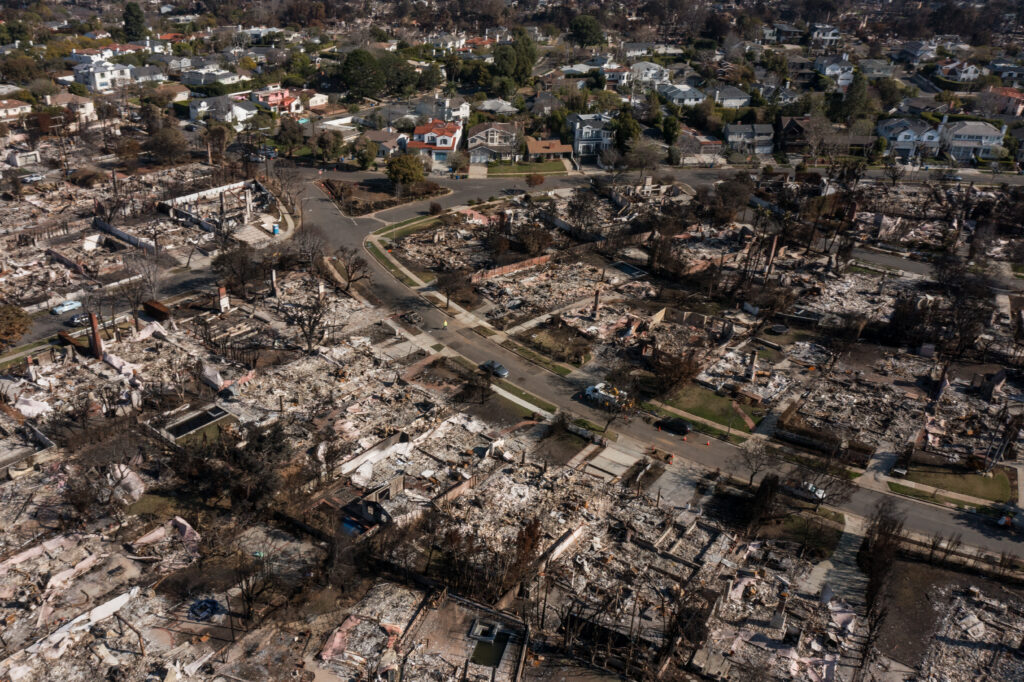
After the loss of more than 10,000 homes in last month’s Los Angeles fires, the region faces a daunting challenge to rebuild with a tight labor market, constrained construction supplies and strict regulations.”It’s going to be a very difficult rebuild process … and it’s going to take a long time,” said Jim Tobin, CEO of the National Association of Home Builders. “Fire is very unique: we’re talking about total loss.” Even when there is still a foundation or a chimney, “fire wreaks havoc with those materials and they all have to be knocked down,” said Tobin, describing what is often a more complete annihilation compared with a flood or hurricane.Before new work can begin, the old properties must be cleared of debris because of the risk of toxic waste, said Mary Comerio, professor of architecture at the University of California at Berkeley and a specialist in disaster recovery.In Paradise, California — where 18,000 structures were obliterated in fires in 2018, including 11,000 homes — this initial step of clearing out the old property took nine months, according to Colette Curtis, who directed the rebuilding for the city.Only 10 percent of Paradise’s homes and some 500 buildings overall survived the conflagration. The initial rebuilding permits were granted in 2019. There are about 400 buildings currently under construction in the city.”We expect our recovery will be another 10 years probably before we’re completely rebuilt,” Curtis said. Things could move faster in wealthy areas such as Malibu and Pacific Palisades, devastated in last month’s fires, if the homeowners don’t need to wait for funds from an insurer, or if they receive federal aid.- Burst of activity -Experts say construction permits for new homes could require nine to 12 months, with a finished home ready in three to five years.Public entities will also need to mobilize to clean and rebuild roadways, and build waist disposal and energy facilities, schools, hospitals and libraries.The federal government normally shoulders three-quarters of the costs, but then-president Joe Biden said it would cover 100 percent of the cost of the most recent Los Angeles fires.It is unclear whether President Donald Trump — who succeeded Biden on January 20 — will adhere to that promise, however.Republican Trump has repeatedly threatened to withhold funding from Democrat-led California — though after seeing the fire damage for himself last month, he vowed solidarity.California Governor Gavin Newsom has announced steps meant to accelerate the rebuilding, loosening some environmental standards and cracking down on price gouging.Supplies have remained tight for some construction materials. Procuring more could be further challenged if the Trump administration moves ahead with planned tariffs on China and Canada, which are major suppliers of key building materials.The construction industry is also expected to need to add some 439,000 workers in 2025 and 500,000 the year after.”For any major urban disaster, there will be a lot of internal migration of workers,” said Comerio. The surge of activity is “quite good for the economy,” she said. “All the construction is a very good short-term boom.”But the burst of demand can put stress on US home improvement stores such as Home Depot and Lowe’s.”It will be difficult for most retailers and suppliers to cope with the very elevated demand that is generated in a short period of time,” said Neil Saunders of GlobalData. “Tariffs, if applied, will add another layer of complication.”The new construction will also need to mitigate against future fire risk. At Paradise, where 85 people perished in the fires, local officials are strict about ensuring that walls, roofs and windows are fire resistant, that there is a five-foot zone of non-combustible vegetation near a home and that electric lines are buried, Curtis said.”Don’t give up hope,” she said. “It feels impossible right now but just keep going, it will get better.”

Davis bids farewell to LA, ready for ‘next chapter’

Anthony Davis paid tribute to Los Angeles in a farewell message to his adopted city on Monday following his shock trade to the Dallas Mavericks.In his first comments since news broke that the Los Angeles Lakers were trading him to Dallas in exchange for Slovenian superstar Luka Doncic, Davis described the deal as “business.”The Doncic-Davis trade is widely regarded as the most jaw-dropping deal in NBA history, a stunning coup conducted in utmost secrecy that no one saw coming.In a post on Instagram, Davis said he was pleased to have been able to deliver an NBA championship for the Lakers during the pandemic-disrupted 2020 season.”Six years ago, I came here with the vision to win a Championship, and I will never forget the moment we did!” the 31-year-old wrote.”The business of basketball is a business just like all other businesses… I am grateful to the city where my first ring came from, grew my family and friendships and I will always have a home here,” said Davis, who reportedly paid $31 million for a mansion in the exclusive Los Angeles neighborhood of Bel Air in 2021.”My family and I thank everyone who made this place home and we are still thinking of those that lost their homes in the fires,” he said, refering to deadly blazes that ravaged parts of the city last month.Los Angeles “will always have a special place in my heart,” he added. “Every great story has an exciting next chapter… Dallas — Here we come!”

US judge extends block on Trump freeze of federal aid funding

A US district judge delivered a scorching opinion on Monday extending a temporary block on President Donald Trump’s freeze on federal funding for aid programs.Judge Loren AliKhan said the National Council of Nonprofits and others who brought the case had shown they would suffer “irreparable harm” if the federal aid freeze was allowed to take effect.Trump triggered nationwide confusion last week with an order from the White House’s Office of Management and Budget (OMB) ordering a freeze of trillions of dollars in federal loans, grants and other assistance.The move created an uproar and OMB issued a terse notification saying the freezing of aid order had been “rescinded.”White House Press Secretary Karoline Leavitt announced soon afterwards, however, that the spending freeze remained in place — and only the memo from the budget office was rescinded, a move the judge described as “disingenuous.”AliKhan blocked the spending freeze last week until the conclusion of a court hearing in Washington on Monday and she issued a ruling shortly afterwards extending the pause.”The declarations and evidence presented by Plaintiffs paint a stark picture of nationwide panic in the wake of the funding freeze,” she wrote in a 30-page opinion.”Organizations with every conceivable mission — healthcare, scientific research, emergency shelters, and more — were shut out of funding portals or denied critical resources beginning on January 28.”The judge, an appointee of Democratic President Joe Biden, said as much as $3 trillion in financial assistance was implicated by the freeze, “a breathtakingly large sum of money to suspend practically overnight.”OMB, she added, had “offered no rational explanation for why they needed to freeze all federal financial assistance — with less than twenty-four-hours’ notice.””If Defendants intend to conduct an exhaustive review of what programs should or should not be funded, such a review could be conducted without depriving millions of Americans access to vital resources,” she said.”Rather than taking a measured approach to identify purportedly wasteful spending, Defendants cut the fuel supply to a vast, complicated, nationwide machine — seemingly without any consideration for the consequences.”She also said the White House had overreached and “the appropriation of the government’s resources is reserved for Congress, not the Executive Branch.”Many organizations are still waiting for funds to be disbursed, she said.A district judge in Rhode Island last week also temporarily blocked the freeze on federal aid spending in a case brought by 22 states.

Breaking: Truck crash leaves eggs on US freeway

A truck crash left eggs all over a California freeway on Monday, sparking internet jokes about the high cost of the accident at a time of soaring egg prices.Highway patrol officers in Los Angeles scrambled to control traffic as it backed up following the pre-dawn accident.Aerial pictures showed the top of the big rig appeared to have been sheared off by an underpass, with sodden boxes of eggs spilling onto the road.The crash, which happened on the I-5, a major route that runs the length of the US West Coast, came with the price of eggs in supermarkets soaring.Internet users were quick to pounce.”Million dollar load” quipped rosiebsosodef on Instagram.”I can volunteer I’ll pick up all the ones that’s not broken and we can go from there” said momma_got_it.The cost of eggs has risen steeply in the United States in recent weeks, with supply crimped by bird flu outbreaks across the country.The wholesale price of a dozen eggs in California stood at over $8 at the end of January, with isolated reports of consumers paying as much as $15.Rising prices could be bad news for President Donald Trump, who came to office last month on a promise to tamp down grocery bills.

Covid’s origins reviewed: Lab leak or natural spillover?

Whether Covid-19 was unleashed by a laboratory mishap or spilled over from animals remains an enduring, fiercely contested mystery.Here are the leading arguments that fuel both sides of this debate, as AFP reflects on the virus’s impact five years after it reshaped the world.- The case for lab leak -Proponents of the lab-leak hypothesis highlight that the earliest known Covid-19 cases emerged in Wuhan, China — home to the Wuhan Institute of Virology (WIV), a major hub for coronavirus research — located roughly 1,000 miles (1,600 kilometers) from the nearest bat populations carrying similar SARS-like viruses.”Wuhan labs performed research that placed them on a trajectory to obtain SARS viruses having high pandemic potential,” Richard Ebright, a microbiologist and professor at Rutgers University, told AFP.”One year before the outbreak, Wuhan labs proposed research to obtain SARS viruses having even higher pandemic potential and features that match, in detail, the features of SARS CoV-2,” he added. This research proposal included engineering a structure called a “furin cleavage site,” which increases viral growth and transmissibility but is absent in other SARS viruses.Lab-leak advocates also cite concerns over biosafety standards at the Wuhan lab, where personnel reportedly only wore lab coats and gloves.”There is sufficient evidence to conclude beyond reasonable doubt that SARS-CoV-2 entered humans through a research-related incident,” Ebright concluded.- The case for natural spillover -On the other side, researchers like Angela Rasmussen, a virologist at the Vaccine and Infectious Disease Organization at the University of Saskatchewan in Canada, argue that real-world “hard evidence” consistently points to a wholesale seafood market in Wuhan.”We’ve actually been looking at an evidence base that is hard evidence. It’s evidence that can be measured,” she told AFP, including genomic, geographic and environmental sampling data.She contends that the case for a lab origin, by contrast, is built on “what ifs” and speculation. That would include claims that proposals for research on ways to greatly increase virus transmissibility were publicly rejected but secretly carried out.This perspective is supported by multiple studies, including one published in the prestigious journal Science that analyzed the geographic pattern of Covid-19 cases during December 2019. The study showed cases were tightly clustered around Wuhan’s Huanan Seafood Wholesale Market.Another study, which examined genomic data from the earliest cases, concluded that the virus likely did not circulate widely in humans before November 2019.More recently, in September 2024, a study published in Cell identified raccoon dogs, palm civets, Amur hedgehogs, and bamboo rats at the market.Notably, raccoon dogs, which are closely related to foxes, are known to carry and transmit viruses similar to SARS-CoV-2, suggesting they could have acted as intermediaries between bats and humans.For Rasmussen, the appeal of the lab-leak theory reflects a desire for straightforward answers. If the blame lies with wayward scientists or China, she argues, people will believe in the possibility of straightforward fixes.- Where things stand now -One thing is certain: the lab-leak theory, once dismissed as a conspiracy theory, has gained mainstream traction. For now, the debate remains unresolved — scientifically and politically.Some US agencies, like the Federal Bureau of Investigation and the Department of Energy, support the lab-leak theory, albeit with varying levels of confidence, while most elements of the intelligence community lean toward natural origins.Lab-leak proponents, such as Alina Chan, a molecular biologist at the Broad Institute and author of “Viral: The Search for the Origin of Covid-19,” continue to advocate for the full declassification of intelligence data and an independent investigation beyond the 2021 World Health Organization probe in China.”There are many aspects of the pandemic that have damaged public trust in science and health institutions,” Chan told AFP. “The origin of the pandemic is one of these.”

Trump halts Canada, Mexico tariffs after last-ditch talks

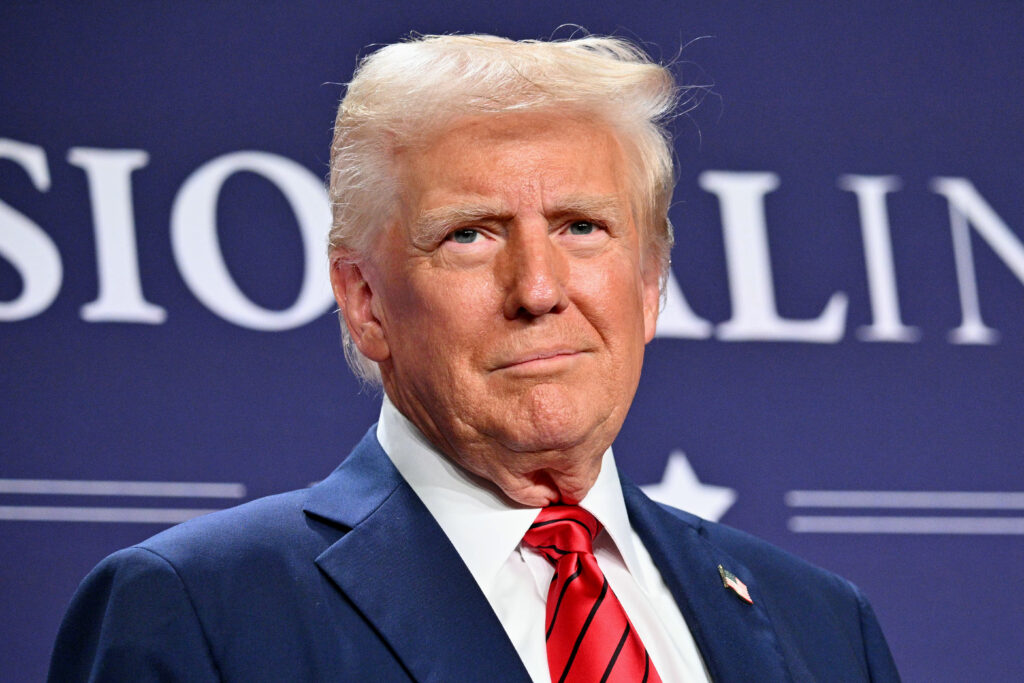
President Donald Trump delayed the start of tariffs on Mexico and Canada for a month Monday after the US neighbors struck last-minute deals to tighten border measures against the flow of migrants and the drug fentanyl.Global stock markets had slumped as Trump’s threat of sweeping 25 percent levies on exports from Canada and Mexico to the United States sparked fears of a global trade war.But after calls with Trump just hours before the US tariffs were due to take effect, both Canadian Prime Minister Justin Trudeau and Mexican President Claudia Sheinbaum struck deals for a postponement.Trump said that after “very friendly” talks with Sheinbaum he’d “immediately pause” the tariffs on Mexico, and that his counterpart had agreed to send 10,000 troops to the US-Mexico frontier.Tensions appeared higher between the US and Canada, but afer two separate calls Trump later said he was “very pleased” and was announcing a 30-day halt in the tariffs.”Canada has agreed to ensure we have a secure Northern Border, and to finally end the deadly scourge of drugs like Fentanyl that have been pouring into our Country,” he said.Talks on final deals would continue with both countries, he added.Trudeau said after the “good call” that Canada deploy nearly 10,000 frontline officers to help secure the border, list drug cartels as terrorists, appoint a “Fentanyl Czar” and crack down on money laundering.It was not clear the real extent of the changes on the Canadian border, given that just this December authorities there said they already had 8,500 personnel deployed.- Stocks slump -China remains in the firing line for Trump tariffs. It faces a further 10 percent duty on top of existing levies.The US president said last-minute talks between Washington and Beijing will likely be held “probably in the next 24 hours” to avoid new tariffs on Chinese imports. Canada, China and Mexico are the United States’s three biggest trading partners, and Trump’s threatened tariffs have sent shock waves through the global economy.Wall Street’s three main indices fell sharply in early deals, but clawed back ground after Trump’s announcement on the Mexico deal.The London, Paris and Frankfurt stock markets finished in the red as Trump warned over the weekend that the European Union would be next in the firing line and did not rule out tariffs on Britain.The Mexican peso and Canadian dollar also sank against the greenback, while oil jumped despite Trump limiting the levy on Canada’s energy imports at 10 percent to avoid a spike in fuel prices.The White House said earlier there had been a “heck of a lot of talks” over the weekend.”This is not a trade war, this is a drug war,” National Economic Council Director Kevin Hassett told CNBC, complaining that “the Canadians appeared to have misunderstood the plain language.”However, US government figures show that only a minimal quantity of drugs comes via Canada.- 51st state? -Canada had vowed to respond strongly to the tariffs.Its most populous province Ontario on Monday had banned US firms from bidding on tens of billions of dollars in government contracts — and dumped a deal with Trump ally Elon Musk’s Starlink.Trump has upped the pressure recently by calling Canada’s existence into question — once again calling on Monday for it to become the 51st US state.A political crisis in the Canadian government over Trump’s tariff threats led to Trudeau announcing earlier this month that he would quit too. Canadians now face elections as early as April.The US president — who has said that tariff is the “most beautiful word in the dictionary” — is going even further in his second term on the levies than he did in his first.He has insisted that the impact would be borne by foreign exporters without being passed on to American consumers, despite most experts saying the contrary.But the billionaire 78-year-old did acknowledge as he returned from a weekend at his Florida resort Sunday that Americans might feel economic “pain”.Trump has also wielded tariffs as a threat to achieve his wider policy goals, most recently when he said he would slap them on Colombia when it turned back US military planes carrying deported migrants.

Musk takes reins of US Treasury payments, sparking alarm

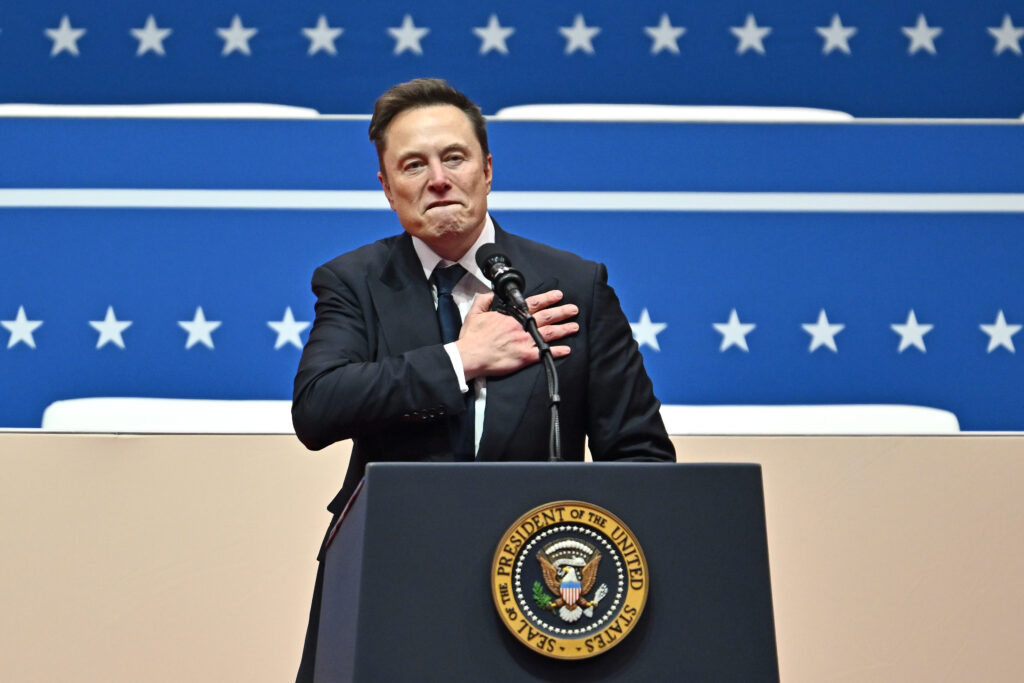
Elon Musk and his aides have taken control of the US Treasury Department’s payments system — which manages trillions of dollars of transactions each year — sparking alarm among critics.Musk, the world’s richest person, is leading President Donald Trump’s federal cost-cutting efforts under the so-called Department of Government Efficiency (DOGE).”The only way to stop fraud and waste of taxpayer money is to follow the payment flows and pause suspicious transactions for review,” Musk said Monday in a post on X, the platform he owns.”Naturally, this causes those who have been aiding, abetting, and receiving fraudulent payments to become very upset. Too bad,” he added.The Treasury’s closely guarded payments system handles the money flow of the US government, including $6 trillion annually for Social Security, Medicare, federal salaries, and other critical payments.Musk’s control of the payments system was approved by incoming Treasury Secretary Scott Bessent and was made possible when a career official was put on administrative leave Friday after refusing to hand over access, The Washington Post first reported.The official subsequently retired from the department, a source close to the matter told AFP.Trump on Sunday praised Musk as “a big cost-cutter.””Sometimes we won’t agree with it and we’ll not go where he wants to go. But I think he’s doing a great job,” the president added.Wired magazine reported that Musk has placed young surrogates working for DOGE into key government positions, with his team gaining unprecedented access to the payment systems typically restricted to career employees.The staff members, reportedly aged between 19 and 24, were also placed at the federal Office of Personnel Management, the human resources department for federal workers. Last week, the office sent an email offering most employees the option to leave government service immediately with approximately nine months’ severance pay, though many legal experts warned staff to be wary of the offer.Democratic lawmakers are expressing deep concerns about political operators having access to the US government’s money flow, saying it amounts to an illegal power grab.”They are seizing the tools you need for a coup,” said Senator Ron Wyden, the top Democrat on the Senate Finance Committee.Elizabeth Warren, the ranking Democrat on the Senate Banking Committee, blasted the move as “extraordinarily dangerous” and said it posed a systemic risk to the economy.”I am alarmed that as one of your first acts as secretary, you appear to have handed over a highly sensitive system responsible for millions of Americans’ private data — and a key function of government — to an unelected billionaire and an unknown number of his unqualified flunkies,” Warren wrote in a letter to Bessent.She also said sidelining experienced staff in this crucial corner of government “puts the country at greater risk of defaulting on our debt, which could trigger a global financial crisis.”On X, Musk predicted “Excitement guaranteed” in response to a post that said DOGE would uncover an “unprecedented amount of fraud and corruption in numerous government departments.”

Salvage crews recover part of plane in fatal Washington crash

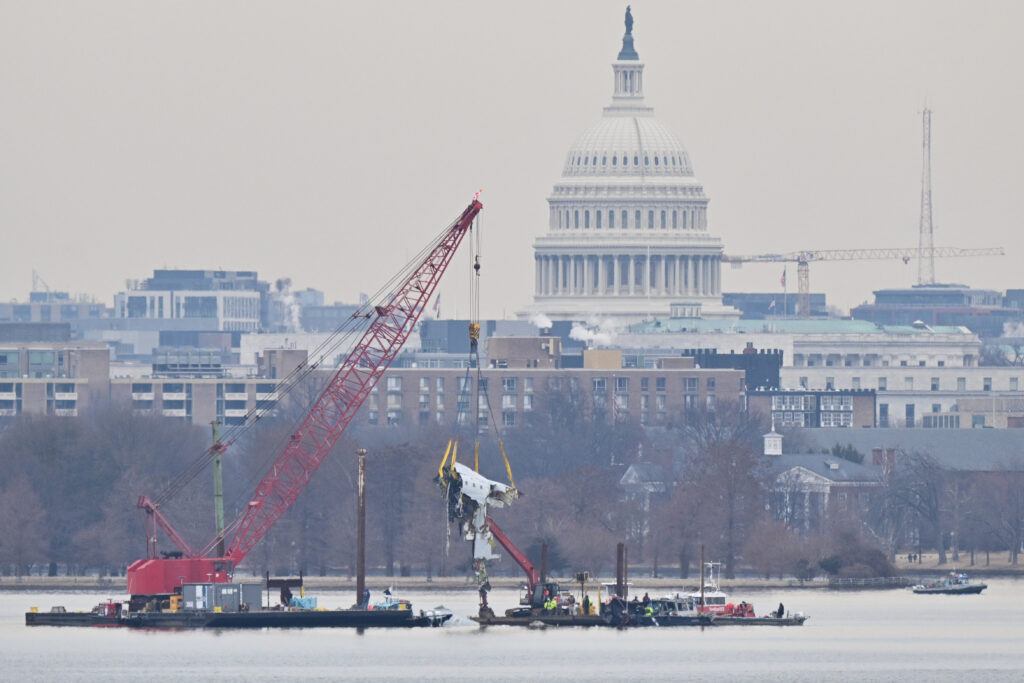
Salvage crews on Monday recovered part of the fuselage of a passenger plane that plunged into the Potomac River last week after colliding with a US Army helicopter, killing 67 people.A large crane assisted by a smaller one gingerly pulled the twisted wreckage of the Bombardier CRJ-700 operated by American Eagle airlines out of the water and placed it on a barge.An engine from the regional passenger jet was also recovered from the icy waters.Sixty passengers on the plane and four crew members were killed in Wednesday’s accident along with three soldiers aboard the US Army Black Hawk helicopter.There were no survivors.Fifty-five bodies have been recovered and identified so far, according to local authorities, who have expressed confidence they will locate all of the victims.”We will absolutely stay here and search until such point as we have everybody,” Washington fire chief John Donnelly said Sunday.The plane was on a flight from Wichita, Kansas, to Ronald Reagan National Airport in Washington when the collision occurred.President Donald Trump was quick to blame diversity hiring policies for the accident although no evidence has emerged that they were responsible.Trump also said the helicopter, which was on a routine training mission, appeared to be flying too high.According to US media reports, the control tower at the busy airport may have been understaffed at the time of the accident.The National Transportation Safety Board is expected to compile a preliminary report within 30 days, although a full investigation could take a year.

Hundreds of US government sites go offline

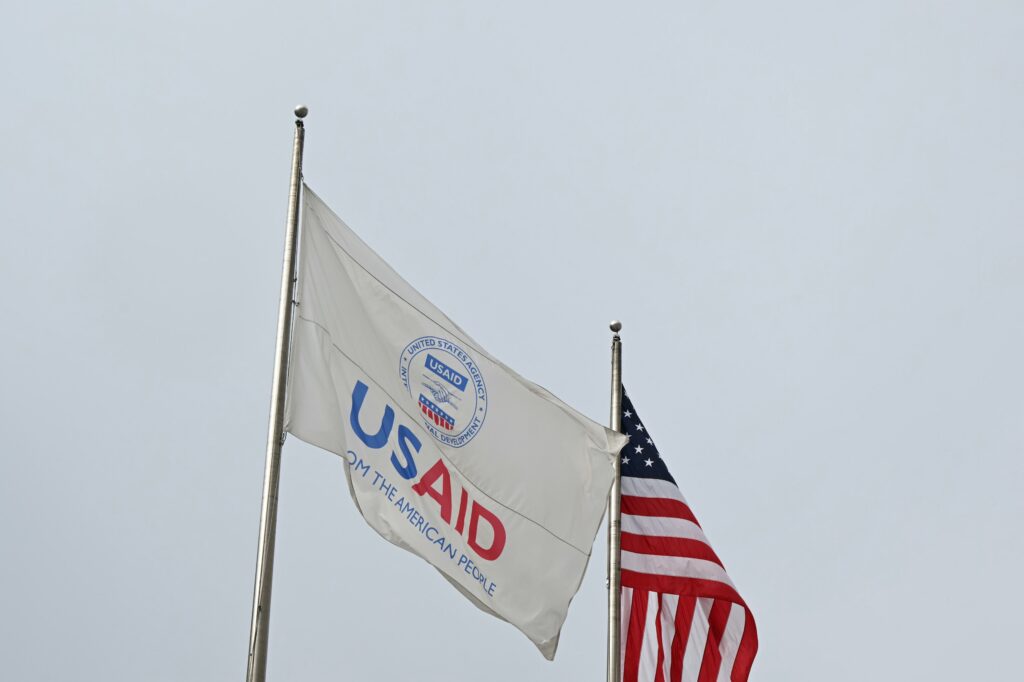
Hundreds of US government websites were offline on Monday, an AFP review showed, including that of the humanitarian agency USAID which President Donald Trump’s administration is shutting down.From a list of nearly 1,400 federal sites provided by the Cybersecurity and Infrastructure Security Agency (CISA), more than 350 were unavailable on Monday afternoon.These included sites linked to the departments of defense, commerce, energy, transportation, labor as well the Central Intelligence Agency and the Supreme Court, the review showed.The exact time when the sites became unavailable was not clear. Nor was it known whether the sites were temporarily offline or taken down at the instruction of Trump’s administration.But the development comes amid the administration’s controversial drive to radically shrink the US government.Elon Musk, the Tesla and SpaceX chief executive and the world’s richest person, is leading Trump’s federal cost-cutting efforts under the so-called Department of Government Efficiency (DOGE).On Monday, Musk said USAID will be shuttered, calling the agency which runs relief programs in about 120 countries a “criminal organization.”USAID’s website was offline as employees were instructed by email not to go to their offices on Monday.A slew of US government websites, including top public health agencies, have also scrubbed references to LGBTQ after a Trump directive last week instructing them to terminate all programs funded by taxpayers that promote “gender ideology,” US media reported.Trump has already issued executive orders banning diversity, equity and inclusion in the government.Key information and datasets related to HIV and LGBTQ youth have also disappeared from the website of the US Centers for Disease Control and Prevention (CDC), alarming health experts.On Monday, the CDC’s landing pages for both topics said: “The page you’re looking for was not found.””The removal of HIV- and LGBTQ-related resources from the websites of the Centers for Disease Control and Prevention and other health agencies is deeply concerning and creates a dangerous gap in scientific information and data to monitor and respond to disease outbreaks,” the Infectious Diseases Society of America said in a statement.Public access to this information was “especially important as diseases such as HIV, mpox, sexually transmitted infections and other illnesses threaten public health and impact the entire population,” it added.

Trump says ‘no guarantees’ Gaza truce will hold ahead of Netanyahu visit

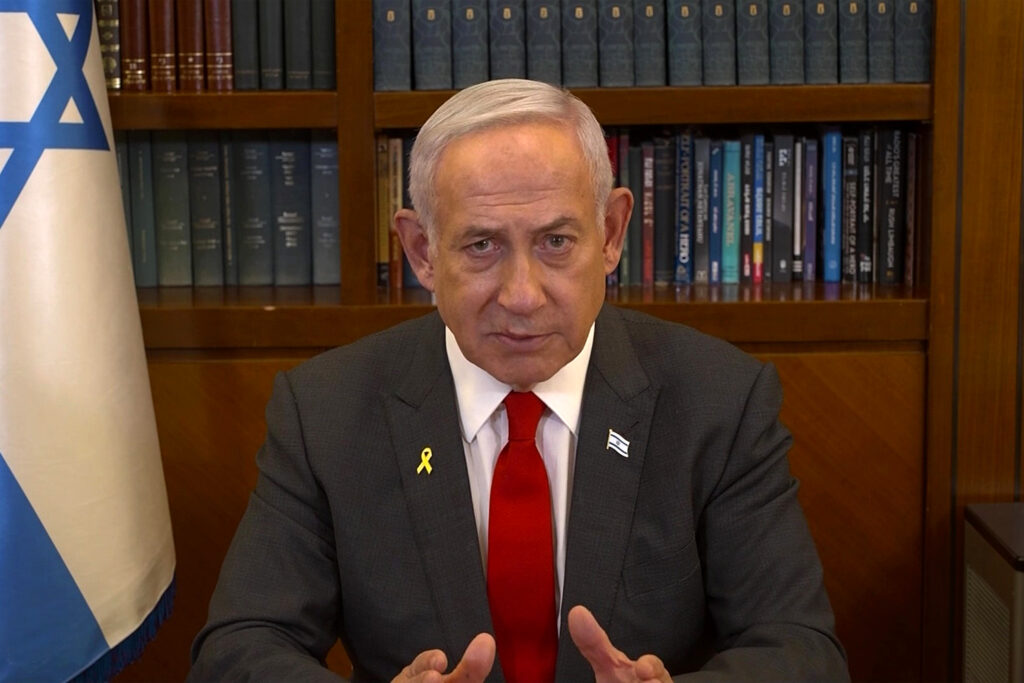
US President Donald Trump said on Monday there were “no guarantees” that a fragile ceasefire in Gaza will hold, as he prepares to discuss its future with Israeli Prime Minister Benjamin Netanyahu.Netanyahu was in Washington for talks with the new Trump administration on a second phase of the truce with Hamas, which has not yet been finalised.Just over two weeks after the ceasefire took hold, two Hamas officials said the group was ready to begin talks on the details of a second phase, which could help secure a lasting cessation of violence.Before leaving Israel, Netanyahu told reporters he would discuss “victory over Hamas”, countering Iran and freeing all hostages when he meets Trump on Tuesday.It will be Trump’s first meeting with a foreign leader since returning to the White House in January, a prioritisation Netanyahu said showed “the strength of the Israeli-American alliance”.With fragile ceasefires holding in both Gaza and Lebanon — where an Israeli campaign badly weakened Iran-backed Hezbollah — Israel has turned its focus to the occupied West Bank and an operation that it says is aimed at rooting out extremism that has killed dozens.Trump, who has claimed credit for sealing the ceasefire deal after 15 months of war, said Sunday negotiations with Israel and other countries in the Middle East were “progressing”.The president later told reporters that he has “no guarantees that the peace is going to hold”.Netanyahu’s office said he would begin discussions with Trump’s Middle East envoy Steve Witkoff on Monday over terms for the second phase of the Gaza truce.Witkoff said he was “certainly hopeful” that the truce will hold.The next stage is expected to cover the release of the remaining captives and could lead to a more permanent end to the war.One Hamas official, speaking to AFP on condition on anonymity because of the sensitivity of the talks, said the Palestinian group “has informed the mediators… that we are ready to start the negotiations for the second phase”.A second official said Hamas was “waiting for the mediators to initiate the next round”.The Washington discussions are also expected to cover normalisation efforts between Israel and Saudi Arabia, which Riyadh froze early in the Gaza war.- ‘Return to their land’ -Under the Gaza ceasefire’s first, 42-day phase, Hamas is to free 33 hostages in staggered releases in exchange for around 1,900 Palestinians held in Israeli jails.Four hostage-prisoner exchanges have already taken place, and the truce has led to a surge of food, fuel, medical and other aid into rubble-strewn Gaza.It has also allowed displaced Gazans to return to the territory’s north, which Israel had blocked before. According to UN humanitarian office OCHA, more than 545,000 people have reached the north since the truce began.During Hamas’s October 7, 2023 attack, militants took 251 hostages, 91 of whom remain in Gaza, including 34 the Israeli military has confirmed are dead.The attack resulted in the deaths of 1,210 people, mostly civilians, according to an AFP tally based on official Israeli figures.Israel’s retaliatory response has killed at least 47,498 people in Gaza, a majority civilians, according to the Hamas-run territory’s health ministry, figures which the UN considers reliable.While Trump’s predecessor Joe Biden sustained Washington’s military and diplomatic backing of Israel, he also criticised the mounting death toll and aid restrictions.Back in office, Trump moved quickly to lift sanctions on Israeli settlers accused of violence against Palestinians in the West Bank and reportedly approved a shipment of 2,000-pound bombs that the Biden administration had blocked.Trump has also repeatedly touted a plan to “clean out” Gaza, calling for Palestinians to move to neighbouring countries such as Egypt or Jordan.Qatar, which jointly mediated the ceasefire along with the United States and Egypt, underscored the importance of allowing Palestinians to “return to their homes and land”.Iran’s foreign ministry spokesman Esmaeil Baqaei, meanwhile, warned Monday that relocating Gazans “would be tantamount to ethnic cleansing”.- Jenin operation -In the West Bank — which is separated from the Gaza Strip by Israeli territory — Israel said it had killed at least 50 militants and detained more than 100 “wanted individuals” in an operation that began on January 21.Israel’s military says the offensive is aimed at rooting out Palestinian armed groups from the Jenin area, where militants have long operated.On Sunday, Palestinian official news agency WAFA said Israeli forces “simultaneously detonated about 20 buildings” in the Jenin refugee camp.On Monday, the Palestinian presidency denounced the operation in the territory, which Israel has occupied since 1967 and where violence has surged since the Gaza war began.In a statement, spokesman Nabil Abu Rudeineh said the Palestinian presidency “condemned the occupation authorities’ expansion of their comprehensive war on our Palestinian people in the West Bank to implement their plans aimed at displacing citizens and ethnic cleansing”.