AFP USA

Trump blasts ‘political judges’ as court clash mounts

President Donald Trump slammed “highly political judges” Tuesday as his new administration veered closer to a constitutional clash over his plans to radically overhaul the US government.Trump’s remarks on his Truth Social network came after federal judges questioned the legality of some of the cost-cutting measures led by SpaceX and Tesla CEO Elon Musk.The Republican president asserted in an early-morning post that “billions of Dollars of FRAUD, WASTE, AND ABUSE, has already been found in the investigation of our incompetently run Government.””Now certain activists and highly political judges want us to slow down, or stop,” added Trump.”Losing this momentum will be very detrimental to finding the TRUTH, which is turning out to be a disaster for those involved in running our Government. Much left to find. No Excuses!!!”In his first three weeks in office, Trump has issued a flurry of executive orders aimed at slashing federal spending, appointing Musk — the world’s richest person — to lead efforts that critics widely denounce as unconstitutional.But his plans, which have effectively shuttered some federal agencies and sent staff home, have sparked legal battles across the country. Multiple lawsuits seek to halt what opponents characterize as an illegal power grab.In the most recent case a federal judge in Rhode Island on Monday said the Trump administration had violated a previous order lifting a sweeping federal funding freeze.Trump’s team has angrily stepped up its attacks on the judiciary in recent days as they seek to assert unprecedented levels of executive power for the Republican.”If a district court judge wants control over the entire executive branch… he should run for president,” Stephen Miller, Trump’s hardline deputy chief of staff for policy and homeland security advisor, said Tuesday on X.Vice President JD Vance — who has previously called for presidents to ignore court rulings that curb the White House’s power — had warned judges Sunday to back off.”Judges aren’t allowed to control the executive’s legitimate power,” he said on X, which is owned by Musk, comparing judicial intervention to a judge dictating military strategy to a general.”Judicial tyranny is grossly improper!” Musk said, echoing the White House pushback.

US funding freeze is ‘bombshell’ for world aid sector

US President Donald Trump’s order to suspend most foreign aid has sent shock waves through the humanitarian sector, threatening to trigger mass layoffs at many NGOs and possibly destroy others altogether. Less than a week after Trump returned to power, the US Agency for International Development told NGOs they would have to cease operations immediately because the new administration had frozen USAID’s budgets. The US president has ordered a 90-day review of USAID — which runs health and emergency programmes in around 120 countries, including the world’s poorest. The campaign is being spearheaded by his billionaire ally Elon Musk, who has boasted of feeding USAID “through the wood-chipper”.Trump’s administration has since issued waivers for some “life-saving” aid, while the freeze included exceptions to funding for Israel and Egypt.But confusion reigns over how those waivers will be implemented and the uncertainty has already taken its toll.The order to stop work immediately hit “like a bombshell”, said a source at an NGO in Kenya. He asked to remain anonymous out of fear his charity could be punished by the Trump administration.”It threw people into panic mode,” the aid worker said of the freeze, pointing out that the lack of notice meant staff had no time to adapt. They were instantly put on compulsory unpaid leave and the organisation was no longer able to pay their rents or salaries, he said. “What’s that going to mean for people who have children?” he asked, aghast. – Impossible to compensate –  According to aid network ALNAP, more than 630,000 people were employed in the aid sector in 2020, more than 90 percent of them local staff. For many locals, the US freeze spells unemployment in countries with fragile economies where finding another job is almost impossible. Expatriates working for aid agencies also face disruption. “We notified everyone on US budgets that they had been suspended temporarily,” said a source at the European headquarters of an NGO mostly financed by US funds. The consequence for expatriates, she said on condition of anonymity, is that “they put you on a plane and you go back home”. Except, she added, “you don’t necessarily have a home” because many expat aid workers go from mission to mission, with no home base in their country of origin. USAID manages a budget of $42.8 billion — representing 42 percent of humanitarian aid disbursed worldwide. NGOs will have to “lay off employees in proportion to their dependence on US funds”, she said. “If an NGO depends 60 percent on USAID, it will have to lay off 60 percent of its employees. If it depends 40 percent, it will lay off 40 percent.” It would be “impossible to compensate for the loss of US funds”, she said. – ‘Brutal’ -The Norwegian Refugee Council, one of the world’s largest aid agencies, said on Monday it was forced to abruptly suspend US-funded “urgent humanitarian work for hundreds of thousands of people in nearly 20 countries affected by wars, disasters and displacement”. Just under 20 percent — $150 million — of its funding came from the United States last year, providing vital support for 1.6 million people.While the initial US funding freeze was set to last 90 days, the administration has already begun slashing USAID’s workforce, and many in the aid sector fear a drastic long-term drop in US support.Trump and Musk have publicly vowed to shutter USAID for good. “We’re not so vulnerable that we’ll just fold in 90 days. The problem is, will this last 90 days or go on much longer?” said Kevin Goldberg, head of Solidarites International, which is 36 percent US-funded. Local partners of international NGOs, “who depend on our ability to transfer part of the US aid allocated to us”, would also suffer, he added.Goldberg said he “feared for the entire humanitarian chain”. “There are a lot of players in the aid sector that will disappear” because European state funding is also decreasing, warned Jean-Francois Corty, head of Medecins du Monde. He told AFP the US decision was an “apocalyptic revolution” for a humanitarian ecosystem that was “being… strangled to death”. An executive from another international NGO said she feared the “brutal” Trump method would have repercussions in Europe, where far-right parties drawing from the US president’s playbook are gaining ground.”This earthquake… forces us to rethink everything,” she told AFP.dl-fv-al-jf/mr/gil

Jordan king set for tense Trump talks over Gaza

Jordan’s King Abdullah II faces a tense meeting with Donald Trump at the White House Tuesday as he leads opposition from Arab nations to the US president’s controversial Gaza takeover plan.The talks come a day after Trump said he could “conceivably” halt billions of dollars in US aid to both Jordan and Egypt if they refuse to take in Palestinians that he says should be moved out from their homeland.The meeting also comes as the Gaza ceasefire appears increasingly fragile with Trump warning that “all hell” would break out if Hamas fails to release all hostages by Saturday.Abdullah and Jordan’s Crown Prince Hussein will meet Trump in the Oval Office before having lunch, the White House said. Both meetings will be behind closed doors.The pair also met Trump’s National Security Advisor Mike Waltz on Tuesday, the Jordanian royal court said on X.King Abdullah is a key US ally but last week rejected “any attempts” to take control of the Palestinian territories and displace its people after Trump stunned the world with his proposal for Gaza.He also held talks with Palestinian president Mahmud Abbas on the matter.Trump unveiled the proposal after Israeli Prime Minister Benjamin Netanyahu became the first foreign leader to visit the White House since the US president’s inauguration.Trump said the United States would “take over” Gaza, envisioning rebuilding the devastated territory into the “Riviera of the Middle East” — but only after resettling Palestinians elsewhere, with no plan for them ever to return.The US president has pressed Jordan and Egypt in particular to take in the more than two million Palestinians from Gaza under the plan, while indicating other regional countries could also take them in.- Aid pressure -Trump doubled down on the pressure on the eve of his meeting with Abdullah, threatening US assistance to Jordan and Egypt if they continue to oppose the plan.”Maybe,” Trump told reporters on Monday when asked if he would suspend aid if the two countries did not take in the Palestinians. “If they don’t agree, I would conceivably withhold it.” Trump made clear in an interview with Fox News channel’s Bret Baier broadcast Monday that Palestinians would have no right of return to Gaza after leaving.His plan has sparked a global backlash and Arab countries have condemned the proposal, insisting on a two-state solution with an independent Palestinian state alongside Israel.Egyptian President Abdel Fattah al-Sisi, who is expected to visit the White House later this week, urged on Tuesday the reconstruction of Gaza “without displacing Palestinians.”Egypt’s Foreign Minister Badr Abdelatty also met with his US counterpart Marco Rubio in Washington on Monday. The Egyptian foreign ministry later issued a statement rejecting “any compromise” on Palestinians’ rights.Analysts say the issue is an existential one for Jordan in particular.Half of Jordan’s population of 11 million is of Palestinian origin, and since the establishment of Israel in 1948, many Palestinians have sought refuge there.In 1970 in what became known as “Black September”. clashes erupted between the Jordanian army and Palestinian groups led by the Palestinian Liberation Organization (PLO).It resulted in the expulsion of those groups.But Jordan is also keenly aware of the economic pressure Trump could exercise. Every year, Jordan receives around $750 million in economic assistance from Washington and another $350 million in military aid.

Kremlin: ‘Significant part of Ukraine wants to be Russia’

The Kremlin said Tuesday that a “significant part” of Ukraine “wants to be Russia,” hours after US President Donald Trump floated the idea that Ukraine “may be Russian someday.”Addressing the three-year conflict between Moscow and Kyiv in a Fox News interview that aired Monday, Trump said: “(Ukraine) may make a deal, they may not make a deal. They may be Russian someday, or they may not be Russian someday.”Kremlin spokesman Dmitry Peskov said Tuesday that the situation in Ukraine “largely corresponds to President Trump’s words.””The fact that a significant part of Ukraine wants to become Russia, and has already, is a fact,” he told reporters, referring to Moscow’s 2022 annexation of four Ukrainian regions.”Any phenomenon can happen with a 50 percent probability — either yes or no,” Peskov added.Trump has said ending the fighting is one of his priorities for his first months in the White House, but is yet to outline specific proposals for how he plans to bring the two sides to the negotiating table.Both Moscow and Kyiv have publicly welcomed his focus on ending the conflict. Russian President Vladimir Putin has said he is ready for direct talks with Trump on a possible agreement, while the New York Post reported over the weekend that Trump had told them he had already spoken to Putin privately over the issue.The Kremlin declined to confirm or deny the call.- Energy strikes -Both Putin and Ukrainian President Volodymyr Zelensky have previously ruled out direct talks with each other, and there appears to be little ground where the two could strike a deal.Kyiv fears that any settlement that does not include hard military commitments for its security — such as NATO membership or the deployment of Western peacekeeping troops — will just allow the Kremlin time to regroup and rearm for a fresh offensive.Putin is demanding that Ukraine withdraw from swathes of its south and east that Kyiv still has control over, and considers closer ties between Ukraine and NATO inadmissable.Zelensky has meanwhile rejected any territorial concessions to Moscow, though he has acknowledged that Ukraine might have to rely on diplomatic means to secure the return of some territory.Russia says it has annexed five regions of Ukraine — Crimea in 2014 and then Donetsk, Kherson, Lugansk and Zaporizhzhia in 2022 — though it does not have full control over them.Zelensky will meet US Vice President JD Vance at the Munich Security Conference on Friday, the Ukrainian president’s spokesman told AFP.Trump will also dispatch his special envoy Keith Kellogg to Ukraine later this month to further discuss a possible roadmap for ending the conflict.Both armies are trying to secure an advantage on the battlefield ahead of possible talks.Russia’s defence ministry said Tuesday its troops had captured the small village of Yasenove in Ukraine’s eastern Donetsk region.Overnight the two sides traded long-range attacks on each other’s energy infrastructure.Ukraine’s General Staff said its forces had struck an oil refinery in Russia’s Saratov region, sparking a fire.”Strikes on strategic targets involved in the Russian armed aggression against Ukraine will continue,” it said in a statement.The governor of the Russian region had earlier reported a drone attack on an industrial site, without specifying where.Russia’s defence ministry also said it had struck Ukrainian gas and energy sites that support Kyiv’s army in an overnight aerial attack.Naftogaz, the Ukrainian national gas company, confirmed one of its facilities in the eastern Poltava region had been damaged in the “massive” Russian attack overnight.Temporary power cuts — frequent across Ukraine — were put in place Tuesday morning following the strike.Moscow has pursued a months-long bombing campaign against Ukrainian energy infrastructure, claiming the attacks targeted facilities that aid Kyiv’s military.Ukraine has carried out its own strikes on Russian energy and military installations, and Moscow has accused it of using US- and British-supplied missiles to strike deep inside Russian territory. 

Trump signs orders for steel, aluminum tariffs to start March 12

US President Donald Trump signed executive orders to impose 25 percent tariffs on steel and aluminum imports from March 12, ramping up a long-promised trade war despite warnings from Europe and China.The European Union swiftly vowed to retaliate with “firm and proportionate countermeasures”.In an executive order released Monday, Trump said: “As of March 12, 2025, all imports of aluminum articles and derivative aluminum articles from Argentina, Australia, Canada, Mexico, EU countries, and the UK shall be subject to the additional ad valorem tariff.” He issued a separate order for steel, which said it would apply to all imports from the same countries the aluminum tariffs hit, as well as to Brazil, Japan and South Korea. “I’m simplifying our tariffs on steel and aluminum,” Trump said earlier in the Oval Office. “It’s 25 percent without exceptions or exemptions.”The tariffs also appear to indirectly target China, with the executive orders detailing how certain countries — particularly Mexico — were “using” their exemptions to get Chinese imports into the United States. “Chinese producers are using Mexico’s general exclusion from the tariff to funnel Chinese aluminum to the United States through Mexico,” it said.Mexico’s increased volume of steel imports from China also “support a conclusion that there is transshipment or further processing of steel mill articles… from countries seeking to evade quantitative restrictions.”Canada, Mexico and Brazil are among the biggest steel importers to the United States, followed by South Korea. South Korea’s acting President Choi Sang-mok vowed Tuesday to protect domestic firms’ interests and reduce uncertainties “by building a close relationship with the Trump administration and expanding diplomatic options.”Trump had also signaled he would look at imposing additional tariffs on automobiles, pharmaceuticals and computer chips, and promised an announcement on Tuesday or Wednesday on broader “reciprocal tariffs” to match the levies other governments charge on US products.During his 2017-2021 presidency, he had imposed sweeping tariffs as he believed US industries faced unfair competition from Asian and European countries. – ‘Misguided path’ -Canadian steelmakers warned of “massive” disruption, while the European Commission said it would “react to protect the interests of European businesses, workers and consumers from unjustified measures.”EU chief Ursula von der Leyen on Tuesday slammed Trump’s decision, vowing the bloc would retaliate.”Unjustified tariffs on the EU will not go unanswered — they will trigger firm and proportionate countermeasures,” she said in a statement. German Chancellor Olaf Scholz said the bloc will provide a united front to Washington, though “I hope that we are spared the misguided path of tariffs and counter-tariffs.”French President Emmanuel Macron vowed in an interview aired Sunday to go head-to-head with Trump over his wider tariff threats against the European Union, though he also said the United States should focus its efforts on China.Around 25 percent of European steel exports go to the United States, according to consultancy Roland Berger.Britain’s steel industry body called the tariff plan a “devastating blow.”Trump has already shown his fondness for weaponizing the United States’ power as the world’s largest economy, ordering tariffs on key trade partners China, Mexico and Canada soon after he took office.He paused 25 percent levies against Canada and Mexico for a month after both countries vowed to step up measures to counter flows of the drug fentanyl and the crossing of undocumented migrants into the United States.- Economic ‘pain’ to come? -But Trump went ahead with tariffs on China, the world’s second-biggest economy, with products entering the United States facing an additional 10 percent levy.Chinese retaliatory tariffs targeting US coal and liquified natural gas came into play on Monday. Chinese foreign ministry spokesman Guo Jiakun said “there is no winner in a trade war and tariff war.”Trump also focused on steel during a visit by Japanese Prime Minister Shigeru Ishiba last week. The American leader said he had secured an agreement for Japan’s Nippon Steel to make a major investment in US Steel, instead of seeking to take over the troubled firm.Trump has insisted the impact of any tariffs would be borne by foreign exporters without being passed on to US consumers, despite most experts saying the contrary.But he did acknowledge this month that Americans might feel economic “pain” from the levies.Wall Street’s main indices finished up Monday despite the tariff threat, though Asian and European markets were mixed by Tuesday.burs-dk/dhc/sco

Trump signs executive orders for steel, aluminum tariffs to start March 12

US President Donald Trump signed executive orders to impose 25 percent tariffs on steel and aluminum imports from March 12, ramping up a long-promised trade war despite warnings from Europe and China.”Today I’m simplifying our tariffs on steel and aluminum,” Trump said Monday in the Oval Office. “It’s 25 percent without exceptions or exemptions.”In an executive order released after, he said: “As of March 12, 2025, all imports of aluminum articles and derivative aluminum articles from Argentina, Australia, Canada, Mexico, EU countries, and the UK shall be subject to the additional ad valorem tariff.” Trump issued a separate order for steel, which said it would apply to all imports from the same countries the aluminum tariffs hit, as well as to Brazil, Japan and South Korea.Canada and Mexico are the biggest steel importers to the United States, according to US trade data. Brazil and South Korea are also major steel providers.Trump also signaled he would look at imposing additional tariffs on automobiles, pharmaceuticals and computer chips.”President Trump has made it clear that an important part of an America First Golden Age is steel production,” National Economic Council Director Kevin Hassett told CNBC.Trump also promised an announcement on Tuesday or Wednesday on broader “reciprocal tariffs” to match the levies other governments charge on US products.During his 2017-2021 presidency, Trump had imposed sweeping tariffs as he believed US industries faced unfair competition from Asian and European countries. – ‘Devastating blow’ -Canadian steelmakers warned of “massive” disruption, while the European Commission said it would “react to protect the interests of European businesses, workers and consumers from unjustified measures.”French President Emmanuel Macron vowed in an interview aired Sunday to go head-to-head with Trump over his wider tariff threats against the European Union, though he said the United States should focus its efforts on China.German economy minister Robert Habeck said a tariff conflict “only has losers.”Around 25 percent of European steel exports go to the United States, according to consultancy Roland Berger.Britain’s steel industry body called the tariff plan a “devastating blow.”Trump has already shown his fondness for weaponizing the United States’ power as the world’s largest economy, ordering tariffs on key trade partners China, Mexico and Canada soon after he took office.He paused 25 percent levies against Canada and Mexico for a month after both countries vowed to step up measures to counter flows of the drug fentanyl and the crossing of undocumented migrants into the United States.- ‘Tariff fatigue’ -But Trump went ahead with tariffs on China, the world’s second-biggest economy, with products entering the United States facing an additional 10 percent levy.Chinese retaliatory tariffs targeting US coal and liquified natural gas came into play Monday. Chinese foreign ministry spokesman Guo Jiakun said “there is no winner in a trade war and tariff war.”Trump also focused on steel during a visit by Japanese Prime Minister Shigeru Ishiba last week. The American leader said he had secured an agreement for Japan’s Nippon Steel to make a major investment in US Steel, instead of seeking to take over the troubled firm.Trump, who has promised a “new golden age” for the United States, insists the impact of any tariffs would be borne by foreign exporters without being passed on to US consumers, despite most experts saying the contrary.But he did acknowledge this month that Americans might feel economic “pain” from the levies.Wall Street’s main indices finished up Monday despite the tariff threat. London and Frankfurt set fresh records, while Asian markets were mixed Tuesday.”The fact that global equity indices are higher at the start of the week could be a sign of tariff fatigue,” said Kathleen Brooks, research director at trading group XTB.The dollar also rose against the Canadian dollar, the Mexican peso and South Korean won on Monday.burs-dk/sst/jgc/sn/dhc

US prosecutors ordered to drop New York mayor corruption case: reports

The US Justice Department on Monday ordered federal prosecutors to drop corruption charges against Democratic New York Mayor Eric Adams, US media reported, after his rapprochement with President Donald Trump.”You are directed, as authorized by the Attorney General, to dismiss the pending charges in United States v. Adams,” said the department memo obtained by the New York Times and CNN. The first sitting New York mayor to be criminally indicted, Adams in September pleaded not guilty to charges of fraud and bribery, and rebuffed calls for his resignation. The shocking corruption scandal bode ill for his reelection bid in the November mayoral race. Adams has also asserted, without evidence, that he was being punished for his criticism of former President Joe Biden’s immigration policies.And Trump, who himself was facing multiple legal troubles, expressed solidarity with Adams during his election campaign, saying the mayor was being prosecuted “for speaking out against open borders.”Adams’s lawyer Alex Spiro praised the move in an email statement to AFP.”As I said from the outset, the mayor is innocent — and he would prevail. Today he has,” Spiro said. “Despite a lot of fanfare and sensational claims, ultimately there was no evidence presented that he broke any laws, ever,” he added. “Now, thankfully, the mayor and New York can put this unfortunate and misguided prosecution behind them.”A man once touted as a future Democratic Party star, Adams has ramped up contact with associates of Republican US President Donald Trump in recent weeks. In December, he met with border czar Thomas Homan — charged by Trump with plans to deport undocumented immigrants — and some on the left suspect the mayor of seeking a presidential pardon in exchange for rapprochement with the administration. Emil Bove, the Justice Department’s acting deputy attorney general and a former lawyer for Trump, in the letter accused the former Manhattan federal prosecutor of pursuing Adams for his own political gains.He said the investigation was conducted too close to the Democratic primaries for the upcoming New York mayoral election in November. According to the New York Times, Bove also argued that the indictment had hindered Adams’s ability to cooperate with the Trump administration in its crackdown on immigration. Adams has been accused of wire fraud, soliciting illegal campaign donations and a bribery conspiracy involving Turkish citizens and at least one Turkish official.According to the charges, he accepted luxury international flights, hotel suites and free high-end restaurant meals including from Turkish associates in return for favors.In one example, prosecutors say Adams pressured the city’s fire department to approve Turkey’s new high-rise consulate in Manhattan despite safety concerns.

Federal workers fearful, outraged over ‘DEI watchlist’ website

Federal workers across US health agencies say they are nervous and on edge after a conservative group published more than 50 of their names and photos on a website that at one point described them as “targets.”The so-called “DEI watchlist,” registered in November, triggered alarm among civil servants as it gained traction amid President Donald Trump’s efforts to purge the government of positions and programs related to diversity, equity and inclusion (DEI).The website — which initially described the workers as “targets” — now displays “dossiers” for workers it claims have promoted such initiatives, most of whom are Black and women.The group behind it, the nonprofit American Accountability Foundation, says it plans to add another 40 names on Tuesday.One federal worker profiled by the site said they were concerned for their safety when a colleague alerted them to the list and its tipline.”First, it was a little bit of fear,” the person, who requested anonymity for security reasons, told AFP.”Is my life about to change forever? Then, I think it turned into a bit of anger.”Georges Benjamin, executive director of the American Public Health Association, said he felt “dismayed” to see the website named mostly people of color who are not major policymakers, including friends he said have gone “absolutely silent.””It shocks me, hurts me, makes me afraid for my friends,” he told AFP. “They’re ruining lives.”He said the use of photos was especially troubling and likened it to the harassment faced by Ruby Freeman, a Georgia elections worker falsely accused of fraud in 2020 who later received millions of dollars after filing defamation lawsuits.”People have done this kind of doxxing before, and it puts people at physical risk.”- ‘DEI offenses’ – Each worker’s page contains their name, photo, job title and other publicly available information under the headline: “A quick summary of DEI offenses.”Those “offenses” include donating to Democrats and using pronouns online. They also include posting — or interacting with — messages supportive of Black Lives Matter or critical of Trump.One person’s “dossier” highlights how she liked a LinkedIn post from a connection who contributed to a book on race.Another was singled out for helping people sign up for the Affordable Care Act during an internship roughly a decade ago. A third had updated their Facebook profile picture during the coronavirus pandemic to say: “Stay Home Save Lives.”One of the few white people included is listed for a prior role with the Environmental Defense Fund, a nonprofit environmental advocacy group.The federal worker who spoke to AFP said many people featured on the website focus on issues of health equity, such as offering mobile health screenings in low-income neighborhoods.The American Accountability Foundation has previously published lists of workers at other agencies, such as the Department of Homeland Security, where it identified officials it accused of hindering efforts to secure the border.Last year, the group received a $100,000 grant from the Heritage Foundation, which produced the controversial Project 2025 memo laying out a vision for Trump’s administration.Spokesperson Yitz Friedman rejected concerns that the new “DEI watchlist” could endanger workers as a “false premise,” saying the fears are “based on a hypothetical.”He said his team have themselves received threats since the launch of the website.”We simply reviewed public information,” Friedman told AFP, saying the group created the site to “expose” government workers who push “extreme, left-wing, racist ideologies.”But the federal worker who spoke to AFP said they heard that some others on the list had pizzas anonymously delivered to their homes last week, an act the person described as “a message to say, ‘We know where you live.'”More than a dozen of the workers named appear to have deleted their LinkedIn profiles. One wrote on Instagram that he scrubbed his bio because he was “being harassed.”The “DEI watchlist” is now the top result Google returns when searching some of the workers names, an AFP analysis found. The worker told AFP they consulted a lawyer, filed a hate crime complaint with a state attorney general and alerted lawmakers and the NAACP civil rights group.The FBI has also been contacted, they said.”We are even more dedicated now to staying in our jobs and fighting back,” the person said, adding that the “DEI watchlist” is “creating our class-action lawsuit for us.”

YouTube, the online video powerhouse, turns 20

YouTube has evolved from a dinner party lark 20 years ago into a modern lifestyle staple poised to overtake US cable television in paid viewership.PayPal colleagues Steve Chen, Chad Hurley, and Jawed Karim conceived YouTube in 2005, reportedly during a dinner party. The domain YouTube.com launched on Valentine’s Day that year.Video uploading capabilities were added on April 23, when Karim posted the first video, titled “Me at the Zoo.” The 19-second clip showing Karim at the San Diego Zoo’s elephant exhibit has garnered 348 million views.Over the next 20 years, the site has expanded beyond what was imagined possible back in 2005.”YouTube was started by tech bros who wanted a video hosting service to watch reruns of Janet Jackson’s ‘wardrobe malfunction’ during the Super Bowl,” said eMarketer analyst Ross Benes.”Now, it’s the world’s largest digital video service in terms of time spent and ad revenue — it’s an utter behemoth.”YouTube reached more than 2.5 billion viewers globally last year, with its music and premium tier subscribers hitting 100 million, according to market tracker Statista. Users worldwide watch more than a billion hours of YouTube content daily on television sets alone, Google reported.”If you go back 20 years, it would have seemed laughable that this website with kids making parody videos would become a threat to Disney, ABC, and CBS,” Benes said. “That’s what they were able to accomplish.”- ‘Firehose’ of videos -YouTube’s breakthrough came from challenging traditional television titans without requiring studios or production costs — it was users who were creating and uploading the content. The platform hosts everything from concert clips to political campaign ads to how-to videos — and much more.”The amount of new stuff coming out is a firehose that you can’t turn off, so people are always tuning in,” Benes said. According to Google, more than 500 hours of video are uploaded to YouTube every minute.Analysts consider Google’s 2006 purchase of YouTube for $1.65 billion in stock a pivotal moment, combining Google’s search and advertising expertise with a video-sharing platform that had passionate users.”YouTube was part of the recovery from the dot-com collapse, when people realized monetization was actually important,” said tech analyst Rob Enderle. “YouTube became an example of how dot-coms should have been done, as opposed to how they were done in the late 1990s.”Google used its advertising know-how to build a successful model, sharing revenue with creators who attract significant audiences. The company also enhanced technology and negotiated with studios to address copyright violations on what was once considered the Wild West of video content.”The piracy aspect isn’t quite there the way it used to be at YouTube,” Benes noted. “They used to have nudity too.”YouTube also worked its way past concerns that disturbing content, like parody videos of popular cartoon characters in violent or risque situations, were being served up to children by its recommendation software.The company launched a free “Kids” app promoted as a safe space for children, and is constantly tweaking its algorithm to avoid offending users, advertisers, and governments.Analyst Enderle credited much of YouTube’s development into a formidable platform to former chief executive Susan Wojcicki, who died last year. “She was phenomenal at her job and showcased how something like this should be done,” Enderle said.- ‘Part of me’ -YouTube is projected to surpass all US cable television services in paid subscribers within two years, according to Benes. The platform now competes with streaming services like Netflix, Disney, and Amazon Prime, as well as short-form video platforms like TikTok and Instagram’s Reels.In response to TikTok’s popularity, YouTube introduced its “Shorts” feature, which averages more than 70 billion views daily.”As the original streaming video platform, YouTube has continued to evolve and differentiate,” Mike Proulx, vice president and research director at Forrester, told AFP. “It’s the de facto standard for long-form user-generated video, literally defining the modern ‘creator.'”While YouTube’s recommendation algorithm has traditionally favored established creators, longtime content maker “Robert G” noted that emerging creators are once again being featured on the home page.”I’m really happy that YouTube is changing,” said Robert G, who began uploading videos in 2009. “YouTube is part of me; it is what I do.”

‘So fast’: NY subway shove survivor captures commuter fears

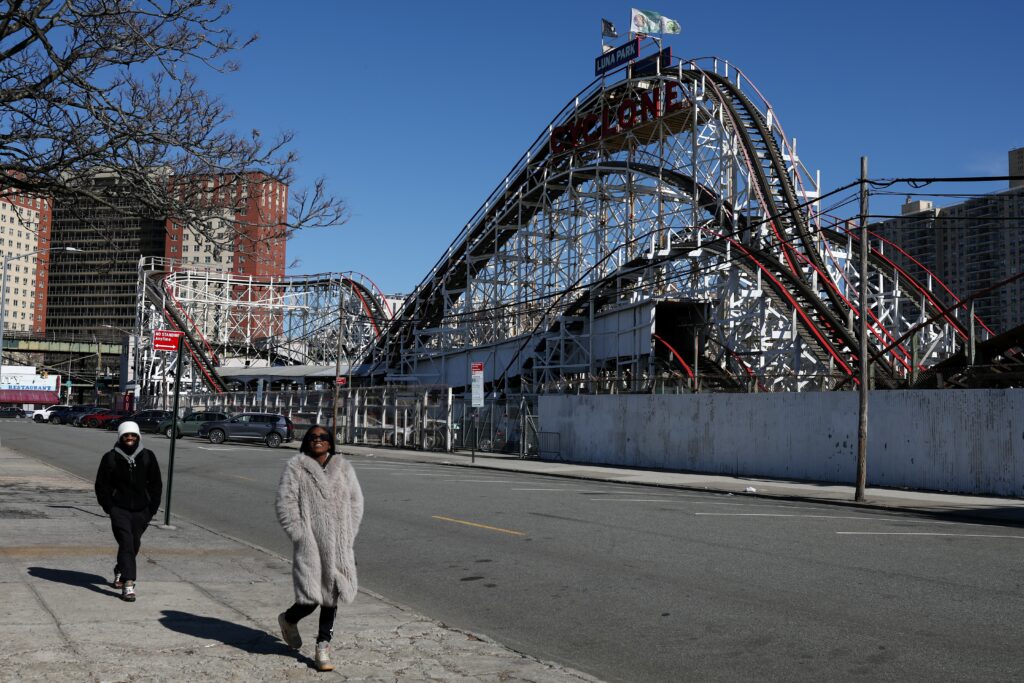
Joseph Lynskey was quietly waiting for the New York subway on New Year’s Eve when someone shoved him from behind onto the tracks as a train pulled into the station.Highly publicized horror stories like Lynskey’s have had a chilling effect on many New Yorkers even as authorities say crime is down on the metro system and across the city.Lynskey survived because he fell into a deeper, recessed space under the train and between the tracks, and was not hit by the wheels but rather the undercarriage.”I knew instantly… that somebody had pushed me and tried to kill me,” the music producer told AFP of the attack at the 18th Street subway station in the Chelsea neighborhood of Manhattan.”When I hit the tracks and I opened my eyes, the train was on top of me. It was so fast.”He recalled thinking “I’m going to get hit by the train and I’m going to die.” A 45-year-old adopted New Yorker, he has not been able to return to the subway, used by four million people daily who flock to the sprawling network of 472 stations and more than 660 miles of track, running day and night.When he looked around after falling onto the tracks, Lynskey recalled being just inches from the high-voltage rail that powers trains, and seeing his blood pooling on the rail bed.He was left with a fractured skull, four broken ribs and a ruptured spleen.”I knew that I had to remain calm. There was nobody on the platform answering my calls for help. For about 90 seconds, I was alone, screaming for help,” he said. “A woman started answering me… a Good Samaritan. She asked me what my name was. She asked me if I could move. She asked me if I could wiggle my fingers and wiggle my toes to see if, I guess if I was paralyzed, and I think she was trying to keep me awake.”Within minutes firefighters, police and subway workers arrived, with two firefighters retrieving him from the tracks, having been trained to do so just days before.Lynskey later met his rescuers to give them a hug and thank them properly.His rescue was captured on film and widely shared on social media, with rescuers expressing surprise that he was alive once he was lifted through the gap between two carriages.Lynskey still struggles to understand why his attacker, a 23-year-old man with criminal convictions and mental health issues, would want to harm him.He chooses instead to focus his attention on the kindness of strangers, like those who have written to him from around the world to express solidarity.- ‘Back against the wall’ -Last year 26 people were pushed or fell onto tracks, one of whom died, an increase of nine on 2023, police say.Cases like Lynskey’s, though rare, attract a disproportionate share of headlines and public awareness.Another subway tragedy that shocked New Yorkers became front page news in May 2023 when Jordan Neely, an unhoused Michael Jackson impersonator who had struggled with psychiatric issues, was choked to death by a former US Marine, Daniel Penny. Penny was charged with murder despite claiming he acted in self-defense when Neely became agitated, and a jury acquitted him.Similarly shocking was the killing of a woman who was set alight by another passenger.One rider, Marissa Keary, 24, said that she had “definitely heightened” her vigilance when riding the metro.”If I have to wait, I’ll have my back against the wall, and I’ll also stand near another woman,” she said.Lynskey said that the subway operator could do more to make passengers feel safe.”I think everyone deserves to feel safe when they go down into their commute,” he said.Despite chronic issues with reliability and dirtiness, the subway remains the fastest way for the city’s eight million people to crisscross the tightly packed urban jungle.In mid-January, authorities stepped up police patrols at stations and on trains, while also steeping up mental health outreach and erecting barriers on the edges of some platforms.Administrators said they hope that President Donald Trump does not scrap a $9 per car congestion charging scheme despite his opposition to the measure which will be used to fund a $65 billion subway overhaul bill, and the system’s $48 billion debt pile.