AFP USA

US-Japan alliance unequal, Trump complains

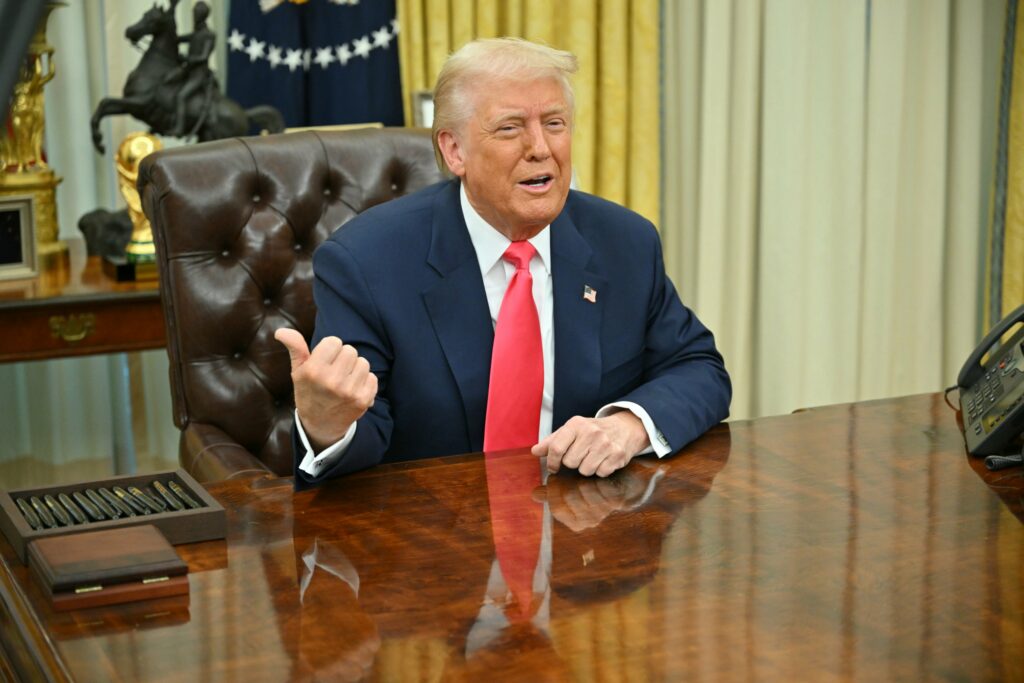
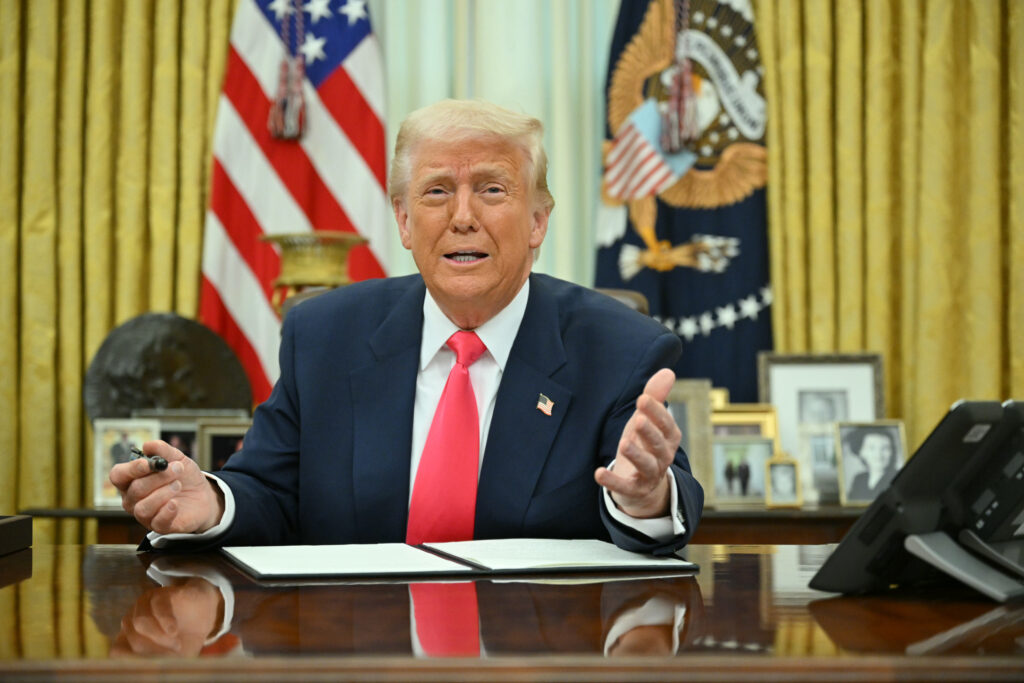
President Donald Trump said Japan is not required to protect the United States militarily and makes “a fortune” from it economically, as he fired off an impromptu broadside at a key ally.It came as Japan’s trade minister is arranging a trip to Washington during which he will reportedly demand an exemption from imminent US tariffs on steel and aluminum.”We have a great relationship with Japan. But we have an interesting deal with Japan that we have to protect them, but they don’t have to protect us,” Trump said Thursday.”And by the way, they make a fortune with us economically,” he said. “I actually ask, who makes these deals?”In response, government spokesman Yoshimasa Hayashi said Friday that Japan trusts Washington to keep its obligation to the two countries’ security treaty.Around 54,000 US military personnel are stationed in Japan, mostly in the Okinawa region east of Taiwan.Meanwhile Tokyo’s economy, trade and industry minister Yoji Muto told reporters that he hoped his US trip would “be a win-win for both Japanese and US national interests.”He said the visit was being coordinated and did not confirm the March 9-13 dates given by Japanese media or reports that he will push US officials to exempt Japan from levies.Trump has said 25-percent steel and aluminum tariffs will be imposed on Wednesday of next week, without exceptions.”It is important to closely study the specific content of these (tariff) measures and their impact,” Muto said Friday.He also poured cold water on Trump’s announcement that Japan was among the countries looking to invest trillions of dollars in a “gigantic” natural gas pipeline in Alaska.”This is an issue that the government and the private sector need to study, in terms of profitability and when supply will begin,” Muto said.”I hope to hear more details on this project” from US officials, he added.Trump has also threatened to impose tariffs of around 25 percent on auto imports. Vehicles represented nearly a third of all Japan’s exports to the United States last year.Without referring to Muto’s planned visit, Prime Minister Shigeru Ishiba told parliament on Wednesday that Japan’s “contribution to the US economy is significant.””So we want to appeal resolutely, with emotion and logic,” to Washington on the tariffs, he said.Muto and Japan’s foreign minister will hold economic security talks with their British counterparts in Tokyo Friday, touted as a chance to promote free trade and boost business ties.
Trump backs off Mexico, Canada tariffs after market blowback

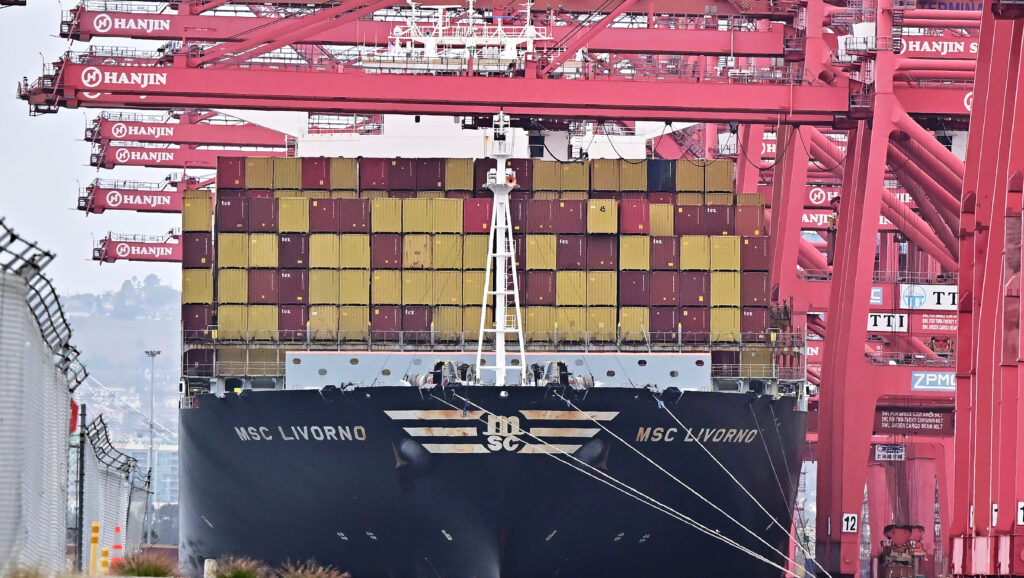
US President Donald Trump on Thursday delayed some tariffs targeting Canada and Mexico, leading Ottawa to halt an upcoming wave of countermeasures — offering a reprieve to companies and consumers after blowback on financial markets.Stock markets tumbled after Trump’s duties of up to 25 percent took effect Tuesday, as economists warned that blanket levies could weigh on US growth and raise inflation.Trump signed orders Thursday to hit pause on the fresh tariffs for Canadian and Mexican imports covered by a North American trade agreement, though he dismissed suggestions that his decisions were linked to market turmoil.The halt — which will last until April 2 — offers relief to automakers.In the auto sector, parts cross North American borders multiple times during production.Following talks with the “Big Three” US automakers — Stellantis, Ford and General Motors — Washington initially announced a one-month exemption on autos coming through the United States-Mexico-Canada Agreement (USMCA).A White House official told reporters that about 62 percent of Canadian imports will still face the new tariffs, although much of these are energy products hit by a lower rate of 10 percent.About half of Mexican imports come through the USMCA.The latest moves make conditions “much more favorable for our American car manufacturers,” Trump said Thursday.Shortly after Trump’s decision, Canadian Finance Minister Dominic LeBlanc wrote on X that his country “will not proceed with the second wave of tariffs on $125B of US products until April 2nd, while we continue to work for the removal of all tariffs.”Trump said more tariffs would come on April 2, adding they will be “reciprocal in nature.” He had earlier vowed reciprocal levies to remedy practices Washington deems unfair.At that point, Canadian and Mexican goods could still face levies.The US president also said he would not modify broad tariffs for steel and aluminum imports, which are due to take effect next week.US stock markets slumped again Thursday despite the new measures.- ‘Tremendous progress’ -Trump told reporters Thursday in the Oval Office that he had a “very good conversation” with Mexican President Claudia Sheinbaum.He claimed “tremendous progress” on both illegal immigration and drugs coming into the United States — both reasons that Washington cited in imposing levies on Mexico, Canada and China.His remarks stood in sharp contrast to simmering tensions with Canadian Prime Minister Justin Trudeau.Trudeau said Thursday that Ottawa will remain in a trade war with Washington for “the foreseeable future” even if there are “breaks for certain sectors.””Our goal remains to get these tariffs, all tariffs removed,” Trudeau added.Canada contributes less than one percent of fentanyl to the illicit US supply, according to Canadian and US government data.China, meanwhile, has pushed back on US allegations of its role in the fentanyl supply chain, and instead touted its cooperation with Washington on the issue.”The United States should not repay kindness with resentment, let alone impose tariffs without reason,” Chinese Foreign Minister Wang Yi said in Beijing.”China-US economic and trade ties are mutual. If you choose to cooperate, you can achieve mutually beneficial and win-win results. If you use only pressure, China will firmly counter.”- ‘Economic reality’ -For Scott Lincicome, vice president of general economics at the Cato Institute, Trump’s easing of tariffs was “a recognition of economic reality” — that tariffs disrupt supply chains and the burden falls mainly on Americans.”The market doesn’t like them and certainly doesn’t like the uncertainty surrounding them,” Lincicome told AFP.Since taking office for his second term in January, Trump has made tariff threats on allies and adversaries alike.US Treasury Secretary Scott Bessent said Thursday that he was not concerned Trump’s tariffs would be inflationary, adding that any impact on prices would likely be temporary.Trump has referred to tariffs as a source of US government revenue and a way to remedy trade imbalances.The US trade deficit surged to a new record in January, ballooning 34 percent to $131.4 billion as imports rose.Analysts say the deficit was likely bolstered by gold imports, but that data suggests businesses were also trying to get ahead of tariffs.

China will ‘firmly counter’ US trade pressure: top diplomat

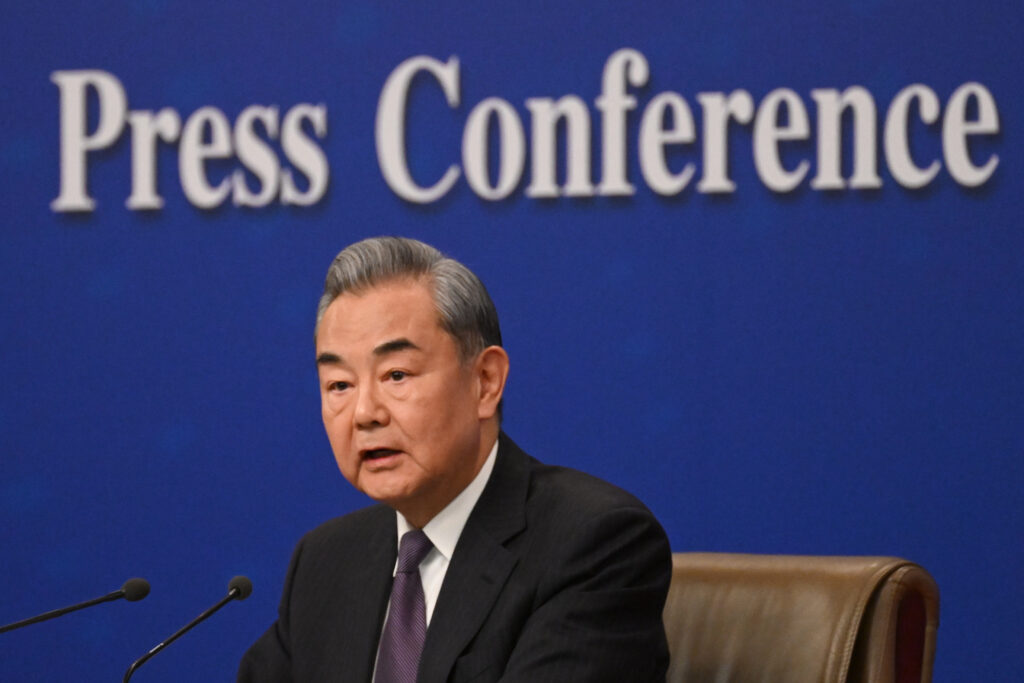
China’s foreign minister on Friday vowed Beijing would “firmly counter” US pressure, after Donald Trump heaped  tariffs on Chinese goods and torched off a trade war between the world’s two largest economies.Speaking at a press conference on the sidelines of a key political meeting, Wang Yi warned the “law of the jungle” could take hold in the world if nations were to pursue purely their own interests.Touting Beijing’s cooperation in the fight against the fentanyl epidemic in the United States, Wang said Washington should not “repay kindness with resentment, let alone impose tariffs without reason”.”There are around 190 countries in the world,” Wang said.”Imagine if every country emphasised their own priority and believed in strength and status, the world would fall back into the law of the jungle,” he added.Washington’s current policy, Wang said, was “not how a responsible major country behaves”.”China-US economic and trade ties are mutual,” the veteran diplomat said.”If you choose to cooperate, you can achieve mutually beneficial and win-win results. If you use only pressure, China will firmly counter,” he added.Wang also called for negotiations to end the war in Ukraine, warning “conflict has no winners, and peace has no losers”.”China welcomes and supports all efforts dedicated to peace,” he stressed.And he urged all parties to seek a “comprehensive and lasting ceasefire in Gaza and increase humanitarian assistance”.The Chinese top diplomat was speaking on the sidelines of the “Two Sessions” political meetings in Beijing, so far clouded by a new administration in the United States that is overturning the international order.Beijing has vowed to fight a trade war with the United States “to the end” as tariffs from Washington buffeted the global economy and threatened to hit Beijing’s lagging growth.The country’s leaders set an ambitious annual growth target of around five percent this week, vowing to make domestic demand its main economic driver as the escalating trade confrontation with the United States hit exports.US President Donald Trump imposed more blanket tariffs on Chinese imports this week, following a similar move last month — levies expected to hit hundreds of billions of dollars in total trade between the world’s two largest economies.

Musk’s SpaceX faces new Starship setback

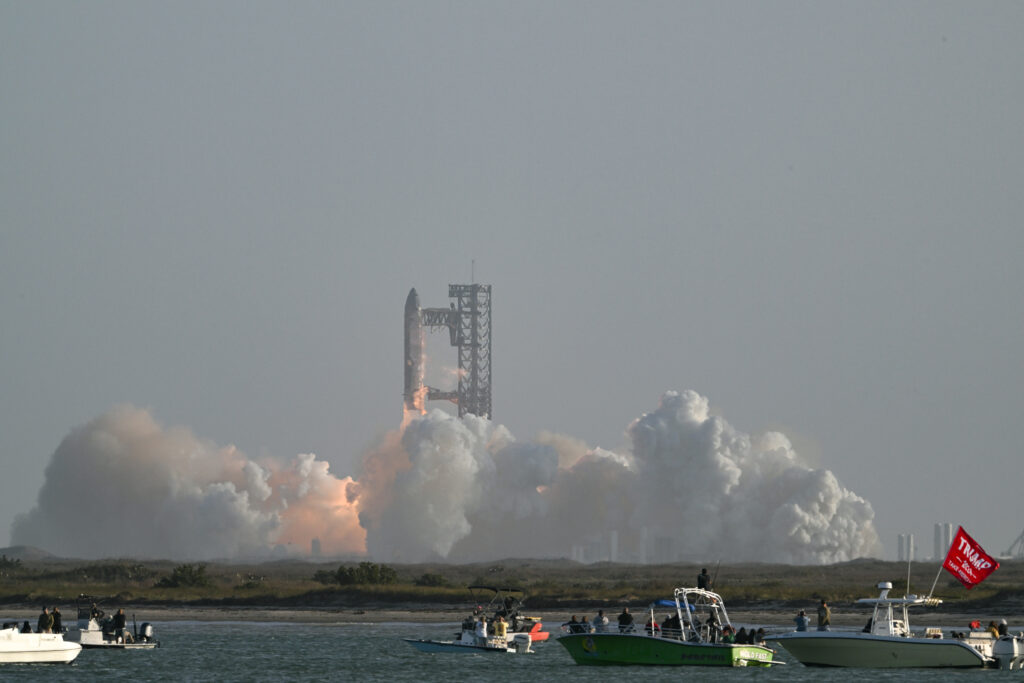
Elon Musk’s SpaceX on Thursday once again lost the upper stage of its massive Starship rocket in a fiery explosion, even as the booster was successfully caught in its latest orbital test — a near replay of the previous attempt.Minutes after liftoff and booster separation, a live video feed showed the upper stage tumbling uncontrollably before the signal abruptly cut out. Dramatic footage circulating online captured red-hot debris raining down over the Bahamas.”Can confirm we did lose contact with the ship. Unfortunately, this happened last time, too,” SpaceX spokesman Dan Huot said, referring to January’s flight, which also ended with the upper stage disintegrating over the Caribbean.The fallout was felt immediately in US airspace. The Federal Aviation Administration (FAA) briefly activated a “debris response area,” delaying flights from airports stretching from Newark and Philadelphia to Miami. The agency confirmed SpaceX will be required to conduct a mishap investigation before it can fly again.Despite the setback, SpaceX’s “fail fast, learn fast” approach has helped it become the world’s dominant launch services provider. But Musk’s status as one of President Donald Trump’s closest advisors and his influence over federal regulators are raising concerns about potential conflicts of interest.- Eighth Starship Test – Starship — the world’s largest and most powerful rocket — lifted off from SpaceX’s Starbase facility in Boca Chica, Texas, shortly after 5:30 pm (2330 GMT). It marked its eighth uncrewed orbital test, after earlier launch attempts were scrubbed on Monday and Wednesday.While the upper stage was lost for a second consecutive flight, SpaceX successfully recovered the Super Heavy booster, catching it with the launch tower’s mechanical “chopstick” arms for the third time — an impressive feat of engineering.About 40 minutes after launch, SpaceX ended its livestream without providing further details.Standing 403 feet (123 meters) tall — about 100 feet taller than the Statue of Liberty — Starship is designed to eventually be fully reusable and is key to Musk’s long-term vision of colonizing Mars.NASA is also awaiting a modified version of Starship as a lunar lander for its Artemis program, which aims to return astronauts to the Moon this decade. But before SpaceX can carry out those missions, it must prove the vehicle is reliable, safe for crew, and capable of complex in-orbit refueling — critical for deep space missions.The FAA previously grounded Starship after its January 16 flight ended in an upper-stage explosion. Last Friday, the agency allowed SpaceX to proceed with this latest test before finalizing its investigation into that mishap.- Conflicts -During Joe Biden’s presidency, Musk frequently clashed with the FAA, accusing it of over-regulating SpaceX over safety and environmental concerns.Now, as Trump’s chief advisor on cost-cutting initiatives, Musk faces scrutiny over his influence on federal agencies overseeing his companies.According to Bloomberg News, a SpaceX engineer recently visited FAA headquarters, warning employees their jobs were at risk if they did not begin work on a program to deploy thousands of the company’s Starlink satellite terminals in support of the national airspace system.Telecom giant Verizon currently holds a contract to upgrade the FAA’s infrastructure, but that deal could be in jeopardy, Bloomberg reported. SpaceX has denied the allegations, stating “recent media reports about SpaceX and the FAA are false.”

Trump signs executive order establishing ‘Strategic Bitcoin Reserve’

US President Donald Trump signed an executive order Thursday establishing a “Strategic Bitcoin Reserve,” forcefully endorsing a currency once shunned as a tool for money launderers.The government stockpile, which backers liken to a “digital Fort Knox,” will be composed of digital currency seized in US criminal proceedings, said David Sacks, the White House’s crypto “czar,” emphasizing in a social media post that Thursday’s move made good on a Trump campaign promise.The use of these assets “means it will not cost taxpayers a dime,” Sacks said in a post on X. “The purpose of the Stockpile is responsible stewardship of the government’s digital assets under the Treasury Department.”The policy also allows the secretaries of Commerce and Treasury to develop “budget-neutral strategies” for adding to the reserve, he said.Bitcoin prices fell as much as five percent following the announcement, apparently out of disappointment the program involves no immediate bitcoin purchases.The move comes on the eve of a White House summit Friday with major crypto figures, who were significant donors to Trump’s successful campaign to regain the presidency. Cryptocurrency supporters organized heavily in the 2024 election in response to the skepticism of Joe Biden’s administration to digital currency, also helping to propel Republicans to victory in key Senate races.For believers, cryptocurrencies represent a financial revolution that reduces dependence on centralized authorities while offering individuals freedom from traditional banking systems.Trump has waded into the space personally, partnering with exchange platform World Liberty Financial and launching his own “Trump” memecoin in January as his wife Melania did the same — moves that have prompted conflict of interest accusations.Trump critics such as Democratic Senator Chris Murphy of Connecticut have characterized Trump’s cryptocurrency venture as a conduit to potential corruption on a massive scale. “It’s as if Trump is posting his Venmo or his Cash App handle and inviting corporations and foreign governments to just send him cash in secret,” said Murphy in a video posted to X in which he called Trump’s crypto venture “a pure grift.”

NYC High Line architect Scofidio dead at 89

Ricardo Scofidio, an architect in New York City whose firm designed some of the city’s most iconic structures such as the High Line elevated park in Manhattan, died on Thursday at age 89, according to US media.Together with his wife, Elizabeth Diller, Scofidio founded the design firm now called Diller Scofidio + Renfro, known for its conceptual building designs.Among their most prominent projects is the High Line, a 1.5-mile (2.3-kilometer) park and scenic pedestrian route built along a former railway on the west side of Manhattan.The project, a collaboration with architects James Corner and Piet Oudolf, has become one of New York’s signature destinations since its opening in 2009.Scofidio and Diller — who met when he was her teacher at the Cooper Union School of Architecture — opened their architecture firm in 1979. They married in 1989.Other major projects designed by the firm include Alice Tully Hall at New York’s Lincoln Center, The Broad art museum in downtown Los Angeles, and Zaryadye Park, a landscape urban park next to Moscow’s Red Square.Charles Renfro, who in 2004 became a partner at Diller and Scofidio’s firm, told the New York Times that Scofidio’s “voice is in all of” their projects, “both as a conceptual thinker and as someone who helped solve deep technical problems.” In 1999, the MacArthur Foundation awarded one of its famous “genius” grants to Scofidio and Diller, the first architects to receive the prestigious prize.Scofidio is survived by Diller, as well as four children from a previous marriage, six grandchildren and and three great-grandchildren, according to the New York Times.

Two armies, one goal: stopping Mexico-US migration

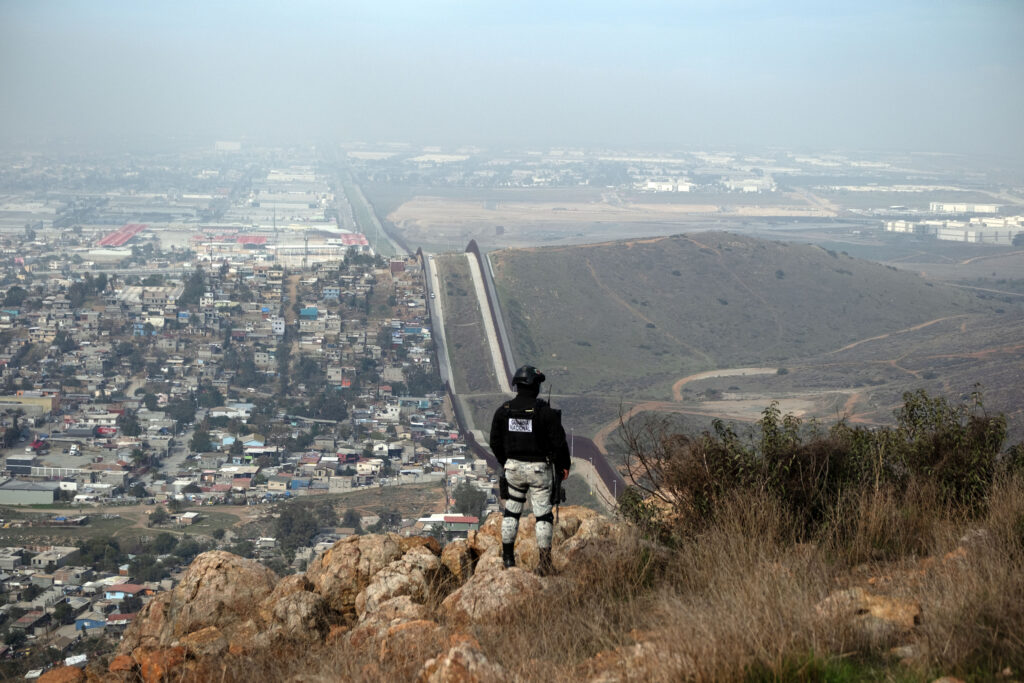
On one side of the border, US soldiers unfurled barbed wire. On the other, Mexican soldiers monitored a gap in the border wall. Both had the same objective: to curb irregular migration.Mexico and the United States have deployed thousands of troops to their 3,100-kilometer (1,900-mile) frontier since President Donald Trump returned to office in January, when he immediately declared a border “emergency.”The efforts appear to be paying off: the US Customs and Border Protection (CBP) reported a 65-percent drop in migrant interceptions in January compared with the same month of 2024.”If before there were a hundred daily crossings, now there are no more than five. Yesterday there were none,” a Mexican National Guard officer told AFP during a patrol on the edge of the border city of Tijuana.The officer, who spoke on condition of anonymity, attributed the fall to coordination between US and Mexican border patrols, including a WhatsApp chat in which they share data, photos and videos of their operations.Mexico has stepped up efforts to contain fentanyl trafficking and illegal migration to the United States, seeking to address two issues that Trump used to justify the 25-percent tariffs that he imposed on Mexican goods.After a call Thursday with Mexican counterpart Claudia Sheinbaum, Trump agreed to suspend most of the duties until April 2.The two countries were “working hard, together, on the Border, both in terms of stopping Illegal Aliens from entering the United States and, likewise, stopping Fentanyl,” he wrote on his Truth Social platform.- Military camp -Armed Mexican troops patrolled the steep slopes of an area on the edge of Tijuana known as Eagle’s Nest, a well-known crossing point for migrants who are often guided by traffickers.On the other side of the border, to the west, was the US city of San Diego, about 15 hours away on foot.Since February 20, about 30 soldiers have set up camp next to the border, on a hill surrounded by ramshackle homes, dirt roads, chicken coops and garbage.Due to the rocky terrain, there is no wall along this part of the border, making it a key crossing point, the National Guard officer said.Despite the increased military presence, some migrants still risk trying to cross, like a Pakistani couple intercepted on February 26 with a child in their arms.They were handed over to the Mexican immigration authority, after the National Guard had the CBP check whether the adults had criminal records.”From the wall here, they are ours; from the wall there, they are theirs,” the officer said about the demarcation of the border for intercepting migrants.Meanwhile, his troops filmed CBP helicopter overflights to share in the group chat.One of them has stuck a CBP patch on his helmet, a common gesture among law enforcement officers who exchange emblems as a symbol of friendship.On the US side of the fence, meanwhile, soldiers pushed a large roll of barbed wire uphill to use to reinforce the barrier, while others surveyed Mexican territory with binoculars.

Trump again casts doubt on his commitment to NATO

President Donald Trump on Thursday renewed doubts over his commitment to the NATO alliance, saying countries that are not spending adequately on their militaries do not deserve defense.”If they don’t pay, I’m not going to defend them,” he told reporters in the Oval Office.Trump has frequently questioned whether the United States — by far the biggest military in the transatlantic alliance and ultimate guarantor of Europe’s security since World War II — should continue its central role in NATO.The Republican, who began his second term in January, doubled down on his criticism that some NATO members do not spend enough on their defense budgets and overly rely on the United States.”They should be paying more,” he said.Trump was responding to reporters after NBC News reported earlier Thursday that he is considering a plan to calibrate US military support in a way that favors member countries which spend a higher proportion of more of their GDP on defense.The president has previously called for allies to lift annual defense spending to five percent of GDP from the current two-percent target, which NATO expected only 23 of 32 members to meet last year.Countries deemed to be underspending might not be defended if attacked, according to the reported plan.The move would weaken NATO’s core Article 5 which stipulates that any member attacked will be defended by all the others.Trump also questioned whether allies, including France, would defend the United States.”If the United States was in trouble and we called them. We said, ‘We got a problem, France. We got a problem. A couple of others, I won’t mention. Do you think they’re gonna come and protect us? Hmm. They’re supposed to. I’m not so sure,” Trump said.French President Emmanuel Macron, however, said France was a “loyal and steadfast ally.””We have always been there for each other,” Macron told reporters in Brussels after a meeting of EU leaders, where they agreed to strengthen Europe’s defense.Macron said France had shown “respect and friendship” to the United States, and “we are entitled to ask for the same thing.”burs-sms/dc/raz/ub/des

Deja vu on the Moon: Private US spaceship again lands awkwardly

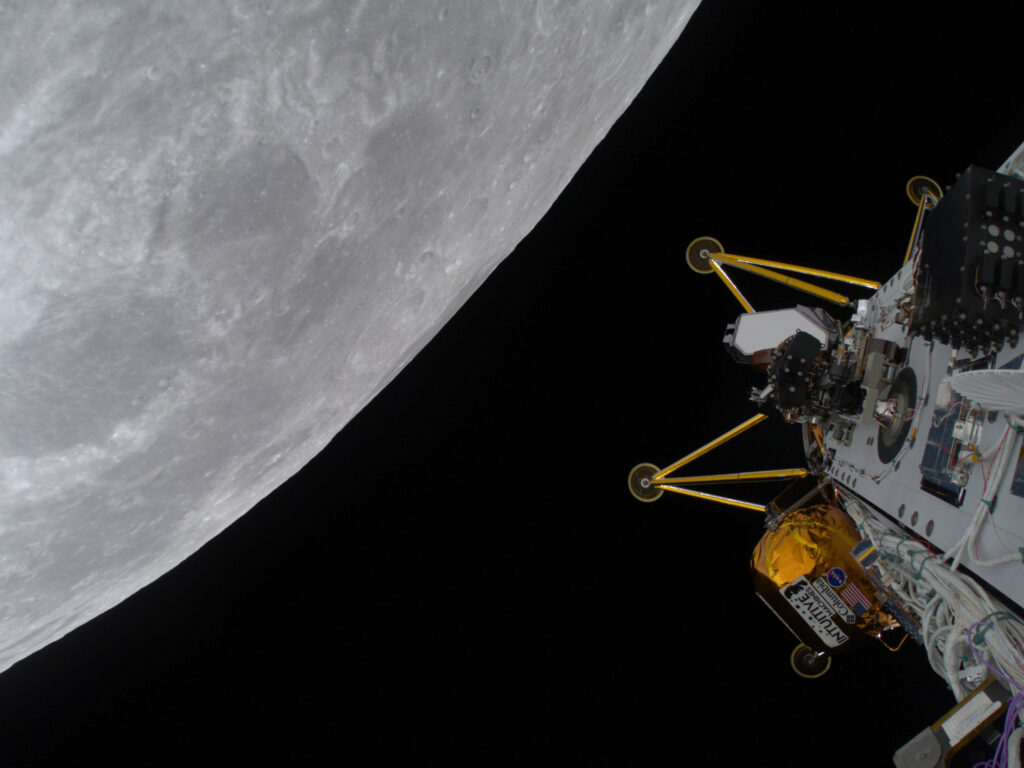
Second time unlucky: A US company’s lunar lander appears to have touched down at a wonky angle on Thursday, an embarrassing repeat of its previous mission’s less-than-perfect landing last year.Houston-based Intuitive Machines made history in February 2024 as the first private firm to place a spaceship on Earth’s nearest neighbor, though the moment was marred by Odysseus toppling over upon touchdown.For its second attempt, the company sent the hexagonal Athena lander to the Mons Mouton plateau, closer to the lunar south pole than any mission before it.The team targeted a 12:32 pm ET (1732 GMT) touchdown, but as time passed with confirmation, mission control grew visibly tense.Twenty minutes after the scheduled landing, company spokesman Josh Marshall announced on a webcast: “Athena is on the surface of the Moon.” However, teams were still analyzing data to determine the lander’s exact status, he said.Later, CEO Steve Altemus acknowledged to reporters: “We don’t believe we’re in the correct attitude,” an aeronautical term for orientation. He added that the lander’s position could limit power generation and communication, impacting the mission’s success.Intuitive Machines’ share price tumbled 20 percent in afternoon trading. The company suggested that, as in its previous mission, issues with Athena’s laser altimeters, which provide altitude and velocity readings, may have played a role in the suboptimal landing.Athena, like its predecessor Odysseus, has a tall, slender build. At 15.6 feet (4.8 meters) — the height of a giraffe — it had raised stability concerns. However, Altemus emphasized that the lander’s weight distribution kept the center of gravity low, and Intuitive Machines remains confident in its design.Expectations were high after Texas rival Firefly Aerospace successfully landed its Blue Ghost lander on the Moon on Sunday on its first attempt.- Cutting-edge technologies at stake -Both missions are part of NASA’s $2.6 billion Commercial Lunar Payload Services (CLPS) program, which seeks to leverage private industry to reduce costs and support Artemis, NASA’s effort to return astronauts to the Moon and eventually to reach Mars.Athena carries an ice-drilling experiment, a 4G cellular network test, three rovers, and a unique hopping drone named Grace, designed to descend into a permanently shadowed crater—where sunlight has never reached—a first for humanity.However, whether any of these objectives can be met depends on Athena’s final resting angle, which is yet to be determined.”Any time humanity puts a lander on the moon, it’s a good day,” said Tim Crain, the Intuitive Machines chief technology officer, striking a positive tone.The team hopes to use imagery from NASA’s Lunar Reconnaissance Orbiter to determine Athena’s exact location and orientation, though this could take a day or two, Crain added.Despite the non-optimal orientation, NASA’s Nicky Fox, associate administrator for the science mission directorate, said the agency remains “excited” and will prioritize gathering as much scientific and technology data as possible before the mission ends.  – Sticking the landing -Lunar landings are notoriously difficult. The Moon’s lack of atmosphere rules out parachutes, forcing spacecraft to rely on precise thrusts and navigation over hazardous terrain.Until Intuitive Machines’ first mission, only national space agencies had achieved the feat, with NASA’s last landing dating back to Apollo 17 in 1972.The company’s first lander, Odysseus, came in too fast, caught a foot on the surface and toppled over, cutting the mission short when its solar panels could not generate enough power.Athena launched last Wednesday aboard a SpaceX Falcon 9 rocket, which also carried NASA’s Lunar Trailblazer probe, a spacecraft designed to map the Moon’s water distribution.However, ground controllers have been struggling to re-establish contact with Trailblazer, adding to NASA’s challenges.These missions come at a delicate time for NASA, amid speculation that the agency may scale back or even cancel the crewed Moon missions in favor of prioritizing Mars, a goal championed by President Donald Trump and his billionaire advisor and SpaceX owner Elon Musk.