AFP USA

Trump announces big Boeing order for Qatar Airways

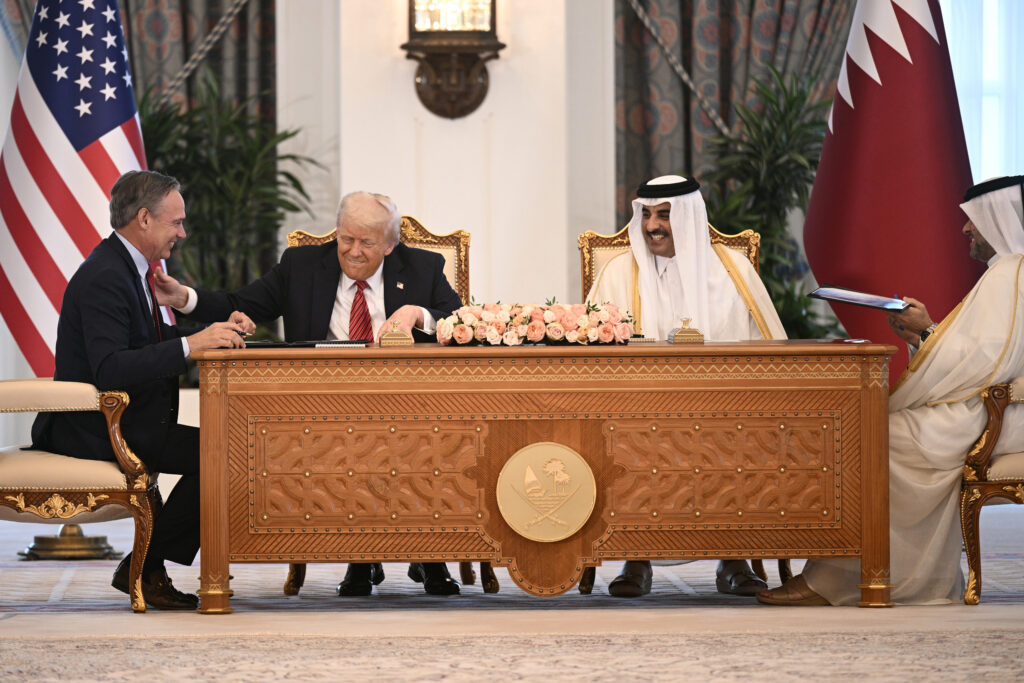
US President Donald Trump said on Wednesday Qatar Airways had placed a “record” order for 160 planes from Boeing, as he signed a raft of deals in Doha alongside Qatar’s emir.The order, Boeing’s largest ever for its wide-body jets, deepens ties between the US aerospace giant and the giant Middle East carrier.Qatar Airways will honour a “$96 billion agreement to acquire up to 210 American-made Boeing 787 Dreamliner and 777X aircraft powered by GE Aerospace engines,” according to a White House fact sheet.”This is Boeing’s largest-ever widebody order and largest-ever 787 order,” it said.The order is comprised of 130 Dreamliner planes and 30 Boeing 777-9 jets, which are still being certified by the US Federal Aviation Administration. There are also options for 50 additional 787 and 777X planes, according to a Boeing news release. “We are deeply honored that Qatar Airways has placed this record-breaking order with Boeing, one that solidifies their future fleet,” Boeing commercial plane chief Stephanie Pope said.The order represents a win for new Boeing CEO Kelly Ortberg, although analysts noted that the planes will not be delivered for at least five years due to industry backlogs.Both Boeing and rival Airbus, which has also sold extensively to Qatar Airways, have struggled in recent years with supply chain problems as they have taken thousands of plane orders amid strong airline demand. Boeing has also been beset with safety and labour problems that have limited output.Ortberg joined Trump for part of Wednesday’s signing ceremony that also included defence agreements and the purchase by Qatar of American MQ-9B drones, after about two hours of talks with Qatar’s Emir Sheikh Tamim bin Hamad Al-Thani.”It’s over $200 billion but 160 in terms of the jets. That’s fantastic. So that’s a record,” Trump said, adding: “It’s the largest order of jets in the history of Boeing. That’s pretty good.”The list prices of the 777X and 787 Dreamliner suggest the total value of the Boeing deal is well under $200 billion. The $96 billion figure in the White House factsheet also appears to include some business for GE Aerospace.- Plane backlog -Trump’s Qatar visit is the second destination of his Gulf tour, after a first stop in Riyadh, where he made a surprise announcement lifting sanctions on Syria and met the country’s president.Relations between Washington and Doha have been in the spotlight over Qatar’s offer to Trump of a $400 million luxury aircraft to serve as a new Air Force One and then pass into his personal use.Democratic Senate Minority Leader Chuck Schumer announced Tuesday he would hold up Trump’s Justice Department political appointees in protect, saying, “This is not just naked corruption, it is also a grave national security threat.”Since 2016, Boeing has received 118 gross orders from Qatar Airways and delivered 65 planes to the carrier, according to Boeing’s website.  Morningstar analyst Nicolas Owens said the order represents “good news” for Boeing, but noted that it would be years before Boeing receives revenues for the jets in Wednesday’s order.”If you’re ordering a plane today it’s not going to be on your landing strip for at least five years,” Owens said.Owens said the announcement is also a “vote of confidence” in the much-delayed 777X, which is still to be certified, with Boeing pointing to first deliveries in 2026.A press release from Qatar Airways praised the new 777 planes for reducing fuel use and emission by 25 percent compared to the aeroplanes they will replace.Ortberg joined Boeing in August 2024 following a leadership shakeup after a series of safety and quality control problems. He has focused on upgrading Boeing’s operations under the close scrutiny of US air safety regulators, saying improving Boeing’s corporate culture will take time.Shares of Boeing rose 0.6 percent.
Democrats grill Trump’s controversial health secretary

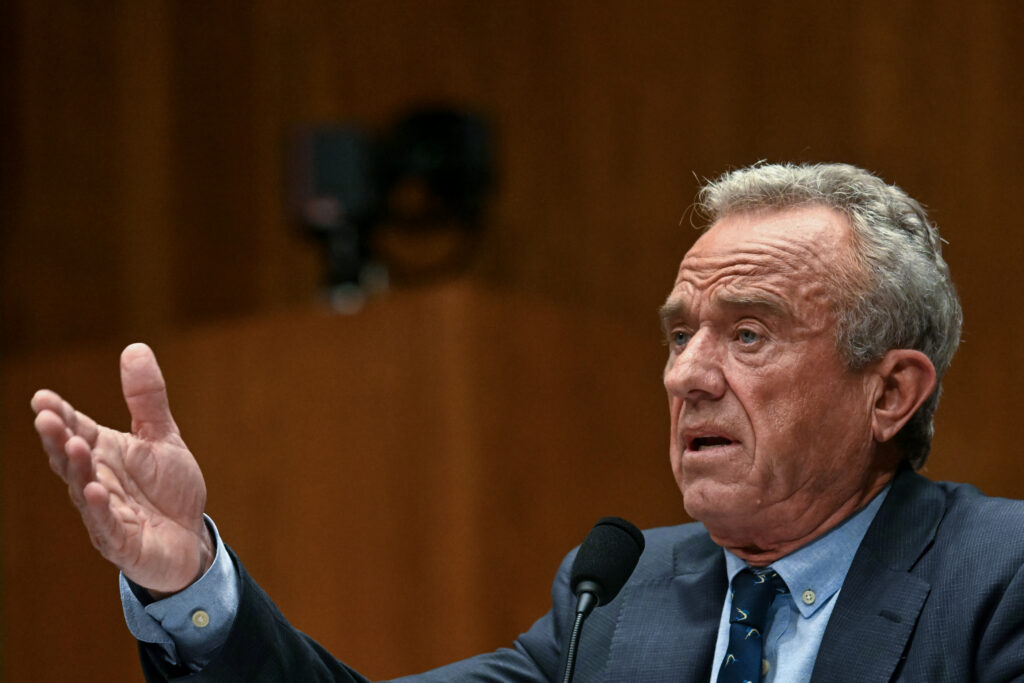
President Donald Trump’s health secretary gave mixed messages Wednesday on whether children should be vaccinated and defended a brutal series of budget cuts in a grilling by congressional Democrats.The hearing — ostensibly about Trump’s 2026 budget proposal — offered Democrats a chance to pressure Robert F. Kennedy Jr. on layoffs, budget cuts and a measles outbreak that has killed three children and sickened more than a thousand.Asked in the House of Representatives if he would vaccinate his own child for measles, the long-time vaccine skeptic initially declined to respond.”If I answer that question directly, it will seem like I’m giving advice to other people and I don’t want to be doing that,” Kennedy told Democratic Representative Mark Pocan during the session, which was interrupted by protesters.Pocan responded that Kennedy oversees the Centers for Disease Control and Prevention, a premier US government public health service, and therefore advising on vaccines is “kind of your jurisdiction.”Later, Kennedy said he was “recommending” vaccination as “the best way to stop the spread.”But asked the same question about chicken pox and Polio, Kennedy said “I don’t want to give advice.”The globally renowned US health agencies and centers for scientific research are facing deep workforce and budget cuts under a plan to slash the federal government led by Trump’s mega-billionaire backer Elon Musk.Kennedy defended the elimination of 20,000 positions from the Department of Health and Human Services — nearly a quarter of the workforce — and denied reports that key programs and funding, such as cancer research, have been cut.”We intend to do more, a lot more, with less,” he said, claiming to be staunching an “unsustainable hemorrhage” of spending that would have “disastrous health consequences.”Democrat Rosa DeLauro suggested that Kennedy was illegally reducing the department without congressional approval.”I believe you are promoting quackery,” DeLauro said.”The United States remains the sickest developed nation,” Kennedy said. “Clearly, something is structurally and systematically wrong with our approach.”

Trump admin axes safeguards against ‘forever chemicals’ in drinking water

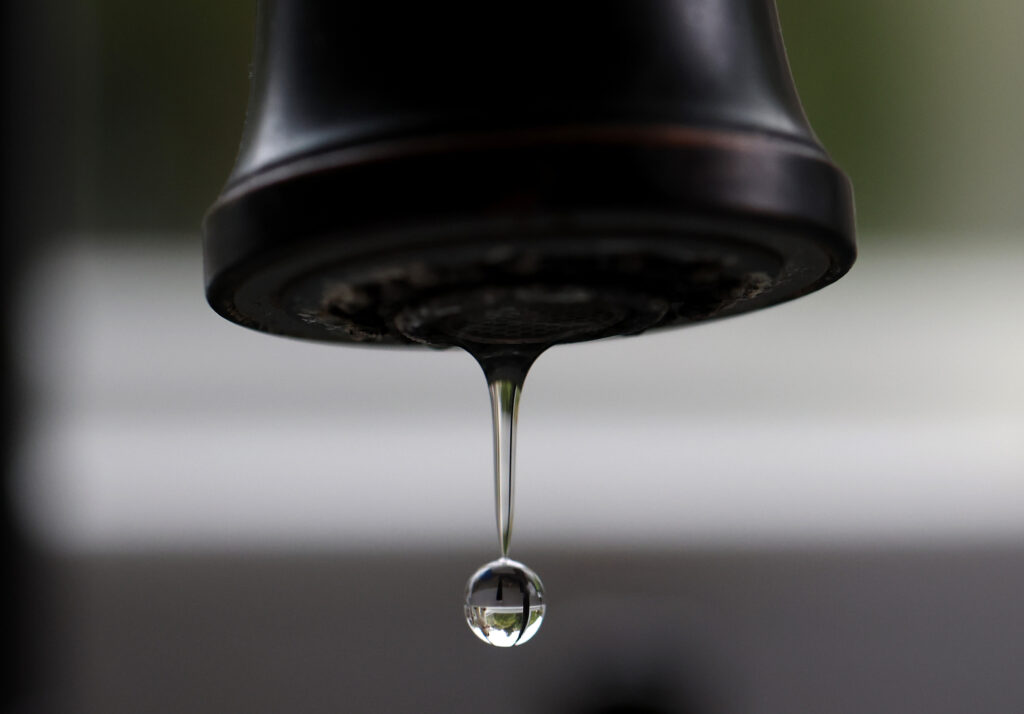
President Donald Trump’s administration on Wednesday moved to scrap limits on several toxic “forever chemicals” in drinking water, reversing what had been hailed as a landmark public health victory.The Environmental Protection Agency said it would retain maximum contaminant levels for just two of the most notorious compounds from the so-called PFAS class of chemicals, while removing limits for four others known to cause harm.At least 158 million people across the United States have drinking water contaminated with per- and polyfluoroalkyl substances, which accumulate in the body and have been linked to cancers, birth defects, decreased fertility and behavioral disorders even at very low levels.The original rules, imposed by then president Joe Biden’s administration in April 2024, were celebrated as a long-overdue response to decades of industry deception and government inaction.But under the changes announced by EPA Administrator Lee Zeldin, the limits would now apply only to PFOA and PFOS — two legacy chemicals historically used in products such as nonstick Teflon pans, fabric protectors like 3M’s Scotchgard, and firefighting foams — while exempting newer-generation PFAS developed as replacements.The EPA would also extend the compliance deadline for these two chemicals from 2029 to 2031, and stop the agency from assessing cumulative risks from mixtures of PFAS chemicals.”We are on a path to uphold the agency’s nationwide standards to protect Americans from PFOA and PFOS in their water,” said Zeldin. “At the same time, we will work to provide common-sense flexibility in the form of additional time for compliance.”The move — part of a broader deregulatory push under Zeldin, who has recast his agency’s role as prioritizing the “unleashing” of American industry over environmental stewardship — was welcomed by water utilities but sharply criticized by advocacy groups.”This is a huge step backwards, and it’s really a betrayal of the promise this administration made to provide clean drinking water and clean air, and to make America healthy again,” Melanie Benesh of the nonprofit Environmental Working Group told AFP.”With a stroke of the pen, the EPA is making a mockery of the Trump administration’s promise to deliver clean water for Americans,” added Eric Olson and Anna Reade of the Natural Resources Defense Council.Benesh noted that the excluded chemicals were developed as substitutes, but the EPA’s own research has linked some of them — including GenX, which contaminated a swath of North Carolina’s water supply — to harm to the liver, kidneys, immune system, fetal development, and cancer.- Planet-wide contamination -PFAS earned the nickname “forever chemicals” because they can take millions of years to break down in the environment.First synthesized in the 1930s, PFAS contain carbon-fluorine bonds — the strongest in chemistry — giving them extraordinary heat resistance and liquid-repellent properties. Today, they blanket the planet, from the Tibetan Plateau to the ocean floor, and circulate in the blood of nearly every American.Internal documents cited by researchers show that manufacturers such as DuPont and 3M knew for decades about PFAS dangers yet worked to cloud the science and delay regulation.In recent years, companies have paid billions of dollars to settle lawsuits with water utilities and affected communities — even as next‑generation PFAS continue to appear in clothing, cookware, and cosmetics.Water systems will eventually have to install granular-activated carbon systems, but the newer-generation PFAS, which have shorter molecular chains, clog filters more quickly, raising operating costs.”This commonsense decision provides the additional time that water system managers need to identify affordable treatment technologies and make sure they are on a sustainable path to compliance,” said National Rural Water Association CEO Matthew Holmes, welcoming the delay.The rollback is likely to face legal challenges. Under the Safe Drinking Water Act, any change to existing standards must be equally or more protective of health.Activists are also calling on states — which are free to set stricter standards — to step in and fill the gap left by federal inaction.

Crypto industry praises Trump, calls for market clarity

The start of President Donald Trump’s term earned rave reviews at the world’s leading crypto conference Wednesday, but top industry lawyers said digital platforms wanted regulatory clarity while the Republicans control Congress.”Across the board, it’s been a very encouraging three months,” said Lewis Cohen, a lawyer specializing in digital assets with the New York firm Cahill Gordon & Reindel.Cohen was speaking at Consensus, the world’s longest-running crypto conference, hosted this year in Canada’s largest city, Toronto.Trump’s son Eric, who is promoting his own crypto business, is expected to address the conference on Thursday amid increasing questions about potential conflict of interest with his father in the White House.Eric Trump is deeply involved in the crypto industry through direct business ventures, notably as a co-founder and executive at American Bitcoin, as well as through family-backed projects like World Liberty Financial and the $TRUMP meme coin.The digital currency saw a spike in value when it announced that its top holders would be invited to a dinner with the president, set to take place on May 22 at the Trump National Golf Club near Washington.US crypto investors were major supporters of Trump’s presidential campaign, contributing millions of dollars toward his victory in hopes of ending the deep skepticism of the previous Democratic administration toward digital currencies.Conference participants did not conceal their lingering contempt for Joe Biden’s presidency.Annemarie Tierney of Liquid Advisors, a regulatory expert who previously worked at the Securities and Exchange Commission (SEC), said that Trump’s return to the White House offered “a chance to reset the relationship” between the industry and Washington.Biden’s administration had implemented restrictions on banks holding cryptocurrencies and allowed former SEC chairman Gary Gensler to pursue aggressive enforcement.Trump’s pro-crypto SEC chair Paul Atkins has dropped cases against major platforms like Coinbase and Kraken initiated under Biden. “This is one of the most important things the SEC has done…I never thought I would see this,” Tierney said.- ‘Rules of the road’ -Cryptocurrency critics warn that digital assets function primarily as speculative investments with questionable real-world utility that could cause massive damage if the market crashes.But believers see digital assets as a financial revolution that reduces dependence on centralized authorities and an alternative to traditional banking systems.Some say crypto’s success at the grassroots level would be stamped out by regulation that would give massive financial institutions free rein to dominate the sector.But for Connor Spelliscy, who heads the non-profit Decentralization Research Center, crypto platforms would benefit from fast regulatory action.”It’s so important that we establish some rules of the road for the industry before potentially the House switches,” he said, referencing a widely-held view that Democrats, currently the minority party in the House and Senate, are more hostile toward crypto.Congress is considering two cryptocurrency bills. The so-called stablecoin bill, which aims to regulate digital coins whose value is tied to the dollar, is seen as less contentious.But it’s being held up by Democrats who are furious over Trump’s increasing holdings in the sector while in office.The second, thornier bill, aims to create a regulatory framework for the entire digital assets market — like a regulated stock market for cryptocurrencies.”This administration needs to put these rules in writing,” Tierney said. “We need to build a framework that’s regulatorily solid.”

Sean Combs’s ex Cassie alleges pattern of abuse ahead of defense grilling

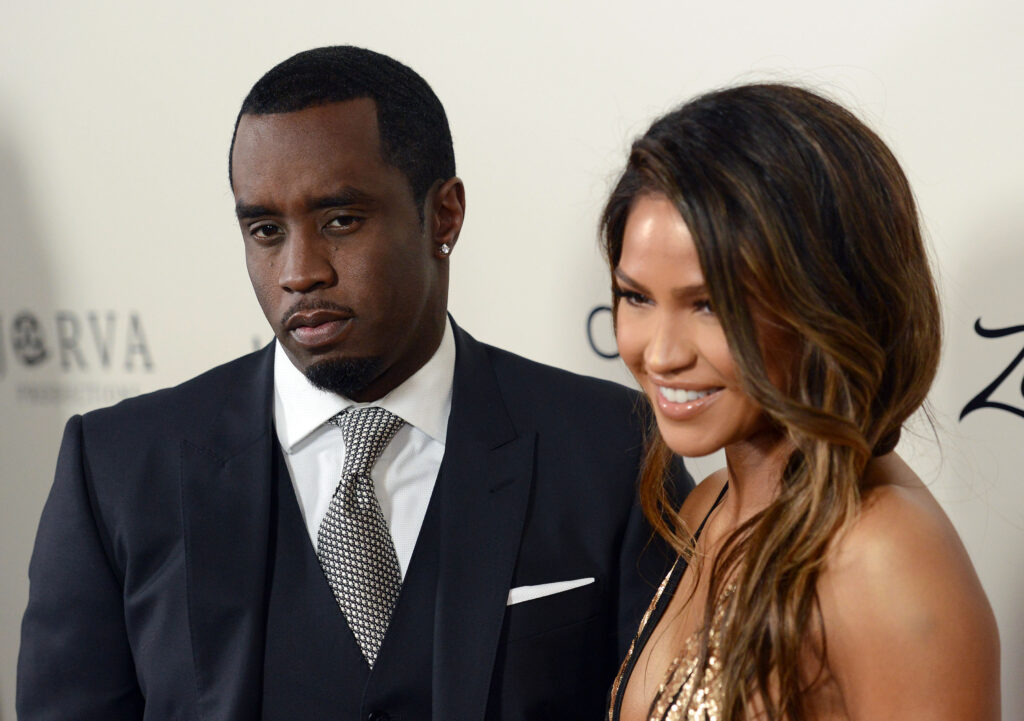
Sean “Diddy” Combs’s former partner Casandra Ventura returned to the stand Wednesday, testifying about a pattern of violence at the music mogul’s hands ahead of what is expected to be an aggressive cross-examination by his lawyers.Singer and model Ventura, better known as Cassie, is also likely to face questions about allegations that Combs raped her in 2018, as well as her graphic accounts of elaborate sex parties organized by the 55-year-old hip-hop icon.Combs, charged with five counts including racketeering and sex trafficking, would “push me down, hit me in the side of the head, kick me” during the parties, Ventura testified Wednesday.She said that in 2011 Combs looked through her phone and discovered she was seeing rapper Kid Cudi, which sent him into a rage that saw him lunge at her with a corkscrew.”I knew his capabilities, his access to guns,” Ventura later testified.Combs subsequently threatened to release videos of her participating in his sex parties as retaliation, she said.During an emotional first day of testimony, Ventura — who is heavily pregnant with her third child with husband Alex Fine — detailed extensive, sustained abuse at the hands of Combs.She painted him as controlling and willing to wield his wealth and influence to get his way. Ventura gave vivid accounts that will underpin much of the prosecution’s case against the music industry figure who is alleged to have used violence and blackmail to manipulate women over many years.Ventura recounted so-called “freak-off” sex parties saying she participated because she was “just in love and wanted to make (Combs) happy — to a point I didn’t feel like I had much of a choice.”Ventura, who is 17 years younger than Combs and first met him when she was 19, described how the mogul would sometimes urinate on her, or he would instruct one of the numerous sex workers he engaged to do so. – ‘It was disgusting’ -The escorts, almost always men, were paid thousands of dollars in cash after encounters.”It was disgusting. It was too much. It was overwhelming,” she said, adding that the hotel rooms used for the marathon sex sessions were often trashed, with establishments charging sizable cleaning and repair bills including for sheets stained with blood and urine.Combs’s defense team indicated that during cross-examination, which is expected as early as Wednesday afternoon, they would seek to emphasize that Ventura took drugs of her own free will, and behaved erratically.Ventura said that during the encounters she took drugs including ecstasy, ketamine and cocaine, and that the “drugs honestly helped” her meet Combs’s demands to stay awake for days on end.The drugs also had a “dissociative and numbing” effect, she said, “a way to not feel it for what it really was.”Ventura revealed that she would take opiates often to cope with the parties.It “made me feel numb which is why I relied on them so heavily,” she testified. “It was an escape.”Ventura told the court she grappled with frequent urinary tract infections (UTIs) and that she would sometimes participate in the freak-off before they had cleared up which she described as “painful.”In a hotel surveillance clip from March 2016 shown to jurors Monday and again Tuesday, Combs is seen brutally beating and dragging Ventura down a hallway.The prosecution played portions of the footage while Ventura was on the stand.When asked why she didn’t fight back or get up, Ventura answered simply that curled up on the ground “felt like the safest place to be.” “I don’t remember exactly his words,” she said Wednesday, describing Combs losing control. “I’m sure he was calling me something other than my name.”Following the alleged hotel assault, Ventura was forced to attend the premiere of her movie “The Perfect Match” covered in bruises to her body and face, the jury heard as they were shown photographs of the actress at the event.Ventura said she was forced to wear sunglasses to conceal a black eye.The images contrasted with red carpet shots of the pair seemingly enjoying each other’s company and projecting harmony.Combs’s defense team insists while some of his behavior was questionable it did not constitute racketeering and sex trafficking. He denies all counts and proceedings are expected to last eight to 10 weeks.

Toddler separated from parents in US deportation case returned to Venezuela

A two-year-old Venezuelan girl, whose parents were deported from the United States without her, was flown home on Wednesday to Caracas, earning President Donald Trump rare praise from Venezuela’s government.”Welcome, Maikelys,” First Lady Cilia Flores said as she took the toddler into her arms on her arrival on a deportation flight carrying 226 Venezuelan migrants, state TV showed.The separation of Maikelys Antonella Espinoza Bernal from her parents had caused an outcry in the South American nation.Several demonstrations were held in Caracas to denounce her “abduction” by US authorities.Her mother, Yorelys Bernal, was not at the airport to greet her daughter but was reunited with her later at the presidential palace, where President Nicolas Maduro profusely thanked Trump for the girl’s return.Striking an unusually conciliatory tone, he said that “there have been, and will be differences” with the Trump administration but called the return of the toddler a “profoundly humane act of justice.”Maikelys is one of several children caught up in Trump’s crackdown on illegal migration.Campaigners have also highlighted the case of a four-year-old cancer patient, who was deported with her mother to Honduras last month without medication, according to the American Civil Liberties Union.Maikelys’ mother said she and her husband were separated from their daughter when they handed themselves over to US authorities after arriving in the country illegally in May 2024. The US Department of Homeland Security (DHS) said the girl was placed in foster care to protect her from her parents, who it claimed were members of Venezuela’s Tren de Aragua criminal gang.Venezuela says her father was among a group of Venezuelans transferred by the United States to El Salvador’s notorious CECOT prison for gangsters.The transfers of the migrants to the brutal prison constituted one of Trump’s most controversial moves since his return to power in January.Washington said that the Venezuelans it sent to El Salvador were all members of Tren de Aragua, but has provided scant evidence to back that claim. The US Supreme Court and several lower courts have since temporarily halted transfers to CECOT, citing a lack of due process.- Tattoos -The Department of Homeland Security claimed that Maikelys’ father, Maiker Espinoza-Escalona, was a Tren de Aragua “lieutenant” who oversaw “homicides, drug sales, kidnappings, extortion, sex trafficking and operates a torture house.”It said the girl’s mother oversaw the recruitment of young women for drug smuggling and prostitution.The mother, Bernal, 20, claimed they were detained because they had tattoos, which US authorities have linked to gang activity.Since February, more than 4,000 migrants have been sent home to Venezuela, some deported from the United States and others from Mexico, where they had gathered in the hope of crossing into the United States.

HBO again: Warner’s streaming service gets old name back

Warner’s streaming service, the home of hits including “The Last of Us” and “Hacks,” is changing its name again — back to HBO, the company announced Wednesday.The pioneering HBO launched as a streaming service in 2020 and carved out a niche for itself with offerings that many viewers saw as a cut above the fare on other platforms.Some fans and industry watchers were baffled two years ago when bosses decided to ditch a name long associated with quality television like “The Sopranos,” “Game of Thrones” and “The Wire” in favor of the anodyne “Max.”The move left some wondering about the direction of a platform that was competing in an increasingly crowded streaming space against giants like Netflix and Disney’s Hulu.But on Wednesday, parent company Warner Bros. Discovery said they were reversing course and putting the HBO back into the name, rebranding the offering HBO Max this summer.”The powerful growth we have seen in our global streaming service is built around the quality of our programming,” David Zaslav, president and CEO of Warner Bros. Discovery, said.”Today, we are bringing back HBO, the brand that represents the highest quality in media, to further accelerate that growth in the years ahead.”The company says it has momentum and has added 22 million subscribers over the last two years, envisaging more than 150 million paying customers by the end of 2026.

Trump admin drops limits on several ‘forever chemicals’ in drinking water

President Donald Trump’s administration on Wednesday moved to scrap limits on several toxic “forever chemicals” in drinking water, reversing what had been hailed as a landmark public health victory.The Environmental Protection Agency said it would retain maximum contaminant levels for just two of the most notorious compounds from the so-called PFAS class of chemicals, while removing limits for four others known to cause harm.At least 158 million people across the United States have drinking water contaminated with per- and polyfluoroalkyl substances, which accumulate in the body and have been linked to cancers, birth defects, decreased fertility and behavioral disorders even at very low levels.The original rules, imposed by former president Joe Biden’s administration in April 2024, were celebrated as a long-overdue response to decades of industry deception and government inaction.But under the changes announced by EPA Administrator Lee Zeldin, the limits would now apply only to PFOA and PFOS — two legacy chemicals historically used in products such as nonstick Teflon pans, fabric protectors like 3M’s Scotchgard, and firefighting foams — while exempting newer-generation PFAS developed as replacements.The EPA would also extend the compliance deadline for these two chemicals from 2029 to 2031, and stop the agency from assessing cumulative risks from mixtures of PFAS chemicals.”We are on a path to uphold the agency’s nationwide standards to protect Americans from PFOA and PFOS in their water,” said Zeldin. “At the same time, we will work to provide common-sense flexibility in the form of additional time for compliance.”The move was praised by water utilities but slammed by health and environmental advocacy groups.”This is a huge step backwards, and it’s really a betrayal of the promise this administration made to provide clean drinking water and clean air, and to make America healthy again,” Melanie Benesh of the nonprofit Environmental Working Group told AFP.”With a stroke of the pen, the EPA is making a mockery of the Trump administration’s promise to deliver clean water for Americans,” added Eric Olson and Anna Reade of the Natural Resources Defense Council.Benesh noted that the excluded chemicals were developed as substitutes, but the EPA’s own research has linked some of them — including GenX, which contaminated a swath of North Carolina’s water supply — to harm to the liver, kidneys, immune system, fetal development, and cancer.- Planet-wide contamination -PFAS earned the nickname “forever chemicals” because they can take millions of years to break down in the environment.First synthesized in the 1930s, PFAS contain carbon-fluorine bonds — the strongest in chemistry — giving them extraordinary heat resistance and liquid-repellent properties. Today, they blanket the planet, from the Tibetan Plateau to the ocean floor, and circulate in the blood of nearly every American.Internal documents cited by researchers show that manufacturers such as DuPont and 3M knew for decades about PFAS dangers yet worked to cloud the science and delay regulation.In recent years, companies have paid billions of dollars to settle lawsuits with water utilities and affected communities — even as next‑generation PFAS continue to appear in clothing, cookware, and cosmetics.Water systems will eventually have to install granular-activated carbon systems, but the newer-generation PFAS, which have shorter molecular chains, clog filters more quickly, raising operating costs.”This commonsense decision provides the additional time that water system managers need to identify affordable treatment technologies and make sure they are on a sustainable path to compliance,” said National Rural Water Association CEO Matthew Holmes, welcoming the delay.The rollback is likely to face legal challenges. Under the Safe Drinking Water Act, any change to existing standards must be equally or more protective of health.Activists are also calling on states — which are free to set stricter standards — to step in and fill the gap left by federal inaction.

China, US slash sweeping tariffs in trade war climbdown

The United States and China slashed sweeping tariffs on each others’ goods for 90 days on Wednesday, marking a temporary de-escalation in a brutal trade war that roiled global markets and international supply chains.Washington and Beijing agreed to drastically lower sky-high tariffs in a deal that emerged from pivotal talks at the weekend in Geneva.US President Donald Trump said Washington now had the blueprint for a “very, very strong” trade deal with China that would see Beijing’s economy “open up” to US businesses, in an interview broadcast Tuesday on Fox News.”We have the confines of a very, very strong deal with China. But the most exciting part of the deal … that’s the opening up of China to US business,” he told the US broadcaster while aboard Air Force One on the way to the start of his Gulf tour.”One of the things I think that could be most exciting for us and also for China, is that we’re trying to open up China,” he added, without elaborating.Trump had upended international commerce with his sweeping tariffs across economies, and China has been especially hard hit. Unwilling to budge, Beijing responded with retaliatory levies that brought new tariffs on both sides well over 100 percent.After billions were wiped off equities and with businesses ailing, negotiations finally got underway at the weekend in Geneva between the world’s trade superpowers to find a way out of the impasse. Under the deal, the United States agreed to lower its new tariffs on Chinese goods to 30 percent while China will reduce its own to 10 percent — down by over 100 percentage points.- ‘No winners’ -The reductions came into effect just after midnight Washington time (0401 GMT) on Wednesday, a major de-escalation in trade tensions that saw US tariffs on Chinese imports soar to up to 145 percent and even as high as 245 percent on some products.Washington also lowered duties on low-value imports from China that hit e-commerce platforms like Shein and Temu.Under Trump’s order, such small parcels would be hit by duties of 54 percent of their value — down from 120 percent — or a $100 payment.China said Wednesday it was suspending certain non-tariff countermeasures too.Beijing’s commerce ministry said it was halting for 90 days measures that put 28 US entities on an “export control list” that bars firms from receiving items that could be used for both civilian and military purposes.The ministry added in a separate statement that it was pausing measures which added 17 US entities to an “unreliable entity list”. Companies on the list are prohibited from import and export activities or making new investments in China.The suspension for 11 entities added on April 4 applies for 90 days, while the ministry did not specify the length of suspension for six others added on April 9.Markets have rallied in the glow of the China-US tariff suspension.Chinese officials have pitched themselves at a summit in Beijing with Latin American leaders this week as a stable partner and defender of globalisation.”There are no winners in tariff wars or trade wars,” Chinese President Xi Jinping told leaders including Brazil’s Luiz Inacio Lula da Silva. His top diplomat Wang Yi swiped at a “major power” that believed “might makes right”.- ‘Risk of renewed escalation’ -Deep sources of tension remain — the US additional tariff rate is higher than China’s because it includes a 20 percent levy over Trump’s complaints about Chinese exports of chemicals used to make fentanyl.Washington has long accused Beijing of turning a blind eye to the fentanyl trade, something China denies.Analysts warn that the possibility of tariffs returning after 90 days simply piles on more uncertainty.”Further tariff reductions will be difficult and the risk of renewed escalation persists,” Yue Su, principal economist at The Economist Intelligence Unit, told AFP.Trump’s rollercoaster tariff row with Beijing has wreaked havoc on US companies that rely on Chinese manufacturing, with the temporary de-escalation only expected to partially calm the storm.And Beijing officials have admitted that China’s economy — already ailing from a protracted property crisis and sluggish consumer spending — is likewise being affected by trade uncertainty.bur-oho-mya-bys/st

Seeking something new, Airbnb CEO promises ‘perfect concierge’

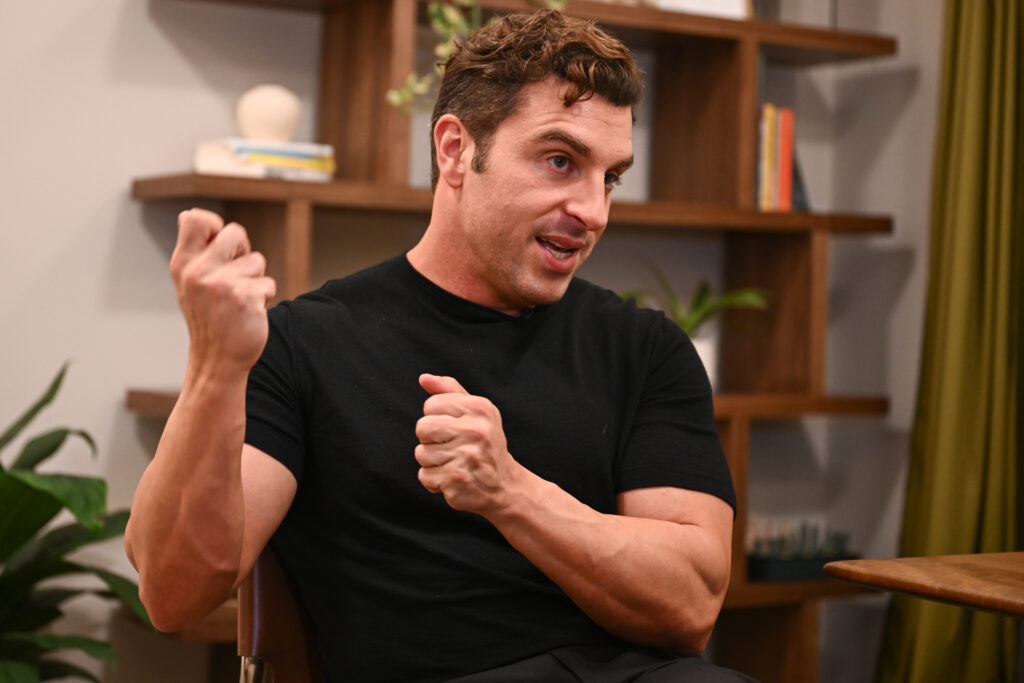
“Novelty is cool. It’s exciting. I want to be new (and) fresh,” Airbnb CEO Brian Chesky told AFP in Los Angeles, where he is presenting a new offering that could bring haircuts and other services into your holiday home.Alongside accommodation bookings — which are “no longer new,” he notes — users will now be able to find beauty and wellness professionals as well as caterers ready to come to their vacation rental or even to their own home.It marks the most ambitious diversification of Airbnb’s business since its birth in 2008 in San Francisco.”I do want to stay relevant. I do want the company to grow and change. But the world doesn’t care about that. That’s our problem,” said Chesky in a Tuesday interview. “The problem for customers is it’s really hard to get these services.”He explained that initially the idea seemed merely interesting but gradually became “essential,” with the realization that customers could transform from annual Airbnb users to weekly ones.With the rollout, hairdressers, massage therapists, and photographers selected by the platform are becoming available in 260 cities worldwide. The offering will then expand to other locations and services.Childcare represents “the ultimate goal.” Offering babysitters on the application would mean users truly “trust” the company, he said. “I don’t think Airbnb has earned that level of trust yet, but I think that’s a really good North Star.”- ‘Perfect concierge’ -Surprisingly, while generative artificial intelligence is dominating all investments and new products in Silicon Valley, Chesky barely mentioned the technology behind ChatGPT in a keynote speech announcing the company’s future plans.”We have an AI customer service agent. We believe it’s the best AI customer service agent in all travel,” the executive told AFP. Trained on “hundreds of millions or even billions” of data points related to customer stays, it’s initially being deployed to American users before expanding to other countries and languages in the coming months.Industry expectations suggest Airbnb will focus on AI assistants capable of composing entire customized trips and making reservations — similar to startups like Mindtrip. It’s a highly coveted sector where Expedia, Booking, and Google have spent years trying to establish themselves as central platforms for travelers.”In the coming years, we imagine ultimately becoming the perfect concierge for traveling and living,” Chesky said.- Travel and politics – Meanwhile, Airbnb faces less technological and more political challenges. The California company had to distance itself from co-founder Joe Gebbia, who joined billionaire Elon Musk’s DOGE team — tasked by President Donald Trump with identifying federal spending they consider unnecessary.Some hosts have announced they’re leaving Airbnb in reaction, as the ad hoc agency’s methods are widely considered brutal and counterproductive by the American left.”We haven’t seen any impact,” Chesky maintained.”Airbnb is an idea that is just so much bigger than any one person,” he added, noting that Gebbia has not been involved in daily Airbnb operations for two years.The CEO remains diplomatic regarding Trump’s economic policies, which have caused market turmoil and created uncertainty across sectors. Airbnb has observed a decrease in foreign tourists visiting the United States, but “we’re a really adaptable business,” he assured. “If people choose to travel within their own country, they might do it in Airbnbs.””That being said, I think a world where borders are open and people travel freely is certainly best for the travel industry, and probably best economically and culturally for bringing communities together.”