AFP USA

Trump to watch ‘Les Miserables’, tale of revolt and oppression

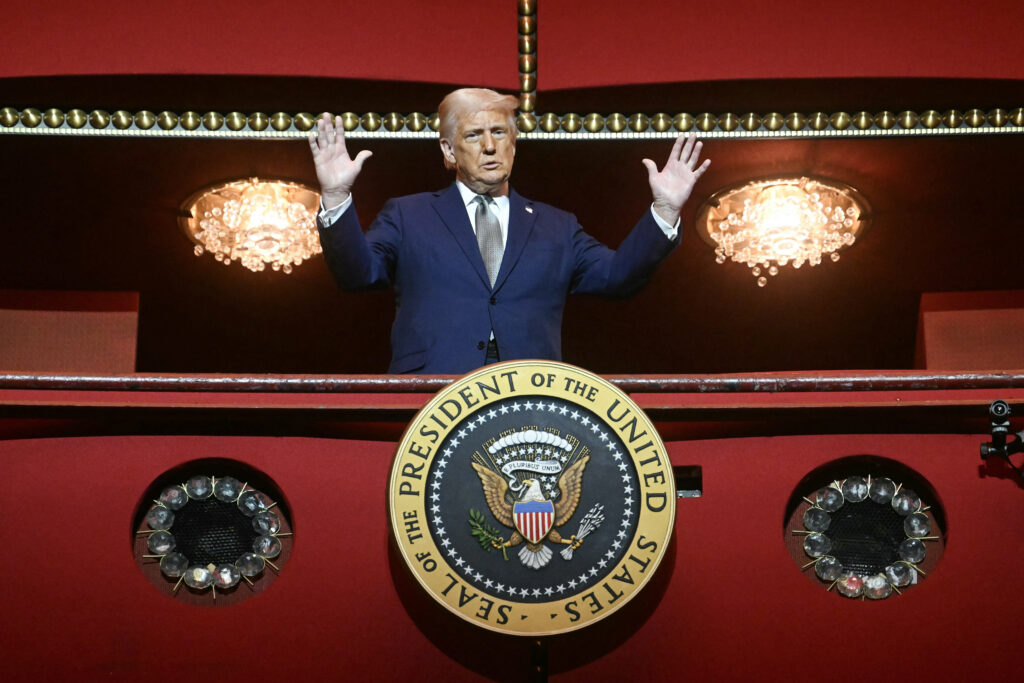
It’s a tale of revolutionary fervor, featuring street protesters manning the barricades against a repressive leader. And watching from the audience will be US President Donald Trump.Trump’s appearance at the opening night of the hit musical “Les Miserables” at the renowned Kennedy Center in Washington on Wednesday night could hardly be more politically charged.The Republican recently orchestrated a conservative takeover of the famed arts venue, reportedly prompting some “Les Mis” cast members to boycott the show.But the performance of the show, set against the backdrop of revolutionary 19th century France, also comes as the United States itself faces fresh turbulence. Trump, who will be joined by First Lady Melania Trump, Vice President JD Vance and second lady Usha Vance at the premiere, has recently sent in troops to deal with protests against immigration raids in Los Angeles.California officials accuse him of “dictatorial” behavior and of manufacturing a confrontation by deploying thousands of National Guard troops and US Marines. Trump says he will “liberate” Los Angeles from an “invasion” of migrants.”I think the irony is probably lost on him,” Peter Loge, director of George Washington University’s School of Media, told AFP.The social injustice portrayed in Victor Hugo’s 1862 novel — coupled with songs such as “Do You Hear the People Sing?” and “I Dreamed a Dream” — has long resonated with audiences around the world. But billionaire Trump, who had announced his decision to attend “Les Miserables” before the Los Angeles protests erupted, says he too has long been a fan. The 78-year-old has played songs from the show at his rallies and political events. “I love the songs, I love the play,” Trump told Fox News Digital last week.- Trump takeover -His attendance is yet another show of strength after installing himself as chairman of the center and replacing the entire board with loyalists in February as part of his administration’s war on what it views as the liberal opposition.Loge said Trump’s presence there was part of a broader focus on image-making by the reality TV star-turned-president. “Les Mis is a great spectacle. And it sounds smart. It’s not just a show, it sounds like it stands for something.”Trump’s takeover of the John F. Kennedy Center faced opposition in some quarters. A historically bipartisan-supported institution, it has never been led by a US president before.Another hit show, “Hamilton,” canceled its run there in response. Trump responded by saying he had “never liked” the rap musical, which is about the birth of the United States and its first treasury secretary.Several key figures, including TV producer Shonda Rhimes who created the show “Grey’s Anatomy” and musician Ben Folds, resigned from their leadership positions. And the Vances — Usha Vance is one of the new board members — were booed by the Kennedy Center audience at a performance of the National Symphony Orchestra in March.Trump toured the center days afterwards, notably addressing the media from high up in a red velvet-lined presidential box, and accusing its previous bosses of letting it fall into debt and disrepair.The Kennedy Center is a major performing arts venue in the United States, a living monument to the late John F. Kennedy that opened in 1971 and that has long enjoyed bipartisan support.Its diverse programming includes a prestigious annual arts gala. Trump did not attend during his first term as president but it’s unclear whether he will do so now.Trump’s takeover of the Kennedy Center comes amid a broader assault on what he deems “woke” programming at cultural institutions, including the famed Smithsonian museums, as well as universities.
Waymo leads autonomous taxi race in the US

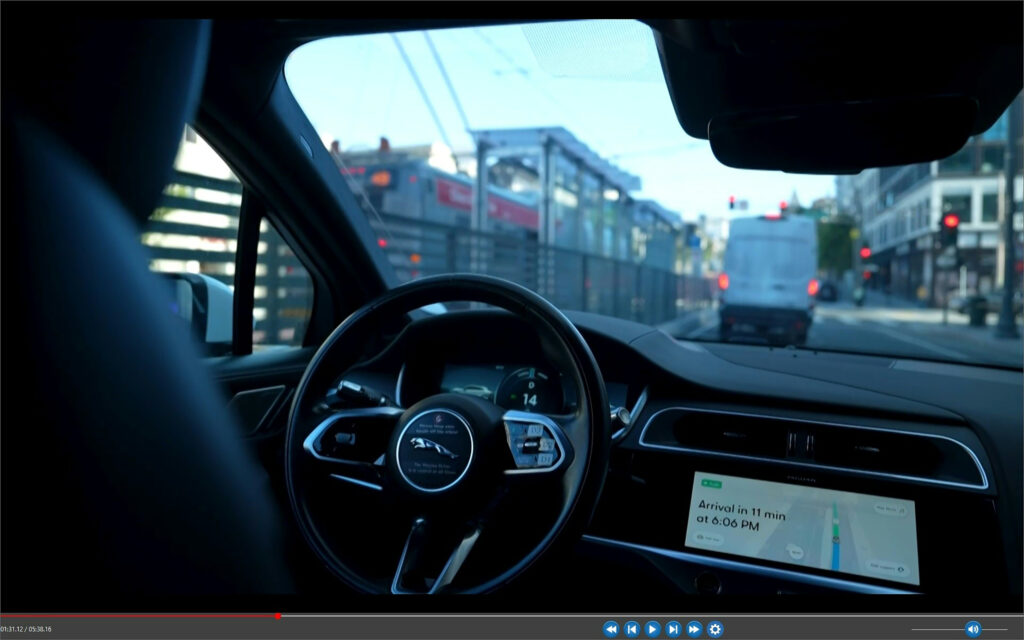
Waymo’s autonomous vehicles have become part of the everyday landscape in a growing number of US cities, serving as safe transport options, tourist attractions, and symbols of a not-so-distant future. Their market dominance, however, is far from guaranteed.As Tesla preps to launch its first driverless taxi service in Austin, Texas, this month after numerous delays, Waymo already claims to have more than 250,000 weekly rides across Phoenix, San Francisco, Los Angeles and Austin (in a partnership with Uber).In San Francisco, locals barely notice the steering wheels turning by themselves anymore, with Waymo’s fleet of Jaguars also available in parts of Silicon Valley.But for tourists and business travelers, their first Waymo ride often becomes the most memorable part of a trip to the Golden Gate city.In Los Angeles, the vehicles also became a target of protesters against the White House’s immigration policies, who set Waymos on fire or covered them in graffiti.That blip aside, Waymo has been going from strength to strength, with the company — a subsidiary of Google-parent Alphabet — capturing 27 percent of San Francisco’s market share, according to YipitData. The data shows that Waymo has surpassed Lyft, the United States’ second-largest ride-hailing service, in the city, while Uber maintains a dominant 50-plus percent market share.Remarkably, Waymo only launched commercial service in San Francisco in 2023 and opened to the general public just one year ago.”People quickly feel comfortable because they perceive these cars as safer than human-driven vehicles,” explained Billy Riggs, an engineering professor at the University of San Francisco who studies such vehicles and their integration into daily life.- Better than humans -Despite typically higher fares than Uber and longer wait times, Riggs’s research reveals that more than a third of users earn less than $100,000 annually –- the median salary in the tech capital.Three factors drive this success: safety, the absence of a driver (no need to haggle over what music to play), and well-maintained vehicles.According to a recent Waymo study covering more than 90 million kilometers (56 million miles) of driving, their autonomous vehicles achieved a 92 percent reduction in pedestrian-involved accidents and a 96 percent reduction in injury-causing collisions at intersections.”Even when humans challenge them, the vehicles don’t respond aggressively. They’re better versions of ourselves,” Riggs joked.While better than humans, these vehicles are less passive and hesitant than in their early days. Through continuous data collection on driver behavior and algorithmic adjustments by engineers, Waymo cars have developed “humanistic driving behavior.””That’s everything from being able to creep into the intersection if there’s a potential blind right turn or nudging into a left-hand turn” against oncoming traffic. Both are legal, “but they would be seen as more aggressive, rather than defensive, human, driving maneuvers.”The vehicles have also gained recognition for their smooth accelerations and braking. “My boys say, it’s like butter. When they ride with me in our Tesla, I make them sick,” he added.- $100,000 taxi -The collapse of Waymo’s main competitor, Cruise — due to high costs and following poor crisis management after a San Francisco accident — has propelled Waymo to market leadership.It plans to expand to Atlanta, Miami and Washington by 2026.True large-scale deployment, however, requires adapting to different regulations and, more critically, acquiring many more vehicles. The company currently operates 1,500 vehicles across four cities. In early May, Waymo announced plans to build 2,000 additional electric Jaguar I-Pace vehicles next year, all equipped with autonomous driving technology.These vehicles cost approximately $100,000 each, according to an interview with Waymo executive Dmitri Dolgov on the Shack15 Conversations podcast.That means profitability remains a distant goal. In the first quarter, Alphabet’s “Other Bets” division, which includes Waymo, recorded net losses of $1.2 billion.”There still could be a scenario where Waymo loses. It’s not unrealistic that some Chinese competitor comes in and wins,” Riggs said.

US inflation edges up but Trump tariff hit limited for now

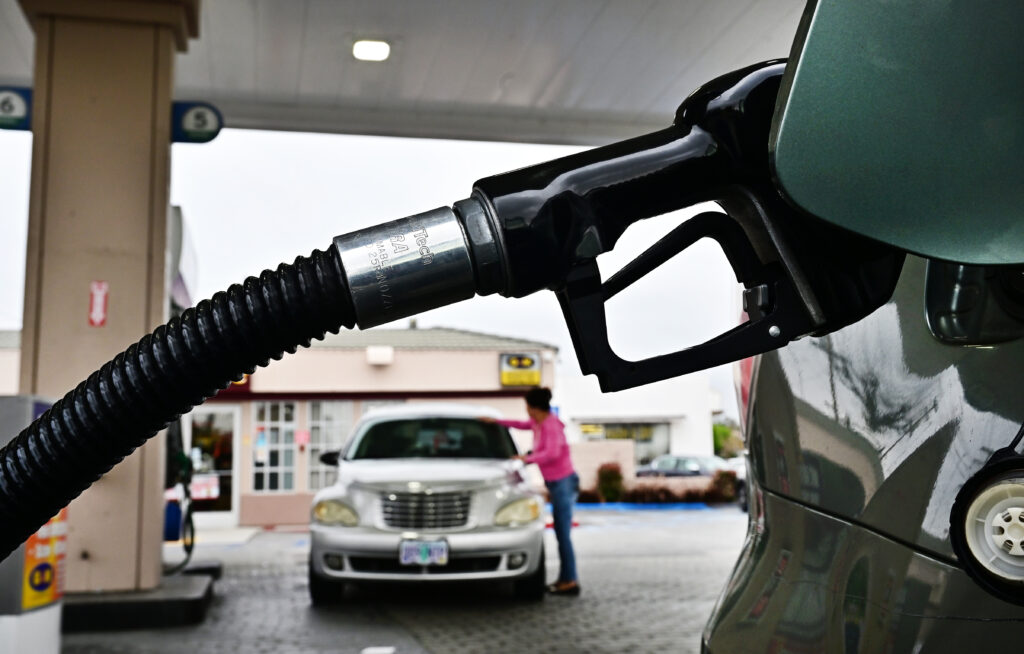
US consumer inflation ticked up in May, in line with analyst expectations, government data showed Wednesday as President Donald Trump’s sweeping tariffs began to ripple through the world’s biggest economy.The consumer price index (CPI) came in at 2.4 percent from a year ago, after a 2.3 percent reading in April, the Labor Department said, with headline figures cooled by energy prices.All eyes were on the data after Trump imposed a blanket 10 percent levy on imports from almost all trading partners in early April.He also unveiled higher rates on dozens of economies including India and the European Union, although these have been suspended until early July.Trump engaged in a tit-for-tat tariff escalation with China as well, with both sides temporarily lowering eye-wateringly-high levies on each other’s products in May.Despite the wide-ranging duties, analysts said it will take months to gauge the impact of Trump’s tariffs on consumer inflation.This is partly because businesses rushed to stockpile goods before the new tariffs kicked in — and they are now still working their way through existing inventory.”As that inventory level gets worked down, we’ll see a larger and larger pass-through of the tariffs,” Nationwide chief economist Kathy Bostjancic told AFP.In a post on Truth Social after Wednesday’s data, Trump insisted that the Federal Reserve should cut interest rates, arguing that the country “would pay much less interest on debt coming due.”This, however, overlooked that lower interest rates usually increase consumer demand and stoke inflation.Between April and May, CPI was up 0.1 percent, cooling from a 0.2 percent increase from March to April.While housing prices climbed alongside food costs, energy prices edged down over the month, the report added.The energy index fell 1.0 percent in May from a month ago, as the gasoline index declined over the month.Excluding the volatile food and energy components, so-called core CPI was up 2.8 percent from a year ago, the Labor Department said.- ‘Early signs’ -“Many Americans are enjoying cheaper gas prices this summer,” said Navy Federal Credit Union chief economist Heather Long.”But there are early signs of what is coming for Main Street: grocery store prices and appliance costs rose in May,” she added in a note.Samuel Tombs, chief US economist at Pantheon Macroeconomics, estimates that retailers usually take at least three months to pass on cost increases to customers.He expects price increases for “core goods” to gain momentum in June and peak in July, while remaining elevated for the rest of the year — assuming current tariff policies remain in place.Bostjancic said she did not expect the latest inflation report to significantly impact the US central bank’s interest rate decision next week.”The guidance remains that there’s such a great degree of uncertainty of how the increased tariffs will affect prices and ultimately the economy,” she said.”They need to wait and see, to see how this plays out over the coming months. And we should learn a lot more from the data through the summer and early fall,” she added.The Federal Reserve has begun cutting interest rates after the Covid-19 pandemic as officials monitor progress in lowering inflation to their long-term two-percent goal sustainably.But Fed policymakers have been cautious in recent months as they monitor how the Trump administration’s policies affect the economy.

US inflation edges up as Trump tariffs flow through economy

US consumer inflation ticked up in May, in line with analyst expectations, government data showed Wednesday as President Donald Trump’s sweeping tariffs began to ripple through the world’s biggest economy.The consumer price index (CPI) came in at 2.4 percent from a year ago after a 2.3 percent reading in April, the Labor Department said, with headline figures cooled by energy prices.All eyes were on US inflation data after Trump imposed a blanket 10 percent levy on imports from almost all trading partners in early April.He also unveiled higher rates on dozens of economies including India and the European Union, although these have been suspended until early July.Trump engaged in a tit-for-tat tariff escalation with China as well, with both sides temporarily lowering high levies on each other’s products in May.Despite the wide-ranging duties, analysts said it will take months to gauge the impact on consumer inflation.This is partly because businesses rushed to stockpile goods before Trump’s new tariffs kicked in — and they are now still working their way through existing inventory.”As that inventory level gets worked down, we’ll see a larger and larger pass-through of the tariffs,” Nationwide chief economist Kathy Bostjancic told AFP.Between April and May, CPI was up 0.1 percent, cooling from a 0.2 percent increase from March to April.While housing prices climbed alongside food costs, energy prices edged down over the month, the report added.The energy index fell 1.0 percent in May from a month ago, as the gasoline index declined over the month.Excluding the volatile food and energy components, so-called core CPI was up 2.8 percent from a year ago, the Labor Department said.- ‘Early signs’ -“Many Americans are enjoying cheaper gas prices this summer,” said Navy Federal Credit Union chief economist Heather Long.”But there are early signs of what is coming for Main Street: grocery store prices and appliance costs rose in May,” she added in a note.Samuel Tombs, chief US economist at Pantheon Macroeconomics, estimates that retailers usually take at least three months to pass on cost increases to customers.He expects price increases for “core goods” to gain momentum in June and peak in July, while remaining elevated for the rest of the year — assuming current tariff policies remain in place.But Bostjancic said she did not expect the latest inflation report to significantly impact the US central bank’s interest rate decision next week.”The guidance remains that there’s such a great degree of uncertainty of how the increased tariffs will affect prices and ultimately the economy,” she said.”They need to wait and see, to see how this plays out over the coming months. And we should learn a lot more from the data through the summer and early fall,” she added.The Federal Reserve has begun cutting interest rates after the Covid-19 pandemic as officials monitor progress in lowering inflation sustainably.But Fed policymakers have been cautious in recent months as they monitor how the Trump administration’s policies affect the economy.

Police make arrests in downtown LA during nighttime curfew

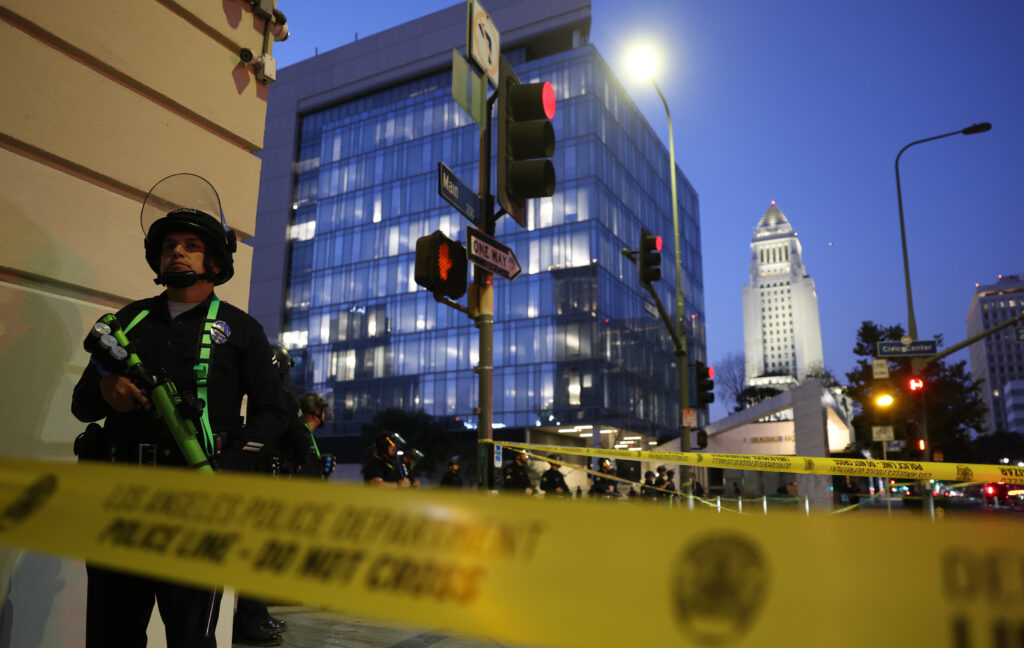
Downtown Los Angeles was largely calm overnight into Wednesday, with police arresting at least 25 people for violating a curfew after a fifth day of protests against President Donald Trump’s immigration crackdown.Heavily armed security officers, including several riding horses, patrolled near government buildings, while men boarded up storefronts after dark on Tuesday to protect against vandalism.Looting and vandalism in the second-biggest US city have marred the largely peaceful protests over ramped-up arrests by immigration authorities.The demonstrations, which began Friday, and isolated acts of violence prompted Trump to take the extraordinary step of sending in troops, over the objection of the state governor.One protester told AFP the arrest of migrants in a city with large immigrant and Latino populations was the root of the unrest.”I don’t think that part of the problem is the peaceful protests. It’s whatever else is happening on the other side that is inciting violence,” she said Tuesday.Los Angeles Mayor Karen Bass said the curfew — meant to stop vandalism and looting — was in effect within one square mile (2.5 square kilometers) of the city’s more-than-500 square mile area from 8:00 pm and 6:00 am (0300 to 1300 GMT).That zone was off-limits for everyone apart from residents, journalists and emergency services, she added.Protests against immigration arrests by federal law enforcement have also sprung up in cities around the country, including New York, Atlanta, Chicago, San Francisco and Austin.On Tuesday, in the Atlanta suburb of Brookhaven, dozens of demonstrators waved American and Mexican flags and held signs against US Immigration and Customs Enforcement (ICE), the federal agency that has ramped up arrests and deportations of migrants under Trump.”You got people that are being arrested on the street by (immigration) agents that don’t wear badges, wear masks… it makes me really angry,” 26-year-old protester Brendon Terra told AFP.- Breaking curfew -The Los Angeles protests again turned ugly Tuesday night, but an hour into the curfew only a handful of protesters were left downtown, with police making several arrests as they warned stragglers to leave.”Multiple groups continue to congregate” within the designated downtown curfew area, the Los Angeles Police Department (LAPD) wrote on X late Tuesday. “Those groups are being addressed and mass arrests are being initiated.”Police arrested at least 25 people on suspicion of violating the curfew as of Tuesday evening, the Los Angeles Times reported, citing an LAPD spokesperson.At their largest, the protests have included a few thousand people taking to the streets, but smaller groups have used the cover of darkness to set fires, daub graffiti and smash windows.Overnight Monday 23 businesses were looted, police said, adding that more than 500 people had been arrested over recent days.- ‘Provide protection’ -Trump has activated 4,000 National Guard troops in Los Angeles, along with 700 active-duty Marines, in what he has claimed is a necessary escalation to take back control, even though local law enforcement authorities insisted they could handle the unrest.A military spokeswoman said the Marines were expected to be on the streets by Wednesday. Their mission will be to guard federal facilities and provide protection to federal officers during immigration enforcement operations.The Pentagon said the deployment would cost US taxpayers $134 million.Photographs issued by the Marine Corps showed men in combat fatigues using riot shields to practice crowd control techniques at the Naval Weapons Station Seal Beach.Late Tuesday, Texas Governor Greg Abbott said his state would deploy its National Guard “to locations across the state to ensure peace & order” after solidarity protests.- Behaving like ‘a tyrant’ -In sprawling Los Angeles on Tuesday, it was largely a typical day, with tourists thronging Hollywood Boulevard, children attending school and commuter traffic choking streets.But at a military base in North Carolina, Trump painted a darker picture.”What you’re witnessing in California is a full-blown assault on peace, on public order and national sovereignty,” the Republican told troops at Fort Bragg.”We will not allow an American city to be invaded and conquered by a foreign enemy.”California Governor Gavin Newsom, a Democrat who has clashed with the president before, said Trump’s shock militarization of the city was the behavior of “a tyrant, not a president.”In a filing to the US District Court in Northern California, Newsom asked for an injunction preventing the use of troops for policing.US law largely prevents the use of the military as a police force — absent the declaration of an insurrection, which Trump has mused.The president “is trying to use emergency declarations to justify bringing in first the National Guard and then mobilizing Marines,” said law professor Frank Bowman.

China says ready to ‘strengthen’ cooperation with US after trade talks

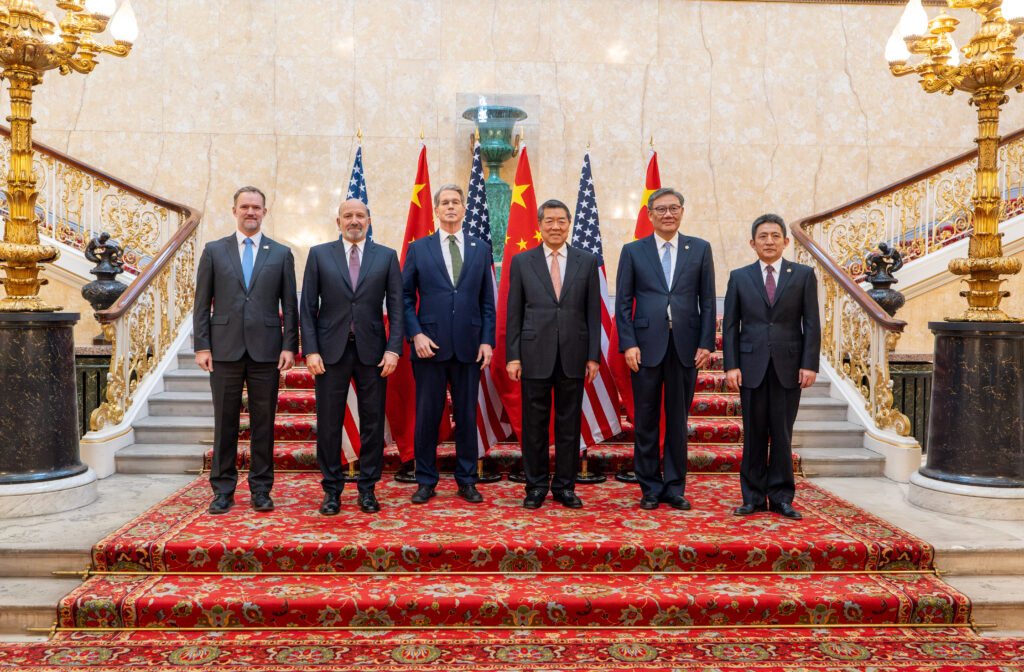
China’s vice premier and top trade negotiator said Beijing was ready to “strengthen cooperation” with Washington, Chinese state media said Wednesday, following trade talks in London it said had made substantial progress.US Commerce Secretary Howard Lutnick expressed optimism after a full day of negotiations that concerns surrounding rare earth minerals and magnets “will be resolved” eventually, as the deal is implemented.But this framework will first need to be approved by leaders in Washington and Beijing, officials said, at the end of meetings at the British capital’s historic Lancaster House.All eyes were on the outcomes of negotiations as both sides tried to overcome an impasse over export restrictions. US officials earlier accused Beijing of slow-walking approvals for shipments of rare earths.The world’s two biggest economies were also seeking a longer-lasting truce in their escalating tariffs war, with levies currently only temporarily on hold.”We’re moving as quickly as we can,” US Trade Representative Jamieson Greer told reporters Tuesday.”We would very much like to find an agreement that makes sense for both countries,” he added, noting that the relationship was complex.”We feel positive about engaging with the Chinese,” he maintained.Speaking separately to reporters, China International Trade Representative Li Chenggang said: “Our communication has been very professional, rational, in-depth and candid.”Li expressed hope that progress made in London would help to boost trust on both sides.And in a state media readout of the talks released Wednesday, Chinese Vice Premier He Lifeng, who headed Beijing’s team in London, stressed the need for the two sides to strengthen cooperation in future dialogue.”As a next step, the two sides should… continuously enhance consensus, reduce misunderstandings and strengthen cooperation,” He Lifeng said, according to state broadcaster CCTV.- Productive talks -US Treasury Secretary Scott Bessent earlier described the closely-watched trade talks as productive, although scheduling conflicts prompted his departure from London with negotiations still ongoing.Bessent, who led the US delegation with Lutnick and Greer, left early to return to Washington for testimony before Congress, a US official told AFP.Both sides do not yet have another gathering scheduled.But Lutnick said Tuesday that US measures imposed when rare earths “were not coming” would likely be relaxed once Beijing moved forward with more licence approvals.Stocks rose Wednesday as investors welcomed the China-US agreement to lower trade tensions, stoking hopes the economic superpowers will eventually reach a broader tariff deal.Hong Kong was among the best performers in Asia while European markets were also up.The London negotiations follow talks in Geneva last month, which saw a temporary agreement to lower tariffs.This time, China’s exports of rare earth minerals — used in a range of things including smartphones, electric vehicle batteries and green technology — were a key issue on the agenda.”In Geneva, we had agreed to lower tariffs on them, and they had agreed to release the magnets and rare earths that we need throughout the economy,” US President Donald Trump’s top economic adviser, Kevin Hassett, told CNBC on Monday.Even though Beijing was releasing some supplies, “it was going a lot slower than some companies believed was optimal”, he added.- ‘Mirror arsenal’ -Both countries “have developed almost a mirror arsenal of trade and investment weapons that they can aim at each other,” said Emily Benson, head of strategy at Minerva Technology Futures.As they tap economic tools to try to shift global power structures, she told AFP, it may not be reasonable to expect a typical trade and investment deal.But both sides could find ways to level off a downward spiral.A dialling-down of temperatures could involve Chinese efforts to shore up the process for granting export control licences, Benson said. She noted Beijing appeared understaffed given the volume of requests.On the US side, this could look like a relaxation of certain export curbs in the high-tech domain, she added.But observers remained cautious, with Thomas Mathews of Capital Economics warning that Washington was unlikely to “back off completely.” This could weigh on markets.Since returning to office, Trump has slapped a 10 percent levy on friend and foe, threatening steeper rates on dozens of economies.His tariffs have dented trade, with Beijing data showing Chinese exports to the United States plunged in May.The World Bank on Tuesday joined other international organisations to slash its 2025 global growth forecast amid trade uncertainty.China is also in talks with partners including Japan and South Korea to try to build a united front countering Trump’s tariffs.burs-oho/mtp

Police make ‘mass arrests’ in LA during nighttime curfew

Los Angeles police began arresting people in the city’s downtown late Tuesday, as groups gathered in violation of an overnight curfew after a fifth day of protests against Donald Trump’s immigration crackdown.Looting and vandalism in the second-biggest US city have marred the largely peaceful protests over ramped-up arrests by immigration authorities.The demonstrations, which began Friday, and isolated acts of violence prompted Trump to take the extraordinary step of sending in troops, over the objection of the state governor. The protests again turned ugly after dark Tuesday, but an hour into the overnight curfew only a handful of protesters were left downtown, with police making several arrests as they warned stragglers to leave.”Multiple groups continue to congregate on 1st St between Spring and Alameda” within the designated downtown curfew area, the Los Angeles Police Department (LAPD) wrote on X late Tuesday.”Those groups are being addressed and mass arrests are being initiated.”Police arrested 25 people on suspicion of violating the curfew as of Tuesday evening, the Los Angeles Times reported, citing an LAPD spokesperson.The number of arrests was likely to rise as law enforcement worked to remove the remaining protesters from the area, the newspaper said.Earlier, Los Angeles Mayor Karen Bass said she had issued the curfew “to stop the vandalism, to stop the looting.”One square mile (2.5 square kilometers) of the city’s more-than-500 square mile area will be off-limits from 8:00 pm and 6:00 am (0300 to 1300 GMT) for everyone apart from residents, journalists and emergency services, she added.One protester told AFP the arrest of migrants in a city with large immigrant and Latino populations was the root of the unrest.”I think that obviously they’re doing it for safety,” she said of the curfew. “But I don’t think that part of the problem is the peaceful protests. It’s whatever else is happening on the other side that is inciting violence.”At their largest, the protests have included a few thousand people taking to the streets, but smaller mobs have used the cover of darkness to set fires, daub graffiti and smash windows.Overnight, Monday 23 businesses were looted, police said, adding that more than 500 people had been arrested over recent days.Protests against immigration arrests by federal law enforcement have also sprung up in cities around the country, including New York, Atlanta, Chicago, San Francisco and Austin.- ‘Provide protection’ -Trump has ordered 4,000 National Guard troops to Los Angeles, along with 700 active-duty Marines, in what he has claimed is a necessary escalation to take back control — despite the insistence of local law enforcement that they could handle matters.A military spokeswoman said the Marines were expected to be on the streets by Wednesday. Their mission will be to guard federal facilities and to accompany “federal officers in immigration enforcement operations in order to provide protection.”Demonstrators told AFP the soldiers “should be respected” because they had not chosen to be in Los Angeles, but Lisa Orman blasted it as “ridiculous.””I was here for the Dodger parade,” she said, referring to the LA team’s World Series victory.”It was 100 times bigger,” she said, branding the idea that Marines were necessary as “a big show” that Trump wanted.The Pentagon said the deployment would cost US taxpayers $134 million.Photographs issued by the Marine Corps showed men in combat fatigues using riot shields to practice crowd control techniques at the Naval Weapons Station Seal Beach.Late Tuesday, Texas Governor Greg Abbott said his state would deploy its National Guard “to locations across the state to ensure peace & order” after solidarity protests.”Peaceful protest is legal. Harming a person or property is illegal & will lead to arrest,” Abbott wrote on X.The Texas National Guard “will use every tool & strategy to help law enforcement maintain order.”- Behaving like ‘a tyrant’ -In sprawling Los Angeles on Tuesday, it was largely a typical day: tourists thronged Hollywood Boulevard, celebrities attended red carpet premieres, tens of thousands of children went to school and commuter traffic choked the streets.But at a military base in North Carolina, Trump was painting a much darker picture.”What you’re witnessing in California is a full-blown assault on peace, on public order and national sovereignty,” the Republican told troops at Fort Bragg.”This anarchy will not stand. We will not allow an American city to be invaded and conquered by a foreign enemy.”California Governor Gavin Newsom, a Democrat who has clashed with the president before, said Trump’s shock militarization of the city was the behavior of “a tyrant, not a president.”In a filing to the US District Court in Northern California, Newsom asked for an injunction preventing the use of troops for policing.US law largely prevents the use of the military as a policing force — absent the declaration of an insurrection, which Trump has mused.The president “is trying to use emergency declarations to justify bringing in first the National Guard and then mobilizing Marines,” said law professor Frank Bowman.

Trump orders names restored to military bases honoring Confederates

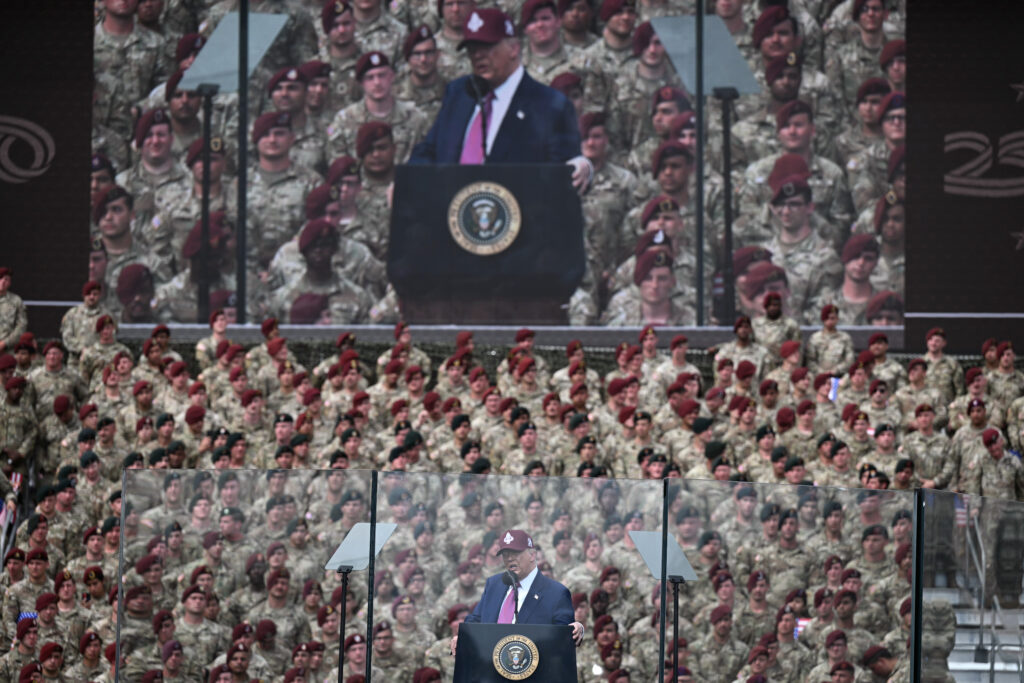
President Donald Trump said Tuesday he has ordered the restoration of the names of several US military bases that honored officers who fought for the Confederacy in the American Civil War.While the redesignations will return the facilities to their original names, they come with a twist, as the bases will ostensibly honor other military personnel who have the same names, and not those who fought to maintain slavery in the South.The Republican president made the announcement in a speech at the country’s largest military base, which he had renamed to Fort Bragg in February after predecessor Joe Biden changed it to Fort Liberty in 2023.”We are also going to be restoring the names to Fort Pickett, Fort Hood, Fort Gordon, Fort Rucker, Fort Polk, Fort A.P. Hill and Fort Robert E. Lee,” Trump told soldiers.”We won a lot of battles out of those forts. It’s no time to change.”The move reverses a renaming process begun in the wake of the death of George Floyd, whose murder by police in 2020 focused a spotlight on systemic racism.A naming commission ultimately recommended hundreds of locations be redesignated, among them nine US Army bases named after Confederate officers who had fought for the South in defense of slavery during the country’s 1861-1865 Civil War.The Pentagon said Tuesday that the new base names, while consistent with the last names of the Confederate officers, actually honor different military veterans.For example, while the original Fort Bragg honors Confederate general Braxton Bragg, the new name commemorates Roland L. Bragg, a little-known World War II hero, officials said.Fort Robert E Lee in Virginia, which was redesignated Fort Gregg-Adams in honor of two African-American servicemembers, was changed back to Fort Lee. But the new name honors Medal of Honor recipient Private Fitz Lee who fought in the Spanish-American War, said the Pentagon, and not the Robert E Lee who was overall commander of the Confederate army.

US intel chief denounces ‘warmongers’ after Hiroshima visit

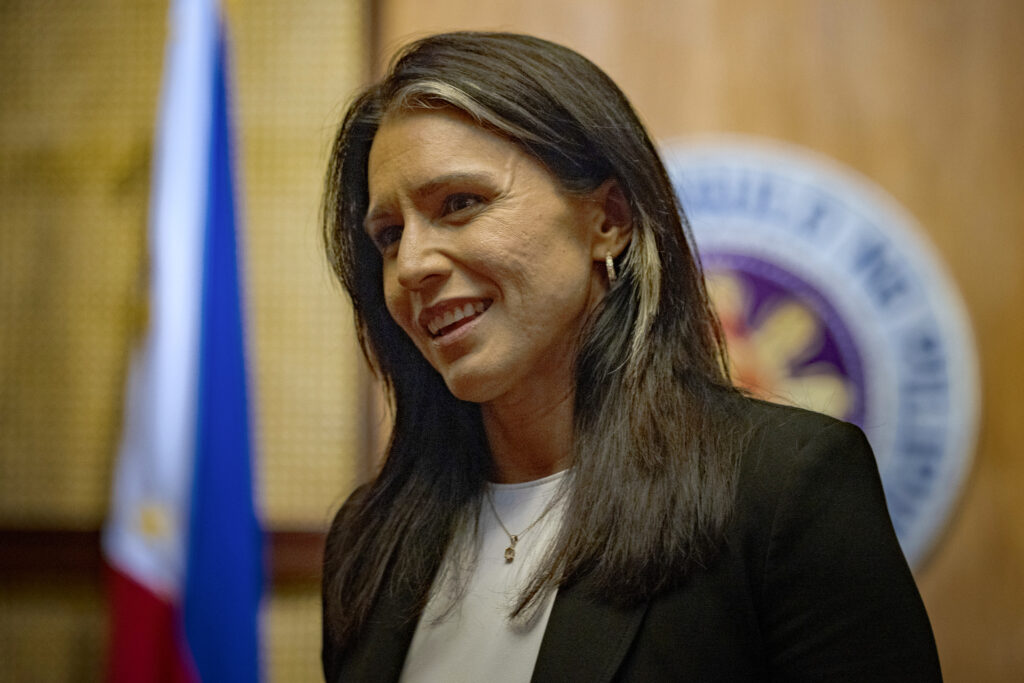
US intelligence chief Tulsi Gabbard warned Tuesday after a trip to Hiroshima that “warmongers” were pushing the world to the brink of nuclear war, in an extraordinary, if veiled, pitch for diplomacy.Gabbard did not specify her concerns, but Russian President Vladimir Putin has repeatedly brandished the specter of nuclear war as he cautions Europe and the United States against support for Ukraine.Gabbard, a former congresswoman who has faced criticism in the past for her views on Russia, posted a video of grisly footage from the world’s first nuclear attack and of her staring reflectively at the Hiroshima Peace Memorial.On August 6, 1945, the United States obliterated Hiroshima, killing 140,000 in the explosion and by the end of the year from the uranium bomb’s effects.Three days later, a US plane dropped a plutonium bomb on Nagasaki, leaving around 74,000 people dead by the end of the year. Japan surrendered on August 15.”This one bomb that caused so much destruction in Hiroshima was tiny compared to today’s nuclear bombs,” Gabbard said. “A single nuclear weapon today could kill millions in just minutes.””As we stand here today closer to the brink of nuclear annihilation than ever before, political elites and warmongers are carelessly fomenting fear and tensions between nuclear powers,” she said.”Perhaps it’s because they are confident that they will have access to nuclear shelters for themselves and for their families that regular people won’t have access to.”Taking a tone more customary for a politician or activist than the director of national intelligence, Gabbard said: “So it’s up to us, the people, to speak up and demand an end to this madness.”Japanese media reports said the comments were “extremely rare” for an incumbent US government official, and at odds with Washington’s past justification of the bombings. Yoshimasa Hayashi, Japan’s top government spokesman, declined to comment directly on Gabbard’s video.But he said an “accurate understanding” of the destruction and suffering caused by atomic bombs would “serve as the basis for various efforts toward nuclear disarmament”.”It’s important for Japan to continue its realistic, pragmatic efforts with the United States to realise a nuclear-free world, based on the belief that the carnage in Hiroshima and Nagasaki must not be repeated,” Hayashi said.Gabbard’s remarks come as aides to President Donald Trump voice growing frustration with Putin, who has refused US-led, Ukraine-backed calls for a temporary ceasefire.Secretary of State Marco Rubio, whom Gabbard criticized before the two entered Trump’s cabinet, has warned that the United States could walk away from diplomacy over the Ukraine conflict if there are no positive signs.Gabbard, a former Democrat, faced a heated confirmation hearing but ultimately prevailed after Democrats and some Republicans questioned her past statements, including some supportive of Russian positions.She has said that the European Union and Washington should have listened to Russian security concerns about Ukraine joining NATO.Gabbard’s visit to Hiroshima comes ahead of the 80th anniversary of the world’s only atomic bombings.The United States has never apologized for the attacks.

California governor goes on offensive as Trump squeezes LA

California Governor Gavin Newsom went on the political offensive Tuesday with a dire warning that Donald Trump’s crackdown on California “will not end here,” attacking the president’s policies across the country.Newsom, who observers say is weighing a presidential run in 2028, has been full-throated in his insistence that Trump overstepped his authority by deploying troops to Los Angeles to quell days of unruly protests against immigration raids. But on Tuesday he went well beyond accusing the president of stoking tensions in the country’s second-biggest city to attack Trump’s ongoing, polarizing effort to “Make America Great Again.” “California may be first, but it clearly will not end here,” Newsom warned in the live-streamed address. Trump, he said, is a “president who wants to be bound by no law or constitution, perpetuating a unified assault on American tradition.”The actions of immigration agents — who Newsom said had used unmarked cars to detain a heavily pregnant US citizen and a four-year-old girl — are worrying precepts of the administration.”If some of us can be snatched off the streets without a warrant, based only on suspicion or skin color, then none of us are safe,” he said.”Authoritarian regimes begin by targeting people who are least able to defend themselves. But they do not stop there.”Newsom ran through a stark list of the Republican leader’s actions since he returned to the White House in January, from firing government watchdogs to threatening universities’ funding and targeting law firms. “He’s declared a war, a war on culture, on history, on science, on knowledge itself,” the 57-year-old Democrat said. This weekend, Trump will spend his 79th birthday watching tanks rumble through Washington at a parade to mark the 250th anniversary of the US army.Newsom accused him of “forcing” the military “to put on a vulgar display to celebrate his birthday, just as other failed dictators have done in the past.”He charged Trump with “taking a wrecking ball” to American democracy, and said there were “no longer any checks and balances” on the president.”Congress is nowhere to be found,” Newsom said. He called on Americans to “stand up and be held to account,” but urged any protesters to do so peacefully. “I know many of you are feeling deep anxiety, stress and fear,” he said.”What Donald Trump wants most is your fealty, your silence, to be complicit in this moment. Do not give in to him.”A presumed frontrunner for Democratic leadership, Newsom has made no secret of his political ambitions and has not shied away from a public showdown with Trump.In the five days since the Los Angeles protests began, he has brawled with officials on social media and dared the Trump administration to make good on its threats to arrest him.