AFP USA

US to screen social media of foreign students for anti-American content

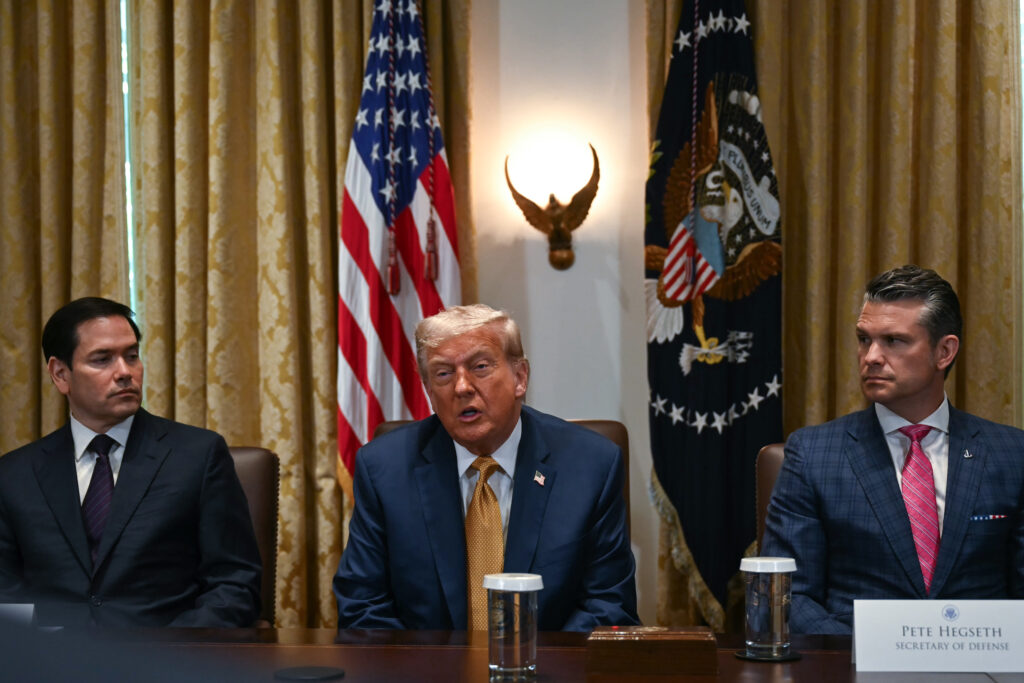
Foreigners seeking to study in the United States will be required to make public their social media profiles to allow screening for anti-American content under new State Department guidelines released Wednesday.The State Department had temporarily paused issuing visas for foreign students at the end of May while it came up with the new social media guidance and it will now resume taking appointments.”The enhanced social media vetting will ensure we are properly screening every single person attempting to visit our country,” a senior State Department official said.US consular officers will conduct a conduct a “comprehensive and thorough vetting of all student and exchange visitor applicants,” the official said.To facilitate the screening, student visa applicants will be asked to adjust the privacy settings on all their social media profiles to “public,” the official said.In an executive order on his first day as president, Donald Trump called for increased vetting of persons entering the United States to ensure they “do not bear hostile attitudes toward its citizens, culture, government, institutions, or founding principles.”Student visas are one of a series of battles waged over higher education by the Trump administration, which has rescinded thousands of visas and sought to ban Harvard University from accepting international students.Secretary of State Marco Rubio has revoked visas in large part of students who led demonstrations critical of Israel’s offensive in Gaza, as he uses an obscure law that allows the removal of people deemed to go against US foreign policy interests.In April, the Department of Homeland Security said the social media of foreign student applicants would be examined for “antisemitic activity” that could result in visa denial.The US government has been vetting the social media of persons seeking to immigrate to the United States or obtain a green card for more than a decade.

Lakers to be sold in record-breaking $10 billion deal: ESPN

The Los Angeles Lakers are being sold in a record-breaking $10 billion deal that makes the iconic franchise the highest-valued sports team in US history, ESPN reported Wednesday.The report said the Lakers owners, the Buss family, would sell their controlling interest in the team to billionaire Mark Walter, who already owns a minority stake in the franchise.While Jeanie Buss would continue as Lakers governor, the deal ends the Buss family’s 46-year reign over the NBA giants.Walter is the chief executive of holding company TWG Global which has built an impressive portfolio of professional sports teams, including the Los Angeles Dodgers and Los Angeles Sparks. He is also part of the ownership group of English Premier League side Chelsea.TWG also owns the Billie Jean King Cup tennis tournament and the Cadillac Formula One team.While further specifics of the deal were not disclosed, Lakers legend Earvin “Magic” Johnson — a business partner of Walter — was among the first to react to news of the agreement.”Laker fans should be ecstatic,” Johnson wrote on X. “A few things I can tell you about Mark — he is driven by winning, excellence, and doing everything the right way. And he will put in the resources needed to win! I can understand why Jeanie sold the team to Mark Walter because they are just alike.”- ‘The best choice’ -Johnson cited Walter’s ownership of the Dodgers baseball team as a reason for optimism. The Dodgers have won the World Series twice since Walter’s ownership group took over the club, and in recent years have adopted an aggressive recruitment strategy that has seen them sign some of the sport’s best talent, including Japanese superstar Shohei Ohtani on a 10-year, $700 million deal.”Mark is the best choice and will be the best caretaker of the Laker brand,” Johnson wrote. “The proof is in the pudding on what he’s been able to accomplish with the LA Dodgers. Mark has been nothing short of a winner.”The Buss family selling the Lakers marks the end of an era in the NBA, whose modern popularity owes much to the franchise’s 1980s heyday.The Lakers were bought in 1979 by charismatic tycoon Jerry Buss, who quickly helped turn the franchise into a sporting powerhouse as well as a globally recognised brand.The Buss era brought the Lakers 11 NBA championships — more than any other team over the same period — and encompassed golden ages which included the “Showtime” Lakers of Magic Johnson as well as a hat-trick of championships between 2000 and 2002 when the team was spearheaded by Kobe Bryant.More recently the team recruited superstar LeBron James, who led the Lakers to a 17th championship in 2020, and stunned the league earlier this after swooping for Dallas Mavericks star Luka Doncic.Walter has been a minority owner of the Lakers since 2021 when he bought a share in a deal which also gave him first refusal to purchase the club should the Buss family ever decide to sell.The sale of the club smashes the previous highest figure paid for a US sports team, the $6.1 billion paid for the Boston Celtics earlier this year.That Celtics sale eclipsed the $6.05 billion that Josh Harris paid for the Washington Commanders in 2023.

Khamenei vows Iran will never surrender, hypersonic missiles target Israel

Supreme leader Ayatollah Ali Khamenei said Wednesday Iran would never surrender, with the country unleashing hypersonic missiles in a new wave of attacks against Israel on the sixth day of war between the longtime enemies.The latest missile barrage came hours after Israel said it had destroyed Iran’s internal security headquarters in Tehran, and as it reported a new wave of attacks targeting missile systems and storage sites in the country’s west.Khamenei also warned the United States against becoming involved in the conflict, after US President Donald Trump appeared to flirt with the idea in recent days, calling for Tehran’s “unconditional surrender”.”This nation will never surrender,” Khamenei said in a televised address, in which he called Trump’s ultimatum “unacceptable”.”America should know that any military intervention will undoubtedly result in irreparable damage.”Iran’s state television reported the launch of Fattah hypersonic missiles, while the Islamic Revolutionary Guards Corps also announced the launch of so-called super-heavy, long-range missiles.An Israeli military official, who asked not to be named, said Wednesday that Iran had fired around 400 ballistic missiles and 1,000 drones since Friday. About 20 missiles had struck civilian areas in Israel, the official added.Israeli Defence Minister Israel Katz said earlier that air force jets had destroyed Iran’s internal security headquarters, as AFP journalists in Tehran reported powerful explosions across the city.Meanwhile, a London-based internet watchdog said there was a “near-total national internet blackout” in Iran on Wednesday after days of disruptions.Iran later announced heavier internet restrictions to curb hostile use, according to the Fars news agency. It first imposed internet curbs at the outset of Israel’s campaign last week.- ‘Unconditional surrender’ -Trump has fuelled speculation about US intervention, saying Wednesday that his patience had “run out” with Iran, but that it was still not too late for talks.He later said he has not yet made a decision on whether to join Israel in bombing Iran and warned that the country’s current leadership could fall as a result of the war.A change in Iran’s government “could happen,” he told reporters at the White House.A day earlier Trump had boasted that the United States could assassinate Khamenei, but would not do so, “at least not for now”.Israeli Prime Minister Benjamin Netanyahu thanked Trump for his “support in defending Israel’s skies” on Wednesday, calling him a “great friend” of Israel.Iran’s Foreign Minister Abbas Araghchi insisted in a post on X that his country remains committed to diplomacy, even as it acts in “self-defence” against Israel.”Iran has so far only retaliated against the Israeli regime and not those who are aiding and abetting it,” he said.Russian President Vladimir Putin said Thursday that a deal to end the fighting was possible, that would guarantee both Israel’s security and Iran’s desire for a civilian nuclear programme.”I believe it would be good for all of us together to look for ways to stop the fighting and seek ways for the participants in the conflict to find an agreement,” he told foreign journalists, including AFP, at a televised event.Putin also said Iran had not asked Russia for military help.- ‘Painful losses’ -Netanyahu said in a televised statement Israel was “striking the ayatollahs’ regime with tremendous power” but acknowledged Israel had also suffered “painful losses”.Since Friday, at least 24 people have been killed in Israel and hundreds wounded, according to Netanyahu’s office.Iran said Sunday that Israeli strikes had killed at least 224 people, including military commanders, nuclear scientists and civilians. It has not issued an updated toll since then.Israel said its surprise air campaign was aimed at preventing Iran from acquiring nuclear weapons — an ambition Tehran denies.Israel has maintained ambiguity regarding its own atomic activities, but the Stockholm International Peace Research Institute (SIPRI) says it has 90 nuclear warheads.Beyond the deadly strikes, some Iranians have reported shortages in recent days.Finding fuel has become a challenge, with long car queues waiting hours in front of petrol stations, a 40-year-old Iranian driver told AFP at the Iraqi border crossing of Bashmakh.”There are shortages of rice, bread, sugar and tea,” he said, asking to remain anonymous for fear of reprisals.”People are shocked and distraught, they don’t know what they should do,” said a car dealer in the Iranian city of Bukan who also asked not to be identified by his real name.- Centrifuges hit -Earlier, Israeli strikes destroyed two buildings making centrifuge components for Iran’s nuclear programme in Karaj, a satellite city of Tehran, the International Atomic Energy Agency said.In another strike on a site in Tehran, “one building was hit where advanced centrifuge rotors were manufactured and tested”, the agency added.Centrifuges are vital for uranium enrichment, the sensitive process that can produce fuel for reactors or, in highly extended form, the core of a nuclear warhead.burs-smw/ser/gv

Waymo looks to test its self-driving cars in New York

Google-owned Waymo on Wednesday said it has applied for a permit to start testing its self-driving cars in New York City, a first for the Big Apple.Waymo’s autonomous vehicles have become part of the everyday landscape in a growing number of US cities, serving as safe transport options, tourist attractions, and symbols of a not-so-distant future.Waymo plans to begin operating a small fleet of autonomous vehicles in Manhattan next month, with human drivers at the wheel until regulators allow otherwise, a spokesperson told AFP.Waymo operations in New York, once properly permitted, will be in a test phase, according to the company.Waymo first ventured into New York in late 2021, but did not let its cars operate autonomously then either.New York State law limits the use of autonomous cars to testing and does not allow Waymo to offer the kind of robotaxi services it provides in San Francisco, Los Angeles, Phoenix and Austin, a Waymo spokesperson said.New York officials said they are making safety a priority “which is why we have put in place safeguards and conditions for any type of autonomous vehicle to ensure that this technology is deployed appropriately.”Founded in 2009, Waymo now has a fleet of 1,500 vehicles and provides more than 250,000 paid rides a week in the United States.Waymo plans to launch its robotaxi service in Atlanta this summer, followed by Miami and Washington in 2026.The collapse of Waymo’s main competitor, Cruise — due to high costs and following poor crisis management in response to a San Francisco accident — has propelled Waymo to market leadership.Amazon subsidiary Zoox has a few dozen prototype vehicles on the road, and is not planning its first commercial launch until later this year in Las Vegas.As for Tesla, it has promised to debut its robotaxi service on Sunday in Austin, Texas, after several postponements.

US bases in the Middle East

The United States has thousands of troops deployed on bases across the Middle East, a region in which Washington’s forces have carried out repeated military operations in recent decades.Israel launched an unprecedented air campaign against Iran last week, and US President Donald Trump has said he is weighing whether to join Israel in the fight.US involvement in the conflict would likely result in attacks by Tehran on American troops in the region, who were already targeted by Iran-aligned forces in the course of the Israel-Hamas war.Below, AFP examines countries with major concentrations of US forces in the Middle East, which falls under the US military’s Central Command (CENTCOM).- Bahrain -The tiny Gulf kingdom hosts an installation known as Naval Support Activity Bahrain, where the US Navy’s Fifth Fleet and US Naval Forces Central Command headquarters are based.Bahrain’s deep-water port can accommodate the largest US military vessels, such as aircraft carriers, and the US Navy has used the base in the country since 1948, when the facility was operated by Britain’s Royal Navy.Several US ships have their home port in Bahrain, including four anti-mine vessels and two logistical support ships. The US Coast Guard also has vessels in the country, including six fast response cutters.- Iraq -The United States has troops at various installations in Iraq, including Al-Asad and Arbil air bases. The Iraqi government is a close ally of Iran, but also a strategic partner of Tehran’s arch-foe the United States.There are some 2,500 US troops in Iraq as part of the international coalition against the Islamic State jihadist group. Baghdad and Washington have agreed on a timetable for the gradual withdrawal of the coalition’s forces from the country.US forces in Iraq and Syria were repeatedly targeted by pro-Iran militants following the outbreak of the Gaza war in October 2023, but responded with heavy strikes on Tehran-linked targets, and the attacks largely subsided.- Kuwait -Kuwait has several US bases, including Camp Arifjan, the location of the forward headquarters for the US Army component of CENTCOM. The US Army also has stocks of prepositioned materiel in the country.Ali al-Salem Air Base hosts the 386th Air Expeditionary Wing, the “primary airlift hub and gateway for delivering combat power to joint and coalition forces” in the region. Additionally, the United States has drones including MQ-9 Reapers in Kuwait.- Qatar -Al Udeid Air Base in Qatar includes the forward components of CENTCOM, as well as of its air forces and special operation forces in the region. It also hosts rotating combat aircraft, as well as the 379th Air Expeditionary Wing, which includes “airlift, aerial refueling intelligence, surveillance, and reconnaissance, and aeromedical evacuation assets.”- Syria -The United States has for years maintained troop presences at a series of installations in Syria as part of international efforts against the Islamic State group, which rose out of the country’s civil war to overrun large parts of Syria and neighboring Iraq.The Pentagon announced in April that it would roughly halve the number of its forces in the country to less than 1,000 in the coming months as part of a “consolidation” of US troops in the country.- United Arab Emirates -Al Dahfra Air Base in the UAE hosts the US 380th Air Expeditionary Wing, a force that is composed of 10 squadrons of aircraft and also includes drones such as MQ-9 Reapers.Combat aircraft have rotated through Al Dhafra, which also hosts the Gulf Air Warfare Center for air and missile defense training.

Trump shows off giant new flagpoles

US President Donald Trump took time out Wednesday from deliberating on whether to bomb Iran to unveil two huge new flagpoles that he claimed are among the best in the world.Trump, 79, saluted as a giant Stars and Stripes flag was raised on one of the 88-foot (27-metre) poles in a brief ceremony on the South Lawn of the White House.The billionaire real estate tycoon, who built his career on brash displays of wealth, said he was personally paying for each of the $50,000 poles. And he could not resist some nationalistic hyperbole about the size and quality of the new additions.”This is about the largest you’ll ever see,” Trump told reporters. “These are the best poles anywhere in the country — in the world actually.”The poles are, however, 12 feet shorter than originally advertised by the White House, which said when it announced Trump’s plan in April that they would be 100 feet tall. Trump also said the pole on the South Lawn — the famed expanse of grass with a vista that leads to the Jefferson Memorial — was “very far” from where Marine One lands, when asked if it could cause any issues for the helicopter.The second flagpole was being installed on the North Lawn at the front of the White House.The giant flags are the latest part of Trump’s sweeping makeover of 1600 Pennsylvania Avenue since he returned to power in January. The Republican is paving over the famed Rose Garden and has blitzed the Oval Office with gaudy gold decorations. He also has plans to build a new ballroom.For the flag-raising ceremony, Trump was accompanied by a group including Charles Kushner, the new US ambassador to France and father of Trump’s son-in-law. Kushner, a real estate executive who spent time in federal prison after pleading guilty in 2004 to tax evasion, among other crimes, was pardoned by Trump in 2020, near the end of his first term. Kushner’s son Jared Kushner, who married Trump’s eldest daughter Ivanka in 2009, served as the president’s advisor during his first term, notably on conflict in the Middle East.The Middle East overshadowed the debut of Trump’s new flagpoles, with the president facing a series of questions from reporters about whether the United States would join Israel’s airstrikes on Iran.”I may do it, I may not do it,” Trump said when asked.

Nippon, US Steel say they have completed partnership deal

Nippon Steel and US Steel announced Wednesday they have completed a long-debated transaction granting the US government a “golden share” — a veto-like power over the Japanese company’s strategic decisions.The agreement modifies a transaction originally announced in December 2023 in which Nippon Steel agreed to acquire US Steel for $14.9 billion. But the outright acquisition of the iconic US company sparked bipartisan political opposition, including from President Donald Trump.Trump, who railed against the proposed deal throughout the 2024 presidential campaign, last month announced a pivot, branding the revamped venture as a “planned partnership.”And the US government will now have a non-economic “golden share” that gives it a say on Nippon’s plans for US infrastructure and jobs.On Wednesday, US Steel filed a notice with US securities regulators to delist its shares on the New York Stock Exchange. The NYSE halted trading, pointing to a “merger effective” order.”The companies have now completed the transaction as contemplated by their merger agreement,” Nippon and US Steel said in a joint press release. “The companies have also entered into a National Security Agreement with the US Government, and US Steel will issue a Golden Share to the US Government.”Nippon Steel has bought all common shares of US Steel, completing the merger, a source close to the matter said Wednesday.Pennsylvania Senator Dave McCormick, a Republican, cheered the deal’s closing, thanking Trump on X and calling the outcome “a massive victory for working families in the Mon Valley, our economy, our national security, and America’s manufacturing future!”But the United Steelworkers (USW) union, which vigorously fought the deal, vowed to “continue watching, holding Nippon to its commitments,” according to a statement.”And we will use the most powerful tool workers have against global corporations: collective bargaining.”- Post-election window of opportunity -Under the December 2023 transaction, Nippon agreed to pay $55 per share for US Steel, an all-cash deal that included a 40 percent premium and pitched the combined company as the “best steelmaker with world-leading capabilities.”While the transaction included a pledge to maintain the name US Steel and the company’s Pittsburgh headquarters, industry watchers expected an exodus of US Steel executives.But after the deal sparked bitter opposition from the USW and a broad range of politicians, including then president Joe Biden and former Ohio senator JD Vance — now Trump’s vice president — Nippon stepped up its lobbying efforts in Washington and Pittsburgh to win support for a transaction that appeared for months to be on life support.In early January, shortly before leaving office, Biden blocked the transaction, saying that placing “one of America’s largest steel producers under foreign control” could “create risk for our national security and our critical supply chains.”But backers of the deal had been hoping the shift in political climate following Trump’s election victory over Biden’s vice president Kamala Harris might revive the deal’s prospect.Besides agreeing to keep US Steel’s Pittsburgh headquarters and to maintaining US production, the revamped deal’s national security agreement calls for a majority of US Steel’s board to be US citizens and for key leaders, including the CEO, to be US citizens.The government’s “golden share” will allow it the right to appoint one independent director and grant it consent rights for proposed capital budget cuts, the redomiciling of activities outside the United States and on acquisitions in the United States.The “golden share” does not entitle the US government to dividends, nor does it require Washington to make investments in the company.Atlantic Council senior fellow Sarah Bauerle Danzman said the deal is not a nationalization of US Steel because the government will not be involved in day-to-day management and “because the United States is not taking equity stakes away from owners.”While the structure gives the government “extraordinary” influence, the mechanism could be difficult to enforce in a downturn if Nippon fails to comply, Danzman said.”How would the US government compel Nippon to increase investments to its promised amount?” wrote Danzman, adding that Washington’s enforcement options “are relatively weak here, especially if Nippon finds itself in a fragile economic position.”

US Supreme Court upholds ban on gender-affirming care for minors

The US Supreme Court on Wednesday upheld a state law banning gender-affirming medical treatments for transgender minors -– an issue at the heart of the American culture wars.The court voted 6-3 to uphold a Tennessee law barring hormone therapy, puberty blockers and gender transition surgery for those under the age of 18.The six conservative justices on the top court rejected a challenge to the law while the three liberals dissented.Two dozen Republican-led states have enacted laws restricting medical care for transgender youth, and the case will have repercussions for the prohibitions across the country.”This case carries with it the weight of fierce scientific and policy debates about the safety, efficacy, and propriety of medical treatments in an evolving field,” wrote Chief Justice John Roberts, author of the majority opinion.”The Court’s role is not ‘to judge the wisdom, fairness, or logic’ (of the law) but only to ensure that the law does not violate equal protection guarantees,” Roberts said. “It does not. Questions regarding the law’s policy are thus appropriately left to the people, their elected representatives, and the democratic process.”The Supreme Court heard the case in December and the Justice Department of then-president Joe Biden joined opponents of the law, arguing that it violated the Constitution’s Equal Protection Clause since it denies transgender minors access to medical treatments permitted to others.Republican President Donald Trump has since taken office and he signed an executive order in January restricting gender transition procedures for people under the age of 19.While there is no US-wide law against gender-affirming medical treatments for transgender youth, the Trump order ended any federal backing for such procedures.Reacting to the ruling, the American Academy of Pediatrics (AAP) said it “sets a dangerous precedent for legislative interference in the practice of medicine.””Gender-affirming care is medically necessary for treating gender dysphoria and is backed by decades of peer-reviewed research, clinical experience, and scientific consensus,” the AAP said.”Denying patients access to this care not only undermines their health and safety, it robs them of basic human dignity.”- ‘Must end’ -The Alliance Defending Freedom, a conservative legal group, welcomed the ruling as a “huge win for children” and a “step toward ending dangerous experiments on kids.”During oral arguments in December, Tennessee Solicitor General Matthew Rice told the court the law was designed to “protect minors from risky, unproven medical interventions” with “often irreversible and life-altering consequences.”Chase Strangio, an American Civil Liberties Union attorney representing three transgender adolescents, their parents, and a Memphis-based doctor, countered that the law has “taken away the only treatment that relieved years of suffering.””What they’ve done is impose a blunderbuss ban, overriding the very careful judgment of parents who love and care for their children and the doctors who have recommended the treatment,” said Strangio, the first openly transgender lawyer to argue before the court.Trump, in his inauguration speech, said his government would henceforth only recognize two genders — male and female — and he issued his executive order a week later restricting gender transition procedures for minors.”Across the country today, medical professionals are maiming and sterilizing a growing number of impressionable children,” the executive order said. “This dangerous trend will be a stain on our Nation’s history, and it must end.”Trump’s order said it would now be US policy that it would “not fund, sponsor, promote, assist, or support the so-called ‘transition’ of a child from one sex to another.”The order bars funding for gender transition under the Medicaid health insurance program for poor families, the Medicare scheme used by retirees, and Defense Department health insurance that covers some two million children.According to a study by UCLA’s Williams Institute, an estimated 1.6 million people aged 13 and older in the United States identify as transgender.

Musk’s X sues to block New York social media transparency law

Elon Musk’s X Corp. has filed a lawsuit challenging a New York state law that requires social media companies to report how they moderate hate speech and disinformation.The complaint, filed in a federal court in Manhattan, seeks to halt the law, which X argues violates the First Amendment by forcing platforms to disclose sensitive information about their content moderation practices.”Today, @X filed a First Amendment lawsuit against a New York law, NY S895B,” X’s Global Government Affairs team posted Tuesday, adding that it had successfully challenged a similar law in California.”X is the only platform fighting for its users by challenging the law, and we are confident we will prevail in this case as well,” the company said. The New York law requires social media companies with over $100 million in annual revenue to submit semiannual reports detailing how they define and moderate hate speech, racism, extremism, disinformation and harassment.Companies face fines of $15,000 per day for violations, which can be sought by the attorney general’s office.X says the law is “an impermissible attempt by the State to inject itself into the content-moderation editorial process” and seeks to pressure platforms into restricting constitutionally protected speech.- ‘Stop Hiding Hate’ -Reporters Without Borders said in a statement that asking X “account for their actions against misinformation is by no means an infringement of freedom of expression, but the bare minimum to clean up the digital space.””Freedom of expression does not come without responsibilities,” it added.The lawsuit comes after X successfully challenged a nearly identical California law last year, according to the filing. New York’s law is “a carbon copy” of the California provisions that were struck down, the filing adds.X claims New York lawmakers refused to discuss changes to the bill after the California ruling, with sponsors saying they declined to meet because of content on X promoted by owner Musk that “threatens the foundations of our democracy.” The company argues this indicated “viewpoint discriminatory motives” behind the law’s passage. Senator Brad Hoylman-Sigal and Assembly member Grace Lee — who introduced the law — said in a statement that their act “does not infringe upon the First Amendment rights of social media companies, nor does it conflict with federal law.” “Instead, the Stop Hiding Hate Act requires narrowly tailored disclosures by social media companies to allow consumers to better decide which social media platforms they utilize,” they added.”The fact that Elon Musk would go to these lengths to avoid disclosing straightforward information to New Yorkers as required by our statute illustrates exactly why we need the Stop Hiding Hate Act.”

US Fed set to hold rates steady as it guards against inflation

The US central bank is expected to hold interest rates steady Wednesday after its key policy meeting, as officials gauge the impact of tariffs on inflation — drawing renewed pressure from President Donald Trump for rate cuts.The Federal Reserve has kept the benchmark lending rate unchanged this year at a range between 4.25 percent and 4.50 percent, and analysts expect policymakers will remain on the sidelines until price increases cool sustainably.But shortly after Fed officials gathered for a second day, Trump stepped up calls for rate reductions, lashing out at Fed Chair Jerome Powell and insisting there was no need to worry about price increases.”We have a stupid person, frankly, at the Fed, he probably won’t cut today,” Trump said in reference to Powell, hours before the Fed was due to release its latest decision.”We have no inflation, we have only success, and I’d like to see interest rates get down,” he added, speaking at the White House. “Maybe I should go to the Fed. Am I allowed to appoint myself?”While Trump has imposed a 10 percent tariff on most US trading partners and steeper levies on imports of steel, aluminum and autos in recent months, these have not triggered a widespread price surge so far.This is partly because Trump has backed off or postponed some of his most punishing salvos, while businesses in turn are relying on existing inventory to avoid hiking consumer costs directly.In May, the consumer price index edged up to 2.4 percent year-on-year from 2.3 percent in April, underscoring the limited effect of levies for now.But economists expect it will take several months for tariffs to flow into consumer prices, and the Fed is proceeding cautiously with interest rate adjustments.”The Fed would no doubt be cutting again by now if not for the uncertainty regarding tariffs and a recent escalation of tensions in the Middle East,” said KPMG senior economist Benjamin Shoesmith.The prospect of higher inflation will probably keep the central bank in “wait-and-see mode for much of this year,” he added. Officials will want to see if price increases are sticky.Policymakers are also trying to keep expectations “anchored,” a state in which consumers expect price increases to remain low and steady.If there are widespread expectations of price hikes, inflation could rise as businesses increase customer costs and workers seek higher wages.The Fed is due to release its latest economic projections on growth, unemployment and inflation on Wednesday too. Analysts will monitor if officials still expect to make two more rate cuts this year as well.- ‘Saber-rattling’ -Trump has repeatedly urged the independent central bank to slash rates, calling Powell “too late” in doing so and “a fool” for holding off further cuts at the bank’s May meeting.The president has pointed to benign US inflation in arguing for cuts.More recently, he cast such a move as a way for the country to “pay much less interest on debt coming due,” overlooking the fact that lower interest rates usually raise consumer prices.Powell has maintained that the Fed’s rate-setting committee would make its decisions based solely on objective and non-political analysis, the Fed previously said.The Fed chair has also defended US central bank independence over rates in his recent meeting with Trump.Despite Trump’s pressure, Allianz Trade North America senior economist Dan North expects Powell will not be too shaken by “saber-rattling.””Consumers are still spending, labor markets still creating jobs, although it is in fact slowing a little bit,” North told AFP.”Certainly, the health of the economy doesn’t beg for the Fed to cut rates,” he added. “So we think they’re on hold till the end of the year.”