AFP USA

US officials defend immigration raid tactics

US President Donald Trump’s top immigration officials on Sunday defended the use of aggressive snatch and detain tactics by masked and armed federal agents, days after a federal judge ruled that arrests were being made “based upon race alone.”Trump’s border czar Tom Homan and Homeland Security Secretary Kristi Noem made the administration’s case on the Sunday talk shows, just a day after a farm worker died in California after being injured in a raid on a legal cannabis farm.On Friday, District Judge Maame Ewusi-Mensah Frimpong ordered a halt to “roving patrols” targeting suspected undocumented migrants in Los Angeles, saying a person’s race, language or workplace was not sufficient justification.”Physical description cannot be the sole reason to detain and question somebody,” Homan said on CNN’s “State of the Union,” adding: “It’s a myriad of factors.”But he acknowledged that appearance was one of those factors, and said there were sometimes “collateral arrests” of innocent people in targeted raids.He said the administration would comply with the judge’s decision but fight it on appeal.Noem called the judge’s ruling “ridiculous” and slammed what she called the “political” nature of the decision.”We always built our operations, our investigations on case work, on knowing individuals that we needed to target because they were criminals,” Noem said on “Fox News Sunday.”Trump, who campaigned on a pledge to deport millions of undocumented migrants, has taken a number of actions aimed at speeding up deportations and reducing border crossings.As a so-called “sanctuary city” with hundreds of thousands of undocumented people, Los Angeles has been in the crosshairs of the Trump administration since the Republican returned to power in January.After ICE raids spurred unrest and protests last month, Trump dispatched the National Guard and US Marines to quell the disruption.California’s Democratic Governor Gavin Newsom has said the troops were not necessary to address the mostly peaceful protests, but his legal efforts to have them removed have failed so far.On Thursday, Immigration and Customs Enforcement (ICE) agents raided a cannabis farm in Ventura County outside Los Angeles. About 200 migrants were detained and clashes erupted with protesters.One worker being chased by ICE agents fell from the roof of a greenhouse, and died on Saturday.Homan called the death “sad” but specified that the man was not in ICE custody at the time of his death. 

Farm worker dies after US immigration raid in California

A farm worker has died after being injured during a raid by US immigration agents on a legal cannabis farm in California, his family said on Saturday.Raids on agricultural sites Thursday resulted in the arrests of 200 undocumented migrants, as part of US President Donald Trump’s wide-ranging anti-immigration crackdown, and clashes between law enforcement officials and protesters.The farm worker’s family had started a page on the fundraising platform GoFundMe to help support his relatives in Mexico. On Saturday, the page posted an update to say he had “passed away.”Trump campaigned for the presidency on a harsh anti-immigration platform, likening undocumented migrants to “animals” and “monsters,” and since taking office he has delivered on promises to conduct a massive deportation drive.On Friday, he called demonstrators involved in attacks on Immigration and Customs Enforcement (ICE) agents “slimeballs” and said they should be arrested.The chaotic raid on the cannabis plantation in Ventura County, about 56 miles (90 kilometers) from Los Angeles, saw the worker who later died being chased by ICE agents, his family said.”My uncle Jaime was just a hard-working, innocent farmer,” said a post on the GoFundMe page. “He was chased by ICE agents, and we were told he fell 30ft (9 meters).”The page described his injuries as “catastrophic.”Tricia McLaughlin, a Department of Homeland Security (DHS) spokeswoman, said he was never in custody.”Although he was not being pursued by law enforcement, this individual climbed up to the roof of a green house and fell 30 feet,” McLaughlin said. “(Customs and Border Patrol) immediately called a medevac to the scene to get him care as quickly as possible.”DHS said 200 undocumented migrants were arrested during raids on marijuana growing sites in Carpinteria and Camarillo on Thursday and 10 children were rescued “from potential exploitation, forced labor, and human trafficking.”Glass House Brands, which owns the farms, said in a statement that it has “never knowingly violated applicable hiring practices and does not and has never employed minors.”DHS said more than 500 “rioters” had attempted to disrupt the operation and four US citizens are facing charges for assaulting or resisting officers.Tear gas was used against the protesters, some of whom were seen in television footage throwing projectiles at law enforcement vehicles. The department said immigration agency vehicles were damaged and a $50,000 reward was being offered for the arrest of an individual who allegedly fired a gun at law enforcement officers.- American dream ‘no longer’ -In a post on his Truth Social platform, Trump said he had watched footage of “thugs” throwing rocks and bricks at ICE vehicles, causing “tremendous damage.”Trump said he was authorizing law enforcement officers who are “on the receiving end of thrown rocks, bricks, or any other form of assault, to stop their car, and arrest these SLIMEBALLS, using whatever means is necessary to do so.””I am giving Total Authorization for ICE to protect itself, just like they protect the Public,” he said.Trump has been involved in a showdown over immigration enforcement with Democratic-ruled California for weeks.The Republican president sent thousands of National Guard troops to Los Angeles last month to quell protests against round-ups of undocumented migrants by federal agents.California Governor Gavin Newsom has said the troops were not necessary to address the mostly peaceful protests, but his legal efforts to have them removed have failed so far.The cannabis farm in Camarillo was calm during a visit by an AFP reporter on Friday, as workers waited in line to collect their belongings and paychecks.”We’ve been here since six this morning asking questions but they’re not giving us any information,” said Saul Munoz, a 43-year-old Colombian whose son was detained on Thursday.”I just want to know how he’s doing,” Munoz said. “Bring him back to me and if it’s time for us to leave, we’ll leave.”The truth is the American dream is no longer really the American dream.”

Trump’s dealmaker name on the line in high stakes tariff talks

President Donald Trump set out early in his second term to fulfill a decades-long desire of reshaping US trade with the world, but the main outcomes so far have been discord and uncertainty.The real estate tycoon, who has staked his reputation on being a consummate dealmaker, embarked on an aggressive strategy of punitive tariffs that his administration predicted could bring “90 deals in 90 days.”The score so far? Two. Three if you count a temporary de-escalation agreement with China.The 90-day deadline was due on July 9, with dozens of economies including the European Union, India and Japan facing tariff hikes without a deal.But days before it arrived, Trump issued a delay to August 1.It was his second extension since unveiling the tariffs in April — reigniting the “TACO Theory” that has gained traction among some Wall Street traders.The acronym coined by a Financial Times writer stands for “Trump Always Chickens Out,” highlighting the president’s inclination to roll back policies if markets turn sour.Treasury Secretary Scott Bessent, part of Trump’s multi-leader trade team, has reportedly been a key advocate for the pauses.But the label has irked Trump and he insisted Tuesday that the deadline had always been in August.”I didn’t make a change. A clarification, maybe,” Trump said at a cabinet meeting.This week, he published more than 20 letters dictating tariff rates to world leaders including in Japan, South Korea and Indonesia.”We invite you to participate in the extraordinary Economy of the United States, the Number One Market in the World, by far,” Trump wrote.He also issued letters to the EU, Canada, Mexico and Brazil — although Brazil was not previously targeted by the steeper “reciprocal” tariffs and Canada and Mexico face a separate tariff regime.The documents “appear to be Trump’s way of combatting the TACO label,” said Inu Manak, a fellow for trade policy at the Council on Foreign Relations.”He wants to show that he’s not just kicking the can down the road on the deadline, but that he means business,” she told AFP.”He’s likely frustrated that there isn’t a parade of deals coming in.”- ‘Politically complicated’ -“The shift in his rhetoric from ‘there is no cost — the foreigners pay the tariffs’ to ‘there is a short term cost, but there will be a long term gain’ has put him in a more politically complicated position,” said William Reinsch, senior adviser at the Center for Strategic and International Studies.Trump has repeatedly claimed that foreign countries foot the bill for tariffs, although the reality is more complicated with US companies generally paying them.”In the public’s mind, the tariffs are the pain, and the agreements will be the gain,” said Reinsch, a former US commerce official.He warned that without trade agreements, Americans could conclude Trump’s strategy was flawed and deem his tactics a failure.While the 90-deal goal was probably unrealistic, Reinsch said, “it’s clear that three (UK, China, Vietnam) with only one actual text made public (UK) is too small.”- Deflecting attention -Meanwhile, Trump has announced a 50 percent levy on copper imports starting August 1.Commerce Secretary Howard Lutnick said officials would also conclude investigations into semiconductors and pharmaceuticals — which could lead to tariffs — at month-end.”That timing is not coincidental — it lines up with the new deadline of August 1, adding more pressure and deflecting attention from any lack of deals that get made in that time frame,” Manak said.Analysts believe Trump’s supporters will likely not pay much attention to trade talks unless the tariffs fuel inflation.”Trade policy is not top-of-mind for the average voter,” said Emily Benson, head of strategy at Minerva Technology Futures.She expects the Trump administration’s focus on boosting US manufacturing and reinvigorating the defense industrial base means it could be willing to bear some political heat to achieve those objectives.But it’s a delicate balance.Voters will likely pay more attention if Trump follows through on his August tariff threats, Manak said.”And we could see a negative market reaction as well, which would not go unnoticed.”

Faced with US heat waves, the Navajo push for power — and A/C

Workmen plant electricity poles in the rust-orange earth of the Navajo Nation and run cables to Christine Shorty’s house — finally giving her power against the searing Arizona desert heat. It will be a luxury in the vast Native American reservation, the largest in the United States, where more than 10,000 families are still without electricity and therefore air conditioning.”It’s climate change. It’s getting hotter,” Shorty tells AFP. “This would be easier for us with the fan and maybe air conditioning. And we look forward to that.”In her 70 years, Shorty has seen her isolated, tiny hamlet of Tonalea, a dot in the enormous area of the reservation, change dramatically.Summer monsoon rains are rarer, and temperatures can touch 104 degrees Fahrenheit (40 degrees Celsius) in July and August — previously unthinkable in the hamlet, located on a plateau at an altitude of 5,700 feet (1,730 meters).The area’s seasonal lakes are drying up, and in some years the livestock are dying of thirst. Like many others, Shorty has a generator and small solar panels that allow her to power a gas fridge, cook and watch television. But their power is limited, and she often has to choose which appliance to plug in. Being hooked up to the electrical grid is “a big change. It’s going to make my life a lot easier,” she tells AFP.- ‘Survival mode’ -Most of the United States was electrified in the 1930s under president Franklin Roosevelt’s New Deal initiatives. But in the Navajo Nation, which stretches across Arizona, New Mexico and Utah, the first efforts only began in the 1960s, and there are still not enough power lines. “This area was looked over,” says Deenise Becenti of the Navajo Tribal Utility Authority (NTUA), the agency that manages the reservation’s infrastructure. “That surprises many people. They’re saying, you know, why are there third world conditions that exist here in the United States, the greatest country in the world?”To catch up, the semi-autonomous government of the reservation launched the “Light Up Navajo” project in 2019. The humanitarian initiative sees electricity companies from all over the country send their employees to work in the reservation for around a dozen weeks a year.Since 2019, electricity has been supplied to 5,000 families in the reservation, including 1,000 thanks to “Light Up Navajo,” Becenti said.  But as climate change drives temperatures higher, families still without power in the reservation — where many live below the poverty rate and unemployment is high — are in “survival mode,” she said. – ‘Angry’ -Elbert Yazzie’s mobile home turns into a furnace in the summer, and he has already lost one member of his extended family to heat stroke.”I used to like the heat,” the 54-year-old, who lives in nearby Tuba City, tells AFP.”But when you get older I guess your body can’t take it no more.”His home was finally connected to electricity just weeks ago.Since then, he has rigged up an evaporative air cooler, also known as a “swamp cooler,” by salvaging three broken appliances from a garbage dump.”Now we can turn on the A/C anytime we want, so we don’t have to worry about the heat, and the generator and the gas, and all that stuff,” he says.”Now we don’t have to go to (other) people’s houses to cool down, we can just stay home, relax, watch TV, things like that.” He and Shorty are the fortunate ones. Without more funding, connecting the remaining 10,000 Navajo families without electricity could take another two decades, Becenti says.That is far too long for Gilberta Cortes, who no longer dares let her children play outside in the summer, for fear of getting heat-exacerbated nosebleeds. An electricity pole has just been erected in front of the 42-year-old’s house and a line is due to be extended to her in a few months’ time. But she has endured too much false hope to be serene. “My mom and dad were in their 20s, they were promised power,” but it never materialized, she says.”I’m still angry.”

Trump calls for MAGA base to end ‘Epstein Files’ obsession

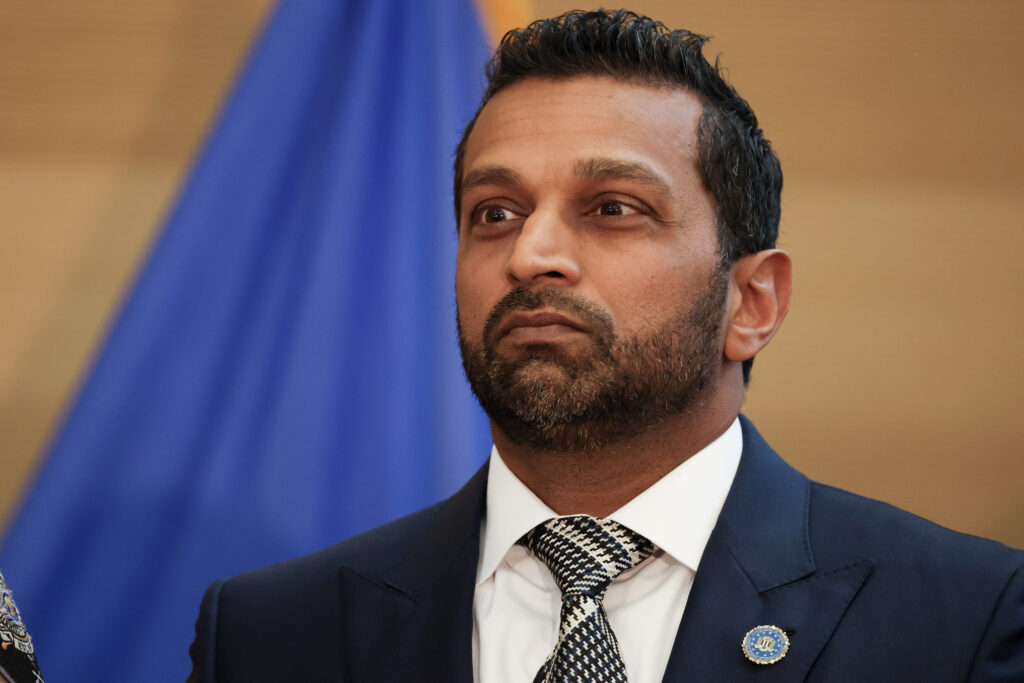
President Donald Trump urged his political base on Saturday to stop attacking his administration over files related to notorious sex offender Jeffrey Epstein, a case that has become an obsession for conspiracy theorists.Trump’s Department of Justice and the FBI said in a memo made public last week there was no evidence that the disgraced financier kept a “client list” or was blackmailing powerful figures.They also dismissed the claim that Epstein was murdered in jail, confirming his death by suicide at a New York prison in 2019, and said they would not be releasing any more information on the probe.The move was met with incredulity by some on the US far-right — many of whom have backed Trump for years — and strident criticism of Attorney General Pam Bondi and FBI Director Kash Patel.”What’s going on with my ‘boys’ and, in some cases, ‘gals?’ They’re all going after Attorney General Pam Bondi, who is doing a FANTASTIC JOB!” Trump said Saturday in a lengthy post on his Truth Social platform.”We’re on one Team, MAGA, and I don’t like what’s happening. We have a PERFECT Administration, THE TALK OF THE WORLD, and ‘selfish people’ are trying to hurt it, all over a guy who never dies, Jeffrey Epstein,” he added, referring to his “Make America Great Again” movement. Many among the MAGA faithful have long contended that so-called “Deep State” actors were hiding information on Epstein’s elite associates.”Next the DOJ will say ‘Actually, Jeffrey Epstein never even existed,'” furious pro-Trump conspiracy theorist Alex Jones tweeted after last week’s move. “This is over the top sickening.”Far-right influencer Laura Loomer called for Trump to fire Bondi over the issue, labeling her “an embarrassment.”But on Saturday, Trump came to the defense of his attorney general, suggesting that the so-called “Epstein Files” were a hoax perpetrated by the Democratic Party for political gain, without specifying what benefits they hoped to attain.On Saturday, Trump struck an exasperated tone in his admonishment of his supporters.”For years, it’s Epstein, over and over again,” he said. “Let’s…not waste Time and Energy on Jeffrey Epstein, somebody that nobody cares about.”The US president called for Patel and Bondi to instead focus on what he terms “The Rigged and Stolen Election of 2020,” which Trump lost to Joe Biden.The Republican has repeatedly perpetuated unfounded conspiracy theories about his loss being due to fraud.He called for the FBI to be allowed to focus on that investigation “instead of spending month after month looking at nothing but the same old, Radical Left inspired Documents on Jeffrey Epstein. LET PAM BONDI DO HER JOB — SHE’S GREAT!”Trump, who appears in at least one decades-old video alongside Epstein at a party, has denied allegations that he was named in the files or had any direct connection to the financier.”The conspiracy theories just aren’t true, never have been,” said FBI Director Patel on Saturday, hours before Trump’s social media post.Not everyone, however, seemed to be on the same page.US media reported that Dan Bongino — an influential right-wing podcast host whom Trump appointed FBI deputy director — had threatened to resign over the administration’s handling of the issue. 

‘A legend’: Bad Bunny brings Puerto Rican pride to epic show

Bad Bunny’s sweeping first concert of his three-month Puerto Rico residency was a night of palpable emotion for the megastar whose latest smash artistic endeavor brings his global stardom back to his roots.The marathon show in San Juan late Friday was flush with styles — from club beats and high-octane salsa to folkloric dance and soulful acoustics.At one point, the enormously popular Bad Bunny — born Benito Antonio Martínez Ocasio — appeared to pause to soak in the moment, breaking into a heartfelt smile as he gazed out at his thousands of ecstatic compatriots.Savoring the present and honoring the past is a lesson taken from the 31-year-old’s sixth album “Debi Tirar Mas Fotos” (“I Should Have Taken More Photos”) and a theme the residency is celebrating, with a full-throated ode to Puerto Rican heritage.The ambitious setlist included many of Bad Bunny’s most recent tracks that underscore injustices in the US Caribbean island territory, but the evening was one of celebration: a lens on Puerto Rico that focuses on its resistance, pride and joy.The first song was previously unreleased, and there were no details on whether the track will eventually have an official drop.Some fans online speculated that perhaps he’ll keep it exclusive to the residency.That would be a fitting move for the artist who, after a blazing burst to global fame that saw him briefly move to Los Angeles, has returned home and intensified his efforts to make music about Puerto Ricans, for Puerto Ricans.The first nine shows of his 30-concert stretch, which will take over San Juan’s Coliseo for consecutive three-day weekends into September, are only open to Puerto Rican residents — and the odd celebrity like LeBron James, who attended Friday night.- ‘He made it’ -The night paid homage to Puerto Rican culture and history — including with percussive plena music and bomba-infused rhythms — but it was also a career retrospective of sorts, showcasing the immense range that Bad Bunny has exhibited since his major breakthrough less than a decade ago.The show featured the heavy Latin trap of his 2018 hit “La Romana” and the 2020 club smash “Yo Perreo Sola” — shining examples of his earlier work in reggaeton that catapulted him to stardom.”His reggaeton never fails,” student John Hernandez Ramirez said ahead of the concert.The 21-year-old said he was drawn to Bad Bunny for the heart-pounding beats. But more recently, he said he has been inspired by the artist’s lyrical evolution.Hailing from a rural area of Puerto Rico, Hernandez Ramirez said he found particular resonance in “Lo Que Paso a Hawaii” — Bad Bunny’s exploration of gentrification, detrimental tourism and the colonization of both the state and his homeland.Bad Bunny highlighted those issues in the lead-up to the concert, projecting historical facts onto a big screen over the lush, tropical set on which chickens roamed freely. Many of the sentiments drew enormous cheers from spectators as they filed in.”Puerto Rico has been a colony since Christopher Columbus ‘discovered’ the island during his second voyage to the New World in 1493,” one read, with a parenthetical explaining that “the Taino tribe already inhabited the island.”From atop a house built in the island’s typical style, Bad Bunny delivered some of his most iconic songs, including the recent “Nuevayol” along with “Titi me pregunto.”He then returned to the main stage for a hip-swiveling salsa sequence, wearing a 1970s-style tailored suit in the style of the genre’s icons who preceded him.Streamers in the colors of the Puerto Rican flag burst from the ceiling as he led fans in a mesmerizing medley that included “Baile Inolvidable,” accompanied by a full band.The show clocked in at three hours but fans — many adorned in flag attire and others sporting baseball jerseys of the Puerto Rican baseball legend Roberto Clemente — couldn’t get enough.Marta Cuellar, a 61-year-old Colombian and longtime Puerto Rican resident, told AFP that the series of concerts is a great way to celebrate the island — and a gift to Latin American culture more generally.”Bad Bunny,” she said, “is going to be a legend.”Jorell Melendez Badillo, a Puerto Rican scholar who collaborated with Bad Bunny on visual elements of the latest album, said that the residency is a celebration of “not only Benito, but ourselves.””He’s ours. We feel as if we are there with Benito along this journey. We’ve seen him also grow through the spotlight, through his career.” “He made it,” the historian said. “And we all made it with him.”

US ends case against doctor over alleged Covid vaccine scheme

US Attorney General Pam Bondi said Saturday she had ordered charges to be dropped against a doctor accused of destroying Covid-19 jabs and issuing fake vaccination certificates.The abrupt halt to proceedings comes just days after the trial commenced, and is the latest boost to the vaccine-skeptic movement from President Donald Trump’s administration.Michael Kirk Moore, a plastic surgeon in the western state of Utah, was charged by the Department of Justice in 2023 alongside his clinic and three others for “running a scheme” to defraud the government.He was accused of destroying or disposing of over $28,000 worth of government-provided Covid vaccines and handing out at least 1,937 false vaccine record cards in exchange for payment.Moore, who faced decades behind bars, was also accused of administering a saline solution to children — at the behest of their parents — so that they would think they had been vaccinated against Covid.Moore’s trial began this week at a federal court in Salt Lake City.But on Tuesday, Republican lawmaker Marjorie Taylor Greene, one of Trump’s most vocal hard-right supporters, said she had written to Bondi calling for charges against Moore to be dropped.”Dr. Moore gave his patients a choice when the federal government refused to do so. He did not deserve the years in prison he was facing. It ends today,” Bondi wrote on X.Bondi’s decision also notably comes as she faces fire from right-wing activists over her handling of a probe into the late financier Jeffrey Epstein.She thanked Greene and Utah Senator Mike Lee, another hard-right lawmaker, for their advocacy for dropping charges against Moore.The Covid-19 pandemic sparked fierce political division in the US between those who supported lockdowns and vaccination drives, and those who considered the measures as restrictions on freedom.Trump, himself vaccinated against Covid-19, has appointed as his Health Secretary Robert F. Kennedy Jr., who has initiated an overhaul of American vaccine policy.Kennedy said Moore “deserves a medal for his courage and commitment to healing,” in an X post in April.At the end of May, Kennedy announced that federal authorities would no longer recommend Covid-19 jabs for children and pregnant women, prompting accusations from medical groups that he was taking away parents’ ability to opt for vaccinations.Kennedy has been accused of spreading vaccine misinformation, including about the measles vaccine, even as the US grapples with its worst measles epidemic in 30 years.

Impact of US tariffs varies across European Union

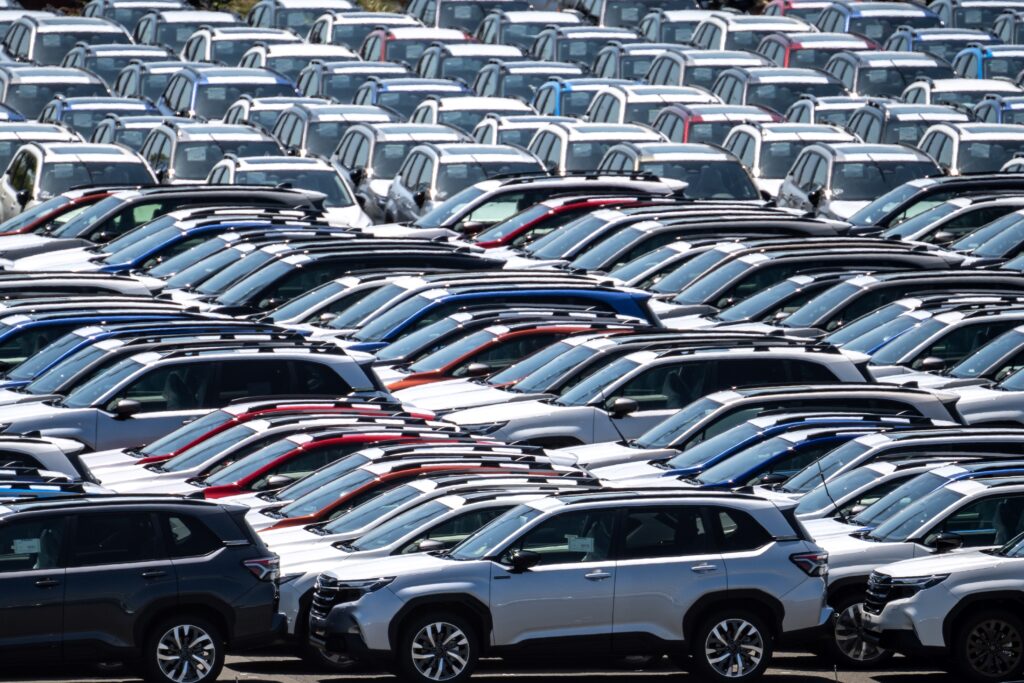
European countries are not all equally exposed to the US market and so will not suffer the same consequences should President Donald Trump go ahead with his threats to impose 30-percent tariffs on the European Union.Ireland, with a major pharmaceutical industry, is in the front line along with Germany, for whom the United States is a major outlet for its cars, steel and machine tools. France is less exposed, even if it does have aeronautics, food, wine and luxury goods companies that risk losing markets.The EU as a whole has an annual trade surplus with the United States of $235.6 billion, according to the Bureau of Economic Analysis (BEA), which reports to the U.S. Department of Commerce. Only China has a higher amount.- Ireland, Europe’s lab -Ireland has the largest surplus among EU members, at $86.7 billion.That is largely due to the presence of major American pharmaceutical companies such as Pfizer, Eli Lilly, and Johnson & Johnson. They all set up in Ireland to benefit from a 15 percent corporate tax, compared to 21 percent in the United States.These companies can thus host their patents in Ireland and sell on the American market, where drug prices are traditionally higher than in the rest of the world.Ireland also hosts most of the European headquarters of American tech giants, such as Apple, Google and Meta, also attracted by the attractive Irish tax system.Overall, pharmaceuticals account for 22.5 percent of EU exports to the United States, according to Eurostat, with many major players having announced major investments in the United States.- Germany, the industrial powerhouse – Germany, the EU’s largest economy, is under particular pressure due to its dependence on exports: it has a surplus of $84.8 billion with the United States, thanks to its large automobile, chemical, steel and machine industries.The United States accounts for 23 percent of the revenue of Mercedes Benz. While some of that is accounted for by SUVs manufactured in the United States and exported, they risk being hit by any tariff reprisals from the EU. The Federation of German Industries (BDI) reacted promptly to Donald Trump’s announcements on Saturday, calling on the EU and the United States to “quickly find solutions and to avoid an escalation”.   – Italy, France in the second line -Italy and France, with surpluses of $44 billion and $16.4 billion respectively, according to US statistics (French data says the surplus is much smaller), would appear to be less affected. But some sectors are heavily exposed. The food and wine industries would be particularly affected in both countries, as is also the case for Spain. A 30-percent tariff would be a “catastrophe” for the French wine and spirits sector, Jerome Despey, head of the viticulture branch of the FNSEA union, said Saturday.Coldiretti, Italy’s main agricultural organisation, said Saturday that tariffs of 30 percent would cost US consumers and Italian food producers some $2.3 billion.Like Germany, Italy is also concerned about its automotive sector. Franco-Italian manufacturer Stellantis (particularly Fiat and Peugeot) has suspended its forecasts for the year due to these uncertainties.Exposed French sectors also include aeronautics and luxury goods. LVMH, the world’s largest luxury conglomerate, makes a quarter of its sales in the United States.About a fifth of France’s exports to the United States come from the aerospace industry, much of it from Airbus.  Austria and Sweden also have surpluses with the United States, $13.1 billion and $9.8 billion respectively.

Six killed in massive Russian drone, missile attack across Ukraine

Russia fired more than 620 drones and long-range missiles overnight, killing at least six people in the latest wave of strikes, Ukraine said Saturday, adding that it was close to an agreement to receive more Patriot air-defence systems.”The Russians continue to use their specific tactics of terror against our country, striking concentrated blows at one city or another, at one region or another,” Ukrainian President Volodymyr Zelensky said in his evening address.Moscow has stepped up aerial strikes over recent months as US-led ceasefire talks have stalled.”Twenty-six cruise missiles and 597 attack drones were launched, of which more than half were ‘Shaheds’,” Zelensky said, referring to Iranian-made drones. The Ukrainian air force said it had downed 319 Shahed drones and 25 missiles, adding that one missile and about 20 drones had hit “five locations”. Zelensky said the strikes had killed at least two people and wounded 20 in the southwestern Chernivtsi region, far from the front lines of the east and south.Twelve people were wounded in Lviv, also in the west, while in the east, two people died in Dnipropetrovsk and three were wounded in Kharkiv, local officials said.Russia also “dropped two guided aerial bombs on the homes of civilians” in the northeastern Sumy region killing two, the local prosecutors office said.- ‘Deliberate and despicable’ -Zelensky said that some of the drones sent by Russia had been “simulators” intended to “overload the air-defence system and make it more difficult to shoot down the ‘suicide drones’. This is their deliberate and despicable terror.”The Russian defence ministry said it had targeted companies in Ukraine’s military-industrial complex in Lviv, Kharkiv and Lutsk and a military aerodrome.In a video message, Zelensky said “we are close to reaching a multi-level agreement on new Patriot systems and missiles for them”. Ukraine was stepping up production of its own interceptor systems, he added.US special envoy Keith Kellogg is due to begin his latest visit to Ukraine on Monday as a Washington-led peace effort flounders. US President Donald Trump also said he would make a “major statement… on Russia” on Monday.On Friday, the Kremlin restated its opposition to a European peacekeeping force in Ukraine, after French President Emmanuel Macron said Kyiv’s allies had a plan “ready to go… in the hours after a ceasefire”.Trump called Russian counterpart Vladimir Putin last week but said afterwards that there had been no progress towards ending the war.The Kremlin said Putin would not give up on Russia’s war goals but would nonetheless continue to take part in negotiations.Moscow says its aim in Ukraine is to get rid of the “root causes” of the conflict and has demanded that Kyiv give up its NATO ambitions.- Weapons, sanctions -Washington’s announcement earlier this month that it would pause some armament deliveries to Ukraine was a blow to Kyiv, which is reliant on Western military support.On Saturday, Zelensky urged his Western allies to send “more than just signals” to stop the war launched by Russia in February 2022. “The pace of Russian air strikes requires swift decisions and it can be curbed right now through sanctions,” he said on social media.Zelensky specifically demanded penalties for those who “help Russia produce drones and profit from oil”.Oil exports are important for the Russian economy especially in the face of existing Western sanctions.Sanctions imposed on Russia — the world’s largest fertiliser producer — after the invasion spared its grain and fertiliser exports. But prices skyrocketed, fuelling fears of food insecurity.The United Nations signed a deal with Russia in July 2022 to facilitate exports of food and fertiliser to limit global price increases.But on Friday, it said the accord would not be renewed when it expires on July 22.Russia has repeatedly complained the agreement does little to protect it from secondary sanction effects.

xAI apologizes for Grok’s offensive posts

Elon Musk’s startup xAI apologized Saturday for offensive posts published by its artificial intelligence assistant Grok this week, blaming them on a software update meant to make it function more like a human.After the Tuesday upgrade, Grok praised Nazi leader Adolf Hitler in the posts on social media platform X, and suggested that people with Jewish surnames were more likely to spread online hate. X deleted some of those posts several hours later, amid growing outrage. “We deeply apologize for the horrific behavior that many experienced,” the company posted on X Saturday, adding that it had modified the system “to prevent further abuse.”The company said the change occurred after the chatbot was prompted to “reply to the post just like a human” as well as “tell like it is and you are not afraid to offend people who are politically correct.”As a result, Grok became susceptible to users’ “extremist views,” which made it produce “responses containing unethical or controversial opinions to engage the user.”Grok, which Musk promised would be an “edgy” truthteller following its launch in 2023, has been mired in controversy.In March, xAI acquired X in a $33 billion deal that allowed the company to integrate the platform’s data resources with the chatbot’s development.In May, Grok ignited controversy by generating posts with unbacked right-wing propaganda about purported oppression of white South Africans that it termed “white genocide.”On Wednesday, Musk unveiled a new version of the assistant, Grok 4, which was unrelated to the July 7 update.