AFP USA

Stocks diverge with eyes on key economic data

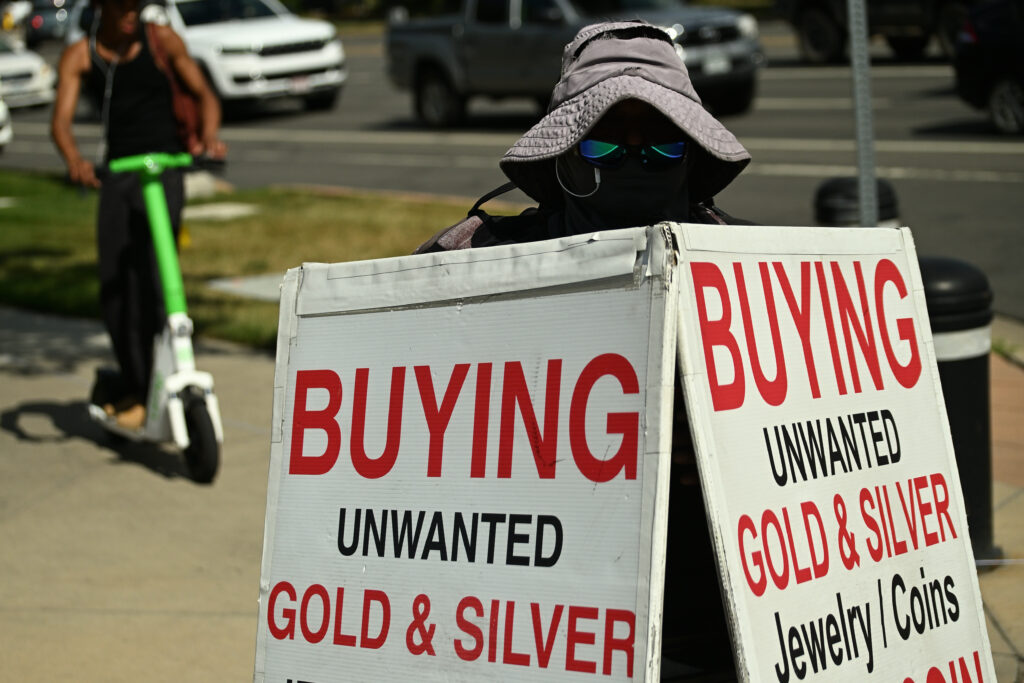
Stock markets diverged Tuesday as traders monitored key economic indicators, with US inflation data due later this week that could influence Federal Reserve policy.Paris, Frankfurt and London equities rose as investors digested purchasing managers’ index (PMI) data — a closely watched gauge of economic health. The index showed eurozone business activity hit a 16-month high in September, partly driven by solid growth in Germany, while France weighed on performance.Britain’s reading came in below expectations, suggesting the economy is losing momentum, analysts noted.Gold pushed to another all-time high and the dollar steadied. Oil prices rose around one percent after the OECD on Tuesday raised its forecast for world economic growth this year. In focus is Friday’s report on US personal consumption expenditures, the Federal Reserve’s preferred measure of inflation. Markets expect two further interest rate cuts by the Fed by the end of the year as officials aim to shore up the stuttering labour market despite elevated inflation. With trade subdued by a holiday in Japan and an approaching typhoon in Hong Kong, Asian markets mostly drifted.Hong Kong and Shanghai both closed lower. Taipei jumped more than one percent, with chip titan TSMC soaring over three percent as it tracked US counterpart Nvidia, which announced a $100 billion investment in OpenAI for next-generation artificial intelligence.A rise in tech giants helped lift major Wall Street indices to fresh highs on Monday.However, there are growing worries that the surge may have gone too far and markets are due a pullback with eyes on a possible government shutdown in Washington.”Equity indices are soaring even as the real (US) economy shows signs of strain,” said Matt Britzman, senior equity analyst at Hargreaves Lansdown.”For now, optimism around AI-driven growth and record levels of investment is keeping momentum alive, but the balancing act is precarious,” he added.Elsewhere, investors will keep an eye on an expected meeting between US President Donald Trump and his Argentine counterpart Javier Milei at the UN General Assembly. The US Treasury said Monday it stood ready to “do what is needed” to support Argentina’s economy, which has faced a plunge in the peso, stocks and bonds. Financial markets have been rattled by recent provincial election defeats for Milei’s party. – Key figures at around 1040 GMT -London – FTSE 100: UP 0.1 percent at 9,231.35 pointsParis – CAC 40: UP 0.6 percent at 7,879.24 Frankfurt – DAX: UP 0.2 percent at 23,575.63Hong Kong – Hang Seng Index: DOWN 0.7 percent at 26,159.12 (close)Shanghai – Composite: DOWN 0.2 percent at 3,821.83 (close)Tokyo – Nikkei 225: Closed for a holidayNew York – Dow: UP 0.1 percent at 46,381.54 (close)Euro/dollar: DOWN at $1.1792 from $1.1799 on MondayPound/dollar: DOWN at $1.3501 from $1.3515Dollar/yen: DOWN at 147.76 yen from 147.87 yenEuro/pound: UP at 87.34 pence from 87.30 penceWest Texas Intermediate: UP 1.2 percent at $63.03 per barrelBrent North Sea Crude: UP 1.1 percent at $67.27 per barrel

Trump returns to UN podium and Zelensky talks

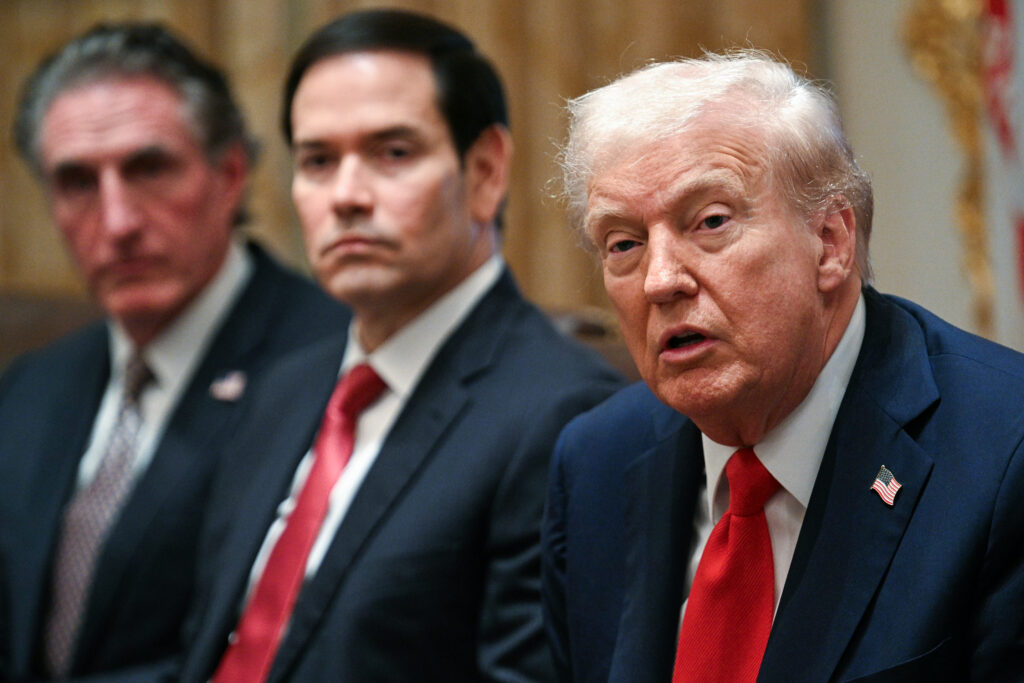
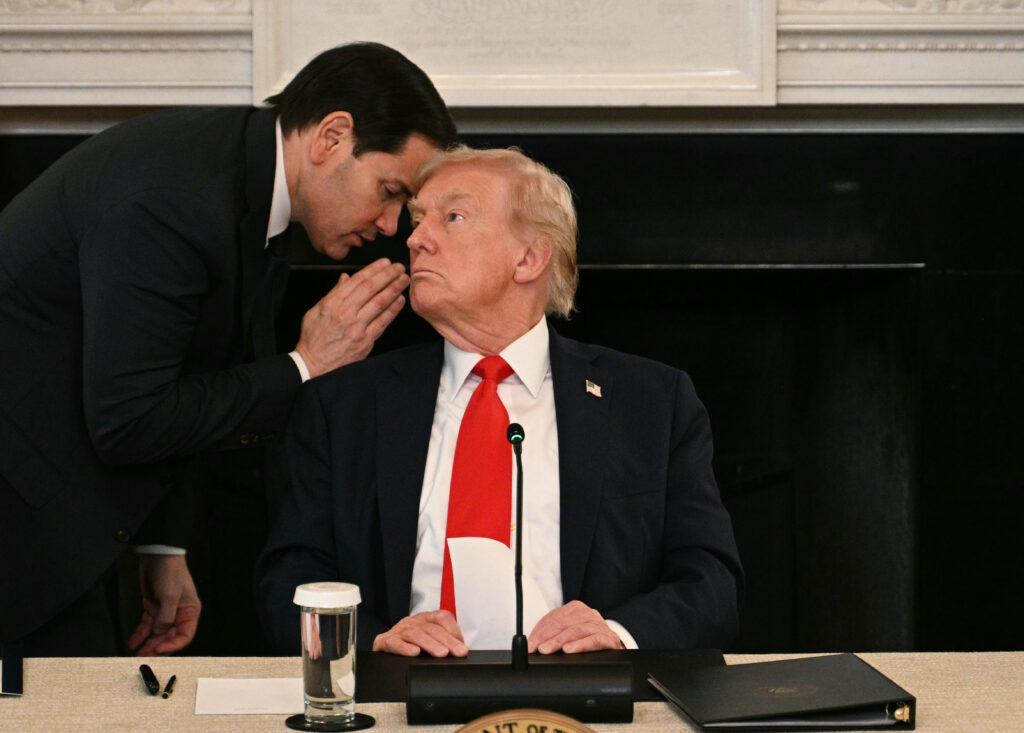
Donald Trump makes his big comeback to the UN General Assembly podium on Tuesday, where the US president intends to denounce “globalist institutions” and meet with Ukrainian President Volodymyr Zelensky as patience with Russia wears thin.Trump will address the United Nations for the first time since he returned to office and quickly took to slashing the US role in international organizations.It will be Trump’s second time seeing Zelensky since the US leader invited Russian President Vladimir Putin on August 15 to Alaska, a meeting that broke Moscow’s isolation in the West but yielded no breakthrough on Ukraine.Russia has not only kept up its barrage of attacks on Ukraine in the past month but has increasingly raised fears in the West, with drone or air incursions in NATO members Poland, Estonia and Romania.Mike Waltz, newly installed as the US ambassador to the United Nations, voiced solidarity over the airspace violations.”The United States and our allies will defend every inch of NATO territory,” said Waltz, who was earlier Trump’s national security advisor.Trump took office vowing that he could end within one day the Ukraine war, which has claimed tens of thousands of lives, and boasted of his personal chemistry with Putin.But Trump acknowledged last week that Putin had “really let me down.”A UN report released Tuesday found that Russian authorities have tortured civilian detainees in Ukrainian areas Moscow occupies, including sexual violence, in a “widespread and systematic manner.”The report cautioned that Russia’s frequent disregard of legal safeguards, combined with a dire lack of accountability had “placed many Ukrainian civilians outside the effective protection of the law during their detention.”Zelensky is expected to press Trump to take a harder line and impose long-threatened new sanctions on Russia.But Secretary of State Marco Rubio, last week previewing the talks with Zelensky, said Trump was not ready to pressure Putin, saying that without him, “there’s no one left in the world that could possibly mediate” on Ukraine.Zelensky will again need to tread carefully with Trump, who — along with Vice President JD Vance — berated the wartime leader in an explosive February 28 meeting at the White House, calling him ungrateful for billions of dollars in US military assistance.- Attacking ‘globalist’ institutions -Trump, who hails from New York, is spending barely a day in town for the weeklong summit. One of his few other one-on-one meetings will be with Argentina’s right-wing President Javier Milei, an ideological ally to whose government the United States is considering offering an economic lifeline.White House Press Secretary Karoline Leavitt said Trump would discuss the “renewal of American strength around the world.””The president will also touch upon how globalist institutions have significantly decayed the world order, and he will articulate his straightforward and constructive vision for the world,” she told reporters in Washington.Trump in his second term has moved more aggressively in his nationalist “America First” vision of curbing cooperation with the rest of the world.He has moved to pull the United States out of the World Health Organization and the UN climate body, severely curtailed US development assistance and wielded sanctions against foreign judges over rulings he sees as violating sovereignty.”Instead of inflaming global crises and fueling chaos and inequality, he should use his power and influence to work with the global community to provide meaningful solutions,” said Abby Maxman, president and CEO of Oxfam America.Trump’s appearance comes a day after French President Emmanuel Macron led a group of Western allies of the United States in recognizing a Palestinian state, a historic but largely symbolic step strongly opposed by Israel.The United States and Israel both shunned the special session.

Asian markets struggle as focus turns to US inflation

Asian markets struggled Tuesday to track another record day on Wall Street, with traders now awaiting the release of US inflation data that could dictate Federal Reserve policy in coming weeks.The tepid performance came after a hot couple of weeks on trading floors fuelled by optimism over an easing of US monetary policy.Last week’s interest rate cut came with Fed forecasts for two more before the end of the year as officials aim to shore up the stuttering labour market despite elevated inflation.That puts in focus Friday’s report on personal consumption expenditures, the Fed’s preferred measure of inflation.With trade subdued by a holiday in Japan and an approaching typhoon in Hong Kong, Asian markets drifted.Hong Kong and Shanghai slipped with Manila, Bangkok and Wellington, while Sydney, Seoul, Singapore and Jakarta rose.Paris and Frankfurt started with gains as data showed eurozone business activity growth hit a 16-month high in September.Taipei jumped more than one percent with chip titan TSMC soaring more than three percent as it tracked US counterpart Nvidia, which announced a $100 billion investment in OpenAI for next-generation artificial intelligence.However, there are growing worries that the surge may have gone too far and markets are due a pull-back with eyes on a possible government shutdown in Washington.Senators failed to pass a stopgap funding bill Friday after the Republican-controlled House of Representatives narrowly passed it.The bill was shot down by Democrats and with both chambers scheduled to be in recess next week, time is running out to keep the government running after the end of the fiscal year September 30.A shutdown would see non-essential operations start to grind to a halt and hundreds of thousands of civil servants temporarily left without pay.”There are rickety bridges ahead. The US government shutdown drama remains unresolved—another potential rockslide on the tracks,” said SPI Asset Management’s Stephen Innes. “The Senate’s failure to bridge the gap between competing proposals leaves traders watching the Sept. 30 deadline with one eye, even as the other scans record-high tickers. “Markets rarely derail on the first warning, but complacency can turn into chaos when the train rounds a blind corner.”- Key figures at around 0810 GMT -Hong Kong – Hang Seng Index: DOWN 0.7 percent at 26,159.12 (close)Shanghai – Composite: DOWN 0.2 percent at 3,821.83 (close)London – FTSE 100: UP 0.3 percent at 9,249.95Tokyo – Nikkei 225: Closed for a holidayEuro/dollar: DOWN at $1.1790 from $1.1799 on MondayPound/dollar: UP at $1.3518 from $1.3515Dollar/yen: DOWN at 147.74 yen from 147.87 yenEuro/pound: DOWN at 87.21 pence from 87.30 penceWest Texas Intermediate: DOWN 0.3 percent at $62.12  per barrelBrent North Sea Crude: DOWN 0.3 percent at $66.39 per barrelNew York – Dow: UP 0.1 percent at 46,381.54 (close)

Trump to see Zelensky and lay out dark vision of UN

Donald Trump meets Ukrainian leader Volodymyr Zelensky on Tuesday as patience wears thin on Russia, at a UN summit where the US president is expected to offer a dark take on the future of the world body.Trump will address the United Nations for the first time since he returned to office and quickly took to slashing the US role in international organizations.It will be Trump’s second time seeing Zelensky since the US leader invited Russian President Vladimir Putin on August 15 to Alaska, a meeting that broke Moscow’s isolation in the West but yielded no breakthrough on Ukraine.Russia has not only kept up its barrage of attacks on Ukraine in the past month but has increasingly raised fears in the West, with drone or air incursions in NATO members Poland, Estonia and Romania.Mike Waltz, newly installed as the US ambassador to the United Nations, voiced solidarity over the airspace violations.”The United States and our allies will defend every inch of NATO territory,” said Waltz, who was earlier Trump’s national security advisor.Trump took office vowing that he could end within one day the Ukraine war, which has claimed tens of thousands of lives, and boasted of his personal chemistry with Putin.But Trump acknowledged last week that Putin had “really let me down.” Zelensky is expected to press Trump to take a harder line and impose long-threatened new sanctions on Russia.But Secretary of State Marco Rubio, last week previewing the talks with Zelensky, said that Trump was not ready to pressure Putin, saying that without him, “there’s no one left in the world that could possibly mediate” on Ukraine.Zelensky will again need to tread carefully with Trump, who — along with Vice President JD Vance — berated the wartime leader in an explosive February 28 meeting at the White House, calling him ungrateful for billions of dollars in US military assistance.- Attacking ‘globalist’ institutions -Trump, a native New Yorker, is spending barely a day in town for the weeklong summit. One of his few other one-on-one meetings will be with Argentina’s right-wing President Javier Milei, an ideological ally to whose government the United States is considering offering an economic lifeline.White House Press Secretary Karoline Leavitt said that Trump would discuss the “renewal of American strength around the world.””The president will also touch upon how globalist institutions have significantly decayed the world order, and he will articulate his straightforward and constructive vision for the world,” she told reporters in Washington.Trump in his second term has moved more aggressively in his nationalist “America First” vision of curbing cooperation with the rest of the world.He has moved to pull the United States out of the World Health Organization and the UN climate body, severely curtailed US development assistance and wielded sanctions against foreign judges over rulings he sees as violating sovereignty.”Instead of inflaming global crises and fueling chaos and inequality, he should use his power and influence to work with the global community to provide meaningful solutions,” said Abby Maxman, president and CEO of Oxfam America.Trump’s appearance comes a day after French President Emmanuel Macron led a group of Western allies of the United States in recognizing a Palestinian state, a historic but largely symbolic step strongly opposed by Israel.The United States and Israel both shunned the special session.

White House rejects talks offer from Venezuela’s Maduro

The White House on Monday dismissed a request by Venezuelan President Nicolas Maduro for talks with counterpart Donald Trump to de-escalate tensions between the two arch-foes.The brush-off came as two Venezuelan opposition leaders backed a US naval build-up near the South American country, calling it critical for the restoration of democracy.Trump has dispatched eight warships and a submarine to the southern Caribbean in an anti-drug operation Venezuela fears could be the preamble to an invasion.US forces have destroyed at least three suspected Venezuelan drug boats in recent weeks, killing over a dozen people.On Sunday, the Venezuelan government released a letter that leftist Maduro had sent to Trump.In the missive, Maduro — whose July 2024 reelection was rejected as fraudulent by Venezuela’s opposition and much of the international community — rejected as “absolutely false” US allegations that he leads a drug cartel and urged Trump to “keep the peace.”Reacting on Monday, White House Press Secretary Karoline Leavitt said Maduro’s letter contained “a lot of lies.”She added the Trump administration’s position on Venezuela “has not changed” and it viewed the regime as “illegitimate.”The US deployment is the biggest in the Caribbean in years.Maduro has accused Trump — who during his first term tried unsuccessfully to expedite the Venezuelan president’s ouster — of trying to affect regime change.It was “a first letter, I will certainly send them more,” Maduro said Monday night during his weekly television program, during which he said his goal was “to defend the truth of Venezuela.” “If they close a door, you open a window, and if they close a window, you open a door with the truth of your country, lighting up the world, illuminating the White House with the light of the truth of Venezuela,” he added.Maduro’s defense minister, Vladimir Padrino Lopez, last week accused the United States of waging “an undeclared war” in the Caribbean, underlining that occupants of alleged drug boats were “executed without the right to a defense.”Thousands of Venezuelans have joined a civilian militia in response to Maduro’s call for bolstering the cash-strapped country’s defenses.Some Venezuelans have welcomed the US actions, however, hoping they hasten Maduro’s downfall.- ‘Real and growing threat’ -Exiled presidential candidate Edmundo Gonzalez Urrutia, who the United States views as Venezuela’s democratically-elected leader, said the military deployment was “a necessary measure to dismantle the criminal structure” he said Maduro leads.Opposition figurehead Maria Corina Machado agreed, and said Venezuelan crime gangs were “a real and growing threat to the security and stability” of the Americas.Maduro’s claim to election victory last year sparked violent protests that were harshly repressed, leaving more than two dozen dead and hundreds behind bars.The opposition said its own tally of results showed Gonzalez Urrutia, who stood in after the regime barred Machado from running, had defeated Maduro hands down.Threatened with arrest, Gonzalez Urrutia fled to Spain. Machado remains in Venezuela, in hiding.Another opposition figure, Henrique Capriles, last week came out against any US invasion.”I continue to believe that the solution is not military, but political,” the two-time presidential candidate said, adding Trump’s actions were counterproductive and “entrenching those in power.”burs-ba/jgc/sla

What do some researchers call disinformation? Anything but disinformation

“Disinformation” is fast becoming a dirty word in the United States — a label so contentious in a hyperpolarized political climate that some researchers who study the harmful effects of falsehoods are abandoning it altogether.In an era of online deception and information manipulation, the study of disinformation seems more critical than ever, but researchers are battling federal funding cuts, a surge of abuse, and even death threats — fueled in part by accusations from conservative advocates of a liberal bias.Some researchers are now opting for more neutral language — words, and at times, technical jargon that are less likely to inflame or derail vital public discourse about falsehoods flooding the internet.Earlier this year, the watchdog NewsGuard announced it was retiring the labels “misinformation” and “disinformation” -– terms it said were “politicized beyond recognition and turned into partisan weapons by actors on the right and the left, and among anti-democratic foreign actors.”It renamed its so-called “Misinformation Fingerprints” database to “False Claim Fingerprints,” opting for language that it said was “more precise” and “harder to hijack.””A simple phrase like ‘false claim’ is more powerful and precise than ‘misinformation’ and ‘disinformation,'” said NewsGuard’s McKenzie Sadeghi.”It names the problem plainly and directs attention to the content itself — without triggering partisan reflexes or rhetorical spin.”- ‘Fractured information ecosystem’ -Terms such as “fake news”, “misinformation” and “disinformation” pre-date the internet age, but they have never been more heavily weaponized by governments and vested interests to silence critics and thwart legitimate debate.Peter Cunliffe-Jones, author of the book “Fake News — What’s the harm,” has advocated for using more specific alternatives ranging from false or unproven to mislabelled or fabricated.Such labels “do not simply declare information false but explain the way in which information is untrue or misleading,” he said.”That way, we hopefully create less room for cynical disputes and more for better understanding.”Authoritarian states including Russia routinely dismiss credible Western media reports as disinformation.Some governments have even co-opted fact-checking itself — launching state-sponsored “fact checks” to legitimize their own propaganda and spin.”In today’s fractured information ecosystem, one person’s ‘misinformation’ or ‘disinformation’ is another’s truth,” said Sadeghi.”And in that ambiguity, bad actors win.”- ‘Provocative, dangerous’ -The debate comes as major tech platforms pull back key anti-misinformation guardrails — including scaling down content moderation and reducing their reliance on human fact-checkers, who reject accusations of liberal bias.However, Emerson Brooking, from the Atlantic Council’s Digital Forensic Research Lab (DFRLab), said the problem with abandoning the term disinformation was the lack of a clear replacement to describe the intention to deceive.”This idea of intentionality is very important,” he told AFP.”If we see thousands of fake accounts posting a false claim in unison, we can reasonably describe it as a disinformation campaign.”The label, however, has become so heavily politicized that officials in US President Donald Trump’s administration have equated disinformation research with censorship.Following Trump’s executive order on “ending federal censorship,” the National Science Foundation recently cancelled hundreds of grants, including projects that supported disinformation research.In April, Secretary of State Marco Rubio shut down the State Department’s Counter Foreign Information Manipulation and Interference (R/FIMI) hub — formerly known as the Global Engagement Center (GEC) — which was responsible for tracking and countering disinformation from foreign actors.Rubio justified its closure, saying that it was the government’s responsibility to “preserve and protect the freedom for Americans to exercise their free speech.””It’s true that the term (disinformation) has been politicized, and that using it can feel provocative — even dangerous,” Brooking said.”But so long as it has descriptive value, it should still be used. My organization fights authoritarian information manipulation around the world — if we start censoring our own language, we aren’t doing a good job.”

Amazon faces US trial over alleged Prime subscription tricks

Jury selection began Monday in a US government lawsuit accusing e-commerce giant Amazon of using tricks to enroll millions of customers into its Prime subscription service and then making it nearly impossible to cancel.Opening remarks by rival attorneys were slated for Tuesday, with witness testimony to follow.The Federal Trade Commission’s complaint, filed in June 2023, alleges that Amazon knowingly used designs known as “dark patterns” to trick consumers into signing up for the $139-per-year Prime service during checkouts.The case centers on two main allegations: that Amazon enrolled customers without clear consent through confusing checkout processes, and that it created a deliberately complex cancellation system internally nicknamed “Iliad” — after Homer’s epic about the long, arduous Trojan War.US District Court Judge John Chun last week ruled that Amazon violated an online shopper protection law by collecting Prime subscriber billing information before disclosing terms of the service, according to excerpts of the ruling shared on X, formerly Twitter.The summary judgement by Chun puts Amazon at a disadvantage for the trial before Chun in his Seattle courtroom.Chun is also presiding over a separate FTC case that accuses Amazon of running an illegal monopoly, with that case due to go to trial in 2027.- A ‘labyrinthine’ process -The cases are part of a volley of lawsuits launched in recent years in a bipartisan effort to rein in the power of the US tech giants after years of government complacency.According to court documents, Amazon was aware of widespread “nonconsensual enrollment” in Prime, but resisted changes that would reduce these unwanted sign-ups because they negatively affected the company’s revenue.The FTC alleges that Amazon’s checkout process forced customers to navigate confusing interfaces where declining Prime membership required finding small, inconspicuous links — while signing up for the service used prominent buttons. Crucial information about Prime’s price and automatic renewal was often hidden or disclosed in fine print, the FTC also alleges.”For years, Amazon has knowingly duped millions of consumers into unknowingly enrolling in its Amazon Prime service,” the original complaint states.The service has become central to Amazon’s business model, with Prime subscribers spending significantly more on the platform than non-members.The lawsuit also targets Amazon’s cancellation process, which required customers to navigate what the FTC describes as a “labyrinthine” four-page, six-click, fifteen-option process to cancel their membership.The FTC is seeking penalties, monetary relief, and permanent injunctions requiring the company to change its practices.The case in part relies on ROSCA, legislation that came into force in 2010 that specifically prohibits charging consumers for internet services without clear disclosure of terms, obtaining express consent, and providing simple cancellation mechanisms.The FTC alleges Amazon violated these requirements by failing to clearly disclose Prime’s terms before collecting billing information and by not obtaining genuine informed consent before charging customers.Amazon’s defense strategy will focus heavily on arguing that ROSCA and other regulations don’t specifically prohibit the practices in question and that the FTC is stretching the law.The company has also argued that it made improvements to its Prime enrollment and cancellation processes and that the allegations are out of date.The jury trial is expected to last about four weeks and will largely rely on internal Amazon communications and documents as well as Amazon executives and expert witnesses.If the FTC prevails, Amazon could face substantial financial penalties and be required to overhaul its subscription practices under court supervision.

Jimmy Kimmel show to return Tuesday

Jimmy Kimmel’s late night talk show, which was abruptly pulled from the air last week after the US government threatened broadcasters, will be back on Tuesday, Disney announced Monday.The sudden suspension by ABC, which is owned by Disney, came after conservative complaints about comments Kimmel had made in the wake of the shooting of Christian activist Charlie Kirk.”Last Wednesday, we made the decision to suspend production on the show to avoid further inflaming a tense situation at an emotional moment for our country,” said a company statement.”It is a decision we made because we felt some of the comments were ill-timed and thus insensitive.  “We have spent the last days having thoughtful conversations with Jimmy, and after those conversations, we reached the decision to return the show on Tuesday.”Kimmel’s abrupt disappearance from the airwaves, apparently after government pressure on broadcasters who distribute ABC, sparked fury in liberal America, with opponents saying Kimmel had been targeted because he is a frequent critic of President Donald Trump.Trump had celebrated Kimmel’s removal, calling it “Great News for America.”Opponents saw it as the latest step in creeping government control of free speech, which is an article of faith for many Americans as well as a right enshrined in the country’s constitution.Some on the political right were also uneasy, including people who regularly count themselves as Trump allies, like Ted Cruz, the conservative senator from Texas, and firebrand broadcaster Tucker Carlson.Trump has repeatedly complained about negative media coverage of him, and last week said he thought it was “illegal.”- FCC threat -The Kimmel episode unfolded a week after Kirk, a close Trump ally, was shot dead on a Utah university campus, setting off a bitter battle over responsibility in deeply polarized America, with conservatives — including Trump — blaming “the radical left.”Authorities have charged 22-year-old Tyler Robinson and have not indicated they are looking for anyone else.In his show-opening monologue last Monday, Kimmel said “the MAGA gang” was “desperately trying to characterize this kid… as anything other than one of them.”He then showed footage of Trump pivoting from a question about how he had been affected by Kirk’s death to boasting about the new ballroom he is building at the White House, prompting laughter from the studio audience.”This is not how an adult grieves the murder of somebody called a friend. This is how a four-year-old mourns a goldfish,” Kimmel said.Two days later, Federal Communications Commission (FCC) Chairman Brendan Carr threatened the licenses of ABC affiliates that broadcast Kimmel’s show.”I think it’s past time these (affiliates) themselves push back… and say, ‘Listen, we’re not going to run Kimmel anymore until you straighten this out, because we’re running the possibility of license revocation from the FCC,'” he told right-wing podcaster Benny Johnson.Nexstar — one of the country’s biggest owners of ABC affiliate stations, which is in the middle of a multi-billion-dollar merger requiring FCC approval — then announced it would be removing the show from its stations.Sinclair, another media group that also yanked the show, said Monday it would not return it to the airwaves, despite Disney’s announcement.”Sinclair will be preempting Jimmy Kimmel Live! across our ABC affiliate stations and replacing it with news programming,” the company said on social media, using an industry term for removing a show.”Discussions with ABC are ongoing as we evaluate the show’s potential return.”- Hollywood stars -Before Disney’s about-face was announced on Monday, a constellation of Hollywood stars signed an open letter calling the decision to pull the show “a dark moment for freedom of speech in our nation (that is) unconstitutional and un-American.””The government is threatening private companies and individuals that the President disagrees with. We can’t let this threat to our freedom of speech go unanswered,” said the letter by the American Civil Liberties Union (ACLU).Signatories to the letter included Marvel star Pedro Pascal, Tom Hanks, Jennifer Aniston, Meryl Streep and Robert De Niro.After Monday’s announcement the ACLU welcomed the news, saying: “ABC made the right call.” 

Antifa: who are they?

Antifa, designated a “domestic terrorist organization” by US President Donald Trump on Monday, is a nebulous movement of left-wing “anti-fascist” activists that experts say is more a political ideology than an organized group.Trump’s move follows the September 10 assassination of conservative influencer Charlie Kirk and is one of several actions the Republican president has threatened to take against opponents he accuses of fomenting violence.- Who is Antifa? -Antifa stands for anti-fascism, and the name comes from early 1930s Germany, where socialist “anti-fa” groups attempted to stand up to the rise of Adolf Hitler’s Nazis.Antifa has no national leader or centralized organizational structure and is made up of “independent, radical, like-minded groups and individuals,” according to a 2020 Congressional Research Service analysis.Mark Bray, author of “Antifa: The Anti-Fascist Handbook,” said Antifa is “a kind of coalition politics of all kinds of radicals, from different kinds of socialists to communists, anarchists and more independent radicals.””Sometimes I compare it to feminism,” Bray, a historian at Rutgers University, told The Washington Post. “There are feminist groups, but feminism itself is not a group. There are Antifa groups, but Antifa itself is not a group.”Anti-fascist groups in the United States have campaigned on a range of social justice issues in the past two decades but their principal focus has been countering the resurgence of neo-Nazi and white supremacist groups.One of the oldest, Rose City Antifa of Portland, Oregon, began in 2007 to shut down a neo-Nazi skinhead music festival called Hammerfest.Antifa-aligned activists, often masked and dressed entirely in black, protest against racism, far-right values and what they consider fascism, and say violent tactics are sometimes justified in self-defense.Such protesters have been increasingly involved in direct confrontations with right-wing groups since Trump’s first election to the White House in 2016.During Trump’s January 20, 2017 inauguration, scores of black-clad, mask-wearing Antifa followers and other protestors smashed windows in Washington.In August that year, they were at the vanguard of counter-demonstrations when white supremacists and neo-Nazis marched in Charlottesville, Virginia, and engaged in physical fights with the rightists.- Can Trump designate Antifa as terrorists?Unclear.While federal law enforcement’s purview includes combating domestic terrorism, the United States has no statute that permits designating domestic groups as terrorist organizations, as there is for foreign groups like the Islamic State or Al-Qaeda.During his first term in office, following the protests against police brutality sparked by the murder of George Floyd, Trump announced that he would designate Antifa as “terrorists” on the same level as Al-Qaeda and the Islamic State but nothing came of it.The global terror designation is a powerful tool for law enforcement: it permits the arrest and imprisonment of someone who merely expresses support for those jihadist groups or others. That law has not been expanded to domestic groups for good reason: such a law, many fear, could tempt a leader to deploy it against political rivals and would violate First Amendment free speech protections.

Trump signs order naming Antifa as ‘domestic terrorist’ group

US President Donald Trump signed an order Monday designating the left-wing Antifa movement as a domestic terrorist organization, the White House said, in a move sparked by the killing of right-wing ally Charlie Kirk.Antifa is a shorthand term for “anti-fascist” used to describe diffuse far-left groups, and there have been questions since Trump first mooted the designation last week about how to define it.Trump’s order on Monday described Antifa as a “militarist, anarchist enterprise that explicitly calls for the overthrow of the United States Government” and was using “violence and terrorism” to suppress free speech.”Because of the aforementioned pattern of political violence designed to suppress lawful political activity and obstruct the rule of law, I hereby designate Antifa as a ‘domestic terrorist organization’,” said the order.But in an apparent nod to the questions about how to define Antifa, his order accused it of using “elaborate means and mechanisms to shield the identities of its operatives.”It used the same methods to hide its sources of funding, and recruit new members, the order said.Trump’s order also casts a net wide against the nebulous group. His order says US authorities can act against “any person claiming to act on behalf of Antifa, or for which Antifa or any person claiming to act on behalf of Antifa provided material support.” Trump has repeatedly warned of a crackdown on left-wing groups since the assassination of activist Kirk, who was killed on September 10 at a Utah university campus, sparking right-wing rage.US authorities have charged suspected shooter, 22-year-old Tyler Robinson, with murder. Robinson justified the attack by citing the “hatred” he accused Kirk of spreading, according to investigators. – Rise in violence -But Trump has also threatened action against what he has called Antifa since his first term. He has blamed it for various wrongs from violence against police to being behind the US Capitol riot on January 6, 2021 that aimed to block Joe Biden’s presidential election win.Critics of the Republican president warn such a move could be used as a pretext to quash dissent and target political rivals.While Kirk was a vocal conservative, the United States has seen violence targeting members of both political parties in recent years, amid a sharp rise in polarization and easy access to firearms.Antifa — whose name has roots in socialist groups in 1930s Germany that opposed Hitler — has a track record of confronting right-wing groups and engaging in civil disobedience.Antifa-aligned activists, often dressed entirely in black, protest against racism, far-right values and what they consider fascism, and say violent tactics are sometimes justified as self-defense. During Trump’s first inauguration in January 2017 scores of black-clad, mask-wearing Antifa and other protestors smashed windows and burned a car in Washington.Antifa was also involved in counter-protests to racist demonstrations in Charlottesville, Virginia later that year.