
AFP USA
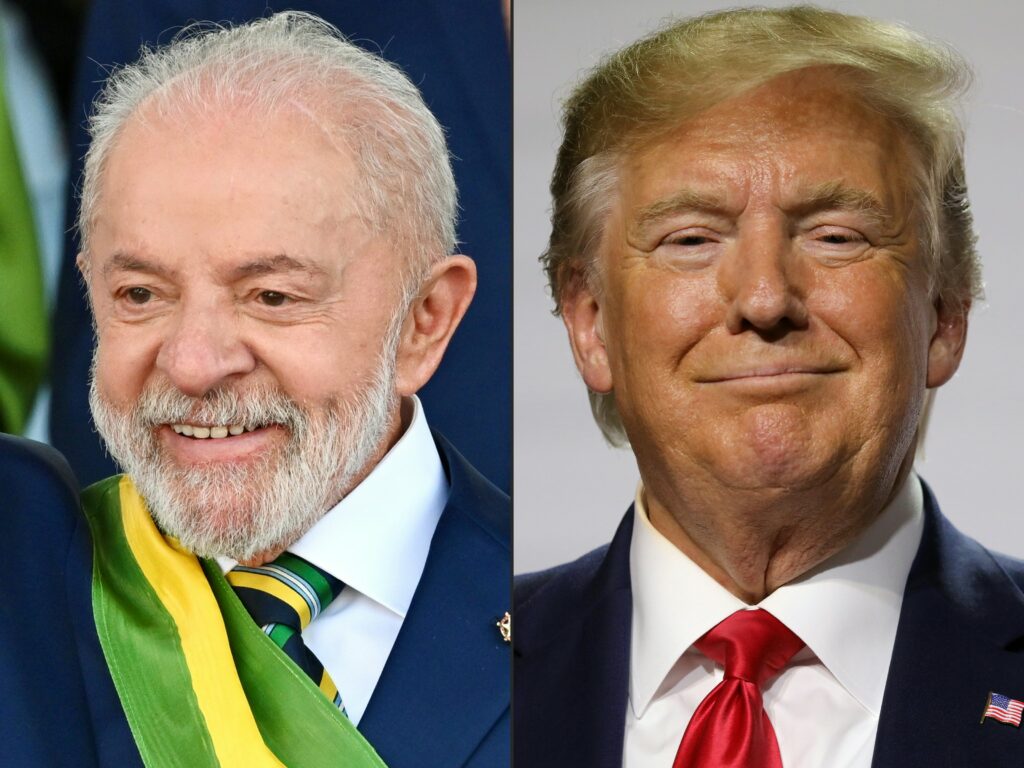
Trump-Lula meeting in Malaysia under discussion: US
Talks are under way for a meeting between US President Donald Trump and Brazilian counterpart Luiz Inacio Lula da Silva at an upcoming regional summit in Malaysia, a senior US administration official said Wednesday.The two leaders have begun to patch up their differences after months of bad blood over the trial and conviction of Trump’s ally, the far-right former Brazilian president Jair Bolsonaro.Republican Trump and leftist Lula are both due to travel to the Association of Southeast Asian Nations (ASEAN) summit in Malaysia that starts on Sunday.”President Trump has expressed his interest in meeting President Lula following their friendly call” earlier this month, the senior Trump administration official told AFP on condition of anonymity.”There are discussions about facilitating such a meeting while President Trump is in Malaysia.”Trump has imposed a 50-percent tariff on many Brazilian products and imposed sanctions against several top officials, including a top Supreme Court judge, to punish Brazil for what he termed a “witch hunt” against Bolsonaro.In September, Brazil’s Supreme Court sentenced Bolsonaro to 27 years in prison for his role in a botched coup bid after his 2022 election loss to Lula.But relations between Trump and Lula began to thaw when the two 79-year-old leaders had a brief meeting on the sidelines of the UN General Assembly in September.They then spoke by phone on October 6 and first raised the possibility of meeting at the ASEAN summit.During that meeting Lula asked Trump to lift the tariffs and sanctions.
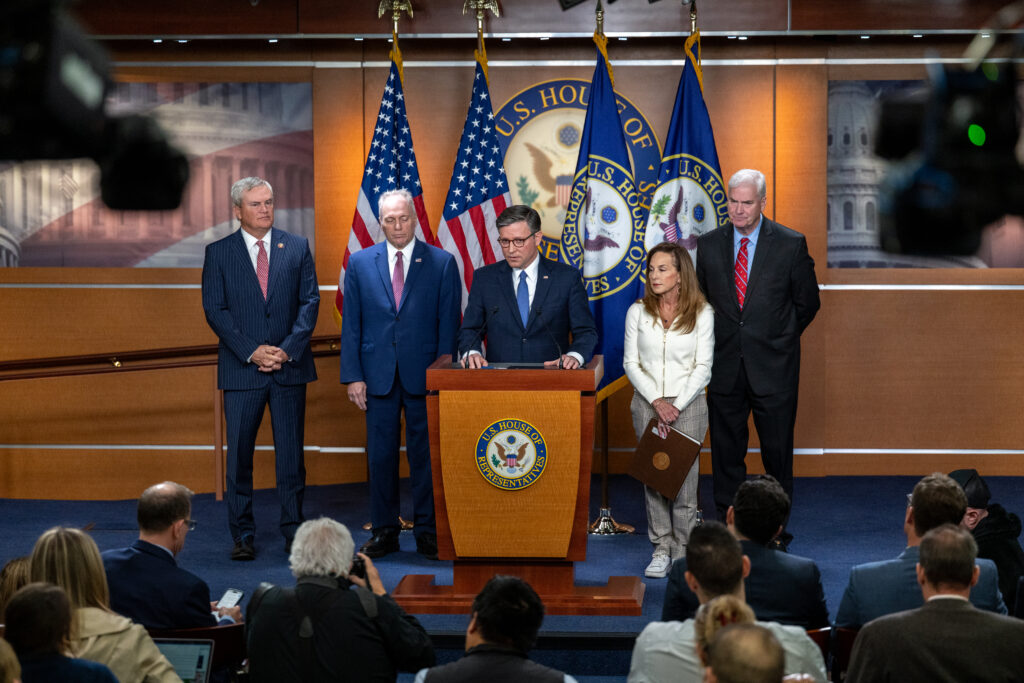
Air safety in focus as US government shutdown hits fourth week
The US government shutdown entered its fourth week Wednesday, becoming the second longest in history, as Donald Trump’s Republicans and the opposition Democrats faced increasing pressure to end a stalemate that has crippled public services.Federal workers are set to miss their first full paychecks in the coming days, including tens of thousands of air traffic controllers and airport security agents — an inflection point that helped end the last shutdown in 2019.But with the current crisis entering Day 22, the bipartisan backbench groups in Congress who have struck deals behind the scenes to end past standoffs have hardly been talking, and there was no off-ramp in sight.”This is now the second-longest government shutdown of any kind ever in the history of our country, and it’s just shameful,” Republican House Speaker Mike Johnson told reporters.”Democrats keep making history, but they’re doing it for all the wrong reasons.”The government has been gradually grinding to a halt since Congress failed to pass a bill to keep federal departments and agencies funded and functioning past September 30.At the heart of the standoff is a Democratic demand for an extension of expiring health insurance subsidies that keeps premiums affordable for millions of Americans.Republicans — who run Congress and the White House but need Democratic votes to pass most legislation — say that debate should happen later, not as part of a must-pass funding bill.Democrats in the Senate have repeatedly blocked a House-passed short-term extension of funds, keeping 1.4 million federal workers on enforced unpaid leave, or working without pay.- ‘Nuclear option’ -Around 63,000 air traffic controllers and Transportation Security Administration agents are considered essential workers and expected to stay at their posts during government shutdowns.Employees calling in sick rather than working without pay — leading to significant delays — was a major factor in Trump bringing an end to the 2019 shutdown, the longest in history at 35 days.The Federal Aviation Administration issued a ground stop at two Houston airports on Tuesday due to staffing issues, according to a notice on its website, and the aviation industry has voiced fears over worsening absences as the shutdown drags on.”For every day the government is shut down and employees in the aviation ecosystem are still furloughed, another layer of safety may be peeled away,” Dave Spero, president of the Professional Aviation Safety Specialists union, said in a statement.Confounding expectations at the start of the shutdown, Democrats have maintained a largely united front as they have repeatedly rejected Republican efforts to reopen the government.”We’re ready, we’re willing, we’re able to reopen the government to enact a bipartisan spending agreement that actually meets the needs of the American people,” House Minority Leader Hakeem Jeffries said at a hearing on the impacts of the shutdown.With no end in sight to the stalemate, Senate Republicans are under pressure to change the 60-vote threshold to advance legislation — known as the “filibuster” — so that they can approve the House-passed funding resolution without Democratic help.They are hoping to avoid that so-called “nuclear option” and instead turn public opinion against Democrats this week with a measure to safeguard the pay of military personnel and essential federal workers. The minority party is planning to block the measure, arguing that it cedes further power to Trump while failing to help 750,000 nonessential workers who have been placed on enforced leave without pay.
Air safety in focus as US government shutdown hits fourth week
The US government shutdown entered its fourth week Wednesday, becoming the second longest in history, as Donald Trump’s Republicans and the opposition Democrats faced increasing pressure to end a stalemate that has crippled public services.Federal workers are set to miss their first full paychecks in the coming days, including tens of thousands of air traffic controllers and airport security agents — an inflection point that helped end the previous shutdown in 2019.But with the current crisis entering Day 22, the bipartisan backbench groups in Congress who have struck deals behind the scenes to end past standoffs have hardly been talking, and there was no off-ramp in sight.”This is now the second-longest government shutdown of any kind ever in the history of our country, and it’s just shameful,” Republican House Speaker Mike Johnson told reporters.”Democrats keep making history, but they’re doing it for all the wrong reasons.”The government has been gradually grinding to a halt since Congress failed to pass a bill to keep federal departments and agencies funded and functioning past September 30.At the heart of the standoff is a Democratic demand for an extension of expiring health insurance subsidies that keeps premiums affordable for millions of Americans.Republicans — who run Congress and the White House but need Democratic votes to pass most legislation — say that debate should happen later, not as part of a must-pass funding bill.Democrats in the Senate have repeatedly blocked a House-passed short-term resolution championed by Republicans to get the lights back on, keeping 1.4 million federal workers on enforced unpaid leave, or working without pay.Around 63,000 air traffic controllers and Transportation Security Administration agents are considered essential workers and expected to stay at their posts during government shutdowns.Employees calling in sick rather than working without pay — leading to significant delays — was a major factor in Trump bringing to an end the longest shutdown in history on its 35th day in 2019.The Federal Aviation Administration issued a ground stop at two Houston airports on Tuesday due to staffing issues, according to a notice on its website, and the aviation industry has voiced fears over worsening absences as the shutdown drags on.”For every day the government is shut down and employees in the aviation ecosystem are still furloughed, another layer of safety may be peeled away,” Dave Spero, president of the Professional Aviation Safety Specialists union, said in a statement.”The furloughed employees want to be back on the job, all of the employees need to be paid… We call on Congress to open the government as soon as possible.”
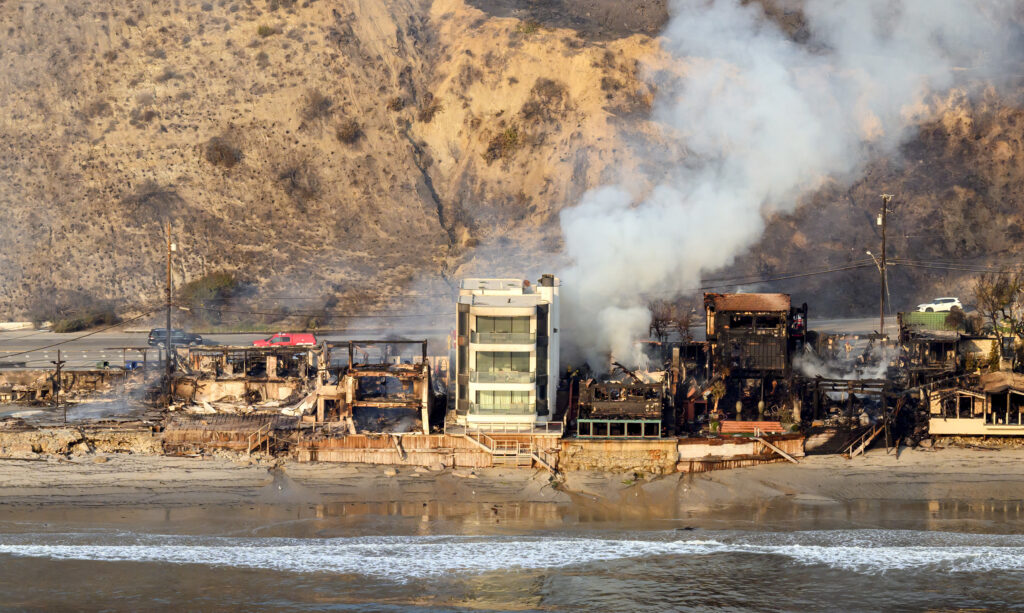
Scrapped by Trump, revived US climate-disaster database reveals record losses
A flagship US climate-disaster database killed by President Donald Trump’s administration has been brought back to life by its former lead scientist — revealing that extreme weather inflicted a record $101 billion in damages in just the first half of 2025.The Billion-Dollar Weather and Climate Disasters tracker, long maintained by the National Oceanic and Atmospheric Administration (NOAA), chronicled major US catastrophes from 1980 to 2024 before it was abruptly shut down in May amid sweeping budget cuts that critics decried as an ideologically driven attack on science.”This dataset was simply too important to stop being updated, and the demand for its revival came from every sector of society,” Adam Smith, an applied climatologist who helmed the database for 15 years before resigning in May, told AFP.Among those calling for its return were groups such as the American Academy of Actuaries, who argued the list was a vital tool for tracking the rising costs of climate-fueled disasters, from wildfires to floods, that threaten homeowners, insurers, and mortgage markets.Congressional Democrats have also sought to restore the program within NOAA, introducing a bill last month that has yet to advance.Now based at the nonprofit Climate Central, Smith said he worked with an interdisciplinary team of experts in meteorology, economics, risk management, communication, and web design over recent months to recreate the dataset using the same public and private data sources and methodologies.The new findings, he said, show that “the year started out with a bang”: the Los Angeles wildfires were likely the costliest in history, with insured losses reaching an estimated $60 billion.That was followed by a barrage of spring storms across the central and southern United States, including several destructive tornadoes.Altogether, 14 separate billion-dollar weather and climate disasters between January and June caused $101.4 billion in inflation-adjusted damages — though 2025 as a whole may fall short of a record, thanks to a milder-than-usual Atlantic hurricane season.Smith said his decision to leave NOAA stemmed from his realization that “the current environment to do science, across the board, is becoming more difficult, and that’s likely an understatement.” But he added he was happy to give the dataset a new home so it can remain a “public good” and continue to publish updates at regular intervals.Looking ahead, the team plans to broaden the scope of the tracker to include events causing at least $100 million in losses — to capture the smaller and mid-sized disasters that still have “life-changing impacts to lives and livelihoods.”

OpenAI unveils search browser in challenge to Google
ChatGPT-maker OpenAI on Tuesday announced an “Atlas” search browser, leveraging its artificial intelligence prowess in a direct challenge to Google Chrome.”This is an AI-powered web browser built around ChatGPT,” OpenAI chief Sam Altman said in a streamed presentation.OpenAI has ramped up its challenge to Google, which has responded by rapidly building more AI capabilities into search and across its platform.Altman and a team of executives demonstrated an “agent” mode that has a chatbot conduct searches on a user’s behalf.Altman said that in agent mode, ChatGPT uses the web browser independently, returning with what it finds.”It’s got all your stuff and is clicking around,” Altman said.”You can watch it or not, you don’t have to, but it’s using the internet for you.”Atlas will go live Tuesday on computers powered by Apple’s operating system free of charge, but agent mode will only be available to users of paid Plus or Pro versions of ChatGPT, according to Altman.”We want to bring this to Windows and to mobile devices as quickly as we can,” Altman said, without providing a timeline.”This is still early days for this project.”Some Atlas offerings demonstrated in the stream seemed similar to features already incorporated into Google Chrome and Microsoft Edge internet search browsers.- Pressure on Google -Tech industry rivals Amazon, Google, Meta, Microsoft and Elon Musk’s xAI have been pouring billions of dollars into artificial intelligence since the blockbuster launch of the first version of ChatGPT in late 2022.”OpenAI’s browser puts pressure on Google,” Emarketer technology analyst Jacob Bourne told AFP.”This is another step in the AI race as tech companies try to make their AI interfaces the first point of contact for internet users.”OpenAI has an opportunity to ride the popularity of ChatGPT to win people over to its browser, according to the analyst.However, Bourne noted that Google has a significant infrastructure advantage in terms of providing browser capabilities to billions of users.A big question is how well Atlas will perform when under pressure from the kinds of user volume handled by Google, he added.The debut of Atlas comes on the heels of Google escaping a breakup of its Chrome browser in a major US competition case, but with the judge imposing remedies whose impact remains uncertain just as AI starts to compete with search engines.Judge Amit Mehta, who found a year ago that Google illegally maintained monopolies in online search, did not order the company to sell off its widely-used Chrome browser.Instead, he ordered remedies including requirements to share data with other firms so they could develop their own search products, and barring exclusive deals to make Google the only search engine on a device or service.Mehta himself noted that the landscape has changed since the US Justice Department and 11 states launched their antitrust case against Google in 2020.- Challenges -OpenAI, Perplexity, and Microsoft have been ramping up challenges to Google, which dominates the online search market where it earns most of its revenue through targeted advertising.OpenAI recently unveiled a new feature for ChatGPT, the leading generative AI model with 800 million weekly users, enabling it to interact with everyday apps like Spotify and Booking.com.The new functionality enables ChatGPT to interact with various apps to select music, search for real estate or explore hotel and flight booking sites.Meanwhile, Perplexity AI in August announced a new model for sharing search revenue with publishers.The company’s media partners will get paid when their work is used by Perplexity’s Comet browser or AI assistant to satisfy queries or requests, according to the San Francisco-based startup.Perplexity is one of Silicon Valley’s hottest startups, whose AI-powered search engine is often mentioned as a potential disruptor to Google.Google shares were down slightly more than one percent in trading that followed OpenAI announcing Atlas.

‘Music to my ears’: Trump brushes off White House demolition critics
US President Donald Trump on Tuesday brushed off criticism over the demolition of part of the White House to build a new ballroom, saying the sound of the construction work was “music to my ears.”Democrats including former first lady Hillary Clinton accused the Republican of failing to respect the presidential mansion after excavators tore off the facade of the building’s East Wing.”We’re building a world-class ballroom,” Trump told a lunch for Republican senators at the White House as the grinding and beeping of machinery could be heard in the background.”You probably hear the beautiful sound of construction to the back. You hear that sound? Oh, that’s music to my ears. I love that sound.”The 79-year-old property mogul also said taxpayers would not pay for any of the $250-million plan. “When I hear that sound it reminds me of money. In this case it reminds of lack of money because I’m paying for it,” he said of the demolition noise.Trump has said that he is partly funding work on the giant ballroom while private and corporate donors will cover the rest. Last week, Trump hosted a glitzy dinner for donors with guests including several top US tech firms, but the White House has not released a list yet or given any figures.AFP journalists saw demolition work under way for a second day on the East Wing, which is where the offices of US first ladies are located.- ‘Pearl-clutching’ -One former occupant of the East Wing led criticism of Trump’s project.”It’s not his house. It’s your house. And he’s destroying it,” said former secretary of state Hillary Clinton, whose husband Bill Clinton was president from 1993 to 2001, and who lost to Trump in the 2016 election.Other Democrats compared it to Trump’s own radical efforts to reshape the federal government and target his political opponents.”The demolition of the East Wing feels very symbolic of what Trump is doing to our democracy,” Hawaii Senator Mazie Hirono said on X. “He’ll lie about protecting it, then destroy it right in front of your face.”Senior Senator Elizabeth Warren said that while Americans faced a “skyrocketing” cost of living, “Donald Trump can’t hear you over the sound of bulldozers demolishing a wing of the White House to build a new grand ballroom.”The White House rejected what it called “pearl-clutching” from critics.”In the latest instance of manufactured outrage, unhinged leftists and their Fake News allies are clutching their pearls over President Donald J. Trump’s visionary addition of a grand, privately funded ballroom to the White House,” it said in a statement.It called the ballroom a “a bold, necessary addition that echoes the storied history of improvements and renovations” by presidents. The White House also pointed out a series of works done by previous presidents — including what it said was President Barack Obama upgrading the tennis court into a full basketball court.Trump has launched a major makeover of the White House in his second term — including paving over the grass of the Rose Garden, where he hosted the Republican senators.
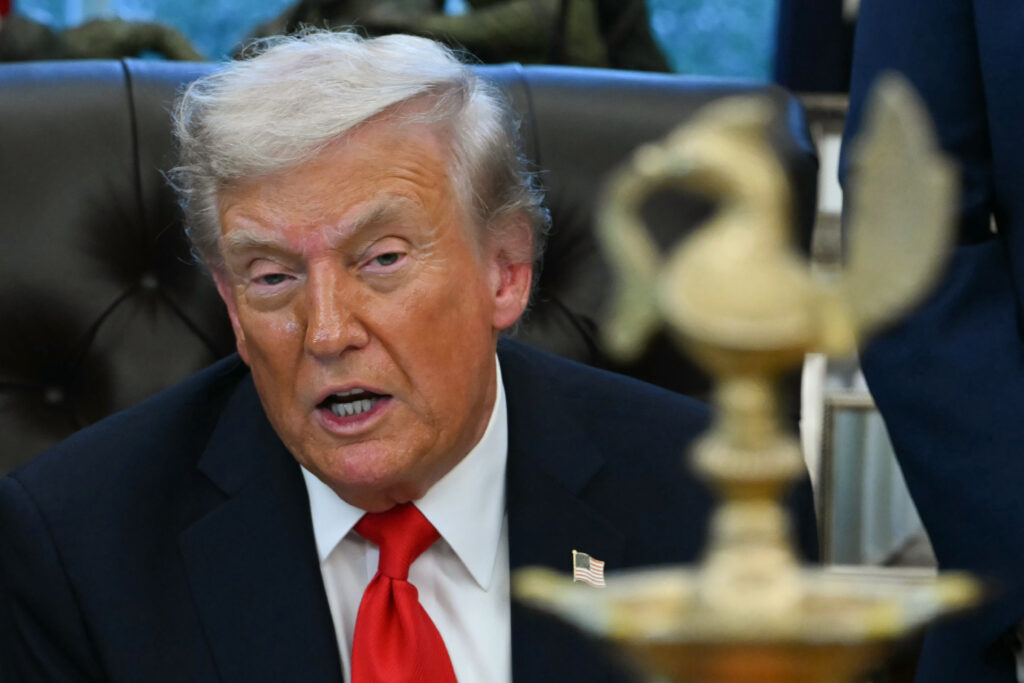
Trump says own Justice Department likely owes him damages
US President Donald Trump said Tuesday the Department of Justice likely owed him damages, after a report that he was seeking millions of dollars in compensation for past investigations. The New York Times reported that lawyers for the Republican were demanding around $230 million in compensation for federal probes into him before he was elected president for a second time.”That decision would have to go across my desk. And it’s awfully strange to make a decision where I’m paying myself,” Trump told reporters in the Oval Office when asked about the report.”But I was damaged very greatly.” Trump added of the Department of Justice that “they probably owe me a lot of money — if I get money from our country, I will do something nice with it like to give it to charity or give it to the White House.”Trump has launched a series of legal cases against media firms and other organizations he accuses of bias against him, in some cases winning huge sums.He said it “could be” the case that his legal team had filed a compensation claim, but said that “I don’t know what the numbers are, I don’t even talk to them about it.” A spokesman for Trump’s legal team did not directly confirm the New York Times story but told AFP that the president “continues to fight back against all Democrat-led witch hunts.” These included the investigation into alleged collusion between Trump’s 2016 election campaign and Russia, the spokesman said.But a situation in which a US president seeks compensation from the very government he heads has “no parallel in American history,” the New York Times said, adding that it also threw up major ethical conflicts. One of Trump’s former lawyers, Todd Blanche, is now the deputy US attorney general at the Department of Justice.It declined to comment on the status of the claims but rejected suggestions that top officials would be conflicted.”In any circumstance, all officials at the Department of Justice follow the guidance of career ethics officials,” department spokesman Chad Gilmartin said in a statement to AFP. Trump faced a series of federal investigations after his first presidency into the alleged mishandling of classified material and attempts to overturn the results of the 2020 presidential election that Biden won.They were abandoned when Trump was reelected last year.Trump has also been convicted of 34 felonies related to hush money payments to a porn star in a case in New York State.

Wife of Colombian killed in US strike says life taken unjustly
Alejandro Carranza’s loved ones say he left home on Colombia’s Caribbean coast to fish in open waters. Days later, he was dead — one of 32 alleged drug traffickers killed in US military strikes. From Santa Marta, northern Colombia, Carranza’s family is questioning White House claims that he was carrying narcotics aboard a small vessel targeted last month.For his wife Katerine Hernandez, the 40-year-old was “a good man” devoted to fishing.”Why did they just take his life like that?” she asked during an interview Monday with AFP. She denied he had any link to drug trafficking.”The fishermen have the right to live. Why didn’t they just detain them?”Since the United States began bombing boats in the Caribbean in September, critics have accused Donald Trump’s administration of carrying out extrajudicial executions.The White House and Pentagon have produced little evidence to back up their claims that those targeted were involved in trafficking.Colombia’s President Gustavo Petro, a critic of the US military presence in the Caribbean, has also claimed Carranza was innocent.Petro said his crew suffered a mechanical failure at sea.”The Colombian boat was adrift with a distress signal, its engine raised,” Petro wrote Saturday on X. “He had no ties to drug trafficking. His daily activity was fishing.”However Colombian media have reported that Carranza had a criminal record for stealing weapons in collusion with gangs.Prosecutors contacted by AFP refused to confirm or deny the reports.The US government has released statements and images purporting to show strikes on at least seven boats allegedly carrying drugs, leaving 32 dead.AFP has not been able to independently verify this toll. – He stopped calling -Before his last trip, Carranza told his father he was heading to a spot “with good fish.” Days passed without contact, until the family learned of the bombing on television.”The days went by and he didn’t call,” Hernandez said.The deadly strikes have sparked a diplomatic row between the United States and Colombia, historically close partners.Petro condemned the attack as a violation of Colombian sovereignty and labeled it an “assassination,” while Trump has lashed out his counterpart, calling him an “illegal drug dealer” and vowing to to halt all US economic aid to the country.Friends interviewed by AFP also insisted Carranza was a fisherman.”He went offshore to catch sierra, tuna, and snapper, which are found far out at this time of year,” said Cesar Henriquez, who has known him since childhood.”He always came back to Santa Marta, secured his boat, and went home. I never knew him to do anything bad,” Henriquez told AFP.A Colombian and an Ecuadoran are the only survivors so far of US attacks in the Caribbean.The Colombian, repatriated in serious condition, will face trial as a “criminal” accused of drug trafficking, according to the government.The Ecuadoran was released after authorities said he had no pending charges.