AFP USA

US revokes visa for Nigerian Nobel laureate Wole Soyinka

The US consulate in Lagos has revoked the visa of Nigerian writer Wole Soyinka, the Nobel laureate said Tuesday.”I want to assure the consulate… that I’m very content with the revocation of my visa,” Soyinka, a famed playwright and author who won the 1986 Nobel Prize for Literature, told a news conference.Soyinka previously held permanent residency in the United States, though he destroyed his green card after Donald Trump’s first election in 2016.He has remained critical of the US president, who is now serving his second term, and speculated that his recent comments comparing Trump to former Ugandan dictator Idi Amin might have struck a nerve.Soyinka said earlier this year that the US consulate in Lagos had called him in for an interview to re-assess his visa, which he said he would not attend.According to a letter from the consulate addressed to Soyinka, seen by AFP, officials have now cancelled his visa citing US State Department regulations that allow “a consular officer, the Secretary, or a Department official to whom the Secretary has delegated this authority… to revoke a nonimmigrant visa at any time, in his or her discretion”.Reading the letter aloud to journalists in Lagos, Nigeria’s economic capital, he jokingly called it a “rather curious love letter from an embassy”, while telling any organisations hoping to invite him to the United States “not to waste their time”.”I have no visa. I am banned,” Soyinka said.- ‘Like a dictator’ -The US embassy in Abuja said it could not comment on individual cases, citing confidentiality rules. The Trump administration has made visa revocations a hallmark of its wider crackdown on immigration, notably targeting university students who were outspoken about Palestinian rights.Soyinka said he had recently compared Trump to Uganda’s Amin, something he said Trump “should be proud of”.”Idi Amin was a man of international stature, a statesman, so when I called Donald Trump Idi Amin, I thought I was paying him a compliment,” Soyinka said. “He’s been behaving like a dictator.”The 91-year-old playwright behind “Death and the King’s Horseman” has taught at and been awarded honours from top US universities including Harvard and Cornell.His latest novel, “Chronicles from the Land of the Happiest People on Earth”, a satire about corruption in Nigeria, was published in 2021.He left the door open to accepting an invitation to the United States should circumstances change, but added: “I wouldn’t take the initiative myself because there’s nothing I’m looking for there. Nothing.”He went on to criticise the ramped up arrests of undocumented immigrants in the country.”This is not about me,” he said. “When we see people being picked off the street — people being hauled up and they disappear for a month… old women, children being separated. So that’s really what concerns me.”Trump’s crackdown has seen National Guard troops deployed to US cities and citizens temporarily detained as part of aggressive raids, as well as the curtailing of legal means of entry.

US kills 14 in strikes on alleged Pacific drug boats

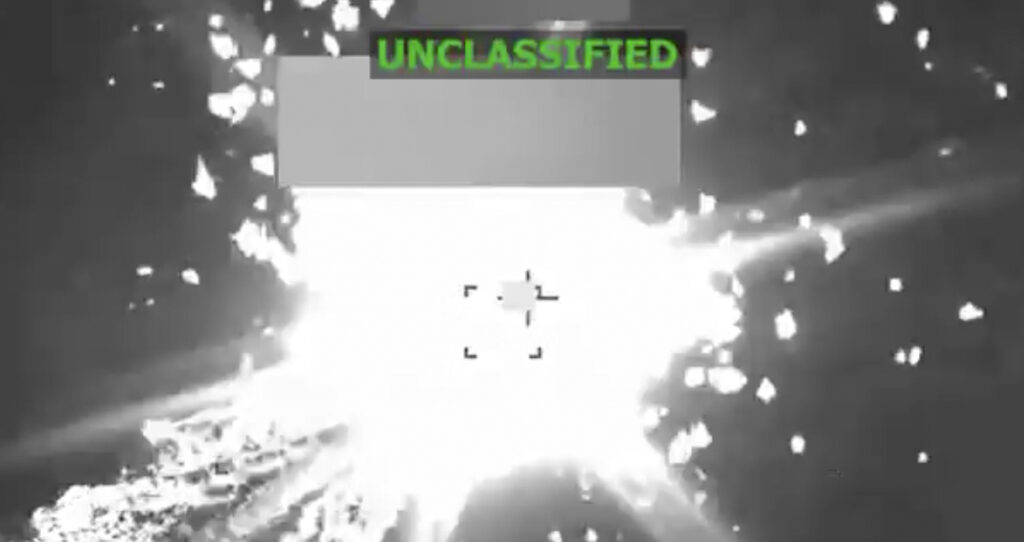
US forces killed 14 people in strikes that destroyed four alleged drug-smuggling boats in the eastern Pacific Ocean, Defense Secretary Pete Hegseth said Tuesday, bringing the death toll from Washington’s controversial anti-narcotics campaign to at least 57.The United States began carrying out the strikes — which experts say amount to extrajudicial killings even if they target known traffickers — in early September, and has now destroyed at least 14 vessels in the Caribbean and Pacific.In three strikes carried out Monday in international waters, 14 “narco-terrorists” were killed and one survived, Hegseth said in a post on X — making it the deadliest day of the US campaign so far.”The four vessels were known by our intelligence apparatus, transiting along known narco-trafficking routes, and carrying narcotics,” he said.”We will track them, we will network them, and then, we will hunt and kill them,” Hegseth said of drug traffickers.But Washington has yet to make public any evidence that its targets were smuggling narcotics or posed a threat to the United States.The Pentagon chief’s post included video of the strikes, the first of which targeted two stationary boats that appeared to be moored together, while the others hit vessels that were speeding across open water.Hegseth said that US Southern Command (SOUTHCOM) immediately started searching for the sole survivor of the strikes, and that Mexican authorities “accepted the case and assumed responsibility for coordinating the rescue.”- Galapagos base? -He did not specify what happened to the survivor or if the person was found, and SOUTHCOM referred a question on the survivor to Mexico.Mexico’s Navy said it was searching some 400 nautical miles (740 kilometers) southwest of the port of Acapulco.The announced drug interdiction operation has seen a major US military buildup around Latin America.The US has deployed seven US Navy warships as well as F-35 stealth warplanes, and ordered the USS Gerald R. Ford aircraft carrier strike group to the region, bringing a massive increase in firepower.The unusually large US military presence in the Caribbean is coming face to face with Hurricane Melissa, requiring some assets to be moved to safety.Washington has also carried out multiple shows of force with B-52 and B-1B bombers flying near Venezuela’s coast, the most recent of which took place on Monday.Regional tensions have flared as a result of the strikes and the military buildup, with Venezuela saying the United States is plotting to overthrow President Nicolas Maduro, who has accused Washington of “fabricating a war.”Ecuadoran President Daniel Noboa, a staunch US ally, meanwhile said Tuesday that his country could host a foreign military base in the famed Galapagos Islands that could be used to combat drug and fuel trafficking, as well as illegal fishing.Noboa did not specify which country could establish the base in Ecuador, a major hub for cocaine trafficking, but has talked of “various countries,” including the United States.

Monster Hurricane Melissa makes landfall in Jamaica

Ferocious winds and torrential rain tore into Jamaica Tuesday as Hurricane Melissa made landfall, the worst storm ever to strike the island nation and one of the most powerful hurricanes on record.The extremely violent Category 5 system was still crawling across the Caribbean, promising catastrophic floods and life-threatening conditions as maximum sustained winds reached a staggering 185 miles per hour (295 kilometers per hour).”This is an extremely dangerous and life-threatening situation!” warned the US National Hurricane Center, urging residents to stay sheltered and as far from windows as possible, including during the brief calm offered by the storm’s eye.Melissa’s sustained wind speed was even more potent than most of recent history’s big storms, including 2005’s Katrina, which ravaged the US city of New Orleans.”For Jamaica it will be the storm of the century so far,” said Anne-Claire Fontan of the World Meteorological Organization.Seven deaths — three in Jamaica, three in Haiti and one in the Dominican Republic — have already been blamed on the deteriorating conditions, but officials were concerned that many people were ignoring pleas to get to safety.”Jamaica this is not the time to be brave,” local government minister Desmond McKenzie told a briefing.He lamented that many of the country’s approximately 880 shelters were still in large part empty.Surges in seawater combined with rainfall — which will likely be measured in feet, not inches — could trigger deadly floods and landslides.”Keep Safe Jamaica,” posted Olympian sprinter Usain Bolt, one of Jamaica’s most famous figures, on X.Ishack Wilmot, who was hunkered down with family in Kingston, told AFP they were safe and dry for now but had lost electricity and water overnight.”The winds are up and gusting,” he said. “Even though we are away from the eye, it’s still really intense and loud.”- Lumbering giant -The Jamaican Red Cross, which was distributing drinking water and hygiene kits ahead of infrastructure disruptions, said Melissa’s “slow nature” made the anxiety worse.The hurricane had quickened slightly but had been lumbering along at a human walking pace, meaning there it could linger over the tropical island renowned as a tourist destination.Usually, “you anticipate that maybe within four hours it would be gone… but Melissa is not looking like that,” Red Cross spokesperson Esther Pinnock told AFP.Melissa was set to strike nearby eastern end of Cuba late Tuesday after pummeling Jamaica.The mammoth storm appeared set to wreak devastation on the scale of some of the worst hurricanes in recent memory like Katrina, Maria or Harvey.Scientists say human-driven climate change has exacerbated massive storms and increased their frequency.Meteorologist Kerry Emanuel said global warming was causing more storms to rapidly intensify as Melissa did, raising the potential for enormous rains.”Water kills a lot more people than wind,” he told AFP.The last major hurricane to impact Jamaica was Beryl in July 2024 — an abnormally strong storm for the time of year.”Human-caused climate change is making all of the worst aspects of Hurricane Melissa even worse,” said climate scientist Daniel Gilford.

Climate change won’t end civilization, says Bill Gates

Climate change “will not lead to humanity’s demise,” billionaire philanthropist Bill Gates has said in a long memo in which he argued that tackling global disease and poverty will help prepare the planet’s poorest for a warming world.The missive was seen as a pivot by the 70-year-old Microsoft co-founder, a major backer of green technologies through his Breakthrough Energy organization, and comes days ahead of the COP30 climate summit in Brazil, whose leadership Gates praised for placing climate adaptation and human development high on the agenda.Gates acknowledged that critics may charge him with hypocrisy because of his significant carbon footprint or argue the memo was a “sneaky way of arguing that we shouldn’t take climate change seriously.”But he said that while climate change will have “serious” consequences, “people will be able to live and thrive in most places on Earth for the foreseeable future.”Gates’s memo outlined his “Three tough truths about climate”: climate change will not end civilization, limiting temperature is not the best measure of progress, and health and prosperity are the strongest defenses against climate destabilization.He also pointed to significant progress in cutting emissions to date and said he was optimistic future technology innovation would pave the way for more.While the planet is dangerously off course in meeting the Paris Agreement’s goal of limiting long-term warming to 1.5 degrees Celsius, Gates argued that rather than fixating on the precise figure, the world should strengthen its resilience.For most of the world’s poor, he added, poverty and disease remain the more pressing problems, he added.”Our chief goal should be to prevent suffering, particularly for those in the toughest conditions who live in the world’s poorest countries,” he said.That means, for example, less focus on limiting extremely hot and cold days, and more on ensuring “fewer people live in poverty and poor health so that extreme weather isn’t such a threat to them.”Looking ahead, Gates said a key climate strategy should be to reduce the so-called green premium — the cost difference between clean and dirty ways of doing something — to zero for materials such as cement, steel, and jet fuel.He compared the memo to one he wrote at Microsoft 30 years ago urging the company to put the internet at the heart of everything it did.Likewise, he said, the climate community needs a “strategic pivot” at COP30 and beyond.”Prioritize the things that have the greatest impact on human welfare,” he said.Critics said Gates’ essay lacked substance and posed a false choice between climate action and reducing human suffering.”Mr. Gates has set up a false frame that pits improving lives against science-based temperature and emissions goals. In fact, the two are intrinsically connected,” Rachel Cleetus of the Union of Concerned Scientists told AFP.”The warming climate is directly undermining poverty eradication and human development goals around the world.”Hurricane Melissa, a climate change-fueled monster storm, is just the latest example of the deadly and costly consequences of climate change for nations already struggling with complex humanitarian challenges.”Transitioning away from fossil fuels will bring health and economic benefits while disrupting the “malign influence” of Big Oil on the future of the planet, she added.

Statue of Confederate general returns to US capital

A statue of a general for the pro-slavery Confederacy during the Civil War has been reinstalled in the US capital after being toppled during racial justice protests in 2020.The National Park Service (NPS) had announced plans in August to return the statue of General Albert Pike to the downtown park where it once stood.The statue, which honors Pike’s contributions to freemasonry, was the only memorial to a Confederate general in the US capital before it was torn down.It was restored to its pedestal by the NPS over the weekend.Statues honoring the Confederacy were a prime target during protests that broke out nationwide in June 2020 following the death of George Floyd, a 46-year-old Black man who was murdered by a white police officer in Minneapolis.Donald Trump, who was president at the time, called the removal of the Pike statue a “disgrace” and after taking office in January for a second time he signed an executive order “Restoring Truth and Sanity to American History.”Trump ordered the restoration of the names of several US military bases that honored officers who fought for the Confederacy in the 1861-1865 Civil War.The names had been changed under Democratic president Joe Biden. Several facilities have been returned to their original names but with a twist — the bases now ostensibly honor military personnel who have the same names, and not those who fought to maintain slavery in the South.Fort Bragg, for example, which originally honored Confederate general Braxton Bragg, now commemorates Roland L. Bragg, a little-known World War II hero.Efforts to remove Confederate monuments gathered momentum after a white supremacist shot dead nine African Americans at a church in Charleston, South Carolina, in 2015 and they picked up again following Floyd’s death.

Historically strong Hurricane Melissa nears landfall in Jamaica

Rising floodwater and extreme winds hit Jamaica Tuesday as the Caribbean island braced for imminent landfall of Hurricane Melissa and officials pleaded with residents to take shelter.The Category 5 storm, one of the most powerful Atlantic hurricanes on record and the largest ever to hit Jamaica, gathered pace as it closed in.”Last chance to protect your life,” said the US National Hurricane Center mid-morning. “This is an extremely dangerous and life-threatening situation! Take cover now!”The NHC said Melissa’s winds had reached a staggering maximum speed of 185 miles (295 kilometers) per hour.That sustained speed was even more potent than most of recent history’s most devastating storms, including 2005’s Katrina, which ravaged the US city of New Orleans.”For Jamaica it will be the storm of the century so far,” said Anne-Claire Fontan of the World Meteorological Organization.Seven deaths — three in Jamaica, three in Haiti and one in the Dominican Republic — have already been blamed on the deteriorating conditions, but officials were concerned that many people were ignoring pleas to get to safety.”Jamaica this is not the time to be brave,” local government minister Desmond McKenzie told a briefing.”There is still a small window of opportunity,” McKenzie said. “Let us see if we can use it wisely.”He lamented that many of the country’s approximately 880 shelters were still in large part empty.Surges in seawater combined with rainfall — which will likely be measured in feet, not inches — could trigger deadly floods and landslides.”Keep Safe Jamaica,” posted Olympian sprinter Usain Bolt, one of Jamaica’s most famous figures, on X.Ishack Wilmot, who was hunkered down with family in Kingston, told AFP they were safe and dry for now but had lost electricity and water overnight.”The winds are up and gusting,” he said. “Even though we are away from the eye, it’s still really intense and loud.”- Lumbering giant -The Jamaican Red Cross, which was distributing drinking water and hygiene kits ahead of infrastructure disruptions, said Melissa’s “slow nature” had made the anxiety worse.The hurricane had quickened slightly but had been lumbering along at a human walking pace, meaning there it could linger over the tropical island renowned for tourism.”You anticipate that maybe within four hours it would be gone… but Melissa is not looking like that,” Red Cross spokesperson Esther Pinnock told AFP.Melissa was set to strike nearby eastern end of Cuba late Tuesday after pummeling Jamaica.The mammoth storm appeared set to wreak devastation on the scale of some of the worst hurricanes in recent memory like Katrina, Maria or Harvey.Scientists say human-driven climate change has exacerbated massive storms and increased their frequency.Meteorologist Kerry Emanuel said global warming was causing more storms to rapidly intensify as Melissa did, raising the potential for enormous rains.”Water kills a lot more people than wind,” he told AFP.The last major hurricane to impact Jamaica was Beryl in July 2024 — an abnormally strong storm for the time of year.”Human-caused climate change is making all of the worst aspects of Hurricane Melissa even worse,” said climate scientist Daniel Gilford.

Musk launches Grokipedia to rival ‘left-biased’ Wikipedia

Elon Musk’s company xAI has launched a website called Grokipedia to compete with online encyclopedia Wikipedia, which he and others on the American right wing have accused of ideological bias.The site, dubbed version 0.1, had more than 885,000 articles by Monday evening after its launch, compared to Wikipedia’s more than seven million in English. The launch came with the promise of a newer version, 1.0, which Musk said would be “10X better” than the current live site, which he claimed is already “better than Wikipedia.”Musk and the US Republican Party have frequently criticized Wikipedia, accusing a site that has become a living repository of human knowledge of being biased against right-wing ideas. Musk, the world’s richest person and owner of social media platform X, poured hundreds of millions into US President Donald Trump’s election campaign, and claimed Grokipedia would carry “the truth, the whole truth and nothing but the truth.”We will never be perfect, but we shall nonetheless strive towards that goal,” he said on X following the launch.The content of Grokipedia is generated by artificial intelligence (AI) and the generative AI assistant Grok.Grokipedia’s release had been slated for the end of September, but was delayed to “purge out the propaganda,” Musk said in a separate X post.- Attacks on Wikipedia -In 2024, Musk accused Wikipedia of being “controlled by far-left activists” and called for donations to the platform to cease.In August, he stopped Twitter from using Wikipedia as a “definitive source for Community Notes, as the editorial control there is extremely left-biased.”Trump-aligned officials have also taken aim at the site since the Republican returned to power in January.In April, federal prosecutor Ed Martin, who was appointed by Trump but has since been replaced, threatened to investigate whether Wikipedia’s parent organization Wikimedia was eligible for the tax exemption granted to foundations, accusing it of carrying propaganda.And in August, two Republican members of the House of Representatives launched an investigation into “organized efforts… to influence US public opinion on important and sensitive topics by manipulating Wikipedia articles.” Created in 2001, Wikipedia is a collaborative encyclopedia managed by volunteers, largely funded by donations. Its pages can be written or edited by internet users.”Unlike newer projects, Wikipedia’s strengths are clear: it has transparent policies, rigorous volunteer oversight, and a strong culture of continuous improvement,” Gwadamirai Majange, a spokeswoman for the Wikimedia Foundation, told AFP in an email.She said the site is written to inform “billions of readers without promoting a particular point of view.”- Right-leaning content -A Grokipedia article about Musk states that the Tesla and SpaceX CEO “has influenced broader debates on technological progress, demographic decline, and institutional biases, often via X.”It said his ownership of the social media platform “has prioritized content moderation reforms amid criticisms from legacy media outlets that exhibit systemic left-leaning tilts in coverage.”Another example was the page devoted to right-wing journalist and commentator Tucker Carlson, which highlights his role in “challenging systemic biases in traditional journalism.”The citation to that claim, however, links to a Newsweek article where the only corroboration is Carlson describing himself that way. Several right-wing figures welcomed the launch of Grokipedia. Hardline Russian ideologue Alexander Dugin described the article about him as “neutral, objective, accurate,” whereas Wikipedia’s page, according to him, was, “totally biased and defamatory.”Asked about the launch of Grokipedia, Wikimedia spokesperson Majange said the organization was “still in the process of understanding how Grokipedia works.” She highlighted that Wikimedia “is — and always will be — human.””This human-created knowledge is what AI companies rely on to generate content, even Grokipedia needs Wikipedia to exist.”

Beef, defence deals and rare earths: how Japan’s new leader wooed Trump

Japan pulled out all stops for this week’s visit by US President Donald Trump — his first with Prime Minister Sanae Takaichi.The US president’s visit was a major diplomatic test for Takaichi, who has only been in office for a week.From pledges that Tokyo will spend much more on its defence to supporting Trump’s Nobel Peace Prize bid, here’s how Takaichi sought to woo the mercurial US leader:- ‘Golden Age’ and Nobel Peace Prize -“I was very impressed and inspired by you,” Takaichi told Trump as they met, calling for “a new golden age of the Japan-US alliance”.Takaichi also announced during the visit that she will nominate him for a Nobel Peace Prize.Since returning to the White House for his second term in January, Trump has repeatedly insisted that he deserves the prize for his role in resolving numerous conflicts.Observers say Trump’s claims of helping bring about world peace are broadly exaggerated.But Tokyo was keen to burnish the US leader’s bid to join the ranks of former president Barack Obama and journalist Maria Ressa, praising Trump’s efforts towards a ceasefire between Thailand and Cambodia and his “unprecedented historic achievement” of the Gaza deal.- Baseball and slogan caps -Speaking after their meeting, Takaichi apologised for being late and explained that they had been watching a World Series baseball game — which also featured Japanese star player Shohei Ohtani.The two leaders also signed black “Japan is back” caps, reminiscent of Trump’s “Make America Great Again” hats.- US beef on the menu -Menus at summit lunches are often carefully considered with diplomatic niceties in mind.And Tokyo’s choice was no exception, deftly blending US produce with Japanese ingredients.For starters guests were served a “US rice cheese risotto with chicken”, while mains were New York strip steak with gravy and warm vegetables from the southern Japanese city of Nara — Takaichi’s hometown.Not exactly traditional Japanese fare, but tailormade to appeal to Trump’s push to sell more American agricultural products and backing for US farmers, a key support base.- Defence spending -Trump has for years grumbled that US allies in Asia including Japan do not spend enough on their own defence and urged them to pay more for US military presence on their territory.Days before Trump’s arrival, Takaichi told Japan’s parliament that Tokyo’s target of spending two percent of its gross domestic product on defence would be achieved this fiscal year — two years earlier than planned.Japan had also committed to acquiring counter-attack capabilities including Tomahawk cruise missiles from the United States, part of a contract signed in January 2024.- Rare earths and shipbuilding -Tokyo signed a key deal with Washington for “securing” supplies of critical minerals and rare earths.Under the agreement, the United States and Japan would “jointly identify projects of interest to address gaps in supply chains for critical minerals and rare earths”.It comes as the United States tries to boost access to critical minerals with China tightening controls on rare earths.The world’s second-largest economy exercises a virtual monopoly on so-called “rare earth” metals, essential for everything from household appliances to cars, energy and even weapons.Another cooperation agreement was signed Tuesday between Tokyo and Washington on shipbuilding, a sector where Japan and neighbour South Korea are seeking to challenge Chinese dominance.- Golf and memories of Abe -Takaichi had another ace up her sleeve — her ties to her mentor, former premier Shinzo Abe, who was assassinated in 2022 and with whom Trump became close during his first term.She thanked Trump for his “enduring friendship” with Abe and later gifted him a golf putter used by the late premier.The sport was a shared passion of Trump and Abe’s, and the two met several times on the golf course.The US president also met with the politician’s widow, Akie Abe, who said afterwards: “He still holds my husband in high regard and offered me warm words.”Another gift planned by Tokyo, according to Japanese media, is gold-plated golf balls.

Takaichi, Trump swap praise for ‘new golden age’ of ties

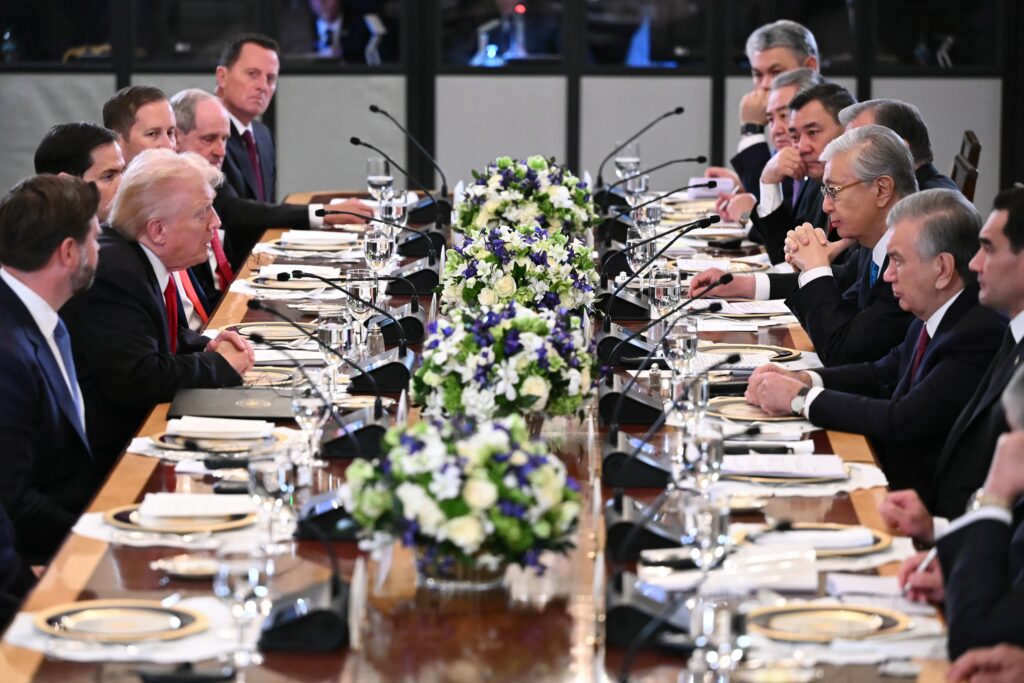
Japan’s new premier Sanae Takaichi lavished US leader Donald Trump with praise and vows of a “golden age” of ties on his visit to Tokyo Tuesday, before inking a deal with Washington aimed at securing critical minerals.Takaichi, Japan’s first woman prime minister, pulled out all the stops for Trump in her opening test on the international stage, and even announced she would nominate him for a Nobel Peace Prize.Trump has become increasingly focused on the Nobel since his return to power in January, and claims to have ended several conflicts around the world, a role that experts, however, downplay.In return for Takaichi’s plaudits, Trump, who was meeting the conservative premier for the first time on an Asia tour that aims for a deal with China, said Washington was an ally of the “strongest level”.”It’s a great honour to be with you, especially so early in what will be, I think, one of the greatest prime ministers,” Trump told Takaichi at the Akasaka Palace state guest house.Takaichi praised Trump’s efforts towards a ceasefire between Thailand and Cambodia and his “unprecedented historic achievement” of the Gaza truce deal.She also gifted him a golf bag signed by star player Hideki Matsuyama and a putter belonging to assassinated former prime minister Shinzo Abe, who had a close personal relationship with Trump, the White House said.”I would like to realise a new golden age of the Japan-US Alliance, where both Japan and the United States will become stronger and also more prosperous,” Takaichi said.- ‘Making ships’ -Speaking later alongside Trump on board the USS George Washington near Tokyo, Takaichi told a crowd of hundreds of sailors that she was “committed to fundamentally reinforce” Japan’s defence capabilities, noting her nation faces “unprecedented” security dangers.Trump, who came to the stage pumping his fist, waving and clapping as the audience cheered, said he had approved the first batch of missiles to be delivered to Japan’s Self-Defense Forces for their F-35 fighter jets and they would arrive this week.He also said the United States was going be working with Japan on “making ships”, as Commerce Secretary Howard Lutnick on Tuesday signed a deal to boost cooperation in shipbuilding.China dominates the global shipbuilding industry which has been in steady decline in the United States — but Trump has promised a revival of the sector.The two sides earlier signed an agreement aimed at “achieving resilience and security of critical minerals and rare earths supply chains”, a statement said.Beijing this month announced sweeping restrictions on the rare earths industry, prompting Trump to threaten 100 percent tariffs on imports from China in retaliation.Trump also squeezed in a meeting with families of Japanese people abducted by North Korea decades ago, where he said “the US is with them all the way” as they asked for help to find their loved ones.After years of denial, North Korea admitted in 2002 that it had sent agents to kidnap 13 Japanese people who were used to train spies in Japanese language and customs. Japan says it also abducted others.- China talks -On security, long-pacifist Japan is adopting a more muscular military stance as relations with China worsen.Takaichi, a China hawk, said her government would achieve its target of spending two percent of gross domestic product on defence this year — two years ahead of schedule.The United States, which has around 60,000 military personnel in Japan, wants Tokyo to spend even more, potentially matching the five percent of GDP pledged by NATO members in June.Most Japanese imports into the United States are subject to tariffs of 15 percent, less painful than the 25 percent first threatened.But the levies still contributed to a 24-percent slump in US-bound car exports in September in value terms year-on-year.Under the terms of a July trade deal shared by the White House, Japan is expected to invest $550 billion in the United States.The two sides said several investment projects were on the table, including up to $100 billion for the construction of nuclear reactors by the American company Westinghouse, involving Japanese suppliers and operators.Trump arrived in Tokyo on Monday for a visit sandwiched between a trip to Malaysia and a meeting in South Korea with Chinese counterpart Xi Jinping that could ease their bruising trade war.Trump is due to meet Xi on Thursday for their first face-to-face talks since the 79-year-old Republican’s return to office in January.

Giant Hurricane Melissa hours from bullseye hit on Jamaica

Hurricane Melissa was only hours away Tuesday from expected landfall on Jamaica, bringing devastating flooding and winds that officials warn will smash the small Caribbean nation’s infrastructure.Evacuations were underway as the slow-moving Category 5 storm — potentially the biggest ever to hit Jamaica — crept forward.Four deaths — three in Jamaica and one in Haiti — have already been blamed on the deteriorating conditions but officials were concerned that many people were ignoring pleas to get to safety.In the worst-hit areas, said Jamaican Prime Minister Andrew Holness, “I don’t believe there is any infrastructure within this region that could withstand a Category 5 storm.””For Jamaica it will be the storm of the century so far,” Anne-Claire Fontan, at the World Meteorological Organization, said.The US National Hurricane Center (NHC) reported  early on Tuesday that Melissa was about 115 miles (185 kilometers) from the Jamaican capital Kingston, reaching maximum wind speed of 175 miles (280 kilometers) per hour.Surging ocean, together with rainfall expected to be measured in feet not inches, will likely trigger deadly floods.But officials were worried that many had refused to heed evacuation calls.Local government minister Desmond McKenzie said late Monday that many of the island’s 880-odd shelters remained empty.”I want to urge persons… to get to high ground as quickly as possible,” he said.Roy Brown, a plumber and tiler, told AFP he’d had bad experiences in government shelters during previous hurricanes and was “not moving.””I don’t believe I can run from death,” he said.- Lumbering giant -Melissa was forecasted to reach the nearby eastern end of impoverished Cuba late Tuesday after pummeling Jamaica.The Jamaican Red Cross, which was distributing drinking water and hygiene kits ahead of infrastructure disruptions, said Melissa’s “slow nature” made the anxiety worse.The hurricane was creeping along at human walking pace, meaning there will be no quick relief once it hits, likely lingering over the tropical island renowned for tourism, sprint star Usain Bolt and reggae.”You anticipate that maybe within four hours it would be gone… but Melissa is not looking like that,” Red Cross spokesperson Esther Pinnock told AFP.Up to 40 inches (one meter) of rainfall were forecasted, with flash flooding and landslides also expected in Haiti, the Dominican Republic and Cuba.A “life-threatening” storm surge is likely along Jamaica’s southern coast, with waters potentially rising 13 feet (4 meters), along with “destructive waves,” the NHC said.There were fears that Melissa will wreak devastation on par with historic hurricanes, including 2017’s Maria or 2005’s Katrina, which left indelible impacts on Puerto Rico and the US city of New Orleans, respectively.Scientists say human-driven climate change has exacerbated massive storms, increasing their frequency.- Global warming -Meteorologist Kerry Emanuel said global warming was causing more storms to rapidly intensify as Melissa did, raising the potential for enormous rains.”Water kills a lot more people than wind,” he told AFP.The last major hurricane to impact Jamaica was Beryl in July 2024 — an abnormally strong storm for the time of year.”Human-caused climate change is making all of the worst aspects of Hurricane Melissa even worse,” said climate scientist Daniel Gilford.