AFP USA

Young plaintiffs stand tall after taking on Trump climate agenda in court

Young Americans challenging President Donald Trump’s fossil fuel agenda say they were proud to have their day in court — even if it meant fielding tough, sometimes perplexing questions from government lawyers.”I don’t think the gravity of that situation has permeated through my brain yet,” 19-year-old Joseph Lee told AFP at the close of a two-day hearing in Lighthiser v. Trump.”I’m going to wake up and realize, ‘Wow, I really did that.’ I testified in court against my own federal government, and it’s just such a meaningful thing to be part of this process.”The case challenges three executive orders that the plaintiffs say trample their inalienable rights to life and liberty by seeking to “unleash” fossil fuels while sidelining sources of renewable energy. The plaintiffs also seek to reverse the administration’s dismantling of climate science — from suppressing a key national climate report to proposing to shut down a critical carbon dioxide monitoring site in Hawaii. Judge Dana Christensen is now weighing whether to grant a preliminary injunction that could pave the way to trial — or throw the case out, as the government has urged.- ‘It’s not about ACs’ -Despite the gravity of the issues at the center of the case, the plaintiffs said they found themselves questioning the seemingly insignificant details raised in court. Lee, from California, testified that a case of heat stroke left him hospitalized on the brink of organ failure.During cross-examination, Justice Department attorney Erik Van de Stouwe asked whether he had sued the University of California, San Diego over its lack of air conditioning in dorms, implying that — and not climate action — was the remedy.”It’s not about ACs,” Lee later told AFP. “Minimizing it to something as trivial just goes to show” that the government’s case lacks merit, he added.At another point, Van de Stouwe questioned whether Lee could prove Trump’s climate cuts cost him opportunities to gain a research position at university — even though a university-wide letter, entered into evidence, explicitly cited the executive actions for reducing such positions. When pressed on how he could be certain, Lee replied that as a student he lacked the power to investigate the matter beyond all doubt.”But you did have the capacity to investigate the government’s executive orders?” the lawyer shot back. Lee responded he had the ability to read their plain language — a remark that drew murmurs of approval from the packed and supportive federal courtroom in Missoula, Montana.- ‘Really empowering’ -In another strange exchange, 20-year-old Avery McRae of Oregon was asked whether the anxiety she linked to climate change might stem from having spent half her life suing the federal government.And when 17-year-old Jorja McCormick of Livingston, Montana took the stand, she recalled the day a firefighter knocked on her family’s door and ordered them to evacuate as flames closed in, a moment, she said, that left her traumatized. Under cross examination, government attorney Miranda Jensen asked: “You just testified you have three horses, right? You’re aware that raising horses contributes to global warming?”Speaking after the hearings wrapped up, McCormick said she had mulled over the exchange. “There’s coal trains going through my downtown every day,” spewing toxic dust, she told AFP. “So I think my horses being out on open property minding their own business compared to coal trains hurting the entire community is quite different.”Despite the grilling, McCormick described testifying as cathartic. “Being on the stand was really empowering — telling my story, getting it out into the world like that was almost healing.”Whatever the outcome of Lighthiser v. Trump, she said she plans to continue her activism.”A better future is possible,” added Lee. “If a decision isn’t favorable, we’ll keep fighting.”

Canada, Mexico leaders agree to seek ‘fairer’ trade deal with US

The leaders of Canada and Mexico on Thursday defended their three-way free-trade deal with the United States, while agreeing to try and make it “fairer” in the face of tariff pressure from President Donald Trump.After talks in Mexico with President Claudia Sheinbaum, Canadian Prime Minister Mark Carney said the pair were “committed” to the United States-Mexico-Canada Agreement (USMCA), saying it had “helped make North America the economic envy of the world.”Sheinbaum said she was “optimistic” about the future of the accord, which Trump wants to renegotiate on terms more favorable to US manufacturers.”I believe that the USMCA will prevail,” she told a joint press conference with Carney.The agreement, in place since 2020, is up for review next year. It is critical to the economies of both Mexico and Canada, which send around 80 percent and 75 percent of their exports to the United States, respectively.Trump has already imposed tariffs on some exports from Canada and Mexico that don’t fall under the agreement and threatened further punishment if they fail to curb cross-border migration and drug trafficking.The USMCA replaced the North American Free Trade Agreement signed in the 1990s.The successive deals fundamentally reshaped North America’s economy over three decades, creating a high degree of interdependence between the three partners.However, Trump’s trade war has already significantly disrupted cross-border supply chains.He has hit Canadian goods that fall outside the agreement with 35-percent duties and similar Mexican goods with 25-percent levies.The tariffs are hurting Canada’s crucial auto, steel and aluminum sectors, leading to job losses, and also causing pain for Mexico’s auto and steel industries.”We complement the United States, we make them stronger, we are all stronger together,” Carney said.The fact that Washington was already reviewing UMSCA was “a good thing,” he added, arguing that it meant decisions on tariffs and local content could be “taken in a calm, deliberate manner.”- ‘Move forward together’ -Both Sheinbaum and Carney have been attempting to reach side deals with Trump.  But on Thursday they insisted they were not in competition with each other.”We will move forward together,” said Carney, holding up next year’s FIFA World Cup, to be jointly hosted by the United States, Canada and Mexico as an expression of the countries’ synergies.Anxious to diversify their exports, Carney and Sheinbaum also announced plans to boost bilateral trade and investment, using Canadian and Mexican ports rather than shipping goods across the United States.Trade between the two countries last year totaled under $32 billion — more than 20 times less than the amount each has with the United States.   Mexico is Canada’s third-largest partner and Canada is Mexico’s fifth-largest.The two leaders also announced plans to cooperate more closely on foreign affairs, agriculture, the environment and security, among other areas.Some Canadian politicians have complained that Trump unfairly lumped their country, a small player in the global drug trade, with Mexico in terms of fentanyl trafficking.”The unfortunate fact is that there are gangs from one country in another country but also vice-versa,” Carney said.

Kirk killing sparks fierce US free speech debate

For Americans, the words are practically sacred: the First Amendment to the US Constitution guarantees freedom of speech. But that right is now the subject of bitter debate, following the assassination of right-wing activist Charlie Kirk.On Thursday, several high-ranking Democrats accused President Donald Trump of waging war on free speech, after he celebrated ABC’s suspension of talk show host Jimmy Kimmel, who accused the political right of using Kirk’s death to score points.The American Civil Liberties Union, a rights advocacy group, accused the Trump administration of operating outside constitutional safeguards to target its opponents, likening it to the Red Scare of the late 1940 and 1950s under senator Joseph McCarthy.”This is beyond McCarthyism. Trump officials are repeatedly abusing their power to stop ideas they don’t like, deciding who can speak, write, and even joke,” said Christopher Anders, director of the ACLU’s democracy and technology division.So what does the First Amendment say? And why is it up for debate?- ‘How we identify ourselves’ -Ratified in 1791, the Bill of Rights comprises the first 10 amendments to the US Constitution, protecting the fundamental rights of Americans.”Congress shall make no law respecting an establishment of religion, or prohibiting the free exercise thereof; or abridging the freedom of speech, or of the press; or the right of the people peaceably to assemble,” the First Amendment says.For David Super, a professor at Georgetown University’s law school, the amendment is “really how we identify ourselves as a nation.”Beyond the varied ethnicities and background of the nation’s 340 million people, “we are thought to be drawn together by a belief in open discussion and a belief that the government can’t shut any of us up,” Super told AFP.The First Amendment even protects speech that is “morally repulsive,” explained Eugene Volokh, a professor of law at the University of California, Los Angeles.Volokh however emphasized that the history of the United States has been marked by attempts to stifle dissident voices.- ‘Malicious writings’ -In 1798, America’s second president John Adams signed into law the Sedition Act, which forbade “any false, scandalous and malicious writing or writings against the government of the United States.”Then during World War I, the expression of pacifist ideology was banned.From the 1920s to the 1950s, anyone expressing support for communist ideals risked serious repercussions. And in the 1960s, officials in several southern US states battled to silence the civil rights movement.One of the key pillars of Trump’s political movement has been to eviscerate “cancel culture” — the process of criticizing someone for voicing an opinion seen as unacceptable, to the point of that person being ostracized or fired. Trump has often called “cancel culture” a scourge of leftist progressives, claiming that it has been used to silence conservative pundits and politicians.But Democrats have turned the tables on Trump, accusing him of doing the same to US media organizations, major universities and, now, Kimmel — a frequent target of Trump’s ire.”After years of complaining about cancel culture, the current administration has taken it to a new and dangerous level,” Democratic former president Barack Obama wrote Thursday on X.- Conservative push-back -US Attorney General Pam Bondi sparked controversy among conservatives by saying earlier this week that the Justice Department would pursue anyone guilty of “hate speech” linked to the slain influencer.Republican Senator Ted Cruz quickly countered that the Constitution “absolutely protects hate speech.” Bondi then said she meant to refer to “threats of violence that individuals incite against others.”Conservative commentator Tucker Carlson called for “civil disobedience” should Kirk’s murder result in an uptick in laws limiting free speech.And some voices on the far right have criticized a decree signed by Trump in August that makes burning the American flag punishable by up to a year in prison. The US Supreme Court ruled in 1989 that burning the Stars and Stripes indeed amounted to free speech, and was protected by the First Amendment.”I would never in a million years harm the American flag,” conservative radio host Jesse Kelly wrote on X.”But a president telling me I can’t has me as close as I’ll ever be to lighting one on fire. I am a free American citizen. And if I ever feel like torching one, I will.”

Eying bottom line, US media giants bow to Trump

The suspension by Disney-owned ABC of talk show host Jimmy Kimmel is the latest surrender by a US media giant to pressure from the Trump administration, putting the bottom line over free speech.ABC’s decision to pull Kimmel off the air comes two months after CBS announced plans to cancel “The Late Show” featuring Stephen Colbert, another unsparing critic of President Donald Trump.Kimmel, 57, was suspended “indefinitely” by ABC because of remarks the comedy show host made about last week’s murder of conservative activist Charlie Kirk.In a similar vein, the Emmy-winning Colbert was canned shortly after he criticized a decision by CBS’s parent company, Paramount Global, to pay $16 million to settle a lawsuit brought by Trump over an interview with former vice president Kamala Harris.ABC also came in for criticism after it agreed in December to donate $15 million to Trump’s eventual presidential library to settle a defamation suit instead of fighting it out in court.Kimmel’s departure came after Federal Communications Commission (FCC) chairman Brendan Carr openly threatened the licenses of ABC affiliates that broadcast his show.Speaking to reporters aboard Air Force One on his return from a visit to Britain, Trump complained about the late night shows and networks, saying “all they do is hit Trump.””They are licensed. They are not allowed to do that,” he claimed.Democratic lawmakers and media analysts condemned the FCC threats to revoke broadcast licenses and said media and entertainment corporations were placing their economic interests over free speech rights.”What we are witnessing is an outright abuse of power,” Harris wrote on X.”This administration is attacking critics and using fear as a weapon to silence anyone who would speak out. Media corporations — from television networks to newspapers — are capitulating to these threats.”For Senator Richard Blumenthal, “Jimmy Kimmel is off-the-air because of an unprecedented act of gov’t censorship.””The FCC has now proven that its sole mission is to be the speech police for Trump, punishing his perceived opponents & rewarding his cronies,” Blumenthal wrote on X.- ‘Coercion’ -Jeffrey McCall, a professor of media studies at DePauw University, said Kimmel’s ratings have been “questionable for a long time.””ABC and Disney at some point just had to make a decision that was based more on the marketplace,” McCall said. “They’ve just decided that, from a corporate ratings and revenue standpoint, he’s no longer viable.”Ken Paulson, director of the Free Speech Center at Middle Tennessee State University, said the “problem lies in corporations that apparently make decisions based solely on financial considerations and cannot be trusted to protect the public.”The Colbert cancellation came as the FCC was considering a multi-billion-dollar deal between Paramount Global and Skydance, a company owned by the son of Trump billionaire ally Larry Ellison.The FCC gave the green light to the merger a few days after CBS pulled the plug on Colbert.It also obtained an extraordinary pledge from Skydance that it will “adopt measures that can root out the bias that has undermined trust in the national news media.”In the Kimmel case, the Nexstar group — which controls more than 200 local television stations in the United States — was the first to announce it would no longer air Kimmel’s show after FCC chair Carr’s remarks Wednesday.The Texas company is currently seeking FCC approval of a bid to acquire rival Tegna.Some right-wing commentators have condemned Kimmel’s silencing, comparing it to the 2023 firing of conservative darling Tucker Carlson by Fox News or the 2018 booting of sitcom star Roseanne Barr over tweets seen as racist.Paulson said the situations are not comparable.”In this case, the head of the Federal Communications Commission is targeting the on-air talent,” he said. “Others have lost their jobs because of public outrage.”When the public is angry, networks can take that into account,” he said. “But when the government is angry, that’s coercion.”

RFK Jr panelists make initial changes to childhood vaccine schedule

A US medical panel handpicked by President Donald Trump’s health secretary made its first alteration to the standard childhood vaccine schedule on Thursday, as public health experts fear more changes that flout prevailing medical advice are in the pipeline.The Advisory Committee on Immunization Practices (ACIP) was revamped to reflect anti-vax advocate Robert F. Kennedy Jr.’s ideals — and among its initial moves was voting to advise that no child under four should receive the combination MMRV shot, which covers measles, mumps, rubella and varicella.Parents should instead be offered the alternative of separate MMR and chicken pox injections for their children, members decided.The combination shot has a small risk of causing temporary, non-life-threatening febrile seizures. But in a call with journalists, Sean O’Leary, chair of the American Academy of Pediatrics Committee on Infectious Diseases, said the debate was settled years ago and that today parents already have a choice of both options.”I’m still puzzled by why this came back as a point of discussion,” he said. “The only thing I can think of is it’s another strategy to scare parents.”Kennedy has spent decades promoting vaccine misinformation, including the widely debunked claim that the MMR shot causes autism.After his appointment to the federal government, he sacked every person from ACIP, and replaced them with figures whose anti-vaccine views track more closely with his own.That skepticism bled into Thursday’s discussion: the committee’s methods were scrutinized by medical professionals in attendance who can’t vote but can offer input.”You’re not looking at all of the aspects of how we evaluate vaccine implementation,” said Jason Goldman, president of the American College of Physicians.”You’re looking at very small data points and misrepresenting how it works in the real world and how we take care of our patients.”- ‘Illegitimate’ -Following much head-scratching over language, the committee voted that the combination shot would still be covered under the Vaccines for Children federal program — which helps fund many immunizations in the United States — even though they were no longer recommending that shot for kids under four.A couple of members abstained — because they said they weren’t sure what they were voting for.The decision means some federal programs will cover the shot but others won’t, creating a patchwork system that public health experts fear could sow widespread confusion among parents.”Parents like me depend on a childhood vaccine schedule built on science and trust. Every change should strengthen, not weaken, the safety net — that keeps our kids healthy,” epidemiologist Syra Madad told AFP.She said Thursday’s committee discussions “risk eroding protections we know work.”Committee members put off until Friday a closely watched vote on whether to scrap the longstanding standard of immunizing newborns against Hepatitis B within the first 24 hours of life.That move has been met with widespread alarm by public health experts, including from some voices on the panel.Swift vaccination has proven the best way to prevent any maternal transmission of the incurable, highly contagious disease that can cause severe liver damage and cancer later in life, said Adam Langer, a CDC scientist who presented to the panel.Amending the advice could amount to a “devastating decision,” said O’Leary of the AAP, a body that did not attend the committee meeting despite a past history of collaboration. “This is in the midst of a growing wave of what we’re seeing with rumors, falsehoods, inaccurate information surrounding our country’s immunization efforts,” he said.”This committee is illegitimate.”In opening the two-day meeting, ACIP chair and biostatistician Martin Kulldorff insisted that the panel was, despite much criticism and fear to the contrary, “pro-vaccine” and will “welcome scientific critique of any of our votes, as there are gray areas.”But Wilbur Chen, an infectious disease physician, cast that defensiveness as disingenuous.”They do not intend to debate using sound, rigorous, reproducible science; they are echoing poor and falsified information,” he told AFP.Along with the Hepatitis B vote on Friday, the committee will reconvene and consider this season’s Covid-19 shot, including who should get it and who should pay for it.

US again vetoes UN Security Council Gaza ceasefire call

The United States on Thursday again wielded its veto and thwarted a UN Security Council call for a ceasefire in Gaza, shielding its ally Israel from meaningful diplomatic pressure.The 14 other members of the Council backed the resolution, initiated in August in response to the UN’s official declaration of famine after nearly two years of Israel’s war on Hamas in the Palestinian territory.The vote came as Israeli tanks and jets pounded Gaza City, the target of a major new ground offensive, forcing Palestinians to flee south.The resolution text seen by AFP had demanded “an immediate, unconditional and permanent ceasefire in Gaza respected by all parties” as well as the immediate and unconditional release of hostages.The United States has repeatedly rejected that approach multiple times, most recently in June when it used its veto to back Israel.”Let this resolution send a clear message, a message that the Security Council is not turning its back on starving civilians, on the hostages and the demand for a ceasefire,” Denmark’s UN ambassador Christina Lassen said ahead of the vote. “A generation risks being lost not only to war — but to hunger and despair. Meanwhile Israel has expanded its military operation in Gaza City, further deepening the suffering of civilians as a result. “It is this catastrophic situation, this humanitarian and human failure that has compelled us to act today.”Pakistan’s ambassador Asim Ahmad called the veto a “dark moment in this chamber.””The world is watching. The cries of children should pierce our hearts,” he said.- ‘Genocide’ accusation -The previous US veto sparked an unusual show of anger from the 14 other members of the council, who are increasingly vocal in their frustration over their apparent inability to pressure Israel to stop the suffering of Gaza’s inhabitants.For the first time Tuesday, a UN-mandated international investigative commission gave its independent analysis, accusing Israel of committing “genocide” in Gaza since October 2023 with the intent to “destroy” the Palestinians.The issue will be central to next week’s annual UN summit in New York.Israeli ambassador to the UN, Danny Danon, condemned the resolution, saying  that “for some members of the Council, this is a performance. For Israel, this is a daily reality. The proposal was presented without condemnation of Hamas, without condemnation of the October 7 massacre.”Danon sparred repeatedly with Algeria’s ambassador Amar Bendjama who asked Palestinian people to “forgive us because this Council could not save your children…our sincere efforts, shattered against the wall of rejection.”

Stocks rise on Nvidia-Intel deal, Fed rate cut

Stock markets advanced Thursday, as tech shares jumped following AI-chips giant Nvidia’s announcement of a $5 billion investment in struggling US rival Intel, and as investors digested the Federal Reserve’s first interest rate cut of 2025.The tech-heavy Nasdaq led gains on Wall Street, with Intel shares soaring nearly 23 percent and Nvidia gaining more than three percent.All three major US indices finished at fresh records.The dollar gained against other major currencies.”Even if Intel needs handouts from its peers in Silicon Valley, investors like it,” said Kathleen Brooks, research director at trading platform XTB.Under the Nvidia-Intel deal, the companies will jointly develop chips for PCs and data centers.The deal comes on the heels of the United States taking a 10-percent stake in Intel, which has fallen behind in recent years after missing key technology shifts.The move propelled shares of other tech firms. In Europe, shares in ASML, a Dutch company that makes the machines used to produce semiconductors, surged more than seven percent.Other US semiconductor names were mixed. Micron jumped 5.6 percent while Advanced Micro Devices dropped 0.8 percent.Investors were also reacting to Wednesday’s US central bank decision to lower rates by 25 basis points.US stocks had finished mixed Wednesday over uncertainty about the path forward following the Fed’s announcement.But the mood changed Thursday, with investors confident that more cuts are coming this year, analysts said.”Markets are betting policymakers will continue to prioritize jobs over inflation, even with headline prices still running hot,” said Fawad Razaqzada, market analyst at City Index and FOREX.com.The decision to cut came even as US inflation runs well above policymakers’ two-percent target, but analysts said the main focus was on the jobs market.Fed policymakers are split between those who expect at least two interest rate cuts later this year and those who anticipate one or fewer.Fed boss Jerome Powell remained cagey, telling reporters decision-makers were approaching it “meeting by meeting.”Paris and Frankfurt stocks were up around one percent in afternoon deals, with German sentiment buoyed by a central bank statement saying Germany should dodge a technical recession in the immediate future.London rose less enthusiastically as the Bank of England kept its main interest rate at four percent in the face of the UK’s stubbornly high inflation, which stands at 3.8 percent.While Britain’s interest rate was kept unchanged, Norway’s central bank cut borrowing costs on Thursday, after a similar move by Canada on Wednesday.In Asia, investors were in a cautious mood on Thursday.Shanghai stocks retreated overall, and Hong Kong’s session also ended in the red.Tokyo closed in the green as the Fed decision boosted the dollar against the yen, helping Japanese exporters.- Key figures at around 2050 GMT -New York – Dow: UP 0.3 percent at 46,142.42 (close)New York – S&P 500: UP 0.5 percent at 6,631.96 (close)New York – Nasdaq: UP 1.2 percent at 22,470.73 (close)London – FTSE 100: UP 0.2 percent at 9,228.11 (close) Paris – CAC 40: UP 0.9 percent at 7,854.61 (close)Frankfurt – DAX: UP 1.4 percent at 23,674.53 (close)Tokyo – Nikkei 225: UP 1.2 percent at 45,303.43 (close)Shanghai – Composite: DOWN 1.2 percent at 3,831.66 (close)Hong Kong – Hang Seng Index: DOWN 1.4 percent at 26,544.85 (close)Euro/dollar: DOWN at $1.1785 from $1.1813 on WednesdayPound/dollar: DOWN at $1.3550 from $1.3626Dollar/yen: UP at 147.97 yen from 146.99 yenEuro/pound: UP at 86.96  pence from 86.69 penceWest Texas Intermediate: DOWN 0.8 percent at $63.57 per barrelBrent North Sea Crude: DOWN 0.8 at $67.44 per barrel

US Democrats say will introduce bill to protect free speech

US Democratic lawmakers said Thursday they plan to introduce legislation to protect free speech, arguing that President Donald Trump is seeking to censor opponents, especially since the murder of Charlie Kirk.The death of Kirk — a right-wing activist who was shot dead during a public event in Utah last week — was “a national tragedy” that “should have been an opportunity for President Trump to bring this country together,” Senator Chris Murphy told a news conference in Washington.”But Trump and his lieutenants are choosing to exploit this tragedy to destroy Donald Trump’s political opposition,” Murphy said, citing the example of Jimmy Kimmel’s late-night show.Kimmel’s show was indefinitely suspended by ABC after he accused Trump’s “Make America Great Again” movement of seeking to exploit Kirk’s death for political points.”That’s censorship. That’s state speech control. That’s not America,” said Murphy.The planned legislation “creates a specific defense for those that are being targeted for political reasons” and “builds real consequences for government officials when they use the power of the government to target speech that is protected by the First Amendment,” he said.Senator Alex Padilla listed various recent developments as causes for concern.”An attorney general who is vowing to prosecute Americans for what she alone deems hate speech. A president who threatens a reporter with prosecution for asking a question about that,” Padilla said.”And Donald Trump personally suing The New York Times and The Wall Street Journal for publishing stories that he doesn’t like,” he said.Senate Minority Leader Chuck Schumer said that “one of the great hallmarks of our country is free speech,” accusing Trump’s administration of “trying to snuff it out.””They don’t want people to even speak when they don’t like what they say,” Schumer said, warning: “That is the road to autocracy.”

US regulator sues Ticketmaster over ‘illegal’ ticket schemes

A top US regulator on Thursday sued Ticketmaster and its parent company Live Nation, alleging the ticketing giant conspired with brokers to inflate concert ticket prices and deceive consumers with hidden fees.The Federal Trade Commission, along with seven states, filed the lawsuit in a California federal court, accusing the companies of allowing ticket brokers to harvest millions of tickets in violation of purchase limits, and then resell them at marked-up prices.Ticketmaster has been the object of anger and frustration from both artists and spectators for decades, with concertgoers complaining about overpriced tickets, opaque pricing schemes, and glitches that saw sales for Taylor Swift’s historic Eras Tour, among others, marred by breakdowns.Most recently, the reunion tour of UK rockers Oasis sparked furor in Britain when dynamic pricing caused ticket prices to jump to hundreds of pounds above face-value costs.American live entertainment “should be accessible to all of us. It should not cost an arm and a leg to take the family to a baseball game,” said FTC Chairman Andrew Ferguson, citing President Donald Trump’s executive order to protect consumers from ticket pricing abuses.The complaint alleges Ticketmaster, which controls about 80 percent of major concert venue ticketing in the United States, turned “a blind eye” to brokers who routinely exceeded ticket limits using thousands of fake accounts.From 2019 to 2024, consumers spent more than $82.6 billion purchasing tickets from Ticketmaster, the FTC said.According to the complaint, the regulator said internal documents show Ticketmaster even provided technological support to brokers through a software platform called TradeDesk, enabling them to manage tickets purchased across multiple accounts for easier resale.The lawsuit also targets Ticketmaster’s pricing practices, alleging the company advertised ticket prices substantially lower than what consumers ultimately paid after mandatory fees and markups.These hidden fees, which reached as high as 44 percent of ticket cost, totaled $16.4 billion from 2019-2024, the FTC said.

Melania’s hat, Epstein’s ghost: takeaways from Trump’s UK visit

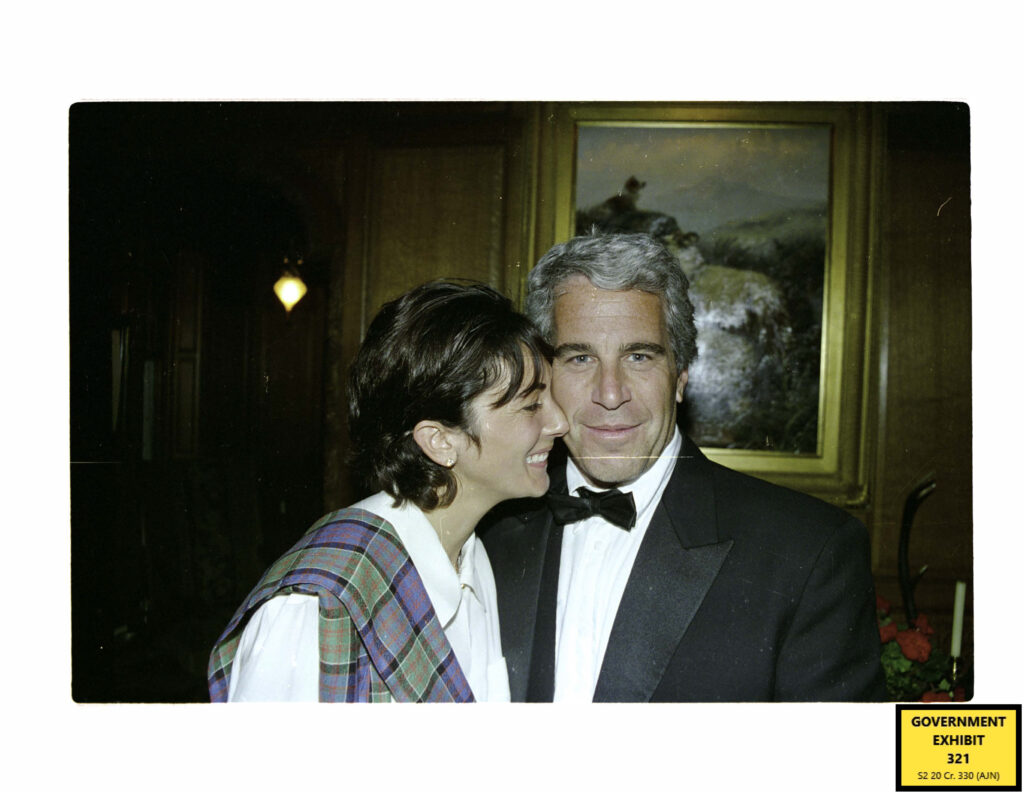
Pomp and politics, warm words, tech deals and a sumptuous state banquet. Britain pulled out all the stops to welcome US President Donald Trump.Here are five things to take away from the president’s historic second state visit.- Protest-free zone -Trump critics drummed, chanted and waved their banners in protest at his visit in both London and Windsor.Around 5,000 people took part in the London demonstration while Trump was being given the red carpet treatment in Windsor Castle, 35 kilometres (22 miles) away.There was little chance of the president noticing though as he revelled in pomp and pageantry behind the castle’s impregnable ramparts, before flying by helicopter to Chequers, the country residence of Prime Minister Keir Starmer.The entire visit was meticulously choreographed to exclude any public-facing events that could have caused embarrassment.- ‘Remarkable son’ -King Charles III paid tribute at Wednesday evening’s banquet to what he called Trump’s “personal commitment” to seeking peace in the world.In return Trump lavished praise on his hosts, calling the visit “one of the highest honours of my life”. Trump’s mother famously grew up in Scotland and the president has long held a love of the UK.The president hailed Charles for raising his “remarkable son”, heir to the throne Prince William, who Trump predicted would be “an unbelievable success in future”.Turning to William’s wife Catherine, Trump declared her “so radiant and so healthy and so beautiful”.The Princess of Wales — who he reportedly chatted to for most of the dinner — is currently recovering following treatment for cancer.- Melania’s hat -The purple statement hat First Lady Melania Trump wore for her arrival in Windsor had everyone talking.The brim of the hat was so wide it obscured her eyes from view, sparking comparisons with the white and navy millinery she chose for her husband’s inauguration.What did it mean? Fashionistas and the public weighed in on the airwaves and social media, but ultimately failed to make much sense of it all.Theories included Melania not wanting to overshadow her husband, a desire to appear mysterious, or just a preference for big hats.- Ghost of Epstein -The spectre of the late sex offender Jeffrey Epstein loomed uncomfortably over the visit in more ways than one.Shortly before the president touched down in Britain, protesters from the campaign group Led by Donkeys projected images of Trump and Epstein onto one of the castle towers.The shots included the president’s mugshot, portraits of Epstein, newspaper headlines and footage of the two men dancing together.Local police arrested four men “on suspicion of malicious communications” who were bailed pending further inquiries.Trump has struggled to shake off stories about his ties to Epstein, who died in prison in 2019 before his trial for sexual exploitation.Others have also been caught in the net, including the UK’s former ambassador to the United States, Peter Mandelson, whose close ties to Epstein came under the spotlight last week.Starmer was forced to sack the Labour Party grandee just days before the visit, exposing the premier to heavy criticism for appointing him in the first place.- Pomp, not controversy -Despite his reputation for unpredictability when dealing with foreign leaders, Trump was reportedly keen for this visit to be more about pomp than controversy.Sources said the president understood that Starmer was under political pressure at home due to a string of missteps and did not want to make trouble for him.At a news conference to wrap up the visit, he acknowledged differences over Starmer’s pledge to recognise a Palestinian state, but noticeably held back on a number of questions where there could have been disagreements with Starmer.The lack of friction allowed the premier to trumpet a huge tech deal inked by the pair as the “biggest investment package of its kind in British history”.