AFP USA

Merz, Macron vow to fight for European digital ‘sovereignty’

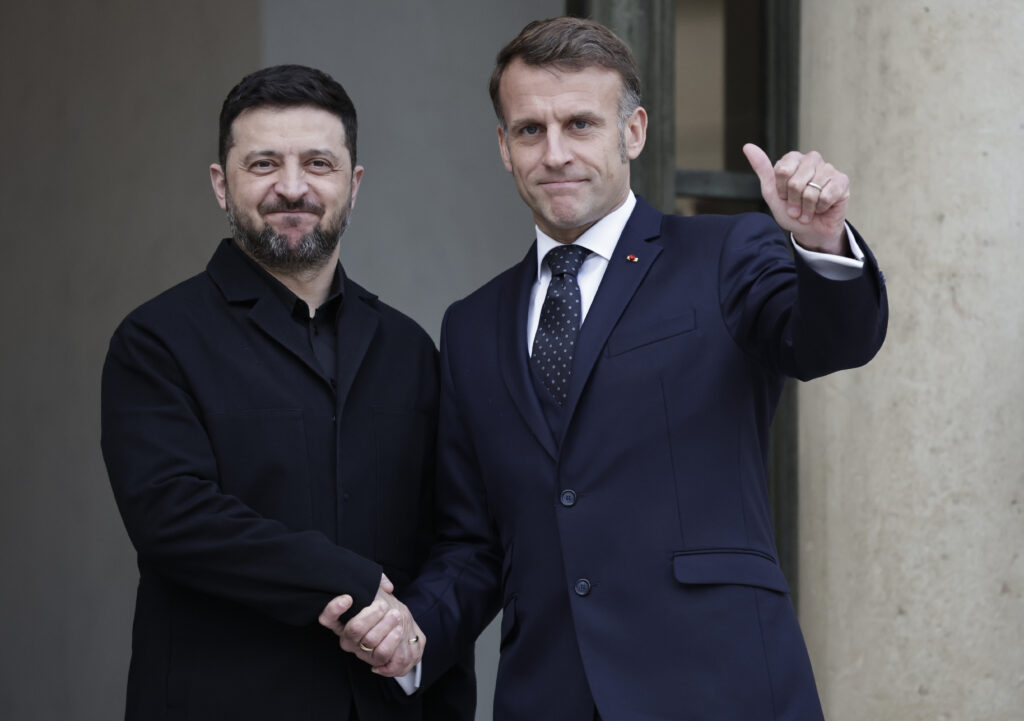
German Chancellor Friedrich Merz and French President Emmanuel Macron vowed Tuesday to help Europe catch up in the AI race and unshackle the continent from a heavy reliance on US tech titans.Speaking at a Berlin summit attended by regional tech firms and investors, the leaders of Europe’s biggest economies also backed the EU’s expected rollback of digital rules that many firms complain are holding them back.European companies pledged more than 12 billion euros ($13.9 billion euros) investment in the digital sector at the event, according to Merz, as the continent seeks to catch up with the United States and China in the AI race.”Europe doesn’t want to be the client of the big entrepreneurs or the big solutions being provided either from the US or from China, we clearly want to design our own solutions,” Macron said, adding that this stance represented “a refusal of being a vassal”.Merz called for Europe to “join forces and forge its own digital path — and this path must lead to digital sovereignty”.”Digital sovereignty has costs, but the costs of digital dependence are even higher,” said the chancellor. – Uneasy US ties -Europe is responding to calls to blaze its own digital path as concerns escalate about US tech dominance at a time of increasingly uneasy ties with Washington under the “America First” administration of Donald Trump.Despite the US-Europe tensions, a senior official from the French presidency earlier said the summit was not about “confrontation” with the United States or even China, but rather protecting “our core sovereignty”.Amid concerns that onerous rules are hobbling European tech firms, France and Germany said they are pushing for a “simple, innovation-friendly and competitive EU regulatory framework”, according to a statement from Berlin after the summit.They are calling specifically for a 12-month postponement for parts of the EU’s AI law, and simplifications of the bloc’s flagship data protection rules, it said. The EU is expected to propose a rollback in these areas Wednesday — a move welcomed by businesses, but criticised by privacy advocates.Macron also urged preference to be given to European tech companies when handing out contracts, in particular from the public sector. “Because guess what? The Chinese have a Chinese exclusivity … and the Americans have a very strong American preference,” he said.- Sensitive data -Calls have been growing for European firms to be more often given the job of handling sensitive data of the region’s citizens, rather than handing it to foreign cloud computing giants.Earlier at the summit, the EU’s digital chief announced that Amazon and Microsoft cloud services could face stricter competition rules in the bloc as Brussels probes their market power.Digital ministers from across Europe, as well as CEOs of tech firms like France’s Mistral and Germany’s SAP, took part in the summit.A total of 18 new partnerships between companies and the AI sector were unveiled at the summit, according to an EU initiative for promoting the technology.This ranged from a tie-up between SAP and Mistral on a providing “sovereign” services, to deals involving carmaker Mercedes-Benz and insurer Allianz, it said.As well as worrying about US dependence, Europe has long-standing concerns about reliance on firms in China and other parts of Asia for hardware, from semiconductors to laptop components.But the continent faces an uphill battle to switch supply chains from foreign companies in the digital realm.The region is struggling after a period of prolonged economic weakness and its tech firms remain far smaller than their US rivals.As of last year, the continent’s data centres — crucial for AI — had computing capacity of just 16 gigawatts, compared with 48 in the US and 38 in China, according to a recent study by German digital business association Bitkom.But SAP CEO Christian Klein struck an upbeat note.”We have our own industries that we are good at,” he said during a panel at the summit. “Let’s apply AI in these battlegrounds, then Europe has a bright future.”

Venezuelan opposition leader looks to ‘new era’ without Maduro

With US warships deployed within striking distance of Venezuela, the country’s opposition leader Maria Corina Machado spoke Tuesday of her vision for “a new era” without President Nicolas Maduro.Maduro, whose last two re-elections were rejected as fraudulent by the United States and other countries, fears the naval deployment is a regime-change plot under the guise of an anti-drug operation.Nobel laureate Machado has welcomed the military presence — which has seen strikes on alleged drug boats claim at least 83 lives in the Caribbean and Pacific — and backed Washington’s claim that Maduro heads a drug cartel.US President Donald Trump said recently that he believed Maduro’s days were numbered and on Monday refused to rule out boots on the ground — though he was open to talks with the leftist South American leader.”We are on the threshold of a new era,” Machado, the 2025 Nobel Peace Prize winner, said in a video posted on social media Tuesday.She has been in hiding since accusing Maduro of stealing last year’s presidential election — a claim backed by much of the international community.”The long and violent abuse of power by this regime is coming to an end,” she said.Machado vowed that in a post-Maduro period, elections will be held “with security and without any manipulation.”And she said Maduro’s “criminal regime must be held accountable” for its “brutality,” including holding thousands of “political prisoners” behind bars.”Venezuela will only fully rise when those who committed crimes against humanity are judged by the law and by history,” said Machado.

NATO trials new anti-drone defences to ward off Russia

Polish troops on Tuesday launched a drone from the back of a pick-up truck as they trained some 100 kilometres (60 miles) from the Ukrainian border to use a new US-made system designed to counter the threat from Russia.Guided by a pilot, the unmanned craft swooped through the winter sky on the hunt to destroy its target: a simulated version of one of the attack drones Moscow regularly uses to terrorise Ukraine.  The deployment of the Merops system is part of NATO’s hurried efforts to shore up its eastern flank after the alliance in September scrambled jets to shoot down Russian drones over Poland.That incident — followed by a string of unexplained drone flights that rattled other European countries — served as a wake-up call of the continent’s vulnerabilities almost four years after Russia’s full-scale invasion of Ukraine.  In response, NATO has bolstered its forces nearest Russia and the European Union has hastily drawn up plans to build a system of anti-drone defences.On NATO’s recommendation, Poland and fellow eastern flank country Romania have quickly acquired a handful of the Merops systems to help plug the gaps in the short-term.The technology, produced by a firm backed by ex-Google CEO Eric Schmidt, has already proved its worth downing Russian drones in Ukraine.”The system is one of the most effective killers of Russia’s Shahed drones,” US General Curtis King told journalists invited to view the training at a Polish military base, referring to Iranian-designed drones Russia is using massively.”We estimate it is responsible for 40 percent of those drones killed in Ukraine.”Crucially, it is also relatively cheap.Back in September NATO was forced to use its latest F-35 fighter jets firing missiles worth a million dollars each to down Russian drones costing tens of thousands of dollars.That was clearly unsustainable given that the Kremlin has regularly sent swarms of hundreds of such drones into Ukraine.In comparison the drones fired by the Merops system only cost some $15,000 each.”The system is roughly a tenth of the cost of what it’s costing Russia to build and employ a Shahed-type drone system,” King said.The Merops — which can use artificial intelligence to target enemy drones — is just one of numerous similar systems that NATO countries are testing as they seek to rush more capabilities into use.- ‘Gap-filler’ -Polish, Romanian and US troops underwent some 20 days of training to be able to handle it.”Once you get your hands on, it’s pretty simple to catch on,” said US sergeant Corey Myers. “For our younger kids, as long as you’re good with an Xbox controller, it’s very intuitive.”Given the limited number of such anti-drone systems in NATO hands and the huge areas it has to defend, there is little chance of making the alliance’s eastern flank airtight against Russian incursions.”To defend such a vast area effectively, I think it might almost be impossible,” said Robert Tollast, a military expert at the UK’s RUSI think tank.Instead officials and analysts say the systems could be best used deployed around key sites like power stations, airports and military bases.That means they could help serve to deter the sort of drone disruptions seen recently in countries such as Denmark, Germany and Brussels.With the EU’s push to develop it’s own capacities likely to take time, Polish commanders said they see the US system as  a stepping stone.”This system is now battle-tested in Ukraine, and the results there are very encouraging — so we decided to get it as a gap-filler,” said General Stanislaw Czosnek, deputy commander of the Polish armed forces. “Then eventually we want to replace them with Polish products.”

Trump hosts Saudi prince for first time since Khashoggi killing

Saudi Crown Prince Mohammed bin Salman received a red carpet welcome from President Donald Trump on Tuesday, on his first visit to the United States since the 2018 murder of journalist Jamal Khashoggi.Trump laid on a noisy military flypast featuring F-35 stealth fighters that Washington will sell to Riyadh as the de facto Saudi ruler arrived at the White House.Cannon fire and a parade of horses also greeted the Saudi prince as Trump doubles down on Washington’s burgeoning alliance — and his own personal bond — with the key Middle Eastern ally.Portugal soccer legend Cristiano Ronaldo, who plays in Saudi Arabia, will also be at the White House for the gala day of events, a White House official told AFP.Trump has made a priority of boosting ties with the oil-rich Gulf kingdom, and said on Monday he would sell coveted F-35 stealth fighters to Saudi Arabia, calling it a “great ally.”The move comes despite concerns from Israel and warnings from US officials that China could steal technological knowledge about the jets. In another area of past contention, Trump will sign a deal on a framework for civilian nuclear cooperation, a US official and a source familiar with the negotiations said.- ‘Honoring Saudi Arabia’ -The 40-year-old prince has fostered close ties with Trump and his family over the years — a relationship burnished by a lavish welcome and $600 billion in investment pledges when the president visited Saudi Arabia in May.Saudi Arabia is also expected to announce a “multi-billion dollar investment” in AI infrastructure in the United States on Tuesday, the US official added.Trump will meanwhile push Prince Mohammed to normalize relations with Israel as he seeks a wider Middle East peace deal after the war in Gaza.”We’re more than meeting,” Trump told reporters on Air Force One on Friday when asked about the visit. “We’re honoring Saudi Arabia, the Crown Prince.”Trump will host the prince in the Oval Office, while later in the day First Lady Melania will hold a gala dinner.The Saudi heir to the throne is looking forward to a fresh start on his first US trip since the murder and dismembering of Washington Post columnist Jamal Khashoggi by Saudi agents sparked global outrage.The killing also chilled relations with Washington, as US intelligence suggested that Prince Mohammed approved the operation inside the kingdom’s consulate in Istanbul, an allegation which Saudi authorities deny.Khashoggi’s widow, Hanan Elatr Khashoggi, told CNN that her husband’s killing had “destroyed my life” and she hoped Washington would remember that as it seeks ties with Riyadh.”I hope they look at the American values of human rights and (democracy)” besides any deal and selling weapons, she said.- Security guarantees -Prince Mohammed will have his own agenda, seeking firmer US security guarantees after Israeli strikes in September on Qatar, an iron-clad US ally, rattled the wealthy Gulf region.Along with the F-35 jets, Riyadh is seeking to buy advanced air and missile defense systems. It will also push hard for access to the high-tech chips it needs to fuel its AI ambitions, experts said.But Saudi Arabia is unlikely to agree to normalization with Israel at this stage, despite Trump’s aim for the grand prize of Riyadh joining the Abraham Accords that he launched in his first term.Potential Saudi moves towards normalization in return for security and energy guarantees were put on hold after the outbreak of Israel’s devastating war in Gaza in October 2023.Riyadh appears in no mood to budge without any progress on its international push for a Palestinian state.

Court upholds dismissal of Trump defamation suit against CNN

A US federal appeals court on Tuesday upheld the dismissal of a lawsuit Donald Trump filed against CNN for describing his claim that the 2020 presidential election was stolen as the “Big Lie.”District Court Judge Raag Singhal, who was appointed by Trump during his first term in the White House, tossed out his $475 million suit against the Cable News Network in July 2023.Trump, in the suit filed in a district court in Florida, alleged that the use of the phrase the “Big Lie” by CNN associated him with tactics used by Adolf Hitler.The network’s use of “Big Lie,” he said, was a “deliberate effort by CNN to propagate to its audience an association between the plaintiff and one of the most repugnant figures in modern history.”Singhal, in her ruling, said “the complained of statements are opinion, not factually false statements, and therefore are not actionable.”A three-judge panel of the 11th Circuit Court of Appeals agreed.”Trump has not adequately alleged the falsity of CNN’s statements,” the panel, which included two judges appointed by Trump, said. “Therefore, he has failed to state a defamation claim.”Trump, who returned to the White House in January after winning the November 2024 election, continues to insist falsely that he won the 2020 presidential vote against Democrat Joe Biden.The Republican president has had a caustic relationship with CNN and other major news organizations, branding them “fake news” and repeatedly raging against them on social media.He has filed a number of lawsuits against media outlets and has reached monetary settlements in a number of cases.He threatened last week to sue the BBC for up to $5 billion over a misleading edit to the speech he delivered before the January 6, 2021 assault by his supporters on the US Capitol.Trump was accused of conspiring to overturn the 2020 election results but the case was dropped after the November 2024 election under a Justice Department policy of not indicting or prosecuting a sitting president.

US lawmakers set for explosive vote on Epstein files

US lawmakers are expected to vote Tuesday for the release of government records on sex offender Jeffrey Epstein, in defiance of President Donald Trump’s attempts to keep a lid on one of the country’s most notorious scandals.After months of resistance, behind-the-scenes pressure and frenzied lobbying against making the material public, Trump threw in the towel on Sunday as it became clear that much of the Republican Party in Congress was poised to defy him.The House of Representatives now looks all but certain to approve — perhaps even unanimously — the Epstein Files Transparency Act compelling publication of unclassified documents detailing the investigation into the disgraced financier’s operations and 2019 death in custody, ruled a suicide.Lawmakers say the public deserves answers in a case with over 1,000 alleged victims.Trump says the files will expose powerful Democrats’ connections to Epstein, but the Republican president himself faces uncomfortable scrutiny over his years-long friendship with the man alleged to have supplied rich and influential men with underaged women.Killing the bill in the Senate after a lopsided House vote would be awkward to defend, and Trump has pledged not to veto the legislation if it reaches his desk. But expectations of damning new revelations could prove premature.The Justice Department has wide latitude hold back any information if release “would jeopardize an active federal investigation” and Trump ordered officials in a widely criticized intervention last week to probe Epstein’s ties with high-profile Democrats.The saga has exposed rare fissures in support for the Republican leader, who campaigned on releasing the files but changed course after taking office, accusing Democrats of pushing a “hoax.”After multiple attempts by Republican leaders to block the vote, all Democrats and four Republicans signed a “discharge petition” — an extraordinary procedure forcing the bill to the House floor.Trump said on social media late Sunday that Republicans should vote to release the files “because we have nothing to hide.”- ‘I am not stupid’ -The U-turn marks a rare occasion when a revolt from Trump’s allies has forced his hand, and Epstein survivors at a news conference ahead of the vote questioned the president ‘s motives.”I can’t help to be skeptical of what the agenda is,” said Haley Robson, who was recruited to massage Epstein when she was 16.”So with that being said, I want to relay this message to you: I am traumatized — I am not stupid.”At the time of his death, Epstein was facing federal trial over an alleged sex trafficking operation said to have exploited underage girls and young women, following a 2008 conviction for procuring a minor for prostitution.Trump’s Justice Department said in July officials had completed an “exhaustive review” of the case file that threw up “no basis to revisit the disclosure” of any Epstein materials — sparking uproar among the president’s support base.The White House escalated efforts last week to avoid the vote, with Trump and his allies making last-minute appeals to two of Republican signers of the discharge petition.The rupture widened when Trump pulled his endorsement of loyalist Marjorie Taylor Greene in a stunning break that she said “has all come down to the Epstein files.””Today you are going to see probably a unanimous vote in the House to release the Epstein files, but the fight — the real fight — will happen after that,” Greene said at the news conference.”The real test will be, will the Department of Justice release the files? Or will it all remain tied up in investigations?” she added.Trump, who has denied wrongdoing and says he cut ties with Epstein years before the financier’s arrest, has tried to redirect attention toward Epstein’s connections with Democrats, including Bill Clinton.But fresh disclosures — such as newly surfaced emails from Epstein suggesting Trump “knew about the girls” — have revived scrutiny of the pair’s long association.

Europe looks to catch up with US in AI race at German digital summit

Europe must strive to lead in the AI race, top officials urged Tuesday at a summit focused on propelling the region to the forefront of the digital era and reducing its reliance on US tech titans.As the Berlin gathering got underway, the EU also announced that Amazon and Microsoft cloud services could face stricter competition rules in the bloc as Brussels probes their market power.The summit brought together leaders from Europe’s tech sector, and was to be addressed by German Chancellor Friedrich Merz and French President Emmanuel Macron later Tuesday.”Europe’s goal is very simple: we want to lead, not follow, on AI and frontier technologies,” European Commission digital chief Henna Virkkunen told the opening of the event.”We have the market, we have the talent, we have the ambition. Now we must deliver scale in investment, innovation and uptake.”Europe is responding to calls to blaze its own digital path and take steps to catch up in the AI race against China and the United States.Concerns about US tech dominance have also grown as ties with Washington become increasingly uneasy under the “America First” administration of Donald Trump.Despite the US-Europe tensions, a senior official from the French presidency said the summit was not about “confrontation” with the United States or even China, but rather protecting “our core sovereignty”.- ‘Become a creator’ -Arthur Mensch, CEO of French AI firm Mistral, told a panel at the summit that he had helped found the company as “we didn’t want Europe to become an AI colony, and it was starting to look a bit like this in 2023″.But European regulations needed to be better designed to help local companies, added Christian Klein, chief executive of German software giant SAP.”You need a framework here in Europe where you can build your business, where you can thrive,” he said.His comments came a day before the EU was set to propose a rollback of its rules on AI and data protection — a move welcomed by businesses, but criticised by privacy advocates.Virkkunen also announced the move against Amazon and Microsoft cloud services in Berlin, saying that twin investigations aim to assess whether the tech giants “should be designated as the gatekeepers on cloud computing”.The European Commission, the bloc’s digital regulator, said it will investigate whether Amazon Web Services (AWS) and Microsoft’s Azure should come under the scope of the Digital Markets Act (DMA).Efforts to build up “sovereign” EU cloud computing capabilities, which proponents argue would better protect Europeans’ data, were also being discussed in Berlin.Digital ministers from across Europe, as well as CEOs of tech firms like France’s Mistral and Germany’s SAP, were attending, and announcements on new digital initiatives were expected.- ‘Protect sovereignty’ -After giving their keynote addresses, Merz and Macron were to dine with British Prime Minister Keir Starmer.As well as worrying about US dependence, Europe has long-standing concerns about reliance on firms in China and other parts of Asia for hardware, from semiconductors to laptop components.But the continent faces an uphill battle to switch supply chains from foreign companies in the digital realm.The region is struggling after a period of prolonged economic weakness and its tech firms remain far smaller than their US rivals.As of last year, the continent’s data centres — crucial for AI — had computing capacity of just 16 gigawatts, compared with 48 in the US and 38 in China, according to a recent study by German digital business association Bitkom.But Klein of SAP struck an upbeat note.”We have our own industries that we are good at,” he said.”Let’s apply AI in these battlegrounds, then Europe has a bright future.”

Amazon, Microsoft cloud services could face tougher EU rules

Amazon and Microsoft cloud services could face stricter EU competition rules as Brussels probes their market power, the bloc’s tech chief said Tuesday.Twin investigations aim to assess whether the tech giants “should be designated as the gatekeepers on cloud computing,” Henna Virkkunen said at a summit in Berlin focused on the push for greater European digital sovereignty.The European Commission, the bloc’s digital regulator, said it will investigate whether Amazon Web Services (AWS) and Microsoft’s Azure should come under the scope of the Digital Markets Act (DMA).In a statement it said it would analyse whether the two “act as important gateways between businesses and consumers, despite not meeting the DMA gatekeeper thresholds for size, user number and market position”.The commission will seek to conclude the investigations within a year, it added. “We’re confident that when the European Commission considers the facts, it will recognise what we all see – the cloud computing sector is extremely dynamic, with companies enjoying lots of choice, unprecedented innovation opportunity, and low costs, and that designating cloud providers as gatekeepers isn’t worth the risks of stifling invention or raising costs for European companies,” an AWS spokesperson said.Brussels announced it would also open a third probe to find out whether it needs to update the DMA to make sure it “can effectively tackle practices that may limit competitiveness and fairness in the cloud computing sector in the EU”.The DMA is part of the European Union’s bolstered legal armoury that seeks to make the digital sphere fairer with a list of do’s and don’ts for Big Tech.For example, tech titans must offer users the possibility to choose between different web browsers and search engines, via so-called “choice screens”. The law gives the EU the power to impose fines of up to 10 percent of a company’s total global turnover.Brussels had been under pressure to include the probed services under the bill’s scope because of the dominance of US cloud providers, which hold around two thirds of market share in the 27-nation bloc.AWS leads the cloud computing market, followed closely by Microsoft Azure, with Google Cloud in third place. Google is not under investigation by the EU.There has also been growing concern after a raft of outages in recent months.In October Microsoft cloud clients experienced widespread service disruptions. Among them was Alaska Airlines, whose customers were unable to check in.That came after Amazon cloud troubles last month forced popular services ranging from streaming platforms to messaging apps offline for hours.Amazon and Microsoft already face stricter rules for their other services including Amazon Marketplace and Microsoft’s LinkedIn platform.

Trump says will talk to Venezuela’s Maduro, ‘OK’ with US strikes on Mexico

President Donald Trump said Monday he will talk to Venezuela’s Nicolas Maduro, as Washington’s military buildup stokes tensions, and added that he would be “OK” with US anti-drug strikes inside Mexico.Trump has dramatically increased the number of US forces in the Caribbean region to tackle what he calls drug traffickers based in a number of Latin American countries including Venezuela and Mexico.”At a certain period of time, I’ll be talking to him,” Trump told reporters in the Oval Office when asked if he would speak to Maduro, while adding that the Venezuelan president “has not been good to the United States.”Asked if he would rule out US troops on the ground in Venezuela, Trump replied: “No, I don’t rule out that, I don’t rule out anything.”We just have to take care of Venezuela,” he added. “They dumped hundreds of thousands of people into our country from prisons.” Hours later, Maduro said on his weekly television show that he was ready to talk “face to face” with anyone in the United States “who wants to talk to Venezuela.”A contingent of US Marines is currently conducting military exercises in Trinidad and Tobago, the second such maneuvers in less than a month between Washington and the small English-speaking archipelago located about 10 kilometers (six miles) from the Venezuelan coast.But Trinidad and Tobago’s leader said Monday that the small island nation would not allow its territory to be used to attack Venezuela, nor was it ever asked to.”The US has NEVER requested use of our territory to launch any attacks against the people of Venezuela,” said Prime Minister Kamla Persad-Bissessar, a close Trump ally, in a WhatsApp message to AFP.”Trinidad and Tobago will not participate in any act that could harm the Venezuelan people,” she added, emphasizing that Washington and Caracas should resolve their differences through dialogue.Venezuela has accused Washington of seeking regime change in Caracas with its military build-up including an aircraft carrier group, warships and several stealth jets.Washington accuses Maduro of leading a “terrorist” drug cartel, a charge he denies.Since September, US forces have killed at least 83 people via air strikes on boats accused of ferrying drugs in international waters, according to an AFP tally of publicly released figures.The United States has released no details to back up its claims that the people targeted in both the Caribbean and eastern Pacific in the more than 20 strikes were actually traffickers.- ‘OK with me’ -Trump has also accused Mexico of failing to tackle drug trafficking groups, and stepped up his rhetoric towards the United States’s southern neighbor.”Would I launch strikes in Mexico to stop drugs? It’s OK with me. Whatever we have to do to stop drugs,” Trump said when asked by reporters at the White House whether he would sanction a US counter-drug operation in Mexico.”I didn’t say I’m doing it, but I’d be proud to do it. Because we’re going to save millions of lives by doing it.”Since August, Washington has maintained a significant military presence in the Caribbean, including half a dozen warships, officially to combat drug trafficking destined for the United States.

Trump unveils fast-track visas for World Cup ticket holders

President Donald Trump on Monday unveiled special fast-track visas for people with tickets to the 2026 World Cup — but his administration warned it was no guarantee of entry to the United States.The United States has promised a seamless experience for next year’s tournament despite concerns that Trump’s border crackdown could hurt fans.”For those who intend to join us for the World Cup, I strongly encourage you to apply right away,” Trump said as he announced the scheme in the Oval Office with Gianni Infantino, the boss of global soccer body FIFA.Infantino — who has repeatedly appeared at Trump’s side since the Republican’s return to the White House in January — said the so-called “FIFA Pass” was a “very important announcement.””If you have a ticket for the World Cup, you can have a prioritized appointment to get your visa,” Infantino said.”We’ll have between five and 10 million people coming to America from from all over the world to enjoy the World Cup, and with this FIFA pass, we can make sure that those who buy a ticket, that are legitimate football fans or soccer fans, they can come and attend the World Cup in the best conditions.” US Secretary of State Marco Rubio however issued a warning to those hoping to come for the tournament.”Your ticket is not a visa,” Rubio said at the announcement. “It doesn’t guarantee admission to the US. It guarantees you an expedited appointment, you’re still going to go through the same vetting.”Rubio said ticket holders would get an interview within six to eight weeks under the plan but urged people to act now. “Don’t wait till the last minute,” he said.Trump has made the World Cup a centerpiece event of both his second presidency and the 250th anniversary of US independence next year.But the giant sporting extravaganza has not escaped the political turmoil caused by Trump’s hardline stance on a host of issues.Trump has raised the possibility of moving games from certain host cities amid a crackdown on what he says is crime and migration in some Democratic-run cities.The draw for the World Cup is due to take place in Washington on December 5.FIFA will present a new peace prize on the same day, with widespread speculation that it it could go to Trump.