AFP USA

Trump’s budget ‘grim reaper’ eyeing big cuts amid shutdown

He is perhaps the most powerful man in Washington at the moment, after Donald Trump. Russell Vought, the right-wing ideologue who heads the Office of Management and Budget, is using the US government shutdown to deliver his brand of shock therapy to American bureaucracy.Shutdowns usually result in hundreds of thousands of federal workers being placed on temporary unpaid leave. But this time, the White House has said mass firings are “imminent.”Trump has tapped Vought to tell him “which of the many Democrat Agencies… he recommends to be cut.” He even posted on his Truth Social platform an AI-generated video depicting the budget chief as the grim reaper walking through Washington, scythe in hand.Vought is following a far right governance blueprint, Project 2025, which he helped author.During his reelection campaign, Trump distanced himself from the ultra-conservative policy plan, which envisions vastly expanded executive control over sharply reduced federal government.Now Trump is referring to the 49-year-old Vought as “he of PROJECT 2025 Fame.” Lawmaker Rosa DeLauro, the ranking Democrat on the committee that allocates government money to federal agencies, accuses Vought of having “engineered” the shutdown. “He has been scheming, hoping and planning for this since he was last in office, building his plan to dismantle essential government functions with no regard for the working class, the middle class, and vulnerable Americans who depend on them,” she said on Wednesday, day one of the shutdown. Shutdowns are brought about by lawmakers’ failure to pass an annual budget bill that funds the government. – ‘Dismantle the bureaucracy’ -Born in the northeastern state of Connecticut, Vought graduated from a small evangelical Christian college before earning a law degree and becoming a staffer for Republican lawmakers, then a lobbyist for the conservative Heritage Foundation. He joined the Office of Management and Budget (OMB) and became its director during Trump’s first term.  Vought spent president Joe Biden’s term in office planning for a fresh conservative takeover over of government from his own think tank, the Center for Renewing America. The goal: instituting efficiency in what he saw as a bloated government. Trump “has to move executively as fast and as aggressively as possible, with a radical constitutional perspective, to be able to dismantle that bureaucracy,” he told conservative political commentator Tucker Carlson after Trump’s reelection in November 2024.In September, he called the US government “the woke and weaponized administrative state” of civil servants who resist the directives of an elected president.- ‘Trauma’  -Vought was swiftly confirmed by the Senate for a second stint as OMB director in February 2025. But it was tech tycoon Elon Musk who wielded the cost-cutting chainsaw in the early months of the Trump administration.That reportedly irritated Vought, who disagreed with parts of Musk’s approach, sources told The New York Times.But the OMB director was on board for the abrupt dismantling of government agencies.”Yes, I called for trauma within bureaucracies. Bureaucracies hate the American people,” he said in November. “It’s quite simple: all executive power must be vested in the executive branch,” he declared.Burying foreign aid, ending federal funding for public broadcasting and rolling back dozens and dozens of regulations: “It’s exciting to be involved in this,” Vought recently said.

Americans, Canadians unite in battling ‘eating machine’ carp

Finally, something to unite President Donald Trump, his Democratic opponents and the Canadians he’s threatening to annex: a ferociously hungry carp.Invasive carp, sometimes called Asian carp, were introduced in the United States in the 1970s. And they’ve never stopped spreading — and eating everything in their path — since.”They’re eating machines,” said Trisiah Tugade, an aquatic biologist with Canada’s Invasive Carp Program, as she and her team glided along the Grand River — a Lake Erie tributary — looking for fish that specialists fear will devastate the Great Lakes. Because they can eat up 40 percent of their bodyweight daily, invasive carps were initially seen as a tool to control nuisance algae in confined areas, like aquaculture ponds. But they escaped, likely during floods, and made their way north, including through the Illinois River. That has raised the specter of the devastating eater establishing itself in the Great Lakes, the world’s largest freshwater system by surface area. “There is nothing that I have seen that scares ecologists more than looking at what the impacts would potentially be if the species of Asian carp that are in the Illinois River get into the Great Lakes and form a breeding population,” University of Michigan Great Lakes water policy expert Mike Shriberg told AFP. It’s a threat that has got the attention of Trump, who calls the fish “a threat” and specialists on both sides of the border.- Shock treatment -Each year, Canadian experts search for carp in Great Lakes tributaries considered favorable for spawning and feeding — often grassy areas with warmer, shallow water. In the Grand River, Tugade and senior biologist Alex Price oversaw an electrofishing mission.The team lowered two roads into the water that released non-lethal pulsating charges, stunning the fish and allowing them to be brought with nets into a tank onboard. Fish were identified, measured and — if not deemed invasive — released into the muddy water. Since the program’s launch in 2012, only a few dozen invasive carp have been captured in Canadian waters.James Hall, whose Hall’emin Sport Fishing business takes clients out on Lake Erie, told AFP he was one of the first to catch one. “I was wondering what it was, but I knew it was something different,” he said, describing the moment he pulled a carp out of the water a decade ago. Hall said he put the fish on ice and called government’s carp hotline.Invasive carp “have been very rare to catch, which is great,” said Price, while insisting vigilance was essential given the gravity of the threat. “They can breed multiple times a year and produce hundreds of thousands of eggs in a single event,” he told AFP. “Within the first year of life, they can be too big for our natural predators to eat,” he added. – Blown apart? -Shriberg described the Great Lakes as “the great uniters” across US political parties and between Canada and the United States. Defending them against invasive species has been a bipartisan priority in states on their shores, several of which have historically been US electoral swing states — like Michigan, Ohio, Pennsylvania and Wisconsin — he said. Trump’s May White House memo confirming his support for efforts against “the economic and ecological threat of invasive carp,” drew cross-party praise.   “We’re in the most politically contentious times that I’ve seen in my lifetime,” Shriberg said, calling Trump’s “quiet” memo an affirmation of the rare bipartisan nature of Great Lakes policy. But that path forward is uncertain. Trump’s trade war and annexation threats have strained US-Canada relations. Earlier this year the president reportedly told former prime minister Justin Trudeau that he wanted to revise treaties governing the Great Lakes.Shriberg noted cooperative management of the waterway has defined US-Canada relations, but said “the Trump administration’s hostility towards Canada … threatens to blow that apart.” If the battle against invasive carp were to fail, the consequences would be both dire and unpredictable, he added. “It would cause dramatic changes in the ecological balance of the water,” Shriberg said.And if they ever became established in the Great Lakes, “I don’t believe that you’d have any chance of actually eliminating the population,” he said.

US citizens caught up in deportation dragnet

Leo Garcia Venegas was working at a construction site in Alabama when two immigration agents ran up to him and wrestled him to the ground.”I’m a citizen. I’m a citizen,” he told them. They didn’t believe it. He was handcuffed and detained for an hour before being released — with no apology, according to his lawyers. “The officers have no warrant, they didn’t know who Leo was and haven’t seen him breaking any laws,” said Janae Wilkerson of the public-interest Institute for Justice (IJ), which partnered with Garcia Venegas in filing a class action lawsuit in Alabama last week. “When the officers checked Leo’s Alabama-issued Real ID, they called it fake.”The incident occurred in May, in an area of Alabama where there is hot demand for new homes.In June, it happened again.”I was in one of the houses with headphones on. I felt someone behind me. It was an immigration agent who came through the garage,” Garcia Venegas said in a video produced by IJ.”I told him that I was a citizen. They told me I had to follow them to the car to verify whether I was a citizen or no,” he said.Garcia Venega’s lawyers say the Department of Homeland Security’s current policies allow agents to arrest anyone they believe may be undocumented, until they prove otherwise. That violates the Fourth Amendment of the US Constitution, which protects citizens against “unreasonable searches and seizures” and warrantless arrests.”They arrested me twice for being Latino, for working in construction,” said Garcia Venegas, a 25-year-old man born in Florida to Mexican parents. “I live in fear every day that when I get to work it will happen again.”  – ‘Refused to comply’ -President Donald Trump has launched a crackdown on illegal immigration, saying the United States has been invaded by foreign criminals. Immigration and Customs Enforcement (ICE) agents are carrying out his mass deportation operation, often armed and wearing masks.Their activities and aggressive tactics have sparked criticism and protests. Even Pope Leo XIV has denounced the “inhumane” treatment of migrants in the United States.In an October 1 statement, the Department of Homeland Security said Garcia Venegas was earlier detained because he had tried to prevent “the lawful arrest of an illegal alien.” “He physically got in between agents and the subject they were attempting to arrest and refused to comply with numerous verbal commands,” the statement said.Federal agents began raiding construction sites in Alabama early this year, IJ said.”We’ll be filing a preliminary injunction next week that will ask the judge to quickly halt warrantless raids on private construction sites” in south Alabama, IJ spokesman Andrew Wimer told AFP.- Fractured ribs – In California, Rafie Ollah Shouhed, a 79-year-old naturalized American born in Iran, is suing the government for $50 million after he was body-slammed during an immigration raid at his car wash in early September, fracturing his ribs, ABC news reported. Also in California, border patrol agents attempted to handcuff Jason Brian Gavidia, a 29-year-old Latino American, with one agent demanding to know the name of the hospital where he was born, video of the interaction shows. He was released, and the government claimed he had been interfering with their work at his auto body shop. “This is not right at all,” Gavidia told The New York Times. “Latinos in general are getting attacked. We’re all getting attacked.””ICE does NOT arrest or deport US citizens,” Department of Homeland Security Assistant Secretary Tricia McLaughlin said. “Any US citizens arrested are because of obstructing or assaulting law enforcement.”

India warns not to condone ‘terrorist epicenter’ Pakistan

India on Saturday warned countries against turning a blind eye to what it called support for terrorism from Pakistan, which has basked in closer relations with US President Donald Trump.Addressing the UN General Assembly a day after Pakistan used the forum to appeal for talks, Indian Foreign Minister Subrahmanyam Jaishankar demanded “much deeper global cooperation” against terrorism.”India has confronted this challenge since independence, having a neighbor that is an epicenter of global terrorism,” Jaishankar said, without saying Pakistan’s name.”For decades now, major international terrorist attacks are traced back to that one country,” he said.”Those who condone nations that sponsor terror will find that it comes back to bite them,” he said, also without naming countries.India in May launched attacks on military sites in Pakistan after suspected Islamist gunmen massacred tourists, nearly all Hindus, on the Indian side of divided Kashmir.Jaishankar said that India “exercised its right to defend its people against terrorism.”Pakistan denied responsibility. In his own UN address on Friday, Pakistani Prime Minister Shehbaz Sharif said India showed “arrogance” and received a “bloody nose” with counterattacks.Sharif before the UN summit traveled to Washington to meet alongside Pakistan’s military chief with Trump, who has voiced hope of mediating between India and Pakistan.Indian Prime Minister Narendra Modi has played down Trump’s role in reaching a ceasefire in May and stuck to New Delhi’s refusal of outside mediation on Kashmir.Pakistan by contrast has heaped praise on Trump and said he deserves the Nobel Peace Prize, rekindling Islamabad’s relationship with Washington that had grown tense during the two-decade Afghanistan war.Trump has ramped up tariffs on India, pointing to its purchases of oil from sanctioned Russia.Jaishankar in his speech said that India will need to correct “overdependence on a particular market.””We now see tariff volatility and uncertain market access. As a result, de-risking is a growing compulsion,” he said.

Sweeping UN sanctions loom for Iran after nuclear talks fail

Sweeping UN sanctions loomed for Iran late Saturday for the first time in a decade, after last ditch nuclear talks with Western powers failed to produce a breakthrough.President Masoud Pezeshkian said the United States had offered Iran only a short reprieve in return for handing over its whole stockpile of enriched uranium, an offer he described as unacceptable.An 11th-hour effort by Iran allies Russia and China to postpone the sanctions until April failed to win enough votes on the Security Council on Friday, meaning they will go into effect at midnight GMT on Saturday. Though Iran allowed inspectors back into some of its nuclear facilities, Western governments said they saw insufficient progress to justify delaying sanctions, after a week of high-level diplomacy.European powers triggered the “snapback” mechanism a month ago, accusing Iran of failing to comply with its obligations under a 2015 deal with major powers that saw the UN sanctions frozen in return for restrictions on its nuclear activities.Pezeshkian told reporters in New York that Washington had asked Tehran to relinquish all of its enriched uranium in exchange for a three-month reprieve from sanctions.The United States “wants us to hand over all our enriched uranium to them, and in return they would give us three months” exemption from sanctions, Pezeshkian told reporters in New York before flying home.”This is by no means acceptable,” he said.He previously said France had made a similar proposal, offering only a one-month delay.”Why would we put ourselves in such a trap and have a noose around our neck each month?” he asked, accusing the United States of pressuring Europeans not to compromise.- ‘Null and void’ -Pezeshkian reiterated that Iran had no intention of developing nuclear weapons, charging that the issue was being used as a pretext for efforts by Israel and the United States to topple the Islamic republic.Talks over Iran’s nuclear activities had also involved Steve Witkoff — special envoy of US President Donald Trump — who said Washington did not want to harm Iran and was open to further discussions.But Pezeshkian dismissed him as not serious, saying he reneged on understandings reached in past negotiations.Iran and the United States had held several rounds of Omani-brokered talks earlier this year before they collapsed in June when first Israel and then the United States attacked Iranian nuclear facilities.- Rial hits new low -Iran recalled its envoys from Britain, France and Germany — the three countries which triggered the renewed sanctions — for consultations on Saturday, state television reported. The sanctions will reinstate a global ban on dealings with companies, individuals and organisations accused of involvement in Iran’s nuclear and ballistic missile programmes.”The current (economic) situation was already very difficult, but it’s going to get worse,” said an Iranian engineer who asked to be identified only by his first name Dariush. “The impact of the renewed sanctions is already evident: the exchange rate is increasing, and this is leading to higher prices,” the 50-year-old told AFP, lamenting a standard of living that is “much lower” than it was “two or three years ago.” The dollar was trading at around 1.12 million rials on the black market on Saturday, a record high according to several currency tracking websites. An AFP journalist at Tehran’s Grand Bazaar saw brisk business at jewellery stores as people rushed to buy gold. “Most people fear another war because of the snapback,” Dariush said.It remains to be seen if all governments around the world will enforce the new restrictions.Russian deputy ambassador Dmitry Polyansky said his country considered the renewed sanctions “null and void.”Russia and China had both sought to delay the reimposition of sanctions until April but failed to muster enough votes on the Security Council on Friday.- Economic ‘malaise’ -The United States already enforces unilateral sanctions on Iran and has put huge pressure on third countries to stop buying Iranian oil, although China has defied the pressure.Brussels-based think tank the International Crisis Group said Iran seemed dismissive of the renewed UN sanctions as s it had already learnt to cope with US sanctions.But it noted that the snapback was not easy to reverse as it would require consensus at the Security Council.”It is also likely to compound the malaise around an economy already struggling with high inflation, currency woes and deepening infrastructure problems,” it said.In an address to the UN General Assembly on Friday, Israeli Prime Minister Benjamin Netanyahu urged no delay in reinstating the sanctions.He also hinted that Israel was ready to take further military action after the 12 days of bombing that Iranian authorities say killed more than 1,000 people in June.

US to revoke Colombian president’s visa over ‘incendiary actions’

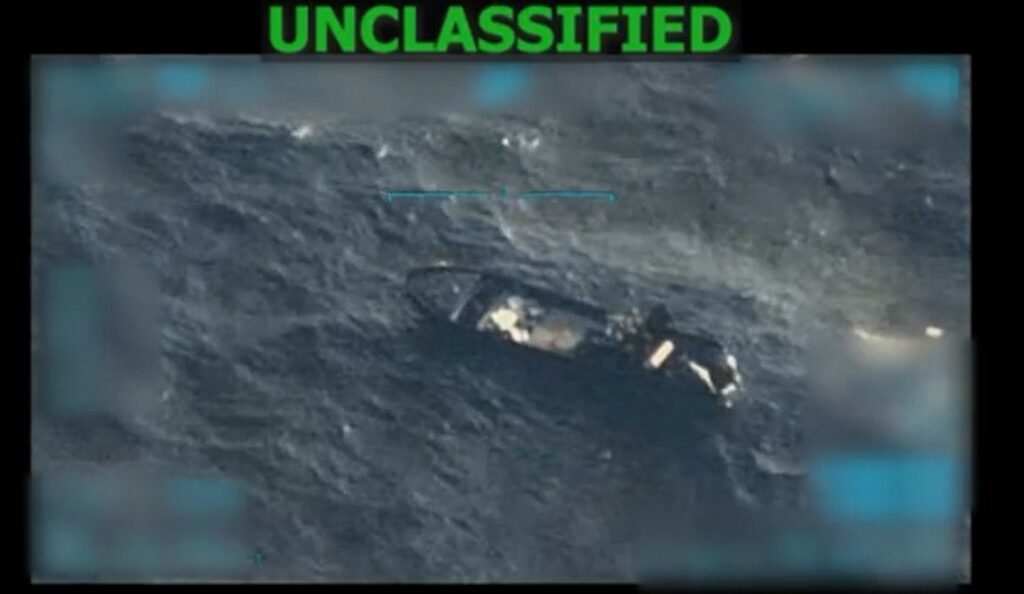
The US State Department said it would revoke the visa of Colombia’s leftist President Gustavo Petro, who returned to Bogota on Saturday after being accused of “incendiary actions” during a pro-Palestinian street protest in New York.Petro was in New York for the UN General Assembly, where he fiercely rebuked US President Donald Trump’s administration and called for a criminal inquiry into recent US strikes on alleged drug trafficking boats in the Caribbean in his Tuesday address.The Colombian leader shared video on social media of himself speaking through megaphone to a large crowd on Friday, calling on “nations of the world” to contribute soldiers for an army “larger than that of the United States.””That is why, from here in New York, I ask all soldiers in the United States Army not to point their rifles at humanity. Disobey Trump’s order! Obey the order of humanity!” Petro said.The State Department said on social media that Petro had “stood on a NYC street and urged US soldiers to disobey orders and incite violence.””We will revoke Petro’s visa due to his reckless and incendiary actions,” it said.Petro struck a defiant note after leaving New York for Bogota, saying that he considered himself a “free person in the world.””I arrived in Bogota. I no longer have a visa to travel to the USA. I don’t care,” he wrote on social media early Saturday.He added that he was “not only a Colombian citizen but also a European citizen” which meant he would not require a visa but instead use the Electronic System for Travel Authorization (ESTA) for entry into the United States.Petro said unarmed “poor young people” died in the strikes — more than a dozen in total — but Washington contends the actions are part of a US anti-drug operation off the coast of Venezuela, whose president Washington accuses of running a cartel.Trump has dispatched eight warships and a submarine to the southern Caribbean, and the biggest US deployment in years has raised fears in Venezuela of an invasion.Petro, whose country is the world’s biggest cocaine producer, has said he suspects some of those killed in the US boat strikes were Colombian.Last week, the Trump administration decertified Colombia as an ally in the fight against drugs, but stopped short of economic sanctions.The countries are historical allies, but ties have soured under Petro — Colombia’s first leftist leader.The South American country’s Interior Minister Armando Benedetti wrote on social media Friday night that Israeli Prime Minister Benjamin Netanyahu’s visa should have been revoked rather than Petro’s.”But since the empire protects him, it’s taking it out on the only president who was capable enough to tell him the truth to his face,” Benedetti said.

UN sanctions on Iran set to return as nuclear diplomacy fades

Iranian President Masoud Pezeshkian on Saturday slammed as “unacceptable” what he described as US demands that Tehran hand over its enriched uranium, as sweeping UN sanctions loomed after nuclear talks collapsed.Earlier this month, the UN nuclear watchdog reported that Iran’s stockpile of uranium enriched up to 60 percent had risen to an estimated 440.9 kilogrammes as of June 13, an increase of 32.3 kilogrammes since May 17.Though Iran allowed inspectors back into its sites, Western powers said they saw insufficient progress to justify delaying sanctions, after a week of top-level diplomacy at the UN General Assembly.European powers triggered the “snapback” mechanism a month ago, accusing Tehran of failing to comply with requirements over its nuclear program — including through countermeasures it launched in response to Israeli and US strikes in June.Pezeshkian on Saturday told reporters in New York that Washington had asked Tehran to relinquish all of its enriched uranium in exchange for a three-month reprieve from sanctions.The United States “wants us to hand over all our enriched uranium to them, and in return they would give us three months” exemption from sanctions, Pezeshkian told reporters in New York before leaving for Tehran.”This is by no means acceptable,” he said.He previously said France had made a similar proposal, offering only a one-month delay.”Why would we put ourselves in such a trap and have a noose around our neck each month?” he asked, accusing the United States of pressuring Europeans not to compromise.- ‘Null and void’ -Pezeshkian reiterated that Iran had no intention of developing nuclear weapons, charging that Washington and Israel were instead using pressure to try to topple the Islamic republic.Talks over Iran’s nuclear program had also involved Steve Witkoff — Special Envoy of US president Donald Trump — who said Washington did not want to harm Iran and was open to further discussions.But Pezeshkian dismissed him as unserious, saying he backtracked on earlier understandings that collapsed after Israel launched its latest military campaign on Iran in June.Meanwhile, Iran recalled its envoys from Britain, France and Germany for consultations after the three countries triggered the sanctions mechanism, state television reported.The measures, due to take effect at 0000 GMT Sunday (8:00 pm Saturday in New York), will reinstate a global ban on dealings with companies, people and organisations accused of involvement in Iran’s nuclear and ballistic missile programs.The sanctions are aimed at imposing new economic pain to pressure Iran, but it remains to be seen if all countries will enforce them.Russian deputy ambassador Dmitry Polyansky said Friday that Moscow, a top partner of Iran, considered the reimposition of sanctions “null and void.”Russia and China sought at the Security Council Friday to delay the reimposition of sanctions until April but failed to muster enough votes.- ‘Maximum pressure’ -The United States already has unilateral sanctions on Iran and has tried to force all other countries to stop buying Iranian oil, although companies from China have defied the pressure.Trump imposed a “maximum pressure” campaign during his first term when he withdrew from a landmark 2015 nuclear agreement negotiated under former president Barack Obama, which had offered sanctions relief in return for drastic curbs on Iran’s nuclear program.The new sanctions mark a “snapback” of the UN measures that were suspended under the 2015 deal, which had been strongly supported by Britain, France and Germany after Trump’s withdrawal.The International Crisis Group, which studies conflict resolution, said in a report that Iran seemed dismissive of the snapback as it had already learned to cope with the US sanctions.But it noted that the snapback was not easy to reverse as it would require consensus at the Security Council.”It is also likely to compound the malaise around an economy already struggling with high inflation, currency woes and deepening infrastructure problems,” the report said.Israeli Prime Minister Benjamin Netanyahu in a defiant UN address Friday urged no delay in the snapback and hinted that Israel was willing to again strike Iran’s nuclear program, after the 12 days of bombing in June that Iranian authorities say killed more than 1,000 people.Pezeshkian said that Iran would not retaliate against the sanctions by leaving the nuclear Non-Proliferation Treaty, warning that unnamed powers were seeking a “superficial pretext to set the region ablaze.”

Protesters demand answers 11 years after Mexican students vanished

Eleven years after her son vanished, Delfina de la Cruz vented frustration at the unsolved disappearances of 43 Mexican students who were allegedly kidnapped by drug traffickers while authorities turned a blind eye.The students from the Ayotzinapa teacher training college — whose members have a history of political activism — had commandeered buses to travel to a demonstration in Mexico City when they went missing on September 26, 2014.The case is considered one of the worst human rights atrocities in Mexico, where a spiral of drug-related violence has left more than 120,000 people unaccounted for.In the rain, de la Cruz and the mothers of other victims led a massive protest march in Mexico City on Friday to mark the anniversary.”We are back where we started,” she said. “I want to see my son, (know) what happened, where he is, if he is no longer there.” So far the remains of only three of the missing students have been found and identified, while the whereabouts of the rest are unknown.Investigators believe they were kidnapped by a drug cartel in collusion with corrupt police, although exactly what happened to them is unclear.At Friday’s march, retired university professor Jesus Gumaro held a banner criticizing former president Andres Manuel Lopez Obrador and his successor, Claudia Sheinbaum, for not “clearing up the crime.””We had hoped that it would be solved, but nothing has happened,” said Gumaro, 66.No one has been convicted despite the prosecution of dozens of people, including a former attorney general and several military personnel.The missing students’ relatives have accused the army of withholding information.On Thursday, protesters rammed a truck into the gates of a military barracks in Mexico City during a demonstration over the student disappearances.No injuries were reported in the truck ramming and the barracks remained secure.The students’ disappearance drew international condemnation and has become emblematic of a missing persons crisis in Mexico, with criminal violence claiming more than 450,000 lives since 2006.The so-called “historical truth” — an official version of the case presented in 2015 under then-president Enrique Pena Nieto — was widely discredited, notably the theory that the remains were incinerated and thrown into a river in the southern state of Guerrero.In 2022, a truth commission set up by Lopez Obrado’s government branded the case a “state crime” and said the military shared responsibility, either directly or through negligence.The commission found that the army was aware of what was happening and had real-time information about the kidnapping and disappearance.

Iran sanctions look set to return even as nuclear inspections resume

Deep sanctions on Iran over its nuclear program look set to go into force once again, even as a UN watchdog confirmed Friday inspections of its atomic sites had resumed. Russia failed in an effort with Beijing Friday to delay the reimposition of the measures on Tehran, with Moscow raising the prospect that it may not enforce the sanctions — despite being required to under international law.European powers triggered the process to reimpose economic sanctions after demanding Iran reverse a series of steps it took after Israel and the United States bombed its nuclear sites in June.The UN’s nuclear watchdog, the IAEA, did confirm Friday that inspections of Iranian nuclear sites had resumed this week after a hiatus following Washington and Israel’s strikes. Resumption of the International Atomic Energy Agency’s inspections was a key measure demanded by the Europeans — Britain, France and Germany.”I signed an agreement with the agency in Cairo and the director general of the agency is quite satisfied and happy,” Iran’s Foreign Minister Abbas Araghchi said.Araghchi has insisted any effort to reimpose sanctions is “legally void,” vowing never to “bow to pressure” on its nuclear program — but left the door open to more talks.Iran’s President Masoud Pezeshkian said Friday Tehran would not leave the Nuclear Non-Proliferation Treaty in retaliation to sanctions being reimposed.China and Russia’s effort to buy time for diplomacy was rejected by nine countries against four in favor.”UN sanctions, targeting Iranian proliferation, will be reimposed this weekend,” said Britain’s ambassador to the UN Barbara Woodward.”We stand ready to continue discussions with Iran on a diplomatic solution to address international concerns about its nuclear program. In turn, this could allow for the lifting of sanctions in the future.”The UN sanctions, notably on Iran’s banking and oil sectors, are set to take effect automatically at the end of Saturday.China and Russia at the Security Council session on Friday pushed a resolution that would have extended talks until April 18, 2026.”We had hoped that us, that European colleagues in the US, would think twice, and that they would opt for the path of diplomacy and dialog, instead of their clumsy blackmail,” the Russian deputy ambassador to the UN told the council prior to the vote.”Did Washington, London, Paris, Berlin make any compromises? No, they did not.”- ‘Several workable solutions’? -France’s ambassador to the UN Jerome Bonnafort told the council all sides had been “trying to find, until the very last moment, a solution.”France — speaking for itself, Germany, and Britain — has told Iran it must allow full access to UN nuclear inspectors, immediately resume nuclear negotiations, and offer transparency on highly enriched uranium, the whereabouts of which has been the subject of speculation.The European nations “and the US have consistently misrepresented Iran’s peaceful nuclear program,” said Araghchi who insisted Tehran had put forward “several workable” proposals.The European countries’ “pursuit of the so called ‘snapback’ is… legally void, politically reckless and procedurally flawed,” he said.The 2015 deal, negotiated during Barack Obama’s presidency, lifted sanctions in return for Iran drastically scaling back its controversial nuclear work.President Donald Trump in his first term withdrew from the deal and imposed sweeping unilateral US sanctions, while pushing the Europeans to do likewise.Steve Witkoff, Trump’s roving envoy who had been negotiating with Iran until Israel attacked, said Wednesday that Iran was in a “tough position” but also held out hope for a solution.But Iran’s president was withering in his assessment of Washington’s diplomatic efforts, claiming that Witkoff and his team were not serious.”We came to understandings a number of times but they were never taken seriously by the Americans,” Pezeshkian told reporters on the sidelines of the UN General Assembly.Iran has long contended that it is not seeking nuclear weapons, pointing to an edict by Supreme Leader Ayatollah Ali Khamenei, and US intelligence has not concluded that the country has decided to build a nuclear weapon.dt-abd-gw-sct/sla/ksb