AFP USA

US economy in the dark as government shutdown cuts off crucial data

US policymakers, financial institutions and business owners have been flying blind for almost a month as a government shutdown has stopped the release of crucial federal economic data ranging from the size of the labor force to the country’s GDP.The void is set to deepen by Thursday as Washington holds off publishing gross domestic product (GDP) numbers measuring the growth of the world’s biggest economy in the July to September period.The United States has already delayed reports on employment, trade, retail sales and others, only recalling some furloughed staff to produce key inflation figures needed for the government to calculate Social Security payments.Congressional Republicans and Democrats remain at an impasse, each assigning blame to the other side over the shutdown with no quick end in sight and food aid for millions now at stake.Analysts warn the growing information blackout could, in turn, cause businesses to lower hiring and investment.”There’s a huge demand right now for government data,” said Heather Long, chief economist at Navy Federal Credit Union. “Every industry is trying to figure out if the Federal Reserve is going to keep cutting interest rates.”The central bank’s decisions hinge upon the economy’s health, particularly inflation and the weakening jobs market.”This is the time of year where most organizations are finalizing their budgets for 2026,” Long told AFP.”So, almost any company is sitting there thinking: Do we think 2026 is going to be an uptick? Or a slowdown, or a recession?”The nonpartisan Congressional Budget Office estimates the shutdown could cost the economy up to $14 billion.Economist Matthew Martin of Oxford Economics expects firms to proceed cautiously, with President Donald Trump’s tariffs already sending uncertainty surging this year.”Businesses would therefore reduce their overall hiring to be on the safe side of things, until they see data that really points towards increased demand, or at least stabilization in the economy,” he told AFP.Similarly, those in the financial markets need data to make investments and decide their moves in equities, he said.- ‘Tainted data’ -Should the shutdown last through mid-November, as prediction markets expect, most delayed data releases will likely not come out until December, Goldman Sachs said in a note this week.”The risk would grow that delays could distort not just the October but the November data too,” the report added.Long said that October’s data could even be lost if the shutdown drags on for too long, “because the data was not collected.”Government workers could ask people to recount economic conditions once the shutdown ends, but this proves tricky if the delay is too long, she said.The risk is no data or “tainted data” if memories are seen as less reliable over time, she added.While economists, policymakers and business leaders have been relying on private sector data, analysts stress that these cannot replace numbers produced by the US government, which are viewed as the gold standard.”We have a remarkable amount of uncertainty about just literally what’s happening with labor supply, like how many people are in the United States and want jobs,” said Brookings Institution senior fellow Wendy Edelberg.She added that there is significant disagreement about how many people have left the country since the start of 2025.Wells Fargo senior economist Sarah House said despite strong GDP growth recently, there are many “signs of strain underneath the surface,” alongside signals that “not every component or group in the economy is doing equally well.”She cautioned that the shutdown is unhelpful for the economy: “If you’re not sure when your next paycheck is coming as a government worker, you’re not going to be going out to eat for dinner.” “You’re maybe pushing off a trip, or just not buying little discretionary things.”

From La Guardia to De Blasio: New York’s most memorable mayors

New York’s mayors are an eclectic bunch: from uniters to heroes-turned-villains and those accused of corruption.Here is what to know about five of the most high-profile mayors of The Big Apple as the city prepares to pick its 111th leader on November 4:- Fiorello La Guardia (1934-1945) -La Guardia lends his name to New York’s first major airport, inaugurated in 1939, a recognition of his role as the builder of modern New York.He remains the preferred mayor of present-day candidates Zohran Mamdani and Andrew Cuomo.Born in New York to Italian parents and raised between the United States and Italy, La Guardia was one of many city leaders of immigrant descent.A progressive Republican, he was elected by opposing Tammany Hall, the Democratic hub that had controlled the city for a century. Nicknamed “the Little Flower,” he led the city during the Great Depression, collaborating with president Franklin Roosevelt.Under La Guardia’s administration, New York developed public housing, a modernized subway system, new parks and two airports, and reformed its welfare system.- The Orator: Ed Koch (1978-1989) -Koch famously described himself as “the sort of person who will never get ulcers. Why? Because I say exactly what I think.”Born in New York in 1924 to Polish Jewish parents, he studied law before entering politics. The city faced high crime and a financial crisis when he took office.The Democrat, who described himself as “liberal with sanity,” imposed austerity while renovating thousands of abandoned homes. He famously pounded the sidewalks, asking passersby “How’m I doin’?” His tenure ended marred by corruption scandals involving close associates, the closure of a hospital serving Black residents, and criticism of his AIDS policy.- Diversity champion: David Dinkins (1990-1993) -New York’s first African American mayor championed diversity, calling it a “gorgeous mosaic.” Born in neighboring New Jersey, Dinkins served in the military before studying mathematics and law.His marriage to the daughter of a New York State Assembly member propelled him into politics.He was unable to secure re-election after battling rising crime and racial tensions.This culminated in 1991’s Brooklyn riots after a rabbi’s motorcade hit two Black children, killing one. Dinkins strengthened police and supported community mediation and racial integration, laying the groundwork for a sustained drop in crime and more inclusive policies. – ‘America’s mayor’: Rudy Giuliani (1994-2001) -The first Republican mayor in 20 years in true-blue New York, Giuliani cut spending and cracked down on crime. He pushed controversial “broken windows theory,” insisting on zero tolerance for low-level lawbreaking. Critics accused him of ignoring police brutality, noting crime was declining nationwide anyway.Giuliani’s management of the September 11, 2001 attacks aftermath earned him the nickname “America’s Mayor” — and Time magazine’s Person of the Year.After an unsuccessful 2008 Republican presidential run, he joined Donald Trump’s campaign to overturn Joe Biden’s 2020 presidential victory. Ex-attorney Giuliani has since been repeatedly sued for defamation and disbarred in New York.- The Progressive: Bill de Blasio (2014-2021) -This Democratic outsider courted voters emphasizing the city’s economic divisions after 12 years under independent Michael Bloomberg’s leadership.His progressive wins included universal pre-kindergarten and a reduction in police stop-and-frisk actions.But de Blasio’s policies aimed at promoting affordable housing failed to curb rising rents, and homelessness.His attempt to introduce a “millionaire’s tax” to fund his social programs was blocked by state legislators. He struggled to engage police unions following the Black Lives Matter protests in 2014 and 2020, and is remembered for a stuttering response to the Covid-19 pandemic. He abandoned his presidential ambitions in 2020 amid a lack of support.

US says 4 killed in new strike on alleged Pacific drug boat

The US military on Wednesday struck another boat in the eastern Pacific it claimed was trafficking drugs, killing four people, Pentagon chief Pete Hegseth said, bringing the death toll from Washington’s controversial anti-narcotics campaign to at least 62.The strike occurred in international waters, Hegseth announced on X, and a video accompanying his post showed a boat floating stationary in the water before a large explosion and subsequent fire.Like previous videos released by the US government, areas on the boat are obfuscated, rendering it impossible to verify how many people were on board.”This vessel, like all the others, was known by our intelligence to be involved in illicit narcotics smuggling, was transiting along a known narco-trafficking route, and carrying narcotics,” Hegseth said.Experts say the attacks, which began in early September, amount to extrajudicial killings even if they target known traffickers, and Washington has yet to make public any evidence that its targets were smuggling narcotics or posed a threat to the United States.Wednesday’s deadly attack comes two days after multiple strikes on four boats killed 14 people in the eastern Pacific and left one survivor.The United States asked Mexico to attempt to rescue the survivor, but Mexican President Claudia Sheinbaum said Wednesday that search efforts had failed.Earlier Wednesday, Venezuelan President Nicolas Maduro said his country had intercepted three planes allegedly used for drug trafficking, as tensions mount over the US boat strikes and its military deployment in the region.”The day before yesterday…a drug-trafficking plane entered through the Caribbean. Our aviation detected it in a second,” Maduro said at an official event. “Today, two drug-trafficking aircraft entered from the north. And in accordance with our law, we have an interception law…bam, boom, bang!”It was not immediately clear if this meant the planes were shot down.Maduro said the action was taken “to make them respect Venezuela…what is that called? Exercising sovereignty.”Caracas has sought to showcase anti-drug efforts in the face of a massive US military deployment within striking distance of the country.The United States has deployed seven US Navy warships as well as F-35 stealth warplanes, and ordered the USS Gerald R. Ford aircraft carrier strike group to the region, bringing a massive increase in firepower.Washington calls its deployment an anti-drug operation, but Caracas fears it is a guise for military action to oust Maduro.US President Donald Trump’s administration says Maduro is a drug lord, an accusation he denies, and has issued a $50 million reward for information leading to his capture.Maduro insists there is no drug cultivation in Venezuela, which he says is used as a trafficking route for Colombian cocaine against its will.

Google parent Alphabet posts first $100 bn quarter as AI fuels growth

Google parent Alphabet reported its first-ever $100 billion quarterly revenue on Wednesday, powered by strong growth across its core search business and rapidly expanding cloud division that was buoyed by artificial intelligence.The tech giant’s revenues jumped 16 percent year-on-year to $102.3 billion in the third quarter, beating analyst expectations and marking a milestone for the company founded by Larry Page and Sergey Brin in 1998.”Alphabet had a terrific quarter, with double-digit growth across every major part of our business,” said CEO Sundar Pichai in a statement.Net income surged 33 percent to $35 billion, with the company pointing to its ability to capitalize on the artificial intelligence boom that is reshaping the tech landscape.Google’s core search and advertising business remained the primary revenue driver, generating $56.6 billion, up from $49.4 billion a year earlier.YouTube advertising revenues also grew strongly to $10.3 billion from $8.9 billion.But it was Google Cloud that stole the spotlight, with revenues soaring 34 percent to $15.2 billion. The cloud division, which competes with Amazon Web Services and Microsoft Azure, has become a key growth engine for Alphabet.The company’s ambitious approach to offering AI “is delivering strong momentum and we’re shipping at speed,” Pichai said, highlighting the global rollout of AI features in Google Search and the company’s Gemini AI models.The company said its Gemini App now boasts over 650 million monthly active users and that a growing amount of users were using the company’s AI Mode for search queries.However, the results were partially overshadowed by a $3.5 billion fine imposed by the European Commission in September for competition law violations in its ad tech business.Excluding this penalty, operating income would have increased 22 percent instead of the reported nine percent, the company said.The strong performance comes as Alphabet ramps up capital spending to meet surging demand for AI infrastructure.The company now expects 2025 capital expenditures of between $91-$93 billion, reflecting massive investments in data centers and computing power to fulfill its AI ambitions.It said its spending on capex would grow even more next year, though without providing more details for now.Microsoft and Meta, which also posted results on Wednesday, showed similar massive expenditures on AI infrastructure, which consume more energy than conventional data centers, strain electric power grids and use local water resources for cooling.The company also reported having over 300 million paid subscriptions across services like Google One and YouTube Premium.Despite the robust growth, Alphabet’s experimental “Other Bets” division, which includes autonomous vehicle unit Waymo, posted a loss of $1.4 billion on revenues of just $344 million.Google’s shares have surged by nearly 40 percent in the thrid quarter, with investors also buoyed by the company’s success in persuading a federal judge to deny a US government request that it sell off its Chrome browser as a solution in an antitrust trial.The judge was swayed by arguments that Google’s world-dominating search engine — the heart of Google’s business — faces stiff competition from ChatGPT and other AI chatbots like Perplexity.Still, Google’s search revenue was up nearly 15 percent from the same quarter last year.

Underwater ‘human habitat’ aims to allow researchers to make weeklong dives

To someday allow scientists to stay underwater conducting research for days on end, the UK-based company DEEP has designed Vanguard, a “subsea human habitat.”The company unveiled its prototype Wednesday at a hangar in Miami, Florida, hoping that oceanographers and other researchers can use it to stay underwater in the ocean for at least a week, instead of only a few hours like most expeditions.”There are zones in oceans around the world that are unexplored at those depths, and making them available and accessible by divers will open up a whole new realm of science,” Norman Smith, DEEP’s Chief Technology Officer and the lead engineer behind Vanguard, told AFP.For now, Vanguard is situated only 20 meters (65 feet) underwater, a depth accessible by scuba diving, but DEEP is already working on prototypes that can get down to 200 meters (650 feet). The vessel consists of three sections: a living chamber, a diving center and a base. The first part, measuring 12 meters (40 feet) long by 3.7 meters (12 feet) wide, is where scientists would eat, sleep and work, designed to resist ocean water pressure to keep up to four occupants safe. The “diving center” would connect to the underwater base, which would be anchored to the seabed to protect the overall habitat from waves and storms. Vanguard also will include a floating structure on the surface of the water to transport compressed air, power the vessel, and allow for communication with the outside world.When DEEP deploys Vanguard for the first time in the coming weeks off the coast of Florida, the company hopes scientists will be able to use it to carry out long-term underwater conservation projects, such as coral restoration.

‘Non-interventionist’ Trump flexes muscles in Latin America

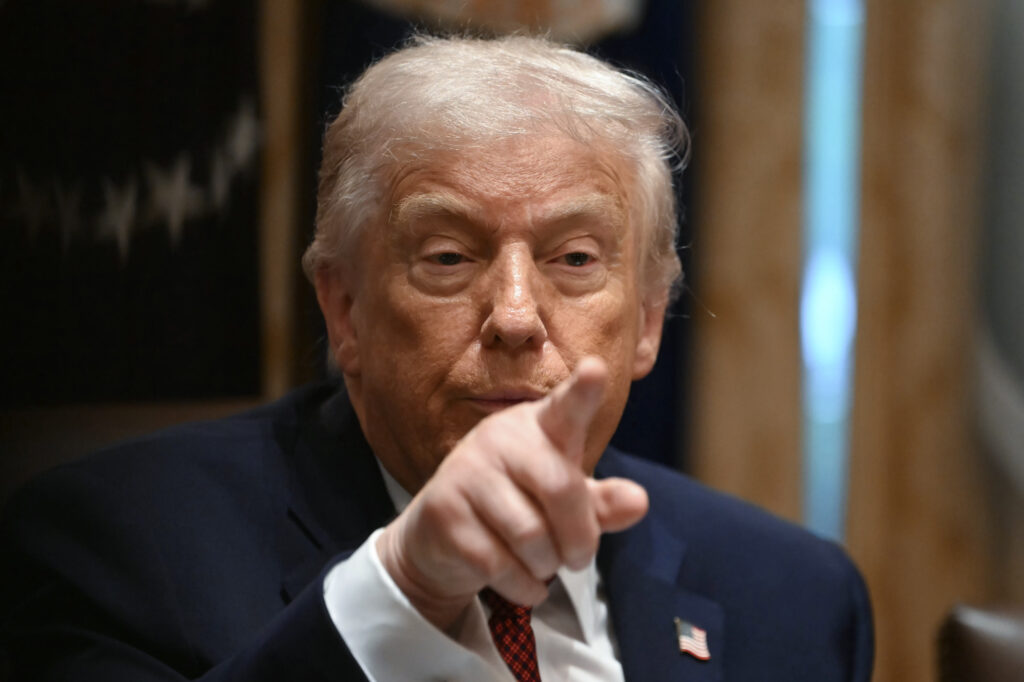
In a speech in Riyadh in May, President Donald Trump denounced generations of US interventionism, saying the Middle East was only made worse by Americans who fly in “giving you lectures on how to live and how to govern your own affairs.”Those views apparently do not extend to Latin America, where he instead has been blatantly meddling in ways harkening back to an earlier era in US history.Trump has intervened directly to weaken the democratically elected leftist leaders of Colombia and Brazil and to bolster the right-wing president of Argentina.He has also put the United States on a war footing in the Caribbean, raising speculation he will forcefully depose Venezuela’s leftist firebrand Nicolas Maduro.Trump, who has put a top priority at home on mass deportation of mostly Latin American undocumented migrants and alleged gang members, has argued that the United States is in an armed conflict with narcotraffickers, likening them to “terrorists.” He has launched repeated deadly strikes on small boats, with murky public information available, and confirmed he authorized CIA operations in Venezuela.Democratic Senator Mark Kelly said in a recent ABC News interview: “You don’t move a battle group all the way from where it was to the Caribbean unless you’re planning on either to intimidate the country — which is rather intimidating — or you’re going to start conducting combat operations in Venezuela.”- Dividing friends and foes -The United States has treated Latin America as its sphere of influence under the 1823 Monroe Doctrine, when then president James Monroe said the hemisphere was closed to European powers.Washington has intervened aggressively over the past two centuries, sometimes with disastrous results — as in the failed 1961 Bay of Pigs invasion aimed at ousting Cuban communist revolutionary Fidel Castro.Trump has zeroed in from the start of his second term on a revitalization of the Monroe Doctrine, threatening to seize back the Panama Canal due to Chinese influence in the critical waterway.If not military force, Trump has turned to economic tools. At the start of his administration in January he imposed sweeping tariffs on Colombia to punish Gustavo Petro, the US ally’s first left-wing president, for defying Trump on migration.More recently the Treasury Department imposed sanctions personally on Petro, whom Secretary of State Marco Rubio, a Cuban-American and sworn critic of the region’s leftists, branded a “lunatic.”Trump has also targeted a top judge in Brazil for prosecuting former far-right president Jair Bolsonaro, who was convicted over a coup attempt with echoes of Trump supporters’ riot at the US Capitol on January 6, 2021.By contrast, Trump promised a $20 billion bailout to Argentina to boost President Javier Milei and has moved to reward Ecuador’s Daniel Noboa and El Salvador’s Nayib Bukele, who offered to help Trump’s deportation drive by taking in prisoners to his own maximum-security prison.- ‘MAGA’ Latin America -“I think definitely the goal of the Trump administration is to shape Latin American politics in the form of a MAGA agenda,” said Renata Segura, who heads the Latin America and Caribbean program at the International Crisis Group, which promotes conflict resolution.But Trump’s MAGA, or Make America Great Again, movement is also deeply skeptical of jeopardizing US lives and resources in foreign wars.Rubio has been seen as the architect of the hawkish turn on Venezuela, hoping a downfall of Maduro could set off a domino effect that could even bring down Cuba’s 66-year-old communist government.With the military deployment, the United States is sending a clear message not only to Venezuela, Segura said.”They’re sending a message to the entire region that they will act unilaterally when they decide that that is appropriate,” she said.Trump, however, already tried during his 2017-2021 term to oust Maduro, including by building a coalition of major Latin American and European powers.Maduro remained entrenched, enjoying his own support base as well as backing by Cuba, China and Russia.”If there is this goal of using militarization pressure to produce some internal break that leads to Maduro’s departure, my concern is that what was tried in Trump One,” said Roxanna Vigil, a fellow at the Council on Foreign Relations.”It didn’t work,” she said.

Portland Guard deployment blocked, Supreme Court wants more time on Chicago

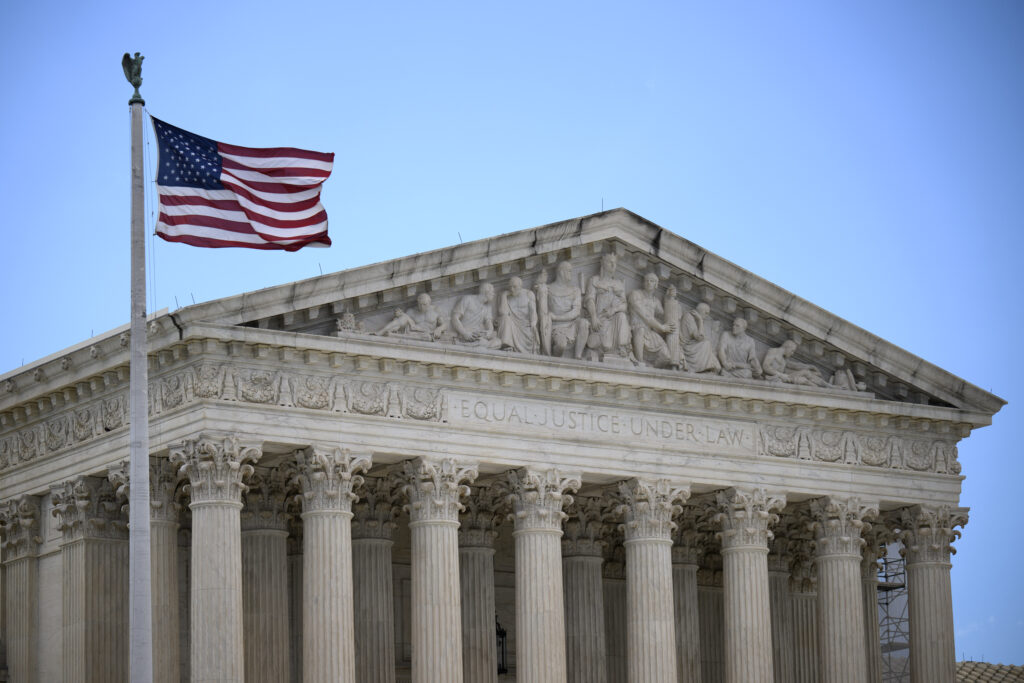
A US appeals court has temporarily blocked President Donald Trump from deploying National Guard troops in Portland, Oregon, as part of his sweeping crackdown on crime and immigration.The Supreme Court asked for more time and additional briefing materials, meanwhile, before ruling on Trump’s emergency request to deploy troops in Chicago, another Democratic-run city.The Republican president has sent National Guard troops to three Democratic-led cities this year — Los Angeles, Washington and Memphis — but his efforts to deploy soldiers in Portland and Chicago have been tied up in the courts.A Trump-appointed district court judge blocked the deployment of National Guard troops in Portland but was overruled by a three-judge panel on the 9th Circuit Court of Appeals.The 9th Circuit voted late Tuesday, however, to have the case reheard by an 11-judge panel, a move which prevents National Guard troops from deploying in Portland for now.Oregon’s Democratic Attorney General Dan Rayfield, who has filed suit to block the use of the National Guard, welcomed the ruling.”The Constitution limits the president’s power, and Oregon’s communities cannot be treated as a training ground for unchecked federal authority,” Rayfield said. “The court is sending a clear message: the president cannot send the military into US cities unnecessarily.”The US president has repeatedly called Portland “war-ravaged” and riddled with violent crime, a description dismissed as “simply untethered to the facts” by the district court judge who initially blocked the National Guard deployment.A district court and an appeals court have also blocked the use of National Guard troops in Chicago, the third-largest US city, and the Trump administration asked the Supreme Court in an emergency filing on October 17 to lift the lower court rulings.In a brief order on Wednesday, the conservative-dominated Supreme Court asked the Trump administration and the Illinois authorities who oppose the Chicago deployment to submit additional written filings in the case by November 17.Trump’s extraordinary domestic use of the National Guard was also challenged by California earlier this year after the president sent troops to Los Angeles to quell protests sparked by the rounding up of undocumented migrants.A district court judge ruled it unlawful but an appeals court panel allowed the Los Angeles deployment to proceed.

Boeing reports $5.4 bn loss on large hit from 777X aircraft delays

Boeing on Wednesday reported a third-quarter loss of $5.4 billion as massive added costs from the delayed certification of its 777X aircraft weighed down its results.The aviation giant scored a 30-percent jump in revenues to $23.3 billion following much higher commercial plane deliveries compared with the year-ago level.But the performance was marred by a one-time charge of $4.9 billion on the repeatedly delayed 777X program, which has faced a prolonged certification process with US authorities.Boeing had hoped to begin the next phase of certification flights this year. But the company has pushed those back until 2027 to complete needed preparatory analysis, company officials said.Chief Executive Kelly Ortberg pointed to the October approval by the Federal Aviation Administration of an increased monthly production rate on the 737 MAX as a sign of the company’s progress. He also noted that Boeing generated positive free cash flow during the quarter, a benchmark closely watched by Wall Street. But Ortberg said more work was still needed to turn Boeing around after a series of safety problems, including two fatal 737 MAX crashes in 2018 and 2019 that have led to more intense FAA scrutiny over new plane certifications.”While we are disappointed in the 777X schedule delay, the airplane continues to perform well in flight testing, and we remain focused on the work ahead,” Ortberg said.Wednesday’s results marked the 17th straight quarterly loss for Boeing, according to Briefing.com, which characterized the figures as “a mix of clear progress and lingering challenges.”Boeing must “prove that its turn-around efforts can translate into consistent profitability,” Briefing.com said.Meanwhile, European rival Airbus reported a 14 percent jump in profits to $1.1 billion, its latest strong financial result that underscored the wide gulf between the companies in recent years.  However, in one bright spot for Boeing, the US company has retaken the lead in terms of orders in 2025 as it benefits from the aggressive trade lobbying of US President Donald Trump.Boeing had racked up 774 net orders as of the end of September, compared to 514 for Airbus. Last year Airbus was far ahead with 648 compared to 272 for Boeing.-Another delay -Boeing has repeatedly pushed back the timeframe on the 777X. Under the latest shift, commercial deliveries will commence in 2027, delayed from the prior 2026 timeframe.After beginning deliveries, company officials expect the program to operate as a drain on cash in the first couple of years as production ramps up, but to turn cash flow positive in 2029, Chief Financial Officer Jay Malave said on a conference call.In 2020, Boeing booked a $6.5-billion charge on the 777X, citing the lengthy FAA certification process as a major factor.Ortberg, in a conference call with financial analysts, described the shifting backward of the 777X tests as the result of new requirements that the FAA and Boeing are both working through.- Labor strike -In a message to employees, Ortberg said the company’s defense operation in St. Louis is “effectively executing our strike contingency plans” following the vote Sunday by more than 3,000 workers to reject the company’s latest contract offer.Ortberg said on the conference call that production in the striking operation is operating at “about the same” rate as prior to the stoppage.Local Boeing officials in St. Louis have said the company is accelerating recruitment of replacement workers and welcoming back employees who cross the picket line. Union leaders have described Boeing as refusing to negotiate in good faith, while criticizing the hiring of replacement workers as risky. “These are complex, precision-built products — and they cannot replace the skilled, experienced IAM members who have dedicated their careers to this work,” said a Tuesday statement from the International Association of Machinists and Aerospace Workers District 837.Shares of Boeing closed down 4.4 percent.

Meta shares sink as $16 bn US tax charge tanks profit

Meta shares dove more than eight percent in after-hours trading Wednesday after the tech giant reported a US tax charge took a roughly $16 billion bite out of its quarterly profit.The parent company of Facebook, Instagram and Whatsapp said that its net income would have reached $18.64 billion in the recent quarter had it not been for a one-time tax charge prompted by provisions in President Donald Trump’s “One Big Beautiful Bill Act.”Quarterly revenue however exceeded analyst expectations at $51.2 billion, a 26 percent increase from the same period a year earlier.Meta also notched up the forecast of how much money it expects to spend this year as it invests heavily in being a leader in artificial intelligence.The company said it expects capital expenditures to tally somewhere between $70-$72 billion, at the higher end of a range it had previously disclosed.Costs and expenses in the quarter were $30.71 billion, an increase of 32 percent from the same period last year, with some of that cost going to talent for Meta’s AI efforts.”I am very focused on establishing Meta as the leading frontier AI Lab, building personal super intelligence for everyone and delivering the app experiences and computing devices that will improve the lives of billions of people around the world,” chief executive Mark Zuckerberg said on an earnings call.”We’re heads down, developing our next generation of models and products.”Meta’s Family of Apps segment, which includes Facebook, Instagram, WhatsApp and Messenger, saw daily active users reach 3.54 billion in the quarter, up 8 percent from a year earlier.Meta announced earlier this month that it will begin using people’s conversations with its AI chatbot to tailor ads and content they see on Facebook and Instagram.Meta also recently showed off new smart glasses as it continued to bank on a lifestyle shift toward blending reality and virtual space despite the efforts inflicting heavy financial losses.Announcements included the debut of Meta Ray-Ban Display smart glasses that have built-in screens that allow wearers to see messages, photos and more as though looking at a smartphone screen.Zuckerberg has predicted that AI-infused smart glasses will be the “next major computing platform,” eventually replacing the smartphone.But Reality Labs —  Meta’s virtual and augmented reality unit — has consistently posted big losses.Meta is locked in a bitter rivalry with other tech behemoths as they invest heavily in AI, aiming to ensure the technology benefits society and generates profits in the not-so-distant future.Most analysts believe Meta will make the investment pay off by improving its advertising efficiency and creating new opportunities, such as with its smart glasses through a partnership with Ray-Ban maker EssilorLuxottica.